

Magnesium for Cats

Why cat food limits it, what the struvite and kidney trials found, and when extra magnesium becomes a risk.

By La Petite Labs Editorial 12 min read

As Seen On

  • AVMA, American Veterinary Medical Association
  • Today’s Veterinary Business
  • Petfood Industry
Woman cuddling an orange-and-white cat and a silver tabby while holding a Hollywood Elixir box
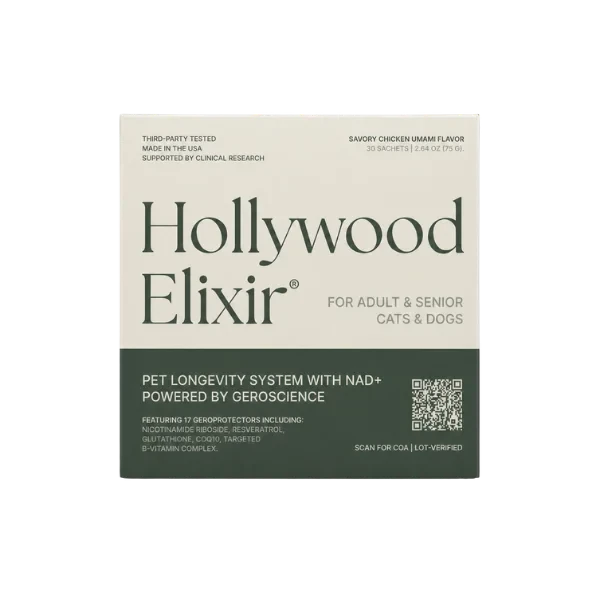
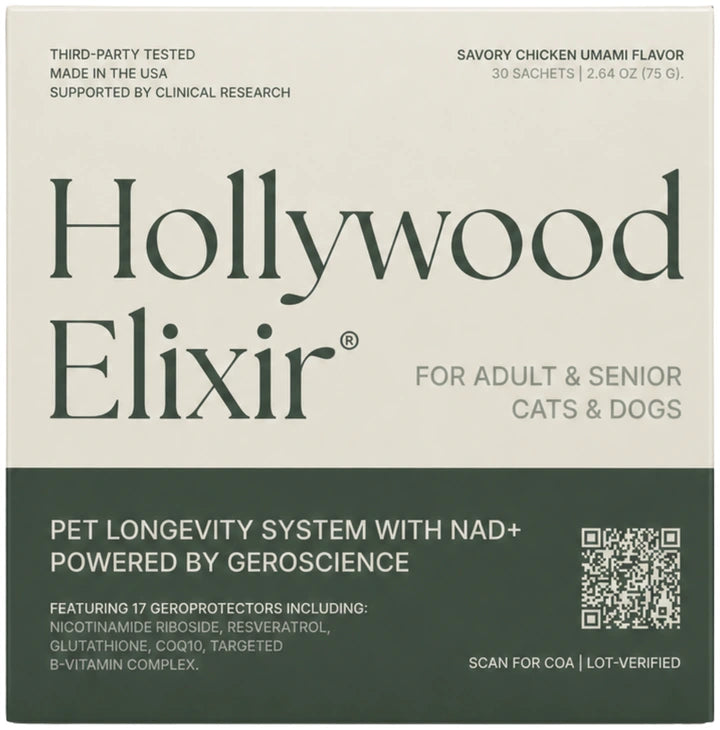
Hollywood Elixir® Senior Cat Supplement

17 science-backed actives

From$50/moSave up to 47%Save up to 44%Shop Now
Contents
Cats need magnesium, and a complete cat food already supplies it, so a healthy cat doesn't need a supplement. The mineral's bad name comes from struvite bladder stones. Feeding studies show that urine acidity can decide the outcome even when the magnesium number stays the same. Extra magnesium has helped in one trial of cats with kidney disease, as part of a vet-managed diet, and high blood magnesium is a warning sign in a sick cat.

This guide covers what food provides, the stone and kidney evidence, the risks, and how to read a label.

  • What it is: An essential mineral that cells need every time they spend energy.1
  • Food first: Magnesium is rarely deficient in complete diets.2 All 31 senior cat foods in one lab test exceeded the AAFCO adult minimum.3
  • Stones: Low-magnesium, urine-acidifying foods dissolved struvite stones in 32 of 37 cats.9 Both features changed at once, so magnesium gets only part of the credit.
  • Kidneys: In a 60-cat trial, a magnesium-enriched kidney diet held a key hormone steady while it rose in the control group.12
  • Risk: High blood magnesium shows up with kidney disease and blocked urethras, and cats with it died 2.3 times as often in one hospital study.15, 14
  • Amount: A heart trial gave cats 210 mg of magnesium chloride for 12 weeks and saw no effect.18 No supplement amount is established for cats.
  • In Hollywood Elixir: No. Hollywood Elixir has no added magnesium. It's daily nutrition.

What is magnesium, and why do cats need it?

Magnesium is an essential mineral, and a cat's cells can't work without it. The body spends energy in the form of a molecule called ATP, and each reaction that uses ATP needs magnesium bound to it.1 Nerve signals and muscle contraction depend on magnesium as well.21

Most of a cat's magnesium is out of sight. About half sits in bone, most of the rest is in muscle and other soft tissue, and only around 1% travels in blood.1 A blood test is a small window onto a large store.

Cats are good at holding the level steady. In a classic feeding study, cats that ate large amounts of magnesium kept normal levels in kidney, muscle and bone by passing the extra out in urine.5 The kidneys do that balancing. Kidney failure and a blocked urethra are the main situations where magnesium builds up.1, 15

Woman kneeling with two long-haired tabby cats while holding a Hollywood Elixir box beside a food bowl

Does cat food have enough magnesium?

Magnesium is rarely deficient in cats that eat a complete and balanced food.2 Lab testing backs that up. When researchers analyzed 31 commercial foods sold for senior cats, every one held more magnesium than the AAFCO minimum for adult cats.3

The amount a cat needs to stay in balance is small. In a controlled study, adult cats held their magnesium balance on a purified diet with 0.19 g of magnesium per kg of food, the lowest level tested.4

So the question for most cats isn't whether to add magnesium. It's whether the food is complete. Home-prepared diets are the weak spot: researchers who collected 114 cat recipes could analyze 94 of them, and none met every recommended allowance.22 Our guide to supplements for homemade cat food covers that case.

Woman exercising beside a tabby cat, with a Hollywood Elixir box and food bowl on a small table

Why did magnesium get blamed for urinary problems?

Magnesium earned its reputation in feeding experiments from the 1980s. When cats ate diets loaded with magnesium oxide, struvite crystals clumped together and blocked the urethra in a high percentage of them.5

A second experiment showed the other half of the story. Two groups of 12 cats ate the same high-magnesium dry food, at 0.37% of dry matter. In one group the food also contained a urine acidifier. Seven of the 12 cats without the acidifier blocked, against 2 of the 12 with it.6

Same magnesium, different urine, different result.

Orange-and-white cat reaching toward a woman holding a Hollywood Elixir box while sitting in a chair

Does magnesium cause struvite stones in cats?

Magnesium is one ingredient of struvite, a stone built from magnesium, phosphorus and ammonia.7 Diet studies link the two. In a comparison of 290 cats with struvite stones and 827 cats with healthy urinary tracts, foods with the highest magnesium went with a higher risk of struvite.8 So did foods highest in phosphorus, calcium, chloride or fiber.8

Magnesium isn't the whole cause, though. Cats that blocked naturally had far lower urine magnesium than cats fed high-magnesium diets, and the researchers concluded that other factors were at work.5

Struvite dissolves far more readily when urine is acidic and its building blocks are scarce.10

Gray-haired man holding a Hollywood Elixir box while two cats rest beside him in an armchair

Should you buy the lowest-magnesium cat food?

Magnesium at its lowest isn't the goal, and chasing the smallest number can backfire. In the same diet comparison, foods with moderate magnesium went with a lower risk of calcium oxalate stones than foods with the least.8 Calcium oxalate is the other common stone in cats, and no diet can dissolve it.7

Changing one mineral also shifts others. When cats ate eight times more magnesium, their urine calcium rose and they absorbed 13% less phosphorus.4

Pick food for your cat's diagnosis. A healthy cat needs a complete food, and a cat with stones needs the diet its vet prescribes.

Same magnesium, different urine, different result.

What did the struvite diet trials in cats find?

Magnesium-restricted diets do dissolve struvite stones in cats, and the best trial shows how fast. Vets at several clinics randomly assigned 37 cats with suspected struvite stones to one of two commercial dry foods, both low in magnesium and both designed to acidify urine.9

  • Dissolved: 32 of the 37 cats, with no diet-related side effects.9
  • Speed: complete dissolution took 13 days on average with one food and 27 days with the other.9
  • Not dissolved: 5 cats, whose stones turned out to be urate or calcium oxalate.9

The faster food also produced more acidic urine, so the trial can't credit magnesium alone. A later experiment makes the same point from the other side. Thirteen cats ate four foods with identical nutrients and rising amounts of an acidifier, and the urine's tendency to form struvite fell as it grew more acidic.11

Specialists now advise dissolving suspected struvite stones with diet before considering surgery, and they expect sterile struvite to dissolve within two to five weeks.10 For prevention they recommend therapeutic foods that are low in magnesium and phosphorus and that acidify urine.10

Tabby cat looking up at a Hollywood Elixir sachet held above it, with the product box on a small table

Does magnesium help cats with kidney disease?

Magnesium has one promising trial in cats with chronic kidney disease. The idea came from a study of 174 such cats, where the 12% with low blood magnesium were more likely to die.13

Researchers then tested a fix. Sixty cats already on a phosphate-restricted kidney diet ate either a magnesium-enriched version or a matching control for 12 to 16 weeks.12 FGF23, a hormone that helps predict how kidney disease will go, stayed stable on the enriched food and rose on the control.12, 13 Four control cats developed high blood calcium, against none on the enriched food.12

The company that made both diets paid for the trial, and it tested a complete food, not a supplement added at home.12 Our guide to chronic kidney disease in cats covers standard care.

Hand gently petting an orange-and-white cat beside a food bowl and Hollywood Elixir box

Is magnesium safe for cats?

Magnesium is safe for cats at the levels in a complete food, and healthy cats pass extra amounts out in urine.5 Trouble starts when a cat can't get rid of it.

High blood magnesium is uncommon and serious. Among 310 hospitalized cats, 8% had a high ionized level, and those cats died 2.3 times as often as the rest.14 In an intensive care study of 57 cats, high magnesium appeared on admission only in cats with kidney disease, a urinary blockage or cancer.15

A high reading is usually a sign of the illness, not its cause. It's still a strong reason to keep extra magnesium away from a sick cat. Our guide to senior cat blood work explains the tests.

Man holding a Hollywood Elixir box beside a black cat, an orange tabby and a food bowl

What are the signs of too much magnesium in a cat?

Magnesium in excess slows the heart and weakens muscles. After a large amount by mouth, poison-control vets expect gut upset, a slow heart rate and weakness within 2 to 3 hours, lasting 12 to 48 hours.16 Kidney disease stretches that out.16

One published case shows how it can look. An 8-year-old cat arrived at the hospital barely responsive, cold and with a slow heart rate, and her blood magnesium was about three times the upper limit.17 The suspected source was a calming supplement, given long term, that listed magnesium stearate as an inactive ingredient. She went home after 10 days in hospital.17

A weak, cold or very quiet cat is an emergency whatever the cause.

How much magnesium does a cat need?

No magnesium supplement amount has been set for cats. What exists is a handful of figures from food standards and studies, and each answers a different question.

  • Enough for balance: adult cats held their magnesium balance on 0.19 g per kg of a purified diet.4
  • Commercial food: all 31 senior cat foods in one analysis sat above the AAFCO adult minimum.3
  • A "high" experimental diet: 0.37% of dry matter, the level that blocked cats when urine wasn't acidified.6
  • Kidney trial: 0.2% magnesium in the enriched food, against 0.07% in the control.12
  • Heart trial: 210 mg of magnesium chloride for 12 weeks, with no measurable effect.18

Notice that none of these is a home recipe. The stone and kidney figures come from complete diets, fed to cats that vets checked with blood tests, urine tests and X-rays.9, 12 A spoonful of a human product added to a normal food copies none of that.

A healthy cat needs a complete food, and a cat with stones needs the diet its vet prescribes.

Silver tabby sitting beside a food bowl and a Hollywood Elixir box held in a person's hand

DVM Voice: Clinical Vignette of a Common Pattern in Senior Cat Aging

Case provided by JoAnna Pendergrass, DVM

Sasha, a 12-year-old cat, was brought in after her owner noticed increased thirst and urination, lethargy, vomiting, and a generally unkempt appearance. Examination showed weight loss, elevated blood pressure, and reduced vitality.

Diagnostic testing revealed elevated kidney markers, poorly concentrated urine, and protein loss in the urine — findings consistent with chronic kidney disease, one of the most common chronic conditions in senior cats.

Her care required a kidney-focused diet, blood pressure management, targeted supplementation, medication support, and regular monitoring — a necessary plan, but one started after clinical signs were already visible.

Clinical takeaway: Sasha’s case reflects why senior-cat wellness should begin before obvious decline. Earlier monitoring, body-condition tracking, hydration awareness, antioxidant support, and daily cellular resilience may help support quality of life as cats age.

Single-case vignette. Not generalizable. Veterinary diagnosis and monitoring are essential for increased thirst, urination, vomiting, lethargy, weight loss, or suspected kidney disease.

Explore Hollywood Elixir Research →
Woman holding a Hollywood Elixir box toward a brown cat perched on the back of a sofa

Which cat foods and supplements contain magnesium?

Magnesium is in every complete cat food, and the AAFCO profile for cats sets a minimum for it.3 Therapeutic diets often set it higher or lower on purpose.2 The cat studies used ordinary salts: magnesium oxide in the stone and kidney work, magnesium carbonate in the balance study and magnesium chloride in the heart trial.5, 12, 4, 18

Other products carry magnesium without advertising it:

  • human multivitamins and single-mineral pills;16
  • antacids;1
  • supplements that use magnesium stearate as an inactive ingredient.17

For the record, magnesium isn't an active in our own powder, Hollywood Elixir, and its inactive ingredients include no magnesium stearate.

Woman leaning toward a fluffy orange cat beside a Hollywood Elixir box and green food bowl

Which cats should not get extra magnesium?

Extra magnesium is the wrong call for several groups of cats. Talk to your vet before giving any to a cat that:

  • has kidney disease, unless the vet has chosen a magnesium-adjusted diet;12, 1
  • has had struvite crystals or stones, a group the kidney trial itself kept out;12
  • eats a prescription urinary diet, since those foods control magnesium on purpose;10
  • is a kitten, or is pregnant or nursing, and eats a food made for growth and reproduction.20

Male cats deserve extra caution, because their longer, narrower urethra blocks more easily.7

Tabby cat licking its nose beside a food bowl and Hollywood Elixir box

Do cats with heart disease or diabetes need magnesium?

Magnesium has been tested in cats with heart disease, and it didn't help. Thirty cats with hypertrophic cardiomyopathy, a thickening of the heart muscle, got either magnesium chloride or a placebo for 12 weeks. Heart measurements and magnesium status changed by the same amount in both groups.18 Cats with the condition also had the same magnesium status as healthy cats to begin with.18

Our guide to heart health for cats covers the basics of cardiac care.

Diabetes looks different. Low ionized magnesium was common in diabetic cats in one small study, found in 13 of 21.19 The authors couldn't say what it meant for the cats' health, and we found no trial of supplements for them.

How do you read magnesium on a cat food label?

Magnesium percentages on cat food labels are easy to misread, because they're printed on an as-fed basis, water included. Canned food is typically 75 to 78% moisture and dry food 10 to 12%.20 The same percentage means very different things in a can and in a bag.

To compare fairly:

  • convert both foods to dry matter, by dividing the label percentage by the food's dry-matter percentage and multiplying by 100;20
  • or compare magnesium per calorie, since researchers found the plain percentage misleading when moist and dry diets differed in calorie density.5

Read claims with the same care. Many foods are sold for "urinary health". Cornell's feline center says they may make a blockage less likely in cats with bladder inflammation, but there's no evidence they have reduced urinary signs overall.7 A complete food chosen for your cat's actual diagnosis beats a low number on the bag.

Supplement labels should list every amount too. Hollywood Elixir prints all 17 of its actives, and magnesium isn't one of them.

Is magnesium different for cats and dogs?

Magnesium matters to both species, but cats have their own pattern.

  • Stones: in cats, struvite usually forms in sterile urine, so diet is the main tool. In dogs, struvite stones are mostly caused by urinary infections, and treating the infection comes first.10
  • Blood levels: among hospital patients, low magnesium was far more common in dogs, at 35.5% against 6.8% of cats. High magnesium was more common in cats, at 8% against 1.1% of dogs, and only in cats was it tied to dying.14
  • Food labels: most commercial cat foods are now formulated to limit magnesium and to produce more acidic urine.7

A product made for the dog in the house shouldn't go to the cat, and a canine amount can't be scaled down by weight. Our guide to magnesium for dogs covers the other side.

Tabby cat sitting at a table with a food bowl and Hollywood Elixir box

When is a straining cat an emergency?

Magnesium questions can wait, but a cat that strains in the litter box can't. A cat that keeps trying to urinate and produces little or nothing may have a blocked urethra, which is an absolute emergency.7 Death can follow in under 24 to 48 hours once the blockage is complete.7

Go to a vet straight away if your cat:

  • strains or makes frequent trips to the litter box with little or no urine;
  • cries out while urinating;
  • passes blood in the urine;
  • licks the genital area again and again.7

A change of food won't clear a blockage. A magnesium product could add to the danger, because a cat that can't pass urine can't clear magnesium either.1

Woman cuddling a silver tabby and a cream-colored cat while holding a Hollywood Elixir box

What works better than cutting magnesium?

Magnesium is only one lever for urinary health, and for most cats it isn't the strongest one.

  • Water: a high-moisture diet is a cornerstone of prevention for nearly every stone type.10
  • A dissolution diet from your vet: for struvite stones, it works within weeks.9
  • Home setup: fresh water at all times, small frequent meals, enough clean litter boxes and a steady routine.7

Bladder inflammation with no known cause is the most common diagnosis in cats with urinary signs, and stones are only one item on the list.7 Our cat hydration calculator can help you check water intake.

Is magnesium in Hollywood Elixir?

No. Magnesium isn't one of the 17 actives in Hollywood Elixir, and none is added to it. Your cat's complete food is the right place to get it.

Magnesium is the mineral every unit of cell energy depends on, and food supplies it. Hollywood Elixir brings different energy nutrients: 40 mg of CoQ10, 60 mg of nicotinamide riboside (an NAD+ precursor) and 1 mg of vitamin B6 in each sachet, with all 17 amounts printed on the label.

It's daily nutrition for adult and senior cats, a powder mixed into food: half a sachet for cats under 7 lb and one sachet from 7 to 30 lb. Hollywood Elixir is a supplement. It hasn't been tested for urinary stones, kidney disease or lifespan. Because the label lists no magnesium amount, ask your vet before adding it, or any supplement, to a prescription urinary diet.

Our guides to CoQ10 for cats and the best supplements for senior cats explain where a formula like this fits. See the full Hollywood Elixir formula and serving guide.

A spoonful of a human product added to a normal food copies none of that.

Educational content only. This material is not a substitute for veterinary advice. Always consult your veterinarian about your cat’s specific needs. These statements have not been evaluated by the Food and Drug Administration. Products mentioned are not intended to diagnose, treat, cure, or prevent any disease.

Glossary

Magnesium: An essential mineral that cells need whenever they spend energy.

Struvite: A crystal or stone made of magnesium, phosphorus and ammonia that can form in a cat's urine.

Calcium oxalate: The other common bladder stone in cats, which diet can't dissolve.

Urethral obstruction: A blockage of the tube that carries urine out of the bladder. It's a life-threatening emergency.

Dry matter basis: A nutrient level worked out with the water removed, so wet and dry foods can be compared.

FGF23: A hormone that vets use to help predict the course of kidney disease in cats.

Related Reading

References

Numbered references identify the sources used for specific claims. Read the study design, species and evidence boundaries alongside each finding.

FAQ

Are urine crystals proof that my cat eats too much magnesium?

No. Struvite forms when several things line up, and urine acidity is one of them. In one feeding study, cats on a high-magnesium food blocked far less often when the same food contained an acidifier. Ask your vet what the crystals mean for your cat.

Can a urinary diet fix every case of cystitis?

No. The most common diagnosis in cats with urinary signs is bladder inflammation with no known cause, where magnesium isn't the issue. Dissolution diets are built for struvite stones, and they can't dissolve calcium oxalate. Your vet needs to find the cause first.

Can I give my cat a human magnesium product for constipation?

Please ask your vet first. A cat that strains in the litter box may be trying to pass urine, and a blocked urethra is an emergency. Magnesium also builds up when the kidneys or the urinary tract aren't working, so a wrong guess carries real risk.

Does Hollywood Elixir contain magnesium?

No. Magnesium isn't among the 17 actives in Hollywood Elixir, and none is added. Each sachet supplies CoQ10, nicotinamide riboside, vitamin B6 and 14 more actives, with every amount printed on the label.

Do kittens need extra magnesium?

No. Kitten foods follow a separate nutrient profile for growth, and magnesium is rarely short in a complete diet. Extra calcium or phosphorus can lower the amount of magnesium a kitten absorbs, so leave mineral supplements out unless your vet prescribes one.

Is magnesium stearate in cat supplements dangerous?

The evidence is a single case. In 2025, vets reported a cat with severe high blood magnesium, and the only non-food source they found was a calming supplement, given long term, that used magnesium stearate as an inactive ingredient. Tell your vet about every supplement your cat gets.

Do senior cats need more magnesium?

Not as a rule. Foods sold for senior cats held the same mineral levels as adult foods in one analysis of 90 products, and every senior food met the AAFCO minimum for magnesium. If your older cat has kidney disease, ask your vet before adding any mineral.

Can a blood test tell if my cat's magnesium is off?

It helps, with limits. Only about 1% of the body's magnesium is in blood. In diabetic cats, a test for ionized magnesium found low levels in 13 of 21 cats, while the total magnesium test flagged only 2. Ask your vet which test was used.

Does magnesium calm cats?

We found no trial of magnesium for anxiety or stress in cats. The one published feline case that involved a calming supplement ended with 10 days in hospital for suspected magnesium poisoning. A behavior plan from your vet is the safer place to start.

Orange-and-white cat beside a Hollywood Elixir box held in a person's hand

Discover LPL-01: How This Fits Into a Larger Feline Longevity System

Aging in cats unfolds quietly. It’s not driven by a single failure, but by gradual shifts across interconnected systems — cellular energy, oxidative balance, immune tone, and tissue integrity — each influencing the others over time.

This article explores one layer of that system. To understand what actually shapes long-term health, you need to step back and look at how these layers interact.

Start with the underlying science:

Keep exploring

What would you like to understand next?

Search practical guides about healthy aging, cellular energy, ingredients, and daily support for cats.