The Kitchen-Sink Formula Problem

Compare focused formulas against ingredient overload for joints, gut, skin, and immunity

By La Petite Labs Editorial 15 min read

An all-in-one supplement feels reassuring: if a dog has itchy skin, stiff joints, and a sensitive stomach, covering everything at once seems logical. The catch is physical, a chew or capsule has limited space, and the body has limited capacity to absorb many nutrients at the same time, so a too-many-ingredients formula often delivers less real support than a simpler one with clear priorities.

This page explains the kitchen-sink pattern in plain terms: ingredient dilution (tiny amounts of many things), absorption competition (ingredients fighting for the same transporters), and formulation economics (the pressure to list more names rather than fund meaningful doses). It also shows what you can do at home, how to read a Supplement Facts panel, what to watch over days and weeks, and how to hand better information to your vet. The goal is not to fear supplements; it is to recognize common formulation problems so choices get calmer: fewer ingredients, clearer dosing logic, and a wider safety margin.

  • The kitchen-sink problem appears when many ingredients force tiny doses, create absorption competition, and make results hard to read.
  • A too-many-ingredients formula can look impressive while delivering token amounts of every active.
  • Crowded formulas also raise overlap risk when owners stack products, shrinking the safety margin.
  • Read the Supplement Facts panel for disclosed amounts and avoid proprietary blends that hide doses.
  • A “hero ingredient plus small supporting cast” usually beats a long list for consistency.
  • Track a few signals (stool, paw-licking, stair confidence, post-walk stiffness) over weeks, not days.
  • If results are volatile or side effects appear, simplify, pause the newest addition, and bring labels plus a log to the vet.

Why “Everything in One Chew” Feels so Appealing

Dogs rarely have just one issue at a time. A senior dog might be scratching, slowing down on stairs, and having softer stools, so an “all-in-one” supplement sounds like a practical shortcut. Marketing also trains the eye to equate a longer ingredient list with stronger science, even when the evidence for many add-ons is mixed or condition-specific (Baritugo, 2023). The result is a common pattern: owners buy a too many ingredients pet supplement hoping it will cover every body system at once.

At home, this often looks like rotating products every few weeks because nothing feels reliably smoother. The dog may have a few “good days,” then slide back, which makes it tempting to add yet another chew or powder. That stacking can blur what is helping versus what is simply adding calories, flavorings, or GI upset. A calmer plan starts by accepting that one product rarely needs to do everything.

The Dilution Math: Capsule Space Versus Real Doses

A chew has finite real estate. Squeeze in dozens of actives and each shrinks to a token amount, ingredient dilution in its simplest form. This is why more ingredients less effective supplements show up so often: the label looks impressive, but the dog may not get enough of any one ingredient to matter. Evidence quality also varies across functional ingredients, so spreading the dose thin across many weakly supported add-ons dilutes the better-supported ones (Baritugo, 2023).

Spot dilution by comparing serving size (grams per chew or scoop) to the number of actives listed. A small serving with a long list forces tiny amounts. Another tell is one chew count covering a wide weight range, which usually means the formula was not designed around functional dosing. When results feel inconsistent, dilution is a common, non-mysterious explanation.

Absorption Competition: When Ingredients Crowd the Same Doorway

Even if a label lists meaningful amounts, ingredients can compete during digestion. Minerals may share transport pathways, fats can change how fat-soluble compounds move, and fiber-like add-ons can bind other nutrients and carry them out. This is a key pet supplement formulation problem: the formula assumes every ingredient acts independently, but the gut is a busy sorting station. When many compounds arrive together, the body may prioritize some and leave others underused.

At home, absorption competition often shows up as “it worked at first, then fizzled,” especially when the supplement is given with a large meal or alongside other products. Some dogs also develop softer stools or more gas when multiple oils, fibers, and botanicals are combined. If a dog’s stool quality changes after starting a complex formula, that’s not just nuisance—it can be a sign the gut is less able to process the crowded mix. A simpler plan can be easier on digestion and easier to evaluate.

Pixie Dusting: the Difference Between Presence and Function

“Pixie dusting” means an ingredient is included in a sprinkle—enough to list, not enough to deliver a predictable effect. It’s especially common with trendy botanicals and specialty antioxidants, where the name carries the selling power. This is why supplement ingredient dilution pets is not only about capsule size; it’s also about design choices that prioritize label appeal. When a formula tries to be a multivitamin, joint chew, skin oil, calming aid, and probiotic all at once, many components end up as decoration.

Owners often notice pixie dusting as “nothing changed, but the dog likes the taste.” Palatability can be real, but it is not the same as support. Another clue is when the product promises broad outcomes but gives no clear amounts for key actives, or hides them inside blends. If the only concrete numbers are for flavoring carriers (like oils or powders) while the “special” ingredients are vague, the formula may be built for impression rather than function.

When Combinations Cancel out or Create New Problems

Some combinations are not dangerous, but they can be counterproductive. For example, adding multiple sources of similar nutrients can push totals higher than intended, while other key nutrients remain low. Independent testing has found that some vitamin-mineral supplements for dogs and cats do not reliably meet recommended levels and may carry contamination risks, which makes “more” a safety question, not just an effectiveness question (RVA, 2021). A kitchen-sink approach can also make it harder to identify which ingredient is causing itchiness, ear redness, or stomach upset.

In the household, cancellation looks like chasing symptoms: adding a “calming” ingredient to offset restlessness caused by GI discomfort, or adding fiber to firm stools loosened by oils. This can turn one purchase into a cascade of adjustments. When a dog becomes gassier, more itchy, or less interested in food after starting a complex supplement, the safest move is often to pause and simplify rather than layering more products on top.

“A long ingredient list can shrink both clarity and safety margin.”

A Real-world Case: the Senior Dog on Four Supplements

Case vignette: A 10-year-old medium-size dog starts a “complete” chew for joints, skin, and digestion, then adds a separate calming powder and a fish-oil capsule. Two weeks later, stools are softer and the dog seems pickier at meals, so the owner switches brands and doubles the chew “to make it work.” This is a common path into more ingredients less effective supplements: the plan becomes crowded, and the dog’s response becomes harder to read. Studies of dogs with cognitive dysfunction show owners frequently use supplements, which increases the chance of overlap and confusion (Haake, 2023).

At home, the turning point is usually not a dramatic reaction—it’s the slow loss of clarity. The owner can’t tell whether the dog’s stiffness is better because walks also got shorter, or whether scratching improved because the season changed. When multiple products start and stop close together, the dog’s “bounce-back” becomes impossible to attribute. A simpler, staged approach (one change at a time) is often the fastest way to get to a more consistent outcome.

The Cost-per-ingredient Reality Behind Crowded Labels

Formulation economics matters because budgets are real. If a product includes 30–50 “actives,” the cost of meaningful dosing for each one becomes difficult, especially when some ingredients are expensive at functional levels. That pressure can lead to pet supplement formulation problems like under-dosing the core ingredients while sprinkling in many low-cost powders. It can also encourage proprietary blends that hide the exact amounts, making it impossible to judge whether the formula is built for outcomes or for a longer list.

Owners can translate this into a practical question: “What am I paying for—measurable amounts of a few priorities, or tiny amounts of many names?” If a jar claims to support joints, skin, heart, brain, immunity, and digestion, but costs less than a single-issue product with transparent dosing, something has to give. This is not about price-shaming; it’s about recognizing that a crowded label often signals tradeoffs that show up later as inconsistent results.

How to Estimate Whether an Ingredient Is Functionally Dosed

You do not need a chemistry degree to sanity-check a label. Start with the Supplement Facts panel: does it list amounts for the ingredients that supposedly drive the main goal? If the key actives have no amounts, hide in blends, or sit after long strings of fillers, that is a dilution red flag. Check whether the product separates active ingredients from the flavoring base, sometimes the base is most of the chew, leaving little room for meaningful dosing.

Then run the priority test. Pick one target, say mobility, and find the one to three ingredients the product is clearly built around. If those are not quantified, or the serving is too small to carry them at meaningful levels, the formula favors breadth over depth. The same check works when comparing across categories, including proprietary blends and best antioxidant supplements pages, where transparency and dosing logic matter more than the longest list.

Hero Ingredient Versus Supporting Cast: a Better Mental Model

A useful way to avoid a too many ingredients pet supplement is to ask: “What is the hero ingredient?” A well-designed formula usually has a clear lead actor—one or two ingredients chosen for a specific goal—plus a small supporting cast that helps delivery, stability, or complementary pathways. When every ingredient is presented as a hero, none of them are. This is where more ingredients less effective supplements becomes predictable: the formula has no center of gravity.

At home, the hero-and-cast model makes tracking easier. If the goal is mobility, the owner can focus on stair confidence, post-nap stiffness, and willingness to jump into the car, rather than trying to judge “overall wellness.” If the goal is skin comfort, the owner can watch paw-licking, ear redness, and coat feel. A supplement plan that is easier to observe is more likely to become smoother and less volatile over time.

What Good Formulation Prioritizes (Without Overpromising)

Good formulation starts with constraints: what the dog can absorb, what fits in a serving, and what keeps a reasonable safety margin. It also takes evidence discipline, choosing ingredients with clearer support rather than collecting every trending compound (Baritugo, 2023). A thoughtful formula avoids stacking multiple nutrient sources that push totals into risky territory on top of a complete diet.

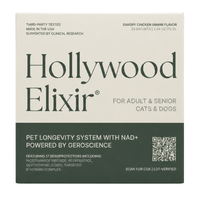
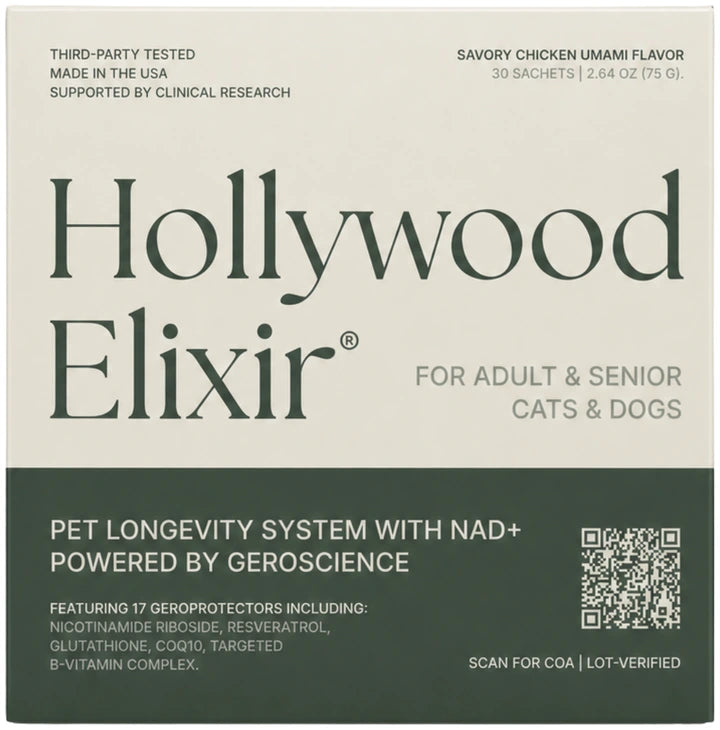
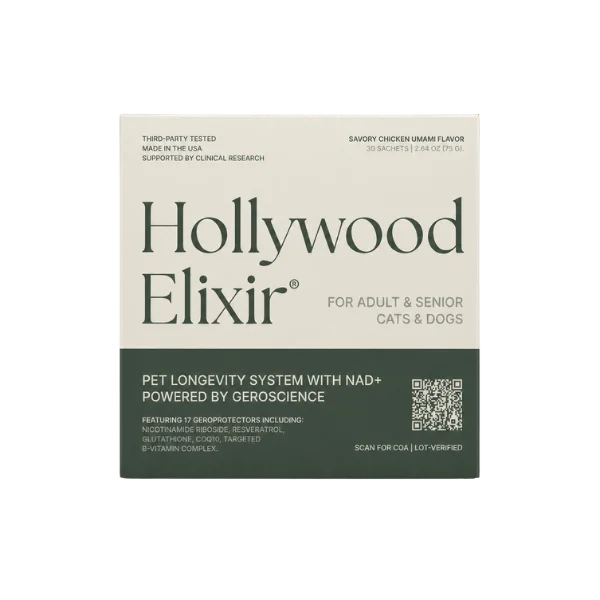
You can see prioritization in small ways: fewer headline claims, clearer amounts, and dosing that scales with size. Hollywood Elixir follows that approach, every active is disclosed by amount with no proprietary blend, so nicotinamide riboside at 60 mg, CoQ10 at 40 mg, and glutathione at 50 mg are visible rather than buried, and the supporting cast stays small enough to preserve headroom for the ingredients that matter. That transparency is exactly what lets an owner judge a formula instead of trusting a long list.

“If everything is a hero ingredient, nothing is truly prioritized.”

La Petite Labs

DVM Voice: Clinical Vignette of a Common Pattern in Senior Dog Aging

Case provided by JoAnna Pendergrass, DVM

Rex, a 7-year-old Labrador Retriever, was brought in after his owner noticed he was slower to rise, hesitant on stairs, and less able to play as before. Examination showed stiffness and reduced hip mobility; radiographs confirmed degenerative joint changes.

His care required weight management, veterinary-guided pain control, nutritional support, and rehabilitation — a comprehensive plan, but one started only after visible decline appeared.

Clinical takeaway: Rex’s case reflects the value of proactive aging support: maintaining lean body condition, monitoring mobility early, and supporting cellular resilience, antioxidant defense, and healthy inflammatory balance before decline becomes obvious.

Single-case vignette. Not generalizable. Veterinary oversight is essential for pain, stiffness, or suspected joint disease.

Explore Hollywood Elixir Research →

How to Read a Supplement Facts Panel Critically

A Supplement Facts panel is a map of the product’s priorities. First, check whether the main actives are listed with exact amounts and whether those amounts are per chew, per scoop, or per daily serving. Second, look for proprietary blends; they often prevent meaningful comparison and can hide supplement ingredient dilution pets. Third, scan for multiple forms of the same nutrient (for example, several trace minerals) that could add up when combined with a complete diet.

Then apply an “owner reality” filter: can the dog actually take the recommended number of chews every day without extra calories becoming a problem? If the label requires many chews to reach the daily serving, that can be hard for small dogs or dogs needing weight control. If the label requires only one chew for very different sizes, that can signal under-dosing for larger dogs. Either way, the panel should help the household plan stay consistent.

Why Fewer, Dosed Ingredients Often Outperform

Fewer ingredients can mean clearer dosing, fewer interactions, and a wider safety margin. It also makes it easier to match the supplement to the dog’s actual need rather than a vague “whole-body” promise. This is not anti-supplement; it is pro-design. In practice, more ingredients less effective supplements often fail because they spread the dose thin, then add complexity that makes results harder to interpret.

Owners often notice the difference as a more consistent pattern: the dog’s stool stays stable, the coat feels smoother, or post-walk stiffness is less volatile from day to day. Another benefit is troubleshooting. If a dog develops itching, ear debris, or loose stool, a short ingredient list makes it easier to pause and restart thoughtfully. A crowded formula can turn a simple question—“Is this helping?”—into a months-long guessing game.

Owner Checklist: Signs a Formula Is Too Crowded

Owner checklist for a too many ingredients pet supplement: (1) the serving size is small but the ingredient list is very long; (2) key actives are hidden in proprietary blends; (3) the product claims to support many unrelated goals at once; (4) the same nutrient appears in multiple forms (suggesting totals may stack); (5) the dog is already on other supplements, making overlap likely. These are practical signals that supplement ingredient dilution pets or interaction risk may be built into the design.

At home, the matching checklist is about the dog’s response: new gas, softer stools, sudden pickiness, or a coat that looks unchanged after a full month of consistent use. Another sign is constant tinkering—changing brands, adding “just one more” product, or increasing chews without a clear reason. When the routine becomes complicated, the dog’s results often become more volatile, not more reliable.

What to Track over Days and Weeks (so Results Aren’t Guesswork)

What to track rubric: pick 3–6 observation signals and write them down. For mobility: time to rise after resting, stair hesitation, post-walk stiffness the next morning, and willingness to jump into the car. For skin/coat comfort: paw-licking episodes per day, ear redness/odor, dandruff level, and how often brushing pulls out loose hair. For digestion: stool score, gas frequency, and appetite consistency. Tracking turns “maybe” into a clearer pattern, which is essential when pet supplement formulation problems make outcomes subtle.

Keep the routine stable while tracking: same food, same treat load, and the same walk pattern as much as possible. Changes in diet alone can shift measurable body chemistry, which is one reason it’s risky to change multiple variables at once (Igreja, 2023). If the dog’s stools change within days of starting a complex supplement, note it; if mobility changes, it often takes longer to judge. A simple log protects the household from overreacting to one good or bad day.

A Common Misconception: “If It’s Natural, More Is Safer”

Unique misconception: “Natural” does not automatically mean “safe at any amount,” and “more ingredients” does not automatically mean “more balanced.” Supplements can deliver concentrated nutrients, and stacking products can push totals into unsafe ranges. A published report linked an over-the-counter joint supplement ingestion to acute manganese toxicosis in dogs, illustrating that trace-mineral exposure can become clinically important (Jaffey, 2024). This is why a kitchen-sink approach is not just an effectiveness issue; it can also shrink the safety margin.

At home, this misconception shows up when owners double the dose because “it’s just vitamins,” or combine a multivitamin chew with a joint product that also contains minerals. Another common pattern is adding several “skin and coat” products that each contain overlapping oils and fat-soluble nutrients. If a dog develops vomiting, diarrhea, extreme thirst, weakness, or sudden behavior changes after a supplement change, that is a reason to stop the product and call a veterinarian promptly.

Vet Visit Prep: Bring the Right Details, Not Just the Jar

Vet visit prep works best when it’s specific. Bring: the full supplement list (including treats with “functional” claims), photos of the Supplement Facts panels, and the daily routine (food brand, amount, and timing). Ask targeted questions: (1) “Are any of these overlapping in minerals or fat-soluble vitamins?” (2) “Which single goal should be prioritized first—skin comfort or mobility?” (3) “What timeline should be used before judging results?” (4) “Are there medical reasons this dog needs explicit nutrient targets?” Dogs with certain liver-related nutrition syndromes, for example, may require carefully defined diet targets rather than broad supplementation (Rowe, 2024).

At home, the most helpful handoff is a short log: when each product started, what changed, and what stayed the same. Include stool changes, appetite shifts, and any new itching or ear issues. This prevents the appointment from becoming a memory test and helps the veterinarian decide whether the plan should be simplified, paused, or redirected toward diet, diagnostics, or a single clearly dosed supplement.

What Not to Do When a Supplement “Isn’t Working”

What not to do: (1) do not add a second complex product on top of the first; (2) do not increase the dose without veterinary guidance; (3) do not change food, treats, and supplements in the same week; (4) do not assume “no side effects” means “safe to stack.” These are the most common ways a too many ingredients pet supplement turns into a confusing, expensive routine with less headroom for meaningful change.

Instead, simplify and test. Pause the newest addition first, give the gut a chance to settle, and reintroduce only one change at a time if needed. If the dog has a chronic issue like itching or mobility decline, consider whether the foundation (diet quality, weight management, parasite control, pain plan) is in place before expecting a crowded supplement to carry the load. A calmer sequence often produces a smoother outcome than constant stacking.

A Practical Decision Framework for Smarter Supplement Choices

A practical framework is “goal → hero → proof → plan.” Choose one primary goal (mobility or skin comfort), identify the hero ingredient(s) the product is truly built around, check that amounts are transparent, and decide how success will be measured. This reduces the odds of supplement ingredient dilution pets and keeps the routine easier to maintain. It also makes internal comparisons clearer when reading about proprietary blends or scanning antioxidant-focused pages: transparency and dosing logic matter more than the longest list.

Then set a household plan: consistent timing, consistent food, and a short tracking list. If the dog is already taking multiple products, consolidate where possible and keep the ingredient list short enough that any change is interpretable. The best outcome is not a “perfect” supplement—it’s a routine that stays consistent, preserves safety margin, and gives the dog a fair chance at a noticeable, durable change.

“Simpler routines are often the fastest path to consistent results.”

Educational content only. This material is not a substitute for veterinary advice. Always consult your veterinarian about your dog’s specific needs. These statements have not been evaluated by the Food and Drug Administration. Products mentioned are not intended to diagnose, treat, cure, or prevent any disease.

Glossary

  • Kitchen-sink formula - A supplement that tries to cover many goals with many ingredients in one product.
  • Ingredient dilution - When each ingredient’s dose becomes very small because too many items share a limited serving size.
  • Functional dose - An amount that is realistically capable of producing a noticeable, repeatable effect for the intended goal.
  • Pixie dusting - Including an ingredient in a token amount mainly to list it on the label.
  • Absorption competition - Ingredients vying for the same digestive “pathways,” reducing how much of each is used.
  • Proprietary blend - A grouped ingredient list that hides the exact amount of each component.
  • Overlap stacking - Combining multiple supplements that share similar nutrients (for example, minerals or oils), raising totals unintentionally.
  • Safety margin - The headroom between a typical daily intake and an amount more likely to cause harm.
  • Observation signals - Simple, repeatable things an owner can notice at home to judge change over days and weeks.

Related Reading

References

Jaffey. Acute manganese toxicosis related to joint health supplement ingestion in two dogs. 2024. https://www.sciencedirect.com/science/article/abs/pii/S1938973624000321

Baritugo. Perspectives on functional foods for improvement of canine health and treatment of diseases. 2023. https://www.sciencedirect.com/science/article/pii/S1756464623003444

Haake. Investigating Owner Use of Dietary Supplements in Dogs with Canine Cognitive Dysfunction. 2023. https://www.mdpi.com/2076-2615/13/19/3056

Igreja. Effects of two commercial diets and two supplements on urinary pH in dogs. PubMed. 2023. https://pubmed.ncbi.nlm.nih.gov/37853984/

Rowe. Dietary Nutrient Evaluations in a Cohort of Dogs with Aminoaciduric Canine Hypoaminoacidemic Hepatopathy Syndrome Inform Dietary Targets for Protein, Fat, Sodium, and Calcium. 2024. https://www.mdpi.com/2813-9372/1/3/16

RVA. Vitamin-mineral supplements do not guarantee the minimum recommendations and may imply risks of mercury poisoning in dogs and cats. PubMed Central. 2021. https://pmc.ncbi.nlm.nih.gov/articles/PMC8075222/

FAQ

What does The 'Kitchen-Sink' Formula Problem: When More Ingredients Deliver Less Real Support mean?

It describes supplements that include many “actives” in one chew or scoop, so each one is present in a very small amount. The label looks comprehensive, but the dog may not receive enough of any single ingredient to create a noticeable, consistent change.

It also covers practical downsides: ingredients can compete during digestion, overlap with other products, and make it harder to identify what is helping versus what is upsetting the stomach or skin.

Why can too many ingredients make a supplement less effective?

A serving has limited space, so adding more ingredients often means shrinking the dose of each one. That’s supplement ingredient dilution pets in everyday terms: lots of names, tiny amounts.

More ingredients can also create absorption competition in the gut, and it becomes harder to track cause-and-effect at home. When results feel volatile, the issue is often design complexity rather than the dog “not responding.”

How many ingredients is “too many” in a dog supplement?

There is no single cutoff number, because it depends on serving size, ingredient forms, and whether amounts are transparent. A small chew with 30–50 actives is more likely to be diluted than a larger powder serving with a short, clearly dosed list.

A practical rule is to look for a clear “hero ingredient” tied to one goal, plus a small supporting cast. If every ingredient is marketed as essential, the formula may be built for breadth over function.

What are signs a formula is “pixie dusted”?

Pixie dusting usually shows up as long ingredient lists with very few actual amounts provided. Key actives may be hidden inside proprietary blends, or listed after many fillers and flavoring bases.

At home, it often feels like “nothing changed” even with consistent use. If the only obvious effect is that the dog likes the taste, the formula may be designed more for label appeal than for functional dosing.

Can ingredients compete for absorption in the gut?

Yes. Some nutrients share transport pathways, and certain fibers or binders can reduce how much of another ingredient is absorbed. When many compounds arrive together, the body may prioritize some and leave others underused.

This is one reason pet supplement formulation problems can look like “it worked briefly, then stopped.” If stools become softer or gassier after starting a complex product, that can be a clue the gut is struggling with the crowded mix.

Is The 'Kitchen-Sink' Formula Problem: When More Ingredients Deliver Less Real Support a safety issue too?

It can be. Stacking multiple products increases the chance of overlapping nutrients, and some supplements may have contamination risks or inconsistent nutrient levels(RVA, 2021).

There are also real-world toxicity events tied to supplement ingestion in dogs, including a report of acute manganese toxicosis associated with a joint supplement(Jaffey, 2024). Any vomiting, diarrhea, weakness, or sudden behavior change after a supplement change is a reason to stop and call a veterinarian.

Should a dog take multiple supplements at the same time?

Sometimes, but it should be intentional. Multiple supplements can overlap in minerals, oils, or botanicals, and that overlap can shrink safety margin and make side effects harder to trace.

If more than one product is used, it helps to keep each one focused on a single goal, start them at different times, and track a few observation signals. A veterinarian can help identify redundancy and decide what is worth keeping.

How long should owners wait before judging results?

It depends on the goal. Digestive tolerance changes can show up within days, while skin/coat comfort and mobility trends often take weeks of consistent use to judge fairly.

The biggest mistake is changing food, treats, and supplements at the same time. Diet changes alone can shift measurable body chemistry in dogs(Igreja, 2023), so keeping the routine stable makes it easier to see whether a supplement is contributing to a smoother pattern.

What should be tracked to avoid guesswork?

Track 3–6 observation signals tied to one goal. For mobility: stair hesitation, time to rise, post-walk stiffness next morning. For skin: paw-licking frequency, ear redness/odor, dandruff level. For digestion: stool score, gas frequency, appetite consistency.

Write them down twice weekly. A short log protects against overreacting to one good day and helps reveal whether a change is becoming more consistent over time.

How do proprietary blends relate to kitchen-sink formulas?

Proprietary blends can hide the exact amount of each ingredient, which makes it hard to judge whether the formula is meaningfully dosed or diluted. They also make it difficult to compare products or identify overlap when stacking supplements.

If the label emphasizes a long list but does not quantify the ingredients that supposedly drive the main goal, that is a common sign of pet supplement formulation problems. Transparency supports better decisions and safer routines.

Is a multivitamin-style supplement necessary for most dogs?

Many dogs eating a complete and balanced diet do not need broad vitamin-mineral supplementation. Adding a multivitamin on top of a complete diet can create overlap, especially if other supplements also contain minerals or fat-soluble vitamins.

Independent analyses have found variability in commercial vitamin-mineral supplements, including concerns about meeting targets and contamination risk(RVA, 2021). A veterinarian can help decide whether a dog has a specific need that justifies targeted supplementation.

Do senior dogs face higher risk from crowded formulas?

Senior dogs are more likely to be on medications and more likely to have multiple goals (mobility, skin comfort, digestion). That increases the chance of stacking products and losing clarity about what is doing what.

Older dogs may also have less headroom for GI upset or appetite changes. A simpler, clearly dosed plan is often easier to tolerate and easier to evaluate, especially when the household is trying to keep routines consistent.

Are small dogs more affected by ingredient dilution?

Small dogs can be more affected by calorie load and palatability issues, because multiple chews per day may add meaningful extra calories. They can also be more sensitive to GI changes when several oils, fibers, and botanicals are combined.

Ingredient dilution itself can occur at any size, but small dogs often reveal it faster because owners may not be able to “scale up” the serving without overfeeding. That makes transparent, focused formulas especially helpful.

Can a supplement change urine or stool chemistry?

Yes. Supplements can have measurable effects, including shifting urinary pH in dogs, depending on ingredients and context(Igreja, 2023). That’s one reason it’s important not to stack multiple products casually.

At home, watch for stool changes (loose stool, mucus, gas) after starting a new product. If urinary accidents, straining, or blood in urine appear, stop the supplement and contact a veterinarian promptly.

What’s the best way to switch off a crowded supplement?

If the dog is having side effects, the safest approach is usually to stop the newest product and return to the prior stable routine, then speak with a veterinarian. If there are no side effects, simplifying can still be done thoughtfully by removing one product at a time.

Keep food and treats steady while simplifying, and track a few observation signals. The goal is to regain clarity: what changes when one variable changes, rather than changing everything at once.

How does The 'Kitchen-Sink' Formula Problem: When More Ingredients Deliver Less Real Support affect label reading?

It shifts attention from “how many ingredients” to “which ingredients are prioritized and quantified.” A long list can be a distraction if the main actives are not clearly dosed.

Reading becomes more critical: look for transparent amounts, avoid hidden blends, and check whether dosing scales with the dog’s size. This approach also helps when comparing antioxidant-focused products, where trendy add-ons are common.

What questions should owners ask their veterinarian about supplements?

Ask: “Are any ingredients overlapping with the diet or other products?” “Which single goal should be prioritized first?” “What side effects should trigger stopping?” and “What timeline is realistic for judging change?”

Also ask whether the dog has a condition that requires explicit nutrition targets rather than broad supplementation. In some clinical contexts, measured nutrient intake and defined targets matter more than adding a general product(Rowe, 2024).

Are there quality signals that suggest better formulation design?

Look for a short list with a clear purpose, transparent amounts for the main actives, and dosing instructions that make sense for different dog sizes. Fewer broad claims and fewer “trendy” add-ons can be a positive sign.

Also look for a plan you can actually follow: a serving size that doesn’t add excessive calories and a routine that stays consistent. A product that is easy to give consistently is easier to evaluate honestly.

Can Hollywood Elixir™ fit a simpler supplement approach?

Some households prefer a focused formula rather than a kitchen-sink chew, especially when the dog is already on a complete diet and the goal is consistent, trackable support. A simpler approach can make it easier to notice changes in coat feel, stool quality, or daily comfort. The best fit is the one that supports a routine the household can keep consistent.

When should owners stop a supplement and call the vet?

Stop and contact a veterinarian if vomiting, persistent diarrhea, weakness, collapse, severe itching, facial swelling, or sudden behavior changes occur after starting or changing a supplement. Bring the product container and a list of everything the dog receives, including treats.

If a dog may have eaten a large amount of a supplement (for example, chewing into a container), treat it like a potential poisoning exposure and seek urgent guidance. Concentrated nutrients can be clinically significant in overdose situations.

How can owners avoid The 'Kitchen-Sink' Formula Problem: When More Ingredients Deliver Less Real Support?

Start with one goal, choose a product with transparent amounts for the main actives, and avoid stacking multiple complex formulas. This reduces supplement ingredient dilution pets and makes side effects easier to identify.

Then track a few observation signals over weeks and keep food and treats stable. If results are inconsistent, simplify rather than adding more. A calmer, focused plan is usually the path to a smoother, more consistent outcome.

La Petite Labs

Discover LPL-01: How This Fits Into a Larger Canine Longevity System

Aging in dogs is not driven by a single pathway. It’s the result of interacting biological systems—energy metabolism, oxidative stress, immune signaling, and structural integrity—changing over time.

This article explores one piece of that puzzle. If you want to understand how these pieces connect—and what actually moves the needle—you need to zoom out.

Start with the underlying science: