


Kelp and Seaweed for Dogs

What kelp adds to a dog's bowl, what the dental trials found, and why the iodine count matters more than the scoop.

By La Petite Labs Editorial 12 min read

As Seen On

  • AVMA, American Veterinary Medical Association
  • Today’s Veterinary Business
  • Petfood Industry
Woman cuddling a golden retriever and a collie beside a Pet Gala box and a food bowl
Pet Gala™ Skin & Coat Supplement for Dogs

15 science-backed barrier actives

From$43/moSave up to 47%Save up to 46%Shop Now
Contents

Kelp and Seaweed for Dogs

What kelp adds to a dog's bowl, what the dental trials found, and why the iodine count matters more than the scoop.

Kelp and seaweed are safe for most healthy dogs in small, measured amounts, and the main thing they add is iodine. One brown seaweed, Ascophyllum nodosum, also slowed plaque and tartar in a 60-dog trial.2 The catch is that iodine varies widely from one kelp product to the next, and a dog on complete food rarely runs short of it.1, 12

This guide covers what kelp does, how much iodine it holds, what the dental studies found, the side effects, and which dogs should skip it.

  • What it is: Kelp is dried brown seaweed, sold for dogs as powders, chews and dental treats.
  • What it adds: Iodine, the mineral the thyroid gland uses to build its hormones.17
  • Teeth: In a 60-dog trial, treats made with one seaweed slowed plaque and tartar for 90 days after a cleaning.2
  • Iodine swings: Kelp supplements sold for people ranged from 5 to 5,600 mcg of iodine per daily serving.1
  • Coat and skin: We found no dog study that tested kelp for coat or skin.
  • Skip it if: Your dog has thyroid disease or takes thyroid medicine, unless your vet agrees. A puppy needs a vet's okay first.
  • In Pet Gala: No. Pet Gala has no kelp or seaweed. It's daily skin, coat and nail nutrition.

What are kelp and seaweed?

Seaweed is the everyday word for large marine algae, which scientists call macroalgae.1 Kelp is a name for certain brown seaweeds, and the two words are often used as if they meant the same thing.16 The species matters more than the name on the front of the bag.

Four names come up most for dogs:

  • Ascophyllum nodosum: a brown seaweed, and the one used in dog dental powders and treats.2, 4
  • Kelp powder: dried kelp sold as a supplement.1
  • Nori: the thin sheets that wrap sushi rolls.1
  • Kombu: a food seaweed that can hold very high levels of iodine.15

What these share is iodine, a mineral the thyroid gland needs to make its hormones.17 How much iodine each one holds is the part that differs, and the gap is large.

Woman cuddling a golden retriever and a fluffy white dog while holding a Pet Gala box beside a food bowl

Is kelp good for dogs? What does it do?

Kelp does two things for dogs that have evidence behind them. First, kelp supplies iodine. Second, one species, Ascophyllum nodosum, slowed the build-up of plaque and tartar in dog trials.2, 3

Other claims are thinner. Kelp is often sold for a shinier coat, and we found no dog study that tested it. In one trial of 30 Golden Retrievers, a seaweed extract mixed into food for 28 days firmed up loose stools.10 That was an extract, in one small study.

Iodine deficiency is rare in dogs fed complete and balanced food, so for most dogs kelp fills no gap.12

Woman holding a Pet Gala box beside a curly-coated brown dog outdoors

Does kelp improve a dog's coat, skin or nails?

Kelp has no dog trial behind its coat claims. We searched for controlled studies of kelp or seaweed for a dog's coat, skin or nails and found none.

The idea comes from the thyroid. The gland needs iodine to make its hormones, and a dog with low thyroid hormone often has a dull, dry coat and thinning hair.17, 11 So the reasoning goes: more iodine, better coat.

The chain breaks in the middle. Low thyroid in dogs is usually caused by inflammation or shrinkage of the gland, and the treatment is lifelong hormone replacement from your vet.11 Our guide to hypothyroidism and hair loss in dogs explains the signs, and our guide to choosing a dog nail supplement covers nails.

Woman cuddling a Dalmatian while holding a Pet Gala box

What did the dog dental trial find?

The best dog evidence for seaweed is a 2018 dental trial of Ascophyllum nodosum. Vets cleaned the teeth of 60 small-breed dogs. Half then got a daily treat made with the seaweed, and half got the same treat without it.2

After 90 days, the seaweed group had less plaque and less tartar. The sulfur gases behind bad breath were 46% lower than in the placebo group.2

The trial was randomized and double-blind, and the maker of the treats paid for it.2 A second trial by the same team, also in 60 dogs, compared the seaweed as a powder with a placebo for 30 days and found changes in saliva. How the seaweed works is still unknown.4

Cream-colored dog resting on a person's lap beside a Pet Gala box and a food bowl

Does seaweed remove tartar that is already there?

Seaweed has only been shown to slow new build-up on clean teeth. The 60-dog trial began right after a professional cleaning.2 A 2023 review found just one study of existing dental disease. It was in cats, and the seaweed gave no benefit.3

The reviewers suggest giving the seaweed after a cleaning, to slow the return of plaque and tartar.3

The Veterinary Oral Health Council lists a seaweed powder, bites, soft chews and dental bones for dogs, each with plaque and tartar claims.14, 13 The seal belongs to those exact products, so look up the one you're buying.

Bad breath that lingers, red gums or chewing on one side still call for a dental exam.

So a powder bought for teeth is also an iodine supplement, added on top of the iodine in your dog's food.

How much iodine is in kelp?

Kelp's iodine content swings widely, even between products that look alike. Researchers in Norway bought 96 kelp and seaweed products sold for people and measured each one.1

  • By species: oarweed averaged 7,800 mcg of iodine per gram, sugar kelp 4,469 and kombu 2,276.1
  • By jar: sugar kelp flakes held 4,700 mcg per gram, and dulse flakes held 180.1
  • By supplement: a daily serving supplied anywhere from 5 to 5,600 mcg.1

Labels didn't settle it. Most supplements held far less iodine than the pack declared, and several products gave the species or the iodine content poorly or wrongly.1

Now set that beside a dog's needs. In a 1975 study, adult beagles needed at least 140 mcg of iodine a day.5 One maker of a seaweed dental powder says a 330 mg scoop holds about 0.198 mg, which is 198 mcg.13 So a powder bought for teeth is also an iodine supplement, added on top of the iodine in your dog's food.

Hand lifting a sachet from an open Pet Gala box beside a dog's long golden coat

How much kelp can a dog have?

We found no official recommended amount of kelp for dogs. What exists is what studies gave and what labels state.

  • Dental trial: 0.05 g of seaweed per kg of body weight a day, for 90 days.2
  • Feeding study: 15 g of whole seaweed per kg of food, for 28 days, in 10 healthy adult dogs.9
  • Dental powder: measured by the scoop and adjusted to the dog's body weight.4, 13

These are facts about studies and products. None is a recommendation for your dog.

Count kelp by its iodine, in mcg, and add in the kelp already in your dog's food or other supplements. If a label gives no iodine figure, you can't do that sum.

Woman leaning toward a golden retriever in a kitchen while holding a Pet Gala box

Is kelp safe for dogs?

Kelp is safe for most healthy adult dogs when the amount is small and the iodine is known. The American Kennel Club calls plain kelp safe for dogs in limited quantities.16 In the dental trial, 30 dogs ate a seaweed treat every day for 90 days.2 In a feeding study, 10 dogs ate four kinds of whole seaweed for 28 days each and stayed in good health.9

Both studies were short and used healthy dogs. The dental trial turned away any dog with a raised thyroid hormone level.2

The risk is iodine you can't see. Two kelp powders can differ many times over, and labels are sometimes wrong.1 Pick a product that states its iodine content, measure it, and give one kelp product at a time.

Man cuddling two dogs while holding a Pet Gala box

What happens if a dog gets too much iodine?

Too much iodine slows a dog's thyroid. Researchers in Argentina fed 18 puppies one of three diets: home-cooked food, a commercial food high in iodine, or home-cooked food with the same extra iodine added.6

Both high-iodine groups ended up with lower thyroid hormone levels and an underactive thyroid. The plain home-cooked group did not.6

That study used iodine, and a heavy hand with kelp would add iodine too. An underactive thyroid shows up slowly, as weight gain, a dull coat and thinning hair.11 If your dog has had kelp for months and you see those signs, stop the kelp and ask your vet for a blood test. Our guide to thyroid testing in dogs explains the results.

What are the side effects of kelp and seaweed?

Kelp's side effects in dogs are mostly mild and mostly in the gut. The bigger risks come from the wrong kind of seaweed.

  • Loose stools: one maker says some dogs get loose stools when a seaweed powder is first added, and suggests starting low.13
  • Thyroid changes: long-term excess iodine can slow the thyroid.6
  • Salt and seasonings: the American Kennel Club's chief vet says dogs can eat plain nori sheets, as long as they have no added salt or garlic.16
  • Beach seaweed: wild seaweed can be loaded with salt, long strands can lodge in the intestines, and dried pieces can swell in the stomach.16
  • Arsenic: one seaweed, hijiki, can carry high levels of inorganic arsenic. Australia and New Zealand test every imported shipment of it.15

Stop the kelp and call your vet if your dog vomits, has diarrhea that lasts, or seems weak after eating seaweed.

Seaweed has only been shown to slow new build-up on clean teeth.

Woman in a white coat sitting with a pug while holding a Pet Gala box

DVM Voice: Clinical Vignette of When Skin Changes Point Deeper Than the Surface

Case contributed by Sarah Calvin, DVM

Rosey, a 10-year-old Shih Tzu, was brought in after two weeks of paw redness and head shaking. Her owner had also noticed lower energy, thinning abdominal hair, and mild generalized itchiness over the previous few months.

Examination showed inflammation in the ears, skin folds, and paws. Testing confirmed mixed yeast and bacterial infections, while parasites and fungal disease were ruled out. Because Rosey’s skin changes appeared alongside reduced energy and coat thinning, her veterinarian performed a broader workup, which revealed hypothyroidism as a likely underlying contributor.

Her care required a staged approach: treating the infections, addressing the thyroid imbalance, and then restoring the skin barrier through diet, bathing support, paw care, and omega-3 supplementation.

Six months later, Rosey’s owner reported a thicker coat, fewer tangles, less breakage, no itch, and restored energy.

Clinical takeaway: Rosey’s case shows why skin and coat changes should not be treated as cosmetic alone. Healthy skin depends on immune balance, endocrine health, nutrition, barrier integrity, and daily support for resilient coat growth.

Single-case vignette. Not generalizable. Veterinary diagnosis and oversight are essential for itching, redness, ear irritation, hair thinning, recurrent infections, or suspected endocrine disease.

Explore Pet Gala Research →
Woman smiling beside a chocolate-brown dog while holding a Pet Gala box

Which form of seaweed: powder, chews or nori?

Seaweed for dogs comes in several forms, and each suits a different job.

  • Dental powder: Ascophyllum nodosum sprinkled on food. A 2023 review rated powder the strongest form for slowing plaque, ahead of dental bites and dry food.3
  • Chews and bites: the same seaweed baked into a treat, the form used in the 60-dog trial.2
  • Kelp powder: plain dried kelp. Its iodine depends on the species, so it needs the most care.1
  • Nori: plain sheets, shared as a snack.16

A dental product only helps if your dog eats it every day, so choose the form your dog accepts.

Hand petting a brown dog beside a Pet Gala box and a bowl of food

What should you look for on a kelp label?

A good kelp label tells you the species, the iodine and the serving.

  • Species: a Latin name such as Ascophyllum nodosum. "Seaweed" or "kelp" alone could be many things.
  • Iodine per serving: a figure in mcg. In a survey of 96 seaweed products, several labels gave the iodine content poorly or wrongly, so a maker that publishes test results is worth more.1
  • Serving by weight: a scoop size tied to your dog's weight.
  • Dental seal: for plaque or tartar claims, look the product up on the Veterinary Oral Health Council list.14

Pass on blends that hide kelp inside a mix with no amounts. Our Solid Gold SeaMeal review reads the label of one kelp-based powder.

German shepherd raising a paw beside a Pet Gala box on a small table

Do dogs on homemade or raw diets need kelp?

Dogs on homemade diets are the ones most likely to run short of iodine, and kelp is one way to supply it. Iodine deficiency is rare on complete and balanced food and can appear on high-meat diets.12

A German study checked 95 raw-food rations fed to adult dogs. About half supplied less iodine than the minimum requirement.7 A later review of raw feeding found that both too little and too much iodine were common.8

So this is the one place where kelp can fill a real gap, if the amount is worked out. Ask a veterinary nutritionist to set it, using a product with a stated iodine content. Our guide to supplements for homemade dog food covers the rest of the recipe.

Which dogs should skip kelp? Thyroid disease, puppies and seniors

Kelp is a poor fit for any dog whose thyroid is under a vet's care, and for a few other groups.

  • Dogs on thyroid medicine: vets check hormone levels every 4 to 8 weeks at first and adjust the medicine to the result.11 Extra iodine is one more moving part, so clear any kelp with your vet.
  • Dogs with an overactive thyroid: the maker of one seaweed dental powder says to avoid it, because seaweed contains iodine.13
  • Puppies: the high-iodine feeding study was done in puppies, and their thyroid function dropped.6 Ask your vet before adding kelp to a puppy's food.
  • Seniors: low thyroid is most often seen in middle-aged and older dogs.11 If an older dog's coat is thinning, test the thyroid before you reach for kelp.
  • Dogs already getting kelp: check the food and every supplement for seaweed, and don't stack them.

Healthy adult dogs on complete food don't need kelp. If you use a seaweed product for teeth, use that one product and measure it.

Is kelp different for dogs and cats?

Kelp raises the same iodine question in dogs and cats, and the thyroid risk points in opposite directions.

In dogs, the common thyroid problem is an underactive gland.11 Cats get the opposite, an overactive thyroid, most often after the age of 7.17 One treatment for those cats is a food with almost no iodine. Even tiny amounts of iodine from other foods can stop it working, which rules out kelp.17

The evidence differs too. Dogs have a randomized trial of 60 animals behind seaweed for teeth.2 Cats have earlier work that was neither randomized nor blinded, and the one study of existing dental disease found no benefit.2, 3

Size matters as well. A scoop that suits a large dog is a much bigger share of a cat's daily iodine. Don't share a product between them unless the label covers both species. Our guide to kelp and seaweed for cats covers the feline side.

Man leaning toward a golden retriever while holding a Pet Gala box beside a food bowl

What are the alternatives to kelp for teeth and coat?

Kelp is one option among several, and for both jobs something else has stronger backing.

  • Teeth: daily brushing. The dental trial's authors call it the most effective home method, and cite a dog study in which it cut plaque by 37.4% and tartar by 80.2%.2
  • Coat and skin: fatty acids. Vets often recommend them for dry, flaky skin and dull coats, after checking for an underlying illness.12

Zinc and biotin are two more nutrients sold for coat. Pet Gala, our skin and coat formula, supplies measured amounts of all three. Our guides to omega 3-6-9 for dogs, biotin for dogs and zinc for dogs explain each one, and our guide to the best supplements for dog dry skin compares products.

Brown-and-white dog raising a paw beside a Pet Gala box held in a person's hand

When should you see the vet?

See the vet first when a symptom is the reason you're looking at kelp. Seaweed is a food supplement, and these signs need an exam:

  • hair loss, weight gain or a dull coat that came on slowly;
  • bad breath that lingers, red or bleeding gums, or trouble chewing;
  • vomiting, diarrhea or weakness after eating seaweed;
  • any change in thirst, weight or energy in a dog on thyroid medicine.

Go the same day if your dog ate dried seaweed on the beach. It can swell in the stomach and block the gut.16

For a healthy dog, mention kelp at the next checkup so it's on the record.

Is kelp or seaweed in Pet Gala?

No. Pet Gala doesn't contain kelp or seaweed of any kind.

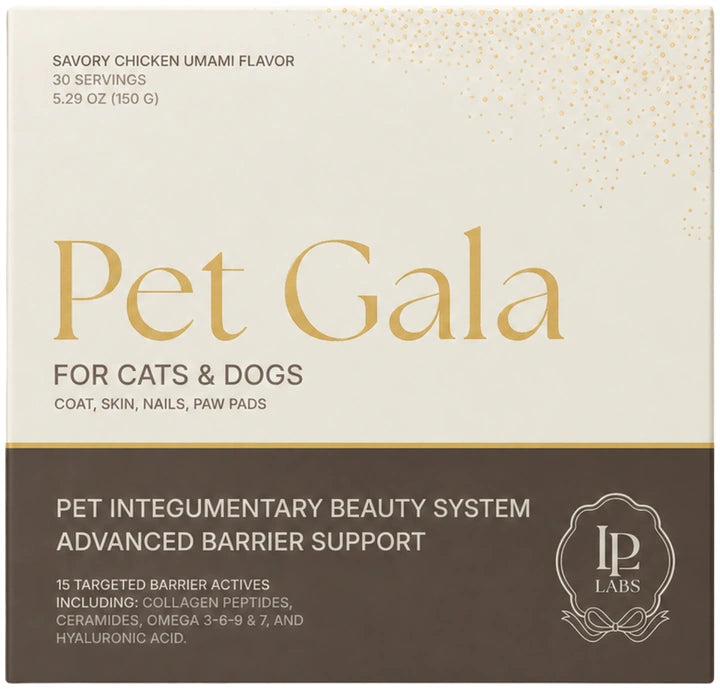
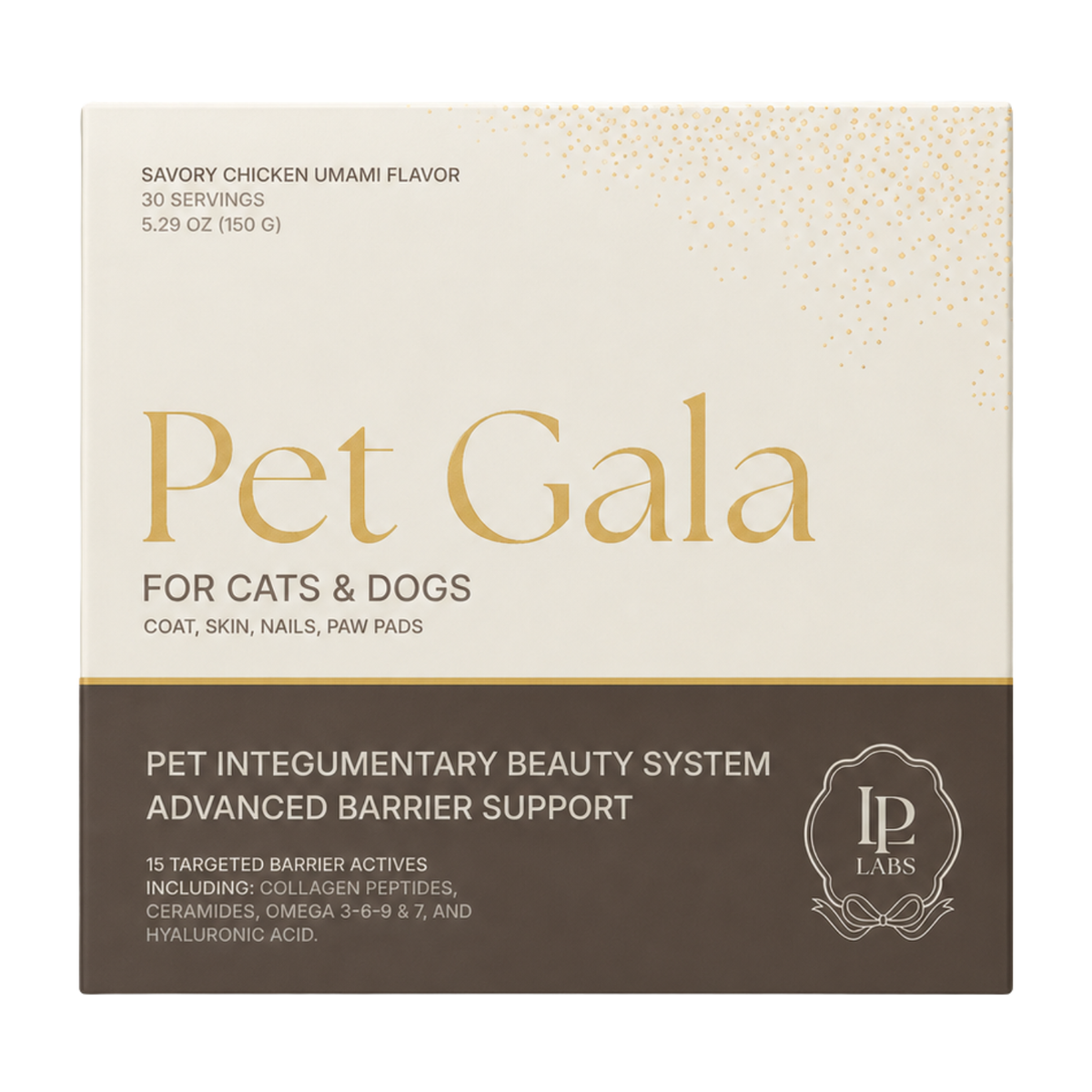
Kelp is usually fed for coat and skin, mostly for its iodine, and iodine is easy to overdo. Pet Gala goes at coat and skin a different way, with nutrients in fixed amounts: 50 mcg of biotin, 1.5 mg of zinc and 150 mg of omega 3-6-9 per sachet. Marine collagen, ceramides, hyaluronic acid and 7 more actives make up the rest, and every amount is printed on the label.

Pet Gala is a supplement: daily skin, coat and nail nutrition in a powder you stir into food. Dogs under 7 lb get half a sachet, dogs from 7 to 30 lb get one, and dogs over 30 lb get two. It hasn't been tested for thyroid health or for cleaning teeth, so it's no stand-in for a dental product or a vet visit.

If coat and skin are what you're feeding for, see the full Pet Gala formula and serving guide.

The species matters more than the name on the front of the bag.

Educational content only. This material is not a substitute for veterinary advice. Always consult your veterinarian about your dog’s specific needs. These statements have not been evaluated by the Food and Drug Administration. Products mentioned are not intended to diagnose, treat, cure, or prevent any disease.

Glossary

Kelp: Brown seaweed, usually sold dried as a powder or supplement.

Ascophyllum nodosum: The brown seaweed used in dental powders and treats for dogs.

Iodine: A mineral the thyroid gland needs to make its hormones.

Hypothyroidism: An underactive thyroid, a common hormone problem in dogs.

Plaque and tartar: The film and the hard deposit that build up on teeth.

VOHC seal: The Veterinary Oral Health Council's mark for products accepted for plaque or tartar claims.

Related Reading

References

Numbered references identify the sources used for specific claims. Read the study design, species and evidence boundaries alongside each finding.

FAQ

Can dogs eat nori or seaweed snacks?

Plain nori is fine as an occasional snack. The American Kennel Club's chief vet says dogs can eat processed seaweed sheets as long as they have no added salt or garlic. Check the ingredient list first, and keep the pieces small.

Does Pet Gala contain kelp or seaweed?

No. Pet Gala has no kelp or seaweed in it. It supplies biotin, zinc, omega fatty acids and other skin and coat nutrients, with every amount printed on the label.

Will kelp fix my dog's bad breath?

A seaweed dental treat lowered the sulfur gases behind bad breath in a 60-dog trial, after the dogs' teeth were cleaned. Breath that stays bad can point to gum disease or another illness, so have your vet look before you rely on kelp.

Can kelp replace thyroid medicine for a dog with low thyroid?

No. The FDA says there is no cure for hypothyroidism in dogs, and that dogs are treated for life with thyroid hormone replacement. Kelp only supplies iodine. Never stop a prescribed medicine to try it.

My dog ate seaweed on the beach. What should I do?

Call your vet right away. Wild seaweed can carry a lot of salt, long strands can lodge in the gut, and dried seaweed can swell in the stomach. Watch for vomiting, diarrhea and weakness.

How long does a seaweed dental product take to work?

In the 60-dog trial, tartar scores were lower at 30 days and plaque scores were lower by day 90. One maker says most users see changes within 3 to 8 weeks. Either way, it takes daily use.

Can puppies have kelp?

Ask your vet first. In one study, 18 puppies fed high-iodine diets ended up with lower thyroid hormone levels, and kelp is a concentrated source of iodine. Iodine deficiency is rare on complete and balanced puppy food.

Is kombu or cooking kelp okay for dogs?

Kombu is one of the most iodine-rich seaweeds. In a Norwegian survey it averaged 2,276 mcg of iodine per gram, and the food regulator for Australia and New Zealand warns that kombu can hold very high levels. A kitchen pinch can't be measured, so skip it.

Is kelp good for older dogs?

We found no kelp study in senior dogs. Low thyroid is most often seen in middle-aged and older dogs, and its signs can pass for aging: weight gain, a dull coat and thinning hair. Ask for a thyroid test before adding kelp.

Black-and-white dog between a bowl of food and a Pet Gala box held in a person's hands

Discover LPL-01: How This Fits Into a Complete Canine Integumentary Support System

Skin, coat, and nails aren’t cosmetic features. They’re the visible surface of deeper biological systems—barrier function, hydration balance, structural protein turnover, and lipid integrity—working in concert.

When these systems fall out of sync, it shows: dull coat, shedding, dryness, brittleness, sensitivity.

This article explores one piece of that puzzle. If you want to understand how true coat quality and skin resilience are built—and what actually moves the needle—you need to zoom out.

Start with the underlying science:

Keep exploring

What would you like to understand next?

Search practical guides about skin, coat, barrier health, ingredients, and daily care for dogs.