




5 Coat Warning Signs of Illness in Dogs & Cats
Read full insightKelp and Seaweed for Cats
By La Petite Labs Editorial 12 min read
As Seen On

15 science-backed barrier actives
Contents +
Kelp and seaweed appear to be tolerated by healthy cats in small, measured amounts, but a cat with an overactive thyroid should skip them. What kelp mainly adds is iodine, and iodine deficiency is rare in cats on complete food.14 One seaweed powder is accepted for plaque and tartar claims in cats.3
This guide covers how much iodine a cat needs, what the thyroid studies show, what seaweed can do for teeth, and which cats should have none.
- What it is: Dried seaweed, sold for cats as dental powders and food toppers.
- What it adds: Iodine. A one-year study put an adult cat's need at about 0.46 mg per kg of food.5
- Thyroid: An overactive thyroid is common in older cats. Its cause is unknown, and no single food factor has been identified.10, 9
- Teeth: One seaweed powder is on the Veterinary Oral Health Council list for plaque and tartar in cats.3
- Side effects: Loose stools at the start are the one a maker reports.4
- Skip it if: Your cat has an overactive thyroid or eats an iodine-restricted food. Ask your vet first for any cat over 7.
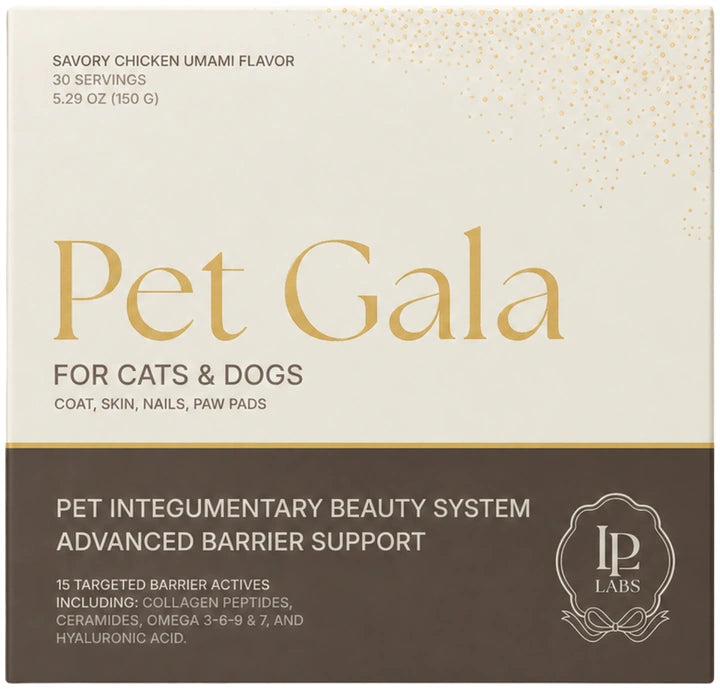
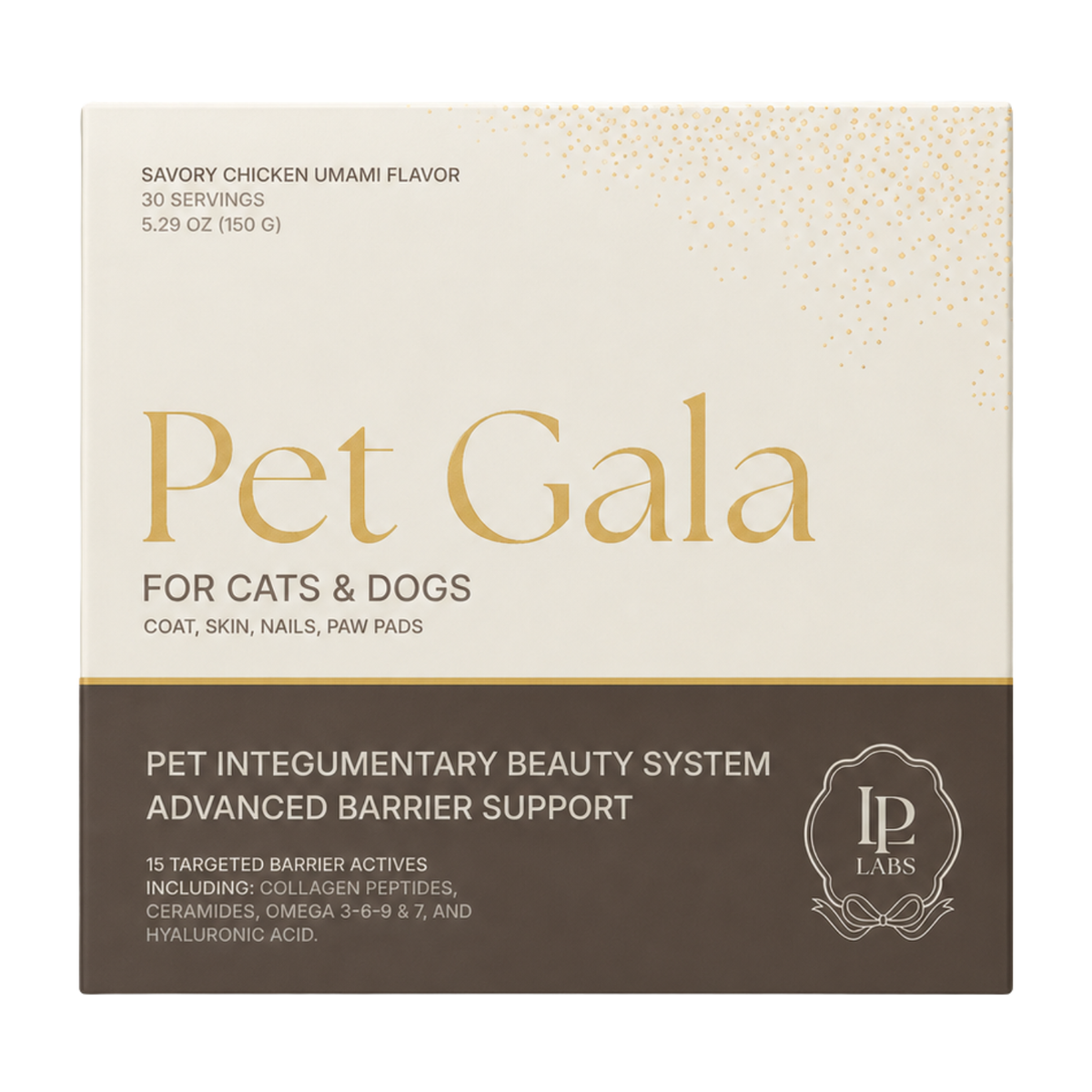
- In Pet Gala: No. There's no kelp or seaweed in Pet Gala. It's a daily nutrition powder for skin, coat and nails.
What is kelp, and why is it in cat products?
Kelp is brown seaweed, dried and ground, and it turns up in cat products for two reasons: iodine and teeth.
Seaweeds and kelps are marine algae large enough to see, and some species are very rich in iodine.12 That makes kelp a concentrated natural source of the mineral.
The second reason is dental. One brown seaweed, Ascophyllum nodosum, is the active ingredient in a powder that's mixed into food to slow plaque and tartar.4, 1
Seaweed is a broad word, though. Nori is the thin sheet that wraps sushi rolls, and kombu, a food seaweed, can hold very high levels of iodine.12, 15 For a cat, the species and the iodine count tell you more than the word on the front of the pack.
Is seaweed good for cats? What does kelp add?
Seaweed gives a cat iodine and, in one specific form, some help against plaque. That is the list with evidence behind it.
Iodine is essential, because the thyroid builds both of its hormones from it.11 A cat doesn't need kelp to get enough. Iodine deficiency is rare in cats fed complete and balanced food.14
The dental benefit belongs to one seaweed and a few products, covered below. Two small trials also mixed processed seaweed powders into the food of cats and kittens and reported better gut and coat measures.13, 16 Both used specially processed seaweed, so they say little about a jar of plain kelp.
How much iodine does a cat need?
A cat needs very little iodine, with or without kelp in the bowl. The best estimate comes from a one-year feeding study of 42 healthy adult cats. It tested seven iodine levels and put the requirement at about 0.46 mg of iodine per kg of food, on a dry-matter basis.5
That figure sat between two official numbers of the time: 0.35 mg per kg from the Association of American Feed Control Officials, and 1.4 mg per kg from the National Research Council's 2006 report.5
How much iodine do cats already get from food?
Cats already get iodine from their food before any kelp is added, and the amount varies more than most owners would guess. Researchers measured 112 commercial cat foods from across the United States and worked out what a 4.5 kg adult cat would take in.6
Among canned foods, daily iodine intake ran from about 49 to 9,639 mcg.6 The authors urged makers to ensure adequate iodine across all their products.
So kelp lands on top of an unknown baseline. One maker of a seaweed dental powder says a 330 mg scoop holds about 0.198 mg of iodine, which is 198 mcg.4 By our arithmetic, that is about four times the daily iodine from the lowest canned food in the survey.
Can kelp cause hyperthyroidism in cats?
We found no study linking kelp to hyperthyroidism in cats. The disease is common in middle-aged and older cats, and its cause is not known.10 Cornell's Feline Health Center lists deficiencies or excesses of certain compounds in the diet as possible contributors, along with thyroid-disrupting chemicals in food and the environment.10
A 2015 review of the food theories reached the same point. No causative factor has been identified, and diet's role is still debated.9
Iodine sits inside that debate. One research group suggests that a diet low in iodine at first and too high later may push the thyroid toward disease.6 It's a theory. It is still a fair reason to keep a cat's iodine intake steady, and an unmeasured spoon of kelp does the opposite.
A hyperthyroid cat must avoid kelp because iodine is the raw material its overactive gland runs on.
What do feeding studies show about iodine and a cat's thyroid?
Feeding studies show that a cat's thyroid reacts to iodine within weeks and then adjusts. None of them fed kelp. They tested iodine in food, which is what kelp delivers.
- Two weeks: 10 young cats were switched between high, medium and low iodine foods every two weeks. Free thyroid hormone in the blood moved the opposite way to iodine intake each time.7
- Five months: the same research group then fed cats high or low iodine diets for five months. Hormone levels showed no significant difference between the diets.8
- One year: 42 cats ate diets from 0.17 to 8.8 mg of iodine per kg with no significant change in weight gain or clinical signs.5
The five-month authors drew a careful conclusion. A cat can hold normal hormone levels through long spells of high or low iodine, they wrote, and the constant adjusting may lead to thyroid disease in cats that are prone to it.8
Why must a hyperthyroid cat avoid kelp?
A hyperthyroid cat must avoid kelp because iodine is the raw material its overactive gland runs on. One treatment is a prescription food with severely restricted iodine. Most cats fed only that food return to normal thyroid levels in 8 to 12 weeks.11
The food works only if nothing else goes in the bowl. The Merck Veterinary Manual warns that even tiny amounts of iodine from other foods or treats can make the diet fail.11
The maker of a seaweed dental powder gives matching advice: avoid it in hyperthyroidism, because seaweed contains iodine.4 If your cat takes thyroid medicine, ask your vet before adding any seaweed. Our guide to methimazole for cats covers that route.
Does seaweed powder clean a cat's teeth?
Seaweed powder can slow plaque and tartar on a cat's clean teeth, and the proof is thinner than it is for dogs. A 2023 review concluded that Ascophyllum nodosum cuts plaque and tartar build-up in both species, with powder as the strongest form.1
The cat data behind that are modest. An early 42-day study of dogs and cats, run after a dental cleaning, found a more than two-fold improvement in oral health scores compared with control animals. It was neither randomized nor blinded.2
Only one study has tried seaweed against dental disease that was already present. It was a cat study, and it found nothing in the seaweed's favor.1
One seaweed powder is on the Veterinary Oral Health Council's accepted list for cats, with plaque and tartar claims.3
Does kelp help a cat's coat or claws?
Kelp has no cat study behind its coat or claw claims that we could find. The nearest evidence is an 8-week trial of a fermented seaweed powder made from another species, Kappaphycus alvarezii.13
Cats given the powder scored better than control cats on coat quality and several other measures, and none had adverse effects. The authors called the work preliminary and said the sample size should be larger.13
A coat that turns greasy, matted or unkempt in an older cat is another matter. Those are signs of an overactive thyroid, so the first step is a blood test.10 Our guides to coat changes with hyperthyroidism in cats and cat nail health cover both.
Is kelp safe for cats? What are the side effects?
Kelp is safe for most healthy adult cats in small, measured amounts. In a one-year study, healthy cats ate a wide range of iodine levels with no significant change in clinical signs.5 Reported side effects are few.
- Loose stools: a seaweed powder maker says some cats get loose stools when the product is first added, and advises starting with less.4
- Excess iodine: hard to spot from the outside. A cat's thyroid adjusts to a high intake, and what years of that adjusting do is the open question.8
- Seasoned snacks: check seaweed snacks made for people for salt, onion and garlic. Onion and garlic can damage red blood cells, and cats are more susceptible than dogs.17
- Risky species: kombu can hold very high levels of iodine, and hijiki can carry inorganic arsenic.15
Processed seaweed has been fed in two short trials. In the 8-week study, cats on a fermented seaweed powder had no adverse effects.13 A 4-week study of 30 Ragdoll kittens mixed a seaweed powder into one group's food, and that group's gut health measures improved.16
Stop the kelp and call your vet if your cat vomits, stops eating or loses weight.
Feeding studies show that a cat's thyroid reacts to iodine within weeks and then adjusts.
DVM Voice: Clinical Vignette of When Skin Changes Point Deeper Than the Surface
Case provided by Sarah Calvin, DVM
Maverick, a 4-year-old Siamese cat, was brought in for hair loss across his lower abdomen and red, flaky skin lesions that had progressed over the previous month. His owners were unsure whether he was itchy or overgrooming.
Examination showed broken hairs, abdominal alopecia, and lesions consistent with bacterial skin infection. Further testing ruled out fleas, FeLV/FIV, and common fungal causes. Because his grooming pattern suggested deeper discomfort, his veterinarian continued the workup.
Radiographs and urinalysis revealed bladder stones, crystalluria, and blood in the urine. Maverick’s overgrooming was linked to urinary pain — a case where skin changes were secondary to an internal problem.
His care required a staged plan: stabilizing the skin infection, surgically removing the bladder stones, managing pain, transitioning to a therapeutic diet, and supporting skin-barrier recovery with appropriate nutrition and fish oil.
Hair regrowth began by 8 weeks. By 6 months, his coat had fully recovered, with no recurrence after the urinary issue was resolved.
Clinical takeaway: Maverick’s case shows why feline coat loss and overgrooming deserve careful veterinary investigation. Skin and coat health can reflect pain, stress, nutrition, infection, barrier weakness, or internal disease — not just surface-level grooming behavior.
Single-case vignette. Not generalizable. Veterinary diagnosis and oversight are essential for overgrooming, hair loss, skin lesions, urinary signs, pain, or suspected infection.
How much kelp powder can a cat have?
We found no official recommended amount of kelp for cats. These are the numbers that exist.
- Iodine need: about 0.46 mg per kg of food, on a dry-matter basis, in adult cats.5
- One scoop: a 330 mg scoop of one seaweed dental powder holds about 0.198 mg of iodine, by the maker's figure.4
- Cooking kelp: kombu sold for people averaged 2,276 mcg of iodine per gram in a Norwegian survey.12
None of these is a recommendation for your cat. Use a product made for cats, follow its serving by weight, and give it daily. The maker says results come from consistent use, usually within 3 to 8 weeks.4 Never guess with kelp from the kitchen.
Which form is best: powder, treats or nori?
Seaweed for cats comes mainly as a powder, and powder is the form with the best support. The 2023 review ranked powder first for slowing plaque, then dental bites, then dry food with seaweed added.1
- Dental powder: mixed into food. The seaweed product accepted for cats is a powder.3
- Dental bites and treats: easier to give, and ranked behind powder in the review.1
- Nori: a snack. If you share it, choose plain sheets with no salt, onion or garlic.17
Whatever the form, it only counts if your cat eats it. Stir a new seaweed powder into a small portion first, so a refused meal doesn't cost a whole day's food.
What should you look for on a seaweed label for cats?
A seaweed product for cats should answer four questions on its label.
- Which species? A Latin name, such as Ascophyllum nodosum.
- How much iodine per serving? A figure in mcg. In a survey of 96 seaweed products sold for people, most supplements held less iodine than they declared.12
- Is it made for cats? A cat serving, by weight, printed on the pack.
- Does it hold a dental seal? For plaque or tartar claims, check the Veterinary Oral Health Council list.3
If the maker can't tell you the iodine content, choose another product. Our comparison of Solid Gold SeaMeal, a kelp-based powder, with a cat system shows how one label reads.
Which cats should skip kelp? Seniors, kittens and thyroid cats
Some cats should have no kelp at all, and others need a vet's check first.
- Hyperthyroid cats: skip it. On an iodine-restricted food, any extra iodine can undo the treatment.11
- Cats treated with radioactive iodine: ask your vet. Up to 50% of these cats develop some degree of low thyroid function afterward, so the plan is individual.10
- Seniors: hyperthyroidism is most common in cats over the age of 7.11 Have the thyroid tested before starting a seaweed product.
- Kittens: the one kitten trial we found ran for 4 weeks and looked at gut health.16 Ask your vet before giving kelp to a kitten.
- Cats on homemade diets: iodine deficiency can appear on high-meat diets and on diets that contain saltwater fish.14 Have a veterinary nutritionist choose the iodine source and the amount. Our guide to supplements for homemade cat food explains the gaps.
Healthy adult cats on complete food have no need for kelp. If you use a seaweed powder for teeth, tell your vet, so thyroid results are read with it in mind.
Is kelp different for cats and dogs?
Kelp is the same ingredient for cats and dogs, and the risks are not the same.
- Thyroid disease: hyperthyroidism is a common disease of middle-aged and older cats, and iodine is what an overactive gland uses to make hormone.10 The seaweed powder maker tells owners to avoid its product in hyperthyroidism.4
- Evidence: seaweed dental treats were tested in a randomized, double-blind trial of 60 dogs.2 Cats have a smaller body of unblinded work and one accepted product.2, 3
- Body size: a scoop measured for a dog is a far larger share of a cat's daily iodine.
Don't give a cat a dog's seaweed product unless the label lists cats. Our guide to kelp and seaweed for dogs covers the canine evidence.
What can you use instead of kelp for a cat's teeth and coat?
Kelp is optional for both jobs, and each has other routes.
For teeth, the Veterinary Oral Health Council's accepted list for cats covers dental diets, water additives, toothbrushes and wipes, and edible treats.3 Your vet can match one to your cat. Tartar that's already there needs a professional cleaning.
For coat, start with the food. A dry, scaly, dull coat is a sign of too little essential fatty acid, which is extremely rare on complete and balanced diets.14 Fatty acids, zinc and biotin are nutrients commonly sold for coat. Our own skin and coat powder, Pet Gala, provides these three in fixed amounts.
Our guides to omega 3-6-9 for cats, biotin for cats and zinc for cats explain each, and our guide to cat hair growth supplements compares the options.
When should you see the vet about thyroid or teeth?
See the vet before trying kelp if your cat shows signs of thyroid or dental trouble. The most common thyroid signs are weight loss, a bigger appetite, and more thirst and urination. Vomiting, diarrhea, hyperactivity and a scruffy coat can follow.10
Mouth signs matter as much:
- bad breath that doesn't clear;
- drooling, pawing at the mouth or dropping food;
- red gums, or a sudden preference for soft food.
A seaweed powder is for clean, comfortable teeth. A sore mouth needs an exam first.
Hyperthyroidism is most common in cats over the age of 7, so ask for a thyroid check at routine visits if an older cat is on a seaweed product.11
Is kelp or seaweed in Pet Gala?
No. There is no kelp and no seaweed in Pet Gala.
Kelp is mostly fed for coat and skin, and what it brings is iodine, which is easy to overdo in a small animal. Pet Gala takes the measured route to the same goal. Each sachet lists 50 mcg of biotin, 1.5 mg of zinc and 150 mg of omega 3-6-9, along with marine collagen, ceramides, hyaluronic acid and 7 more actives.
The product is daily nutrition for skin, coat and nails, made as a powder you stir into food. Cats under 7 lb get half a sachet, and cats from 7 to 30 lb get one.
Pet Gala is a supplement. It has not been tested for thyroid conditions or dental disease, and it is no replacement for a vet's care for either.
For every amount and the serving guide, see the Pet Gala formula page.
A seaweed powder is for clean, comfortable teeth.
Educational content only. This material is not a substitute for veterinary advice. Always consult your veterinarian about your cat’s specific needs. These statements have not been evaluated by the Food and Drug Administration. Products mentioned are not intended to diagnose, treat, cure, or prevent any disease.
Glossary
Kelp: Brown seaweed, usually sold dried and ground.
Ascophyllum nodosum: The brown seaweed used in dental powders for cats and dogs.
Iodine: A trace mineral the thyroid uses to build its hormones.
Hyperthyroidism: An overactive thyroid gland, common in middle-aged and older cats.
Iodine-restricted diet: A prescription food with very little iodine, used to manage hyperthyroidism.
VOHC: The Veterinary Oral Health Council, which accepts products for plaque or tartar claims.
Related Reading
Common Feline Integumentary Issues
• Cat Dandruff
• Why Is My Cat Shedding So Much
• Cat Hair Loss
Comfort & Recovery
• Skin & Coat Supplements for Cats
• Cat Nail Supplement
• Best Supplements for Cat Shedding
Ingredient-Level Articles
• Biotin for Cats
• Silica for Cats
• Hyaluronic Acid for Cats
• Ceramides for Cats
References
Numbered references identify the sources used for specific claims. Read the study design, species and evidence boundaries alongside each finding.
- [1]
- [2]
- [3]
- [4]
- [5]
- [6]
- [7]
- [8]
- [9]
- [10]
- [11]
- [12]
- [13]
- [14]
- [15]
- [16]
- [17]
FAQ
Can cats eat nori or dried seaweed snacks?
A small piece of plain nori is a snack, with no proven benefit for a cat. Read the pack first. Seaweed snacks made for people can contain salt, onion or garlic, and cats are more susceptible than dogs to onion and garlic.
Does Pet Gala contain kelp or seaweed?
No. Pet Gala is made without kelp or seaweed. It provides biotin, zinc, omega fatty acids and other skin and coat nutrients, and each amount is printed on the label.
Can I give my cat the dog's kelp powder?
Only if the label lists cats and gives a cat serving. A dog's serving is set for a dog's body weight, and kelp's iodine comes with it. Seaweed dental powders made for cats exist, so use one of those.
Does the VOHC seal mean seaweed powder is safe for a hyperthyroid cat?
No. The seal covers plaque and tartar claims only. The maker of a seaweed dental powder says to avoid it in hyperthyroidism, because seaweed contains iodine.
Will kelp remove the need for a dental cleaning?
No. Seaweed powder is recommended after a cleaning, to slow the return of plaque and tartar. The one study that tried it on existing dental disease, in cats, found no benefit.
How long does seaweed powder take to work on a cat's teeth?
The maker says most users see cleaner teeth and fresher breath within 3 to 8 weeks of daily use. The early study of dogs and cats ran for 42 days. Keep up dental checkups either way.
Can kittens have kelp?
Ask your vet first. One 4-week trial in 30 Ragdoll kittens fed a processed seaweed powder to one group and reported better gut health. It tells us little about plain kelp or about iodine, and iodine deficiency is rare on complete kitten food.
Is kelp good for senior cats?
Rarely worth it. Hyperthyroidism is most common in cats over the age of 7, and kelp adds iodine to the picture. If an older cat has tartar or a dull coat, start with a vet visit and a thyroid test.
My cat takes methimazole. Can she have kelp or seaweed powder?
Ask your vet before you add it. Anti-thyroid medicine works by reducing how much thyroid hormone the gland makes, and seaweed adds iodine, the raw material for that hormone. One seaweed powder maker says to avoid its product in hyperthyroidism.
Discover LPL-01: How This Fits Into a Complete Feline Integumentary Support System
Skin, coat, and nails in cats are not surface traits. They reflect deeper biological systems—barrier integrity, hydration dynamics, lipid balance, and structural protein turnover—working in coordination.
When these systems drift, the signs are subtle but telling: reduced coat softness, increased shedding, dryness, brittle claws, changes in grooming behavior.
This article explores one piece of that system. If you want to understand how true coat quality and skin resilience are built in cats—and what actually drives visible improvement—you need to zoom out.
Start with the underlying science:
- Feline Skin & Coat Framework →
A structured view of how skin, coat, and claw health are maintained across collagen synthesis, lipid nourishment, and barrier function. - Barrier Protection Coverage Modeling →
A systems-level map of which integumentary pathways are most vulnerable—and how layered nutritional inputs can support them. - 2026 Market Research: Best Cat Skin & Coat Supplements →
A feline-focused review of skin and coat formulas shaped by grooming behavior, barrier resilience, coat softness, ingredient quality, and daily usability. - LPL-01 Standard →
The formulation system that translates these models into real-world supplementation—covering multiple pathways in a coordinated way.
Keep exploring
What would you like to understand next?
Search practical guides about skin, coat, barrier health, ingredients, and daily care for cats.
Essential Summary
What should a cat owner know about kelp?
Kelp's main contribution is iodine, and iodine deficiency is rare in cats on complete food.
Cats with an overactive thyroid should avoid kelp and seaweed products.
One seaweed powder is accepted for plaque and tartar in cats, for use on clean teeth.

Pet Gala™ Skin & Coat Supplement for Cats
15 science-backed barrier actives in every sachet
Skin, coat, paw and nail support
60-day first-box guarantee
The scratching is completely gone, his coat looks healthy and shiny!
— Lena
He was struggling with itching, now he's glowing.
— Grace
Caring for a cat's skin and coat day to day?
Fixed amounts, printed on the label.
Pet Gala gives 50 mcg of biotin, 1.5 mg of zinc, 150 mg of omega 3-6-9 and 10 more skin and coat actives in each daily sachet. It has no kelp or seaweed in it.

Pet Gala™ Skin & Coat Supplement for Cats
15 science-backed barrier actives in every sachet
Skin, coat, paw and nail support
60-day first-box guarantee
Learn about how our DVMs think about the feline barrier
Dr. Sarah Calvin DVM

Pet Gala™ Skin & Coat Supplement for Cats
15 science-backed barrier actives in every sachet
Skin, coat, paw and nail support
60-day first-box guarantee
Explore the visible signs of whole-body wellness
Related Reading
Kelp adds iodine that complete cat food already supplies. See what a 42-cat study found, why thyroid cats must avoid it, and what the dental seal covers.


