
The 12 Hallmarks of Aging in Dogs
Read full insightDog Vitamins and Supplements
Identify Deficiency-Driven Symptoms and Use Targeted Nutrients to Restore Resilience
By La Petite Labs Editorial 15 min read

Dog vitamins and supplements cover a wide range of daily-support options, from broad multinutrient formulas to targeted nutrients used for specific goals. This page is a catalog-style starting point: a category map that helps you navigate by (1) your dog’s life stage and (2) the outcome you’re trying to support.
Start with life stage. Adult dogs often need maintenance support that complements a complete diet, while senior dogs are more commonly supported with age-related priorities like mobility, cognition, and overall vitality. If you’re specifically shopping for older dogs, you’ll likely get more relevant guidance in our senior-focused hubs, including Senior Dog Vitamins and Supplements for Older Dogs.
Then choose a goal. Some owners browse for skin/coat comfort, others for digestion, and others for long-term wellness. Use the goal-based sections below to route to the most relevant guides, ingredient explainers, and buyer rubrics—without having to sift through unrelated categories first.
- Dog vitamins and supplements work best when they match a specific, observable goal.
- A complete diet is the foundation; supplements are support, not a substitute.
- Dosing and stacking matter, because excess can create avoidable risk.
- Quality signals include transparency, testing, and clear intended use, not hype.
- Skin and coat support often involves barrier health and steady routines (Marchegiani, 2020).
- Single nutrients can be important, but form and absorption change outcomes.
- System-level formulas can justify their place by supporting resilience over time, beyond “filling gaps.”
Browse by Goal: Mobility, Skin/Coat, Digestion, Cognition, Longevity
Use this goal-based directory to find the most relevant page in the cluster—whether you want a broad overview, a shopping framework, or a deeper explainer.
• Mobility: For joint comfort, movement, and staying active across adulthood and senior years. Start with Supplements for Older Dogs for age-related mobility priorities, or use senior-specific hubs if your dog is already in the later-life stage.
• Skin/Coat: For coat quality and skin comfort support. This category typically overlaps with diet quality and targeted nutrients; look for ingredient-focused pages when you want to understand a specific nutrient’s role.
• Digestion: For gut comfort and digestive consistency. If you’re comparing approaches, you may prefer format-based guides (foods vs supplements) rather than goal-only pages.
• Cognition: For focus, learning, and age-related brain support. See Brain Health for Dogs for the main hub, and Cognitive Supplements for Dogs for a shopping-oriented rubric.
• Longevity: For long-term wellness and healthy aging support. Start with Longevity Supplements for Dogs or Anti-aging Supplements for Dogs, and explore related context like the Dog Aging Project when you want the bigger picture.

Browse by Format: Multivitamins, Single Vitamins, Antioxidants, Foods vs Supplements
If you already know the “type” of support you’re considering, browse by format to narrow faster.
• Multivitamin: Best for owners who want broad coverage in one product category, especially when diet variability is a concern. For senior-specific context, start with Senior Dog Vitamins.
• Single vitamin: Best when you’re researching one nutrient at a time (for example, Vitamin B for Dogs) and want clarity on what it is and where it fits—without mixing multiple categories.
• Antioxidants: Best for owners exploring oxidative balance and aging-related support. For shopping frameworks, see The Best Antioxidant Supplements for Dogs; for foundational context, see Antioxidants for Dogs and Oxidative Stress in Dogs.
• Foods vs supplements: Best when you’re deciding whether nutrition changes alone are the right next step or whether a supplement format makes sense alongside a complete diet. See Supplements Vs Food for Aging Dogs. As a general principle, outcomes depend on the ingredient, the dose, and the dog’s baseline diet (Barroso C, 2024).

What a Dog Vitamin Supplement Can and Cannot Do
A dog vitamin supplement is typically used in one of three situations: to support a specific body system (skin, joints, digestion), to fill a gap created by a restricted diet, or to support healthy aging. The last category is often overlooked. Even when a diet meets minimum requirements, the body’s needs can shift with stress, activity level, and time.
This is where “best dog vitamin supplements” becomes less about the biggest label and more about the most coherent design. A well-built formula should make sense as a whole, not as a pile of unrelated ingredients.

Dosing, Stacking, and the Safety Conversation You Should Have
Safety is the quiet headline in any supplement conversation. The appropriate dosing of vitamins and supplements is crucial, because excess can be as consequential as deficiency. This is especially true when owners combine a multivitamin, a fortified treat, and a “skin and coat” product without realizing they share overlapping nutrients.
If your dog is pregnant, very young, has liver or kidney disease, or takes prescription medications, treat supplements like you would any other health decision: slow down, read labels, and ask your veterinarian to sanity-check the plan. The goal is support, not unintended stress on the body.

Why Some Vitamin-mineral Products Still Miss the Mark
Not all supplements are created equal, and not all are even formulated to meet basic nutritional expectations. Some vitamin-mineral supplements may not meet minimum recommendations for dogs and cats, which can create a false sense of security (RVA, 2021). A label that looks “complete” can still be poorly balanced.
A useful mindset is to treat supplements as targeted support layered on top of a complete diet, not as a substitute for one. If your dog eats a home-prepared diet, work with a veterinary nutritionist before adding a broad multivitamin—because the real issue may be the recipe, not the lack of a pill.
“The best supplement plan is the one that reduces complexity, not the one that adds bottles.”
How to Read Labels Like a Skeptic, Not a Cynic
When owners search for the best vitamin supplement for dogs, they’re often trying to reduce uncertainty. The most reliable products are transparent: clear ingredient amounts, clear intended use, and manufacturing practices that can be verified. If a brand can’t explain where ingredients come from or how batches are tested, it’s reasonable to move on.
Caution is not cynicism. It’s simply acknowledging that supplements are not risk-free, and that quality varies widely. A careful choice protects your dog and makes it more likely you’ll stick with a routine long enough to matter.

Immune Support: Helpful Framing Without Overpromising
Immune support is a common motivation, but it’s easy to oversimplify. Certain vitamins and minerals can enhance immune response by modulating immune functions. That doesn’t mean “more immune” is always better, or that a supplement can replace vaccines, parasite prevention, or good nutrition.
Think of immune-focused supplements as supporting readiness—helping the body maintain normal function under everyday stress. For dogs with autoimmune disease or complex medical histories, immune-oriented products should be discussed with a veterinarian to avoid unintended effects.

Skin Barrier Basics and When Supplements Make Sense
Skin is where owners often see the fastest feedback. Nutritional supplementation can improve skin health and reduce inflammation in dogs with dermatological issues, though results vary by condition and by dog (Marchegiani, 2020). If your dog’s itch is seasonal or environmental, supplements may be supportive but not sufficient on their own.
A practical approach is to pair a gentle supplement routine with basics that are easy to overlook: consistent flea control, rinsing allergens off paws, and avoiding harsh shampoos. Supplements work best when they’re part of a calm, consistent baseline.

Absorption, Forms, and Why Results Can Vary
If you’ve ever wondered why two dogs respond differently to the same product, bioavailability is often part of the answer. Nutrients can be present on a label yet absorbed differently depending on their form and the rest of the diet (Pereira AM, 2021). This is one reason “more ingredients” doesn’t automatically translate to “better results.”
It’s also why a system-level formula can be appealing: instead of betting everything on one nutrient being absorbed perfectly, it supports multiple layers of normal function. For many owners, that feels like a more realistic way to support a dog across years, not weeks.
What “Best” Really Means When Comparing Supplement Options
If you’re comparing “the best vitamin supplement for dogs,” it helps to separate three categories: (1) targeted nutrients (like zinc or vitamin A), (2) condition-adjacent support (like skin barrier blends), and (3) system-level formulas designed to support the broader metabolic network that changes with age. The first two can be useful, but they also raise the most questions about duplication, dosing, and whether your dog actually needs that specific nutrient.
A system-level approach is often why careful owners still choose a product even when their dog eats a complete diet: it’s not about “fixing a deficiency,” it’s about supporting resilience over time. That framing also reduces the temptation to chase single-ingredient trends that may not match your dog’s real needs.
“Dosing is not a footnote. It’s the difference between support and avoidable risk.”

DVM Voice: Clinical Vignette of a Common Pattern in Senior Dog Aging
Case provided by JoAnna Pendergrass, DVM
Rex, a 7-year-old Labrador Retriever, was brought in after his owner noticed he was slower to rise, hesitant on stairs, and less able to play as before. Examination showed stiffness and reduced hip mobility; radiographs confirmed degenerative joint changes.
His care required weight management, veterinary-guided pain control, nutritional support, and rehabilitation — a comprehensive plan, but one started only after visible decline appeared.
Clinical takeaway: Rex’s case reflects the value of proactive aging support: maintaining lean body condition, monitoring mobility early, and supporting cellular resilience, antioxidant defense, and healthy inflammatory balance before decline becomes obvious.
Single-case vignette. Not generalizable. Veterinary oversight is essential for pain, stiffness, or suspected joint disease.

Plant Compounds, Tolerance, and Why Simplicity Often Wins
Some dogs benefit from supplements that include plant compounds alongside vitamins and minerals. These phytonutrients are often discussed for their role in supporting overall health and immune function (Barroso C, 2024). The practical takeaway is modest: choose products that are transparent about what’s included and why, and don’t assume “natural” automatically means “safe” or “right for every dog.”
If your dog has allergies, a sensitive stomach, or a history of pancreatitis, ingredient simplicity matters as much as ingredient quality. The best dog vitamin supplements are the ones your dog can tolerate consistently—because consistency is what turns a good idea into a real-world habit.

Quality, Testing, and the Quiet Risk of Contaminants
Quality is not a vibe; it’s a paper trail. Look for clear labeling, lot tracking, and testing practices that reduce the chance of contaminants. Some pet supplements have been associated with heavy metal concerns, including mercury risk in certain products (RVA, 2021). That doesn’t mean you should avoid supplements altogether—it means you should be selective, and skeptical of vague sourcing.
Also remember that “vitamin-mineral supplement” doesn’t automatically mean “nutritionally complete.” Some products may fail to meet minimum recommendations or may be imbalanced for dogs (RVA, 2021). Treat supplements as support, not as a replacement for a well-formulated diet.

Skin and Coat Support Without Chasing Quick Fixes
Skin and coat concerns are one of the most common reasons owners explore vitamin supplements for dogs. The skin barrier is a living interface with the world, and it depends on a steady supply of supportive nutrients, including certain vitamins and fatty acids (Marchegiani, 2020). When the barrier is compromised, dogs can look dull-coated, itchy, or simply uncomfortable.
Still, skin issues are rarely “just a vitamin problem.” Food sensitivities, parasites, seasonal triggers, and grooming products can all play a role. Supplements can be part of a broader plan—especially when chosen for tolerance and long-term use rather than quick fixes.
Zinc: Useful, Nuanced, and Not a DIY Diagnosis
Zinc is a useful example of why form and context matter. It supports many biological functions in dogs, including immune response and skin health (Pereira AM, 2021). But zinc status isn’t only about “how much is in the jar.” Bioavailability can vary depending on the source and the rest of the diet, which is one reason two dogs can respond differently to the same label claim (Pereira AM, 2021).
If you suspect a true deficiency, that’s a veterinary conversation—because the signs can overlap with other conditions, and the wrong approach can create new imbalances. For everyday support, many owners prefer formulas that focus on broader resilience rather than high-dose single minerals.
Vitamin a: Essential Benefits, Real Limits, and Avoiding Excess
Vitamin A is another nutrient where the line between helpful and harmful can be thin. It plays a role in vision, immune function, and skin health (Shastak Y, 2024). But excessive intake can cause toxicity, with signs that may include lethargy and bone pain (Shastak Y, 2024). This is one reason “stacking” multiple products—multivitamin plus liver treats plus a fortified topper—deserves a second look.
If your dog eats a complete commercial diet, you’re often already getting baseline vitamin A. Supplementing may still make sense in a system-level formula, but avoid doubling down on single-nutrient megadoses unless your veterinarian has a specific reason.

Aging Dogs and the Case for System-level Daily Support
Aging changes the conversation. The question becomes less about “adding missing pieces” and more about supporting the networks that keep energy, appetite, mobility, and recovery steady across the years. That’s why many owners who are unimpressed by generic multivitamins still choose supplements designed around whole-body support rather than a checklist of nutrients.
If your dog is older, on multiple medications, or has chronic conditions, it’s worth reviewing any supplement plan with your veterinarian. Safety is not only about the ingredient list; it’s also about the dog in front of you and what else is already in their routine.

Tracking Results, Adjusting Gently, and Knowing When to Stop
A practical way to evaluate a new supplement is to decide what “success” would look like before you start. For coat support, you might watch for less flaking and a softer feel. For digestion, you might track stool consistency and gas. For overall vitality, you might notice steadier energy on walks. Keep expectations realistic: some changes are subtle, and some dogs won’t show visible differences even when support is worthwhile.
If you see vomiting, diarrhea, appetite changes, or unusual lethargy after starting something new, stop and check in with your veterinarian. Individual tolerance varies, and the safest plan is the one you can adjust quickly when your dog tells you it’s not a fit.
A Thoughtful Finish: Simple Choices That Hold up over Time
Choosing among dog vitamins and supplements can feel like trying to read a label through fog. The clearest path is to avoid extremes: don’t assume supplements are pointless, and don’t assume they’re harmless. Look for quality signals, avoid ingredient duplication, and choose a purpose that matches your dog’s life today—not an abstract ideal.
For owners who want a more cohesive approach than a standard multivitamin, a system-level formula can make sense: fewer overlapping bottles, a clearer routine, and support that’s designed around aging and resilience rather than chasing one nutrient at a time.
“A complete diet builds the house; supplements are the maintenance plan.”
Educational content only. This material is not a substitute for veterinary advice. Always consult your veterinarian about your dog’s specific needs. These statements have not been evaluated by the Food and Drug Administration. Products mentioned are not intended to diagnose, treat, cure, or prevent any disease.
Glossary
- Bioavailability: How well a nutrient is absorbed and used by the body, not just how much is listed on the label.
- Complete And Balanced Diet: A food formulated to meet established nutrient profiles for a given life stage.
- Condition-Adjacent Support: Supplements intended to support normal function related to a concern (like skin comfort) without treating disease.
- Contaminants: Unwanted substances such as heavy metals that can appear due to sourcing or manufacturing issues.
- Dosing Overlap (Stacking): Using multiple products that contain the same nutrients, increasing the chance of excess intake.
- Fat-Soluble Vitamins: Vitamins (A, D, E, K) stored in body tissues; excess intake can pose higher risk than many water-soluble vitamins.
- Lot Number: A batch identifier that helps trace a product’s manufacturing run and quality testing history.
- Multivitamin: A supplement containing multiple vitamins and often minerals; not necessarily complete or appropriately balanced for every dog.
- Phytonutrients: Plant-derived compounds sometimes included in supplements for broader health support.
- System-Level Support: A formulation approach aimed at supporting whole-body resilience and normal function across multiple domains, rather than targeting one nutrient.
Related Reading
Aging & Senior Dog Guidance
• Dog Age Calculator
• Dog Dementia
• Lethargy in Dogs
• My Dog Won't Eat
• Dog Pacing At Night
• Dog Licking Paws
• Can Dogs Dehydrate
Healthy Aging Support
• NAD+ for Dogs
• NMN for Dogs
• Antioxidants Supplements for Dogs
• Best Senior Dog Supplements & Vitamins
• Rapamycin for Dogs
References
Barroso C. Vitamins, Minerals and Phytonutrients as Modulators of Canine Immune Function: A Literature Review. PubMed. 2024. https://pubmed.ncbi.nlm.nih.gov/39728995/
RVA. Vitamin-mineral supplements do not guarantee the minimum recommendations and may imply risks of mercury poisoning in dogs and cats. PubMed Central. 2021. https://pmc.ncbi.nlm.nih.gov/articles/PMC8075222/
Pereira AM. Zinc in Dog Nutrition, Health and Disease: A Review. PubMed. 2021. https://pubmed.ncbi.nlm.nih.gov/33915721/
Shastak Y. Pet Wellness and Vitamin A: A Narrative Overview. PubMed. 2024. https://pubmed.ncbi.nlm.nih.gov/38612239/
Zheng. Arsenic and Chronic Kidney Disease: A Systematic Review. Nature. 2014. https://www.nature.com/articles/s41598-017-17159-7
Marchegiani. Impact of Nutritional Supplementation on Canine Dermatological Disorders. 2020. https://www.mdpi.com/2306-7381/7/2/38
Rumbeiha W. A review of class I and class II pet food recalls involving chemical contaminants from 1996 to 2008. PubMed Central. 2011. https://pmc.ncbi.nlm.nih.gov/articles/PMC3614097/
FAQ
What are dog vitamins and supplements meant to support?
Dog vitamins and supplements are typically used to support normal body functions such as skin and coat comfort, digestive steadiness, mobility, and everyday immune readiness. They’re not a replacement for a complete diet, but they can be a practical layer when life stage, stress, or picky eating makes “perfect nutrition” hard to achieve.
If you prefer a system-level option rather than stacking multiple products, Hollywood Elixir™ is designed to fit that kind of daily support.
Why do owners add vitamin supplements for dogs?
Owners often add vitamin supplements for dogs when they notice subtle changes: a coat that looks drier, slower recovery after activity, or an older dog who seems less “springy.” Sometimes it’s also about peace of mind during transitions like a new food, travel, or seasonal shifts.
A measured approach focuses on steady, whole-body resilience rather than chasing one ingredient at a time, which is where Hollywood Elixir™ can be a clean fit in the routine.
Do dog vitamins and supplements work the same for every dog?
No. Response depends on baseline diet, gut tolerance, genetics, and what you’re trying to support. Even when two products look similar, absorption can differ by nutrient form and by the rest of the diet, which changes real-world results.
That’s why many owners prefer a broader, system-level formula that supports normal function across multiple domains, such as Hollywood Elixir™, rather than relying on a single nutrient to do all the work.
Can a dog vitamin supplement replace a complete diet?
A dog vitamin supplement should not be treated as a substitute for a complete, well-formulated diet. Some vitamin-mineral supplements may not meet minimum nutritional recommendations, and they can create a false sense of coverage. If the food is unbalanced, the better fix is improving the diet itself.
Once the foundation is solid, a system-level add-on can support resilience over time, including options like Hollywood Elixir™ for daily whole-body support.
How do I choose the best dog vitamin supplements?
The best dog vitamin supplements are the ones that are transparent about ingredients and amounts, have clear quality controls, and match a specific goal you can observe. Also check whether you’re duplicating nutrients across a multivitamin, treats, and specialty products.
If you want fewer overlapping bottles and a more cohesive approach, consider a system-level formula such as Hollywood Elixir™, designed to support healthy aging and everyday resilience.
What safety issues matter most with dog vitamins and supplements?
The biggest safety issues are overdosing, ingredient overlap, and using supplements without considering your dog’s medical history. Appropriate dosing is crucial, because excess can lead to toxicity in some nutrients. If your dog is on medications or has kidney or liver concerns, ask your veterinarian before adding anything new.
For owners who want a simpler routine with less stacking, Hollywood Elixir™ offers a system-level approach that can be easier to manage thoughtfully.
Can too much vitamin A be harmful for dogs?
Yes. Vitamin A supports vision, immune function, and skin health, but excessive intake can cause toxicity(Shastak Y, 2024). The risk often comes from stacking: a multivitamin plus liver-based treats plus a fortified topper. If you’re unsure, bring the full list of foods, treats, and supplements to your veterinarian for a quick review.
If you prefer broader daily support without chasing high-dose single vitamins,Hollywood Elixir™can fit a more measured, system-level plan.
Are there contamination risks in some pet supplements?
There can be. Some vitamin-mineral supplements for pets have been associated with heavy metal concerns, including potential mercury risk in certain products. This is why sourcing, batch testing, and lot traceability matter, especially for supplements derived from marine ingredients or complex blends.
If you’re choosing a daily product, prioritize brands that treat quality control as part of the formula, including options like Hollywood Elixir™ for consistent, routine-friendly support.
Should puppies take dog vitamins and supplements daily?
For most puppies on a complete growth diet, routine supplementation is not automatically necessary. The bigger risk is accidental overlap and inappropriate dosing for a small, fast-growing body. If a puppy has a restricted diet, chronic GI issues, or a veterinarian-identified need, supplementation may be considered with professional guidance.
When your goal shifts to long-term resilience as your dog matures, a system-level option like Hollywood Elixir™ can be part of a steady adult routine.
Do senior dogs benefit more from dog vitamins and supplements?
Often, yes—because aging changes appetite, activity, recovery, and how the body handles everyday stress. The goal is usually not “more vitamins,” but steadier support for normal function across multiple systems. Seniors are also more likely to be on medications, so it’s wise to review any new supplement with your veterinarian.
For owners who want a cohesive daily approach built around aging support, Hollywood Elixir™ is designed with that long view in mind.
How long until I notice results from a dog vitamin supplement?
Timelines vary by goal. Digestive tolerance may show changes sooner, while skin and coat support often takes several weeks because hair and skin turnover are slow. Some benefits are subtle, like steadier energy or easier recovery after activity, and may be easier to notice if you track a few simple observations.
If you want a daily formula meant for consistent, whole-body support rather than quick fixes, consider Hollywood Elixir™ as part of a steady routine.
What side effects can dog vitamins and supplements cause?
The most common side effects are GI-related: soft stool, gas, or reduced appetite, especially when starting too fast or using rich oils. More serious issues can occur with inappropriate dosing or stacking products, since excess intake can be harmful for certain nutrients. Stop the product if you see persistent vomiting, diarrhea, or unusual lethargy and contact your veterinarian.
For a routine that emphasizes measured, system-level support, Hollywood Elixir™ can be a practical option to discuss with your vet.
Can supplements interact with my dog’s medications?
They can. Interactions may involve absorption, bleeding risk, sedation, or changes in how the body handles certain drugs. The safest approach is to share the full supplement label with your veterinarian or pharmacist, especially if your dog takes thyroid medication, NSAIDs, seizure medications, or has chronic disease.
If you’re looking for a single, coherent daily product to simplify the conversation, Hollywood Elixir™ can be reviewed alongside your dog’s current regimen.
Are dog vitamins and supplements safe for dogs with allergies?
They can be, but ingredient simplicity matters. Dogs with allergies may react to flavorings, certain proteins, or complex blends. Start by scanning for known triggers and choose products with clear labeling. Introduce one new item at a time so you can tell what caused a reaction if symptoms appear.
For owners who want a consistent daily approach without stacking many products, Hollywood Elixir™ can be part of a simplified plan to consider.
Do breed size and weight change supplement choices?
Yes, mostly in terms of tolerance and practicality. Small dogs may be more sensitive to rich oils or strong flavors, while large dogs may need formats that are easy to give consistently. Rather than guessing, follow label directions and avoid combining multiple products with overlapping vitamins or minerals.
If you want a single daily option that supports whole-body resilience across sizes, Hollywood Elixir™ can be a straightforward addition to discuss with your veterinarian.
Can cats take dog vitamins and supplements safely?
Cats and dogs have different nutritional requirements and different sensitivities, so products are not automatically interchangeable. A formula designed for dogs may have ingredient levels or forms that aren’t appropriate for cats. If you have both pets, choose species-specific products and keep them stored separately to prevent accidental sharing.
For dog-focused, system-level daily support, Hollywood Elixir™ is intended to fit a canine routine.
What should I look for on a supplement quality label?
Look for clear ingredient amounts, a lot number, a manufacturer address, and statements about testing or quality control. Be cautious with vague “proprietary blends” that hide dosages. Also remember that some products may carry contaminant risks, so transparency and testing are meaningful safeguards.
If you prefer a daily formula positioned around whole-body support rather than a grab bag of nutrients, consider Hollywood Elixir™ as a coherent option to evaluate.
How do I give supplements to picky dogs consistently?
Consistency usually beats creativity. Choose a format your dog accepts, pair it with a stable daily cue (like breakfast), and avoid changing multiple variables at once. If your dog refuses a supplement, don’t escalate with lots of extra treats that change the diet; instead, adjust the format or timing.
A single, routine-friendly product can be easier to maintain than several rotating powders and chews, including Hollywood Elixir™ for daily system-level support.
Can dog vitamins and supplements support skin and coat comfort?
They can support skin and coat comfort, especially when the goal is barrier support and steady nourishment. Certain nutrients and fatty acids help maintain the integrity of the skin barrier, and supplementation can improve skin health in some dermatologic situations. Results depend on the underlying cause, so persistent itch should be evaluated by a veterinarian.
For owners who want broader daily resilience alongside coat support, Hollywood Elixir™ can complement a calm, consistent care plan.
What does research say about immune-focused supplements for dogs?
Research suggests certain vitamins and minerals can influence immune response by modulating immune functions, and some supplements include phytonutrients discussed for broader health support. That said, “immune support” is a wide umbrella, and supplements should not be treated as substitutes for core preventive care.
If your goal is steady, whole-body resilience rather than a single-claim product, Hollywood Elixir™ offers a system-level approach to daily support.
When should I call my vet about supplements?
Call your vet if your dog is very young, pregnant, has chronic disease, takes prescription medications, or develops vomiting, diarrhea, appetite changes, or unusual lethargy after starting a new product. Also reach out if you’re combining multiple supplements, since dosing overlap can increase toxicity risk.
For a simpler plan that’s easier to review in one conversation, you can ask your vet about Hollywood Elixir™ as a daily, system-level option.
How do I decide if I need dog vitamins and supplements?
Start with three questions: Is the diet complete and consistent? Is there a clear goal you can observe (coat comfort, digestion, mobility, aging support)? And is there any medical reason to be cautious? If the foundation is strong and the goal is reasonable, supplements can be a measured way to support normal function over time.
If you want a coherent daily routine rather than a cabinet of single-issue products, consider Hollywood Elixir™ for system-level support aligned with healthy aging.

Discover LPL-01: How This Fits Into a Larger Canine Longevity System
Aging in dogs is not driven by a single pathway. It’s the result of interacting biological systems—energy metabolism, oxidative stress, immune signaling, and structural integrity—changing over time.
This article explores one piece of that puzzle. If you want to understand how these pieces connect—and what actually moves the needle—you need to zoom out.
Start with the underlying science:
- Canine Geroscience Framework →
A structured view of how aging progresses across cellular energy, inflammation, and resilience systems. - Senior Biological Defense Coverage (BDC) Modeling →
A systems-level map of which biological pathways decline first, and how layered interventions can support them. - Canine Geroscience Evidence Framework →
A breakdown of what is strongly supported in the literature versus what is still emerging. - LPL-01 Standard →
The formulation system that translates these models into real-world supplementation—covering multiple pathways in a coordinated way.
Essential Summary
Why are dog vitamins and supplements important?
Dog vitamins and supplements can be a thoughtful way to support skin, immunity, and healthy aging—when chosen with restraint. Focus on quality, avoid overlapping products, and treat dosing as a safety issue, not a detail. The best results usually come from consistent, system-level support layered onto a complete diet.
Hollywood Elixir is designed for owners who want more than a basic multivitamin. Instead of chasing single nutrients, it supports whole-body resilience and the metabolic network that tends to shift with age—an approach that fits neatly alongside a complete diet and a sensible supplement routine.
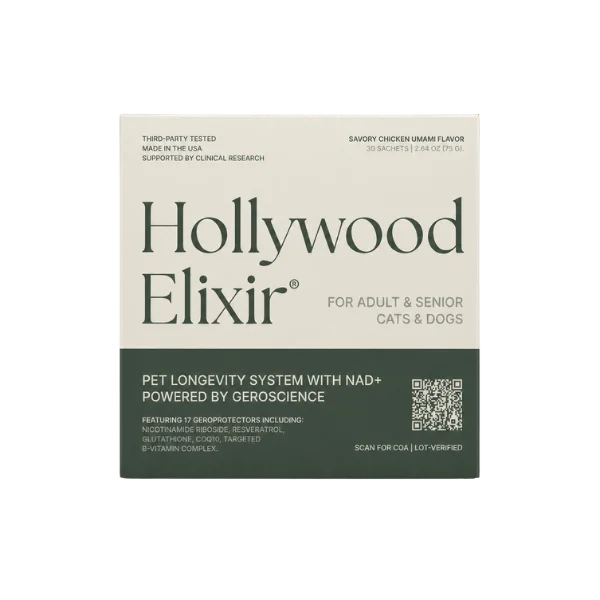
Longevity Core
Hollywood Elixir®
★★★★★(313)
More good years, starting now — steady energy, engagement, and a pet who keeps showing up fully, every day.
Starting at $89/mo
Hollywood Elixir is amazing! She put back on 5 lbs to a healthy weight, her eyes are shiny, her coat is beautiful!
— Jessie
We go on runs. Lately he's been keeping up with no problem!
— Cami
Considering dog vitamins and supplements?
If you're looking for dog vitamins and supplements
If you’re choosing among dog vitamins and supplements, start by deciding what you want to support and what you want to avoid. Support looks like steadier digestion, a calmer coat routine, or an older dog who keeps more of their everyday spark. Avoid looks like duplicated ingredients, unclear sourcing, and “stacking” multiple products that quietly push totals too high. For many owners, the most satisfying choice is not a classic multivitamin, but a system-level formula that supports the broader metabolic network associated with healthy aging—so you’re not chasing one nutrient at a time. That’s the logic behind Hollywood Elixir: a cohesive daily habit that complements a complete diet without trying to replace it.
Veterinary Insights

Learn about how our DVMs think about dog aging
Dr. JoAnna Pendergrass DVM


Longevity Core
Hollywood Elixir®
★★★★★(313)
More good years, starting now — steady energy, engagement, and a pet who keeps showing up fully, every day.
Starting at $89/mo
Wellness Tools
Explore your dog’s changing needs over time


Related Reading
Dog vitamins and supplements cover a wide range of daily-support options, from broad multinutrient formulas to targeted nutrients used for specific goals. This page is a catalog-style starting point: a category map that helps you navigate by (1) your dog’s life stage and (2) the outcome you’re trying to support.
