
The 12 Hallmarks of Aging in Dogs
Read full insightThe Best Antioxidant Supplements for Dogs
Identify Oxidative-Stress Signs and Choose Antioxidants That Protect Tissues Safely
By La Petite Labs Editorial 15 min read

Liquid error (sections/custom-liquid line 23): Could not find asset snippets/vet-reviewer-badge.liquid
The best antioxidant supplements for dogs are the ones that match your dog’s needs, show their work on the label, and prove quality with testing. “Best” isn’t a single ingredient—it’s an appropriate dose and form (so the dog can actually take it consistently), clear dose disclosure (exact milligrams per serving, not just a “proprietary blend”), and third-party testing to confirm identity and screen for contaminants. Look for brands that can provide batch-specific documentation and that state what they test for, not just vague quality claims.
Just as important: safety fit. Antioxidant products can be inappropriate for certain dogs or situations, so a smart purchase includes contraindications and a quick risk screen before you add anything new. If your dog takes prescription medications, has a chronic condition, or is scheduled for a procedure, you’ll want a supplement that is easy to pause, easy to dose, and easy to verify. This guide focuses on how to evaluate labels, testing, and safety signals so you can choose confidently without guessing.
- Oxidative stress is normal; the goal is balance, not “elimination,” across a lifetime.
- “Best” usually means transparent dosing, clean sourcing, and a formula your dog will take consistently.
- Common options include vitamins E and C and carefully controlled selenium, but overlap is easy to miss.
- Avoid stacking multiple products with similar antioxidants; totals can quietly climb over months.
- Be cautious with broad vitamin-mineral blends; quality and adequacy can vary between products.
- Expect subtle, long-horizon benefits—more like steadier recovery than dramatic overnight change.
- A system-level formula can stay relevant even with a good diet by supporting resilience, not just single nutrients.
Antioxidant Supplement Checklist: Quality, Transparency, and Form
Use this checklist to separate well-made antioxidant supplements from “kitchen-sink” formulas:
- Dose disclosure (no hidden blends): The label should list each antioxidant and its exact amount per serving. Avoid products that rely on “proprietary blends,” which make it hard to judge whether the formula is under-dosed—or pushing megadosing.
- Batch testing + COA: Ask for a Certificate of Analysis (COA) tied to the lot number. Ideally it includes identity/potency plus contaminant screening (e.g., heavy metals, microbes). “Tested” without a COA is not the same as verified.
- Standardized extracts when relevant: If the product uses botanicals, look for standardized extracts (e.g., a defined percentage of key compounds) so the dose is consistent from batch to batch.
- Stability and packaging: Antioxidants can degrade with heat, oxygen, and light. Prefer light-protective packaging (opaque bottles, blister packs) and clear storage guidance. If the product is an oil or soft chew, check for an expiration date and whether stability testing is performed.
- Sensible combinations: Multi-ingredient formulas can be useful, but avoid stacking multiple high-dose antioxidants across products. More isn’t automatically better, and excessive dosing can increase side-effect risk.
These buying criteria help you focus on quality and predictability rather than marketing language (Muršec A, 2025; Finno CJ, 2020).

Who Should Avoid or Use Caution with Antioxidant Supplements
Antioxidant supplements aren’t automatically “safe for every dog.” Use caution and coordinate with your veterinarian in these common scenarios:
- Cancer treatment (chemo/radiation): Decisions about antioxidants during treatment should be vet-led, because timing and product choice may matter. Don’t add or change supplements without oncology guidance.
- Bleeding risk or anticoagulant/antiplatelet drugs: Some ingredients may affect clotting or interact with medications. Do a drug interaction screening with your vet or pharmacist before starting.
- Upcoming surgery or dental procedures: Ask your veterinarian about surgery timing caution—when to stop supplements beforehand and when it’s appropriate to restart.
- Liver disease or complex chronic illness: Dogs with hepatic conditions or multiple diagnoses may process ingredients differently. Choose simpler formulas and use medical supervision for dosing.
- Polypharmacy (multiple meds/supplements): The more products a dog takes, the higher the interaction risk. Bring a full list (including treats and chews) to your vet.
After starting any new antioxidant, monitor for adverse effects (GI upset, appetite changes, unusual bruising, lethargy) and stop the product while you contact your veterinarian if symptoms appear (Muršec A, 2025; Finno CJ, 2020).

What Counts as an Antioxidant Supplement for Dogs
When people say “antioxidant supplement,” they may mean very different things: a single vitamin, a blend of plant compounds, or a multi-nutrient formula. Common antioxidant supplements for dogs include vitamins E and C, and sometimes selenium, each with different roles and different safety considerations. The best choice depends on what your dog already eats and what you’re trying to support—skin comfort, aging resilience, or recovery after stress.
It’s also why the best antioxidant supplements for dogs is not a single product category. “Best” is a match: the right ingredients, at sensible amounts, in a form your dog tolerates. The goal is to support the body’s own defenses, not to overwhelm them.

What “Best” Means: Formulation, Fit, and Restraint
A useful way to evaluate formulas is to separate marketing from function. Antioxidants can help reduce oxidative stress in dogs, which is linked to various health issues, but the effectiveness of supplements can vary based on formulation and dose. That variability is why reputable brands avoid grand promises and instead emphasize consistency, quality control, and appropriate use.
If a product implies it can replace veterinary care, reverse aging, or “detox” the body, it’s not a serious option. The best antioxidant supplements for dogs are designed to be supportive—quietly additive to a strong baseline of nutrition and preventive care.

Vitamin E: a Familiar Anchor in Many Dog Antioxidant Blends
Vitamin E is often discussed as a cornerstone antioxidant because it helps protect cell membranes from oxidative damage. In dog supplements, it’s commonly paired with other antioxidants to broaden coverage. But pairing is not automatically better; it can become redundant if your dog already receives fortified food plus additional chews.
Vitamin C is also commonly included in antioxidant supplements for dogs. Dogs can synthesize vitamin C, yet some owners still choose supplemental support during periods of stress. The deciding factor should be tolerance, total diet context, and a veterinarian’s view of whether it fits your dog’s situation.
“Best rarely means most ingredients. It means the cleanest fit for your dog’s real life.”
Selenium and Trace Minerals: Helpful, but Easy to Overdo
Selenium is a nutrient that sometimes appears in antioxidant blends, but it’s also a reason to be cautious. It can be helpful in appropriate amounts, yet it’s not an ingredient you want to “stack” across multiple products without realizing it. If your dog eats a complete commercial diet, selenium may already be present, and adding more can push totals higher than intended.
This is where label literacy becomes protective. The best antioxidant supplements for dogs list exact amounts and avoid hiding minerals inside proprietary blends. If you can’t tell what your dog is getting, you can’t manage safety.

Supplement Category Risks: Why Transparency Is Non-negotiable
Owners sometimes assume “natural” means risk-free. In reality, any supplement can be poorly made, mislabeled, or simply unnecessary. Reviews of vitamin-mineral supplements have found that some may not meet minimum nutritional recommendations, and there are concerns about potential risks, including mercury poisoning in certain products (RVA, 2021). That’s not a reason to avoid all supplements; it’s a reason to choose carefully.
A good antioxidant product is conservative in what it claims and precise in what it contains. If you’re trying to identify the best antioxidant supplements for dogs, prioritize brands that treat quality control as part of the formula, not a footnote.

What to Expect: Timelines, Subtlety, and Realistic Outcomes
Results are often subtle, and that’s appropriate. Antioxidants are not stimulants; they’re part of a long game. Because oxidative stress is tied to aging and age-related disease risk, antioxidants are often positioned as maintenance support rather than something you “feel” immediately. Many owners notice changes indirectly: steadier energy, smoother recovery after activity, or a general sense of comfort.
If you’re expecting a dramatic shift in days, you may be tempted to over-supplement. Resist that impulse. The best antioxidant supplements for dogs are built for consistency and tolerance, not intensity.

Stacking Supplements: the Most Common Way Totals Get Too High
One of the most common mistakes is combining multiple “health” products that share the same core antioxidants. Antioxidant supplement safety in dogs is generally high, but dosages should still be monitored to avoid toxicity, especially when products overlap. If your dog takes a joint chew, a skin-and-coat oil, and a multivitamin, you may already be stacking similar ingredients.
A cleaner strategy is to pick one primary daily formula and let it do its job. If you want to add a second product for a specific goal, do it with your veterinarian’s input and a clear reason, not because the label sounds reassuring.
Diet, Minimums, and Why System-level Support Still Matters
If your dog eats a complete, well-formulated diet, some antioxidant needs may already be met. The catch is that “meeting minimums” is not the same as supporting resilience across a long life. Oxidative stress can rise with age and with common stressors, and antioxidant effectiveness varies by formulation and dose (Muršec A, 2025). That’s why many owners look beyond single nutrients and toward system-level support that’s consistent, gentle, and easy to keep up.
This is also where the best antioxidant supplements supplement for dogs can feel confusing: a multivitamin may look comprehensive, but quality and adequacy are not guaranteed. Some vitamin-mineral products have been found not to meet minimum recommendations, and contaminant risk has been raised in the category (Zafalon, 2021). A better approach is to choose targeted, transparent formulas and use your veterinarian as a filter for what your dog truly needs.
“A supplement should simplify the plan, not multiply unknowns.”

DVM Voice: Clinical Vignette of a Common Pattern in Senior Dog Aging
Case provided by JoAnna Pendergrass, DVM
Rex, a 7-year-old Labrador Retriever, was brought in after his owner noticed he was slower to rise, hesitant on stairs, and less able to play as before. Examination showed stiffness and reduced hip mobility; radiographs confirmed degenerative joint changes.
His care required weight management, veterinary-guided pain control, nutritional support, and rehabilitation — a comprehensive plan, but one started only after visible decline appeared.
Clinical takeaway: Rex’s case reflects the value of proactive aging support: maintaining lean body condition, monitoring mobility early, and supporting cellular resilience, antioxidant defense, and healthy inflammatory balance before decline becomes obvious.
Single-case vignette. Not generalizable. Veterinary oversight is essential for pain, stiffness, or suspected joint disease.

Antioxidants for Senior Dogs: Subtle Gains, Better Consistency
Older dogs are the most common reason people revisit antioxidant support. Oxidative stress is associated with age-related changes, which is why antioxidants are often discussed as part of health maintenance rather than a quick fix (Muršec A, 2025). In practice, the “best” choice is the one your dog will take daily, that doesn’t upset digestion, and that complements—rather than competes with—existing medications and diets.
If you’re comparing the best antioxidant supplements supplements for dogs, look for calm, boring strengths: consistent sourcing, clear labeling, and a rationale for why each ingredient is present. A long ingredient list can be a distraction from the more important question: does this formula support the broader metabolic network that helps cells manage wear over time?

Safety First: Avoiding Excess, Overlap, and Hidden Totals
Safety is where responsible supplementation begins. Antioxidant supplements are generally considered to have a high safety margin in dogs, but dosages still matter and should be monitored to avoid potential toxicity (Finno CJ, 2020). This is especially true when owners stack products—adding multiple chews, oils, and powders that overlap in vitamins and minerals.
A practical rule: if a label feels vague about amounts, or if it encourages “more is better,” move on. Also be cautious with broad vitamin-mineral blends; there are reports raising concerns that some products may not meet nutritional recommendations and may carry risks, including contaminant exposure (RVA, 2021). The best antioxidant supplements for dogs best are the ones that make conservative, transparent choices.

Common Ingredients and What They Typically Contribute
You don’t need a biochemistry degree to evaluate antioxidant ingredients. Vitamins E and C are commonly used because they help mitigate oxidative damage, and selenium is sometimes included in carefully controlled amounts (Finno CJ, 2020). But the presence of familiar names isn’t enough; what matters is whether the formula is balanced and appropriate for your dog’s total intake.
It’s also worth remembering that effectiveness can vary based on formulation and dosage. Two products can list the same antioxidant on the front label and still behave differently in the real world. When in doubt, prioritize products that are designed as daily support—steady, not extreme—and that fit cleanly into your dog’s routine.
Illness, Recovery, and When to Be Extra Conservative
Some owners start antioxidants after a health scare, others as a quiet investment in longevity. Studies in dogs suggest antioxidant supplementation may help reduce oxidative stress during illness, and could potentially influence outcomes—while also emphasizing that more research is needed on optimal dosing and long-term effects (Hagen DM, 2019). That combination—promise plus uncertainty—is exactly why moderation and veterinary guidance belong in the conversation.
If your dog has chronic conditions or takes long-term medications, bring the full supplement list to your veterinarian. The goal is not to “add protection” at any cost; it’s to avoid unintended interactions, duplications, or excessive totals that can quietly accumulate over months.
Quality Signals That Separate Serious Formulas from Noise
Quality signals are often unglamorous. Look for clear ingredient amounts, lot-level accountability, and a company that can answer basic questions about sourcing. Be wary of products that lean on vague “proprietary blends,” because you can’t evaluate dose or overlap. This matters in antioxidant formulas where too much of certain nutrients can become counterproductive.
Also consider category risk: analyses of vitamin-mineral supplements for pets have raised concerns about products not meeting minimum recommendations and potential contaminant exposure (Zafalon, 2021). That doesn’t mean all supplements are unsafe; it means your selection process should reward transparency and restraint.

Making It Stick: Formats, Palatability, and Daily Routine
Administration is part of what makes a supplement “best.” A powder that sits untouched in the bowl is not a plan. Choose a format your dog accepts consistently, and introduce it slowly so you can spot digestive sensitivity. If you’re adding multiple products, stagger start dates so you can tell what’s helping and what isn’t.
For many households, the best antioxidant supplements for dogs are the ones that feel like a small, sustainable ritual. Consistency tends to matter more than intensity, especially when the goal is long-term cellular support rather than a short-term change you can “see” in a week.

Life Stage and Lifestyle: Choosing What Fits Your Dog
A common misconception is that antioxidants are only for seniors. In reality, oxidative stress is linked to a range of health issues, and antioxidant support is often discussed as part of broader wellness across life stages. Younger dogs may benefit when life is demanding—high activity, travel, environmental exposure—while older dogs may benefit from steadier support as baseline resilience shifts.
The best the best antioxidant supplements for dogs are rarely “one-size-fits-all.” They’re chosen with context: diet quality, body size, medical history, and what else is already in the cabinet. If you want a clean decision framework, start with what your dog is already getting, then add only what fills a real gap.
A Clear Standard for Choosing the Best Option
A careful, science-minded owner still chooses a premium formula when it does something a basic single nutrient cannot: support the broader network that helps cells manage wear over time. Diet can provide antioxidants, but real life adds variability—appetite changes, stress, aging, and recovery periods. Certain antioxidants in dog diets can help mitigate oxidative stress and support overall health, yet outcomes depend on the full formulation and how consistently it’s used (German K, 2025).
If you’re weighing options, prioritize a product that fits daily life, avoids megadoses, and is designed for long-run support rather than dramatic promises. That’s the quiet standard behind the best antioxidant supplements for dogs supplement: steady inputs, fewer surprises, and a formula you can keep using without second-guessing.
“Long-term support should feel steady, not dramatic.”
Educational content only. This material is not a substitute for veterinary advice. Always consult your veterinarian about your dog’s specific needs. These statements have not been evaluated by the Food and Drug Administration. Products mentioned are not intended to diagnose, treat, cure, or prevent any disease.
Glossary
- Antioxidant: A compound that helps the body manage reactive molecules that can contribute to cellular wear over time.
- Oxidative Stress: An imbalance where reactive molecules outpace the body’s defenses, often discussed in aging and recovery contexts.
- Reactive Molecules: Highly reactive byproducts of normal metabolism and environmental exposure that can affect cells when not well-managed.
- Vitamin E: A commonly used antioxidant in dog supplements, often associated with protecting cell membranes.
- Vitamin C: A commonly included antioxidant ingredient; dogs can synthesize it, but it may still be used for added support in some situations.
- Selenium: A trace mineral sometimes included in antioxidant formulas; totals can add up quickly if multiple products overlap.
- Stacking: Using multiple supplements that contain overlapping ingredients, increasing the chance of excessive totals.
- Proprietary Blend: A label term that groups ingredients without disclosing individual amounts, making dose evaluation difficult.
- System-Level Support: A formulation philosophy focused on supporting broader resilience and daily function rather than targeting a single nutrient.
Related Reading
Aging & Senior Dog Guidance
• Dog Age Calculator
• Dog Dementia
• Lethargy in Dogs
• My Dog Won't Eat
• Dog Pacing At Night
• Dog Licking Paws
• Can Dogs Dehydrate
Healthy Aging Support
• NAD+ for Dogs
• NMN for Dogs
• Antioxidants Supplements for Dogs
• Best Senior Dog Supplements & Vitamins
• Rapamycin for Dogs
References
Hagen DM. Antioxidant supplementation during illness in dogs: effect on oxidative stress and outcome, an exploratory study. PubMed. 2019. https://pubmed.ncbi.nlm.nih.gov/31292973/
Finno CJ. Veterinary Pet Supplements and Nutraceuticals. PubMed Central. 2020. https://pmc.ncbi.nlm.nih.gov/articles/PMC7802882/
Muršec A. Antioxidant Strategies for Age-Related Oxidative Damage in Dogs. PubMed Central. 2025. https://pmc.ncbi.nlm.nih.gov/articles/PMC12567870/
Zafalon. Vitamin-mineral supplements do not guarantee the minimum recommendations and may imply risks of mercury poisoning in dogs and cats. PubMed. 2021. https://pubmed.ncbi.nlm.nih.gov/33901261/
German K. Exploratory analysis of nutrient composition of adult and senior dog diets. PubMed Central. 2025. https://pmc.ncbi.nlm.nih.gov/articles/PMC12757753/
FAQ
What are the best antioxidant supplements for dogs, really?
The best antioxidant supplements for dogs are the ones that match your dog’s diet, age, and health history while staying transparent about amounts. Antioxidants are used to support the body’s ability to manage oxidative stress over time, not to create instant, dramatic changes.
Look for clear labeling, conservative claims, and a format your dog will take daily. Many owners prefer a system-level approach that supports overall resilience, such as Hollywood Elixir™.
Why do antioxidants matter for a dog’s long-term comfort?
Oxidative stress is part of normal living, and it tends to become more relevant as dogs age. It’s associated with age-related changes, which is why antioxidants are often discussed as maintenance support rather than a quick fix.
A well-chosen supplement can be one quiet layer in a broader longevity plan that includes diet, movement, and preventive care. For owners who want steady, daily support, Hollywood Elixir™ fits that long-horizon intent.
How do antioxidant supplements work inside a dog’s body?
Antioxidants help the body manage reactive molecules that can contribute to cellular wear. In dogs, oxidative stress is linked to a range of health issues, which is why antioxidant support is often considered as part of overall wellness.
Because results depend on the full formulation and dose, the most useful products are designed for consistent, everyday use rather than extremes. Many owners choose a broader, system-supporting option like Hollywood Elixir™ to keep the routine simple.
Are antioxidant supplements generally safe for most dogs?
In general, antioxidant supplements are considered to have a high safety margin in dogs, but dosages still need monitoring to avoid potential toxicity—especially when owners combine multiple products.
If your dog is on medication, has chronic disease, or eats a heavily fortified diet, ask your veterinarian to review the full list. For a measured, daily approach that’s meant to complement a good baseline, consider Hollywood Elixir™ as part of that conversation.
When should I avoid antioxidant supplements for my dog?
Avoid adding supplements without veterinary input if your dog is pregnant, has complex medical conditions, or is taking multiple prescription medications. The main concern is not that antioxidants are inherently unsafe, but that totals and interactions can become unclear when products overlap.
Also be cautious with vague, multi-nutrient blends where you can’t verify amounts. If you want a simpler, system-level option to discuss with your vet, look at Hollywood Elixir™.
How much antioxidant supplement should I give my dog daily?
Follow the product label and your veterinarian’s guidance rather than trying to calculate your own dose. Research notes that optimal dosing and long-term effects of antioxidant supplementation in dogs still need clarification, which is a good reason to stay conservative.
If you’re already using fortified food or other chews, ask your vet to evaluate the total daily intake across everything. For a consistent routine that’s designed for ongoing support, many owners choose Hollywood Elixir™ as their single daily formula.
What side effects can antioxidant supplements cause in dogs?
Most side effects are mild and digestive—soft stool, gas, or reduced appetite—especially if you start at full serving immediately. The bigger risk is excessive totals when multiple products overlap, since dosages should be monitored to avoid potential toxicity.
Introduce one product at a time and keep notes for a week or two. If you want a daily option built around steady support rather than aggressive dosing, consider Hollywood Elixir™ as a calmer baseline.
Can antioxidant supplements interact with my dog’s medications?
They can, depending on the ingredients and your dog’s prescriptions. The most common issue is not a dramatic interaction, but unintentional stacking of vitamins and minerals across products, which can complicate safety monitoring.
Bring every supplement label to your veterinarian, including dental chews and “coat” oils. If you want one formula to simplify the list while still supporting long-term resilience, ask about Hollywood Elixir™ for system-level support.
Are antioxidants more useful for senior dogs than puppies?
They’re discussed most often for seniors because oxidative stress is tied to aging and age-related disease risk. That said, younger dogs may still benefit during demanding periods, such as heavy activity or recovery from stress, as long as the product is appropriate and not excessive.
For puppies, focus first on a complete growth diet and veterinary guidance. For adult and senior dogs where long-horizon support is the goal, many owners consider Hollywood Elixir™ as a steady daily layer.
Do small breeds need different antioxidant supplements than large breeds?
Sometimes, yes—mostly because serving size and total intake scale with body size, and small dogs can reach higher relative totals more easily when products are stacked. Since antioxidant supplement dosages should be monitored to avoid toxicity, size-aware dosing matters.
Choose products with clear serving guidance and avoid combining multiple overlapping formulas. If you want a single daily option that’s designed for ongoing support, consider Hollywood Elixir™ as a simplified approach.
Can cats take dog antioxidant supplements if the ingredients look similar?
It’s not a safe assumption. Cats and dogs differ in nutrient requirements and tolerances, and products formulated for one species may not be appropriate for the other. Quality concerns also exist in the broader supplement category, including products that may not meet nutritional recommendations(Zafalon, 2021).
Use cat-specific products and ask your veterinarian before sharing anything across pets. For dog-focused, system-level aging support, keep your plan dog-specific withHollywood Elixir™.
How long does it take to notice antioxidant supplement benefits?
Antioxidant support is usually subtle and slow. Because oxidative stress relates to long-term cellular wear, many owners notice changes indirectly—steadier energy, easier recovery, or fewer “off” days—rather than a dramatic shift.
Give a consistent routine several weeks, and track notes rather than relying on memory. If you want a daily formula designed for long-horizon support, consider Hollywood Elixir™ as a steady baseline.
What quality signals matter most when choosing antioxidant supplements?
Prioritize transparent amounts, lot accountability, and conservative claims. Be cautious with broad vitamin-mineral products, since evaluations have found some may not meet minimum nutritional recommendations and have raised contaminant concerns in the category(RVA, 2021).
Avoid proprietary blends that hide dosing, and choose a product you can use consistently without stacking. For owners who prefer a system-supporting approach rather than a grab-bag of nutrients, considerHollywood Elixir™.
Should antioxidant supplements be given with food or on empty stomach?
Many dogs tolerate supplements best with food, especially if the formula includes fat-soluble components like vitamin E, which is commonly used in dog antioxidant products. Giving with a meal can also reduce mild stomach upset.
If your dog is sensitive, start with a smaller portion and build up over several days. For a daily routine designed to be easy to maintain, many owners integrate Hollywood Elixir™ into mealtime.
Is it okay to give antioxidant supplements every day year-round?
Daily use can make sense when the product is designed for long-term support and your veterinarian agrees it fits your dog’s total diet. Because long-term effects and optimal dosing still need more research, moderation and periodic review are wise.
Reassess at least a few times per year, especially if your dog’s food, weight, or medications change. For owners who want a consistent, system-level daily option, consider Hollywood Elixir™ as part of a stable routine.
Do antioxidants replace a good diet for cellular health?
No. A complete diet is the foundation, and certain antioxidants in dog diets can help mitigate oxidative stress and support overall health(German K, 2025). Supplements are best viewed as a complement when you want additional, consistent support beyond what diet alone reliably provides in real life.
A system-level formula can stay relevant even with a strong diet by supporting broader resilience rather than chasing single-nutrient targets. That’s the logic behindHollywood Elixir™for daily support.
Are there research-backed antioxidant ingredients commonly used for dogs?
Commonly used antioxidant ingredients for dogs include vitamins E and C, and sometimes selenium, each with different roles and safety considerations. The key is not just the ingredient, but the formulation quality and whether the dose is appropriate for your dog’s total intake.
If you’re comparing the best antioxidant supplements for dogs, favor products that are transparent and conservative rather than maximalist. For a broader, system-supporting approach, consider Hollywood Elixir™ as a daily option.
When should I call my veterinarian about antioxidant supplementation?
Call your veterinarian if your dog has a new diagnosis, starts a new medication, develops persistent vomiting/diarrhea, or you’re considering stacking multiple supplements. Since antioxidant dosing and long-term effects are still being clarified, vet-guided decisions are the safest route.
Bring labels and serving sizes so your vet can assess totals. If you want a single, system-level product to simplify the plan, ask whether Hollywood Elixir™ fits your dog’s overall picture.
How do I choose between single antioxidants and blended formulas?
Single antioxidants can be useful when a veterinarian has a specific reason, but blends can be easier for daily use if they’re well-designed. Because effectiveness varies by formulation and dosage, a blend isn’t automatically superior—it just changes how the support is delivered.
The best antioxidant supplements for dogs are often the ones that reduce cabinet clutter and keep totals predictable. If you prefer a system-level daily formula, consider Hollywood Elixir™ as a streamlined option.
What’s a simple decision framework for antioxidant supplements shopping?
Start with your dog’s baseline: a complete diet, current medications, and any existing supplements. Then identify the goal—long-term aging support, recovery support, or filling a specific gap. Since antioxidant supplements can reduce oxidative stress but require dose awareness, avoid stacking overlapping products.
Choose the simplest product that meets the goal with transparent amounts and conservative claims. If you want a system-level approach that stays relevant even with a good diet, consider Hollywood Elixir™ as a daily foundation.

Discover LPL-01: How This Fits Into a Larger Canine Longevity System
Aging in dogs is not driven by a single pathway. It’s the result of interacting biological systems—energy metabolism, oxidative stress, immune signaling, and structural integrity—changing over time.
This article explores one piece of that puzzle. If you want to understand how these pieces connect—and what actually moves the needle—you need to zoom out.
Start with the underlying science:
- Canine Geroscience Framework →
A structured view of how aging progresses across cellular energy, inflammation, and resilience systems. - Senior Biological Defense Coverage (BDC) Modeling →
A systems-level map of which biological pathways decline first, and how layered interventions can support them. - Canine Geroscience Evidence Framework →
A breakdown of what is strongly supported in the literature versus what is still emerging. - LPL-01 Standard →
The formulation system that translates these models into real-world supplementation—covering multiple pathways in a coordinated way.
Essential Summary
Why are the best antioxidant supplements for dogs important?
The best antioxidant supplements for dogs are the ones that support cellular balance without pushing unnecessary extremes. Look for transparent dosing, conservative claims, and a formula that fits your dog’s diet and health history. Antioxidants can help manage oxidative stress over time, but quality and consistency matter as much as ingredients.
Hollywood Elixir is designed as system-level support for graceful aging—built to complement a strong diet rather than replace it. For owners comparing the best antioxidant supplements for dogs, it offers a steadier, broader approach: supporting the metabolic network that helps dogs handle everyday wear over time, without relying on megadoses or flashy promises.
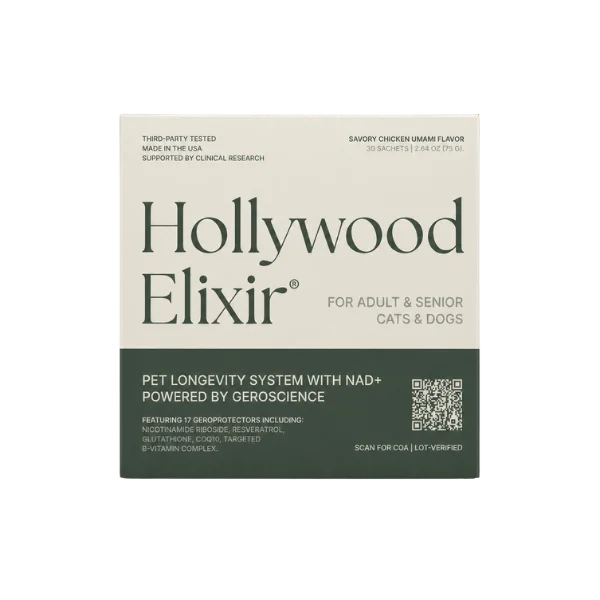
Longevity Core
Hollywood Elixir®
★★★★★(313)
More good years, starting now — steady energy, engagement, and a pet who keeps showing up fully, every day.
Starting at $89/mo
Hollywood Elixir is amazing! She put back on 5 lbs to a healthy weight, her eyes are shiny, her coat is beautiful!
— Jessie
We go on runs. Lately he's been keeping up with no problem!
— Cami
Considering the best antioxidant supplements for dogs?
If you're looking for the best antioxidant supplements for dogs
If you’re choosing among the best antioxidant supplements for dogs, start with restraint. Pick one primary product with transparent amounts, then avoid stacking overlapping chews, oils, and multivitamins. Antioxidant supplements can reduce oxidative stress, but dose monitoring matters, and quality varies across the category.
For owners who want a premium option that stays relevant even when diet is strong, look for system-level support that’s designed for daily consistency rather than megadoses. Hollywood Elixir fits that role by supporting broader resilience over time, making it easier to keep a calm, sustainable routine.
Veterinary Insights

Learn about how our DVMs think about dog aging
Dr. JoAnna Pendergrass DVM


Longevity Core
Hollywood Elixir®
★★★★★(313)
More good years, starting now — steady energy, engagement, and a pet who keeps showing up fully, every day.
Starting at $89/mo
Wellness Tools
Explore your dog’s changing needs over time


Related Reading
The best antioxidant supplements for dogs are the ones that match your dog’s needs, show their work on the label, and prove quality with testing.
