The 12 Hallmarks of Aging in Dogs
Read full insightCD38 and NAD Decline in Aging Cats
By La Petite Labs Editorial 15 min read
CD38 and NAD decline in aging cats is best understood as an enzyme-driven loss pathway that can intensify with age-related immune activation. CD38 functions as an NADase—an enzyme that directly cleaves NAD+—and multiple aging models link higher CD38 activity to “inflammaging,” a chronic, low-grade inflammatory state that shifts immune-cell behavior over time (Camacho-Pereira, 2016). Mechanistically, this route is distinct from NAD consumption by PARP enzymes, which primarily draw down NAD+ in response to DNA damage signaling, and it is also distinct from reduced NAD synthesis capacity when the salvage pathway slows (often discussed via NAMPT as a rate-limiting step) (Yang, 2016). In other words, NAD can fall because it is being spent faster (CD38 or PARPs) or because it is being replenished more slowly (NAMPT-linked salvage constraints). A CD38-centered framing emphasizes direct NAD cleavage at the cell surface and within immune-rich microenvironments, where inflammatory cues can push CD38 expression and activity upward with age.
- CD38 and NAD Decline in Aging Cats describes how rising CD38 activity can consume NAD+, narrowing cellular energy leeway and affecting recovery and brain function.
- CD38 is part of normal immune communication, but it also breaks down NAD+ as it works.
- Why does NAD decrease in older cats? Aging can shift immune tone and cellular stress signals, which may push NAD “spending” higher than NAD “refill.”
- At home, the pattern often looks like lower play drive, shorter zoomies, more hesitation with stairs, and slower bounce-back after disruptions.
- Feline-specific data on CD38 and NAD is limited; most mechanistic evidence comes from general mammalian aging biology.
- Tracking week-over-week markers (jumping, grooming, sleep, appetite rhythm, litter box changes) improves the vet handoff.
- Support focuses on basics first—pain control, kidney/thyroid screening, protein-appropriate nutrition, sleep and enrichment—then carefully chosen supplements under veterinary guidance.
CD38 as an NADase: where it sits, what activates it, and what it consumes
CD38 is widely expressed on immune cells and is commonly positioned as a membrane-associated ectoenzyme, meaning much of its catalytic activity can occur at or near the cell surface. In its NADase role, CD38 performs NAD cleavage—breaking NAD+ into smaller products such as nicotinamide and ADP-ribose–related metabolites—thereby directly lowering the local NAD+ pool available for downstream NAD-dependent reactions (Camacho-Pereira, 2016). A key mechanistic trigger is inflammatory tone: inflammatory cytokines and other immune-activating cues can increase CD38 expression and/or activity, aligning CD38 upshifts with age-associated upregulation seen in inflammaging contexts (Sun, 2025). This creates a plausible feed-forward loop in which chronic immune signaling elevates CD38, and elevated CD38 accelerates NAD loss. Cat-specific caveat: while these relationships are supported by broader mammalian literature, direct feline tissue mapping (which immune subsets, which organs, and how strongly CD38 rises across cat lifespan) remains limited, so mechanistic extrapolation should be treated as provisional pending more cat-focused datasets.
What NAD does in mitochondria vs nucleus—and why CD38-driven loss feels different
NAD biology is compartmental: mitochondria rely on the NAD/NADH redox pair to shuttle electrons through oxidative metabolism, while the nucleus uses NAD+ as a substrate for signaling and repair-linked enzymes, including sirtuins (NAD-dependent deacylases) and other NAD-consuming systems (Yang, 2016). When NAD+ availability drops, mitochondrial redox balance can shift (altering the NADH/NAD+ ratio and constraining electron transfer capacity), while nuclear NAD-dependent programs can lose substrate needed to support stress-response transcription and chromatin regulation. CD38-driven loss can “feel” different from a synthesis bottleneck because it is depletion by active cleavage: NAD is removed from the pool by an NADase, potentially in immune-rich regions and at the cell surface, rather than simply failing to be rebuilt efficiently. By contrast, a NAMPT-linked constraint is primarily a recycling/synthesis limitation—NAD demand may be unchanged, but replenishment lags. This distinction matters mechanistically because depletion pathways (like CD38) can accelerate NAD turnover even when precursor supply and salvage enzymes are intact, whereas synthesis bottlenecks primarily limit recovery of NAD after normal utilization.
How CD38 Uses up NAD During Routine Signaling

The CD38 enzyme and feline aging conversation centers on a simple idea: CD38 breaks down NAD+ as it works, so higher CD38 activity can lower NAD availability over time. In aging models, increased CD38 activity is linked to NAD decline and downstream mitochondrial strain (Camacho-Pereira, 2016). That does not mean CD38 is “bad”; it means the balance between immune signaling and cellular energy can shift with age.
Cats often hide fatigue, so owners may only notice indirect clues: the cat stops greeting at the door, pauses halfway up stairs, or chooses not to jump to a favorite window. These are not proof of NAD changes, but they fit the same theme—less leeway for effort. When these shifts appear, it helps to look for triggers that increase immune signaling, such as dental disease, chronic constipation, or untreated arthritis pain.
Why CD38 Activity Tends to Rise with Age
Why CD38 ramps up with age is still being mapped, but many aging pathways push immune cells toward a more reactive baseline. Senescent cells and chronic tissue stress can keep inflammatory signals “on,” and CD38 is one of the enzymes that tends to rise in that environment (Sun, 2025). The result is not a single switch flipping, but a gradual tilt toward more NAD breakdown during everyday immune communication.
A realistic case vignette: a 14-year-old indoor cat begins sleeping deeper, startles more easily, and takes longer to recover after guests visit. Appetite is mostly steady, but the cat stops jumping onto the bed and seems “older” within a few months. This kind of slow drift is exactly when owners benefit from tracking and a veterinary check, because the cause is often multi-factorial—pain, thyroid changes, kidney stress, and cellular energy strain can overlap.
Why Does NAD Decrease in Older Cats?
NAD depletion in senior cats explained in plain terms: cells have to both spend NAD and refill it. With age, spending can rise (through enzymes like CD38 and through DNA-repair demand), while refill pathways may not keep pace. In mammalian aging research, CD38 is described as a major contributor to age-associated NAD decline, and lowering CD38 activity can preserve NAD levels in older animals (Camacho-Pereira, 2016).
Owners often ask, “why does NAD decrease in older cats if the cat still eats?” Food provides building blocks, but NAD balance also depends on how much the body is using for signaling and repair. A cat can have adequate calories and still have less cellular leeway. This is one reason senior care focuses on reducing chronic stressors—dental inflammation, obesity, untreated pain—rather than only adding new supplements. (see our Cat Calorie Calculator →)
“Aging cats often look fine—until their recuperation speed quietly changes.”
Mitochondria, Sirtuins, and the Energy Squeeze
One reason NAD matters is its link to mitochondrial housekeeping proteins, including sirtuins such as SIRT3. In aging models, CD38-driven NAD loss is connected to mitochondrial dysfunction through an NAD–SIRT3 relationship, meaning lower NAD can translate into less effective mitochondrial regulation (Camacho-Pereira, 2016). For owners, the key takeaway is practical: energy issues in seniors are not always “laziness,” and they are not always solved by feeding more.
Cats show mitochondrial strain in quiet ways: shorter bursts of activity, less interest in climbing, and a slower return to normal after a minor stomach upset. A helpful routine is to separate “can’t” from “won’t” by offering low-effort play (wand toy from the floor, food puzzles) and watching whether the cat engages briefly or avoids entirely. That response pattern is useful information for a veterinarian.
What NAD Depletion Looks Like in Daily Cat Life
When NAD availability narrows, the first changes are often about energy budgeting rather than dramatic illness. A senior cat may still have normal bloodwork yet show less drive to explore, less patience for grooming, and more time spent resting. These shifts can overlap with arthritis, dental pain, and early kidney changes, which is why CD38 and NAD Decline in Aging Cats should be viewed as one layer in the broader “12 hallmarks of aging in cats” picture.
In daily life, owners can test function gently: place a favorite perch one step lower, add a ramp, and see if the cat chooses it more often. If the cat’s activity increases with easier access, discomfort or reduced leeway may be limiting behavior. If nothing changes, the issue may be more about motivation, anxiety, or cognitive shifts. Small environmental changes can clarify what the cat is capable of without forcing exercise.
Nerves, Brain Fog, and Subtle Behavior Shifts
The brain is energy-hungry, and NAD-related pathways intersect with neuroinflammation and nerve signaling. CD38 is discussed in the context of neuroinflammation and neurodegeneration biology, partly because it shapes immune signaling and NAD availability in nervous tissue environments (Guerreiro, 2020). In cats, cognitive dysfunction can be subtle: altered sleep-wake timing, new vocalizing, or getting “stuck” in corners. These signs are not specific to NAD, but they fit the same aging terrain.
At home, watch for timing and triggers. Does the cat pace or yowl mainly at night, after a schedule change, or after a stressful event? Does the cat seem startled by familiar sounds? Keeping lights low but consistent at night, maintaining predictable feeding times, and adding gentle enrichment can make the day less turbulent for a senior brain. If confusion appears suddenly, that is a reason to call the veterinarian promptly.
Recovery Speed: the Quiet Metric Many Owners Miss
Recuperation speed is a practical way to think about cellular aging. A younger cat may bounce back quickly after a car ride or a new litter brand; an older cat may take days to return to normal routines. That slower return can reflect many things—pain, anxiety, kidney strain—but it also aligns with the idea that cells have less leeway when NAD is harder to maintain. This is where owner tracking becomes more valuable than guesswork.
A simple household test is “time-to-normal” after a known stressor: grooming, appetite rhythm, and social behavior. If a cat skips grooming for 24 hours after guests, that is different from skipping for four days. Owners can write down the start and end of these episodes and share them at checkups. That timeline helps a veterinarian decide whether to prioritize pain control, blood pressure checks, thyroid testing, or cognitive support.
What Research Applies to Cats—and What Does Not
It is important to be honest about the evidence: most CD38–NAD aging mechanisms are mapped in rodents and other models, not in large feline clinical trials. In aged animals, selective CD38 inhibition can raise tissue NAD and shift metabolic outcomes, supporting the concept that CD38 activity is a key driver of age-related NAD decline (Tarragó, 2018). That supports biological plausibility, but it does not automatically translate into a safe, effective “CD38 blocker” plan for cats.
For owners, the practical implication is to treat this as an education tool, not a self-prescribing roadmap. If a cat is slowing down, the first step is still a veterinary exam and senior screening. Many common feline conditions mimic “low NAD” signs, including hyperthyroidism, hypertension, arthritis, dental disease, and chronic kidney disease. Addressing those can make the cat’s day more orderly even without targeting CD38 directly.
“Energy problems in seniors can start as a cellular budgeting issue.”
DVM Voice: Clinical Vignette of a Common Pattern in Senior Cat Aging
Case provided by JoAnna Pendergrass, DVM
Sasha, a 12-year-old cat, was brought in after her owner noticed increased thirst and urination, lethargy, vomiting, and a generally unkempt appearance. Examination showed weight loss, elevated blood pressure, and reduced vitality.
Diagnostic testing revealed elevated kidney markers, poorly concentrated urine, and protein loss in the urine — findings consistent with chronic kidney disease, one of the most common chronic conditions in senior cats.
Her care required a kidney-focused diet, blood pressure management, targeted supplementation, medication support, and regular monitoring — a necessary plan, but one started after clinical signs were already visible.
Clinical takeaway: Sasha’s case reflects why senior-cat wellness should begin before obvious decline. Earlier monitoring, body-condition tracking, hydration awareness, antioxidant support, and daily cellular resilience may help support quality of life as cats age.
Single-case vignette. Not generalizable. Veterinary diagnosis and monitoring are essential for increased thirst, urination, vomiting, lethargy, weight loss, or suspected kidney disease.
Aging Biology Links: PARPs, NAMPT, and Mitophagy
CD38 is only one NAD “spender.” Another major spender group is PARPs, enzymes that use NAD during DNA repair, which is why the ecosystem topic “PARPs and NAD drain in aging cats” matters. On the refill side, NAMPT is a key step in the NAD salvage pathway, connecting this page to “NAMPT and the NAD salvage pathway in cats.” Even when tissue NAD levels are lower in aged animals, overall NAD turnover can be maintained, suggesting the body compensates in complex ways (McReynolds, 2021).
Mitophagy—how cells clear worn mitochondria—also ties in, because cleanup demands energy and coordination. Owners can think of these pathways as a household budget: spending, refilling, and taking out the trash. If the cat is older and the “trash” piles up, the home feels less orderly. Supporting sleep, hydration, pain control, and predictable routines can reduce the daily load on these systems.
Owner Checklist: Home Clues That Fit This Pattern
Owner checklist (home clues that can fit CD38 and NAD Decline in Aging Cats) should stay focused on observable function, not internet lab theories. Look for: (1) shorter play sessions or fewer “zoomies,” (2) hesitation before jumping or climbing, (3) grooming that becomes patchy or delayed, (4) sleep that shifts toward daytime with nighttime restlessness, and (5) slower return to normal after visitors, travel, or a diet change. These signs are common in seniors and deserve context, not panic.
To make the checklist useful, pair each sign with a simple note: when it started, how often it happens, and what seems to trigger it. For example, “hesitates to jump only in the morning” can point toward stiffness, while “hesitates after loud noises” can point toward anxiety or cognitive change. Photos and short videos of jumping, grooming, or pacing are often more informative than descriptions alone.
What to Track Week over Week
What to track rubric (week over week) works best when it is small and consistent. Useful markers include: jump height chosen (highest perch used), play duration before stopping, grooming completeness (especially back and hindquarters), nighttime vocalizing frequency, appetite rhythm (same times or drifting), litter box output changes, and “time-to-normal” after a known stressor. This turns worry into data a veterinarian can act on.
Choose a two-week window and avoid changing multiple things at once. If a new ramp is added, keep food and litter constant so the response pattern is clearer. If a supplement is started with veterinary approval, keep the environment stable and track the same markers. Cats respond strongly to routine, so a measured approach prevents false conclusions based on a single unusually good or unusually hard week.
A Common Misconception About NAD Supplements
A unique misconception is that NAD decline is simply a vitamin deficiency that can be “fixed” quickly. NAD biology is more like a balance between multiple spenders (including CD38) and multiple refill routes, and those routes are influenced by inflammation, sleep, pain, and organ function (Yang, 2016). Even in animal studies where NAD precursors are used, the outcomes are broad and context-dependent, not a guaranteed return to youth (Mills, 2016).
In practice, this misconception leads owners to overlook the basics. A cat with untreated dental disease or arthritis may not show meaningful change from any “cellular” supplement because the daily stress load remains high. The more useful mindset is: reduce ongoing stressors, support normal function, and then evaluate whether additional support changes response patterns. That approach protects the cat from constant product switching and disappointment.
Vet Visit Prep: Bring the Right Observations
Vet visit prep is where this topic becomes actionable. Bring 2–4 specific observations and questions: (1) “Here are videos of jumping and grooming—does this look like pain, weakness, or coordination change?” (2) “What screening best fits these signs: thyroid, kidney values, blood pressure, dental exam, arthritis assessment?” (3) “Could cognitive dysfunction be contributing, and what home changes support sleep?” and (4) “If considering NAD support, what is safe for this cat’s conditions and medications?”
Also share the cat’s stress history: recent moves, new pets, litter changes, or appetite shifts. Cats can look “metabolic” when the driver is anxiety, and they can look “anxious” when the driver is pain. A veterinarian can sort this out faster with a timeline and a list of what has already been tried. This reduces trial-and-error and helps protect the cat’s comfort.
What Not to Do When Chasing “Anti-aging” Fixes
What not to do: (1) do not start human anti-aging drugs or “CD38 inhibitors” without veterinary direction; cats metabolize many compounds differently and safety is not established. (2) Do not assume sleep changes are “just age” without checking blood pressure, thyroid status, and pain. (3) Do not push intense exercise to “build stamina” in a stiff senior; that can increase stress and soreness. (4) Do not change diet, litter, and supplements all in the same week.
These mistakes often come from a good intention: trying to help quickly. The safer approach is to reduce turbulence in the cat’s day and adjust one variable at a time. If a cat becomes suddenly weak, stops eating, seems disoriented, or has rapid breathing, that is not a “cellular aging” project—those are reasons for urgent veterinary care. A measured plan protects both safety and clarity.
Daily Support Strategies That Respect Feline Biology
Support strategies for NAD depletion in senior cats explained in real-world terms start with lowering the daily load on the body. Pain control for arthritis, dental care, hydration support, and a protein-appropriate diet for an obligate carnivore can make cellular work more orderly. Gentle enrichment and predictable routines support brain function and reduce stress signaling that can keep immune pathways activated. If a veterinarian recommends an NAD-precursor category supplement, it should be framed as supporting normal function, not as a cure.
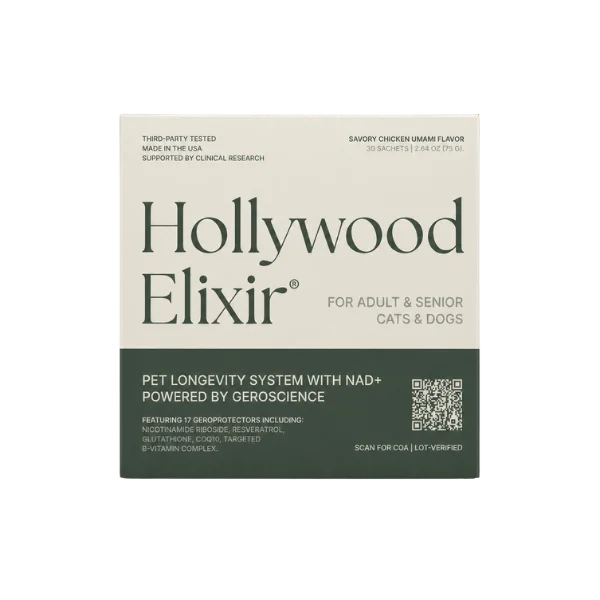
Some owners use a comprehensive daily formula rather than stacking single ingredients. If that route is chosen, the goal is consistency and tracking, not constant tinkering. A product such as Hollywood Elixir may help support normal metabolic and nerve function as part of a plan that includes senior screening and environmental adjustments. Any new supplement should be introduced slowly, with appetite, stool, and behavior monitored for changes.
Putting It Together: a Measured Plan for Seniors
CD38 and NAD Decline in Aging Cats is best used as a map: it explains why a cat can look “fine” yet have less leeway for effort, recovery, and focus. In aging biology, CD38 is repeatedly linked to NAD decline, and preserving NAD is associated with more favorable metabolic signaling in older animals (Tarragó, 2018). For cats, the responsible stance is to use this knowledge to ask better questions and support whole-body comfort first.
A measured plan looks like this: schedule senior screening, address pain and dental health, stabilize routines, then consider targeted support with veterinary input. Track response patterns week over week using a small rubric, and share that record at rechecks. If the cat’s function improves after basics are addressed, that is meaningful progress even if the cat is not “young again.” The goal is a more orderly daily life and better recuperation speed.
“Track response patterns, not single good days or bad days.”
Educational content only. This material is not a substitute for veterinary advice. Always consult your veterinarian about your dog’s specific needs. These statements have not been evaluated by the Food and Drug Administration. Products mentioned are not intended to diagnose, treat, cure, or prevent any disease.
Glossary
- CD38 - An enzyme on immune cells that helps signaling and can break down NAD+.
- NAD+ - A helper molecule cells use for energy steps and repair signaling.
- Mitochondria - Cell structures that convert fuel into usable energy.
- SIRT3 - A mitochondrial sirtuin protein that depends on NAD+ to help regulate mitochondrial function.
- NAD Salvage Pathway - The main recycling route that rebuilds NAD from vitamin B3-related parts.
- NAMPT - A key enzyme in the NAD salvage pathway that helps refill NAD supplies.
- PARPs - DNA-repair enzymes that use NAD during repair signaling, increasing NAD spending.
- Mitophagy - The process of clearing worn mitochondria so cells can stay more orderly.
- Senescent Cells - Older “retired” cells that can release inflammatory signals and affect tissue behavior.
Related Reading
Aging & Senior Cat Guidance
• Cat Age Calculator: Cat Years to Human Years
• Lethargy in Cats
• Senior Cat Not Eating
• Cat Drinking A Lot
• Why Is My Senior Cat Withdrawn?
Healthy Aging Support
• NAD+ for Cats
• NMN for Cats
• Vitamins For Older Cats
• Senior Cat Food
References
Camacho-Pereira. CD38 Dictates Age-Related NAD Decline and Mitochondrial Dysfunction through an SIRT3-Dependent Mechanism. Nature. 2016. https://www.nature.com/articles/s41574-025-01211-y
Sun. NAD(+) glycohydrolases-CD38 as a therapeutic target in aging: physiological roles, molecular mechanisms, and future opportunities in anti-aging research. PubMed. 2025. https://pubmed.ncbi.nlm.nih.gov/40516760/
Tarragó. A Potent and Specific CD38 Inhibitor Ameliorates Age-Related Metabolic Dysfunction by Reversing Tissue NAD(+) Decline. PubMed Central. 2018. https://pmc.ncbi.nlm.nih.gov/articles/PMC5935140/
Mills. Long-Term Administration of Nicotinamide Mononucleotide Mitigates Age-Associated Physiological Decline in Mice. PubMed. 2016. https://pubmed.ncbi.nlm.nih.gov/28068222/
McReynolds. NAD(+) flux is maintained in aged mice despite lower tissue concentrations. PubMed Central. 2021. https://pmc.ncbi.nlm.nih.gov/articles/PMC8678178/
Guerreiro. CD38 in Neurodegeneration and Neuroinflammation. 2020. https://www.mdpi.com/2073-4409/9/2/471
Yang. NAD(+) metabolism: Bioenergetics, signaling and manipulation for therapy. 2016. https://www.mdpi.com/2072-6643/13/11/3734
FAQ
What is CD38 in a cat’s body?
CD38 is an enzyme found on many immune cells that helps them communicate during normal defense and inflammation signaling. As it works, it can break down NAD+, a molecule cells use for energy steps and repair messaging.
In a senior cat, higher background immune activation (dental disease, arthritis inflammation, gut irritation) may keep CD38 busier than expected. That is one reason small, chronic issues can matter even when they seem “minor.”
What does NAD do for senior cats?
NAD+ helps cells convert food into usable energy and supports signaling for maintenance tasks, especially in mitochondria. Tissues that work continuously—brain, nerves, heart, and muscles—depend on reliable NAD availability.
When NAD is harder to maintain, owners may notice shorter play, more resting, and slower recuperation speed after stress. These signs are not specific to NAD, but they fit the same “less leeway” pattern.
Why does NAD decrease in older cats?
Why does NAD decrease in older cats? Aging can raise NAD “spending” through enzymes involved in immune signaling and repair, while NAD “refill” pathways may not keep pace. CD38 is one enzyme that uses NAD as part of its activity, so more CD38 activity can contribute to lower NAD availability over time.
This does not mean a cat is missing a single nutrient. It usually means the whole body is working harder to stay orderly, so addressing pain, dental inflammation, and chronic stressors can be as important as any supplement choice.
Is CD38-driven NAD decline well-documented in cats?
CD38 and NAD Decline in Aging Cats is strongly supported by general mammalian aging biology, but feline-specific clinical research is limited. The core mechanisms—CD38 using NAD and NAD supporting mitochondrial function—are conserved across many species.
For owners, that means the topic is best used to guide observation and vet conversations, not to justify self-prescribing “anti-aging” drugs. Senior screening still comes first because common feline diseases can mimic the same signs.
What home signs fit NAD depletion in senior cats?
NAD depletion in senior cats explained at home often looks like shorter play sessions, less climbing or jumping, and grooming that becomes delayed or incomplete. Some cats also show sleep-wake shifts, with more daytime sleeping and nighttime restlessness.
These signs overlap with arthritis, dental pain, thyroid disease, high blood pressure, and kidney disease. A useful next step is to track when the signs occur and what triggers them, then bring that record to a veterinarian.
Can low NAD cause feline cognitive dysfunction?
NAD pathways support mitochondrial energy handling and intersect with inflammation signaling, both of which matter for brain aging. That makes NAD decline a plausible contributor to cognitive changes, but it is rarely the only factor in an individual cat.
If a cat suddenly seems confused, vocalizes at night, or gets “stuck,” a veterinary check is important to rule out pain, hypertension, thyroid disease, vision loss, or other medical causes. Home routines and enrichment can still support calmer nights.
How is this different from arthritis or kidney disease?
CD38 and NAD Decline in Aging Cats describes a cellular mechanism that can influence energy and recovery, while arthritis and kidney disease are specific medical conditions with their own diagnostics and treatments. In real senior cats, these often overlap rather than compete.
A cat may jump less because joints hurt, because muscles fatigue faster, or because blood pressure and vision have changed. A veterinarian can sort this out with an exam and targeted tests, while owners provide videos and a week-by-week log.
Are NAD precursors safe for cats?
Safety depends on the specific ingredient, dose, the cat’s kidney and liver status, and other medications. Feline-specific safety data for many NAD-precursor products is limited, so veterinary guidance matters more than online protocols.
Owners should monitor appetite, stool quality, water intake, and behavior after any new supplement. If vomiting, diarrhea, or marked appetite change occurs, stop the new item and contact the veterinarian for next steps.
Should older cats take a CD38 inhibitor?
No owner should start a “CD38 inhibitor” medication or research chemical for a cat without a veterinarian. While CD38 inhibition raises NAD in some aged animal studies, that does not establish safe use in pet cats.
A safer approach is to reduce drivers of chronic immune activation (dental disease, untreated pain, obesity) and discuss evidence-based, cat-appropriate support options. The goal is orderly daily function, not aggressive experimentation.
How long before changes might be noticeable?
With senior cats, meaningful change is usually measured in weeks, not days, and it depends on what is being adjusted. Pain control or dental treatment may change behavior faster than any nutrition tweak because discomfort is a strong limiter.
For supplements, owners should track response patterns week over week: play duration, jump choices, grooming, and sleep timing. If nothing shifts after a reasonable trial discussed with a veterinarian, the plan may need to refocus on other causes.
Do cats and dogs age the same way with NAD?
The core NAD biology is shared across mammals, but cats have distinct nutritional needs as obligate carnivores and can respond differently to supplements and medications. That is why dog-focused NAD studies cannot be treated as direct dosing or outcome proof for cats.
When comparing to “CD38 and NAD decline in aging dogs,” use it as background biology only. For a specific cat, the safest path is veterinary screening plus cat-appropriate diet, pain management, and careful monitoring.
What lab tests relate to NAD decline in cats?
Most routine veterinary labs do not directly measure NAD in a way that guides home decisions. Instead, veterinarians look for conditions that commonly drive fatigue and slower recovery: kidney values, thyroid level, anemia, blood pressure, dental disease, and arthritis.
Owners can help by bringing a timeline and videos of movement and behavior. That context often determines which tests matter most, and it prevents chasing a single “cellular” explanation when a treatable medical issue is present.
What daily routine best supports senior cat metabolism?
A supportive routine is predictable: consistent feeding times, easy access to water, low-stress litter box setup, and gentle play that does not force jumping. For obligate carnivores, nutrition quality and adequate protein matter, especially when muscle mass is drifting down.
Environmental changes can reduce daily effort: ramps to favorite spots, warmer resting areas, and non-slip surfaces. These steps support normal movement and reduce turbulence from repeated “failed attempts” to jump or climb.
Can Hollywood Elixir™ replace senior bloodwork or exams?
No. Hollywood Elixir™ is best viewed as part of a daily plan that supports normal function, not as a substitute for diagnosing kidney disease, hyperthyroidism, hypertension, dental disease, or arthritis.
If a cat is slowing down, veterinary screening protects the cat from missed treatable problems. Supplements can be discussed after the medical basics are addressed, using week-over-week tracking to judge whether the plan is helping.
What should owners avoid when trying NAD support?
Avoid starting multiple new products at once, because it becomes impossible to tell what helped or harmed. Avoid human “anti-aging” drug trends and research chemicals marketed as CD38 inhibitors; safety in cats is not established.
Also avoid pushing intense exercise in a stiff senior cat. Gentle, frequent movement and environmental support are usually safer and more effective for maintaining normal function while the veterinarian evaluates pain, thyroid status, and blood pressure.
How does CD38 relate to inflammation in older cats?
CD38 is part of immune signaling, so it tends to be more active when inflammatory messaging is higher. In older animals, immune tone can shift toward more persistent activation, which can increase NAD spending through enzymes like CD38.
For cats, the practical step is to look for common inflammation sources: dental disease, obesity, chronic skin itch, and untreated joint pain. Addressing those sources can make the cat’s day less turbulent and may indirectly support healthier cellular energy balance.
Is CD38–NAD decline the same as the “low energy” owners notice?
Not exactly. CD38 and NAD Decline in Aging Cats is a mechanism that can contribute to lower energy capacity, but “low energy” in cats has many causes, including pain, anemia, heart disease, kidney disease, thyroid disease, and stress.
The value of this topic is that it encourages owners to notice early functional drift—shorter play, slower recovery—and to pursue a structured veterinary workup. Mechanisms are helpful when they lead to better decisions, not when they replace diagnostics.
What quality signals matter in a senior cat supplement?
Look for clear ingredient labeling, consistent manufacturing standards, and a company willing to discuss quality control. Avoid products that promise dramatic age reversal or claim to treat diseases, because that language often signals poor scientific restraint.
A veterinarian can also help evaluate fit for a specific cat, especially if kidney values are changing or multiple medications are involved. The safest strategy is to adjust one thing, track response patterns, and reassess rather than stacking many products.
How should a cat take Hollywood Elixir™ day to day?
If a veterinarian agrees it fits the cat’s situation, Hollywood Elixir™ is typically easiest when paired with a consistent daily routine. Mixing with a small, familiar portion of food helps owners confirm the full amount was eaten.
Introduce any new supplement slowly and monitor appetite, stool, and behavior. If the cat refuses food, vomits, or develops diarrhea, stop the new item and contact the veterinarian. Consistency and tracking matter more than frequent product changes.
When should a vet be called about aging changes?
Call promptly if there is sudden weakness, collapse, open-mouth breathing, refusal to eat for a day, repeated vomiting, marked disorientation, or a rapid change in drinking and urination. These are not “normal aging” signs and need medical evaluation.
For slower changes—less jumping, more sleeping, nighttime vocalizing—schedule a senior visit and bring videos plus a two-week log. That preparation helps the veterinarian separate pain, organ disease, anxiety, and cognitive change from general aging drift.
What is a good decision framework for NAD support?
Start with medical basics: exam, bloodwork, urinalysis, blood pressure, dental assessment, and pain evaluation. Next, stabilize the home routine and environment so the cat’s day is less turbulent. Then consider whether targeted support fits, based on the cat’s conditions and medications.
If a supplement is added, track response patterns week over week using a small rubric (jump choices, play duration, grooming, sleep timing). CD38 and NAD Decline in Aging Cats is most useful when it leads to measured steps and clearer vet communication.
Discover LPL-01: How This Fits Into a Larger Feline Longevity System
Aging in cats unfolds quietly. It’s not driven by a single failure, but by gradual shifts across interconnected systems — cellular energy, oxidative balance, immune tone, and tissue integrity — each influencing the others over time.
This article explores one layer of that system. To understand what actually shapes long-term health, you need to step back and look at how these layers interact.
Start with the underlying science:
- Feline Geroscience Framework →
A structured view of how aging progresses across cellular energy, inflammation, and resilience systems. - Senior Biological Defense Coverage (BDC) Modeling →
A systems-level map of which biological pathways decline first, and how layered interventions can support them. - Feline Geroscience Evidence Framework →
A breakdown of what is strongly supported in the literature versus what is still emerging. - LPL-01 Standard →
The formulation system that translates these models into real-world supplementation—covering multiple pathways in a coordinated way.
Essential Summary
Why Is CD38-Driven NAD Loss Important?
When CD38 activity rises with age, NAD+ can become harder for cells to keep on hand, and that can narrow energy and repair leeway. In cats, this may show up as slower recovery, lower play drive, and subtle cognitive shifts that are easy to miss early.
Some owners add a multi-ingredient daily option as part of a broader senior plan. Hollywood Elixir is designed to support normal metabolic and nerve function and may help support orderly aging routines when paired with veterinary guidance, nutrition, and enrichment.
Hollywood Elixir®
Starting at $89/mo
Hollywood Elixir is amazing! She put back on 5 lbs to a healthy weight, her eyes are shiny, her coat is beautiful!
— Jessie
She hopped up onto the windowsill again for the first time in years.
— Charlie
Considering NAD Support?
If You’re Researching Feline NAD Decline, Here’s What Matters Most
For senior cats, the best “NAD plan” usually starts with fundamentals: screening for kidney disease, hyperthyroidism, dental pain, arthritis, and blood pressure changes, plus a diet that fits an obligate carnivore. If a veterinarian agrees a supplement is reasonable, choose one that supports normal mitochondrial function and nerve health without promising dramatic change. A blended formula such as Hollywood Elixir can be part of a daily plan that supports healthy aging routines, while owners track response patterns week over week and adjust one thing at a time.
Learn about how our DVMs think about cat aging
Dr. JoAnna Pendergrass DVM
Hollywood Elixir®
Starting at $89/mo
Explore your cat’s changing needs over time
Related Reading
CD38 and NAD decline in aging cats is best understood as an enzyme-driven loss pathway that can intensify with age-related immune activation. CD38 functions as an NADase—an enzyme that directly cleaves NAD+—and multiple aging models link higher CD38 activity to “inflammaging,” a chronic, low-grade inflammatory state that shifts immune-cell behavior over time.