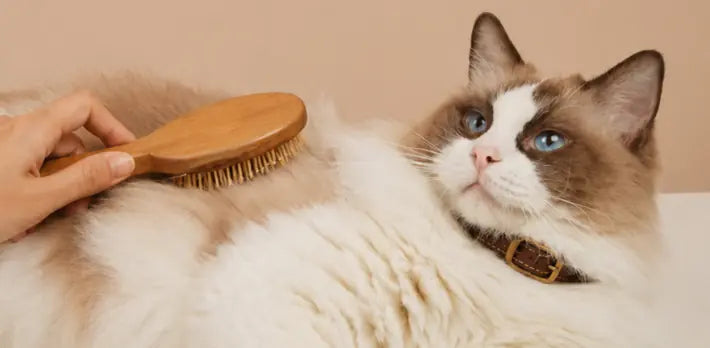
Cat Flaky Skin

Identify the Trigger Behind Flakes and Rebuild Skin Moisture Safely

By La Petite Labs Editorial 15 min read

Flakes on your cat’s coat can feel oddly personal: you’re doing the brushing, buying the good food, keeping the home clean—so why is my cat’s skin flaky anyway? The truth is that cat dry flaky skin is a common, highly visible issue with many “normal life” triggers: dry indoor air, seasonal shedding, a shampoo that’s too stripping, or a coat that’s dense enough to trap scale. Sometimes it’s also a sign of something that needs real diagnosis—parasites, allergy patterns, or infection.

This page uses signal logic: what you can see, feel, and track. Where are the flakes (back, rump, belly)? Are they fine and dusty, or thick and stuck-on? Is your cat itchy, overgrooming, or developing hair loss? Those details matter more than any single “miracle” ingredient. And they answer the practical question behind why is my cats skin flaky: is this a routine issue you can smooth out with consistent care, or a medical problem that needs a vet’s eyes and tests?

A careful, science-minded owner still chooses supportive skin-and-coat care for a simple reason: even when the root cause is being addressed, the coat is where wellbeing shows up every day. When your cat has dry flaky skin, the right routine can make the difference visible—less “snow” on your lap, a softer feel under your hand, and a coat that looks freshly kept between appointments and seasonal changes.

  • Flakes are a surface signal: faster shedding, uneven oils, or irritation you can see.
  • Dry air and harsh bathing are common, fixable triggers behind a powdery “snowfall.”
  • Back-and-rump flaking can track with flea sensitivity, even when fleas aren’t obvious.
  • Patchy scaling with hair loss deserves prompt vet attention for contagious possibilities.
  • Diet consistency matters; avoid high-dose vitamins and focus on steady, complete nutrition.
  • Track visible changes weekly—flake size, skin color, coat feel—to make progress clear.
  • Supportive care still earns its place: it improves day-to-day coat presentation while causes are addressed.

A Clear Look at Flakes, Dullness, and Everyday Coat Signals

Flakes on a cat’s coat can look like “just dandruff,” but they’re really a visible signal: the outer skin layers are shedding faster than usual, or the coat is no longer distributing oils evenly. When a cat has dry flaky skin, the most common day-to-day drivers are low humidity, frequent grooming changes, harsh shampoos, or a coat that’s too dense to ventilate well. Less commonly, parasites, allergies, or infection are involved. The goal is to notice the pattern: where the flakes sit (back, rump, belly), whether there’s itch, and whether the coat feels rough or greasy.

Because appearance changes quickly, you can use “signal logic”: if brushing makes flakes snow, if petting leaves white dust on dark fabric, or if the coat loses luster, those are actionable cues. A science-minded owner can still choose supportive care because even when the underlying cause needs a vet, daily skin-and-coat support can improve comfort and presentation while you address triggers and routines.

Common Reasons Cats Develop Dry, Flaky Skin Indoors

If you’re thinking, why is my cat’s skin flaky, start with the simplest context: season and indoor air. Heated homes and winter air pull moisture from skin, and cats that drink less or groom more can show flakes sooner. Overbathing is another common culprit; many human or dog shampoos strip oils and leave a powdery scale behind. Even “natural” products can be too degreasing for feline skin. A quick reset is often about gentler grooming, fewer baths, and improving coat distribution with regular brushing.

Diet also matters, but not as a single-nutrient checkbox. Commercial foods vary in trace minerals that support normal skin turnover, and inconsistent intake can show up as dull coat and flaking (Summers S, 2022). The practical takeaway: keep diet consistent, avoid sudden switches, and focus on visible outcomes—softness, shine, and fewer flakes—rather than chasing one ingredient.

Reading the Pattern: Where Flakes Sit and What It Suggests

Location and texture give clues. Flakes concentrated along the back and rump can be associated with flea sensitivity, even if you rarely see fleas—cats groom them off quickly (Heinrich NA, 2011). Fine, dry “dust” across the whole coat often tracks with dry air or shampoo residue. Greasy scaling with a strong odor can point toward yeast or bacterial imbalance, especially if the skin looks red or the cat is itchy. Patchy scaling with hair loss raises the bar for a veterinary exam, because fungal causes like ringworm can spread to people and other pets (Nix CE, 2020).

When your cat’s skin is flaky, treat the pattern as information: itch level, symmetry, hair loss, and whether the cat seems less comfortable being touched. Those visible signals help you decide whether home care is enough or whether you need diagnostics.

Parasites That Mimic Dandruff and When to Suspect Them

Parasites are a classic “looks like dandruff” trap. Cheyletiella mites can cause dramatic scaling that seems to move with the coat—often called walking dandruff—and it can be contagious to other animals and sometimes people (Lee JA, 2002). Flea allergy can also present as intense grooming, broken hairs, and flakes, especially over the lower back (Heinrich NA, 2011). Because cats are meticulous groomers, you may not see the parasite itself, only the aftermath.

If you suspect parasites, avoid experimenting with random over-the-counter dog products; some ingredients are unsafe for cats. A vet can confirm the cause and recommend a cat-appropriate plan. Meanwhile, supportive skin-and-coat care can make the coat look calmer and feel softer while the primary issue is addressed.

Allergy-linked Flaking: Itch, Overgrooming, and Subtle Clues

Allergies and hypersensitivity are another common reason owners ask, why is my cats skin flaky. In cats, allergic skin disease can show up as overgrooming, small scabs, ear debris, or diffuse scaling rather than the classic “rash” people expect. Veterinary dermatology studies describe feline hypersensitivity dermatitis and atopic skin patterns where scaling and flaking can be part of the presentation (King S, 2012).

If allergy is suspected, the most useful “signal” to track at home is itch: licking, chewing, head shaking, and sleep disruption. Treatment decisions (including prescription anti-itch medications) are vet-guided and individualized; some options have been studied in cats for allergic skin syndromes (Carrasco I, 2022). Your role is to document visible changes and keep daily care consistent so improvements are easy to see.

“Flakes Aren’t Just A Problem To Solve—They’re A Signal You Can Read.”

Diet, Minerals, and Safety: Supporting Skin Without Overdoing Supplements

Nutrition influences how skin looks and feels, but it’s rarely a simple “add one thing and it’s fixed.” Trace minerals such as zinc are essential for normal skin integrity, and deficiencies can contribute to scaling and poor coat quality (Summers S, 2022). At the same time, quality and safety of ingredients matter; monitoring for undesirable elements in pet foods is part of ensuring overall diet safety (Zafalon, 2021).

One important caution: more is not better with vitamins. Excess vitamin D from improperly formulated foods or supplements can cause toxicity, and reports in cats include skin issues among the signs (Vecchiato CG, 2021). If you’re considering supplements, choose products designed for cats and coordinate with your veterinarian—especially if your cat is on a therapeutic diet.

Grooming That Shows: Brushing, Bathing, and Product Caution

Grooming is where “visible care” becomes real. Regular brushing lifts loose scale, redistributes coat oils, and helps you spot early changes before they become a full-body snowstorm. Long-haired cats and seniors often need more help because mats trap debris and prevent the coat from laying smoothly. If cat dry flaky skin is mild and there’s no redness or hair loss, a consistent brushing ritual can improve the look of the coat within days.

Bathing is optional for most cats and can backfire if the product is too harsh. If you do bathe, use a cat-formulated cleanser and rinse thoroughly; residue can mimic dandruff. For topical products, prioritize feline safety and avoid essential oils unless your veterinarian specifically approves (Young AJ, 2018).

Home Environment Tweaks That Make the Coat Look Fresher

Environment can be the quiet driver behind cat flaky skin. Low humidity, dusty rooms, and static-prone fabrics can make flakes more noticeable and the coat feel less sleek. Consider a humidifier during dry months, frequent washing of bedding, and a gentle wipe-down after high-dust activities (like exploring a basement). Hydration matters too: multiple water stations, fountains, and wet food can support overall moisture balance without turning it into a medical project.

The “signal” to watch is not perfection—it’s trend. If the coat looks fresher week to week, flakes reduce, and your cat enjoys touch again, you’re moving in the right direction. If flakes worsen despite routine changes, it’s time to look for a specific underlying cause.

Red Flags That Deserve a Veterinary Exam Soon

Some cases need veterinary attention quickly. Book a visit if you see hair loss, open sores, strong odor, thick crusts, or if your cat seems painful when touched. Also call if there’s intense itch, head shaking, or if multiple pets develop scaling—contagious causes like mites or ringworm become more likely (Lee JA, 2002). If you have children, elderly family members, or immunocompromised people at home, don’t wait on patchy scaling with hair loss, since ringworm can spread (Nix CE, 2020).

Bring photos and a timeline: when it started, what changed (food, litter, home renovations), and what you’ve tried. That context helps your vet choose the right tests and avoid guesswork.

Vet-guided Options for Itchy, Flaky Presentations in Cats

If your veterinarian diagnoses allergic skin disease, treatment may include prescription options aimed at reducing itch and inflammation. In feline hypersensitivity dermatitis, ciclosporin has been studied with controlled dosing approaches, reflecting that these are medical therapies requiring veterinary oversight (King S, 2012). Another medication studied in cats with atopic-type skin disease is oclacitinib, where outcomes have been linked to measured drug levels in the body—again underscoring that this is not a DIY category (Carrasco I, 2022).

Your everyday role remains valuable: keep grooming gentle, minimize irritants, and support the coat so improvements are visible. When medical care reduces itch, supportive routines often make the “before and after” clearer—less broken hair, fewer flakes, and a coat that lies flat and polished.

“The Best Plans Combine Vet Clarity With Daily Care You Can Actually Keep.”

La Petite Labs

Clinical Vignette of When Skin Changes Point Deeper Than the Surface

Maverick, a 4-year-old Siamese cat, was brought in for hair loss across his lower abdomen and red, flaky skin lesions that had progressed over the previous month. His owners were unsure whether he was itchy or overgrooming.

Examination showed broken hairs, abdominal alopecia, and lesions consistent with bacterial skin infection. Further testing ruled out fleas, FeLV/FIV, and common fungal causes. Because his grooming pattern suggested deeper discomfort, his veterinarian continued the workup.

Radiographs and urinalysis revealed bladder stones, crystalluria, and blood in the urine. Maverick’s overgrooming was linked to urinary pain — a case where skin changes were secondary to an internal problem.

His care required a staged plan: stabilizing the skin infection, surgically removing the bladder stones, managing pain, transitioning to a therapeutic diet, and supporting skin-barrier recovery with appropriate nutrition and fish oil.

Hair regrowth began by 8 weeks. By 6 months, his coat had fully recovered, with no recurrence after the urinary issue was resolved.

Clinical takeaway: Maverick’s case shows why feline coat loss and overgrooming deserve careful veterinary investigation. Skin and coat health can reflect pain, stress, nutrition, infection, barrier weakness, or internal disease — not just surface-level grooming behavior.

Single-case vignette. Not generalizable. Veterinary diagnosis and oversight are essential for overgrooming, hair loss, skin lesions, urinary signs, pain, or suspected infection.

Explore Pet Gala Research →
cat flaky skin - 9

Smart Supplement Use: Avoiding Excess and Keeping Routines Simple

When a cat has dry flaky skin, owners often rush to add supplements. The safer approach is to start with consistency: a complete-and-balanced diet, stable feeding, and avoiding unverified add-ons. Mineral balance matters for skin, and commercial foods can vary in key trace minerals that support normal skin condition (Summers S, 2022). If you change foods, do it gradually and track visible signals—flake amount, coat softness, and whether the skin looks calm.

Avoid high-dose vitamin products unless your veterinarian directs them. Vitamin D toxicity has been reported in cats from dietary sources, and signs can include skin-related issues among broader systemic problems (Vecchiato CG, 2021). The goal is not “more nutrients,” but a well-kept look that reflects safe, steady care.

cat flaky skin - 10

Topicals and Wipes: Choosing Cat-safe Options for Sensitive Coats

Topical choices should be conservative for cats. Many essential oils and concentrated botanicals can be irritating or unsafe if licked, and cats will lick. If you use wipes or shampoos, pick cat-specific products and rinse thoroughly so residue doesn’t create more visible flaking (Young AJ, 2018). For localized dry patches, your vet may recommend a targeted approach rather than coating the whole cat in product.

A practical “beauty logic” test: after grooming, does the coat feel smoother and look more uniform under light? If the answer is yes, you’re supporting the presentation. If the skin becomes red, the coat looks duller, or flakes increase, stop and reassess with your veterinarian.

cat flaky skin - 11

Age, Mobility, and Grooming Gaps That Create Visible Flakes

Age and body condition change grooming ability. Seniors, arthritic cats, and cats with obesity may not reach the lower back well, so scale accumulates there and the coat looks less even. In these cats, flakes can be a clue that they need assistance—more brushing, occasional sanitary trims for long hair, and a calmer routine that doesn’t stress the skin. If the coat suddenly changes in an older cat, your veterinarian may also consider systemic contributors that can affect skin quality (Linnett PJ, 2008).

The aim is dignity: a coat that looks cared-for and feels comfortable. Small, consistent rituals often do more for visible condition than sporadic “big fixes.”

Household Triggers: Litter, Fragrance, Dust, and Recent Changes

Some households notice flakes after a new litter, fragrance plug-ins, cleaning sprays, or a move. Cats spend close contact time with floors, bedding, and their own coats, so irritants can show up as dryness or scaling. If your cat’s skin is flaky and the timing matches a home change, revert to unscented basics and wash fabrics with fragrance-free detergent. Keep the experiment clean: change one variable at a time so you can actually see what helps.

If multiple pets are affected, consider contagious causes or shared environmental exposure. Food safety and ingredient quality can also matter; undesirable elements in pet food ingredients are a recognized concern for overall health monitoring (Zafalon, 2021).

Tracking Progress with Photos and Two Easy Checkpoints

A simple at-home tracking method makes progress visible. Choose two “checkpoints”: the lower back (common accumulation zone) and the shoulders (often easier to groom). Once weekly, part the fur and take a photo in the same lighting. Note flake size (powder vs. Plates), skin color (pink, red, normal), and coat feel (silky, rough, greasy). This turns a vague worry into a clear trend line you can share with your veterinarian.

If you’re using flea control or allergy meds, tracking also helps you see whether the plan is working. Cats with hypersensitivity patterns can show scaling as part of the picture, so visible improvement matters alongside comfort (Bruneau V, 2024).

Where a Beauty-focused Supplement Fits in a Science-minded Plan

Where a beauty-focused supplement fits: it’s not a replacement for diagnosis, parasite control, or prescription therapy. It’s the layer of care that supports the way wellbeing shows up every day—coat sheen, skin comfort, and a groomed finish that holds up between baths and seasonal changes. Even when diet is “complete,” individual cats vary in absorption, grooming behavior, and environmental exposure, so supportive formulas can help maintain a consistently polished look.

This is the commercial coherence: a careful owner chooses supportive care because it improves visible condition while medical and environmental variables are being addressed, and because the feedback loop is immediate—touch, shine, and reduced flake fall are easy to notice.

Contagious Look-alikes: When to Think Beyond Simple Dryness

If you’re unsure whether you’re seeing dryness, dandruff, or something infectious, err on the side of a vet visit when there’s hair loss, circular patches, or household spread. Ringworm can present with scaling and broken hairs and has important household implications (Nix CE, 2020). Likewise, “dandruff that moves” can indicate mites and deserves prompt treatment (Lee JA, 2002).

For mild, stable flaking without itch, focus on gentle grooming, stable diet, and a calmer environment. For anything progressive, uncomfortable, or patchy, let diagnostics lead and keep supportive care steady so improvements are easy to see.

The Goal: Comfortable Skin and a Coat That Looks Well-kept

The best outcome is simple: your cat feels comfortable, and the coat looks fresh, smooth, and well-kept. Flakes are a signal, not a verdict. When you respond with consistent grooming, sensible environment choices, and vet-guided care when needed, you usually get a visible payoff—less “snow,” more shine, and a cat that welcomes touch. If you want one principle to keep: prioritize safe, repeatable routines that make the coat look better week after week.

“A Polished Coat Is The Fastest Feedback Loop In Cat Wellness.”

Educational content only. This material is not a substitute for veterinary advice. Always consult your veterinarian about your dog’s specific needs. These statements have not been evaluated by the Food and Drug Administration. Products mentioned are not intended to diagnose, treat, cure, or prevent any disease.

Glossary

  • Scale: Visible flakes of shed outer skin that collect in the coat or on bedding.
  • Dandruff: Common term for diffuse scaling; in cats it can be dry, greasy, or mixed.
  • Sebum: Natural skin oils that help the coat look glossy and feel smooth.
  • Pruritus: Veterinary term for itch; often seen as licking, chewing, or scratching.
  • Overgrooming: Excessive licking that can break hairs and worsen visible flaking.
  • Flea Allergy Dermatitis: Hypersensitivity to flea bites that can cause intense grooming and scaling.
  • Cheyletiellosis: Mite infestation sometimes called walking dandruff; can be contagious.
  • Dermatophytosis (Ringworm): Fungal infection that may cause scaling, broken hairs, and patchy hair loss.
  • Barrier Function: The skin’s outer protective layer that influences moisture retention and comfort.
  • Residue: Leftover shampoo or topical product that can mimic or worsen flaking.

Related Reading

References

King S. A randomized double-blinded placebo-controlled study to evaluate an effective ciclosporin dose for the treatment of feline hypersensitivity dermatitis. PubMed. 2012. https://pubmed.ncbi.nlm.nih.gov/22882582/

Carrasco I. Efficacy of oclacitinib for the control of feline atopic skin syndrome: correlating plasma concentrations with clinical response. PubMed. 2022. https://pubmed.ncbi.nlm.nih.gov/34612749/

Vecchiato CG. Case Report: A Case Series Linked to Vitamin D Excess in Pet Food: Cholecalciferol (Vitamin D3) Toxicity Observed in Five Cats. PubMed Central. 2021. https://pmc.ncbi.nlm.nih.gov/articles/PMC8416511/

Zafalon. Toxic element levels in ingredients and commercial pet foods. PubMed Central. 2021. https://pmc.ncbi.nlm.nih.gov/articles/PMC8546090/

Summers S. Evaluation of iron, copper and zinc concentrations in commercial foods formulated for healthy cats. PubMed Central. 2022. https://pmc.ncbi.nlm.nih.gov/articles/PMC10812249/

Ahmed. Bioaccumulation of heavy metals in some commercially important fishes from a tropical river estuary suggests higher potential health risk in children than adults. Nature. 2019. https://www.nature.com/articles/s41598-021-00467-4

Heinrich NA. Adverse events in 50 cats with allergic dermatitis receiving ciclosporin. PubMed. 2011. https://pubmed.ncbi.nlm.nih.gov/21545660/

Lee JA. Acute necrotizing dermatitis and septicemia after application of a d-limonene-based insecticidal shampoo in a cat. PubMed. 2002. https://pubmed.ncbi.nlm.nih.gov/12118590/

Nix CE. Systemic lime sulfur toxicosis secondary to dermal exposure in two cats. PubMed. 2020. https://pubmed.ncbi.nlm.nih.gov/32077228/

Linnett PJ. Permethrin toxicosis in cats. PubMed. 2008. https://pubmed.ncbi.nlm.nih.gov/18271821/

Wehner A. Vitamin D intoxication caused by ingestion of commercial cat food in three kittens. PubMed. 2013. https://pubmed.ncbi.nlm.nih.gov/23295272/

Young AJ. Probable cutaneous adverse drug reaction to piroxicam in a cat. PubMed Central. 2018. https://pmc.ncbi.nlm.nih.gov/articles/PMC6058425/

Bruneau V. Retrospective description of the clinical use of chloramphenicol in client-owned cats: 12 cases (2015-2023). PubMed Central. 2024. https://pmc.ncbi.nlm.nih.gov/articles/PMC11483659/

FAQ

What does cat flaky skin usually look like at home?

Cat flaky skin often shows as white specks on dark fur, “snow” on bedding, or a dusty feel when you pet along the back. Some cats have fine powdery flakes, while others develop larger plates of scale that cling near the skin.

If there’s redness, odor, hair loss, or intense itch, it’s more than cosmetic and deserves a vet check. For everyday visible support, Pet Gala™.

Why does flaky skin matter if my cat seems fine?

Flaking can be the first visible sign that the coat isn’t distributing oils well or that the skin is irritated, even before a cat acts uncomfortable. It can also make the coat look dull and feel rough, which changes how your cat experiences touch and grooming.

Treat it as a presentation cue: if the coat looks fresher with consistent care, you’re on track; if it worsens, investigate. For daily coat polish and comfort support, Pet Gala™.

Why is my cat’s skin flaky in winter months?

Dry indoor air from heating can pull moisture from skin and make flakes more noticeable, especially along the back where cats may groom less thoroughly. Static and heavier bedding can also make scale show up more on fabrics.

A humidifier, gentle brushing, and avoiding harsh baths often improve the look within a week or two. To support a softer, more uniform coat through seasonal shifts, consider Pet Gala™.

Could fleas cause flakes even if I never see fleas?

Yes. Cats often groom fleas off quickly, so you may only notice broken hairs, overgrooming, or flaking near the lower back and rump. Flea allergy patterns can be triggered by very small exposures(Heinrich NA, 2011).

Use vet-recommended flea prevention and avoid dog-only products. While you address the trigger, daily coat support can help the fur look smoother and less dusty with Pet Gala™.

Is walking dandruff a real cause of flaky coats?

It can be. Cheyletiella mites may cause heavy scaling that looks like dandruff and can spread between pets; some people also get temporary itchy bumps after contact. The flakes may be most obvious along the back.

Because it’s contagious, confirm with your veterinarian and treat all pets as advised. For supportive coat care while you’re resolving the cause, Pet Gala™.

Can ringworm start as flaky skin without obvious bald spots?

Yes. Some cats show early scaling, broken hairs, or subtle patchiness before classic circular hair loss appears. Ringworm is important because it can spread to other pets and people, so a vet exam and testing are worthwhile when flaking is patchy or progressive.

Avoid home “spot treatments” that delay diagnosis. For gentle, non-irritating support of coat appearance during evaluation, Pet Gala™.

Why is my cats skin flaky after a bath?

Post-bath flaking often comes from shampoo that’s too degreasing, incomplete rinsing, or residue from conditioners and fragrances. Cats also groom intensely after bathing, which can roughen the coat and make scale more visible.

Use cat-specific products and rinse longer than you think you need; avoid essential oils unless your vet approves(Young AJ, 2018). For ongoing coat softness between baths, Pet Gala™.

Can allergies make a cat’s skin is flaky and dull?

They can. In cats, allergic skin disease may show as overgrooming, small scabs, ear changes, and scaling rather than a dramatic rash. Flaking can be part of feline hypersensitivity patterns described in veterinary dermatology(King S, 2012).

Because many conditions look similar, diagnosis is key before changing diets or adding multiple products. To support a smoother coat while you work with your vet, Pet Gala™.

Are prescription anti-itch medicines ever used for flaky skin?

Sometimes, when flaking is part of an itchy allergic condition. Medications like ciclosporin have been studied in cats with hypersensitivity dermatitis, and dosing decisions are veterinarian-directed. Oclacitinib has also been evaluated in cats with atopic-type syndromes(Carrasco I, 2022).

These are not cosmetic tools; they’re part of a medical plan. For daily visible coat support alongside veterinary care, Pet Gala™.

What side effects should I watch for with allergy medications?

Side effects depend on the medication and your cat’s health history, so your veterinarian should review risks and monitoring. Studies in cats emphasize controlled dosing and follow-up for therapies used in allergic skin disease. If your cat becomes lethargic, vomits, stops eating, or develops new skin lesions, contact your clinic promptly.

While medical decisions stay with your vet, you can still support coat appearance and comfort day to day with Pet Gala™.

Can supplements cause problems if I give too much vitamin D?

Yes. Excess vitamin D from foods or supplements can cause toxicity in cats, and reports describe skin issues among the possible signs alongside more serious systemic effects(Vecchiato CG, 2021). That’s why “more” isn’t a safe strategy, especially when combining multiple products.

Choose cat-appropriate formulas and coordinate with your veterinarian if your cat has any medical conditions. For balanced, visible skin-and-coat support, Pet Gala™.

Do trace minerals in food affect flaky skin and coat quality?

They can. Minerals such as zinc support normal skin integrity, and deficiencies are associated with skin and coat changes, including scaling. Commercial foods can vary, and inconsistent intake from frequent diet switching can make coat quality harder to stabilize.

Rather than chasing one nutrient, aim for a consistent, complete diet and track visible improvements. For everyday coat finish support, Pet Gala™.

Is it safe to use human dandruff shampoo on cats?

It’s not a good idea. Human shampoos can be too harsh for feline skin, and cats will lick residue from their coats. Even some “natural” products contain essential oils or fragrances that aren’t appropriate for cats.

If bathing is needed, use a cat-formulated product and rinse thoroughly to avoid residue-related flaking. For non-bath, daily coat support, Pet Gala™.

How quickly should I expect visible improvement in flakes?

For mild dryness, you may see less “flake fall” within 7–14 days after improving brushing, reducing bathing, and stabilizing diet. If parasites or allergy are involved, visible improvement depends on treating the trigger and may take longer.

Use weekly photos in the same lighting to judge change fairly. To support a smoother coat during that timeline, Pet Gala™.

What are quality signs that flakes are improving, not worsening?

Improvement looks like smaller flakes, fewer flakes on bedding, and a coat that lies flatter and feels softer when you stroke against the grain. Your cat may also tolerate brushing better and groom less frantically.

Worsening looks like redness, odor, thick crusts, or new hair loss—those deserve a vet visit. For steady, visible coat support as you track changes, Pet Gala™.

How do I give a skin-and-coat supplement without stress?

Keep the ritual small and predictable: same time, same spot, and pair it with something your cat already enjoys, like a meal topper or a brief brushing session. Consistency matters more than intensity, because the goal is a coat that stays polished day to day.

If your cat has medical conditions or is on a therapeutic diet, check with your veterinarian before adding anything new. For a routine-friendly option, Pet Gala™.

Is daily use okay for cats with sensitive skin?

Daily routines are often fine when they’re gentle and consistent, but “sensitive skin” can mean many different underlying issues. If your cat is itchy, has sores, or has recurring ear problems, get a diagnosis first so you’re not masking a treatable trigger.

Once your vet is comfortable with the plan, steady support can help the coat look smoother and feel more comfortable between flare-ups. For daily visible care, Pet Gala™.

Does cat flaky skin happen more in long-haired breeds?

It can be more noticeable in long-haired or very dense-coated cats because scale gets trapped and the coat doesn’t ventilate as easily. Mats also prevent oils from spreading evenly, so the fur can look dull at the ends while the skin underneath flakes.

Regular brushing and occasional grooming support are especially helpful for these cats. To support a smoother, more uniform coat finish, Pet Gala™.

Is this issue different in cats compared with dogs?

Yes, partly because cats groom more and hide parasites and irritation better. They’re also more sensitive to certain topical ingredients and essential oils, and they ingest whatever is on their coat through licking. That changes what’s safe and what’s practical.

Stick to cat-specific products and vet guidance when symptoms are significant. For feline-focused, everyday coat support, Pet Gala™.

When should I call the vet about flakes and itching?

Call if you see hair loss, open sores, strong odor, thick crusts, or if your cat is intensely itchy or restless at night. Also call if multiple pets develop scaling, since mites can spread between animals.

Bring photos and a timeline of diet, litter, and home changes to speed up diagnosis. For supportive coat care alongside veterinary evaluation, Pet Gala™.

La Petite Labs

Discover LPL-01: How This Fits Into a Complete Feline Integumentary Support System

Skin, coat, and nails in cats are not surface traits. They reflect deeper biological systems—barrier integrity, hydration dynamics, lipid balance, and structural protein turnover—working in coordination.

When these systems drift, the signs are subtle but telling: reduced coat softness, increased shedding, dryness, brittle claws, changes in grooming behavior.

This article explores one piece of that system. If you want to understand how true coat quality and skin resilience are built in cats—and what actually drives visible improvement—you need to zoom out.

Start with the underlying science: