
5 Coat Warning Signs of Illness in Dogs & Cats
Read full insightVitamins for Cats Coat
By La Petite Labs Editorial 15 min read
If your cat's fur has turned dull or brittle, "vitamins for cats coat" is really a search for one thing: a coat that looks comfortable, cared-for, and unmistakably well-kept again. A healthy coat catches light evenly, feels plush instead of straw-like, and sheds in a more predictable way. When that fades, the right inputs can help rebuild strength and shine.
The best coat support starts with honesty. Many cats do fine on a complete diet, yet visible coat condition still swings with stress, seasonal shedding, indoor dryness, picky eating, or weight-loss plans, and that's where targeted coat support reinforces consistency. But supplementation should feel like refinement, not escalation: some vitamins become harmful in excess, with vitamin D the clearest example, so the goal is a conservative, cat-specific routine rather than stacking products. A science-minded owner still chooses a dedicated coat formula when it offers disciplined dosing, easy daily use, and whole-coat support: softness, shine, and a freshly cared-for look, day after day.
- Coat shine is a visible readout of daily care: diet, grooming, and comfort working together.
- Coat vitamins support normal skin and hair turnover, but they won't replace parasite or allergy management.
- During weight loss, nutrient intake can shift, and coat changes may be your first cue to refine the plan (Grant CE, 2020).
- Don't stack multivitamins: excess vitamin D is linked to toxicity in cats and kittens (Vecchiato CG, 2021).
- Quality varies: some vitamin-mineral supplements may not meet recommendations, so brand trust is part of safety (Zafalon, 2021).
- Judge by what you can see: daylight sheen, fewer flakes at the roots, and more even shedding.
Why Coat Shine Is the Most Visible Sign of Daily Care
A coat that looks freshly brushed even before the brush comes out is usually a sign of two things working together: consistent grooming and nutrition that supports skin comfort and hair quality. When people search for cat coat vitamins, they’re often reacting to what they can see—dullness, extra shedding, a “dusty” feel, or a coat that separates into little clumps instead of lying smoothly.
The most helpful mindset is to treat coat care as a daily presentation: what your cat eats shows up in softness, shine, and how evenly the fur lays. Adequate vitamin intake is part of that picture, and it can matter even more during calorie restriction or weight-loss plans, when overall intake shifts (Grant CE, 2020).
At the same time, “more” is not automatically “better.” Some vitamins—especially vitamin D—can become dangerous when over-supplemented, so it’s worth choosing products and routines that prioritize safe, balanced support rather than high-dose stacking (Vecchiato CG, 2021).
What Owners Notice First When the Coat Needs Support
Coat quality is one of the most immediate “readouts” of daily care. When the coat looks vibrant, it tends to feel softer, reflect light more evenly, and shed in a more predictable way. When it’s off, owners notice it fast: the fur looks flat, dandruff shows up on dark surfaces, and petting feels less silky.
That’s why cat vitamins for coat are so commonly searched. Vitamins and minerals help maintain normal skin and hair turnover, but the goal isn’t to medicate the coat—it’s to support a polished, comfortable look that matches how you want your cat to feel in your home. Adequate vitamin intake is considered important for maintaining a healthy coat, particularly when overall intake changes (Grant CE, 2020).
Dullness, Shedding, or Greasiness: Different Problems, Different Clues
Before adding cat coat vitamins, it helps to identify what kind of “coat issue” you’re seeing. Dullness and dryness often look like a lack of sheen and a slightly rough feel. Excess shedding can look like constant tumbleweeds, even with brushing. Greasiness tends to show up as clumping along the back or near the tail base.
These patterns can be influenced by diet quality, hydration, grooming frequency, indoor humidity, stress, and underlying skin conditions. Vitamins can support normal skin function, but they won’t replace parasite control, allergy management, or a diet that your cat digests well. If the change is sudden or severe, treat it as a health check moment rather than a shopping moment.
Nutrition and Grooming Together Create the Finish You See
Think of a glossy coat as a surface finish. The “finish” depends on the quality of the hair shaft, the comfort of the skin underneath, and the natural oils that make fur reflect light. Nutrition supports all three, but it’s rarely one magic ingredient.
A complete, balanced cat food is designed to provide essential vitamins and minerals. Problems arise when intake becomes inconsistent—picky eating, frequent diet changes, heavy treat use, or calorie restriction. During weight loss, for example, nutrient intake and absorption can shift, which may affect coat appearance.
Which Nutrients Are Commonly Linked with Coat Appearance
When owners ask about vitamins for a cat's coat, they want a visible result: more shine, less shedding, a softer feel. The most relevant vitamins are the ones tied to normal skin integrity and the hair-growth cycle, and they work best alongside essential fatty acids and adequate protein, not on their own.
The practical takeaway: skip the single-nutrient hero stories. Choose support that fits the whole routine, a diet your cat thrives on, a supplement that doesn't duplicate several fortified products, and grooming that keeps the coat evenly distributed and comfortable. That combination tends to produce the most believable, naturally polished look.
“Coat care is a visible ritual: what you do daily shows up in shine, softness, and comfort.”
Safety First: Avoiding Excess When Adding Coat Support
Safety matters in coat supplementation because the coat is visible, but the consequences of excess are not. Fat-soluble vitamins can accumulate, and vitamin D is the clearest cautionary example in cats. Excessive vitamin D3 intake has been associated with toxicity and serious health issues (Vecchiato CG, 2021).
To stay on the safe side, avoid combining multiple multivitamins, fortified toppers, and “skin and coat” chews at the same time. If your cat eats a complete diet, any add-on should be conservative and purpose-built. If your cat has kidney disease, is a kitten, is pregnant, or takes medications, ask your veterinarian before adding supplements.
Why Not All Supplements Deliver What the Label Suggests
The label doesn't guarantee the result; not all supplements deliver what they suggest. Reviews of vitamin-mineral supplements have found that some fail to meet minimum nutritional recommendations for cats, with potential risks depending on product quality (Zafalon, 2021).
So the best "cat vitamins for coat" decision is less about adding more ingredients and more about choosing a trustworthy formulation. Look for clear cat-specific directions, conservative positioning (support rather than cure), and a company that treats quality control as part of the product, not an afterthought: disclosed amounts, lot testing, and honest claims.
What a Realistic Timeline Looks Like for Visible Coat Changes
Owners often want to know when they’ll see a difference. Coat changes usually show up gradually because hair grows in cycles. The first noticeable shifts are often tactile: less “static” feel, fewer flakes at the base of the hair, and a smoother stroke along the back.
If you’re using cat coat vitamins, give your routine enough time to be fair, and measure what you can see: shine in daylight, shedding volume during brushing, and how quickly mats form in long-haired areas. If things worsen—especially with itching, redness, vomiting, or appetite changes—stop the new product and check in with your veterinarian.
Making Supplements Easy: Consistency Beats Complexity Every Time
Administration is where good intentions succeed or fail. A supplement that your cat refuses is not a routine—it’s a recurring argument. The best option is the one your cat will take calmly, every day, without turning meals into a negotiation.
Try pairing supplements with a predictable moment: after brushing, with the first bites of breakfast, or during a quiet evening treat. Keep portions small, and avoid mixing multiple new items at once. Consistency is what makes coat support visible, and it also makes it easier to spot intolerance early.
Coat Changes During Weight Loss and Why They Happen
If your cat is on a weight-loss plan, coat changes can be one of the first visible signals that the overall routine needs refinement. Energy restriction can shift the intake of amino acids and vitamins compared with recommended levels, which may show up as dullness, increased shedding, or a coat that feels less plush (Grant CE, 2020).
This doesn’t mean weight loss is “bad” for coat—many cats look better as they become more comfortable and active. It means the plan should be designed so the cat still receives complete, balanced nutrition while calories are reduced. In practice, that often looks like a vet-guided diet choice, careful portioning, and a coat-support routine that doesn’t rely on random add-ons.
If you’re using cat vitamins for coat during weight management, keep the focus on consistency and quality signals (clear labeling, reputable manufacturing, and realistic claims), not on chasing quick fixes.
“Choose one thoughtful routine over a stack of supplements you can’t evaluate.”
DVM Voice: Clinical Vignette of When Skin Changes Point Deeper Than the Surface
Case provided by Sarah Calvin, DVM
Maverick, a 4-year-old Siamese cat, was brought in for hair loss across his lower abdomen and red, flaky skin lesions that had progressed over the previous month. His owners were unsure whether he was itchy or overgrooming.
Examination showed broken hairs, abdominal alopecia, and lesions consistent with bacterial skin infection. Further testing ruled out fleas, FeLV/FIV, and common fungal causes. Because his grooming pattern suggested deeper discomfort, his veterinarian continued the workup.
Radiographs and urinalysis revealed bladder stones, crystalluria, and blood in the urine. Maverick’s overgrooming was linked to urinary pain — a case where skin changes were secondary to an internal problem.
His care required a staged plan: stabilizing the skin infection, surgically removing the bladder stones, managing pain, transitioning to a therapeutic diet, and supporting skin-barrier recovery with appropriate nutrition and fish oil.
Hair regrowth began by 8 weeks. By 6 months, his coat had fully recovered, with no recurrence after the urinary issue was resolved.
Clinical takeaway: Maverick’s case shows why feline coat loss and overgrooming deserve careful veterinary investigation. Skin and coat health can reflect pain, stress, nutrition, infection, barrier weakness, or internal disease — not just surface-level grooming behavior.
Single-case vignette. Not generalizable. Veterinary diagnosis and oversight are essential for overgrooming, hair loss, skin lesions, urinary signs, pain, or suspected infection.
Kittens, Growth, and Extra Caution with Supplements
Kittens can look like they have a naturally perfect coat—until a growth spurt, a diet change, or a sensitive stomach makes the fur lose its smoothness. Because kittens are smaller and still developing, they’re also less forgiving of excesses. Vitamin D is a key example: too much can lead to toxicity, and cases have been reported in cats and kittens from excessive intake (Crossley VJ, 2017).
For kittens, the safest “coat vitamin” strategy is not piling on multiple supplements. It’s choosing a complete kitten diet, keeping treats modest, and using only kitten-appropriate products when your veterinarian agrees they’re needed. If you want a visible-care routine, prioritize gentle brushing, hydration, and a consistent feeding schedule that keeps digestion steady.
Senior Cats: Supporting Grooming Changes You Can See
Senior cats often keep their personality sharp while their grooming habits subtly change. When self-grooming decreases, the coat can look separated, slightly oily along the back, or flaky at the base of the hair. This is where “vitamins for cats coat” becomes less about a single nutrient and more about supporting the whole routine that keeps your cat looking well-kept.
Start with the basics: a complete diet, regular brushing that doesn’t tug, and checking for discomfort (arthritis, dental pain, or skin irritation) that makes grooming less appealing. If you add cat coat vitamins, choose a product designed for cats and avoid overlapping formulas that repeat the same fat-soluble vitamins.
Long-haired Cats: Keeping the Coat Smooth, Not Tangled
Long-haired cats and double-coated cats can look dramatic when their coat is thriving—and equally dramatic when it isn’t. The difference is usually visible in how the fur lays: a healthy coat tends to fall in a more uniform sheet, while a stressed coat separates, mats more easily, and sheds in tufts.
For these cats, cat vitamins for coat are only one part of the picture. Daily brushing reduces tangles and distributes natural oils, which makes any nutrition support more noticeable. If you’re adding supplements, keep them simple and consistent, and avoid “kitchen sink” stacks—especially because some vitamin-mineral supplements may not meet minimum recommendations or may carry quality risks (RVA, 2021).
Red Flags That Deserve a Vet Visit, Not a New Supplement
A dull coat can be a style problem—or a health signal. If you see sudden hair loss, scabs, intense itching, bald patches, or a strong odor, it’s time to pause the supplement experiment and talk with your veterinarian. Those signs can point to parasites, allergies, infection, or other issues that vitamins won’t address.
Also be cautious with “more is better” thinking. Vitamin D3 toxicity has been documented in cats, with cholecalciferol identified as a cause in a case series; excessive intake can lead to serious complications (Vecchiato CG, 2021). If you’re already feeding a complete diet, adding multiple fortified products can unintentionally push totals too high.
How to Judge Supplement Quality Without Guesswork
Quality is the quiet differentiator in coat supplements. Labels can look similar, but manufacturing standards and formulation discipline are what protect your cat’s safety and your expectations. Research has raised concerns that some vitamin-mineral supplements may not meet minimum nutritional recommendations and can carry risks, which is why brand trust matters (Zafalon, 2021).
Practical quality signals to look for: clear species-specific directions (cats, not “pets”), transparent ingredient lists, conservative claims (support, maintain), and a company that can answer questions about sourcing and testing. Avoid products that encourage combining multiple multivitamins, or that imply dramatic transformations in days.
Building a Coat Routine Your Cat Will Actually Accept
A coat routine works best when it feels like a ritual, not a project. Choose one approach, give it time, and watch for the small, reassuring signs: less dandruff on dark furniture, a smoother feel along the spine, and a more even shine in natural light.
If you’re introducing cat coat vitamins, keep everything else stable for a few weeks—same food, same treats, same grooming schedule—so you can actually tell what’s helping. If you change three things at once, you won’t know what to keep. And if your cat is picky, prioritize palatability and low-stress administration over “perfect” ingredients.
Why a Product Still Matters When Diet Already Has Vitamins
If a complete diet already contains vitamins, why add anything? Because visible coat condition isn't only about meeting minimums; it's about how daily care shows up, comfortably, on skin, coat, and nails, especially when life gets messy with stress, seasonal shedding, indoor dryness, or diet transitions.
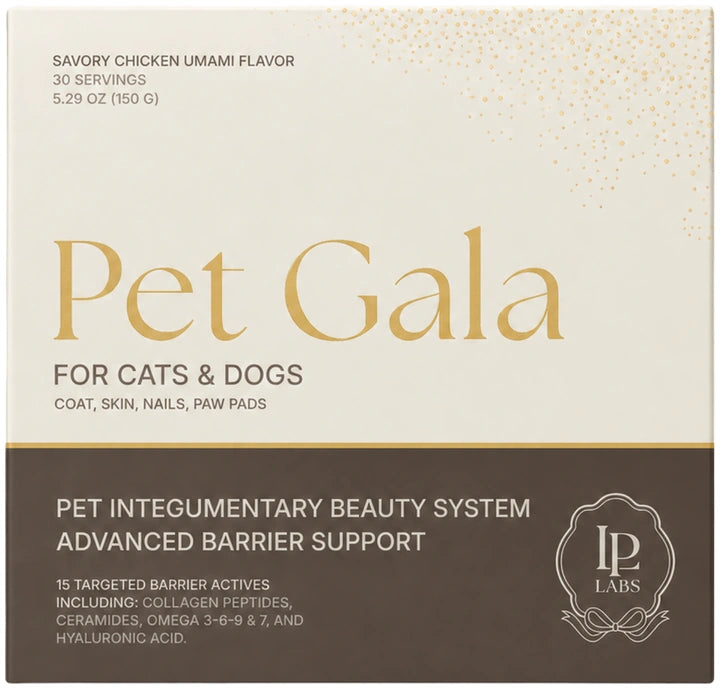
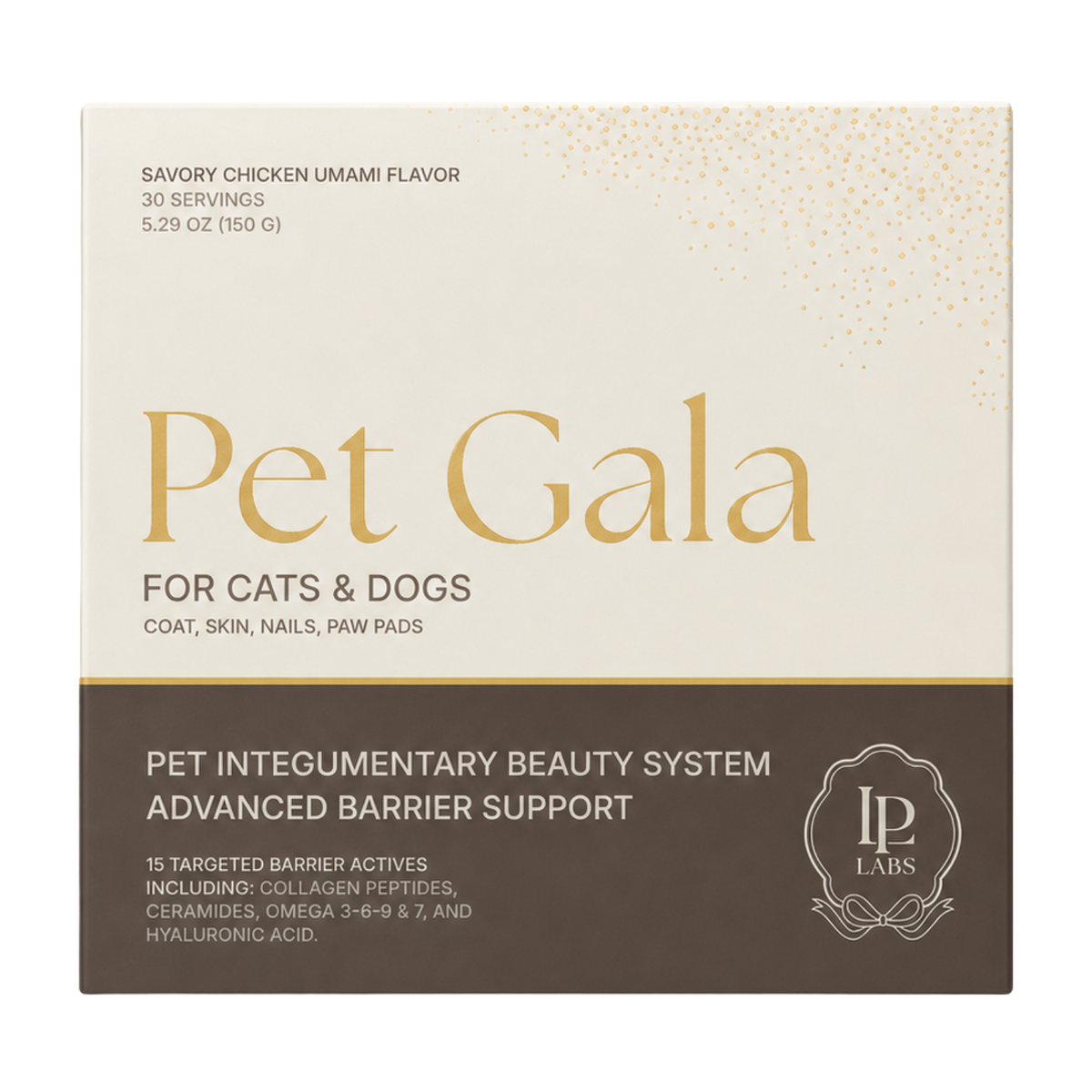
A well-designed beauty formula earns its place by being consistent, conservative, and easy to use. Pet Gala™ is built for this, with biotin at 50 mcg, zinc at 1.5 mg, omega 3-6-9 at 150 mg, and marine collagen peptides at 500 mg per sachet for keratin, coat, and surface texture, and it carries no megadosed fat-soluble vitamins, which fits the cautious approach this page recommends. It supports the whole coat rather than chasing one nutrient, so avoid stacking products and let one steady routine do the work. Explore Pet Gala™ →
A Simple, Safe Plan for a Softer, More Polished Coat
If you want a coat that looks cared-for, build around three anchors: a complete diet, a grooming rhythm your cat accepts, and a supplement choice that respects safety. Be especially cautious with fat-soluble vitamins, since excess vitamin D from foods or supplements can be harmful (Wehner A, 2013).
When you keep the plan simple, results are easier to see and easier to trust: a cleaner feel at the roots, less breakage in long hair, and a shine that looks natural rather than oily. If you’re unsure where to start, ask your veterinarian to review your cat’s full intake (food, treats, toppers, and supplements) so you’re supporting coat beauty without accidental overlap.
“The goal isn’t more vitamins. The goal is a coat that looks unmistakably well-kept.”
Educational content only. This material is not a substitute for veterinary advice. Always consult your veterinarian about your dog’s specific needs. These statements have not been evaluated by the Food and Drug Administration. Products mentioned are not intended to diagnose, treat, cure, or prevent any disease.
Glossary
- Coat Sheen: The way fur reflects light; often noticed as “shine” in daylight.
- Dull Coat: Fur that looks flat or matte, often paired with a rougher feel when petting.
- Flaking (Dandruff): Visible skin flakes at the hair base; can be worsened by dryness or irritation.
- Hair Cycle: The natural rhythm of hair growth and shedding; affects how quickly coat changes appear.
- Fat-Soluble Vitamins: Vitamins stored in the body (e.g., A, D, E, K); excess can be a safety concern.
- Supplement Stacking: Using multiple fortified products at once, increasing overlap and risk of excess.
- Complete and Balanced Diet: A cat food formulated to meet established nutrient requirements for a life stage.
- Palatability: How willingly a cat eats a product; crucial for consistent daily use.
- Coat Matting: Tangling and clumping of fur, common in long-haired cats; influenced by grooming and coat condition.
Related Reading
Common Feline Integumentary Issues
• Cat Dandruff
• Why Is My Cat Shedding So Much
• Cat Hair Loss
Comfort & Recovery
• Skin & Coat Supplements for Cats
• Cat Nail Supplement
• Best Supplements for Cat Shedding
Ingredient-Level Articles
• Biotin for Cats
• Silica for Cats
• Hyaluronic Acid for Cats
• Ceramides for Cats
References
Grant CE. Dietary intake of amino acids and vitamins compared to NRC requirements in obese cats undergoing energy restriction for weight loss. PubMed. 2020. https://pubmed.ncbi.nlm.nih.gov/33160364/
Vecchiato CG. Case Report: A Case Series Linked to Vitamin D Excess in Pet Food: Cholecalciferol (Vitamin D3) Toxicity Observed in Five Cats. PubMed. 2021. https://pubmed.ncbi.nlm.nih.gov/34490396/
RVA. Vitamin-mineral supplements do not guarantee the minimum recommendations and may imply risks of mercury poisoning in dogs and cats. PubMed. 2021. https://pubmed.ncbi.nlm.nih.gov/33901261/
Crossley VJ. Vitamin D toxicity of dietary origin in cats fed a natural complementary kitten food. PubMed. 2017. https://pubmed.ncbi.nlm.nih.gov/29270305/
Wehner A. Vitamin D intoxication caused by ingestion of commercial cat food in three kittens. PubMed. 2013. https://pubmed.ncbi.nlm.nih.gov/23295272/
Bai SC. Vitamin B-6 requirement of growing kittens. PubMed. 1989. https://pubmed.ncbi.nlm.nih.gov/2754508/
Heanes DL. Vitamin A concentrations in commercial foods for dogs and cats. PubMed. 1990. https://pubmed.ncbi.nlm.nih.gov/2222376/
Bai SC. The level of dietary protein affects the vitamin B-6 requirement of cats. PubMed. 1991. https://pubmed.ncbi.nlm.nih.gov/2051225/
Rumbeiha. A review of class I and class II pet food recalls involving chemical contaminants from 1996 to 2008. PubMed Central. 2011. https://pmc.ncbi.nlm.nih.gov/articles/PMC3614097/
Summers. Evaluation of iron, copper and zinc concentrations in commercial foods formulated for healthy cats. PubMed Central. 2022. https://pmc.ncbi.nlm.nih.gov/articles/PMC10812249/
FAQ
What are vitamins for cats coat meant to support?
They’re meant to support normal skin comfort and hair quality so the coat looks smoother, softer, and more evenly shiny. Owners usually notice changes in sheen, flake visibility, and how the fur lays after petting or brushing. They’re not a substitute for parasite control, allergy care, or a complete diet.
Why does coat shine change even with good food?
Shine can shift with seasons, indoor dryness, stress, grooming habits, and how well your cat digests the current diet. Even small routine changes—new treats, less brushing, or a recent move—can show up as dullness or extra shedding.
Do cat coat vitamins work if my cat already eats kibble?
A complete diet is designed to meet baseline needs, but visible coat condition is also influenced by consistency, grooming, and individual sensitivity. Some cats look “fine” on paper yet still benefit from a routine that supports a smoother feel and more even sheen. The goal isn’t replacing food; it’s supporting daily presentation in a controlled, cat-appropriate way.
How soon can I see results from vitamins for cats coat?
Many owners first notice tactile changes—less dryness or flaking—before they see a stronger shine. Because hair grows in cycles, the most convincing improvements tend to appear gradually with steady use and steady grooming. To judge fairly, keep food and treats stable while you trial one product.
Are cat vitamins for coat safe for daily use?
They can be, but safety depends on formulation, your cat’s life stage, and whether you’re stacking multiple fortified products. Fat-soluble vitamins deserve extra caution, since excess vitamin D intake has been linked to toxicity in cats. If your cat is a kitten, senior, or has a medical condition, ask your veterinarian before starting.
What side effects should I watch for with coat supplements?
The most common issues are digestive: softer stools, vomiting, or food refusal, especially if the product is introduced too quickly. Skin-related worsening—more itching, redness, or bumps—should also be taken seriously. Stop the new product and contact your veterinarian if symptoms persist or are severe.
Can I combine multiple cat coat vitamins together?
It’s usually a bad idea to stack multiple multivitamins or “skin and coat” products. Overlap can push totals too high, and vitamin D is a particular concern because excessive intake can be harmful(Crossley VJ, 2017). A cleaner strategy is one well-chosen product plus consistent grooming and a stable diet.
Do vitamins for cats coat help with shedding?
They may support normal skin and hair turnover, which can make shedding feel more even and less “explosive.” But shedding is also driven by season, indoor lighting, stress, and how often loose hair is removed with brushing. Pair any supplement with a grooming rhythm your cat tolerates, and track changes in brush-out volume.
Are cat vitamins for coat different from dog coat supplements?
Yes—cats have different nutrient requirements and sensitivities, and products formulated for dogs may not be appropriate. The safest choice is a cat-specific formula with clear directions and conservative claims. If a label says “for pets” without cat-specific guidance, treat it as a red flag.
What if my cat is on a weight-loss plan?
During calorie restriction, overall intake of amino acids and vitamins can shift compared with recommended levels, and coat changes may be one of the first visible clues. That doesn’t mean weight loss is wrong—it means the plan should be carefully designed. Ask your veterinarian to review the diet and any add-ons so you avoid overlap and keep nutrition complete.
Is vitamin D a concern in coat supplements for cats?
Yes. Vitamin D is essential, but excessive vitamin D3 intake has been linked to toxicity in cats, and cholecalciferol has been identified as a cause in reported cases. That’s why “stacking” fortified products is risky. Choose conservative, cat-specific products and keep your cat’s overall intake simple and reviewable.
How do I choose high-quality cat coat vitamins?
Look for cat-specific labeling, transparent ingredients, realistic claims, and a company that can answer questions about sourcing and testing. This matters because some vitamin-mineral supplements may not meet minimum recommendations for cats(RVA, 2021). Avoid products that encourage combining multiple multivitamins or promise dramatic changes overnight.
Can kittens take vitamins for cats coat safely?
Kittens are more sensitive to excesses, so supplementation should be conservative and veterinarian-approved. Vitamin D is a particular concern because excessive dietary vitamin D has been associated with toxicity risk in cats and kittens(Wehner A, 2013). In many cases, the best foundation is a complete kitten diet plus gentle grooming.
Do certain breeds need more cat vitamins for coat?
Breed influences grooming needs more than vitamin needs. Long-haired and double-coated cats often benefit from more frequent brushing, which makes any nutrition support look more noticeable because the coat lays flatter and mats less. If you add a supplement, keep it simple and consistent rather than stacking products.
Can coat supplements interact with medications my cat takes?
They can, depending on ingredients and your cat’s condition. If your cat takes thyroid medication, has kidney disease, or is on a prescription diet, it’s smart to ask your veterinarian before adding any supplement so the full plan stays coherent. Bring the product label to your appointment and avoid starting multiple new items at once.
What should I do if my cat’s coat suddenly worsens?
Sudden changes—bald patches, scabs, intense itching, strong odor, or redness—deserve a veterinary check. Those signs can point to parasites, infection, or allergies, and vitamins alone won’t address the cause. Pause any new supplements until you have clarity, then rebuild a simple routine once the skin is comfortable again.
Are vitamin-mineral supplements always effective for coat appearance?
Not always. Effectiveness can vary by cat, and research has noted that vitamin-mineral supplements may not reliably meet recommendations or guarantee outcomes. That’s why it helps to focus on consistent routines and quality signals rather than dramatic promises. Track visible changes (sheen, flaking, shedding) and keep variables stable while you evaluate.
How do I give cat vitamins for coat to picky cats?
Start small and attach it to a predictable moment—after brushing, with the first bites of breakfast, or during a calm evening treat. Avoid mixing multiple new flavors at once, and don’t turn meals into a negotiation. If your cat refuses, switch formats rather than increasing pressure.
What’s a simple decision framework for coat supplement choices?
First, confirm the basics: complete diet, parasite prevention, and a grooming rhythm your cat accepts. Second, avoid overlap—one product is easier to evaluate than three. Third, choose conservative formulas with clear cat-specific directions. If your cat is a kitten, senior, or has a medical condition, get vet input before starting.
When should I call a vet about coat and skin changes?
Call if you see rapid hair loss, open sores, significant redness, intense itching, lethargy, appetite changes, or vomiting. Also call if you suspect your cat ingested a high-vitamin product, since excess vitamin D can be dangerous. Once medical causes are addressed, you can rebuild a simple routine focused on visible coat comfort and shine.
What does research say about supplement risks in cats?
Published concerns include variability in whether vitamin-mineral supplements meet minimum recommendations and the possibility of unwanted exposures depending on product quality. Separately, vitamin D excess has been associated with toxicity cases in cats. The practical response is choosing one conservative, cat-specific product and avoiding stacks.
Discover LPL-01: How This Fits Into a Complete Feline Integumentary Support System
Skin, coat, and nails in cats are not surface traits. They reflect deeper biological systems—barrier integrity, hydration dynamics, lipid balance, and structural protein turnover—working in coordination.
When these systems drift, the signs are subtle but telling: reduced coat softness, increased shedding, dryness, brittle claws, changes in grooming behavior.
This article explores one piece of that system. If you want to understand how true coat quality and skin resilience are built in cats—and what actually drives visible improvement—you need to zoom out.
Start with the underlying science:
- Feline Skin & Coat Framework →
A structured view of how skin, coat, and claw health are maintained across collagen synthesis, lipid nourishment, and barrier function. - Barrier Protection Coverage Modeling →
A systems-level map of which integumentary pathways are most vulnerable—and how layered nutritional inputs can support them. - 2026 Market Research: Best Cat Skin & Coat Supplements →
A feline-focused review of skin and coat formulas shaped by grooming behavior, barrier resilience, coat softness, ingredient quality, and daily usability. - LPL-01 Standard →
The formulation system that translates these models into real-world supplementation—covering multiple pathways in a coordinated way.
Essential Summary
Why are vitamins for a cat’s coat important?
A glossy coat is one of the clearest signs of everyday care. The right approach to vitamins for cats coat balances nutrition, grooming, and safety—especially avoiding excesses from stacking multiple products. Choose cat-specific formulas, keep routines consistent, and involve your veterinarian when your cat is a kitten, senior, or on a weight-loss plan.
Pet Gala is designed for owners who want coat support that shows up in daily softness, shine, and a well-kept look—without turning supplementation into a high-dose experiment. It fits into a simple routine that complements complete diets and grooming, supporting the skin, coat, and nails as a unified “presentation” system.
Pet Gala™
From $79
The scratching is completely gone, his coat looks healthy and shiny!
— Lena
He was struggling with itching, now he's glowing.
— Grace
Considering vitamins for a cat’s coat?
If you’re searching to understand vitamins for a cat’s coat
If you’re choosing cat coat vitamins, start with a simple audit: confirm your cat’s food is complete for their life stage, then list every add-on (treats, toppers, chews, oils). The safest, most believable results usually come from reducing overlap, not increasing it—especially with fat-soluble vitamins, where excess can be risky. Next, pick one cat-specific product you can use consistently, and pair it with a grooming rhythm your cat actually enjoys. Track visible signals: sheen in daylight, flake reduction, and how evenly the coat lays after brushing. For owners who want disciplined, daily support that complements diet and grooming without turning into a supplement stack, Pet Gala fits the routine naturally.
Learn about how our DVMs think about the feline barrier
Dr. Sarah Calvin DVM
Pet Gala™
From $79
Explore the visible signs of whole-body wellness
Related Reading
A beautiful cat coat has a particular look: light catches evenly, the fur feels plush instead of brittle, and brushing becomes less of a cleanup operation and more of a quiet bonding ritual.