5 Coat Warning Signs of Illness in Dogs & Cats
Read full insightCollagen for Cats: Benefits for Skin, Coat, and Joints
By La Petite Labs Editorial 15 min read
Is collagen good for cats? For most cats, yes — as an optional, beauty-forward add-on, not a daily requirement. Cats make their own collagen and a complete diet already supplies the amino acids they need, so a supplement is about refining what you can see: a coat with more shine, skin that looks calm rather than dry, and nails that stay smooth. It is support for visible condition, not a medical fix.
What owners usually notice first is tactile — the coat feels less papery and brushes more easily — with visible shine following over a few consistent weeks. Adding it is low-fuss: a small amount of collagen powder blended into wet food usually disappears into the meal. The honest framing is simple: when the skin surface is well supported, the coat tends to look smoother and more luminous, and the best collagen for a cat is the one your cat will reliably eat.
- Collagen is a structural protein in skin and connective tissue; supporting it shows up as a calmer skin surface and a more polished coat.
- For most cats collagen is optional, not essential — they make their own and get the building blocks from a complete diet, so it is refinement, not a rescue.
- Owners usually try collagen when the coat looks dull or dry or is hard to keep sleek despite regular brushing.
- Add it without fuss: mix a small amount of collagen powder into wet food, start low, scale to your cat's size, and watch appetite and stool.
- Expect tactile changes first (softer, less static coat) and visible shine over a few consistent weeks; side effects, when they happen, are usually digestive.
- If you see redness, sores, sudden hair loss, or fragile skin, pause supplements and see your veterinarian first.
Why Coat Shine Feels Like Proof of Everyday Care
A glossy coat is one of the clearest “yes” signals a cat can give you: comfort, good grooming, and skin that isn’t quietly irritated. Collagen for cats sits at the center of that visible story because collagen is a major structural protein in skin and connective tissue. When collagen structure is abnormal, feline skin can become fragile—an extreme reminder of how much this protein contributes to everyday integrity and appearance (Holbrook KA, 1980).
A collagen supplement for cats isn’t about chasing a medical promise; it’s about supporting the look and feel you can actually notice: smoother coat lay, less “papery” dryness, and a more polished finish after brushing. For science-minded owners, the reason to choose a formula like Pet Gala is simple: it’s designed as visible-care support for skin, coat, and nails—so your routine shows up where it matters, not as a single-nutrient gamble.
What Collagen Is, and Why Cats’ Skin Relies on It
Collagen is the structural protein that gives skin its strength and snap, supports the tissue around each hair follicle, and helps the coat sit smoothly. That is what it does for a cat day to day: a comfortable, intact skin surface that a glossy coat can grow from. Rare disorders that disrupt collagen, such as dermatosparaxis, cause striking skin fragility — an extreme reminder of how much this one protein holds together (Counts DF, 1980).
Most cats are nowhere near that, of course. For them, a collagen supplement is chosen for appearance goals: coat luster, smoother texture, and skin comfortable enough to make grooming easy. The best option supports those visible signals while staying gentle on digestion and simple to use every day.
Signs Owners Notice That Spark Interest in Collagen
Owners usually come to collagen for cats because they’re seeing something specific: a coat that looks dull under window light, flaky patches that return quickly after brushing, or nails that seem to split instead of staying smooth. These aren’t always “illness” signs; they’re often presentation signs—your cat’s outer layer isn’t reflecting the care you’re already giving.
A collagen supplement for cats can be a reasonable addition when diet is stable and grooming is consistent, yet the finish still feels a step short of polished. If the skin is red, painful, or your cat is overgrooming, treat that as a veterinary conversation first. Supplements are best when they’re supporting comfort and appearance, not masking a problem.
Formats That Work: Powders, Mix-ins, and Easy Routines
Not all collagen formats feel the same in a cat’s bowl. Collagen powder for cats is popular because it can be mixed into wet food with minimal fuss, while chews can be hit-or-miss for feline preferences. If your cat is sensitive to texture, a fine powder that blends smoothly is often the least disruptive option.
When evaluating the best collagen for cats, prioritize palatability and simplicity over trendy add-ons. Cats are routine-driven; a supplement that changes smell or mouthfeel too much can backfire by reducing food intake. The right product should feel like it was always part of the meal, supporting a calm daily rhythm.
From Structure to Surface: How Support Shows up Visibly
A useful way to think about collagen is as part of the “fabric” of skin. In feline dermatosparaxis, ultrastructural studies show collagen fibers with altered organization, underscoring collagen’s role in maintaining skin integrity (Holbrook KA, 1980). While everyday cats aren’t dealing with that extreme, the concept translates: when the skin’s structure is supported, the surface tends to look calmer and feel smoother.
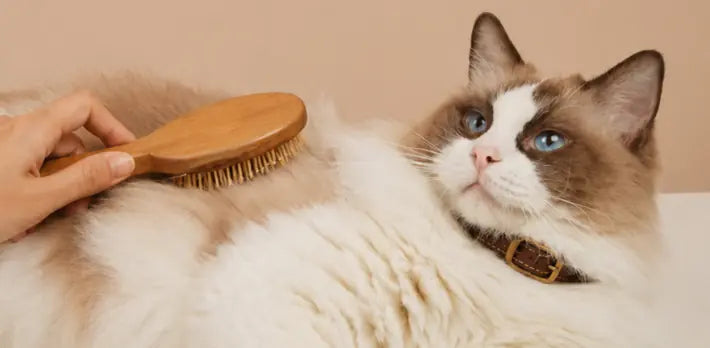
This is why collagen for cats is often paired with grooming: brushing reveals the surface. When the coat lies neatly and the skin looks comfortable, the result is immediate and visible. The best collagen supplement for cats supports that “freshly groomed” look without making the routine complicated.
“The goal isn’t a miracle coat. It’s a finish that looks quietly, consistently well-kept.”
When Will You Notice Collagen Working?
Owners often ask when they’ll see changes. With collagen supplements for cats, the earliest feedback is usually tactile: the coat feels less dry, and brushing seems to pull less static. Visual changes—more shine, a smoother lay along the back, less visible flaking—tend to follow as your routine stays consistent.
If nothing improves, don’t just keep adding products. Dull coat can reflect stress, parasites, dental pain, or diet mismatch. And if you ever see unusual skin fragility, that’s a veterinary issue; feline skin fragility syndromes have been described in association with systemic illness and can improve when the underlying cause is addressed (Furiani N, 2017).
What “Best” Means for Cats: Fit, Simplicity, Consistency
The “best collagen for cats health” is less about a single ingredient and more about fit: a formula your cat tolerates, a serving approach that doesn’t disrupt appetite, and a purpose that matches what you’re trying to see. For most households, that purpose is simple—coat shine, comfortable skin, and nails that look clean and strong.
If you’re choosing between products, avoid those that imply they can treat disease. Collagen is foundational to skin integrity, and disorders involving collagen can be serious and complex (Fernandez CJ, 1998). Your supplement should stay in its lane: supporting everyday presentation and grooming confidence, while your vet handles medical diagnosis and treatment.
Which Cats Benefit Most from a Beauty-forward Approach
Some cats are more likely to benefit from a “finishing touch” approach: seniors with a slightly rougher coat, indoor cats with dry air exposure, or long-haired cats whose grooming demands are higher. In these cases, collagen for cats can be part of a routine that makes the coat easier to maintain and more visibly sleek.
But if your cat is underweight, losing muscle, or seems unwell, prioritize a medical workup. Skin fragility can occur alongside cachexia and systemic disease, and it’s been documented as a reversible syndrome when the underlying issue is addressed (Furiani N, 2017). Supplements should follow stability, not substitute for it.
How Much Collagen Can You Give a Cat?
How much collagen can you give a cat? Start small — a modest amount of powder stirred into a familiar food — and scale to your cat's size rather than guessing high. Keep everything else steady for a couple of weeks so you can read the signal clearly, and watch stool quality and appetite. If your cat refuses the food, stop and reassess; palatability is not a minor detail in feline care.
If you already feed a complete diet, you are not filling a gap — you are choosing a targeted layer of support for visible condition. That is the whole point: enhance the look you can see and the comfort you feel during grooming, without turning care into a project.
Special Cases: Cats with Connective Tissue Diagnoses
If your cat has a diagnosed connective-tissue disorder, collagen conversations deserve extra care. In cats with Ehlers-Danlos–type presentations, genetic variants affecting collagen-related genes have been identified, alongside signs like skin hyperextensibility and joint hypermobility (Kiener S, 2022). That doesn’t mean a supplement can “fix” a genetic condition; it does mean your veterinarian may be particularly attentive to skin handling, grooming tools, and any product that could change stool quality or appetite.
For these cats, the best collagen for cats health is the one that fits the whole plan: gentle, consistent, and easy to stop if anything looks off. Keep goals aesthetic and comfort-focused—coat manageability, less flaking, calmer skin—while your vet monitors the bigger picture. Pet Gala is positioned for supportive daily care, not as a replacement for veterinary management.
“In cats, skin comfort and coat shine tend to rise together—grooming makes the difference visible.”
Clinical Vignette of When Skin Changes Point Deeper Than the Surface
Maverick, a 4-year-old Siamese cat, was brought in for hair loss across his lower abdomen and red, flaky skin lesions that had progressed over the previous month. His owners were unsure whether he was itchy or overgrooming.
Examination showed broken hairs, abdominal alopecia, and lesions consistent with bacterial skin infection. Further testing ruled out fleas, FeLV/FIV, and common fungal causes. Because his grooming pattern suggested deeper discomfort, his veterinarian continued the workup.
Radiographs and urinalysis revealed bladder stones, crystalluria, and blood in the urine. Maverick’s overgrooming was linked to urinary pain — a case where skin changes were secondary to an internal problem.
His care required a staged plan: stabilizing the skin infection, surgically removing the bladder stones, managing pain, transitioning to a therapeutic diet, and supporting skin-barrier recovery with appropriate nutrition and fish oil.
Hair regrowth began by 8 weeks. By 6 months, his coat had fully recovered, with no recurrence after the urinary issue was resolved.
Clinical takeaway: Maverick’s case shows why feline coat loss and overgrooming deserve careful veterinary investigation. Skin and coat health can reflect pain, stress, nutrition, infection, barrier weakness, or internal disease — not just surface-level grooming behavior.
Single-case vignette. Not generalizable. Veterinary diagnosis and oversight are essential for overgrooming, hair loss, skin lesions, urinary signs, pain, or suspected infection.
Natural Options That Still Respect Feline Preferences
Some owners look for natural collagen for cats because they want fewer “extras” and more recognizable inputs. In practice, “natural” should mean transparent sourcing, minimal additives, and a format your cat will actually accept. Collagen powder for cats can be convenient because it disappears into wet food, but it should be neutral in smell and texture to avoid food refusal—especially in picky cats.
Also remember: coat shine is not only about collagen. Essential fats matter for skin presentation, and cats have unique fatty-acid needs—research on arachidonate in cats underscores that feline physiology isn’t simply “small dog” physiology (MacDonald ML, 1984). The best collagen supplement for cats fits alongside a complete diet and thoughtful grooming, so the final look is cohesive, not forced.
Quality Signals That Separate Good from Noisy Formulas
If you’re comparing collagen supplements for cats, quality signals matter more than hype. Look for clear labeling, consistent batch practices, and a straightforward ingredient list. Avoid products that lean on dramatic promises; your goal is a refined, well-kept look—softness, sheen, and comfortable skin—rather than a “before-and-after miracle.”
A practical way to judge “best collagen for cats” is to ask: will this be easy to use every day, and will it complement a cat’s normal eating patterns? Cats can be sensitive to sudden changes. Choose a supplement you can introduce gradually, monitor, and keep consistent. Pet Gala is built to sit naturally inside a daily care ritual, not disrupt it.
What Results Look Like When They’re Realistic and Visible
Visible results are usually subtle, then unmistakable. With collagen for cats, owners often notice changes first during grooming: the brush glides more easily, the coat lies flatter, and the “dusty” look of dryness is less obvious. That’s the right kind of feedback loop—small confirmations that add up to a more polished presentation.
Keep expectations grounded. If your cat’s skin looks unusually fragile, tears easily, or bruises, that’s not a supplement problem to solve at home; collagen abnormalities are central to certain feline skin fragility conditions (Counts DF, 1980). In those cases, the best next step is veterinary evaluation, then supportive routines that prioritize gentle handling and comfort.
Pairing Supplements with Grooming for a Polished Finish
Grooming is where beauty care becomes relationship care. A collagen supplement for cats works best when it’s paired with the basics that make a coat look intentionally cared for: regular brushing, a diet that agrees with your cat, and hydration support through wet food or fountains. The supplement is not the whole story; it’s the finishing layer that helps the story read as “well-kept.”
If you’re using collagen powder for cats, mix it into a familiar texture and keep the routine calm. Cats notice changes. A consistent ritual—same bowl, same time, same gentle brush—often does as much for visible coat quality as any single ingredient. Pet Gala is designed to integrate into that kind of steady, low-drama care.
Safety, Tolerance, and When to Pause and Reassess
Side effects from collagen are uncommon and usually digestive — vomiting, diarrhea, or a change in appetite — so introduce any new supplement slowly and stop if those appear alongside it (see [appetite changes](https://lapetitelabs.com/pages/cat-overgrooming-differential)). Collagen itself is a food-grade protein; most issues come from too much, too fast, or from flavorings and extras rather than the collagen.
Context still decides safety: the cat in front of you, their diet, and their history. If your cat is on medication, or has kidney disease, inflammatory bowel disease, or a history of food sensitivities, ask your veterinarian before starting. The goal is a comfortable, radiant look that never comes at the cost of digestive calm.
Why “Adequate Diet” Can Still Leave Room for Refinement
A common question is whether cats “already get enough” building blocks from a complete diet. Many do. But beauty care isn’t only about adequacy; it’s about presentation. Even when nutrition is solid, owners may still want a more noticeable sheen, smoother texture, and nails that look clean and strong. That’s the space where the best collagen for cats health can make sense: not as a rescue, but as refinement.
Think of it like coat conditioning: the baseline may be fine, yet the finish can be better. Pet Gala fits this logic by supporting the visible “outer layer” signals—skin comfort, coat luster, and grooming ease—so your cat looks as cared for as they are.
When Skin Changes Are a Vet Visit, Not a Beauty Project
When should you call the vet instead of adjusting supplements? If you see sudden hair loss, open sores, significant dandruff with redness, or skin that seems to tear easily, treat it as a medical issue first. Feline skin fragility syndromes have been documented in multiple cats and can be associated with systemic illness and cachexia, with skin integrity affected in a way that can be reversible when the underlying issue is addressed (Furiani N, 2017).
In other words: a supplement can support a polished look, but it shouldn’t delay diagnosis. Once your vet has ruled out parasites, infection, endocrine disease, or systemic causes, a collagen for cats routine can be a calm, supportive add-on—especially when paired with gentle grooming and a diet your cat thrives on.
A Calm Checklist for Choosing the Right Daily Support
Choosing a collagen supplement comes down to three questions: Will my cat reliably eat it? Does it fit their sensitivities and medical history? And does it support the visible outcomes I care about — shine, softness, comfortable skin — without overpromising? If yes, it is worth keeping in rotation.
It also helps to judge the label, not the marketing: disclosed amounts, a named form, testing you can look up. A skin-and-coat system like Pet Gala, for example, lists marine collagen at 500 mg per serving with biotin and omegas, and mixes into food rather than adding another treat. Collagen works best as one part of a well-kept routine — consistent meals, hydration, calm grooming — so the care you give is easy to see.
“Choose supplements that respect feline appetite: the best routine is the one your cat accepts.”
Educational content only. This material is not a substitute for veterinary advice. Always consult your veterinarian about your dog’s specific needs. These statements have not been evaluated by the Food and Drug Administration. Products mentioned are not intended to diagnose, treat, cure, or prevent any disease.
Glossary
- Collagen: A structural protein that contributes to skin strength and connective tissue support.
- Collagen Peptides: Smaller collagen fragments that mix easily into food and are digested like other proteins.
- Integumentary System: The body’s outer layer system—skin, coat (hair), and nails/claws.
- Skin Barrier: The protective outer function of skin that influences comfort, hydration appearance, and sensitivity.
- Coat Luster: The way a coat reflects light; often used as a visible marker of grooming and skin comfort.
- Palatability: How willingly a cat eats a product; critical for consistent supplementation.
- Food Refusal: When a cat avoids a meal due to smell, texture, or association; a key risk with new supplements.
- Dermatosparaxis: A rare condition involving abnormal collagen structure and severe skin fragility in cats.
- Ehlers-Danlos Syndrome (Cats): A connective-tissue disorder associated with skin hyperextensibility and joint hypermobility; linked to collagen-related gene variants.
Related Reading
Common Feline Integumentary Issues
• Cat Dandruff
• Why Is My Cat Shedding So Much
• Cat Hair Loss
Comfort & Recovery
• Skin & Coat Supplements for Cats
• Cat Nail Supplement
• Best Supplements for Cat Shedding
Ingredient-Level Articles
• Biotin for Cats
• Silica for Cats
• Hyaluronic Acid for Cats
• Ceramides for Cats
References
Counts DF. Dermatosparaxis in a Himalayan cat: I. Biochemical studies of dermal collagen. PubMed. 1980. https://pubmed.ncbi.nlm.nih.gov/7351504/
Holbrook KA. Dermatosparaxis in a Himalayan cat: II. Ultrastructural studies of dermal collagen. PubMed. 1980. https://pubmed.ncbi.nlm.nih.gov/7351497/
Furiani N. Reversible and cachexia-associated feline skin fragility syndrome in three cats. PubMed. 2017. https://pubmed.ncbi.nlm.nih.gov/28560784/
MacDonald ML. Effects of dietary arachidonate deficiency on the aggregation of cat platelets. PubMed. 1984. https://pubmed.ncbi.nlm.nih.gov/6146457/
Kiener S. Independent COL5A1 Variants in Cats with Ehlers-Danlos Syndrome. PubMed. 2022. https://pubmed.ncbi.nlm.nih.gov/35627182/
Fernandez CJ. Staining abnormalities of dermal collagen in cats with cutaneous asthenia or acquired skin fragility as demonstrated with Masson's trichrome stain. PubMed. 1998. https://pubmed.ncbi.nlm.nih.gov/34644957/
Sun M. Considerations on amino acid patterns in the natural felid diet: a review. PubMed Central. 2024. https://pmc.ncbi.nlm.nih.gov/articles/PMC11603590/
Summers SC. Evaluation of nutrient content and caloric density in commercially available foods formulated for senior cats. PubMed Central. 2020. https://pmc.ncbi.nlm.nih.gov/articles/PMC7517497/
Bilgiç B. Investigation of Trace and Macro Element Contents in Commercial Cat Foods. PubMed Central. 2025. https://pmc.ncbi.nlm.nih.gov/articles/PMC11633335/
Summers. Evaluation of iron, copper and zinc concentrations in commercial foods formulated for healthy cats. PubMed Central. 2022. https://pmc.ncbi.nlm.nih.gov/articles/PMC10812249/
Lefort-Holguin M. Efficacy and Safety of a Diet Enriched with EPA and DHA, Turmeric Extract and Hydrolysed Collagen in Management of Naturally Occurring Osteoarthritis in Cats: A Prospective, Randomised, Blinded, Placebo- and Time-Controlled Study. PubMed. 2024. https://pubmed.ncbi.nlm.nih.gov/39595350/
Gomes SA. Collagen toxicity in rabbits. PubMed. 1991. https://pubmed.ncbi.nlm.nih.gov/2017782/
Minami. Clinical application of d-glucosamine and scale collagen peptide on canine and feline orthopedic diseases and spondylitis deformans. 2011. https://www.sciencedirect.com/science/article/pii/S0144861710004819
Peloquin. Presumed Choline Chloride Toxicosis in Cats With Positive Ethylene Glycol Tests After Consuming a Recalled Cat Food. 2021. https://www.sciencedirect.com/science/article/pii/S1938973621000416
Caporaso. QIIME allows analysis of high-throughput community sequencing data. 2010. https://www.mdpi.com/2076-2615/12/4/498
Ahmed. Bioaccumulation of heavy metals in some commercially important fishes from a tropical river estuary suggests higher potential health risk in children than adults. Nature. 2019. https://www.nature.com/articles/s41598-021-00467-4
DeBeer. A Review of Pet Food Recalls from 2003 Through 2022. 2024. https://www.sciencedirect.com/science/article/pii/S0362028X23068837
FAQ
What is collagen for cats, in simple everyday terms?
Collagen for cats means adding collagen proteins or peptides to support the look and feel of skin, coat, and nails—part of the structure that helps skin stay smooth and intact. It’s not a promise to fix disease; it’s a way to support visible condition as part of daily care. Some daily formulas include it: Pet Gala™ provides 500 mg of marine collagen peptides per sachet alongside ceramides and hyaluronic acid.
Why do cat parents use collagen for coat shine?
They’re usually chasing a specific signal: a coat that reflects light cleanly, lies flatter after brushing, and feels less dry. When skin looks comfortable, the coat often reads as more finished. Collagen is a structural protein in skin, and feline disorders with abnormal collagen show how tied it is to skin integrity. For everyday shine, grooming consistency and a complete diet do most of the work.
How does a collagen supplement for cats typically work?
Most products provide collagen peptides or collagen-rich ingredients that are digested into amino acids and small peptides. The body then uses those building blocks as needed, including in tissues that influence skin and coat appearance. Because cats can show skin-integrity issues when collagen structure is abnormal, it’s reasonable to keep goals focused on comfort and appearance rather than medical outcomes.
Is collagen for cats safe for daily use?
For many healthy cats, collagen is used as a gentle, food-like addition. The main practical risks are digestive upset, food refusal, or sensitivity to flavorings and extra ingredients. If your cat has chronic disease, takes medication, or has a history of GI sensitivity, check with your veterinarian first. Introduce it slowly and keep the rest of the diet stable so you can read the response.
When should I avoid collagen supplements for cats?
Avoid starting any new supplement if your cat is vomiting, has persistent diarrhea, is refusing food, or is losing weight—those deserve a veterinary workup first. Also pause if you notice itching, facial swelling, or sudden behavior changes after introducing a product. Cats with unusual skin fragility can have underlying conditions where collagen integrity is part of the picture, so let your vet lead before adding anything.
What side effects can a collagen supplement for cats cause?
The most common issues owners report with new supplements are soft stool, gas, vomiting, or a cat deciding the food smells wrong and walking away. These are usually about tolerance and formulation, not collagen as a concept. Introduce slowly, keep the rest of the diet stable, and stop if symptoms persist or your cat seems unwell.
Can collagen for cats interact with medications or prescriptions?
Collagen itself is food-like, but supplements can still complicate medication routines through added ingredients, flavorings, or changes in appetite. Any cat taking thyroid medication, steroids, or chronic pain meds should be cleared by a veterinarian before adding new supplements. If your cat has a complex medical plan, bring the ingredient label to your appointment so your vet can assess fit.
Is collagen for cats appropriate for kittens or seniors?
Seniors are often the group where owners notice coat-texture changes first, so they’re common candidates for beauty-focused support. Kittens usually do best with minimal additions unless your veterinarian recommends otherwise. For any life stage, the priority is tolerance and a complete diet, with new additions introduced one at a time.
Are some breeds more likely to benefit from collagen?
Long-haired breeds and cats with dense undercoats often show the most obvious finish changes because grooming reveals texture and shine quickly. That said, breed isn’t destiny—diet fit, stress level, and grooming habits usually matter more. If your cat has unusually stretchy skin or frequent skin tears, that’s a veterinary conversation, since collagen-related disorders exist in cats.
Is collagen for cats different from collagen for dogs?
The ingredient may look similar, but cats aren’t small dogs in taste, tolerance, or nutrient context. Feline physiology has unique needs, including essential fatty acids that influence skin and coat appearance. That’s why cat-specific formulation and palatability matter as much as the collagen source. Choose a product made and flavored for cats rather than repurposing a dog supplement.
How soon can I see results from collagen for cats?
Most owners notice the earliest changes during grooming: the coat feels softer, looks less dusty, and brushes more smoothly. Visual shine is easier to spot in bright natural light and on darker coats. If your cat’s skin looks fragile or tears easily, don’t wait for a supplement to kick in—skin-integrity problems can be part of documented feline syndromes and need a vet.
What quality signals define the best collagen for cats?
Look for transparent sourcing, simple labeling, and minimal unnecessary additives. A good product should mix easily, smell mild, and avoid strong flavors that can trigger food refusal. Also avoid products that imply they can treat skin diseases—collagen abnormalities can be part of serious feline conditions, which is a medical matter rather than a beauty one.
Should I choose collagen powder for cats or chews?
Powder is often easier for cats because it can blend into wet food without changing the treat rules. Chews can work for some cats, but many are texture-sensitive and may reject them outright. Choose the format that preserves appetite and routine, since consistency is what makes any beauty support noticeable over time.
Can I give collagen supplements for cats every day?
Daily use is common when a cat tolerates the product well, because the goal is a steady, visible finish rather than occasional boosts. Keep the rest of the diet stable so you can clearly judge coat and stool changes. If you notice GI upset, stop and reassess with your veterinarian.
Does collagen for cats help with dry, flaky skin?
It may support the overall look of skin and coat, especially when dryness is mild and related to environment or grooming. But flakes can also come from parasites, infection, allergies, or diet mismatch, so persistent dandruff deserves a vet check. Collagen’s role in skin integrity is real, but it isn’t a treatment for skin disease.
Is natural collagen for cats better than flavored blends?
Natural can be a helpful preference if it means fewer additives and a cleaner ingredient list. Flavored blends sometimes improve acceptance, but they can also introduce ingredients that don’t agree with sensitive cats. The best choice is the one your cat eats consistently without digestive drama.
What should I ask my vet before starting collagen?
Ask whether your cat’s skin or coat changes could be driven by parasites, allergies, endocrine disease, pain, or systemic illness. Also ask about GI sensitivity, kidney-disease considerations, and whether any current medications could be affected by appetite changes. If your cat has unusual skin fragility, mention it—feline syndromes involving skin integrity have been reported.
How do I choose the best collagen supplement for cats?
Choose based on tolerance, simplicity, and consistency: a product your cat will eat daily, with minimal additives and a texture that blends into normal meals. Avoid dramatic disease claims and prioritize a brand that treats supplements as supportive care. For a cat-friendly daily option, Pet Gala™ delivers 500 mg of marine collagen peptides per sachet as a food-mixed powder.
Can collagen for cats support nails and paw presentation?
Owners often include collagen when they want a more put-together look overall—coat, skin, and nails that appear clean and strong. Nail appearance is also influenced by scratching habits, trimming routine, and diet quality. Keep expectations realistic and focus on everyday presentation rather than promises.
What does research say about collagen and feline skin integrity?
Feline case reports and studies show that when collagen structure or related genes are abnormal, cats can develop striking skin fragility and altered dermal collagen. This doesn’t prove supplements change disease outcomes, but it does reinforce collagen’s relevance to skin’s physical integrity. For healthy cats, that supports conservative, beauty-focused use—aim for comfort and coat finish, and involve your vet if anything looks unusual.
Discover LPL-01: How This Fits Into a Complete Feline Integumentary Support System
Skin, coat, and nails in cats are not surface traits. They reflect deeper biological systems—barrier integrity, hydration dynamics, lipid balance, and structural protein turnover—working in coordination.
When these systems drift, the signs are subtle but telling: reduced coat softness, increased shedding, dryness, brittle claws, changes in grooming behavior.
This article explores one piece of that system. If you want to understand how true coat quality and skin resilience are built in cats—and what actually drives visible improvement—you need to zoom out.
Start with the underlying science:
- Feline Skin & Coat Framework →
A structured view of how skin, coat, and claw health are maintained across collagen synthesis, lipid nourishment, and barrier function. - Barrier Protection Coverage Modeling →
A systems-level map of which integumentary pathways are most vulnerable—and how layered nutritional inputs can support them. - 2026 Market Research: Best Cat Skin & Coat Supplements →
A feline-focused review of skin and coat formulas shaped by grooming behavior, barrier resilience, coat softness, ingredient quality, and daily usability. - LPL-01 Standard →
The formulation system that translates these models into real-world supplementation—covering multiple pathways in a coordinated way.
Essential Summary
Why is collagen for cats important?
Collagen for cats is a beauty-forward way to support the visible condition owners notice most: coat shine, skin comfort, and a polished, well-kept look after brushing. Because collagen contributes to skin integrity, thoughtful supplementation can complement a complete diet and grooming routine. Choose simple, cat-friendly formats and keep expectations focused on appearance and comfort, not medical claims.
Pet Gala is designed for discerning cat parents who want everyday support that shows: a smoother coat finish, comfortable-looking skin, and grooming that feels easier and more rewarding. It fits naturally into a daily ritual without turning beauty care into a complicated project.
Pet Gala™
Starting at $79/mo
The scratching is completely gone, his coat looks healthy and shiny!
— Lena
He was struggling with itching, now he's glowing.
— Grace
Considering collagen for cats?
If you're looking for collagen for cats
If you’re considering collagen for cats, keep the decision anchored to visible outcomes: a smoother coat lay, a healthier-looking sheen, and skin that appears comfortable during grooming. Start with a simple, cat-friendly format, introduce it gradually, and watch appetite and stool quality so the signal stays clear. If you see redness, sores, sudden hair loss, or fragile skin, pause and involve your veterinarian—those are medical questions, not beauty tweaks. For owners who want a consistent, polished routine that supports skin, coat, and nails without overpromising, Pet Gala is designed to fit naturally into daily care.
Learn about how our DVMs think about the feline barrier
Dr. Sarah Calvin DVM
Pet Gala™
Starting at $79/mo
Explore the visible signs of whole-body wellness
Related Reading
A cat’s coat is more than decoration. It’s the part of their wellbeing you see in the morning light: the way the fur catches shine, how smoothly it lies after a brush, whether the skin underneath looks calm or quietly irritated.