Arterra Dog Supplement Review

Arterra offers the comfort of a 39-ingredient chew. The real question is whether more ingredients make the senior-dog routine stronger, or just harder to read.

By La Petite Labs Editorial 18 min read

Arterra looks persuasive because it understands a real owner emotion: the desire to cover more bases with one daily chew. If your dog is getting older and you want to feel like you are doing enough, a 39-ingredient formula can feel reassuring.

But a long ingredient list is not the same as a clear plan. If the important amounts, full chew base, quality lookup, and aging-biology focus are hard to see, the label can feel comforting while still leaving the owner unsure what the dog is actually getting.

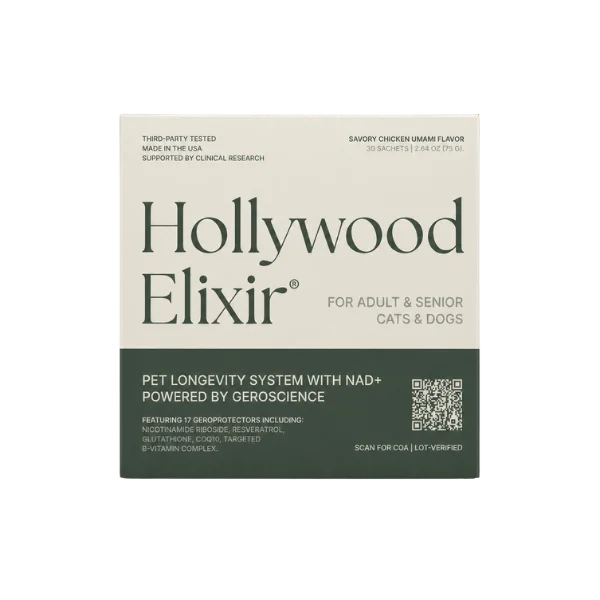
Arterra earns credit for convenience and breadth. Hollywood Elixir may be the stronger fit for owners who want visible active amounts, direct NAD+ support, a food-mixed routine, and a senior-dog supplement that is easier to talk through with a veterinarian.

  • Best reason to consider Arterra:It offers a broad chew format that may feel simple for owners who want one daily product.
  • Best reason to consider Hollywood Elixir:It gives owners a clearer daily senior-dog system with visible actives, direct NAD+ support, antioxidant defense, mitochondrial cofactors, immune steadiness, and food-mixed dosing.
  • Main shopping risk:A long ingredient list can look impressive while still leaving owners unsure which actives matter most, how much the dog receives, what the chew base adds, and where to check lot-level quality.
  • Best next step:Compare the actual labels, choose one product, and track a steady 60-day routine.

Why Arterra Looks Persuasive at First

Arterra understands a real owner emotion: the desire to cover more bases with one easy habit. A broad chew can feel like a safety net, especially when a dog has several small aging signs rather than one obvious need. The Canine Gerosciences Framework is the more disciplined way to think about that instinct: older dogs need connected support, but not every broad label makes the plan clearer.

That convenience deserves credit. Many owners do not want a counter full of bottles, and many dogs accept chews more readily than powders. Arterra is good at selling relief from complexity. The issue is whether that relief survives a careful read of the label.

Product Snapshot

What is Arterra?

Arterra is a broad dog supplement chew built around 39 ingredients, eight named blends, and a simple daily format. Its appeal is coverage: one chew that seems to touch several wellness needs at once. The buying question is whether the active amounts, chew base, quality checks, and senior-longevity focus are clear enough before starting.

Product
Arterra Adult Longevity Multivitamin Soft Chew by Arterra Pet Science
Category
Broad dog longevity / all-in-one soft chew
Format
Daily soft chew with three weight bands.
Why owners notice it
A broad 39-ingredient dog supplement positioned as an all-in-one longevity chew.
What to check before buying
Public materials reviewed describe many actives across named proprietary blends. Owners should check the current label for per-active amounts, per-blend totals, the full chew base, and any public COA or batch-lookup path before buying.
Best fit
Owners who want one broad chew and whose dog accepts treat-style routines easily.
Important caution
If the promise is broad coverage, the label should make that coverage easier to judge, not harder.
Fast Comparison

The Plain Comparison

Use this as the fast shopping read. Arterra gets the convenience win for one broad chew. Hollywood Elixir wins the senior-longevity questions that matter before you start: visible amounts, direct NAD+ support, a cleaner food-mixed routine, and a public quality-check path.

Question Arterra Hollywood Elixir Stronger fit
Biggest appeal A 39-ingredient soft chew that feels like it covers many needs at once. A tighter daily longevity powder built around named senior-dog support lanes. Arterra for one-chew breadth; Hollywood Elixir for a clearer senior-dog plan.
Dose clarity The reviewed public materials organize actives into eight proprietary blends without per-active amounts or per-blend totals. Visible active amounts make the formula easier to review before buying. Hollywood Elixir
Aging-biology focus Broad all-in-one wellness coverage with a longevity blend, but no direct NAD+ precursor surfaced in the reviewed ingredients. Direct NAD+ support with nicotinamide riboside and niacin, plus mitochondrial, antioxidant, and immune support. Hollywood Elixir
Chew base The 5g chew format is convenient, but the reviewed public pages did not enumerate the full binder, carrier, texture, and flavor system. Food-mixed powder avoids turning the supplement into a separate treat routine. Hollywood Elixir for dogs where appetite, stool, or diet control matters.
Quality lookup Facility and NASC language appears in public materials, but no named lab, public COA, or batch lookup was surfaced in the sources reviewed. The COA Lookup path gives owners a public place to check lot-level quality information. Hollywood Elixir
Evidence status A brand-announced clinical study was reviewed, but no peer-reviewed finished-formula paper was surfaced in the sources reviewed. Hollywood Elixir should be judged as evidence-informed daily support, not a clinical superiority claim. Hollywood Elixir for cleaner claim restraint; Arterra if you want to watch the study develop.
Best first move Best if the owner wants one broad chew and accepts less active-by-active visibility. Best if the owner wants a routine they can explain to a veterinarian before starting. Hollywood Elixir for cautious senior-dog owners.

Arterra Dog Supplement Ingredients: The Question Behind the List

Arterra’s ingredient story is broad: public materials describe gut support, antioxidant support, joints, immune support, cognition and mood, organ support, longevity, and adaptogens. That breadth is the appeal.

The question is how much of each meaningful active a dog actually receives. When ingredients sit inside proprietary blends without individual amounts or blend totals, the list becomes harder to evaluate than it first appears. The owner can see the breadth, but not the weight behind each part of the formula.

That is why the Best Dog Longevity Supplements 2026 gives Arterra credit for pathway breadth while still making dose clarity and testing visibility the pressure points. A broad product should not ask the owner to choose from first impression alone.

Ingredient Breadth Is Not Automatically Bad

Broad formulas can make sense when they are built carefully. Dogs rarely age in one neat category. A senior dog may need support for normal energy, comfort after activity, gut routine, skin and coat, and immune resilience at the same time.

The issue is whether breadth turns into clarity or clutter. A good broad formula helps owners understand the purpose and amount of the most important ingredients. A weaker broad formula makes owners feel impressed but still leaves them guessing.

Proprietary Blends Make the Senior-Dog Trial Harder to Read

A proprietary blend is not automatically bad, but it changes what the owner can know before starting. If you cannot see the individual amount of a key active, you cannot easily compare labels, discuss overlap, or troubleshoot tolerance. That is the same issue owners run into with proprietary blends in pet supplements.

Hollywood Elixir is stronger here because its label shows named active amounts. The owner can see nicotinamide riboside, niacin, B vitamins, CoQ10, glutathione, astaxanthin, vitamin C, vitamin E, resveratrol, quercetin, beta glucans, reishi, spirulina, blueberry powder, and whey protein isolate before the first serving.

The Chew Format Has Real Upside and Real Tradeoffs

Chews win on convenience. They feel familiar, they can be given quickly, and they do not require mixing. For owners with a dog who refuses powders, that can be decisive.

The tradeoff is that a 5g chew still needs a base: flavor, texture, binder, carrier, and palatability choices that are separate from the hero actives. The reviewed Arterra public pages did not enumerate that full base system. Those details may be harmless for many dogs, but they can complicate the picture for dogs with soft stool, picky eating, or tightly controlled diets.

“A long ingredient list should make the plan clearer, not harder to judge.”

Why a Powder Can Be Easier to Evaluate

A powder is not automatically better, but it often gives owners more control. You can mix it into familiar food, introduce it gradually, and keep the serving routine tied to the meal instead of a separate treat moment.

That is the practical advantage of Hollywood Elixir. It does not ask owners to admire a huge ingredient list. It asks them to run a steady daily plan with a label that is easier to read and a format that can be paused more cleanly if appetite, stool, or behavior changes.

Does Arterra Contain NAD+ Support?

The Arterra materials reviewed describe a longevity blend with NAD-adjacent ingredients such as PQQ, quercetin, trans-pterostilbene, L-carnosine, and jiaogulan. They do not identify a direct NAD+ precursor such as nicotinamide riboside, NMN, or niacinamide in the formula reviewed. The NAD+ for Dogs guide explains why that distinction matters for owners comparing senior-dog formulas.

Hollywood Elixir takes a more direct route. It includes nicotinamide riboside and niacin as part of its NAD+ support, with B vitamins and CoQ10 alongside them for the daily cellular-energy picture.

What Hollywood Elixir Actually Is

Hollywood Elixir is not built around one dramatic hook or a 39-ingredient list. It is built around the senior-dog systems that tend to fray together: cellular energy, oxidative stress balance, mitochondrial cofactors, immune steadiness, and everyday recovery. The Hollywood Elixir research page shows why those choices are grouped as a daily system.

The formula is specific: nicotinamide riboside and niacin for NAD+ support; B vitamins and CoQ10 for cellular energy; glutathione, astaxanthin, vitamins C and E, resveratrol, quercetin, blueberry, and spirulina for antioxidant defense; beta glucans and reishi for immune steadiness; and whey protein isolate as a light protein foundation. Owners can check the COA Lookup, read the LPL-01 Standard, and browse the Pet Nutrition Evidence Library before starting.

Which Product Feels Better for Sensitive Dogs?

For sensitive dogs, the cleaner routine often wins. That does not always mean fewer ingredients; it means fewer things changing at once and fewer hidden variables that make reactions hard to interpret.

If your dog has a history of soft stool, appetite changes, medication use, or food sensitivity, ask your veterinarian before starting either product. A chew may still be fine. A powder may be easier to introduce slowly with the food your dog already tolerates. Choose the format that makes the next month easier to read.

Who Arterra May Fit Best

Arterra may fit owners who want one broad chew, have a dog who accepts chew routines easily, and are less concerned about inspecting every active amount before buying. It may also fit households that value speed and treat-style compliance above formula readability.

That is a fair use case. Some owners need the easiest habit first. But even then, the label deserves a careful read, especially if the dog is older, medicated, or already using other supplements.

“For sensitive senior dogs, fewer guessing moments can matter immediately.”

La Petite Labs

DVM Voice: Clinical Vignette of a Common Pattern in Senior Dog Aging

Case provided by JoAnna Pendergrass, DVM

Rex, a 7-year-old Labrador Retriever, was brought in after his owner noticed he was slower to rise, hesitant on stairs, and less able to play as before. Examination showed stiffness and reduced hip mobility; radiographs confirmed degenerative joint changes.

His care required weight management, veterinary-guided pain control, nutritional support, and rehabilitation — a comprehensive plan, but one started only after visible decline appeared.

Clinical takeaway: Rex’s case reflects the value of proactive aging support: maintaining lean body condition, monitoring mobility early, and supporting cellular resilience, antioxidant defense, and healthy inflammatory balance before decline becomes obvious.

Single-case vignette. Not generalizable. Veterinary oversight is essential for pain, stiffness, or suspected joint disease.

Explore Hollywood Elixir Research →
Arterra Dog Supplement Review comparison image 8

Who Hollywood Elixir May Fit Best

Hollywood Elixir may fit owners who want support for the connected parts of aging: cellular energy, antioxidant supplements for dogs, mitochondrial support for dogs, immune steadiness, recovery after normal activity, and a routine that does not ask the dog to accept a new treat format.

It is especially appealing for older dogs with picky appetites, sensitive stomachs, medication schedules, or carefully managed diets. The powder can be introduced with familiar food, the active amounts are easier to review, and the owner is not left trying to decode a crowded chew label when the dog needs a clean routine.

That is the difference. Arterra tries to calm the owner by adding more. Hollywood Elixir tries to calm the owner by making the important parts easier to see and easier to run. For a senior dog, that second kind of calm is often more useful.

Arterra Dog Supplement Review comparison image 9

What the Current Arterra Study Status Means

A study announcement is worth noticing, but it is not the same as a published finished-formula paper. The Arterra clinical-study page reviewed described a senior-dog study in progress, not a peer-reviewed result owners can read and weigh.

That does not mean Arterra should be ignored. It means the buyer should separate promise from proof. Until finished-formula evidence is public, the safer shopping move is to judge what is already visible: the label, the amounts, the format, the quality lookup, and whether the routine fits your dog.

Arterra Dog Supplement Review comparison image 10

How to Compare Monthly Value

Do not compare value by ingredient count alone. A product with more ingredients is not automatically a better deal if the amounts are unclear or the format does not fit your dog. Value comes from the match between the product, the dose information, the routine, and the outcome you can actually observe.

Compare monthly cost only after you know what you are buying. What are the key ingredients? How much does your dog receive? How many servings are in the container? How easy is it to use every day without skipped doses or extra treats?

How to Run the First 60 Days

Choose one product first. Keep food, treats, and other supplements steady. Track appetite, stool, energy, comfort after normal activity, sleep quality, and engagement. If you change too many things at once, you will not know what helped or what bothered your dog.

Set a review date before you start. If the routine feels good at 30 days, keep going to 60. If stool, appetite, or behavior changes in a concerning way, stop and ask your veterinarian. A supplement trial should make the household calmer, not more confused.

What to Ask Your Veterinarian

Choose one product first. Keep food, treats, and other supplements steady. Track appetite, stool, energy, comfort after normal activity, sleep quality, and engagement. If you change too many things at once, you will not know what helped or what bothered your dog.

Set a review date before you start. If the routine feels good at 30 days, keep going to 60. If stool, appetite, or behavior changes in a concerning way, stop and ask your veterinarian. A supplement trial should make the household calmer, not more confused.

What Neither Product Should Promise

Neither product should be treated as a cure, treatment, or replacement for veterinary care. If your dog has major appetite loss, repeated vomiting, collapse, unexplained weight loss, persistent pain, or sudden behavior change, the right next step is a veterinarian.

A supplement can belong in a daily support routine, but it should not be asked to do medical work. Keep the job clear: food, weight, movement, veterinary care, and then supportive nutrition where it fits.

How to Judge a Dog Longevity Supplement Before Buying

First, ask whether the formula is broad in a way you can actually judge. Arterra is strong on breadth; the harder question is whether the meaningful amounts are visible enough for review.

Second, ask whether the product has the kind of aging support you are shopping for. Arterra has a broad longevity blend; Hollywood Elixir has direct NAD+ support through nicotinamide riboside and niacin.

Third, ask whether quality checks are easy to find. Facility and membership language can be useful, but a public COA or batch lookup gives owners a cleaner place to verify the product in front of them.

Fourth, ask whether the first 60 days will be easy to read. A very broad chew can make it harder to know which part helped or bothered the dog. Hollywood Elixir is easier to track because the formula and daily food-mixed routine are simpler to follow.

Fifth, ask whether you can bring the label to your veterinarian without translating a long proprietary-blend map. Visible active amounts make that conversation easier.

Shopping Checklist Before You Buy

  • Can I see the amounts of the most important active ingredients?
  • Does the format fit my dog’s stomach, appetite, and daily routine?
  • Can I explain the product to my veterinarian without decoding a long blend?
  • Can I find quality checks, COA information, or testing expectations?
  • Does the product make restrained support claims instead of medical promises?

“The best daily routine is the one you can explain before you start.”

Educational content only. This material is not a substitute for veterinary advice. Always consult your veterinarian about your dog’s specific needs. These statements have not been evaluated by the Food and Drug Administration. Products mentioned are not intended to diagnose, treat, cure, or prevent any disease.

Glossary

  • Clear amounts - Visible quantities for key active ingredients, so owners can compare products more confidently.
  • Proprietary blend - A grouped ingredient listing that may make individual amounts harder to see.
  • Chew base - The flavor, texture, binder, or carrier ingredients that make a supplement into a chew.
  • COA - Certificate of Analysis, a testing document that can help connect product quality claims to a batch or lot.
  • 60-day trial - A structured home trial where one product changes and the owner tracks the same daily signals.

Related Reading

References

Sources used for product facts, public claims, ingredient details, study context, and quality-language checks.

  1. Brand source Arterra Adult Longevity Multivitamin product page Reviewed for format, weight bands, palatability, pricing, and headline claims.
  2. Brand source Arterra ingredients library Reviewed for ingredient grouping, blend structure, and NAD+-precursor check.
  3. Brand source Arterra clinical study announcement Reviewed for study status and disclosed trial details.
  4. Brand source Arterra PRNewswire distribution release Reviewed for distribution and company-background claims.

FAQ

What is Arterra, and what is it trying to do?

Arterra is a multi-ingredient dog supplement sold in a chew format, marketed around broad “whole-body” coverage. The main idea is that many ingredients together can support multiple normal functions at once.

The practical question for owners is not only what’s included, but whether the label clearly shows how much of each active a dog gets per day. That clarity is what lets a veterinarian judge overlap with other supplements and decide what to change if the dog’s stomach, appetite, or behavior shifts.

Is “39 ingredients” automatically better for dogs?

Not automatically. A long list can reduce the urge to stack multiple products, but it also means each ingredient may be present in a smaller amount. With an arterra 39 ingredients dog supplement, the limiting factor is how much material fits into a chew.

Owners usually get the best results when they pick one goal (mobility, skin comfort, digestion) and choose a product that clearly lists amounts for the ingredients tied to that goal. If amounts are hidden in blends, it becomes harder to know what is doing what.

What should an arterra dog supplement review focus on most?

The most useful focus is dose-per-ingredient transparency: are amounts listed for each active, or grouped into proprietary blends? That single detail changes how safely and logically the supplement can be used alongside diets, medications, and other chews.

A good review also looks at what owners can observe at home—stool firmness, appetite, itch/licking, and ease of rising—then recommends tracking one or two markers week over week. That turns “wellness” into something measurable.

What are proprietary blends, and why do they matter?

A proprietary blend is when several ingredients are listed together under one combined amount, without showing the individual amounts. That can make it hard to tell whether a specific ingredient is present at a purposeful level or just a trace.

For owners, the real-world impact is vet interpretability. If a dog develops vomiting, loose stool, or new restlessness, the clinic has less leeway to identify a likely contributor. With fully disclosed amounts, it’s easier to stop, adjust, or avoid duplication.

What does “50% active ingredients” mean in a chew?

In a chew, a large portion must be base material—binders, flavors, fats, and fibers—so the product holds together and dogs will eat it. “Active” language can be used in different ways, so it doesn’t automatically tell how much of each key nutrient is present.

A quick owner check is to compare serving size (grams) to how many individual actives have listed milligram amounts. If many actives are hidden in blends, it’s harder to know what the dog is actually getting, even if the chew is convenient.

Are multi-ingredient supplements ever a good idea?

Yes. They can be helpful when the formula is built around a few goals, the amounts are disclosed, and the product replaces duplicates rather than being added on top of everything else. Convenience can improve consistency, which matters for seeing a response pattern.

The risk is “kitchen-sink stacking,” where a dog ends up on multiple chews, oils, and powders with overlapping ingredients. That can make stools and appetite less orderly and makes it harder to tell what is helping. A veterinarian can help simplify the plan.

Which arterra dog supplement ingredients deserve extra caution?

Any concentrated botanical extract deserves a closer look, especially when the amount is not clearly listed. Green tea extract (EGCG) is one example where concentrated forms have raised liver-safety concerns in dogs at certain exposures, so transparency matters.

Owners should be cautious if the dog has a history of liver disease, pancreatitis, or frequent stomach upset, or if the dog takes multiple medications. If appetite drops, vomiting starts, or gums/eyes look yellow, stop the supplement and call the veterinarian promptly.

What side effects should owners watch for after starting?

The most common early issues owners notice are digestive: softer stool, gas, vomiting, or a dog acting less interested in food. Chews can also add extra fats and flavorings that change stool firmness, especially in small dogs.

Behavior changes can also happen, like restlessness or sleep disruption, particularly if multiple supplements are started together. The safest approach is to change one thing at a time, give it 10–14 days, and stop and call the clinic if vomiting, marked lethargy, or yellowing appears.

How long should it take to notice any change?

For most nutrition-style supplements, owners typically look for a response pattern over several weeks, not days. Digestion changes can show up sooner, while mobility, coat, or itch-related changes often take longer and can be influenced by season, activity, and diet.

To keep it interpretable, track one or two markers week over week (for example: stool firmness and paw licking frequency). Avoid adding new treats, switching foods, or starting another supplement during the same window, or the signal gets blurred.

Can Arterra be used with joint chews or fish oil?

Sometimes, but overlap is common. Multi-ingredient chews often include vitamins, antioxidants, and oils that can duplicate what’s already in joint products, fish oil, or a prescription diet. Duplication can increase the chance of stomach upset and makes it harder to know what is contributing.

The safest step is to list every supplement and treat the dog gets in a day, then ask the veterinarian which ones are redundant. If the label uses proprietary blends, bring the container so the clinic can make the most conservative, orderly plan.

What’s the simplest way to compare arterra vs hollywood elixir?

Compare what a veterinarian can verify: are individual ingredient amounts disclosed, or hidden in blends? Also compare format (chew versus powder), because format affects base ingredients, adjustability, and how easy it is to keep the plan consistent.

If a dog has a complex medical history, dose disclosure usually makes the plan easier to adjust. If the household struggles with compliance, a chew may be more realistic. The “best” choice is the one that keeps the routine more measured and the label more interpretable.

Is a chew format less effective than a powder?

Not necessarily. Effectiveness depends on the ingredient, the amount, and whether the dog actually takes it consistently. Chews can be easier for daily use, which can matter more than small theoretical differences.

Powders can be easier to adjust and may contain fewer binders, but they can fail if the dog refuses the taste. Owners should choose the format that the dog will take reliably and that allows the goal to be tracked week over week without constant changes.

What should owners do if the dog refuses the supplement?

Don’t force it or hide it in a large meal where intake is uncertain. For powders, mix into a teaspoon of wet food or plain canned diet, offer that first, then give the regular meal after it’s eaten. For chews, offer after a meal rather than on an empty stomach.

If refusal is new and sudden, consider whether nausea is already present. A dog that turns away from a previously loved chew may be signaling stomach upset. Stop the supplement and contact the veterinarian if vomiting, lethargy, or appetite loss continues.

Can puppies or pregnant dogs take broad supplements?

Puppies and pregnant or nursing dogs should not be placed on complex, multi-ingredient supplements without veterinary guidance. Their nutritional needs are more specific, and adding extra vitamins, minerals, or botanicals can create imbalance or unnecessary risk.

If a young dog has a true medical need (for example, a diagnosed deficiency or a vet-directed joint plan), the clinic can recommend a targeted product with clear amounts. For most growing dogs, a complete, life-stage-appropriate diet is the foundation.

Do small breeds need different supplement choices than large breeds?

Often, yes—mainly because small dogs have less body mass, so a “one chew” approach can represent a larger relative exposure. They also tend to show digestive side effects sooner when a product adds fats, fibers, or multiple botanicals.

Owners of small breeds should prioritize simplicity and label clarity, and avoid stacking multiple products. If the dog is under 15 pounds, has a sensitive stomach, or takes daily medication, it’s especially important to review the full ingredient list with the veterinarian.

Is there real research behind antioxidant ingredients for dogs?

Some antioxidant-related ingredients have been studied in dogs, but it’s important to separate “ingredient research” from “finished product research.” One example is a ribose-cysteine supplement evaluated in healthy dogs for safety and for its effect on glutathione-related measures(Verrilli, 2021).

That kind of study does not automatically validate every multi-ingredient chew that mentions antioxidants. Owners should ask whether the exact finished formula was studied in dogs, or whether the claim is based on general biology. This helps set realistic expectations.

How can owners tell if a supplement is high quality?

Look for quality signals you can verify: lot-specific testing (identity, microbes, heavy metals), a current Certificate of Analysis upon request, clear contact information, and a label that lists amounts for key actives. Transparency is a practical quality feature because it allows clinical review.

Also check whether the product duplicates what’s already in the dog’s diet. Even a well-made supplement can be a poor fit if it adds unnecessary overlap. When in doubt, bring the label to the veterinarian and ask what to stop before adding anything new.

What’s a common misconception about 39-ingredient chews?

A common misconception is that more ingredients automatically means more “coverage” in a meaningful way. In reality, a chew has limited space, so adding more actives can shrink the amount of each one. Without clear amounts, it’s hard to know whether the formula is broad and purposeful or broad and diluted.

The calmer way to think about it is: pick one goal, then look for a label that lets the goal be supported in a measurable, interpretable way. If the dog is already doing well, a simpler plan may be safer than adding complexity.

When should owners call the vet after starting a supplement?

Call promptly if there is repeated vomiting, refusal to eat, marked lethargy, collapse, or any yellow tint to the gums/eyes. Also call if diarrhea lasts more than a day, if there is blood in stool, or if the dog seems painful or unusually restless.

Bring the container or send photos of the full label, including proprietary blends. If multiple new products were started, tell the clinic exactly what changed and on what day. That timeline helps the veterinarian decide what to stop, what to monitor, and what to reintroduce later.

Can dogs take the same supplements that people take?

It’s risky to assume human supplements translate directly to dogs. Dogs can react differently to certain sweeteners, flavorings, and concentrated extracts, and human products may not be formulated with dog-appropriate amounts or safety testing.

If a household already has human supplements on hand, the safest move is to ask the veterinarian before giving any to a dog. For most goals, a dog-specific product with clear labeling and quality documentation is easier to use in a measured, trackable plan.

How should owners decide between broad support and targeted support?

Start with the dog’s current reality. If the dog is healthy and the goal is general nutritional support, a broad product can be reasonable—especially if it replaces other supplements. If the dog has a specific problem you want to track (mobility, itch/licking, sleep disruption), targeted support with disclosed amounts is usually easier to interpret.

Next steps: write down one goal, pick 3–5 markers to measure week over week, and avoid changing diet and treats during the trial. If the plan feels confusing, that’s a sign to involve the veterinarian and simplify rather than adding another product.

Is Hollywood Elixir a better choice for every dog?

No single supplement is best for every dog. A dose-disclosed powder can be easier to fit into a vet-guided plan, but it still has to match the dog’s needs, medical history, and willingness to eat it. Some dogs simply do better with a chew routine.

If an owner is considering a transparent, fewer-ingredient approach, a product like Hollywood Elixir™ may help support normal aging functions as part of a broader plan. Next step: ask the veterinarian which single outcome should be tracked first.

La Petite Labs

Discover LPL-01: How This Fits Into a Larger Canine Longevity System

Aging in dogs is not driven by a single pathway. It’s the result of interacting biological systems—energy metabolism, oxidative stress, immune signaling, and structural integrity—changing over time.

This article explores one piece of that puzzle. If you want to understand how these pieces connect—and what actually moves the needle—you need to zoom out.

Start with the underlying science: