Arterra Dog Supplement Review

Compare Dose Transparency and Choose Support for Liver, Skin, and Mobility

Essential Summary

Why is an Arterra dog supplement review important?

An Arterra dog supplement review matters most when it helps owners choose between ingredient breadth and dose-per-ingredient clarity. A long list can be convenient, but hidden amounts and extracts can make safety and results harder to interpret. Picking one goal and tracking it week over week makes the next decision calmer.

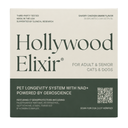
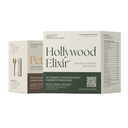
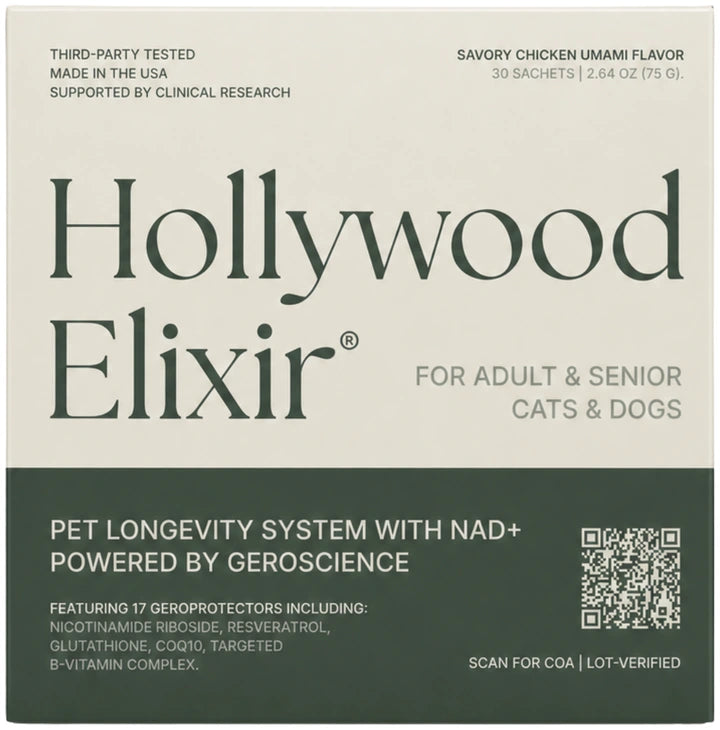
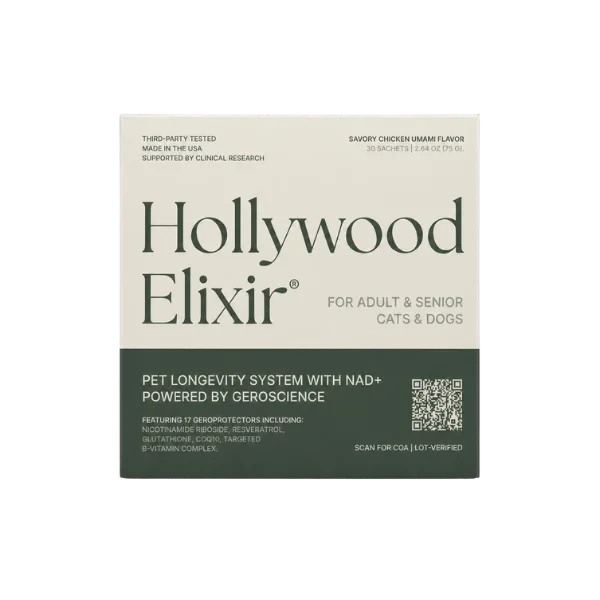
Hollywood Elixir™ is a powder-format supplement designed to support normal aging functions with fewer, fully disclosed actives.

A supplement with 39 ingredients can sound like the safest choice—until the label makes it hard to tell what a dog is actually getting each day. That is the core issue most owners are trying to solve when searching for an Arterra dog supplement review: does “more ingredients” translate into meaningful support, or just a broader list with smaller, harder-to-interpret amounts?

This page takes a measured look at the “breadth versus depth” tradeoff. Broad formulas can be convenient and can reduce supplement stacking, which is a real household win. But when many actives are grouped into proprietary blends, a veterinarian has less leeway to assess overlap with joint chews, fish oil, prescription diets, or medications—and less clarity if side effects appear. Chew format also requires base ingredients for texture and taste, which limits how much room is left for purposeful doses of dozens of actives.

The goal here is not to “pick a winner,” but to help owners make an orderly decision: choose one goal, verify label transparency, and track a few markers week over week. That approach makes it easier to compare a broad chew to a dose-disclosed option, and it makes the next vet conversation faster and more productive.

By La Petite Labs Editorial, ~15 min read

Featured Product:

  • An Arterra dog supplement review is most useful when it focuses on dose transparency, because 39-ingredient chews often leave each active at a small, hard-to-interpret amount.
  • The key decision axis is dose-per-ingredient transparency versus ingredient breadth; pick the goal before picking the product.
  • Proprietary blends can limit a veterinarian’s ability to assess overlap, adjust the plan, or identify a likely cause if side effects appear.
  • “50% active” language can still leave substantial chew base material, which is normal for texture but limits room for meaningful doses.
  • Green tea extract (EGCG) deserves extra caution in dogs when amounts are unclear; new vomiting, appetite loss, or yellowing should prompt stopping and calling the vet.
  • Chew versus powder is a household decision: chews often improve consistency, powders can be easier to adjust and interpret.
  • The most reliable approach is to simplify: choose one outcome to track (stools, itch/licking, mobility), avoid stacking duplicates, and review labels with the clinic.

Does More Ingredients Really Mean Better Support?

A long ingredient list can feel reassuring, especially in an Arterra Pet Science review that highlights “coverage” across many body systems. The catch is simple math: a chew can only hold so much material, and every added active usually means less room for each one. Multi-ingredient formulas can be reasonable when the doses are clear and purposeful, but “39 ingredients” often shifts the question from “what’s in it?” to “how much of each is there?”

At home, this shows up as mixed response patterns: a dog’s coat looks unchanged, stools soften, or nothing seems different after weeks. Owners may also notice the routine gets complicated—adding a chew on top of joint chews, fish oil, and a prescription diet. The most orderly way to decide is to pick one goal (like mobility or skin comfort), then choose a product that clearly tells a veterinarian what the dog is actually getting per day.

Mitochondria illustration showing cellular energy support linked to Arterra vs Hollywood Elixir.

Decision Snapshot: Breadth Versus Dose Clarity

Decision snapshot: the main axis in an Arterra dog supplement review is dose-per-ingredient transparency versus ingredient breadth. If the goal is a targeted change (like mobility support alongside a rehab plan), then prioritize fully disclosed amounts so the plan can be adjusted. If the goal is a simple “nutritional backstop” for a healthy adult dog, then a broad formula can be acceptable—if it doesn’t duplicate other supplements. If the dog has liver history, is on multiple meds, or is a small breed, then avoid mystery blends and choose the most interpretable label.

Persona verdicts: the “label reader” usually does better with fewer, disclosed actives; the “busy household” does better with one product that replaces duplicates; the “complex medical chart” dog needs a vet-led plan with minimal unknowns. Micro-CTA: write down the single outcome you want to support, then list every supplement already in the kitchen so overlap is obvious.

Close-up DNA helix tied to cellular integrity and support from Arterra dog supplement ingredients.

Verify-it-now Checklist: Arterra Versus Hollywood Elixir

Verify-it-now comparison (check the label, not the marketing). Dose disclosure: Arterra—often partial due to proprietary blends; Hollywood Elixir—actives are positioned as fully disclosed. Proprietary blends count: Arterra—commonly multiple; Hollywood Elixir—designed around disclosure. Format base %: Arterra—chew requires more base material; Hollywood Elixir—powder tends to need less base. Trial clarity: Arterra—may reference “studied ingredients”; Hollywood Elixir—positioned around testing and lot standards. Vet interpretability: Arterra—harder when amounts are hidden; Hollywood Elixir—easier when amounts are listed.

This is the practical heart of Arterra vs Hollywood Elixir: can a veterinarian look at the label and confidently say what to keep, stop, or change? Micro-CTA: take a clear photo of the Supplement Facts panel and the full ingredient list, then bring it to the next appointment or send it through the clinic portal.

Bioactive protein structure illustrating synergy in wellness supported by Arterra vs Hollywood Elixir.

What Broad-coverage Formulas Get Right

The broad-coverage philosophy gets a few things right. Dogs rarely have just one “area” that owners care about—mobility, skin, digestion, and calm behavior often overlap in the same month. A multi-ingredient chew can also reduce the temptation to stack five separate products, which can create more side effects and more label confusion. In that sense, a wide formula can be a reasonable starting point for a healthy dog with mild, non-specific goals.

In the kitchen, the advantage is routine: one chew after dinner is easier than powders, oils, and capsules. Owners also tend to be more consistent when the dog views it like a treat, which matters more than people expect. The key is to keep the rest of the plan simple—avoid adding another multivitamin, another antioxidant blend, and another calming chew on top of it.

Expressive pug face reflecting gentle aging support associated with Arterra Pet Science review.

Why Dose Per Ingredient Becomes the Real Question

Dose per ingredient becomes the real question when a product lists Arterra 39 ingredients dog supplement actives. Many nutrients and plant extracts have a “useful range,” and below that range they may not meaningfully contribute to the goal. Proprietary blends make it difficult to know whether a dog is getting a purposeful amount or a trace amount. That uncertainty matters most when the dog is older, on medications, or has a condition where the veterinarian is trying to keep the plan more orderly.

Owners can feel stuck because the label looks impressive, yet the dog’s day-to-day seems unchanged. A practical approach is to choose one measurable outcome—like getting up from the floor, licking paws, or stool quality—and track it for 3–4 weeks without adding anything else. If nothing shifts, the next step is not “add more,” but “switch to fewer ingredients with clearer amounts” so the plan can be adjusted with leeway.

Hollywood Elixir™ is amazing and makes my 13 y/o young again!

— Jessie

We go on runs. Lately he's been keeping up with no problem!

— Cami

“A long ingredient list is only helpful if the amounts are interpretable.”

What “50% Active” Can Mean in a Chew

What “50% active” can mean in a chew is often misunderstood. Chews need structure: binders, flavors, fats, and fibers that make the product hold together and stay palatable. So even when a label emphasizes “active ingredients,” a large portion of the chew will still be base material that helps with texture and shelf stability. That is not automatically bad—dogs have to eat it—but it does limit how much room is left for meaningful doses of many actives.

In real life, this is why two chews from different brands can look the same size but deliver very different amounts of key nutrients. Owners can do a quick reality check: compare the chew’s grams per serving to the total milligrams of listed actives, and note how many are hidden inside blends. If the math feels impossible, that’s a signal the plan may be hard for a veterinarian to fine-tune.

Elegant canine photo emphasizing gentle vitality supported through Arterra 39 ingredients dog supplement.

Safety Spotlight: EGCG and Liver Risk Signals

Safety spotlight: green tea extract (often listed for EGCG) deserves extra care in dogs because concentrated extracts have been associated with liver injury risk at certain exposures. The concern is not “tea” in general, but the concentrated extract form, especially when the amount is not clearly disclosed. When a formula includes many botanicals, it becomes harder to identify which ingredient might be contributing if appetite drops, vomiting starts, or energy becomes less orderly.

Owners should treat new vomiting, yellow-tinged gums/eyes, dark urine, or a sudden refusal of food as a reason to stop the supplement and call the veterinarian the same day. Bring the container so the clinic can review the full list, including blends. This is one reason transparency matters: it gives the vet more leeway to assess risk and decide what to reintroduce later, if anything.

Profile shot of a dog showing attentive expression supported by Arterra Pet Science review.

What Transparency Adds to a Vet-led Plan

A “fewer ingredients, clearer doses” approach can be easier to use in a real medical plan. When amounts are disclosed, a veterinarian can check for duplication with joint products, fish oil, prescription diets, and calming aids. It also helps owners understand what they are paying for: not just a long list, but a set of ingredients that can be discussed in terms of purpose and fit. This is the main practical difference people are usually trying to capture when comparing Arterra vs Hollywood Elixir.

Proof objects owners can ask for include: a current Certificate of Analysis, lot-specific testing summaries, and a clear Supplement Facts panel with amounts per serving. If a company uses third-party testing, ask what was tested (identity, heavy metals, microbes) and how often. A product can still be a poor fit for a specific dog, but transparency makes the next decision less turbulent.

Product info graphic highlighting testing and standards behind Arterra Pet Science review.

Chew Versus Powder: Differences Owners Actually Notice

Chew versus powder is not just preference—it changes what owners can control. Chews are convenient and often improve consistency, but they require more base ingredients and can be harder to split precisely. Powders can be easier to adjust and can avoid some chew binders, but they depend on the dog accepting the taste and the household remembering to mix it. Neither format is “better” in general; the better choice is the one that keeps the plan more measured and repeatable.

Owners often notice format differences in stools and appetite first. A new chew can add fats, fibers, and flavorings that change stool firmness, while a powder mixed into wet food may be refused by picky eaters. If the dog is sensitive, change only one thing at a time and keep the rest of the diet stable for two weeks so the response pattern is interpretable.

Common Objections, with Calm Next Steps

Common objections, calm answers: “More ingredients means better value.” Value comes from purposeful amounts, not the longest list; next step: ask for per-ingredient amounts. “It says 50% active.” That phrase doesn’t tell which actives or how much; next step: look for a full Supplement Facts panel. “It says clinically studied.” Often that means individual ingredients were studied, not the finished chew; next step: ask what was studied and in which species.

“I want an all-in-one.” All-in-one works best when it replaces duplicates; next step: list every supplement currently used and remove overlap. “My dog did okay on it.” That’s useful information, but it doesn’t prove the dose matches the goal; next step: choose one outcome to track week over week before changing anything. Micro-CTA: pick one objection that applies, then do the single verification step tied to it.

“Convenience matters, but clarity is what allows safe adjustments.”

Clinical branding image reflecting trust and validation behind Arterra Pet Science review.

Daily Routine Reality: Chews, Powders, and Picky Eaters

Format story: a common household scene is a dog that happily eats chews but refuses anything “dusty” on food. In that case, owners may stay with a chew even if the label is less transparent, because daily consistency matters. Another common scene is the opposite: a dog with a sensitive stomach who does better when the owner can measure a powder and mix it into a small amount of food, then adjust slowly.

For picky eaters, the most orderly troubleshooting is to change the delivery, not the ingredient list: mix powder into a teaspoon of wet food, then offer the regular meal after it’s eaten. For chews, offer after a meal rather than on an empty stomach, and avoid combining with new treats the same day. If appetite changes, stop and call the clinic rather than “pushing through” for a week.

Shop Now
Premium ingredient tableau framing Hollywood Elixir aligned with Arterra 39 ingredients dog supplement.

From Confusion to a Measured Plan

A fair way to hold the critique is this: broad formulas can be convenient, but convenience should not come at the cost of clarity. When owners feel anxious, the instinct is to cover every base at once. Relief often comes from narrowing the plan—choose one goal, choose ingredients with disclosed amounts, and give the dog time to show a response pattern. That approach creates leeway for the veterinarian to adjust without guessing.

Soft next step: bring two labels to the same conversation—one broad chew and one dose-disclosed option—and ask which better matches the dog’s current priorities and medical history. If the dog is already on a prescription diet or daily medication, the most protective move is usually fewer unknowns, not more ingredients.

Shop Now
Home scene with woman and dog featuring Hollywood Elixir and Arterra vs Hollywood Elixir.

Who a Broad Chew May Fit Best

Who might consider a broad chew like Arterra? It tends to fit the healthy adult dog whose owner wants a simple routine and is not stacking multiple other supplements. It can also fit households where compliance is the biggest barrier—if the dog reliably eats a chew, that consistency may matter more than theoretical advantages of another format. The best fit is when the owner is comfortable treating it as general support, not as a targeted tool.

Before starting, check for overlap: joint chews, fish oil, calming products, and multivitamins commonly duplicate ingredients. If the dog has a history of pancreatitis, liver disease, or frequent stomach upset, a veterinarian should review the full Arterra dog supplement ingredients list first. If the label relies heavily on proprietary blends, plan to monitor more closely for appetite, vomiting, and stool changes.

Shop Now

Who a Dose-disclosed Approach May Fit Best

Who might consider a dose-disclosed powder approach? It often fits senior dogs where the goal is specific—mobility comfort, cognitive aging support, or skin barrier support—because the plan can be discussed in concrete amounts. It also fits dogs on multiple medications, where the veterinarian wants fewer moving parts and clearer risk assessment. In those cases, fewer ingredients can actually create more leeway, because changes can be made one variable at a time.

Owners should match the product to the symptom cluster they can actually observe: getting up, willingness to jump, nighttime restlessness, licking paws, or stool quality. If a product is chosen, keep treats and diet stable for a few weeks so the response pattern is interpretable. If the dog refuses powder, that is not failure—format fit is part of the decision.

Read a Supplement Label in Three Minutes

How to read a supplement label in three minutes: first, find whether amounts are listed for each active or hidden inside blends. Second, scan for botanicals and extracts (like green tea extract) where dose and safety context matter more. Third, check the serving size in grams; a very small chew cannot carry meaningful amounts of dozens of actives. Finally, look for quality signals you can verify, like lot testing and a reachable customer service line that will provide documentation.

What to track week over week: stool firmness, appetite, water intake, itch/lick frequency, ease of rising, willingness to play, and any new vomiting. Write it down twice weekly rather than relying on memory. If two products are being compared, change only one variable at a time and keep the rest of the routine more orderly so the result is believable.

Supplement comparison highlighting clean formulation advantages for Arterra dog supplement ingredients.

Case Vignette: the Ingredient List That Felt Reassuring

Case vignette: an owner chose a chew after reading an Arterra Pet Science review and feeling relieved by the “everything in one” promise. The dog, a 5-year-old mixed breed, ate it happily, but after a month the owner couldn’t name a single change besides slightly softer stools. The turning point was realizing the goal was actually seasonal paw licking, not “overall wellness,” and the plan needed to be narrower.

The owner simplified: stopped duplicate supplements, kept diet steady, and tracked licking frequency and stool quality twice weekly. With fewer variables, the veterinarian could discuss whether skin barrier support, parasite control, or allergy management was the next step. The lesson was not that broad formulas are “bad,” but that broad formulas can blur the signal owners are trying to see.

Shop Now
Packaging reveal image highlighting brand care aligned with Arterra dog supplement ingredients.

Case Vignette: Senior Dog, Dose-first Priorities

Case vignette: a 12-year-old small dog had slower recuperation speed after walks and mild nighttime restlessness. The owner initially leaned toward an Arterra 39 ingredients dog supplement because it sounded comprehensive, but the veterinarian asked a simple question: “Which two changes would matter most to your household?” That reframed the decision toward dose-first priorities and fewer unknowns.

Proof stack to request before committing: a complete list with amounts per serving, lot testing documentation, and a plan for what to stop if appetite or stools change. If an antioxidant ingredient is highlighted, ask whether the finished product has dog-specific data or only ingredient-level references; one example of dog-specific supplement research is a ribose-cysteine product studied for safety and glutathione-related outcomes in healthy dogs (Verrilli, 2021). The household benefit was a plan the vet could adjust without guessing.

Shop Now

Vet Visit Prep, Home Checklist, and What Not to Do

Vet visit prep: bring the container, a photo of the Supplement Facts panel, and a list of every other supplement and treat. Ask: “Which ingredients overlap with my current products?”, “Are any extracts a concern for my dog’s liver or stomach?”, and “What single outcome should be tracked first?” Also ask what would trigger stopping the supplement and calling the clinic. This keeps the plan more measured and reduces trial-and-error.

Owner checklist (at home): check appetite, vomiting, stool firmness, itch/lick frequency, and energy during normal walks. What not to do: start two new supplements at once, combine multiple multivitamins, ignore new GI signs, or assume “clinically studied” means the finished chew was tested in dogs. Final CTA: choose one goal, track it for 3–4 weeks, and let the data decide the next step.

“Track one goal week over week before changing the plan again.”

Educational content only. This material is not a substitute for veterinary advice. Always consult your veterinarian about your dog’s specific needs. These statements have not been evaluated by the Food and Drug Administration. Products mentioned are not intended to diagnose, treat, cure, or prevent any disease.

Glossary

  • Proprietary blend - A grouped set of ingredients listed under one combined amount, hiding individual doses.
  • Dose per ingredient - The actual amount of each active a dog receives per serving or per day.
  • Trace dose - An amount so small it may not meaningfully contribute to the intended goal.
  • Chew base material - Binders, fats, fibers, and flavors that give a chew structure and palatability.
  • Extract (botanical) - A concentrated plant-derived ingredient that can vary widely in strength and safety by dose.
  • EGCG - A concentrated green tea compound often found in green tea extracts; dose and liver safety context matter in dogs.
  • Vet interpretability - How easily a veterinarian can evaluate a label for overlap, risk, and adjustment options.
  • Response pattern - The consistent, repeatable changes (or lack of changes) seen when only one variable is altered.
  • Certificate of Analysis (COA) - A document showing test results for a specific lot, such as identity and contaminants.

Related Reading

References

Verrilli. Safety and efficacy of a ribose-cysteine supplement to increase erythrocyte glutathione concentration in healthy dogs.. PubMed. 2021. https://PubMed.ncbi.nlm.nih.gov/34296936/

FAQ

What is Arterra, and what is it trying to do?

Arterra is a multi-ingredient dog supplement sold in a chew format, marketed around broad “whole-body” coverage. The main idea is that many ingredients together can support multiple normal functions at once.

The practical question for owners is not only what’s included, but whether the label clearly shows how much of each active a dog gets per day. That clarity is what lets a veterinarian judge overlap with other supplements and decide what to change if the dog’s stomach, appetite, or behavior shifts.

Is “39 ingredients” automatically better for dogs?

Not automatically. A long list can reduce the urge to stack multiple products, but it also means each ingredient may be present in a smaller amount. With an arterra 39 ingredients dog supplement, the limiting factor is how much material fits into a chew.

Owners usually get the best results when they pick one goal (mobility, skin comfort, digestion) and choose a product that clearly lists amounts for the ingredients tied to that goal. If amounts are hidden in blends, it becomes harder to know what is doing what.

What should an arterra dog supplement review focus on most?

The most useful focus is dose-per-ingredient transparency: are amounts listed for each active, or grouped into proprietary blends? That single detail changes how safely and logically the supplement can be used alongside diets, medications, and other chews.

A good review also looks at what owners can observe at home—stool firmness, appetite, itch/licking, and ease of rising—then recommends tracking one or two markers week over week. That turns “wellness” into something measurable.

What are proprietary blends, and why do they matter?

A proprietary blend is when several ingredients are listed together under one combined amount, without showing the individual amounts. That can make it hard to tell whether a specific ingredient is present at a purposeful level or just a trace.

For owners, the real-world impact is vet interpretability. If a dog develops vomiting, loose stool, or new restlessness, the clinic has less leeway to identify a likely contributor. With fully disclosed amounts, it’s easier to stop, adjust, or avoid duplication.

What does “50% active ingredients” mean in a chew?

In a chew, a large portion must be base material—binders, flavors, fats, and fibers—so the product holds together and dogs will eat it. “Active” language can be used in different ways, so it doesn’t automatically tell how much of each key nutrient is present.

A quick owner check is to compare serving size (grams) to how many individual actives have listed milligram amounts. If many actives are hidden in blends, it’s harder to know what the dog is actually getting, even if the chew is convenient.

Are multi-ingredient supplements ever a good idea?

Yes. They can be helpful when the formula is built around a few goals, the amounts are disclosed, and the product replaces duplicates rather than being added on top of everything else. Convenience can improve consistency, which matters for seeing a response pattern.

The risk is “kitchen-sink stacking,” where a dog ends up on multiple chews, oils, and powders with overlapping ingredients. That can make stools and appetite less orderly and makes it harder to tell what is helping. A veterinarian can help simplify the plan.

Which arterra dog supplement ingredients deserve extra caution?

Any concentrated botanical extract deserves a closer look, especially when the amount is not clearly listed. Green tea extract (EGCG) is one example where concentrated forms have raised liver-safety concerns in dogs at certain exposures, so transparency matters.

Owners should be cautious if the dog has a history of liver disease, pancreatitis, or frequent stomach upset, or if the dog takes multiple medications. If appetite drops, vomiting starts, or gums/eyes look yellow, stop the supplement and call the veterinarian promptly.

What side effects should owners watch for after starting?

The most common early issues owners notice are digestive: softer stool, gas, vomiting, or a dog acting less interested in food. Chews can also add extra fats and flavorings that change stool firmness, especially in small dogs.

Behavior changes can also happen, like restlessness or sleep disruption, particularly if multiple supplements are started together. The safest approach is to change one thing at a time, give it 10–14 days, and stop and call the clinic if vomiting, marked lethargy, or yellowing appears.

How long should it take to notice any change?

For most nutrition-style supplements, owners typically look for a response pattern over several weeks, not days. Digestion changes can show up sooner, while mobility, coat, or itch-related changes often take longer and can be influenced by season, activity, and diet.

To keep it interpretable, track one or two markers week over week (for example: stool firmness and paw licking frequency). Avoid adding new treats, switching foods, or starting another supplement during the same window, or the signal gets blurred.

Can Arterra be used with joint chews or fish oil?

Sometimes, but overlap is common. Multi-ingredient chews often include vitamins, antioxidants, and oils that can duplicate what’s already in joint products, fish oil, or a prescription diet. Duplication can increase the chance of stomach upset and makes it harder to know what is contributing.

The safest step is to list every supplement and treat the dog gets in a day, then ask the veterinarian which ones are redundant. If the label uses proprietary blends, bring the container so the clinic can make the most conservative, orderly plan.

What’s the simplest way to compare arterra vs hollywood elixir?

Compare what a veterinarian can verify: are individual ingredient amounts disclosed, or hidden in blends? Also compare format (chew versus powder), because format affects base ingredients, adjustability, and how easy it is to keep the plan consistent.

If a dog has a complex medical history, dose disclosure usually makes the plan easier to adjust. If the household struggles with compliance, a chew may be more realistic. The “best” choice is the one that keeps the routine more measured and the label more interpretable.

Is a chew format less effective than a powder?

Not necessarily. Effectiveness depends on the ingredient, the amount, and whether the dog actually takes it consistently. Chews can be easier for daily use, which can matter more than small theoretical differences.

Powders can be easier to adjust and may contain fewer binders, but they can fail if the dog refuses the taste. Owners should choose the format that the dog will take reliably and that allows the goal to be tracked week over week without constant changes.

What should owners do if the dog refuses the supplement?

Don’t force it or hide it in a large meal where intake is uncertain. For powders, mix into a teaspoon of wet food or plain canned diet, offer that first, then give the regular meal after it’s eaten. For chews, offer after a meal rather than on an empty stomach.

If refusal is new and sudden, consider whether nausea is already present. A dog that turns away from a previously loved chew may be signaling stomach upset. Stop the supplement and contact the veterinarian if vomiting, lethargy, or appetite loss continues.

Can puppies or pregnant dogs take broad supplements?

Puppies and pregnant or nursing dogs should not be placed on complex, multi-ingredient supplements without veterinary guidance. Their nutritional needs are more specific, and adding extra vitamins, minerals, or botanicals can create imbalance or unnecessary risk.

If a young dog has a true medical need (for example, a diagnosed deficiency or a vet-directed joint plan), the clinic can recommend a targeted product with clear amounts. For most growing dogs, a complete, life-stage-appropriate diet is the foundation.

Do small breeds need different supplement choices than large breeds?

Often, yes—mainly because small dogs have less body mass, so a “one chew” approach can represent a larger relative exposure. They also tend to show digestive side effects sooner when a product adds fats, fibers, or multiple botanicals.

Owners of small breeds should prioritize simplicity and label clarity, and avoid stacking multiple products. If the dog is under 15 pounds, has a sensitive stomach, or takes daily medication, it’s especially important to review the full ingredient list with the veterinarian.

Is there real research behind antioxidant ingredients for dogs?

Some antioxidant-related ingredients have been studied in dogs, but it’s important to separate “ingredient research” from “finished product research.” One example is a ribose-cysteine supplement evaluated in healthy dogs for safety and for its effect on glutathione-related measures(Verrilli, 2021).

That kind of study does not automatically validate every multi-ingredient chew that mentions antioxidants. Owners should ask whether the exact finished formula was studied in dogs, or whether the claim is based on general biology. This helps set realistic expectations.

How can owners tell if a supplement is high quality?

Look for quality signals you can verify: lot-specific testing (identity, microbes, heavy metals), a current Certificate of Analysis upon request, clear contact information, and a label that lists amounts for key actives. Transparency is a practical quality feature because it allows clinical review.

Also check whether the product duplicates what’s already in the dog’s diet. Even a well-made supplement can be a poor fit if it adds unnecessary overlap. When in doubt, bring the label to the veterinarian and ask what to stop before adding anything new.

What’s a common misconception about 39-ingredient chews?

A common misconception is that more ingredients automatically means more “coverage” in a meaningful way. In reality, a chew has limited space, so adding more actives can shrink the amount of each one. Without clear amounts, it’s hard to know whether the formula is broad and purposeful or broad and diluted.

The calmer way to think about it is: pick one goal, then look for a label that lets the goal be supported in a measurable, interpretable way. If the dog is already doing well, a simpler plan may be safer than adding complexity.

When should owners call the vet after starting a supplement?

Call promptly if there is repeated vomiting, refusal to eat, marked lethargy, collapse, or any yellow tint to the gums/eyes. Also call if diarrhea lasts more than a day, if there is blood in stool, or if the dog seems painful or unusually restless.

Bring the container or send photos of the full label, including proprietary blends. If multiple new products were started, tell the clinic exactly what changed and on what day. That timeline helps the veterinarian decide what to stop, what to monitor, and what to reintroduce later.

Can dogs take the same supplements that people take?

It’s risky to assume human supplements translate directly to dogs. Dogs can react differently to certain sweeteners, flavorings, and concentrated extracts, and human products may not be formulated with dog-appropriate amounts or safety testing.

If a household already has human supplements on hand, the safest move is to ask the veterinarian before giving any to a dog. For most goals, a dog-specific product with clear labeling and quality documentation is easier to use in a measured, trackable plan.

How should owners decide between broad support and targeted support?

Start with the dog’s current reality. If the dog is healthy and the goal is general nutritional support, a broad product can be reasonable—especially if it replaces other supplements. If the dog has a specific problem you want to track (mobility, itch/licking, sleep disruption), targeted support with disclosed amounts is usually easier to interpret.

Next steps: write down one goal, pick 3–5 markers to measure week over week, and avoid changing diet and treats during the trial. If the plan feels confusing, that’s a sign to involve the veterinarian and simplify rather than adding another product.

Is Hollywood Elixir a better choice for every dog?

No single supplement is best for every dog. A dose-disclosed powder can be easier to fit into a vet-guided plan, but it still has to match the dog’s needs, medical history, and willingness to eat it. Some dogs simply do better with a chew routine.

If an owner is considering a transparent, fewer-ingredient approach, a product like Hollywood Elixir™ may help support normal aging functions as part of a broader plan. Next step: ask the veterinarian which single outcome should be tracked first.

5K+ Happy Pet Parents

Excellent 4.8

Arterra Dog Supplement Review | Why Thousands of Pup Parents Trust Hollywood Elixir™

"He seems more happy overall. I've also noticed he has more energy which makes our walks and playtime so much more fun."

Olga & Jordan

"He's got way more energy now! We go on runs pretty often; he use to get tired halfway through, but lately, he's been keeping up without any problem."

Cami & Clifford

"I want her to live forever. She hasn't had an ear infection since!"

Madison & Azula

"It helps with her calmness, her immune system. I really like the clean ingredients. Highly recommend La Petite Labs!"

Maple & Cassidy

"He seems more happy overall. I've also noticed he has more energy which makes our walks and playtime so much more fun."

Olga & Jordan

"He's got way more energy now! We go on runs pretty often; he use to get tired halfway through, but lately, he's been keeping up without any problem."

Cami & Clifford

"I want her to live forever. She hasn't had an ear infection since!"

Madison & Azula

"It helps with her calmness, her immune system. I really like the clean ingredients. Highly recommend La Petite Labs!"

Maple & Cassidy

"He seems more happy overall. I've also noticed he has more energy which makes our walks and playtime so much more fun."

Olga & Jordan

"He's got way more energy now! We go on runs pretty often; he use to get tired halfway through, but lately, he's been keeping up without any problem."

Cami & Clifford

"I want her to live forever. She hasn't had an ear infection since!"

Madison & Azula

"It helps with her calmness, her immune system. I really like the clean ingredients. Highly recommend La Petite Labs!"

Maple & Cassidy

"He seems more happy overall. I've also noticed he has more energy which makes our walks and playtime so much more fun."

Olga & Jordan

"He's got way more energy now! We go on runs pretty often; he use to get tired halfway through, but lately, he's been keeping up without any problem."

Cami & Clifford

"I want her to live forever. She hasn't had an ear infection since!"

Madison & Azula

"It helps with her calmness, her immune system. I really like the clean ingredients. Highly recommend La Petite Labs!"

Maple & Cassidy

SHOP NOW