
The 12 Hallmarks of Aging in Dogs, Explained
Read full insightAnti-Aging Supplements for Dogs
Understand the biology of aging and the steps that reduce the damage
By La Petite Labs Editorial 15 min read

If you are weighing anti-aging supplements for a dog, the honest headline is that the best ones support healthy function as your dog ages — they do not stop aging or replace good care. The ingredients with the most credible role target the systems that actually fray with age: cellular energy, antioxidant balance, mitochondrial output, and immune steadiness, layered on top of weight control and veterinary care.
This page is a map of the categories owners and veterinarians discuss most: foundational nutrition (diet quality and digestibility), mobility support (joints and activity tolerance), cognitive support (attention, sleep-wake patterns, learning), and antioxidant support. Evidence varies by category and by ingredient — some approaches have solid clinical support in dogs, others are emerging, and many are honestly "may help" rather than "will fix." Use it to orient, then explore the deeper pages on senior vitamins, antioxidants, brain health, and diet-versus-supplements when you are ready to choose.
- Aging is a gradual shift in energy, recovery, and resilience — not a single moment — so the credible formulas support a network, not one trendy ingredient.
- The systems worth supporting together: mitochondria and cellular energy, antioxidant balance, and immune steadiness.
- Diet quality and digestibility stay foundational; supplements work best sitting on top of weight control, dental care, and muscle maintenance.
- Start with safety: introduce slowly, watch stool and appetite, and loop in your veterinarian for medicated or chronically ill dogs.
- Results are usually subtle — steadier energy, more consistent interest in walks and food, fewer "off" days — not dramatic transformation.
- Quality signals: visible active amounts, conservative claims, third-party testing, and a routine easy enough to sustain daily.
Anti-Aging in Dogs: The 4 Levers That Matter Most
When people talk about “anti-aging” for dogs, the most meaningful results usually come from a few high-impact levers that work together. Supplements can be part of the plan, but they tend to help most when the basics are already in place.
1) Weight control: Keeping a dog in a healthy body condition reduces strain on joints, supports easier breathing, and can improve overall stamina. Even small, steady changes in weight can affect comfort and activity.
2) Muscle maintenance: Age-related muscle loss can show up as reduced stability, slower rising, or less interest in play. Prioritizing appropriate protein intake, regular low-impact activity, and safe strength-building (as advised by your vet) helps preserve mobility and confidence.
3) Dental and medical management: Chronic dental disease, pain, endocrine issues, and other common age-related conditions can quietly undermine appetite, sleep, and energy. Routine exams and timely treatment often do more than any single supplement.
4) Targeted supplementation: Once diet, activity, and medical needs are addressed, targeted supplementation can be used to support specific goals—such as mobility, cognition, or antioxidant status—based on your dog’s age, lifestyle, and veterinary guidance.

Aging Signs Checklist: What’s Normal, What’s Not, What to Log
Many age-related changes are gradual, but it helps to track them in a structured way so you can separate “expected aging” from issues that deserve prompt veterinary attention. Use this checklist and log observations for 2 weeks.
What to monitor daily (quick notes):
- Mobility: stiffness on rising, reluctance to jump/climb stairs, slipping, shorter walks, limping.
- Sleep changes: sleeping more, restlessness at night, pacing, waking confused, new vocalizing.
- Appetite and weight: finishing meals, pickiness, nausea signs, weight gain/loss.
- Thirst/urination: increased water intake, accidents, needing to go out more often, larger urine clumps.
- Cognition/behavior: getting “stuck” in corners, reduced responsiveness, new anxiety, altered social interaction.
Simple logging template:
- Date/time; activity level (0–3); mobility notes; sleep quality; appetite; water intake/urination; bowel movements; unusual behaviors.
Vet red flags (don’t wait 2 weeks): sudden weakness or collapse, persistent vomiting/diarrhea, labored breathing, marked increase in thirst/urination, blood in urine/stool, acute confusion, severe pain, or a new limp that doesn’t improve within 24–48 hours.

What Anti-aging Can Honestly Mean for Everyday Canine Life
The phrase “anti-aging” can sound like a promise. In reality, it should be a philosophy: reduce avoidable strain, support repair, and keep the dog’s daily experience comfortable and engaged. That’s why many anti-aging supplements for dogs focus on antioxidants, mitochondrial cofactors, and nutrients that help maintain immune steadiness over time.
Aging also changes what “enough” looks like. Even when a diet is complete, older dogs can experience shifts in digestibility that affect how nutrients are used (Schauf S, 2021). A thoughtfully formulated supplement can help buffer those shifts—especially during seasonal appetite changes, travel, or periods of lower activity—without turning the routine into a complicated project.

NAD Support and Cellular Energy: a Practical Owner’s View
NAD+ comes up constantly in longevity circles because cells use it for energy and repair, and the practical takeaway for dogs is simpler than the hype. Ingredients that support energy metabolism may help an older dog feel steadier across the day — especially paired with good sleep, right-sized exercise, and a diet that is easy to digest (Schauf S, 2021).
This is also why single-ingredient thinking falls short. Cellular energy is a network, not one switch. A system-level formula pairs NAD+ support with antioxidant coverage and mitochondrial cofactors, aiming for a more balanced effect than piling on more of one fashionable ingredient. For a buyer, the useful question is not "does it have the trendy molecule?" but "does it support more than one aging pathway at an amount I can see?"

Antioxidants and Resilience: Supporting Balance, Not Perfection
Antioxidants anchor most longevity routines because oxidative stress is a normal byproduct of living — heaviest in hard-working tissue like muscle and brain. The goal is not to wipe out oxidation (the body needs it) but to keep it in balance so recovery stays smooth and inflammation does not become the default setting.
In older dogs the background factors decide how well antioxidant nutrients land: body condition, diet quality, and digestibility shape absorption and use. That is one reason the anti-aging supplements that hold up are built as blends — covering several parts of the same resilience system instead of betting everything on one antioxidant headline. When you compare products, a coherent antioxidant network (water-soluble, lipid-soluble, and cellular roles) is a stronger signal than a single buzzy extract on the front of the bag.
“The most believable longevity support looks like steadiness, not transformation.”
Mitochondrial Cofactors and the Feel of Steadier Stamina
Mitochondrial cofactors are ingredients that help the cell’s energy machinery run efficiently. In practical terms, they’re often included to support stamina, recovery, and the “get up and go” that can fade in later years. Because energy production touches every organ system, this category tends to show up in top anti-aging supplements for dogs even when the marketing language varies.
Still, no cofactor can outwork a mismatched diet. Research in dogs suggests that nutrient digestibility can be influenced by diet processing and may relate to healthy aging outcomes (Schauf, 2021). Supplements are most credible when they assume the basics are handled—and then aim to support the system that makes those basics usable.

Immune Steadiness: the Understated Goal Behind Many Blends
Immune balance is another quiet theme in anti-aging supplements for dogs. With age, the immune system can become less precise—overreacting to minor triggers while responding less efficiently to real challenges. Nutrients that support immune modulation are not about “boosting” immunity; they’re about steadiness, tolerance, and appropriate response.
Because immune function is sensitive to overall nutrition, it’s worth remembering that older dogs may experience changes in nutrient absorption and needs. A system-level supplement can be a way to support immune resilience while you continue to prioritize the fundamentals: consistent calories, adequate protein, and a diet your dog digests well.

Weight, Calories, and Longevity: Avoiding Hidden Tradeoffs
Weight management is inseparable from longevity. Excess weight can make normal aging feel harsher, while overly aggressive calorie restriction can create its own problems. Dogs on weight loss plans may be at risk for nutritional deficiencies if the plan isn’t carefully formulated and monitored (Gaylord L, 2018). That matters because deficiencies can mimic “aging,” showing up as low energy, dull coat, or reduced enthusiasm.
If your dog is trimming down, choose supplements that add minimal calories and don’t encourage overfeeding. The best anti-aging supplements for dogs fit into the plan you can sustain: stable body condition, steady muscle, and a routine that doesn’t require constant recalculation.

How Do You Choose an Anti-Aging Supplement for a Dog?
The cleanest way to choose among anti-aging supplements for dogs is to ask one question: does the formula cover the major aging pressures at once — energy production, oxidative balance, and recovery — with amounts you can actually read? A product that leans on cellular energy, another on antioxidants, another on immune support can all be reasonable, but coverage plus visible doses beats an impressive-sounding single headline.
Also weigh the dog's diet format and digestion. Senior dogs can shift in nutrient digestibility, and a picky eater or sensitive stomach makes "easy to give every day" the deciding factor, because consistency is where benefits accumulate. This is the lane Hollywood Elixir is built for: a food-mixed daily routine with its NAD support disclosed as nicotinamide riboside 60 mg, antioxidant coverage you can see (glutathione 50 mg, astaxanthin 2 mg, resveratrol 15 mg), and CoQ10 at 40 mg — readable amounts you can take to your vet, designed to support healthy aging rather than promise to reverse it. Review Hollywood Elixir →
Reading Reviews Without Losing the Plot of Realistic Outcomes
If you read anti-aging supplements for dogs reviews, you’ll notice a pattern: owners value “daily steadiness” more than dramatic changes. That’s a useful lens. In practice, the most meaningful outcomes are often subtle—more consistent interest in walks, easier transitions from rest to movement, or fewer “off” days. These are not diagnostic endpoints, but they can help you judge whether a routine is worth continuing.
To keep the assessment honest, change only one variable at a time, and give it enough time to be fair. Also remember that senior digestion can shift; moisture content and diet format may influence nutrient absorption, which can affect how a supplement “feels” in the real world (Kim, 2021). If results are inconsistent, the issue may be the overall plan, not the ingredient list. (see our Dog Life Stages →)
“Aging narrows the margin for error; routines that are easy to repeat matter most.”

DVM Voice: Clinical Vignette of a Common Pattern in Senior Dog Aging
Case provided by JoAnna Pendergrass, DVM
Rex, a 7-year-old Labrador Retriever, was brought in after his owner noticed he was slower to rise, hesitant on stairs, and less able to play as before. Examination showed stiffness and reduced hip mobility; radiographs confirmed degenerative joint changes.
His care required weight management, veterinary-guided pain control, nutritional support, and rehabilitation — a comprehensive plan, but one started only after visible decline appeared.
Clinical takeaway: Rex’s case reflects the value of proactive aging support: maintaining lean body condition, monitoring mobility early, and supporting cellular resilience, antioxidant defense, and healthy inflammatory balance before decline becomes obvious.
Single-case vignette. Not generalizable. Veterinary oversight is essential for pain, stiffness, or suspected joint disease.

Diet Quality, Digestibility, and Why Supplements Still Fit
A common question is whether anti-aging supplements for dogs are “necessary” if a dog eats a premium food. High-quality diets can support healthy aging, and research suggests diet quality and digestibility are linked with aging outcomes in dogs (Schauf S, 2021). Still, supplementation can make sense because aging is not only about meeting minimum requirements; it’s about supporting systems that become less flexible over time—energy production, oxidative balance, and recovery after stress.
This is where a system-level formula earns its place. Instead of treating supplements as a replacement for “missing nutrients,” think of them as a way to reinforce the metabolic network that sits behind everyday vitality—especially when appetite, activity, or digestion is less predictable than it used to be.

Dosage Basics: Conservative Starts, Clear Labels, Vet Oversight
Anti-aging supplements for dogs dosage should be treated as a safety question first, and an optimization question second. Dogs vary widely in size, age, and health status, and many ingredients used for “healthy aging” have overlapping effects on the gut, appetite, and energy. For that reason, label directions and veterinary guidance matter more than internet rules of thumb, particularly for dogs with chronic disease or those taking long-term medications (Laflamme, 2005).
A conservative approach is usually the most durable: start low, watch stool quality and appetite, and only then consider moving toward the full serving. If your dog is on a calorie-restricted plan, be especially careful—weight-loss strategies can increase the risk of nutrient shortfalls if not managed thoughtfully (Gaylord L, 2018).

Do Anti-Aging Supplements Have Side Effects in Dogs?
Anti-aging supplements for dogs side effects are typically mild when formulas are well-designed, but “mild” still matters in older dogs. The most common issues are gastrointestinal: softer stool, gas, or brief appetite changes. These effects can be more noticeable in seniors because nutrient digestibility can shift with age and diet moisture, changing how the gut handles new inputs (Kim, 2021).
Stop and reassess if you see persistent vomiting, marked lethargy, hives, facial swelling, or any sudden behavior change. Those signs deserve a veterinary call, regardless of whether the supplement seems “natural.” If your dog has pancreatitis history, inflammatory bowel disease, or food sensitivities, introduce any new product with extra caution and a shorter trial window (Laflamme, 2005).
Medication Interactions and When to Pause the Plan
Interactions are the quiet risk in any longevity routine. Antioxidant blends, mitochondrial cofactors, and immune-modulating nutrients can be appropriate for many dogs, but they may not be neutral for every dog. If your dog takes thyroid medication, seizure medication, NSAIDs, or has a diagnosed endocrine condition, treat supplement additions as a change to the overall plan, not a harmless add-on.
Bring your veterinarian the full label and the full list of everything your dog gets—treats, chews, toppers, and “occasional” products. This is especially important in multi-dog homes where accidental double-dosing happens. The goal is not to avoid supplements; it’s to avoid surprises.
When to Start: Midlife Support Versus Senior Comfort
When should you start? Many owners wait until a dog “looks old,” but healthy aging is easier to support before decline becomes obvious. Adult dogs entering midlife often benefit most from steady, low-drama routines: consistent body condition, predictable exercise, and targeted support for cellular resilience. Maintaining appropriate body condition is repeatedly associated with better health and longevity in aging dogs.
For seniors, the emphasis shifts from performance to comfort and consistency. The best anti-aging supplements for dogs are the ones a dog can take daily without appetite battles, stomach upset, or complicated timing. Longevity is built from what is sustainable.

Breed, Size, and Lifestyle: Tailoring Expectations with Care
Breed and size change the context. Large-breed dogs often show age-related stiffness earlier, while small breeds may live longer and face a slower, more gradual shift in energy and sensory changes. That doesn’t mean the ingredient logic is different; it means your expectations and monitoring should be tailored. A supplement that supports day-to-day vitality should fit the dog’s pace, not the owner’s timeline.
Also consider lifestyle: athletic dogs may need more recovery support, while sedentary seniors may need help maintaining engagement without adding excess calories. Diet quality and digestibility remain foundational, and research suggests they can influence aging outcomes in dogs (Schauf S, 2021). Supplements work best when they sit on top of a stable base.

Quality Signals That Separate Serious Formulas from Noise
Quality signals matter because the “top anti-aging supplements for dogs” category attracts both thoughtful formulators and opportunistic marketing. Look for transparent labeling, clear serving sizes, and a rationale that reads like a formula—not a collage. Third-party testing, lot traceability, and conservative claims are not glamorous, but they are meaningful.
Be wary of products that promise rapid transformation or treat aging like a disease to be “fixed.” Aging is normal; the goal is support. If a brand can’t tell you why each ingredient is there, or how the formula is meant to work as a system, it’s reasonable to move on.
A Calm Decision Framework for Long-term Daily Vitality
A science-minded owner usually wants one thing: a routine that is safe, coherent, and worth repeating. Anti-aging supplements for dogs benefits are most believable when they are framed as support for everyday function—energy, comfort, recovery, and engagement—while respecting the reality that diet, body condition, and digestion do much of the heavy lifting (Schauf S, 2021).
If you choose a supplement, choose one that supports the broader aging network rather than chasing a single metric. That is the practical reason a well-built formula remains relevant even for dogs on excellent food: it’s designed to reinforce the system that food alone may not fully stabilize across the later years.
“Supplements fit best as system support—on top of diet quality and healthy body condition.”
Educational content only. This material is not a substitute for veterinary advice. Always consult your veterinarian about your dog’s specific needs. These statements have not been evaluated by the Food and Drug Administration. Products mentioned are not intended to diagnose, treat, cure, or prevent any disease.
Glossary
- NAD⁺ Precursors: Ingredients intended to support cellular NAD⁺ availability, often discussed in relation to energy and repair.
- Oxidative Stress: An imbalance between normal oxidant production and antioxidant defenses, influenced by age and lifestyle.
- Antioxidants: Nutrients that help manage oxidative load and support recovery from everyday stressors.
- Mitochondria: Cellular structures that generate energy; often a focus in longevity-support formulas.
- Mitochondrial Cofactors: Supportive nutrients that help energy-related enzymes function efficiently.
- Immune Modulation: Supporting a balanced immune response rather than simply “boosting” immunity.
- Digestibility: How effectively a dog can break down and absorb nutrients from food; it can change with age.
- Body Condition Score (BCS): A standardized way to assess whether a dog is underweight, ideal, or overweight.
- System-Level Formula: A blend designed to support multiple connected functions (energy, antioxidant balance, recovery) rather than one isolated target.
Related Reading
Aging & Senior Dog Guidance
• Dog Age Calculator
• Dog Dementia
• Lethargy in Dogs
• My Dog Won't Eat
• Dog Pacing At Night
• Dog Licking Paws
• Can Dogs Dehydrate
Healthy Aging Support
• NAD+ for Dogs
• NMN for Dogs
• Antioxidants Supplements for Dogs
• Best Senior Dog Supplements & Vitamins
• Rapamycin for Dogs
References
Schauf S. Healthy Ageing Is Associated with Preserved or Enhanced Nutrient and Mineral Apparent Digestibility in Dogs and Cats Fed Commercially Relevant Extruded Diets. PubMed. 2021. https://pubmed.ncbi.nlm.nih.gov/34359256/
Gaylord L. Risk of nutritional deficiencies for dogs on a weight loss plan. PubMed. 2018. https://pubmed.ncbi.nlm.nih.gov/30117159/
Kim. Age-related digestibility of nutrients depending on the moisture content in aged dogs. PubMed. 2021. https://pubmed.ncbi.nlm.nih.gov/34957449/
Laflamme. Nutrition for Aging Cats and Dogs and the Importance of Body Condition. PubMed. 2005. https://pubmed.ncbi.nlm.nih.gov/15833567/
Pan. Nutrients, Cognitive Function, and Brain Aging: What We Have Learned from Dogs. 2021. https://www.mdpi.com/2076-3271/9/4/72
German. Exploratory analysis of nutrient composition of adult and senior dog diets. 2025. https://www.frontiersin.org/journals/veterinary-science/articles/10.3389/fvets.2025.1717409/full
Shahverdian A. Dietary Supplement Safety in Older Adults: A Review of Published Case Reports. PubMed. 2025. https://pubmed.ncbi.nlm.nih.gov/39747809/
Nobles IJ. Multiorgan dysfunction syndrome secondary to joint supplement overdosage in a dog. PubMed Central. 2015. https://pmc.ncbi.nlm.nih.gov/articles/PMC4357907/
Barroso. Vitamins, Minerals and Phytonutrients as Modulators of Canine Immune Function: A Literature Review. 2024. https://www.mdpi.com/2306-7381/11/12/655
Ashrafpour. The double-edged sword of nutraceuticals: comprehensive review of protective agents and their hidden risks. 2025. https://www.frontiersin.org/journals/nutrition/articles/10.3389/fnut.2025.1524627/full
RVA. Vitamin-mineral supplements do not guarantee the minimum recommendations and may imply risks of mercury poisoning in dogs and cats. PubMed. 2021. https://pubmed.ncbi.nlm.nih.gov/33901261/
Rumbeiha W. A review of class I and class II pet food recalls involving chemical contaminants from 1996 to 2008. PubMed Central. 2011. https://pmc.ncbi.nlm.nih.gov/articles/PMC3614097/
FAQ
What are anti-aging supplements for dogs, in plain terms?
Anti-aging supplements for dogs are formulas intended to support the body systems that tend to lose flexibility with time—energy production, antioxidant balance, and immune steadiness. They’re not meant to “stop aging,” but to make day-to-day vitality feel more consistent. A good product fits alongside a complete diet and healthy weight, rather than replacing either.
Why do owners consider anti-aging supplements for dogs at all?
Owners usually aren’t chasing a dramatic change; they want fewer “off” days and a steadier baseline as their dog gets older. Supplements are often considered when a dog’s enthusiasm, recovery, or comfort seems less consistent, even with good food and routines.
How do anti-aging supplements for dogs typically work?
Most formulas aim to support cellular energy and recovery while helping the body manage normal oxidative stress. The goal is steadiness: better tolerance for everyday activity, routine changes, and the small stressors that can feel bigger in later years.
Are anti-aging supplements for dogs safe for daily use?
Daily use can be reasonable when the product is formulated for dogs, used as directed, and introduced gradually. Safety depends on the dog’s health history, other supplements, and medications, so it’s worth checking with your veterinarian for seniors or dogs with chronic conditions.
What side effects can anti-aging supplements for dogs cause?
The most common side effects are digestive: softer stool, gas, or brief appetite changes. Older dogs can be more sensitive because digestion and nutrient handling may shift with age, especially during diet changes. If you see persistent vomiting, hives, facial swelling, or marked lethargy, stop the product and call your veterinarian.
What is a sensible anti-aging supplements for dogs dosage approach?
Use the label directions as the default, and treat your veterinarian as the tie-breaker if your dog is very small, very old, or medically complex. A cautious start—then gradual increases—helps you spot digestive sensitivity early. Avoid stacking multiple “longevity” products at once, since overlap can make dosing unclear.
Can anti-aging supplements for dogs interact with medications?
Yes. Even “natural” ingredients can matter when a dog takes thyroid medication, seizure medication, NSAIDs, or has endocrine disease. The safest move is to share the full ingredient panel with your veterinarian before starting, especially for seniors.
At what age should dogs start longevity supplements?
There isn’t one perfect age. Many owners begin in midlife, when small changes in recovery or enthusiasm appear, because support tends to work best before decline feels dramatic. For seniors, the focus is often comfort and consistency rather than “performance.” Your veterinarian can help you decide based on body condition and health history, and a system-support blend like a disclosed aging-support formula can fit either stage.
Do large breeds need different anti-aging supplement strategies?
Large breeds often show age-related stiffness and fatigue earlier, while small breeds may experience a longer, slower shift. The strategy is less about “different ingredients” and more about monitoring: mobility, recovery after activity, and maintaining lean muscle without excess calories.
Are anti-aging supplements for dogs appropriate for puppies?
Usually, puppies do best with a complete growth diet and veterinary guidance, not longevity-style supplementation. Their needs are different, and adding extras can complicate nutrient balance. If you’re considering anything beyond a standard puppy plan, it’s worth discussing with your veterinarian first.
How long until you notice benefits from anti-aging supplements?
Timelines vary. Some owners notice small changes in energy or engagement within a few weeks, while other effects are gradual and best judged over a couple of months. Subtle improvements—like steadier mornings or easier recovery—are often more realistic than dramatic shifts.
What should I look for in anti-aging supplements for dogs reviews?
Look for reviews that describe consistent, everyday outcomes rather than instant transformations: appetite stability, steadier energy, or easier movement after rest. Also notice whether reviewers mention tolerability—stool quality and willingness to take it—because those determine whether a routine lasts.
Do dogs still need supplements if they eat premium food?
Not always, but it can still be reasonable. Research suggests diet quality and digestibility can influence healthy aging, and older dogs may not absorb nutrients as predictably as they once did. Supplements are less about “fixing a deficiency” and more about reinforcing resilience systems that become less flexible with time.
Can anti-aging supplements support dogs on a weight-loss plan?
They can, but weight loss is a special case. Dogs on calorie restriction may be at risk for nutritional deficiencies if the plan isn’t carefully managed(Gaylord L, 2018). Any supplement should be low-calorie and should not encourage extra feeding that undermines the plan.
Are anti-aging supplements for dogs the same as joint supplements?
Not exactly. Joint products usually focus narrowly on cartilage, connective tissue, and inflammation. Longevity-style supplements tend to be broader, aiming to support cellular energy, antioxidant balance, and whole-body resilience—factors that can indirectly influence comfort and activity. Some dogs benefit from both approaches, but it’s wise to avoid overlapping ingredients without a plan.
Can cats take anti-aging supplements formulated for dogs?
It’s better not to assume cross-species safety. Cats have different nutrient requirements and sensitivities, and a dog-formulated product may not be appropriate. If you’re considering longevity support for a cat, ask your veterinarian for a feline-specific recommendation.
What are quality signals for the best anti-aging supplements for dogs?
Look for transparent labeling, clear serving guidance, and conservative claims. Third-party testing, lot traceability, and a coherent formula rationale are meaningful signals that a brand expects scrutiny. Avoid products that promise rapid transformation or rely on vague “proprietary” language.
What’s the best way to give supplements to picky dogs?
Choose a format your dog accepts without negotiation, then keep the routine predictable. Mixing with a small amount of wet food can improve acceptance, and it may also support intake in seniors where moisture can influence digestion. If your dog refuses, don’t escalate with large “bribes” that disrupt calories.
Should I cycle anti-aging supplements or use them continuously?
Most owners use them continuously if the dog tolerates them well, because the goal is steady support rather than a short “course.” That said, it’s reasonable to pause if appetite or stool changes, or if other medications are added, then reassess with your veterinarian.
What research themes support using supplements for healthy aging?
In dogs, research often points back to fundamentals: diet quality, digestibility, and maintaining appropriate body condition are linked with healthier aging patterns. Those themes support the idea that aging outcomes are shaped by how well the body can access and use nutrients over time.

Discover LPL-01: How This Fits Into a Larger Canine Longevity System
Aging in dogs is not driven by a single pathway. It’s the result of interacting biological systems—energy metabolism, oxidative stress, immune signaling, and structural integrity—changing over time.
This article explores one piece of that puzzle. If you want to understand how these pieces connect—and what actually moves the needle—you need to zoom out.
Start with the underlying science:
- Canine Geroscience Framework →
A structured view of how aging progresses across cellular energy, inflammation, and resilience systems. - Senior Biological Defense Coverage (BDC) Modeling →
A systems-level map of which biological pathways decline first, and how layered interventions can support them. - 2026 Market Research: Best Dog Longevity Supplements →
A 2026 industry report and review of leading senior-dog and cellular-aging formulas. - LPL-01 Standard →
The formulation system that translates these models into real-world supplementation—covering multiple pathways in a coordinated way.
Essential Summary
Why are anti-aging supplements for dogs important?
Anti-aging supplements for dogs are best viewed as steady support for the systems that change with time: cellular energy, antioxidant balance, and immune resilience. Because digestion and nutrient availability can shift in senior dogs, a well-built formula can complement a high-quality diet and healthy body condition, helping daily vitality stay more consistent.
Hollywood Elixir is designed as a system-level longevity blend—supporting cellular energy, antioxidant defenses, and whole-body resilience in adult and senior dogs. Rather than acting like a single-nutrient “fix,” it fits alongside a strong diet and healthy weight, helping maintain the steadier day-to-day vitality owners look for in anti-aging supplements for dogs.
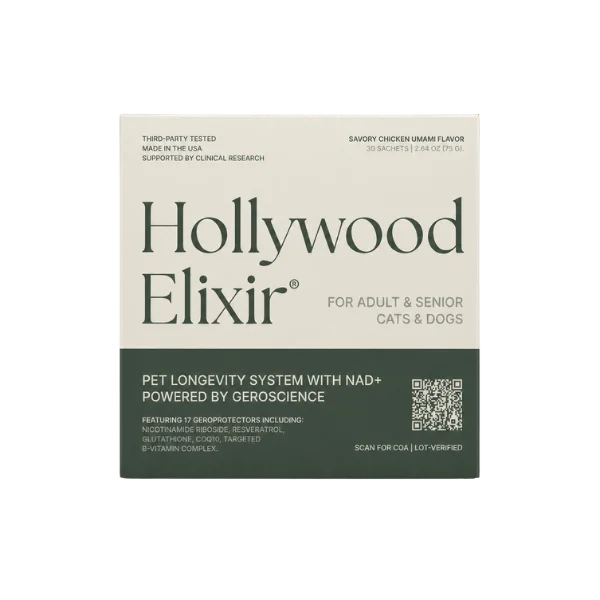
Longevity Core
Hollywood Elixir®
★★★★★(313)
More good years, starting now — steady energy, engagement, and a pet who keeps showing up fully, every day.
Starting at $89/mo
Hollywood Elixir is amazing! She put back on 5 lbs to a healthy weight, her eyes are shiny, her coat is beautiful!
— Jessie
We go on runs. Lately he's been keeping up with no problem!
— Cami
Considering anti-aging supplements for dogs?
If you're looking for anti-aging supplements for dogs
If you’re considering anti-aging supplements for dogs, start with a simple question: what would “better” look like in your dog’s daily life? For many households, it’s steadier energy, smoother recovery, and a more consistent mood—without digestive drama. Prioritize a formula that supports multiple connected systems (energy, antioxidant balance, immune steadiness) and that you can give every day without turning meals into a negotiation. Keep the plan conservative: introduce slowly, avoid stacking similar products, and ask your veterinarian to review the full label if your dog takes medications or has chronic disease. A system-level blend such as Hollywood Elixir is designed to fit that long-run, low-friction approach—supporting the broader aging network rather than chasing a single ingredient headline.
Veterinary Insights

Learn about how our DVMs think about dog aging
Dr. JoAnna Pendergrass DVM


Longevity Core
Hollywood Elixir®
★★★★★(313)
More good years, starting now — steady energy, engagement, and a pet who keeps showing up fully, every day.
Starting at $89/mo
Wellness Tools
Explore your dog’s changing needs over time


Related Reading
Anti-aging supplements for dogs are best understood as tools that may support healthy function as your dog gets older—not as a way to stop aging. In practical terms, “anti-aging” in dogs usually means supporting comfort, vitality, and day-to-day resilience across the systems that commonly change with age.
