
The Velcro Dog Pattern: When Following You Everywhere Is Comfort, Stress, or Decline

Spot Behavior Drivers and Build Routines That Support Mood, Pain, and Aging

Essential Summary

Why Is The Velcro Dog Pattern Important?

Because the same “clingy” behavior can mean comfort, stress, pain, or age-related confusion, the safest approach is to focus on what changed and what else is happening at home.

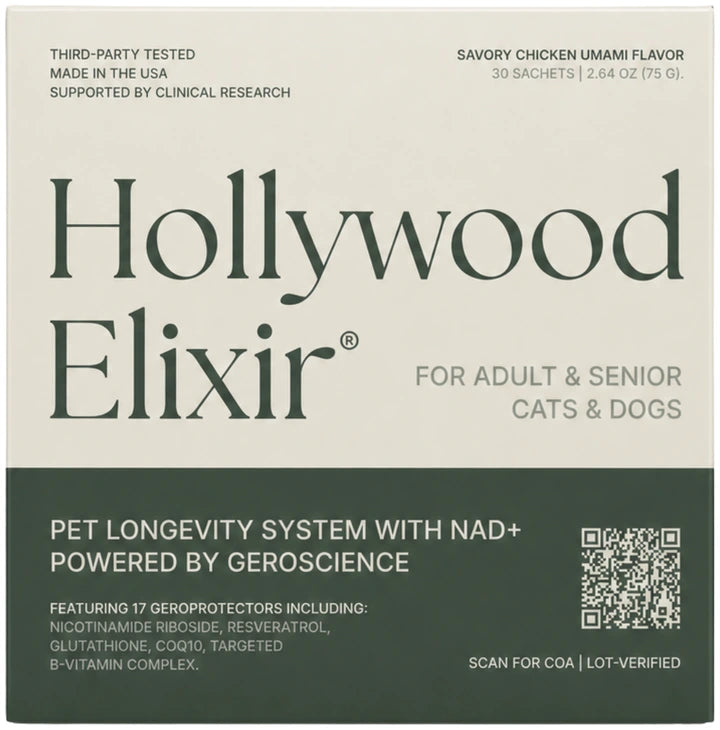
Hollywood Elixir™ is designed to support normal aging functions as part of an overall wellness plan.

When a dog follows you everywhere, it can be sweet, strategic, or a sign something is off. The key is not the following itself—it’s the change in the pattern: when it started, what triggers it, and whether the dog can settle without constant contact. Many owners describe “dog won’t leave my side” days that appear after a move, a schedule shift, a new pet, or an illness. Others have a lifelong shadow who is relaxed and playful, then suddenly becomes watchful and restless.

This page separates normal attachment from velcro dog behavior that points to stress, pain, or age-related brain changes. It also helps translate clingy dog behavior explained into household clues: pacing behind you, blocking doorways, following into the bathroom, or panicking when you step outside. Because attachment is a two-way relationship, the home environment and the owner’s routine can shape how intense the bond feels (Ståhl, 2023). And while closeness can buffer stress for some dogs, it can also become a coping strategy that crowds out sleep, play, and independent settling (Northrope, 2025).

By La Petite Labs Editorial, ~15 min read

Featured Product:

  • When a dog follows you everywhere, it can be normal bonding—or a coping strategy for stress, pain, or cognitive change.
  • Normal attachment looks flexible: the dog checks in, then can settle and sleep independently.
  • Red flags are change and urgency: new shadowing, nighttime pacing, panic behind doors, or inability to relax even when you’re home.
  • Stress-driven following often clusters with watchful body language, pacing, and sensitivity to routine changes.
  • Pain-driven proximity seeking often comes with stiffness, hesitation on stairs, or reduced play and exploration.
  • Senior-dog clinginess can be an early clue of confusion and sleep-wake disruption; track patterns and discuss with your veterinarian.
  • Use a one-week log (timing, settling time, sleep, mobility, alone-time video) to improve the vet handoff and guide next steps.

What “Velcro” Looks Like in Real Homes

Velcro dog behavior is a relationship pattern where proximity becomes the dog’s default “solution” to many feelings—curiosity, uncertainty, excitement, or discomfort. Some dogs track an owner’s movement like a job, while others seem unable to disengage. The biology underneath is simple: closeness predicts safety, access to resources, and social information, so the brain learns to keep the “important person” in view.

At home, this can look like a dog who shadows from room to room, waits outside the shower, or wedges between legs when the owner stops walking. “Dog follows me everywhere” is not automatically a problem; the question is whether the dog can also relax on a bed, chew a toy, or nap while the owner moves around. If the dog’s body stays soft and the breathing stays calm, it often reads as comfort rather than distress.

Cellular powerhouse illustration symbolizing metabolic support via dog follows me everywhere.

Normal Bonding: Temperament, Routine, and Predictability

Healthy attachment can be strong without being fragile. Dogs vary in how much social contact they prefer, and that preference is shaped by temperament, early experiences, and the owner-dog relationship. Studies in pet attachment show that both dog and owner factors influence how intense the bond feels, which helps explain why one household’s “shadow dog” looks different from another’s (Ståhl, 2023).

In a predictable home, a bonded dog often follows during transitions—morning routines, meal prep, or when visitors arrive—then settles when nothing is happening. The dog may check in visually, then choose a nearby spot. A useful home test is whether the dog can stay on a mat with a chew for 5–10 minutes while the owner moves between rooms; normal bonding usually passes that test with practice and consistency.

DNA strand illustration representing antioxidant support pathways in clingy dog behavior explained.

Breed Context: Jobs, Velcro Traits, and “Helper” Dogs

Some breeds were selected to work in close partnership with people, so following is part of their “default settings.” Herding breeds, many gundogs, and some companion breeds are more likely to monitor human movement, anticipate cues, and stay within a tight radius. That can look like clinginess, but it may be a normal expression of a dog’s social problem-solving style.

In these dogs, the difference between sweet and stressful is usually visible in the body: relaxed mouth, loose tail, and the ability to disengage when given a clear task. A working-leaning dog who follows may do best with a predictable “job” at home—place training during cooking, a short sniff walk before meetings, and a food puzzle after. Without that structure, the dog may invent a job: tracking the owner all day.

Bioactive protein structure illustrating synergy in wellness supported by velcro dog behavior.

When Following Becomes a Red Flag

Following becomes concerning when it is new, escalating, or paired with distress. A dog who suddenly “won’t leave my side” may be signaling anxiety, pain, or confusion—especially if the dog also sleeps less, startles more, or seems unable to settle. The red flag is function: the dog is not just nearby, the dog is using proximity to manage a problem.

A practical household clue is whether the dog’s following is “sticky.” Sticky following means the dog shadows tightly, blocks doorways, or panics when a door closes between dog and owner. Another clue is timing: if the dog follows most intensely at night, during storms, or when the owner picks up keys, the pattern points toward stress rather than simple affection.

Close-up dog photo reflecting peaceful vitality supported by dog won't leave my side.

Stress-driven Following: Uncertainty and Hypervigilance
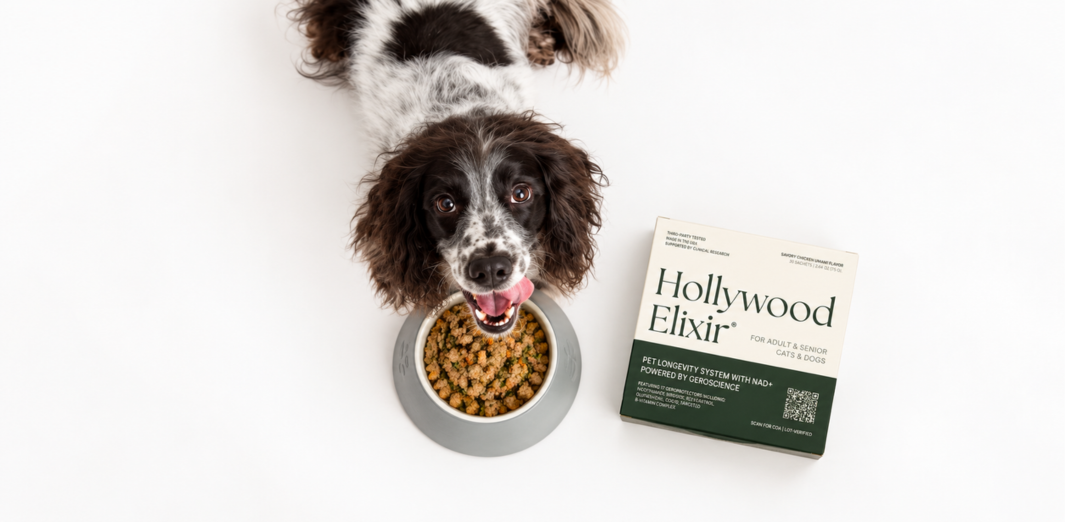
Stress-driven following often comes from uncertainty: the dog is scanning for information and using the owner as an anchor. In that state, the dog’s brain prioritizes proximity over exploration, rest, or play. Human-animal attachment can buffer stress for some individuals, but it can also become a crutch when the environment feels unpredictable (Northrope, 2025).

At home, this may look like shadowing plus extra “tells”: lip licking, yawning when not tired, pacing, or hovering during routine noises (dishwasher, HVAC clicks). The dog may follow more on days with visitors, construction sounds, or when the owner’s schedule changes. This is where cross-links matter: a bored-dog routine and a stressed-dog routine can look similar, but the stressed dog tends to stay watchful even after exercise.

Hollywood Elixir™ is amazing and makes my 13 y/o young again!

— Jessie

We go on runs. Lately he's been keeping up with no problem!

— Cami

“Following is not the diagnosis; the change in the pattern is.”

Separation Anxiety Vs. Velcro Behavior

Separation anxiety is not just “my dog is attached.” It is a panic response to being alone or separated from a specific person, and it can include vocalizing, destruction at exits, and elimination when the owner is gone. In controlled clinical research, medication such as clomipramine has been associated with improvement in separation-anxiety signs when used as part of a treatment plan (King, 2000).

A dog who follows you everywhere may still be fine when left with a sitter, or may unravel the moment the car backs out. Owners can learn a lot by checking what happens in the first 5–30 minutes after departure (camera footage helps). If the dog settles into sleep, that is different from a dog who escalates—panting, pacing, and repeatedly checking doors—until the owner returns.

Close-up weimaraner showing calm strength and presence supported by clingy dog behavior explained.

Pain-driven Proximity Seeking: the Quiet Clue

Pain can make a dog seek closeness because the owner is a source of safety and help. Dogs with orthopedic pain, dental pain, ear discomfort, or abdominal upset may become unusually attached, especially during movement transitions like stairs, jumping, or getting up from rest. Pain can also shrink a dog’s flexibility—less exploring, more hovering—because the body is trying to avoid discomfort.

At home, look for “follow plus friction”: the dog follows but moves stiffly, hesitates before sitting, or chooses rugs over slick floors. Some dogs start sleeping closer to the owner because getting up and down is harder, or because nighttime discomfort wakes them. This is a good moment to cross-link to low-energy-in-dogs content: a dog who is clingy and also less playful deserves a pain check, not just training.

Close-up profile of a dog symbolizing awareness and vitality via velcro dog behavior.

Cognitive-driven Dependence in Senior Dogs

In older dogs, new shadowing can be a coping strategy for confusion. Age-related brain changes can affect sleep-wake rhythm, spatial memory, and how a dog handles novelty, which can make the owner’s presence feel like a stabilizing cue. This is not “stubbornness”; it is often a shrinking repair window after stress, so the dog seeks the simplest path back to calm.

Owners may notice nighttime wandering, getting stuck behind furniture, staring at walls, or barking at familiar sounds—then the dog glues to the owner afterward. A dog who used to nap in another room may now follow to keep the owner in sight. This pattern fits naturally with mood-changes-in-senior-dogs: clinginess can be one of the earliest “something changed” signals, especially when paired with sleep disruption.

Inside-the-box graphic showing active blend design supporting dog follows me everywhere.

Case Vignette: When “Cute” Turns into a Clue

A 10-year-old mixed breed who always liked cuddles starts following tightly after dinner, standing close enough to touch the owner’s legs. Within a week, the dog also begins waking at 2 a.m., pacing, and whining until the owner sits on the couch. The owner jokes about a “velcro dog,” but the new timing and nighttime distress suggest more than affection.

In a scenario like this, the most useful next step is not guessing—it is logging what changed and scheduling a veterinary exam. Pain (arthritis flare, dental disease), stomach discomfort, or early cognitive change can all push a dog toward constant proximity. Video of nighttime behavior, notes on appetite and stool, and a quick mobility check at home can turn a vague worry into a clear vet conversation.

Bonding Vs. Pathology: Owner Checklist at Home

Clingy dog behavior explained well starts with observable differences. Healthy bonding usually includes choice and flexibility; concerning velcro dog behavior includes urgency and loss of independence. Attachment is normal, but when it becomes the dog’s only coping tool, the pattern can crowd out sleep, play, and self-soothing.

Owner checklist to try for one week: (1) Can the dog settle on a bed while the owner moves around? (2) Does the dog startle or panic if a door closes briefly? (3) Is following paired with panting, pacing, trembling, or drooling? (4) Did it start suddenly after an illness, move, or schedule change? (5) Is following worse at night or during specific noises? A “yes” cluster points toward stress, pain, or aging rather than simple affection.

“A relaxed shadow is companionship. A tense shadow is a coping tool.”

Lab coat visual symbolizing disciplined formulation supporting velcro dog behavior.

What to Track: Progress Indicators Between Vet Visits

Because “dog follows me everywhere” can mean different things, tracking turns a fuzzy pattern into usable data. The goal is not perfection; it is a clearer picture of triggers, intensity, and recovery. This helps a veterinarian or behavior professional separate separation anxiety from pain, boredom, or cognitive change.

What to log between vet visits: (1) time of day following is most intense, (2) ability to settle within 5 minutes after the owner sits, (3) sleep disruption (night waking, pacing), (4) appetite and stool changes, (5) mobility notes (stairs, jumping, slipping), (6) response to being briefly separated by a baby gate, and (7) any new sensitivities (sounds, touch, handling). These markers show whether the dog is becoming calmer and more predictable or more erratic.

Shop Now
Hollywood Elixir in food tableau emphasizing purity aligned with clingy dog behavior explained.

A Common Misconception That Delays Help

A frequent misunderstanding is that velcro dog behavior is “just love,” so it should be rewarded with constant reassurance. Affection is not the problem; the problem is accidentally teaching the dog that worry equals immediate access to the owner’s body. That can lock in a loop where the dog checks, clings, and escalates whenever uncertainty appears.

At home, reassurance works best when it is paired with a predictable routine: a mat to settle on, a chew to occupy the mouth, and short, planned separations that end before panic. If the dog is already distressed, scolding or “tough love” often backfires and makes the owner feel like the only safe place. The goal is to widen the dog’s range so closeness is a choice, not a need.

Shop Now
Home scene with woman and dog featuring Hollywood Elixir and clingy dog behavior explained.

When to Seek Veterinary or Behavior Evaluation

Evaluation is warranted when following is sudden, intense, or paired with physical or nighttime changes. A dog who won’t leave your side and also has vomiting, diarrhea, coughing, limping, new accidents, or a big appetite shift should be seen promptly. For behavior, urgent flags include self-injury at doors or windows, nonstop vocalizing when alone, or panic that does not improve with routine.

A helpful way to decide is to ask: is the dog seeking closeness and then settling, or seeking closeness and staying activated? If the dog cannot settle even when the owner is present, that leans toward pain, cognitive change, or high anxiety. If the dog settles only when touching the owner, that can still be workable—but it deserves a plan rather than a shrug.

Shop Now

Vet Visit Prep: Bring the Right Clues and Questions

A good vet visit for a “velcro dog” concern focuses on what changed and what else is happening in the body. Many dogs with pain or early cognitive change look “fine” in the waiting room, so the owner’s observations matter. Clear notes help the clinician choose whether to prioritize a pain exam, lab work, or a behavior plan.

Bring: short videos of following, nighttime pacing, or alone-time behavior; a timeline of when it started; and a list of any new meds, supplements, or household changes. Questions to ask: (1) “Could pain be driving this—what joints, teeth, ears should be checked?” (2) “Do these signs fit early cognitive change, and what should be watched next?” (3) “If separation anxiety is suspected, what training steps come first?” (4) “What would make this urgent?”

Practical Management: Teach Independence Without Coldness

Management works best when it lowers uncertainty and gives the dog a predictable alternative to shadowing. The aim is not to “stop following,” but to teach settling as a skill. For anxiety-prone dogs, small, repeatable routines build flexibility: the dog learns what happens next and how to recover when the owner moves away.

At home, start with a station: a bed or mat placed where the dog can still see the owner. Reward calm choices—lying down, chewing, sighing—rather than rewarding frantic tracking. Use baby gates to practice short separations while the owner remains visible, then gradually add distance. Pair departures with enrichment (snuffle mats, frozen food toys) so the dog’s mouth and brain have a job besides monitoring footsteps.

Side-by-side chart contrasting bioactives and fillers relative to dog follows me everywhere.

What Not to Do When Your Dog Shadows Constantly

Some well-meant responses can make velcro dog behavior more sticky. The biggest risk is swinging between constant contact and sudden isolation, which teaches the dog that separation is unpredictable. Another risk is assuming it is “just behavior” and missing pain, stomach upset, or senior-dog confusion that needs medical attention.

What not to do: (1) do not punish following or block the dog harshly in tight spaces, (2) do not do long “cry it out” absences if the dog panics, (3) do not dramatically reassure during anxious moments in a way that rewards escalation, and (4) do not skip a vet check when clinginess is new or paired with sleep or mobility changes. Change one variable at a time, then reassess.

Shop Now
Unboxed supplement reflecting refined experience and trust in dog won't leave my side.

Support Tools: Pheromones, Medication, and Professional Help

For true separation anxiety or severe stress, training alone may not be enough at first. Dog-appeasing pheromone (DAP) has been studied in dogs for separation-related signs in stressful settings, with reports of benefit for some behaviors (Kim, 2010). In more significant cases, veterinarians may discuss medication as part of a broader plan; clomipramine has clinical evidence supporting improvement in separation-anxiety signs in dogs when appropriately prescribed and monitored (King, 2000).

At home, these tools work best when they make the dog calmer and more predictable so learning can happen. A qualified trainer or veterinary behaviorist can help set a starting point that avoids panic rehearsals. If medication is used, owners should log progress indicators—sleep, settling time, alone-time behavior—so the plan can be adjusted with clear feedback rather than guesswork.

Shop Now

Putting It Together: a Decision Framework for Owners

The most useful question is not “Is my dog a velcro dog?” It is “What job is the following doing today?” Following that functions as companionship is usually relaxed and compatible with sleep, play, and independence. Following that functions as a coping tool tends to be urgent, repetitive, and hard to interrupt, and it often arrives with other changes.

If the dog’s pattern is stable and the dog can settle, lean into routine and enrichment—this overlaps with bored-dog content more than medical workups. If the pattern is new, nighttime-heavy, or paired with stiffness, appetite changes, or confusion, prioritize a veterinary exam and bring a short behavior log. If the dog melts down when alone, treat it like separation anxiety and build a plan that protects the dog’s emotional safety while expanding independence.

“Track timing and recovery—those clues travel well to the vet.”

Educational content only. This material is not a substitute for veterinary advice. Always consult your veterinarian about your dog’s specific needs. These statements have not been evaluated by the Food and Drug Administration. Products mentioned are not intended to diagnose, treat, cure, or prevent any disease.

Glossary

  • Velcro dog behavior - A pattern where a dog persistently seeks close proximity to a specific person.
  • Proximity seeking - Moving toward or staying near an owner to feel safe or gain information.
  • Independent settling - The ability to relax on a bed or mat without needing body contact.
  • Sticky following - Shadowing that is hard to interrupt and escalates when separated by doors or gates.
  • Separation anxiety - Panic or distress when left alone or separated from a specific person.
  • Hypervigilance - A watchful, scanning state where the dog struggles to relax.
  • Nighttime pacing - Repeated walking or restlessness at night, sometimes linked to discomfort or confusion.
  • Trigger stacking - Multiple small stressors in a day that add up and intensify clingy behavior.
  • Enrichment - Activities that give the dog a safe “job,” such as sniffing, chewing, and food puzzles.

Related Reading

References

Ståhl. Pet and owner personality and mental wellbeing associate with attachment to cats and dogs. 2023. https://www.sciencedirect.com/science/article/pii/S2589004223025002

Northrope. The Relationship Between Attachment to Pets and Mental Health and Wellbeing: A Systematic Review.. PubMed Central. 2025. https://pmc.ncbi.nlm.nih.gov/articles/PMC12023967/

King. Treatment of separation anxiety in dogs with clomipramine: results from a prospective, randomized, double-blind, placebo-controlled, parallel-group, multicenter clinical trial.. PubMed. 2000. https://pubmed.ncbi.nlm.nih.gov/10760607/

Kim. Efficacy of dog-appeasing pheromone (DAP) for ameliorating separation-related behavioral signs in hospitalized dogs.. PubMed Central. 2010. https://pmc.ncbi.nlm.nih.gov/articles/PMC2839826/

FAQ

What does The Velcro Dog Pattern mean at home?

It means the dog uses staying close to you as a default strategy—during routines, transitions, and sometimes during stress. The important detail is whether the dog can also relax independently.

If the dog follows you everywhere but can settle on a bed, chew, and nap, it often reflects bonding. If the dog won’t leave your side and seems tense, restless, or panicky when separated by a door, it may be a coping tool rather than simple affection.

Is it normal that my dog follows me everywhere?

Often, yes. Many dogs are social and prefer to be near their person, especially in multi-step routines like mornings and meal prep.

Normal looks flexible: the dog checks in, then chooses a nearby spot and rests. Concern starts when the pattern is new, escalating, or paired with distress signals like panting, pacing, trembling, or inability to settle even when you sit down.

How can bonding be strong without being unhealthy?

Healthy attachment includes choice. The dog enjoys closeness, but can also self-soothe, sleep, and engage with toys or sniffing without constant contact.

Owner and pet factors both shape attachment intensity, so “clingy” can reflect the relationship as much as the dog’s temperament(Ståhl, 2023). A good sign is a dog who follows during activity, then settles when the household is quiet.

When is The Velcro Dog Pattern a red flag?

It is a red flag when it changes suddenly, becomes urgent, or comes with other changes in sleep, appetite, mobility, or bathroom habits.

A dog who won’t leave your side and also paces at night, startles easily, or panics behind doors may be dealing with stress, pain, or confusion. In those cases, tracking the pattern for a week and scheduling a veterinary exam is a practical next step.

What signs suggest stress-driven following versus affection?

Stress-driven following usually looks tense rather than cozy. The dog may hover, pace, scan the room, or repeatedly check exits instead of settling.

Common household clues include worse clinginess during storms, visitors, schedule changes, or noisy appliances. If closeness buffers the dog briefly but the dog quickly becomes activated again, the following is likely serving as a coping tool rather than simple companionship.

Could pain make my dog clingy?

Yes. Pain can make a dog seek safety and help, and many dogs become more attached when they feel physically vulnerable.

Look for “clingy plus” signs: stiffness after rest, hesitation on stairs, reluctance to jump, licking a joint, head shyness, or changes in chewing. If the dog follows you everywhere and also moves differently, a veterinary pain check is more useful than assuming it is behavioral.

Can senior dogs become velcro due to cognitive decline?

They can. Older dogs may use the owner as a familiar cue when they feel disoriented, especially at night or in dim lighting.

Owners often notice new shadowing along with nighttime waking, wandering, getting stuck in corners, or barking at familiar sounds. If The Velcro Dog Pattern appears late in life, it is worth discussing cognitive screening and pain screening together, because both can look similar at home.

How is separation anxiety different from shadowing?

Separation anxiety is distress when the dog is alone or separated from a specific person. Shadowing is what happens while you are home.

A dog may follow you everywhere and still be fine when left alone. Conversely, a dog may seem independent at home but panic when you leave. Camera footage of the first 30 minutes after departure is one of the clearest ways to separate the two.

What home test helps assess independent settling?

Try a “mat test.” Place a bed or mat where the dog can see you, give a chew, and move around the house for a few minutes.

A dog with healthy flexibility may get up once or twice, then choose to settle again. A dog with sticky following will repeatedly abandon the mat, press close to your legs, or become distressed if a door closes. Repeat daily in short sessions so the dog learns the routine.

What should I log if my dog won’t leave my side?

Log timing, triggers, and recovery. The goal is to capture patterns that a veterinarian can act on.

Useful items include: time of day, ability to settle within 5 minutes, nighttime waking, appetite and stool, mobility (stairs/jumping), and response to brief separation by a gate. Add short videos when possible. This turns “dog follows me everywhere” into a clearer clinical story.

What’s a common mistake when dealing with velcro behavior?

A common mistake is swinging between constant contact and sudden isolation. That unpredictability can increase worry and make the pattern more intense.

Another mistake is assuming it is “just love” and missing pain or senior-dog confusion. If clinginess is new, paired with sleep disruption, or paired with stiffness, a veterinary exam should come before major training changes.

Should I ignore my dog when they follow me?

Ignoring is not a complete plan. Some dogs follow out of habit or curiosity, but others are distressed, and ignoring distress can escalate it.

A better approach is to teach an alternative: a mat, a chew, and short, predictable separations that end before panic. Calm attention can still happen—just aim to reward settling and quiet independence rather than rewarding frantic tracking.

Can pheromone products help with stress-related clinginess?

They may help some dogs as part of a broader plan. Dog-appeasing pheromone (DAP) has been studied for separation-related signs in stressful settings, with reported benefit for some behaviors(Kim, 2010).

Pheromones are not a substitute for training or medical evaluation, but they can support a calmer baseline so the dog can learn. If there is panic, self-injury, or severe distress, veterinary guidance is important.

Are medications ever used for separation anxiety in dogs?

Yes, in some cases, under veterinary supervision and paired with behavior work. In a controlled clinical trial, clomipramine was associated with improvement in separation-anxiety signs in dogs compared with placebo(King, 2000).

Medication decisions depend on the dog’s health history, severity, and safety considerations. Owners can help by bringing videos of alone-time behavior and a short log of triggers and recovery, so the plan targets the right problem.

How long does it take to change a clingy pattern?

Most dogs change gradually, not overnight. The timeline depends on whether the driver is habit, stress, pain, or aging.

With consistent mat work and predictable routines, owners often see small wins within 1–2 weeks: faster settling and fewer “sticky” follow episodes. If there is panic when alone, significant pain, or senior-dog confusion, progress may require veterinary treatment and a longer training runway.

Does breed affect The Velcro Dog Pattern intensity?

Yes. Some breeds were selected to work closely with people, so close tracking and frequent check-ins can be normal.

Breed is not destiny, though. A working-leaning dog in a low-enrichment home may become a constant shadow because the dog has no other “job.” A companion breed can also become clingy if stress, pain, or a big routine change shrinks the dog’s flexibility.

Is this pattern the same in cats and dogs?

No. Dogs are generally more likely to shadow and track human movement, while cats may show attachment differently (following sometimes, but also proximity without contact).

For dogs, “dog follows me everywhere” is a common owner complaint and can be normal. For cats, sudden clinginess can also signal stress or illness, but the household clues differ. If a cat suddenly becomes unusually attached, a veterinary check is still the safest first step.

What research supports treating true separation anxiety?

Separation anxiety has clinical research behind several tools, including behavior modification and, in some cases, medication.

Clomipramine has been associated with improvement in separation-anxiety signs in dogs in both controlled and clinical settings. A preliminary clinical study also reported improvement in separation anxiety signs with clomipramine use(Seksel, 2001). The best outcomes typically come from combining medical guidance with a structured training plan.

When should I call the vet about sudden clinginess?

Call promptly if clinginess is sudden and paired with vomiting, diarrhea, coughing, limping, collapse, new accidents, or marked appetite changes.

Also call if the dog cannot settle, paces at night, seems confused, or shows panic when briefly separated. Bring a short timeline and any videos. The fastest path to answers is often ruling out pain or illness first, then building a behavior plan if needed.

How do I decide if The Velcro Dog Pattern is okay?

Decide based on function and flexibility. If the dog chooses closeness but can also rest, play, and settle independently, it is usually okay.

If the dog won’t leave your side and seems driven—blocking doorways, panicking when separated, or losing sleep—the pattern is doing “work” for the dog. That is when tracking, enrichment, and a veterinary or behavior evaluation become the most practical next steps.

5K+ Happy Pet Parents

Excellent 4.8

The Velcro Dog Pattern: When Following You Everywhere Is Comfort, Stress, or Decline | Why Thousands of Pup Parents Trust Hollywood Elixir™

"He seems more happy overall. I've also noticed he has more energy which makes our walks and playtime so much more fun."

Olga & Jordan

"He's got way more energy now! We go on runs pretty often; he use to get tired halfway through, but lately, he's been keeping up without any problem."

Cami & Clifford

"I want her to live forever. She hasn't had an ear infection since!"

Madison & Azula

"It helps with her calmness, her immune system. I really like the clean ingredients. Highly recommend La Petite Labs!"

Maple & Cassidy

"He seems more happy overall. I've also noticed he has more energy which makes our walks and playtime so much more fun."

Olga & Jordan

"He's got way more energy now! We go on runs pretty often; he use to get tired halfway through, but lately, he's been keeping up without any problem."

Cami & Clifford

"I want her to live forever. She hasn't had an ear infection since!"

Madison & Azula

"It helps with her calmness, her immune system. I really like the clean ingredients. Highly recommend La Petite Labs!"

Maple & Cassidy

"He seems more happy overall. I've also noticed he has more energy which makes our walks and playtime so much more fun."

Olga & Jordan

"He's got way more energy now! We go on runs pretty often; he use to get tired halfway through, but lately, he's been keeping up without any problem."

Cami & Clifford

"I want her to live forever. She hasn't had an ear infection since!"

Madison & Azula

"It helps with her calmness, her immune system. I really like the clean ingredients. Highly recommend La Petite Labs!"

Maple & Cassidy

"He seems more happy overall. I've also noticed he has more energy which makes our walks and playtime so much more fun."

Olga & Jordan

"He's got way more energy now! We go on runs pretty often; he use to get tired halfway through, but lately, he's been keeping up without any problem."

Cami & Clifford

"I want her to live forever. She hasn't had an ear infection since!"

Madison & Azula

"It helps with her calmness, her immune system. I really like the clean ingredients. Highly recommend La Petite Labs!"

Maple & Cassidy

SHOP NOW