Sphynx Cat Dry Skin Remedy & Supplement

Find the barrier breakdown behind dryness and restore moisture

By La Petite Labs Editorial 15 min read

Sphynx cat dry skin usually comes down to barrier oils and keratin turnover not keeping up with frequent bathing and low surface oil, so the fix is to bathe more gently and rebuild the skin's moisture from the inside, not to scrub harder. For most cats the everyday triggers are routine, not disease: bathing too often or with a harsh cleanser, low indoor humidity in winter, hydration and diet that don't support skin turnover, and irritation from wipes, detergent, or bedding.

This is an at-home plan that fixes the environment first, then the bath routine, then nutrition basics, including omega-3s with veterinary approval. It also sets clear limits for when to call the vet: intense itching, sores, swelling, strong odor, oozing, spreading redness, cracks or bleeding, or a cat that seems unwell. Those signs point to infection, parasites, or allergy flares that need diagnosis rather than home tweaking.

  • Sphynx dry skin is usually barrier oils and hydration falling behind frequent bathing, not a disease, so gentler cleansing plus internal support is the core fix.
  • Do Sphynx cats need lotion or a moisturizer? A light, cat-safe moisturizer helps only where skin is dry; balanced barrier support matters more than constant lotion.
  • The most reliable results are layered: fewer or gentler baths, selective moisture, and consistent daily nutrition.
  • Environment drives a lot of it: indoor humidity and bathing frequency can change skin appearance as much as any product.
  • Avoid stacking multiple supplements, avoid essential oils, and keep cat-specific safety front of mind.
  • Redness, odor, oozing, or persistent itching is a vet check before adding more oils.
  • Even on an adequate diet, beauty-from-within support earns its place because complete food does not guarantee a polished surface.

What “Dry” Means on a Sphynx: Flakes vs Tightness vs Irritation

“Dry skin” isn’t one single problem, so it helps to match what you’re seeing with likely day-to-day triggers.

Flakes without much itching often show up when indoor air is dry or when bathing is a bit too frequent. You may notice light flaking at the shoulders or along the spine, especially after a bath or after time near heating vents.

A tight feeling after a bath (skin looks slightly drawn or feels less flexible) commonly points to cleanser choice or technique—shampoo left on too long, water that’s too hot, or products with fragrance/essential oils. This is more about irritation/over-cleansing than a serious skin disease.

Itching, redness, or repeated scratching—especially in folds, around the chin, armpits, groin, or between toes—raises the odds of contact irritation (wipes, laundry detergent, fabric softeners), yeast/bacterial overgrowth, or parasites. Location clues matter: chin irritation can be related to bowls or residue; fold irritation can worsen with moisture trapped after bathing.

Quick self-checks: note whether itching is present, where the changes cluster (shoulders/spine vs folds/chin), and what changed recently (new shampoo, wipes, detergent, humidifier off).

Many owners find that cat nail nutrients fills in a gap that routine approaches tend to miss.

When the picture shifts over time, cat shedding and fur loss often helps explain what changed and why.

Remedy Plan: Environment, Bath Routine, and Supplement Basics (In That Order)

1) Environment first (daily): Aim for 40–55% indoor humidity. Use a hygrometer to confirm, and run a humidifier during dry seasons. Reduce contact irritants by switching to fragrance-free laundry detergent, skipping fabric softener, and rinsing bedding well. If you use wipes, choose cat-safe, fragrance-free options and stop them for 1–2 weeks if irritation is suspected.

2) Bath routine second (weekly to every few weeks): Avoid over-bathing. Many Sphynx cats do well with a consistent schedule rather than frequent “extra” baths. Use lukewarm water and a gentle, fragrance-free, cat-safe cleanser; keep contact time short and rinse thoroughly. Pat dry carefully, especially in folds, to prevent moisture-related irritation.

3) Nutrition and supplement basics (ongoing): Support hydration with wet food and fresh water access. Discuss omega-3s (EPA/DHA) with your veterinarian before starting, especially if your cat has pancreatitis history, is on medications, or has a sensitive stomach. (see our Cat Hydration Calculator →)

Timeline and tracking: Expect gradual improvement over 1–3 weeks. Take weekly photos in the same lighting, note bath dates/products, humidity readings, and any flare triggers to see what actually helps.

Different Dryness Patterns and What They Suggest for Care

Not all dryness is the same, and the pattern tells you what to do. Some Sphynx cats are truly dry, with tight, flaky, dull-looking skin. Others are irritated, with redness, sensitivity, and frequent scratching. And some are imbalanced, oily in the folds but flaky on the back. Each pattern needs a different mix of remedies, which is why one "miracle" product rarely delivers.

If you are choosing a dry-skin supplement, pick a formula that supports overall skin condition rather than one promising to erase a single symptom. Nutraceutical reviews note that dietary interventions vary in effect by formulation, and that safety should be weighed for each cat. The best supplement is simply the one that fits your cat's pattern and your routine, used consistently.

Do Sphynx Cats Need Lotion? Why a Steady Routine Beats a Single Miracle Product

Sphynx cats don't need constant lotion; they need a steady care routine and a calm skin barrier. A light, cat-safe moisturizer can help where skin is genuinely tight or flaky, but slathering it everywhere often traps residue in folds and starts a bathe-more, moisturize-more cycle. The skin responds to the whole care ecosystem, not one product: a harsh shampoo can erase the benefit of a good diet, a dry home can undo a perfect bath, and inconsistent supplementation makes results impossible to read.

A supplement earns its place when it makes the rest of the routine look better: fewer visible flakes between baths, a softer feel after wiping, and a more even tone overall. Human research on skin-hydration supplements shows the effects can be real but variable, which is exactly why steady use and realistic expectations beat chasing instant change.

When Flakes, Odor, or Grease Suggest Something Beyond Dryness

When dryness is persistent, it’s worth considering whether something else is sharing the stage. Yeast and other skin flora can influence how skin looks and feels, especially in breeds with distinctive skin environments. If you notice greasy film, odor, or darkened areas in folds, that’s a different situation than simple dryness.

Studies have documented Malassezia species on Sphynx skin and compared prevalence between healthy and seborrhoeic cats, suggesting a potential role in some skin presentations (Ahman SE, 2009). In those cases, the best remedy for dry skin in sphynx cats may start with a vet-confirmed diagnosis, then supportive care (including supplements) to maintain a clean, comfortable, well-kept surface.

“With Sphynx cats, small shifts in routine show up fast—because skin is the coat.”

Diet Baselines Versus Visible Condition: Why Owners Add Support

Diet quality sets the baseline for skin appearance, but “complete and balanced” doesn’t always translate to “looks great on my cat.” Sphynx cats are a perfect example: their skin is on display, and small shifts in hydration and oil balance become obvious quickly. That’s why owners often look for sphynx cat supplements for dry skin even when they’re feeding a reputable food.

A thoughtful supplement can support visible condition beyond single-nutrient replacement: it’s daily reinforcement for softness, smoothness, and a calmer post-bath look. Because nutraceutical suitability varies, choose cat-appropriate products and keep your vet in the loop if your cat has medical conditions or takes medications.

Quality Signals to Look for in Sphynx Cat Supplements for Dry Skin

If you’re trying to decide on the best supplement for sphynx cat dry skin, focus on quality signals that protect your cat and your expectations: clear labeling, cat-specific directions, and a brand that avoids dramatic promises. The goal is visible upkeep—skin that looks comfortable and feels naturally soft—rather than a “before/after” storyline.

Systematic reviews of nutraceuticals emphasize variability in formulations and the importance of considering safety profiles, especially because not all supplements are suitable for every cat. When in doubt, simplify: pick one well-formulated product, use it consistently, and evaluate changes in flakes, texture, and overall polish over time.

Realistic Timelines for Softer Feel and Fewer Visible Flakes

A common frustration is timing. Topical products can feel immediate, while supplements are subtle at first. For many cats, the earliest signs are small: less “chalk” on the shoulders, fewer dry specks after wiping, and a smoother feel when your cat stretches against you. Those are meaningful wins because they’re the moments you notice daily.

Research on moisturizing supplements highlights that randomized trials are important and that individual responses vary, which supports a patient, consistent trial rather than frequent switching. If you’re tracking results, take weekly photos in the same light and note bath dates—Sphynx skin can change quickly with routine shifts.

When Dry Skin Is a Cosmetic Issue Versus a Vet Issue

Some dryness is simply cosmetic, but some is a signal to look closer. If dryness comes with persistent itching, scabs, ear debris, or sudden behavior changes, it’s time to involve your veterinarian. Sphynx cats have breed-specific health considerations, and regular monitoring helps separate “needs more moisture” from “needs medical attention” (Sarfaty H, 2022).

Once you’ve ruled out underlying issues, a sphynx cat dry skin remedy supplement can be a steady, low-drama part of daily care. The right product supports visible condition while you refine bathing frequency, cleanser choice, and environmental comfort—so your cat looks polished and feels at ease in their own skin.

Comparing Best Products for Sphynx Cat Dry Skin Without Overdoing It

If you’re comparing the best products for sphynx cat dry skin, it helps to separate “fast feel” from “lasting look.” Topicals can make skin feel smoother right away, but the effect can fade quickly if bathing strips oils or if indoor air is dry. Supplements tend to work more gradually, but they can support a steadier baseline so the skin looks less reactive to everyday life.

A practical approach is to pair a gentle, fragrance-free cleansing routine with a consistent supplement, then judge results by visible signals: less flaking on dark fabrics, fewer rough patches at elbows, and a calmer look after baths. Because responses to moisturizing supplements can vary by individual, consistency and observation matter more than chasing a “miracle” ingredient (Sun Q, 2022).

“The best results usually come from layered care: gentle cleansing, selective moisture, and steady daily support.”

La Petite Labs

DVM Voice: Clinical Vignette of When Skin Changes Point Deeper Than the Surface

Case provided by Sarah Calvin, DVM

Maverick, a 4-year-old Siamese cat, was brought in for hair loss across his lower abdomen and red, flaky skin lesions that had progressed over the previous month. His owners were unsure whether he was itchy or overgrooming.

Examination showed broken hairs, abdominal alopecia, and lesions consistent with bacterial skin infection. Further testing ruled out fleas, FeLV/FIV, and common fungal causes. Because his grooming pattern suggested deeper discomfort, his veterinarian continued the workup.

Radiographs and urinalysis revealed bladder stones, crystalluria, and blood in the urine. Maverick’s overgrooming was linked to urinary pain — a case where skin changes were secondary to an internal problem.

His care required a staged plan: stabilizing the skin infection, surgically removing the bladder stones, managing pain, transitioning to a therapeutic diet, and supporting skin-barrier recovery with appropriate nutrition and fish oil.

Hair regrowth began by 8 weeks. By 6 months, his coat had fully recovered, with no recurrence after the urinary issue was resolved.

Clinical takeaway: Maverick’s case shows why feline coat loss and overgrooming deserve careful veterinary investigation. Skin and coat health can reflect pain, stress, nutrition, infection, barrier weakness, or internal disease — not just surface-level grooming behavior.

Single-case vignette. Not generalizable. Veterinary diagnosis and oversight are essential for overgrooming, hair loss, skin lesions, urinary signs, pain, or suspected infection.

Explore Pet Gala Research →
sphynx cat dry skin remedy supplement - 9

When Dryness and Oiliness Show up Together on Sphynx Skin

Some Sphynx cats swing between dry-looking skin and oily buildup. That combination can be confusing: owners moisturize to address dryness, then notice more residue, then bathe more often, and the cycle repeats. The goal is a balanced surface—comfortable, clean, and evenly conditioned—rather than “as matte as possible.”

Yeast such as Malassezia can be present on feline skin and has been studied specifically in Sphynx populations, including comparisons between healthy and seborrhoeic presentations (Ahman SE, 2009). If you see persistent greasiness, odor, or dark debris in skin folds, it’s worth a veterinary check before layering more oils. A supplement can still fit into the plan, but it should support overall skin presentation without masking a problem that needs targeted care.

sphynx cat dry skin remedy supplement - 10

Bathing Choices That Keep Skin Looking Comfortable and Well-kept

Bathing is often the make-or-break factor for how to remedy dry skin in sphynx cats. Too frequent or too “squeaky clean” and the skin can look tight and chalky; too infrequent and buildup can dull the skin’s natural glow. Aim for a routine that keeps the surface clean while preserving comfort—lukewarm water, a mild cleanser, and a thorough rinse.

After bathing, pat dry rather than rub, and consider a simple, cat-safe moisturizer only where needed. If you’re using a sphynx cat dry skin remedy supplement, keep the routine steady for a few weeks so you can judge the combined effect. Breed-specific differences are real, and regular check-ins help you avoid overcorrecting based on a single “bad skin day” (Sarfaty H, 2022).

sphynx cat dry skin remedy supplement - 11

Humidity, Fabrics, and Home Comfort That Affect Visible Skin Texture

Indoor air is an underrated driver of visible dryness. Heated winter air and constant AC can pull moisture from skin, and Sphynx cats don’t have fur to buffer that change. If your cat looks flakier in certain rooms or seasons, the environment may be the main variable—not the food or the bath product.

A humidifier in the sleeping area, fewer drafts, and warm (not hot) bathing water can make skin look calmer. Supplements can complement these changes, but they’re not a substitute for comfort basics. Since supplement effects on skin hydration can vary, it’s smart to improve the “stage” (air and routine) while you evaluate the “support” (your chosen formula) (Sun Q, 2022).

Building a Simple Routine from the Best Remedy Options Available

When owners ask for the best remedy for dry skin in sphynx cats, they often mean: “What will look better without starting a whole medical project?” The most reliable answer is a layered routine—gentle cleansing, smart moisture, and a supplement that supports skin, coat, and nails as a set. That combination tends to produce the most noticeable, reassuring changes.

Be cautious with “stacking” multiple supplements at once. Nutraceutical safety and suitability can vary by cat, and not every ingredient is appropriate for every individual (Barbeau-Grégoire M, 2022). If you want to trial a best supplement for sphynx cat dry skin, start with one product, keep everything else stable, and track visible signals weekly (flakes, texture, post-bath tightness, and overall comfort).

Safety Signals: When to Pause Supplements and Call Your Veterinarian

Safety matters most when skin looks “off,” because it’s tempting to add more and more products. If your Sphynx has persistent redness, open sores, intense itching, or a sudden change in skin odor, treat that as a veterinary moment—not a supplement moment. The right plan may still include a supplement, but only after the cause is clarified.

As a general rule, choose cat-specific formulas, avoid essential oils, and be conservative about combining multiple nutraceuticals. Reviews of dietary interventions emphasize that formulations differ and that safety profiles should be considered rather than assumed (Barbeau-Grégoire M, 2022). A well-designed daily product should feel like quiet support for visible condition, not a high-stakes experiment.

How to Track Results Using the Visible Changes Owners Notice

A good way to judge whether a sphynx cat dry skin remedy supplement is “working” is to look for small, repeatable improvements: less powdery residue on bedding, fewer dry patches after grooming wipes, and a smoother feel when you pick your cat up. These are the kinds of feedback loops owners actually live with—quick, visual, and confidence-building.

Because controlled trials are the gold standard for understanding supplement effects on skin hydration, it’s wise to keep expectations realistic and focus on consistent routines rather than instant transformation (Sun Q, 2022). If you see no change after a reasonable trial, the “best” choice may be adjusting bathing frequency, switching cleanser, or asking your vet to rule out infection or allergy triggers.

Why Supplements Work Best Alongside Gentle Topical Care

Owners often ask whether a supplement can replace topical care. For Sphynx cats, it’s usually the opposite: the best results come when internal support makes topical routines easier to keep gentle. If skin is less reactive, you can bathe less aggressively, moisturize more selectively, and maintain a cleaner, more even look.

Think of supplements as part of a “presentation system”: skin comfort, nail integrity, and overall polish. Nutraceutical research in cats highlights that outcomes can depend on the specific formulation and the individual animal, which is another reason to choose a product designed for daily consistency rather than a single-ingredient quick fix (Barbeau-Grégoire M, 2022).

Choosing Daily Beauty Support That Still Makes Scientific Sense

The most science-minded reason to still choose a beauty-focused supplement is simple: a diet can be "adequate" while visible condition is not where you want it. Sphynx cats put skin on display, so small shifts in hydration, oil balance, and routine show up immediately. A product that supports the whole integument, skin, coat, and nails, fits the reality of what owners actually notice and care about.

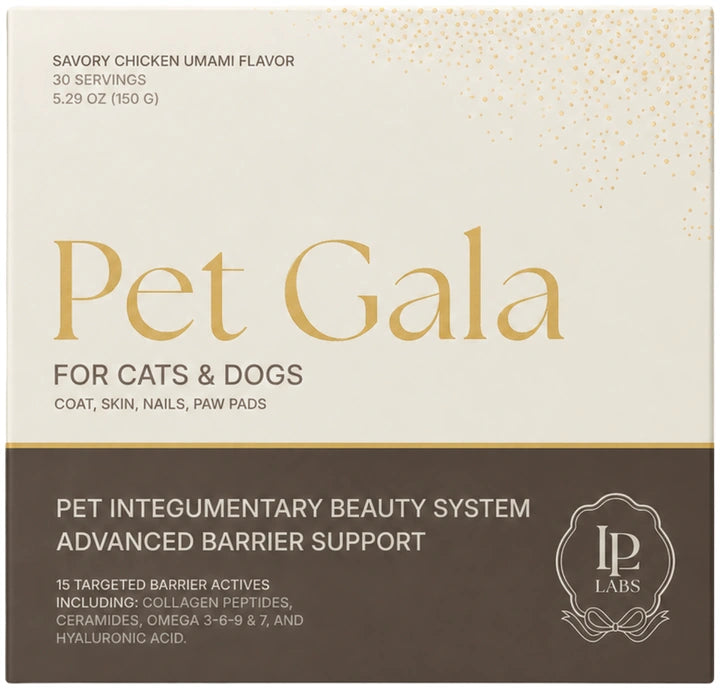
For a Sphynx specifically, the hydration and barrier actives matter, and Pet Gala discloses them per sachet: hyaluronic acid at 50 mg for hydration and elasticity, ceramides at 8 mg, and omega-7 at 50 mg for barrier oils. It is a food-mixed daily routine made for cats and built for visible upkeep, not dramatic claims. Explore Pet Gala. The best choice is the one you can keep consistent, because consistency is what turns care into a reliably fresh, well-kept look.

“A supplement should make skin look calmer between baths—not create a complicated stack.”

Educational content only. This material is not a substitute for veterinary advice. Always consult your veterinarian about your dog’s specific needs. These statements have not been evaluated by the Food and Drug Administration. Products mentioned are not intended to diagnose, treat, cure, or prevent any disease.

Glossary

  • Transepidermal Water Loss (TEWL): Water that evaporates through the skin, contributing to a tight, dry look.
  • Skin Barrier: The outer protective layer that helps keep moisture in and irritants out.
  • Flaking: Small visible skin scales that can appear as “dust” on bedding or clothing.
  • Seborrhea (Seborrhoeic Skin): A pattern of excess oil and buildup that can coexist with flaking.
  • Malassezia: A yeast genus that can be present on skin and may contribute to odor or greasy debris.
  • Nutraceutical: A supplement-like product used to support normal body function and visible condition.
  • Palatability: How willingly a cat eats a product; crucial for consistent daily use.
  • Topical: Applied to the skin surface (wipes, moisturizers, shampoos) to change feel and appearance.
  • Environmental Humidity: Moisture in indoor air that can influence how dry or comfortable skin looks.

Related Reading

References

Genovese DW. Histological and dermatoscopic description of sphynx cat skin. PubMed. 2014. https://pubmed.ncbi.nlm.nih.gov/25109701/

Barbeau-Grégoire M. A 2022 Systematic Review and Meta-Analysis of Enriched Therapeutic Diets and Nutraceuticals in Canine and Feline Osteoarthritis. PubMed. 2022. https://pubmed.ncbi.nlm.nih.gov/36142319/

Ahman SE. Cutaneous carriage of Malassezia species in healthy and seborrhoeic Sphynx cats and a comparison to carriage in Devon Rex cats. PubMed. 2009. https://pubmed.ncbi.nlm.nih.gov/19559635/

Sun Q. Effectiveness of Dietary Supplement for Skin Moisturizing in Healthy Adults: A Systematic Review and Meta-Analysis of Randomized Controlled Trials. PubMed. 2022. https://pubmed.ncbi.nlm.nih.gov/35719159/

Sarfaty H. Prevalence and characteristics of ocular diseases in Sphynx cats: A retrospective assessment (2012-2021) and comparison with non-Sphynx cats. PubMed. 2022. https://pubmed.ncbi.nlm.nih.gov/35598106/

Cunningham R. Evaluation of a nutritional supplement for the alleviation of pain associated with feline degenerative joint disease: a prospective, randomized, stratified, double-blind, placebo-controlled clinical trial. PubMed. 2022. https://pubmed.ncbi.nlm.nih.gov/34719996/

Noli C. An open-label pilot study on an adsorbent mousse containing adelmidrol in client-owned cats with feline atopic skin syndrome and associated seborrhoea. PubMed Central. 2025. https://pmc.ncbi.nlm.nih.gov/articles/PMC12420850/

Lopes. A blinded, randomized, placebo-controlled trial of the safety of oclacitinib in cats. Springer. 2019. https://link.springer.com/article/10.1186/s12917-019-1893-x

Seksel. Behavior-modifying drugs. 2008. https://www.sciencedirect.com/topics/biochemistry-genetics-and-molecular-biology/propentofylline

Kong J. The Pharmacokinetic and Absolute Bioavailability of Cyclosporine (Atopica for Cats()) in Cats. PubMed Central. 2023. https://pmc.ncbi.nlm.nih.gov/articles/PMC10304832/

McDonnel SJ. Pharmacokinetics and pharmacodynamics of suberoylanilide hydroxamic acid in cats. PubMed Central. 2014. https://pmc.ncbi.nlm.nih.gov/articles/PMC3949138/

Summers S. Evaluation of iron, copper and zinc concentrations in commercial foods formulated for healthy cats. PubMed Central. 2022. https://pmc.ncbi.nlm.nih.gov/articles/PMC10812249/

FAQ

What is a sphynx cat dry skin remedy supplement, exactly?

A sphynx cat dry skin remedy supplement is a daily ingestible product intended to support visible skin comfort and surface condition, especially when dryness shows as flakes, tightness, or rough texture. It’s not a replacement for bathing or moisturizers; it’s a way to support a steadier baseline so skin looks more even between routines.

Why does dry skin show up so clearly on Sphynx?

Sphynx cats have distinctive skin characteristics, and without fur, moisture loss and surface changes are easier to see day to day. That means mild dryness can look dramatic: fine flaking, a dusty appearance after cuddling, or a tight look after bathing.

How fast should I expect visible changes from a supplement?

Most owners notice changes gradually, not overnight. Early wins are usually subtle: less powdery residue on bedding, fewer dry specks after wiping, and a smoother feel when your cat stretches against you. Supplements tend to work best when everything else stays steady—same bath schedule, same cleanser, same food. Because responses to skin-hydration supplements can vary by individual, consistency matters more than constant switching.

Is a sphynx cat dry skin remedy supplement safe daily?

Daily use can be appropriate when the product is formulated for cats and used as directed. Safety depends on the full formula, your cat’s health history, and what else you’re already giving. If your cat has chronic disease, is pregnant/nursing, or takes medications, it’s smart to ask your veterinarian before starting. Reviews of feline nutraceuticals emphasize that not all supplements suit every cat, so choosing thoughtfully matters.

What side effects should I watch for when starting supplements?

The most common issues owners report with new supplements are digestive: softer stools, mild gas, or reduced appetite. Less commonly, a cat may refuse food if the flavor or smell is strong. Any vomiting, persistent diarrhea, facial swelling, or sudden itching should be treated as a stop-and-check moment. Because supplement safety varies by formulation, introduce one new product at a time and keep your vet involved if symptoms persist.

Can supplements interact with my cat’s medications or conditions?

They can, depending on ingredients and your cat’s medical profile. Cats with liver or kidney disease, clotting concerns, or complex medication schedules deserve extra caution. Even when a supplement is “natural,” it can still change tolerance or appetite, which can affect how well other treatments are taken. Because nutraceutical suitability is individual, a quick vet check is the safest way to confirm fit before you commit.

Is this approach different for kittens versus adult Sphynx cats?

Yes. Kittens are still developing, and their diets are typically formulated to cover growth needs, so any add-ons should be chosen carefully and discussed with a veterinarian. Adults often have more stable routines, making it easier to evaluate whether a supplement improves visible dryness, texture, or post-bath tightness. If you’re considering a sphynx cat dry skin remedy supplement for a younger cat, prioritize cat-specific formulas and conservative decisions.

Do Sphynx cats need different skin support than other breeds?

Often, yes. Without fur, Sphynx skin is more exposed to bathing, indoor air, and friction from fabrics, and moisture loss can be more noticeable. That’s why routines that feel “extra” for other cats—like careful cleansing and consistent conditioning—can be normal for Sphynx households.

Is a dry skin supplement for cats the same as for dogs?

No. Cats have different nutritional sensitivities and tolerances, and dog products may include ingredient levels or additives that aren’t appropriate for felines. For Sphynx cats especially, you want cat-specific directions and a formula designed around feline needs and palatability. Because safety profiles vary across nutraceutical products, stick to cat-intended supplements and ask your vet if you’re unsure.

What if my Sphynx has oily skin but also flakes?

That combination is common and usually signals imbalance rather than “more moisture is always better.” Over-bathing can create tight, flaky areas, while folds can still hold oil and debris. If there’s odor, dark residue, or persistent greasiness, it’s worth checking for yeast involvement before adding richer topicals. Malassezia has been studied on Sphynx skin, including in seborrhoeic presentations, so diagnosis matters when symptoms persist(Ahman SE, 2009).

How do I choose the best supplement for sphynx cat dry skin?

Choose based on clarity and consistency: cat-specific labeling, straightforward directions, and a formula designed for ongoing visible care (skin comfort, coat sheen, nail integrity). Avoid products that rely on dramatic promises or require stacking multiple add-ons to “work.”

Because nutraceutical formulations vary and suitability is individual, it’s wise to introduce one product at a time and monitor results.

Should I change food before trying a dry skin supplement?

Not necessarily. If your cat is thriving on a complete and balanced diet, changing food can add variables that make skin changes harder to interpret. Many owners prefer to keep food stable and adjust routine factors first—bathing frequency, cleanser gentleness, and indoor humidity—then trial a supplement consistently. Dietary interventions can have variable effects depending on formulation, so simplifying variables often gives clearer feedback.

Can I use a supplement if my cat already eats wet food?

Yes, many owners do. Wet food can support hydration intake, but visible skin condition still depends on bathing, indoor air, and your cat’s individual skin tendencies. A supplement can be used as a consistent “finishing touch” to support softness and reduce the look of flaking between baths. Because responses to moisturizing supplements vary, keep the rest of the routine steady so you can judge the change you see.

What’s the best way to give supplements to picky cats?

Make it feel like part of a calm ritual: offer it at the same time daily, pair it with a favorite meal, and avoid forcing when possible. If the product is a powder or liquid, mixing into a small “test bite” first can prevent wasted food if your cat refuses. Consistency is what makes visible results easier to notice, so the best format is the one your cat accepts reliably.

When should I call the vet about Sphynx skin dryness?

Call if you see open sores, bleeding, strong odor, sudden widespread redness, or intense itching that disrupts sleep or appetite. Also check in if dryness appears abruptly alongside other changes (eye issues, lethargy, weight loss), since breed-specific monitoring can matter for Sphynx cats(Sarfaty H, 2022).

Does bathing more often fix dry skin in Sphynx cats?

Not always. Bathing can remove buildup, but frequent or harsh washing can leave skin looking tight and flaky. Many owners get better results by bathing gently on a consistent schedule, rinsing thoroughly, and moisturizing only where needed rather than trying to “scrub away” dryness. Because Sphynx skin can lose moisture more readily, balancing cleansing with conditioning is key.

What quality signals matter most when buying cat supplements?

Look for transparent labeling, cat-specific directions, and a product positioned for daily use rather than “mega-dose” claims. It’s also a good sign when a brand communicates clearly about intended outcomes (visible condition, comfort, coat sheen) without promising to treat disease. Because safety and effectiveness can vary across nutraceutical formulations, quality and suitability should be considered together.

Can a sphynx cat dry skin remedy supplement replace moisturizers?

Usually it works best as a partner, not a replacement. Topicals can change feel quickly, while a supplement supports a steadier baseline so skin looks less reactive between baths. Many owners find they can moisturize more selectively once the overall texture looks calmer. Since moisturizing supplement effects can vary, it helps to keep your topical routine gentle and consistent while you evaluate changes.

What does research say about supplements and skin hydration?

In humans, dietary supplements have been shown in some studies to improve skin hydration, but results vary among individuals and depend on the specific product and context. In pets, the same principle applies: formulation, consistency, and the rest of the routine influence what you actually see. A practical takeaway is to choose a cat-appropriate formula designed for daily use and judge it by visible signals you can track.

How do I decide between remedy options for Sphynx dryness?

Decide by pattern. If dryness is mild and cosmetic, start with gentler bathing and better humidity. If there’s oil plus flakes, prioritize balance and consider a vet check if odor or dark debris appears. If there’s redness or sores, treat it as medical first, then return to supportive care. Because Sphynx skin has breed-specific tendencies, routines that emphasize steady, visible comfort often work best.

Can I combine multiple supplements for faster skin results?

It’s usually better not to. Stacking products makes it harder to tell what’s helping, and it can increase the chance of digestive upset or ingredient overlap. If you want clearer results, introduce one product, keep everything else stable, and assess visible changes over a few weeks. Nutraceutical reviews emphasize that safety and suitability vary, so “more” isn’t automatically better.

What makes Pet Gala relevant if my cat’s diet is complete?

A complete diet can meet baseline needs while visible condition still fluctuates with bathing, indoor air, and individual skin tendencies. Sphynx cats make those fluctuations obvious, because their skin is fully on display. A beauty-focused supplement can support a steadier, more polished look without requiring you to change everything else. Since Sphynx skin can be more prone to moisture loss, daily support can be a practical part of keeping skin looking comfortable.

La Petite Labs

Discover LPL-01: How This Fits Into a Complete Feline Integumentary Support System

Skin, coat, and nails in cats are not surface traits. They reflect deeper biological systems—barrier integrity, hydration dynamics, lipid balance, and structural protein turnover—working in coordination.

When these systems drift, the signs are subtle but telling: reduced coat softness, increased shedding, dryness, brittle claws, changes in grooming behavior.

This article explores one piece of that system. If you want to understand how true coat quality and skin resilience are built in cats—and what actually drives visible improvement—you need to zoom out.

Start with the underlying science: