Skin and Coat Supplements for Cats

A combined coat-care formula, a meal your cat accepts, and clear reasons to choose one over an oil.

By La Petite Labs Editorial 10 min read

As Seen On

  • AVMA, American Veterinary Medical Association
  • Today’s Veterinary Business
  • Petfood Industry
Woman nuzzling an orange cat beside a fluffy gray-and-white cat, a Pet Gala box and a food bowl
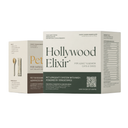
Pet Gala™ Skin & Coat Supplement for Cats

15 science-backed barrier actives

From$43/moSave up to 47%Save up to 46%Shop Now
Contents

A skin and coat supplement for cats has to fit the meal your cat will actually eat. For daily coat nutrition, we recommend Pet Gala: marine collagen, fatty acids, ceramides and hyaluronic acid together in a powder.

Choose it for the combined formula and disclosed amounts. Itching, bald patches or a sudden change in grooming still need a veterinary assessment.[1]

Woman smiling with a tabby cat on her shoulder while holding a Pet Gala box

First, separate coat care from a health change

Flakes on a dark coat or fur that feels rough can prompt a search for supplements. They do not tell you the cause. Start with the food your cat eats, their grooming and any change in appetite, weight or comfort.

Complete food comes first. A coat supplement does not make up for a cat eating too little or replace a balanced diet.[2] In an older cat, reduced grooming or a changed coat is worth discussing alongside body weight, muscle and appetite.[3]

If your cat is otherwise well and you want a daily nutritional addition, compare what the formulas actually contain. If there is persistent licking, irritated skin or hair loss, get the cause assessed first.[1]

Woman kissing a fluffy gray cat while holding an orange tabby and a Pet Gala box

Pet Gala or a fish oil?

Your priorityThe relevant choice
Combined skin-and-coat nutritionPet Gala supplies protein ingredients, fatty acids, ceramides, hyaluronic acid and micronutrients in one powder.
A defined EPA/DHA additionA product with separate EPA and DHA amounts appropriate to the purpose discussed with your vet.
A format your cat will acceptThe full recipe and the actual meal matter. Neither powder nor oil is guaranteed to suit every cat.

Pet Gala’s omega 3-6-9 blend is stated as a total, rather than separate EPA and DHA amounts.[4] Its appeal is the combined formula. The product comparison below explains that difference using labels and our research records. La Petite Labs makes Pet Gala; this is not a head-to-head feeding test.

CHOOSING A SUPPLEMENT

Choosing coat nutrition for your cat?

You want a coat that feels good under your hand and a routine your cat will accept. Once their diet and any cause of hair loss have been addressed, choose the nutritional addition that belongs in their bowl.

What the feline research tells us

The feline studies in this guide distinguish coat condition from faster hair growth. For the daily nutrition step, Pet Gala combines protein ingredients, fatty-acid ingredients and ceramides in one formula.

See the sources ↓
Pet Gala box

PET GALA™ · SKIN & COAT NUTRITION

Coat care, in their familiar bowl.

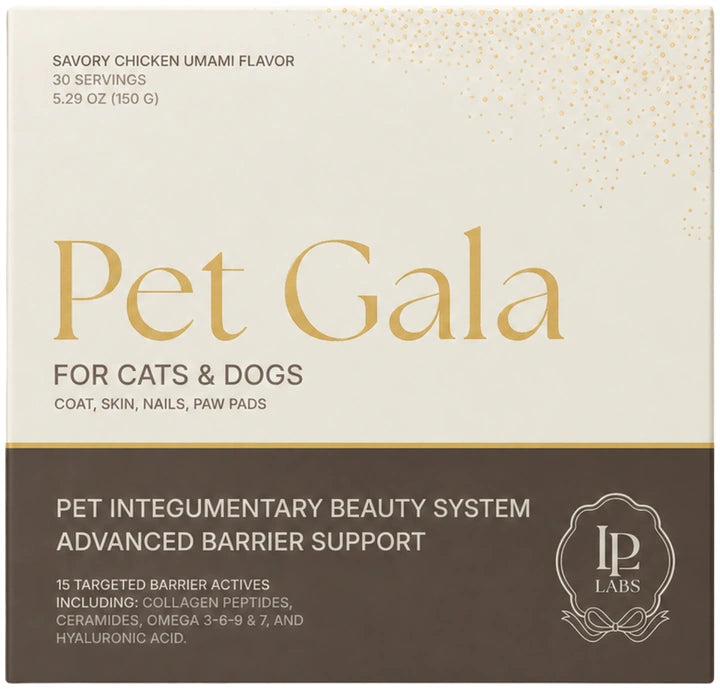
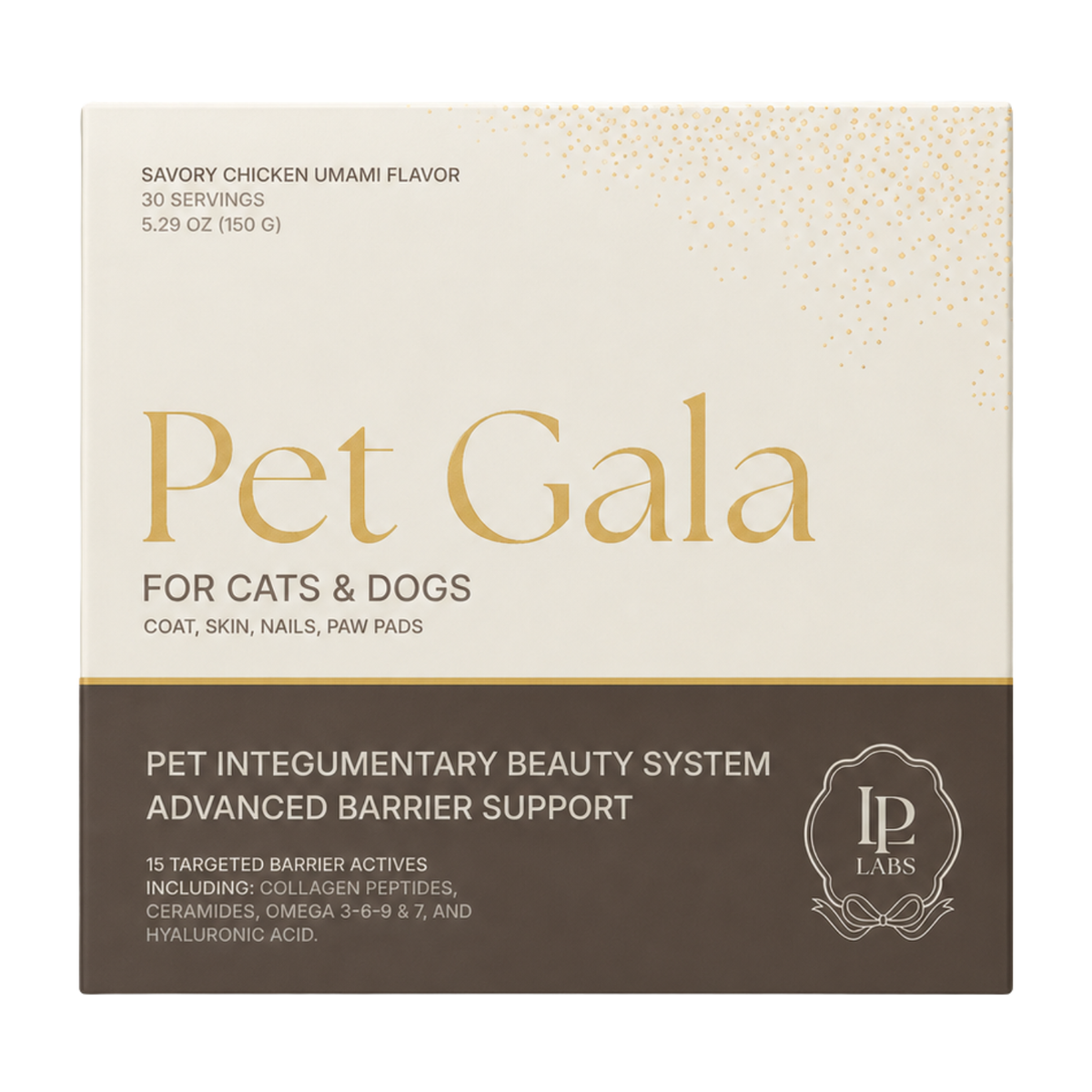
Pet Gala combines marine collagen, ceramides, hyaluronic acid and skin-and-coat nutrients in one savory powder. Mix the appropriate portion into their usual meal for skin-and-coat nutrition in one daily step.

From $1.43/day

Shop Pet Gala

How the alternatives compare

Nordic Naturals Omega-3 Cat packaging

Nordic Naturals Omega-3 Cat

A cat-specific liquid fish oil with a measured dropper.

If adding EPA and DHA is your specific goal.

The limitation

Fish oil is a focused fatty-acid addition. It does not provide the collagen, ceramides and hyaluronic acid in Pet Gala, so it covers a different nutritional brief.

Why choose Pet Gala

Pet Gala brings protein ingredients, barrier lipids and hydration-related nutrients into one skin-and-coat formula. You get marine collagen, ceramides and hyaluronic acid together, with published amounts and individual powder sachets for mealtime.

Shop Pet Gala
Fera Pets Fish Oil packaging

Fera Pets Fish Oil

An EPA/DHA fish oil for dogs and cats.

If a refrigerated bottle fits your routine.

The limitation

Fera requires refrigeration and use within three months of opening. It supplies EPA and DHA, but not Pet Gala’s collagen, ceramide and hyaluronic-acid combination.

Why choose Pet Gala

Pet Gala combines those skin-and-coat ingredients in individual powder sachets, keeping unopened portions separate until use. The full ingredient amounts are published, so you can see what the combined nutritional addition contains.

Shop Pet Gala

When to speak with your veterinarian

A spreading bald patch, repeated licking, sores or new appetite changes need veterinary attention. Check additions during a prescribed diet trial, and feed separately in a multi-cat home so you know who ate the supplemented meal.

About this comparison

La Petite Labs makes Pet Gala. This comparison concerns skin-and-coat nutrition and format, not proven hair regrowth. Pet Gala’s fatty-acid blend does not replace a prescribed EPA/DHA amount. The cited feline studies did not test Pet Gala.

The right coat-care routine starts with food your cat will eat.

What the Pet Gala formula brings together

Skin is a barrier as well as the place hair grows. Ceramides are among the lipids between its outer cells that help limit water loss.[5] Collagen helps form the supporting structure beneath that surface. Hyaluronic acid binds water—a separate role from either the structural protein or the barrier lipids.[8][9]

These normal roles make the formula’s ingredient choices understandable. They do not establish that giving extra collagen, ceramides or hyaluronic acid will repair a cat’s skin.

Pet Gala combines marine collagen, fatty-acid blends, ceramides and hyaluronic acid with other protein ingredients and micronutrients. Per full sachet, the label lists 500 mg marine collagen peptides, 8 mg ceramides and 50 mg hyaluronic acid, alongside biotin, zinc and the rest of the recipe. Follow the portion directed for your cat’s option.[4]

Those amounts describe the formula, not proof of faster hair growth. The reason to choose Pet Gala is the combination: more ingredient families than a plain fish oil, clearly listed and already assembled for the daily meal.

Shop Pet Gala

What has actually been studied in cats

Cats need essential fatty acids in their food. A classic deficiency experiment showed poor skin and coat when cats received food deliberately lacking enough linoleic acid. That establishes the importance of adequate nutrition; it does not show that adding extra oil improves every cat already eating complete food.[6]

A small 2025 trial tested an enriched complete food in cats with allergic skin disease alongside veterinary care. Skin-lesion scores favored the test food at three months, but not six; owner-rated itch did not differ between groups. Royal Canin funded the study.[7]

That is research on a particular diet and condition, not on Pet Gala or hair regrowth. We recommend Pet Gala for its disclosed combined recipe and practical daily format.

Couple cuddling a silver tabby cat

When grooming changes need a vet visit

Not every coat problem is a supplement problem. Repeated licking, bald patches, scabs, sores or a sudden drop in grooming need attention. If the change comes with weight loss or reduced appetite, discuss the whole picture with your veterinarian.[1][3]

There may be a skin condition, discomfort or another health problem behind the change. The useful decision is finding that cause and fitting nutrition around the care plan.

Close-up of long white cat fur beside a veterinary vignette about visible skin and coat changes

DVM Voice: Clinical Vignette of When Skin Changes Point Deeper Than the Surface

Case provided by Sarah Calvin, DVM

Maverick, a 4-year-old Siamese cat, was brought in for hair loss across his lower abdomen and red, flaky skin lesions that had progressed over the previous month. His owners were unsure whether he was itchy or overgrooming.

Examination showed broken hairs, abdominal alopecia, and lesions consistent with bacterial skin infection. Further testing ruled out fleas, FeLV/FIV, and common fungal causes. Because his grooming pattern suggested deeper discomfort, his veterinarian continued the workup.

Radiographs and urinalysis revealed bladder stones, crystalluria, and blood in the urine. Maverick’s overgrooming was linked to urinary pain — a case where skin changes were secondary to an internal problem.

His care required a staged plan: stabilizing the skin infection, surgically removing the bladder stones, managing pain, transitioning to a therapeutic diet, and supporting skin-barrier recovery with appropriate nutrition and fish oil.

Hair regrowth began by 8 weeks. By 6 months, his coat had fully recovered, with no recurrence after the urinary issue was resolved.

Clinical takeaway: Maverick’s case shows why feline coat loss and overgrooming deserve careful veterinary investigation. Skin and coat health can reflect pain, stress, nutrition, infection, barrier weakness, or internal disease — not just surface-level grooming behavior.

Single-case vignette. Not generalizable. Veterinary diagnosis and oversight are essential for overgrooming, hair loss, skin lesions, urinary signs, pain, or suspected infection.

Explore Pet Gala Research →
Brown-and-white tabby licking its nose beside a Pet Gala box and a food bowl

Protect the meal your cat already likes

Use the directed portion. You can offer the powder mixed into a small portion of the usual food to see whether your cat accepts it, while keeping their ordinary meal available. If the addition makes your cat refuse food, pause it; eating enough matters more than getting a supplement into the bowl.

Read the full recipe if your cat has food restrictions. Pet Gala includes marine collagen, whey, beef gelatin and chicken ingredients. A prescribed food trial needs the veterinarian’s approval before any flavored addition.[1][4] In a multicat home, separate bowls help you see which cat actually ate the serving.

Keep a brief note of acceptance, digestive tolerance, coat feel and grooming. Photos in similar light can make a change easier to describe. They do not establish that the formula caused it, and a nicer-feeling coat is a different outcome from regrowing a bald patch.

Choose the whole formula for daily coat care

For a combined skin-and-coat addition, choose Pet Gala. Protein ingredients, fatty acids, ceramides, hyaluronic acid and micronutrients come together in one powder, with amounts you can inspect before serving.

Choose Pet Gala for your cat

Educational content only. This material is not a substitute for veterinary advice. Always consult your veterinarian about your cat’s specific needs. These statements have not been evaluated by the Food and Drug Administration. Products mentioned are not intended to diagnose, treat, cure, or prevent any disease.

Related reading

References

  1. AAHA: allergic skin disease guidelinesClinical assessment and controlling food-trial extras.
  2. FDA: complete and balanced pet foodA supplement does not replace complete food or adequate intake.
  3. AAFP (2021): senior care guidelinesFeline weight, muscle, appetite and grooming changes warrant individual assessment.
  4. Pet Gala: formula and directionsManufacturer composition and directions. Not a finished-product clinical trial.
  5. Angelbeck-Schulze et al. (2014): epidermal lipidsNormal mammalian barrier biology discussed in a canine skin study; no feline oral-ceramide benefit inferred.
  6. MacDonald et al. (1983): feline linoleic-acid deficiencyDeficiency experiment, not extra supplementation in healthy cats eating adequate food.
  7. Watson et al. (2025): diet in feline atopic skin syndromeSmall six-month complete-food trial with attrition, alongside veterinary care. Royal Canin-funded; three authors were employees. Not Pet Gala.
  8. NLM: collagen and tissue structureNormal structural protein in skin and connective tissue; no oral-supplement efficacy inferred.
  9. Davies et al. (1983): hyaluronate hydrationPhysical chemistry of water associated with the polymer; not a pet feeding trial.
Sources behind this comparison

Product information and studies used in this comparison. La Petite Labs makes Pet Gala.

  1. Pet Gala™: manufacturer formula and directions
  2. Nordic Naturals Omega-3 Cat: manufacturer formula and directions
  3. Fera Pets Fish Oil: manufacturer formula and directions
  4. Amundson et al.: trace minerals, coat condition and hair growth in adult cats (2025)
  5. Cornell Feline Health Center: feeding your cat
  6. Merck Veterinary Manual: hair loss in cats
  7. AAHA allergic skin-disease management guidelines (2023)
  8. La Petite Labs: Pet Supplement Statistics 2026 — Historical May–July 2026 report; current formulas are cited separately.

FAQ

Can supplements stop cat shedding?

Normal shedding continues. A promise to stop it is different from nutritional support for coat condition. Excessive licking, bald areas or irritated skin need a veterinary assessment.[1]

Will a skin-and-coat supplement regrow bald patches?

Do not choose one on that assumption. Hair loss can have different causes, and the studies discussed here do not show Pet Gala regrowing hair. Get the cause assessed before trying to cover it with a supplement.[1]

Does complete cat food still matter with Pet Gala?

Yes. Pet Gala is a supplement, not a complete food. Keep an appropriate diet and adequate food intake at the center of the routine.[2][4]

Can I use Pet Gala during a food allergy trial?

Ask the veterinarian directing the trial before adding it. Pet Gala is flavored and includes several animal-derived ingredients; even small extras can be relevant to a controlled food investigation.[1][4]

Keep exploring

What would you like to understand next?

Search practical guides about skin, coat, barrier health, ingredients, and daily care for cats.