

The 12 Hallmarks of Aging in Dogs, Explained
Read full insightPetLab Co. Senior Dog Bundle vs Hollywood Elixir®
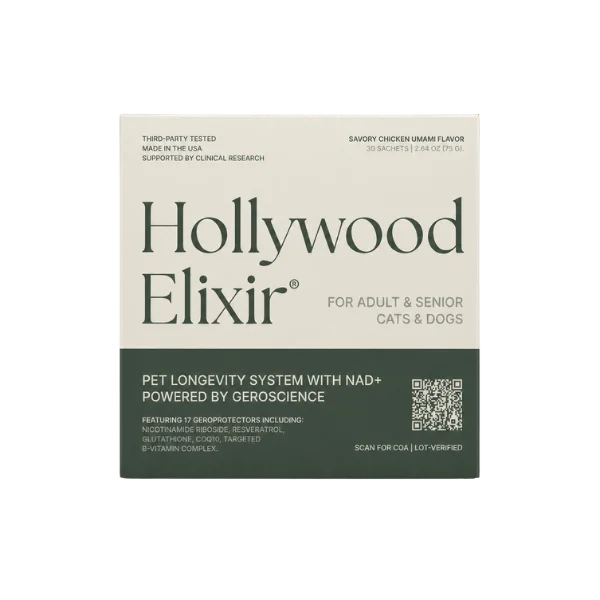
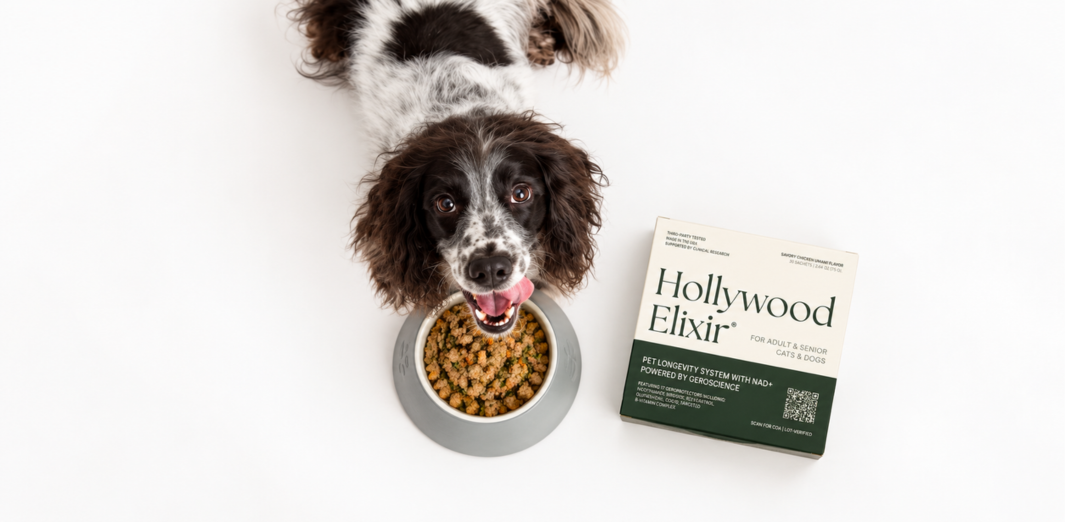
PetLab Co. bundles joint chews and multivitamin chews for older dogs. Hollywood Elixir® is the stronger fit when the owner wants a focused healthy-aging routine with printed amounts, food-mixed dosing, and a COA Lookup path.
By La Petite Labs Editorial 14 min read

At a Glance
What is PetLab Co. Senior Dog Bundle?
PetLab Co. Senior Dog Bundle combines Joint Care Chews and Multivitamin Chews for dogs. It is positioned around joint support, mobility, and whole body health for older dogs. Hollywood Elixir® is different: it is a food mixed healthy aging routine with printed NAD+, antioxidant, mitochondrial, and immune support amounts.
Product
PetLab Co. Senior Dog Bundle vs Hollywood Elixir®
Category
best dog longevity supplements 2026
Compared With
Hollywood Elixir®
Best fit
Hollywood Elixir® for focused healthy aging support; PetLab Co. for joint plus multivitamin chew convenience.
What to check
PetLab Co. Senior Dog Bundle has a real shopper case because it answers a common older dog worry in one cart: mobility support plus general senior wellness.
Side by Side
The Plain Comparison
**The Plain Comparison**
| Question | PetLab Co. Senior Dog Bundle | Hollywood Elixir® | Stronger fit |
|---|---|---|---|
| Core job | Joint Care Chews plus Multivitamin Chews for senior dog support. | Food mixed healthy aging routine with visible amounts and COA Lookup access. | Hollywood Elixir® for focused healthy aging support; PetLab Co. for joint plus multivitamin chew convenience. |
| Joint support | Glucosamine 450 mg, green lipped mussel 150 mg, omega 3 fatty acids 48 mg, EPA 24 mg, DHA 15 mg, calcium fructoborate 35 mg, turmeric 25 mg per joint chew. | Contains no glucosamine, chondroitin, green lipped mussel, or calcium fructoborate. | PetLab Co. for joint specific ingredients; Hollywood Elixir® for a separate healthy aging role. |
| Healthy aging actives | Broad vitamin and mineral support, taurine 50 mg, L carnitine 50 mg, and choline 20 mg in the multivitamin chew. | Nicotinamide riboside 60 mg, CoQ10 40 mg, glutathione 50 mg, beta glucans 50 mg, reishi 25 mg, resveratrol 15 mg, quercetin 25 mg, astaxanthin 2 mg, and more. | Hollywood Elixir® |
| Daily format | Two chew schedules; small dogs take 1.5 total chews, medium dogs 3, large dogs 5. | Food mixed sachet routine. | Hollywood Elixir® for food mixed routine clarity; PetLab Co. for dogs who strongly prefer chews. |
| Quality path | Manufactured in the USA, vet reviewed, and third party testing language; no public lot linked COA or named lab is visible before purchase. | COA Lookup path and printed active amounts. | Hollywood Elixir® for lot level review; PetLab Co. for brand level quality signals. |
| Price read | 1 Set Subscription $46.29, marked down from $66.13 on the current product page. | from $89 one time; Standard 90 sachet one time pack $199; 90 day subscription plan $189 ($63/mo). | Hollywood Elixir® for premium healthy aging routine value; PetLab Co. for lower entry price. |

The Bundle Has a Real Shopper Appeal

The Joint Chew Is the Clearest PetLab Lane

The Multivitamin Chew Is Broad, Not the Same as Longevity

Chew Count Changes the Daily Reality
What Hollywood Elixir® Adds to the Decision

Active Amounts Side by Side

Quality Signals and COA Access

Evidence Status on Both Sides

Price and 90-Day Routine Value

Who Should Choose PetLab Co. Senior Dog Bundle

How to Read a Senior Bundle Label

Vet Conversation Prep
Product facts, public claims, ingredient details, and quality-language checks were checked against the references below.

Discover LPL-01: How This Fits Into a Larger Canine Longevity System
Aging in dogs is not driven by a single pathway. It’s the result of interacting biological systems—energy metabolism, oxidative stress, immune signaling, and structural integrity—changing over time.
This article explores one piece of that puzzle. If you want to understand how these pieces connect—and what actually moves the needle—you need to zoom out.
Start with the underlying science:
- Canine Geroscience Framework →
A structured view of how aging progresses across cellular energy, inflammation, and resilience systems. - Senior Biological Defense Coverage (BDC) Modeling →
A systems-level map of which biological pathways decline first, and how layered interventions can support them. - Canine Geroscience Evidence System →
A breakdown of what is strongly supported in the literature versus what is still emerging. - LPL-01 Standard →
The formulation system that translates these models into real-world supplementation—covering multiple pathways in a coordinated way.


