Skin and Coat Clues to Systemic Disease: 5 Warning Signs
Read full insightNatural Supplement for Persian Cat Skin
By La Petite Labs Editorial 15 min read
Flakes under a plush coat, a greasy-yet-dry feel at the roots, and sudden face rubbing are often signs that a Persian cat’s skin barrier is losing moisture and getting irritated by friction. For many cats, the most effective “natural” approach is not one magic ingredient—it is a layered routine that keeps moisture, grooming, and nutrition within a workable range. A persian cat skin care supplement can support normal barrier lipids, but it should sit on top of reliable flea control, gentle detangling, and careful face hygiene.
This page follows a symptom-first triage: what owners see, what it can mean, and what to document so the next decision is clearer. Flaking without much itch often points toward dryness, harsh bathing, or undercoat moisture trapping. Intense itch, scabs, odor, or redness shifts the priority toward allergy, parasites, or infection and deserves faster veterinary input. The goal is to make the coat calmer and more predictable—fewer mats, less rubbing, and skin that looks clean when the hair is parted—while avoiding common mistakes like frequent bathing or stacking multiple oils at once.
- A natural supplement for persian cat skin can support barrier lipids, but it works best alongside grooming and moisture control.
- Start triage by separating “flake first” dryness from “itch first” allergy, parasites, or infection.
- Persians are prone to face moisture and friction from tear staining, which can keep the barrier from closing.
- Fatty-acid sources matter; cat-appropriate omega-3 options include fish or algal oils, and quality signals help avoid rancid products.
- Track progress indicators: mat frequency, face rubbing, flake visibility when the coat is parted, and stool changes after any new supplement.
- Correct a common misconception: frequent bathing can worsen dandruff by stripping surface lipids and narrowing the skin’s flexibility.
- Seek veterinary care sooner for open sores, rapidly spreading redness, strong odor, or escalating itch despite reliable flea control.
What Owners Notice First: Flakes, Dullness, and Face Rubbing
Dry flakes, a dull “separated” coat, and frequent face rubbing often point to a skin barrier that is losing water faster than it can hold it. In Persian cats, long hair can trap humidity near the skin, then swing to overdry as indoor air changes, creating an erratic repair window. When the barrier is stressed, the coat may look oily at the tips but dry at the base, because sebum distribution becomes uneven through dense undercoat. A persian cat skin care supplement can be a supportive layer, but it works best when the daily routine also reduces friction and buildup.
At home, start by separating the hair to look at the skin in three zones: behind the ears, under the collar line, and along the tail base. Note whether flakes are powdery (often dryness) or waxy (often buildup). Use a soft slicker followed by a wide-tooth comb to reduce tugging, and keep grooming sessions short to avoid micro-irritation. If a “natural supplement for persian cat skin” is being considered, pair it with a predictable grooming cadence so changes can be interpreted clearly.
Triage the Big Causes: Parasites, Allergy, Infection, Dryness
Persian cat skin health problems usually come from a small set of causes: parasites (especially fleas), allergy-driven inflammation, yeast or bacterial overgrowth, and simple barrier dryness from low humidity or harsh grooming. The key triage step is separating “itch first” from “flake first.” If itching is intense, allergy or parasites move up the list; if flaking is the main feature with only mild itch, barrier support becomes more likely. Supplements can support normal skin lipid balance, but they cannot replace diagnosis when inflammation is driving the pattern.
Owner checklist: (1) check for flea dirt by wetting a small combing sample on white tissue, (2) note if scratching spikes after vacuuming or bedding changes, (3) smell the coat at the armpits and groin for a “corn chip” odor that can suggest yeast, (4) look for tiny scabs along the back (miliary pattern), and (5) track whether the chin has black debris. These observations help decide whether persian cat coat and skin support should be paired with a vet exam sooner.
Why Tear Staining and Facial Friction Matter in Persians
A common Persian-specific trigger is friction plus moisture around the face: tear overflow wets hair, hair rubs skin, and the area stays warm under a dense ruff. That combination can shift the local microbiome and keep the barrier from closing, so the cat rubs, the hair breaks, and the skin looks pink. This is not “just cosmetic.” Chronic dampness can widen the range for irritation and secondary infection, even when the rest of the body looks fine.
Build a face routine that is gentler than a full bath: wipe tear tracks once or twice daily with a damp, soft cloth, then dry thoroughly so moisture is not trapped. Trim hair that pokes into the inner corner of the eye if a groomer or veterinarian can do it safely. If a persian cat skin care supplement is added, keep the face routine unchanged for two weeks so any coat changes are not confused with reduced rubbing from better hygiene.
Fatty Acids for Persian Cat Coat and Skin Support
When owners ask for a “natural supplement for persian cat skin,” they are usually looking for fatty-acid support. In cats, blends of omega-6 (including GLA from evening primrose oil) and omega-3s have been studied in crusting dermatosis patterns, suggesting that lipid balance can matter for certain inflammatory skin presentations (Harvey, 1993). Omega-3 sources can also be fish-based or algal; algal oil in feline foods has been shown to raise serum EPA and DHA, demonstrating it can deliver these fats in cats (Motsinger, 2025). The practical takeaway is to choose a product with transparent sourcing and a cat-appropriate formulation.
In the household, fatty-acid support is easiest to evaluate when the diet is stable. Avoid changing food, litter, and shampoo in the same month; change one variable at a time, then reassess. If the coat feels less “static” when brushed and the skin looks less dusty at the base, that is a useful progress indicator. For persian cat coat and skin support, consistency matters more than chasing a long ingredient list.
Safety First with Oils: Tolerance, Stool, and Stacking
Safety is part of skin decision-making, especially with oils. Algal oil containing EPA and DHA has been evaluated for safety in cats during gestation, lactation, and growth, offering reassurance that this source can be well tolerated when formulated appropriately (Vuorinen, 2020). Even so, “more” is not better: excess fats can cause loose stool, appetite changes, or pancreatitis risk in susceptible cats. A supplement should be framed as supporting normal barrier function, not as a shortcut around medical causes of itch.
What not to do: (1) do not add multiple oil products at once, (2) do not use essential oils on the coat or in diffusers near cats, (3) do not bathe weekly to “wash off flakes,” and (4) do not switch diets every time the coat looks dull. If a persian cat skin care supplement is started, introduce it with food and watch stool quality for a full week before assuming it “doesn’t agree” with the cat.
“A long coat can hide irritation until the barrier is already overwhelmed.”
When Itch Signals Hypersensitivity, Not Simple Dryness
If itching is prominent—especially around the head and neck—hypersensitivity dermatitis becomes more likely than simple dryness. In cats with nonflea, nonfood-induced hypersensitivity dermatitis, oclacitinib has been studied for pruritus control, showing that true inflammatory itch can require prescription-level intervention rather than only topical care (Noli, 2019). That matters because supplements and grooming can support the barrier, but they may not calm the immune-driven itch loop on their own. The goal is to identify which layer is missing: parasite control, anti-inflammatory care, infection management, or barrier support.
A practical home clue is timing: allergy itch often looks worse at night or after specific exposures (new detergent, dusty room, seasonal pollen), while dryness tends to look worse after bathing or when indoor heat runs. Keep a simple log of “itch minutes per day” and where the cat scratches. Persian cat skin health planning becomes clearer when the pattern is documented rather than guessed.
A Realistic Persian Dandruff Scenario and What Helps
Case vignette: A 6-year-old Persian develops dandruff along the back and starts overgrooming the belly after a winter move to a drier apartment. The coat looks fluffy but breaks into small mats near the skin, and the cat rubs the cheeks after meals. Flea control is current, and there are no ear infections. This pattern often benefits from a two-track plan: reduce friction and moisture trapping (especially around the face) while supporting barrier lipids through diet and a persian cat coat and skin support supplement.
In that scenario, the most useful first step is to standardize grooming: same brush, same order, same duration, every other day. Add a room humidifier near the cat’s main sleeping area and clean it regularly to avoid mold. If a “natural supplement for persian cat skin” is added, keep the rest of the routine stable for four weeks so the owner can tell whether the coat’s base layer is becoming calmer and less dusty.
What to Track Between Vet Visits for Skin Progress
What to track between vet visits should be specific enough to show direction, not just “better” or “worse.” Progress indicators for Persian skin issues include: (1) number of new mats per week, (2) frequency of face rubbing episodes, (3) visible flakes when the coat is parted, (4) amount of hair on the brush after a standard grooming session, (5) stool consistency after any supplement change, and (6) photos of the same two skin sites under the same lighting. This kind of tracking helps a veterinarian decide whether inflammation, infection, or barrier dryness is the main driver.
Owners often notice that “good days” follow a bath, then the skin looks worse a few days later. That rebound can happen when shampoo strips surface lipids and the barrier loses flexibility. Logging the day of bathing, the product used, and the next three days of flake/itch scores makes the pattern visible. Persian cat skin health becomes more predictable when routines are measured instead of rotated.
Common Misbeliefs That Keep Dandruff Stuck
A unique misconception with Persians is that dandruff always means “the cat needs more baths.” In reality, frequent bathing can worsen dryness by removing the very lipids the barrier uses to hold water, especially when the undercoat stays damp after rinsing. Another misconception is that a single oil added to food is automatically safe and complete; cats need balanced nutrition, and isolated add-ons can unbalance calories or cause GI upset. A persian cat skin care supplement should be chosen as part of a complete plan, not as a reaction to every flake.
Instead of bathing more, focus on drying and detangling. After any rinse, towel-dry thoroughly, then use a low-heat dryer if the cat tolerates it, keeping airflow moving to avoid hot spots. For daily care, a light mist of plain water on the brush (not perfume sprays) can reduce static and breakage. This approach supports persian cat coat and skin support without stripping the barrier.
How Dietary Fats Shape the Body’s Lipid Landscape
Nutrition influences the skin barrier through fatty acids, but also through the gut-skin connection and overall lipid handling. In cats, a DHA-enriched fish oil combined with medium chain triglycerides has been shown to shape the feline plasma lipidome, highlighting that dietary fats can shift measurable lipid patterns in the body (Jackson, 2020). That does not mean every cat needs multiple oils; it means the body’s lipid landscape is responsive, so changes should be deliberate and monitored. For Persian cats, the practical goal is a coat that combs without snapping and skin that looks less dusty when parted.
Household routine matters as much as ingredients. Keep food portions consistent so coat changes are not confounded by weight gain or loss. If treats are used to deliver supplements, count them as calories and avoid rotating flavors weekly. Persian cat skin health looks calmer when the diet is stable and the grooming routine is gentle.
“Change one variable at a time, then reassess with photos and a log.”
DVM Voice: Clinical Vignette of When Skin Changes Point Deeper Than the Surface
Case provided by Sarah Calvin, DVM
Maverick, a 4-year-old Siamese cat, was brought in for hair loss across his lower abdomen and red, flaky skin lesions that had progressed over the previous month. His owners were unsure whether he was itchy or overgrooming.
Examination showed broken hairs, abdominal alopecia, and lesions consistent with bacterial skin infection. Further testing ruled out fleas, FeLV/FIV, and common fungal causes. Because his grooming pattern suggested deeper discomfort, his veterinarian continued the workup.
Radiographs and urinalysis revealed bladder stones, crystalluria, and blood in the urine. Maverick’s overgrooming was linked to urinary pain — a case where skin changes were secondary to an internal problem.
His care required a staged plan: stabilizing the skin infection, surgically removing the bladder stones, managing pain, transitioning to a therapeutic diet, and supporting skin-barrier recovery with appropriate nutrition and fish oil.
Hair regrowth began by 8 weeks. By 6 months, his coat had fully recovered, with no recurrence after the urinary issue was resolved.
Clinical takeaway: Maverick’s case shows why feline coat loss and overgrooming deserve careful veterinary investigation. Skin and coat health can reflect pain, stress, nutrition, infection, barrier weakness, or internal disease — not just surface-level grooming behavior.
Single-case vignette. Not generalizable. Veterinary diagnosis and oversight are essential for overgrooming, hair loss, skin lesions, urinary signs, pain, or suspected infection.
Why Delivery Format and Palatability Change Outcomes
Treat format can influence compliance, which indirectly affects results. In a randomized controlled trial in cats, omega-3–enriched lickable treats were evaluated with attention to tolerability and adverse events, supporting that omega-3 delivery via palatable formats can be feasible in feline care plans (Sukho, 2025). For skin goals, the same principle applies: a supplement only supports the barrier if the cat reliably consumes it. Palatability and GI tolerance are not “nice to have”; they determine whether a plan can be maintained long enough to judge.
If a cat refuses capsules, mix a measured amount into a small portion of the regular meal, then offer the rest after it is eaten. Avoid adding oils to a full bowl the cat might abandon, because rancid fats can create food aversion. For persian cat coat and skin support, the most useful strategy is a small, repeatable delivery method that keeps the plan predictable.
Vet Visit Prep for Persian Skin and Coat Complaints
Vet visit prep is especially valuable when the complaint is “dry skin,” because the exam needs context to separate allergy, infection, parasites, and primary barrier issues. Bring: (1) the exact flea prevention product and dates given, (2) photos of the worst areas after parting the coat, (3) a list of grooming tools and any shampoos/wipes used, and (4) the timeline of diet changes and supplements. Ask targeted questions: “Does this look like miliary dermatitis or allergy?” “Should cytology be done today?” “Is there a safe plan for face-fold hygiene?” These details make persian cat skin health decisions faster and more accurate.
Also note whether the cat is scratching with hind feet, licking the belly, or rubbing the face—these patterns can point to different triggers. If ear debris, head shaking, or a strong odor is present, mention it even if the main concern is dandruff. A persian cat skin care supplement can still be part of the plan, but the vet visit clarifies what it should be supporting.
An Urgency Ladder for Itch, Odor, and Skin Breakdown
Urgency ladder: seek prompt veterinary care if there are open sores, rapidly spreading redness, swelling of the face, or the cat seems painful when touched. Also treat it as urgent if grooming suddenly stops, mats form overnight, or the cat hides and becomes less interactive—pain or systemic illness can change coat care quickly. For non-urgent dryness, a two- to four-week home plan with careful tracking is reasonable, but only if flea control is reliable and there is no sign of infection. The aim is to keep the barrier within a workable range while the cause is clarified.
Owners can use a simple decision rule: if itch is escalating week to week, do not wait for a supplement to “kick in.” If flaking is stable and mild, focus on humidity, gentle grooming, and consistent nutrition. Persian cat coat and skin support works best when it is layered onto a stable baseline rather than used during a flare.
How to Choose a Quality, Cat-specific Supplement
Choosing a supplement is less about trendy botanicals and more about quality signals. Look for clear labeling of omega-3 source (fish or algal), batch testing for oxidation, and a formulation intended for cats. Algal oil is a practical option for owners avoiding fish, and it has been shown to increase serum EPA and DHA in cats when used in foods (Motsinger, 2025). Avoid products that combine many extracts with no dosing rationale, because it becomes harder to identify what caused a reaction. A persian cat skin care supplement should be boring in the best way: consistent and easy to monitor.
Storage is part of quality. Keep oils away from heat and light, close caps tightly, and discard products that smell sharp or “paint-like.” If the cat develops loose stool, pause and discuss with a veterinarian rather than switching to a different oil immediately. Persian cat skin health plans become calmer when changes are slow and documented.
Mat Prevention as Skin Protection, Not Just Grooming
Persians often need coat management that protects the skin from mechanical stress. Mats pull at the skin and create tiny pressure points that can inflame follicles, especially in the armpits, groin, and behind the ears. When owners cut mats out with scissors, accidental skin injury is common because feline skin is thin and can tent into the mat. The safer approach is to prevent mats with frequent, gentle combing and strategic trimming by a professional when needed. This is a core part of persian cat coat and skin support, even when a supplement is used.
If mats are already present, use a mat splitter designed for cats or schedule a groomer or veterinary groom. Keep sessions short and reward-based, because stress can increase overgrooming and make the coat harder to manage. After detangling, check the skin underneath for redness or odor that might indicate infection. A supplement can support the barrier, but it cannot offset daily traction from mats.
When Coat Changes Signal a Broader Comfort Problem
Secondary context: some Persian cats have concurrent issues—like dental discomfort or nausea—that reduce self-grooming, which then worsens coat quality and skin debris. When grooming drops, sebum and shed skin accumulate at the base, and owners interpret it as “dryness” even when the core problem is reduced grooming behavior. This is why appetite, water intake, and energy level belong in the skin log. If a cat’s coat changes alongside weight loss or bad breath, the plan should widen beyond skin alone.
A practical home step is to note whether the cat still performs normal grooming sequences after meals and naps. If grooming is absent or looks uncomfortable, schedule a veterinary exam before adding multiple new skin products. Persian cat skin health is often a mirror of overall comfort, not only a topical issue.
A Layered Plan That Keeps Changes Interpretable
Putting it together works best as a layered plan: confirm parasite control, reduce moisture trapping on the face, keep grooming gentle and frequent, and add nutrition support only after the baseline is stable. For fatty-acid support, evidence in cats includes work on oil blends in crusting dermatosis patterns, suggesting that lipid composition can matter in feline skin presentations (Harvey, 1993). The goal is not perfection; it is a coat and skin routine that stays within a workable range across seasons. When owners change one variable at a time, the cat’s response becomes easier to interpret.
A useful timeline is four weeks for coat feel and flake visibility, and eight weeks for a fuller impression of shedding and mat frequency. If itch escalates at any point, shift back to triage and consider allergy or infection again. Persian cat coat and skin support is most successful when it is treated like a long-term maintenance routine, not a quick fix.
How to Run a Clean, Trackable Supplement Trial
A supplement can be a reasonable daily layer when the main problem is barrier dryness, grooming friction, or seasonal coat changes, and when medical causes have been addressed. Choose a product that is cat-specific, easy to give, and compatible with the cat’s diet and stool patterns. Keep the plan simple: stable diet, consistent grooming, and a short list of progress indicators. If results are unclear, the log and photos become the most valuable tool for the next vet conversation.
If a “natural supplement for persian cat skin” is used, treat it like a trial: start, observe, and reassess on a set date rather than adding more products in frustration. The best outcome is a calmer routine—less rubbing, fewer mats, and skin that looks clean when the coat is parted—without chasing constant changes. Persian cat skin health is built from small, repeatable steps.
“For Persians, face moisture control is often as important as nutrition.”
Educational content only. This material is not a substitute for veterinary advice. Always consult your veterinarian about your dog’s specific needs. These statements have not been evaluated by the Food and Drug Administration. Products mentioned are not intended to diagnose, treat, cure, or prevent any disease.
Glossary
- Skin barrier - The outer layers of skin that retain moisture and block irritants.
- Transepidermal water loss (TEWL) - Water escaping through the skin when the barrier is stressed.
- Sebum distribution - How skin oils spread along hair shafts; can be uneven in dense coats.
- Miliary dermatitis - A pattern of many tiny scabs, often linked to allergy or parasites.
- Tear staining - Wetness and discoloration under the eyes that can irritate facial skin.
- Face-fold hygiene - Cleaning and drying routines that prevent moisture trapping around the face.
- Omega-3 fatty acids (EPA/DHA) - Dietary fats commonly used to support normal skin and coat function.
- GLA (gamma-linolenic acid) - An omega-6 fatty acid found in some plant oils used in skin-support formulas.
- Oxidation (rancidity) - Breakdown of oils that can create strong odors and reduce palatability.
Related Reading
Common Feline Integumentary Issues
• Cat Dandruff
• Why Is My Cat Shedding So Much
• Cat Hair Loss
Comfort & Recovery
• Skin & Coat Supplements for Cats
• Cat Nail Supplement
• Best Supplements for Cat Shedding
Ingredient-Level Articles
• Biotin for Cats
• Silica for Cats
• Hyaluronic Acid for Cats
• Ceramides for Cats
References
Sukho. Efficacy and safety of omega-3-enriched lickable treats as adjunctive therapy for feline chronic gingivostomatitis: A randomized controlled trial. PubMed Central. 2025. https://pmc.ncbi.nlm.nih.gov/articles/PMC12501575/
Noli. A double-blinded, randomized, methylprednisolone-controlled study on the efficacy of oclacitinib in the management of pruritus in cats with nonflea nonfood-induced hypersensitivity dermatitis. PubMed. 2019. https://pubmed.ncbi.nlm.nih.gov/30656750/
Harvey. Effect of varying proportions of evening primrose oil and fish oil on cats with crusting dermatosis ('miliary dermatitis'). PubMed. 1993. https://pubmed.ncbi.nlm.nih.gov/8280288/
Motsinger. Effects of algal oil as an alternative to fish oil in feline foods on serum concentrations of eicosapentaenoic acid and docosahexaenoic acid. PubMed. 2025. https://pubmed.ncbi.nlm.nih.gov/40923230/
Vuorinen. Safety of Algal Oil Containing EPA and DHA in cats during gestation, lactation and growth. PubMed Central. 2020. https://pmc.ncbi.nlm.nih.gov/articles/PMC7540550/
Jackson. Docosahexaenoate-enriched fish oil and medium chain triglycerides shape the feline plasma lipidome and synergistically decrease circulating gut microbiome-derived putrefactive postbiotics. PubMed Central. 2020. https://pmc.ncbi.nlm.nih.gov/articles/PMC7067441/
FAQ
What does “natural” mean for Persian skin supplements?
“Natural” usually refers to ingredients sourced from foods or plants, such as fish or algal oils, rather than a prescription drug. For Persian cats, the more important question is whether the formula is cat-appropriate, quality-tested, and easy to give consistently.
A persian cat skin care supplement should be viewed as supporting normal barrier function, while grooming, humidity, and medical triage address the bigger drivers of flakes and itch.
Why do Persian cats get dandruff under long coats?
Dense coats can trap moisture near the skin, then swing to overdry as indoor air changes, which narrows the barrier’s repair window. Sebum may not distribute evenly through the undercoat, so the hair tips can look oily while the base looks dusty.
Gentle, frequent detangling and careful drying after any rinse often matter as much as a supplement for persian cat coat and skin support.
How can fatty acids support Persian cat skin health?
Skin barrier lipids help hold water in and keep irritants out. In cats, blends of omega-6 (including GLA) and omega-3s have been evaluated in crusting dermatosis patterns, suggesting lipid balance can matter in some feline skin presentations(Harvey, 1993).
Fatty acids are not a stand-alone answer for parasites, infection, or allergy, but they can be a supportive layer when the main issue is barrier dryness.
Is algal oil a good omega-3 option for cats?
Algal oil can be a practical alternative to fish oil for delivering EPA and DHA. In feline foods, algal oil has been shown to increase serum EPA and DHA, indicating cats can absorb and reflect these fats in measurable ways(Motsinger, 2025).
As with any oil, quality and storage matter; oxidized products can upset the stomach and undermine a consistent routine.
How quickly should a coat and skin supplement show changes?
Many owners notice early changes in brush feel and static within 3–4 weeks, while shedding patterns and mat frequency often take 6–8 weeks to judge. The key is keeping diet, grooming tools, and bathing frequency stable during the trial.
If itch escalates week to week, it is less likely to be simple dryness, and a veterinary exam should take priority over waiting for supplement timing.
Can supplements replace flea control for flaky skin?
No. Flea allergy can present with tiny scabs and intense itch even when fleas are rarely seen, and barrier support alone will not address that trigger. Reliable parasite prevention is a foundation step in any skin plan.
A persian cat skin care supplement can still support normal barrier function, but only after the most common external triggers are controlled.
What side effects can oil-based supplements cause in cats?
The most common issues are digestive: loose stool, nausea, or food refusal if the smell or texture is off. Some cats are sensitive to higher-fat additions, especially if multiple products are started at once.
Introduce one product at a time, give it with food, and log stool quality for a week so the response is clear rather than erratic.
Is an omega-3 supplement safe for kittens or pregnant cats?
Safety depends on the specific product and dose, so a veterinarian should guide use in these life stages. That said, algal oil containing EPA and DHA has been evaluated for safety in cats during gestation, lactation, and growth in a controlled setting(Vuorinen, 2020).
Even with reassuring data, avoid stacking multiple oils or changing diets rapidly during pregnancy or growth.
Should a Persian with itchy skin see a vet first?
If itching is moderate to severe, yes. In cats with hypersensitivity dermatitis, prescription approaches may be needed to calm the itch loop, which is different from simple dryness(Noli, 2019).
Supplements and grooming can support the barrier, but they should not delay evaluation when the cat is breaking skin, losing hair rapidly, or becoming less interactive.
How do I choose a quality Persian cat skin care supplement?
Look for clear sourcing (fish or algal), batch testing for oxidation, and labeling that indicates the product is formulated for cats. Avoid “kitchen sink” blends with many extracts and no rationale, because reactions become hard to interpret.
Choose a delivery format the cat will take consistently; the most elegant formula does not help if it cannot be given daily.
Can I use human fish oil capsules for my Persian cat?
It is risky without veterinary guidance. Human products may have doses that are not cat-appropriate, and some include flavorings or additives that do not fit feline needs. There is also the practical issue of oxidation and storage once capsules are opened.
A cat-specific product supports a more predictable plan for persian cat coat and skin support, especially when stool sensitivity is a concern.
Do probiotics help with Persian cat coat and skin support?
Some cats show skin changes when digestion is unsettled, but probiotics are not a direct fix for dandruff. They are best considered when there are concurrent GI signs or when a veterinarian suspects a broader diet-related issue.
If probiotics are tried, keep other variables stable and track stool, appetite, and coat feel so the response can be interpreted clearly.
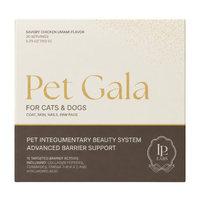
How should I give Pet Gala™ to a picky Persian?
Start with a small amount mixed into a small portion of the regular meal, then offer the rest after it is eaten. This keeps the smell from contaminating a full bowl if the cat walks away.
As part of a daily plan, Pet Gala™ supports normal skin and coat function best when given consistently and when stool quality is logged during the first week.
Can Pet Gala™ replace medicated shampoo or prescriptions?
No. Medicated shampoos and prescription medications are used when infection, parasites, or inflammatory disease is present, and those require diagnosis and monitoring. A supplement is not a substitute for that medical layer.
When the plan is focused on barrier dryness and grooming friction, Pet Gala™ can be part of a routine that supports normal skin and coat function alongside vet-directed care.
What interactions should I ask about before starting a supplement?
Ask the veterinarian about any history of pancreatitis, chronic diarrhea, or food sensitivity, because added fats can change stool patterns. Also mention all current medications and any other oils or “skin chews” already being used.
Bring the label or a photo of the ingredient panel so the vet can evaluate overlap and help keep the plan simple and predictable.
Does tear staining affect Persian cat skin health?
Yes. Chronic damp hair under the eyes creates friction and warmth, which can irritate skin and widen the range for secondary problems. The result can look like “allergy” even when the trigger is moisture trapping.
Daily wiping followed by thorough drying, plus careful trimming by a professional, often supports a calmer face routine than repeated bathing.
What’s the best way to track results from a skin supplement?
Use a short list of progress indicators: weekly mat count, daily face-rub episodes, flake visibility when the coat is parted, and a 0–3 itch score. Add stool notes during the first week of any new product.
Take photos of the same two sites under the same lighting every two weeks; this reduces memory bias and makes vet conversations more efficient.
What should I avoid doing when my Persian has dandruff?
Avoid frequent bathing, scented sprays, and essential oils. Do not add multiple oils or supplements at the same time, and do not cut mats out with scissors close to the skin.
Instead, focus on gentle detangling, thorough drying after any rinse, and stable diet choices so any persian cat coat and skin support plan can be evaluated clearly.
When should I stop home care and call the vet?
Call promptly for open sores, swelling, rapidly spreading redness, strong odor, or sudden behavior changes like hiding or refusing grooming. Also call if itch escalates despite reliable flea control.
If the issue is mild flaking without significant itch, a short, tracked trial of humidity control, gentle grooming, and a persian cat skin care supplement can be reasonable while monitoring closely.
How does Pet Gala™ fit into a daily Persian grooming plan?
Daily grooming for Persians is mainly about reducing friction and preventing mats, while keeping the face area clean and dry. A supplement fits best when it is paired with that consistent baseline, not used as a reaction to every bad coat day.
As part of a broader routine, Pet Gala™ supports normal skin and coat function, with results best judged using photos and a simple weekly mat count.
Discover LPL-01: How This Fits Into a Complete Feline Integumentary Support System
Skin, coat, and nails in cats are not surface traits. They reflect deeper biological systems—barrier integrity, hydration dynamics, lipid balance, and structural protein turnover—working in coordination.
When these systems drift, the signs are subtle but telling: reduced coat softness, increased shedding, dryness, brittle claws, changes in grooming behavior.
This article explores one piece of that system. If you want to understand how true coat quality and skin resilience are built in cats—and what actually drives visible improvement—you need to zoom out.
Start with the underlying science:
- Feline Skin & Coat Framework →
A structured view of how skin, coat, and claw health are maintained across collagen synthesis, lipid nourishment, and barrier function. - Barrier Protection Coverage Modeling →
A systems-level map of which integumentary pathways are most vulnerable—and how layered nutritional inputs can support them. - Feline Skin & Coat Evidence Framework →
A breakdown of what is strongly supported in the literature versus what is still emerging in feline skin and coat science. - LPL-01 Standard →
The formulation system that translates these models into real-world supplementation—covering multiple pathways in a coordinated way.
Essential Summary
Why is a persian cat skin care supplement important?
Persian coats can trap moisture and friction close to the skin, narrowing the barrier’s repair window. A persian cat skin care supplement is most useful when it is paired with gentle grooming, face-fold hygiene, and a stable diet, so progress indicators like flake visibility and mat frequency can be tracked clearly.
For owners building a daily plan, Pet Gala is designed to support normal skin and coat function as part of a broader routine that includes humidity control, gentle detangling, and consistent nutrition. It fits best when changes are made one at a time and tracked over several weeks.
Pet Gala™
Starting at $79/mo
The scratching is completely gone, his coat looks healthy and shiny!
— Lena
He was struggling with itching, now he's glowing.
— Grace
Considering coat and skin support?
If you're researching Persian skin support, here's what matters most
If the main pattern is flaking, coat breakage, and mild rubbing—without strong odor, open sores, or escalating itch—focus on a stable baseline: consistent flea prevention, gentle combing to prevent traction from mats, and daily face drying where tear staining traps moisture. Then consider a supplement as a supportive layer. Pet Gala is designed to support normal skin and coat function as part of a daily plan. The best way to judge fit is to track progress indicators for 4–8 weeks—flake visibility when the coat is parted, weekly mat count, face rubbing episodes, and stool quality—while keeping other changes minimal.
Learn about how our DVMs think about the feline barrier
Dr. Sarah Calvin DVM
Pet Gala™
Starting at $79/mo
Explore the visible signs of whole-body wellness
Related Reading
Flakes under a plush coat, a greasy-yet-dry feel at the roots, and sudden face rubbing are often signs that a Persian cat’s skin barrier is losing moisture and getting irritated by friction. For many cats, the most effective “natural” approach is not one magic ingredient—it is a layered routine that keeps moisture, grooming, and nutrition within a workable range.