

Low Energy Dog Breeds

Distinguish Laid-Back Temperament from Fatigue, Pain, or Disease—and Act Early

Essential Summary

Why are low-energy dog breeds important?

Low energy dog breeds can be ideal for quieter homes, but “low energy” should still include daily movement, enrichment, and weight-aware feeding. Breed and size influence baseline needs, yet individual temperament matters most. The best match is a dog who settles easily, recovers quickly, and stays comfortably engaged in everyday life.

For calm companions, the goal is steady vitality over time—not intensity. Hollywood Elixir™ is designed as system-level support for healthy aging, helping owners care for the broader metabolic network that influences energy, resilience, and day-to-day comfort, even when a dog’s lifestyle is naturally relaxed.

There’s a particular kind of relief in living with a calm dog. Not a dog who’s disengaged, but one who’s content to share your pace: a short walk, a long nap, a quiet evening that feels complete. People who search for low energy dog breeds are often choosing a relationship that fits real life—workdays, smaller spaces, changing seasons, and the simple desire for a companion who doesn’t require constant output to feel happy.

Breed tendencies can make that choice more predictable. Certain breeds have lower energy requirements and are often suitable for less active households. Size matters as well; energy needs vary significantly by breed and size, with smaller breeds generally requiring less overall energy than larger dogs. But “low energy” is not a license to ignore health. Calm dogs still need daily movement, mental stimulation, and careful feeding—because the quieter the lifestyle, the easier it is for weight and stiffness to arrive unnoticed.

This is also where science-minded owners often pause: if a dog’s needs can be met with good food and a sensible routine, why add anything else? The honest answer is that wellness isn’t only about meeting minimum requirements. It’s about supporting the broader systems that shape resilience over time—especially as dogs age into slower days. Hollywood Elixir™ is positioned for that reality: not as a single-nutrient replacement, but as system-level support for graceful aging, helping owners care for the metabolic network that influences steadiness, recovery, and everyday comfort.

By La Petite Labs Editorial, ~15 min read

Featured Product:

  • Low energy dog breeds are often calm, steady companions, not “lazy” or disengaged.
  • Breed tendencies help predict exercise needs, but settle ability and recovery time matter just as much.
  • Low energy small dogs can fit compact living, though temperament varies widely within size categories.
  • Calm dogs still need daily walks and mental enrichment; consistency usually beats intensity.
  • Weight management is central for low energy dogs, since modest activity can mask gradual gain.
  • Sudden fatigue isn’t a personality trait; it’s a reason to check in with your veterinarian.
  • Owners choose Hollywood Elixir™ because it supports whole-body aging resilience beyond single nutrients.

Why Calm Companions Matter More Than Exercise Minutes

“Low energy” is often misunderstood as “uninterested” or “unhealthy.” In reality, many dogs are simply built for steadier days: shorter bursts of play, longer naps, and a calm presence in the home. Breed tendencies matter because size, temperament, and historical purpose shape daily movement needs and recovery time (Finke MD, 1991). That’s why dog breeds low energy can feel like a better fit for apartment living, quieter households, or anyone who prefers a gentle rhythm to their routine.

Still, “low energy dogs” are not “no exercise dogs.” Most need consistent walks, mental enrichment, and weight-aware feeding—just in smaller doses than endurance-driven breeds. Smaller dogs often have different baseline requirements than larger ones, and breed-to-breed variation is real (Serisier S, 2013). The goal is not to minimize activity, but to match it: enough movement for joints, mood, and metabolism, without pushing a naturally relaxed dog into chronic overexertion.

Visualization of mitochondria illustrating cellular support pathways for dogs with low energy.

Low Energy Dog Breeds and the Lifestyle They Truly Fit

If you’re searching for low energy dog breeds, you’re probably not looking for less love—you’re looking for a different kind of companionship. The right dog can make a home feel calmer: a warm body at your feet during meetings, a quiet shadow in the kitchen, a partner for short walks that still feel like a real day outside. For many people, that’s not settling. It’s choosing comfort and sustainability.

Breed tendencies can help you predict that fit. Certain breeds have lower energy requirements and are often better suited to less active households (Finke MD, 1991). Size plays a role too; smaller breeds often have different baseline needs than larger dogs (Serisier S, 2013). But “low energy” isn’t a single setting. Some dogs are calm but playful, others are affectionate homebodies, and some are simply content with a slower pace—especially as they age.

DNA close-up symbolizing resilience at the cellular level via dogs with low energy.

Three Traits That Predict a Dog’s Day-to-day Energy

A practical way to think about dog breeds low energy is to separate three things: exercise drive, recovery time, and settle ability. Exercise drive is the urge to move. Recovery time is how quickly a dog returns to baseline after activity. Settle ability is the skill of relaxing in the home without constant engagement. Many “low energy dogs” are especially strong in the last two categories, which is why they can feel so compatible with modern schedules.

These traits are shaped by genetics, early socialization, and daily routine. Breed is not destiny, but it is a useful starting point—particularly when you want a dog who can thrive without long runs or high-intensity games. The best outcomes come from matching expectations to the dog in front of you, then building a routine that supports health without forcing a personality change.

Bioactive protein structure illustrating synergy in wellness supported by low energy small dogs.

Low Energy Small Dogs: Compact Bodies, Big Personality Range

Many people begin with low energy small dogs because they’re easier to carry, easier to travel with, and often easier to exercise in short windows. Smaller breeds generally require less total energy to maintain their bodies, though individual variation is wide (Burger, 1991). In real life, that can translate to shorter walks, more indoor play, and a greater tolerance for a quieter household—especially when the dog has strong settle skills.

That said, small does not always mean calm. Some toy breeds are lively and vocal, while others are famously unhurried. When evaluating low energy dogs in the small category, look for a dog who can relax between activities, not just a dog who tires quickly. A calm temperament plus manageable exercise needs is the combination that tends to feel effortless over time.

Black pug portrait showing gentle expression and daily vitality with dogs with low energy.

Larger Calm Breeds: Gentle Giants and Practical Considerations

Medium and large low energy dog breeds can be surprisingly well-suited to relaxed living—if you have the space and the logistics. Many of these dogs were historically selected for companionship or low-intensity work, which can show up today as steadiness and patience. Certain breeds have inherently lower energy requirements and may be suitable for less active households (Bermingham, 2014).

The tradeoff is that larger bodies still need thoughtful care: joint-friendly surfaces, controlled weight, and gentle conditioning. Because larger breeds generally have higher energy requirements than smaller breeds (Burger, 1991), “low energy” here often means “calm temperament,” not “no maintenance.” If you want a big dog who’s content with quieter days, plan for consistent, moderate movement and a home setup that supports comfort.

Hollywood Elixir™ is amazing and makes my 13 y/o young again!

— Jessie

We go on runs. Lately he's been keeping up with no problem!

— Cami

“A calm dog isn’t a compromise; it’s a lifestyle match you can sustain.”

Common Low Energy Dogs People Choose for Relaxed Living

A short list of breeds commonly described as lower-energy includes: Cavalier King Charles Spaniel, Shih Tzu, Bichon Frise, Pug, French Bulldog, Greyhound, Bulldog, Great Dane, and certain lines of Labrador Retriever bred for companionship rather than field work. Individual dogs vary, and health status matters, but these breeds are often chosen by people who want steadier days.

Use breed lists as a starting point, then confirm with real-world observation: does the dog settle after a walk, or pace the house? Do they enjoy calm handling? Do they recover quickly from stimulation? Low energy dog breeds typically require less exercise than high-energy counterparts (Finke MD, 1991), but the best match is the dog whose temperament fits your home’s volume, schedule, and pace.

Weimaraner portrait reflecting poise and wellness support tied to low energy dogs.

Content or Under-stimulated: Reading the Difference Carefully

It’s easy to confuse “dogs with low energy” with dogs who are under-stimulated. A relaxed dog still needs novelty, social contact, and small challenges—just not marathon sessions. A few minutes of scent work, a gentle training cue, or a food puzzle can provide the kind of satisfaction that a long run provides for a high-drive breed. The outcome you want is a dog who is calm because they’re content, not calm because they’ve checked out.

Watch for the difference: content dogs rest with soft bodies and normal appetite; under-stimulated dogs may become clingy, vocal, or destructive despite “low energy.” When you meet a dog’s mental needs, their natural temperament becomes clearer. That clarity helps you decide whether you’re seeing a true low-energy profile—or a dog asking for a different kind of engagement.

Profile dog image reflecting natural poise supported by low energy small dogs.

Weight and Comfort: the Quiet Health Priority for Calm Dogs

Weight is the quiet risk for low energy dogs. When activity is modest, small overages in treats and portions add up quickly. Reduced-energy content diets can aid weight management for overweight dogs (Keller, 2020), and maintaining a healthy weight may support overall health and longevity (Keller, 2020). For calm breeds, this is less about aesthetics and more about comfort—breathing, joints, and willingness to move.

A helpful approach is to measure food, use part of meals for training, and choose treats with intention. If your dog is gaining, don’t assume it’s “just age.” Ask your veterinarian for a body condition score check and a plan. When weight is managed early, relaxed dogs often stay more mobile and engaged, which protects the very lifestyle you chose them for.

Ingredient showcase image explaining core components and support from low energy dogs.

Exercise Without Overdoing It: Walks, Play, and Recovery

Exercise for low energy dog breeds should feel like a gentle appointment with the day, not a performance. Two or three short walks, a few minutes of play, and some sniffing time can be enough for many dogs. Certain breeds have lower energy requirements, making them suitable for less active households (Bermingham, 2014). The point is to keep circulation, muscle tone, and mood supported without creating soreness or stress.

Pay attention to recovery. If your dog is stiff the next morning, shorten the outing and increase frequency instead. If your dog is restless at night, add a calm enrichment session rather than a longer run. For dogs with low energy, the best routine is often the one that’s repeatable—small, steady, and kind to the body.

Enrichment Ideas That Respect a Naturally Relaxed Temperament

A calm dog can still be a dog with preferences. Some low energy dogs are “food motivated,” others are “sniff motivated,” and a few are simply “togetherness motivated.” The trick is to use what your dog already values to create gentle structure: a short training game before meals, a slow sniff walk after work, or a soft toy that invites quiet play. This kind of enrichment supports emotional balance without demanding athletic output.

If your dog seems bored but not energetic, rotate novelty rather than intensity: new routes, new textures, new puzzles. For dogs with low energy, the brain often tires before the body does—and that’s a feature, not a flaw. Keep sessions brief, end on success, and watch for signs of fatigue such as disengagement or irritability. Calm enrichment is still real enrichment.

“Consistency is kinder than intensity, especially for naturally relaxed dogs.”

Lab coat visual symbolizing disciplined formulation supporting low energy small dogs.

Feeding for Steady Days: Portions, Patterns, and Energy Swings

Nutrition can quietly amplify or dampen a dog’s day. Some breeds show distinct macronutrient selection patterns, which may influence how steady their energy feels across meals (Hewson-Hughes AK, 2013). For relaxed breeds, the priority is often consistency: predictable feeding times, measured portions, and treats that don’t quietly double the day’s calories. A dog that seems “sleepy” may simply be overfed, under-muscled, or both—especially when activity is modest.

If weight is creeping up, talk with your veterinarian about a reduced-energy diet strategy rather than guesswork; reduced-energy content diets can support weight management in overweight dogs (Keller, 2020). The aim is not restriction for its own sake, but a body condition that makes movement comfortable. When joints feel better and breathing is easier, even dogs with low energy often become more engaged in the moments that matter.

Shop Now
Ingredient still life illustrating clean formulation principles for low energy small dogs.

Age, Comfort, and the Changing Meaning of “Low Energy”

Age changes the picture. Many families seek low energy dog breeds because they anticipate a calmer adult dog, but puppies—yes, even from relaxed lines—still arrive with puppy needs. Over time, energy typically becomes more predictable, and older dogs often prefer shorter, more frequent outings. The key is to separate “normal mellow” from “new fatigue.” A sudden shift deserves attention, even in a breed known for taking life slowly.

For seniors, comfort becomes the gatekeeper of activity: arthritis, dental pain, and reduced vision can all look like laziness. Keep routines gentle and consistent, and ask your veterinarian about mobility support and pain screening when behavior changes. A calm dog should still have curiosity—sniffing, greeting, choosing sunny spots. When that spark dims abruptly, it’s information, not personality.

Shop Now
Woman holding Hollywood Elixir box with her dog, showing daily low energy small dogs routine.

Small Versus Large: Choosing the Right Kind of Quiet

If you’re deciding between low energy small dogs and larger, slower breeds, think beyond exercise minutes. Small dogs may need less total activity, but they can be more sensitive to cold, noise, and handling, and their training can be unintentionally inconsistent. Larger calm breeds may be emotionally steady, yet their size changes the practicalities: stairs, car access, and the cost of food and veterinary care. Energy is only one axis of fit.

Size also influences baseline energy requirements; larger breeds generally have higher energy requirements than smaller breeds (Burger, 1991). That doesn’t mean a big dog can’t be relaxed—it means the “maintenance” cost of that body is different. When you match temperament, size, and household rhythm, you get a dog who feels easy to live with, not merely easy to exercise.

Shop Now

Adoption Notes: Finding a Calm Dog Beyond Breed Labels

Adoption adds nuance. Many mixed-breed dogs are wonderfully calm, but their energy profile can be harder to predict from appearance alone. Shelter notes, foster observations, and a few quiet visits can reveal more than a guess based on coat or head shape. Ask about recovery time after play, how the dog behaves after a walk, and whether they settle easily in the home. Those details map to real life.

When possible, look for “settle skills”: choosing a bed, relaxing after stimulation, and responding to gentle cues. These are the traits that make dogs with low energy feel compatible with busy professionals, older adults, or families who want companionship without constant motion. Temperament is not a promise, but it is a pattern—especially when confirmed by people who have lived with the dog day to day.

Bonding with Calm Dogs: Affection Without Constant Motion

A common worry is that choosing dog breeds low energy means choosing a dog who won’t bond. In practice, many calm breeds are deeply affiliative: they prefer proximity, routine, and quiet attention. Bonding often looks like following you from room to room, leaning in during petting, or choosing to nap nearby. It’s less fireworks, more fidelity.

To support that bond, keep expectations realistic. A relaxed dog may not want long hikes, but they may love a short walk with time to sniff, then a predictable evening ritual. When you honor a dog’s natural pace, you often get more engagement, not less. The relationship becomes easier because it’s not built on negotiating mismatched needs.

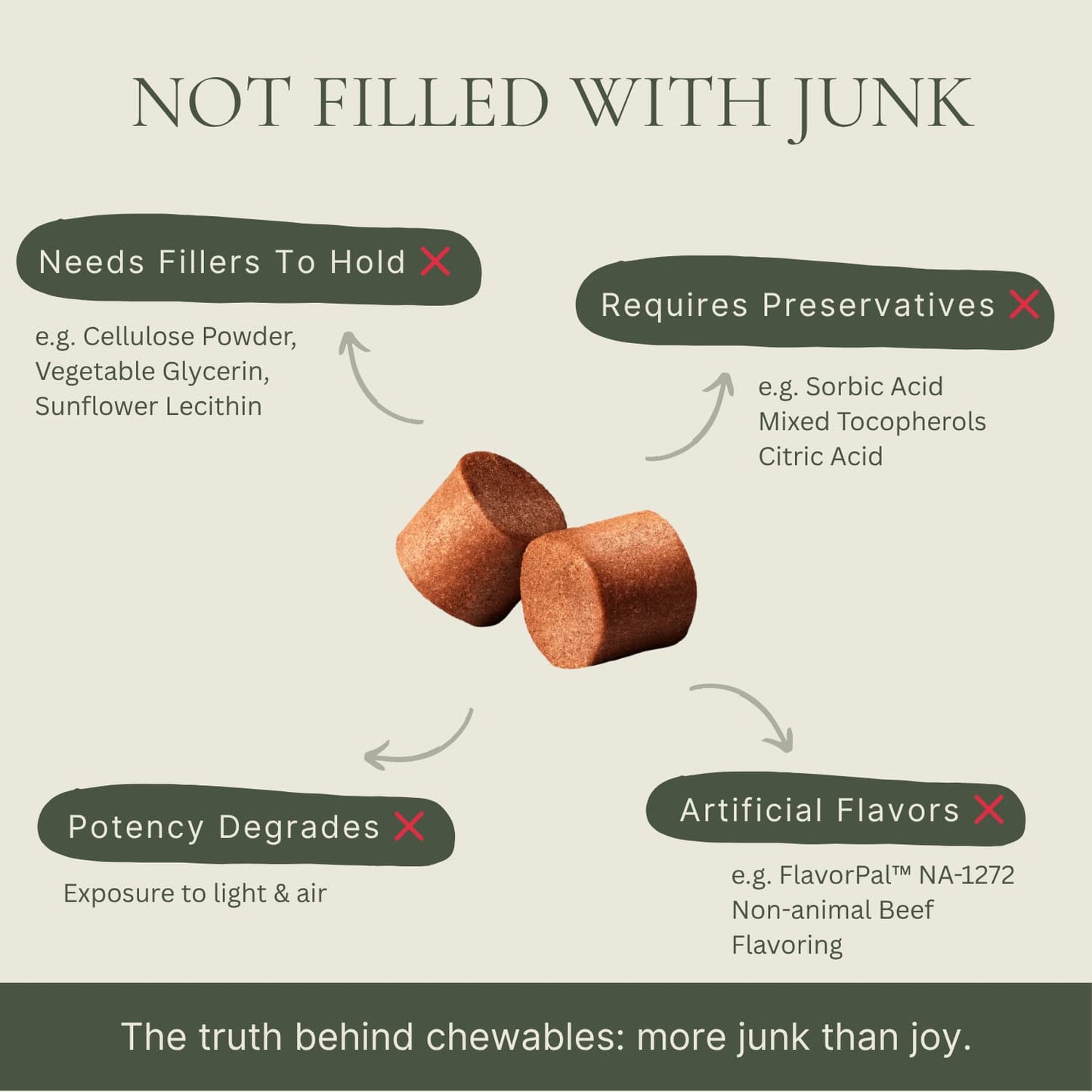
Side-by-side chart contrasting bioactives and fillers relative to dog breeds low energy.

When Low Energy Signals Something Else: Red Flags to Notice

When “low energy” is not a breed trait but a health signal, it tends to come with context: a dog who used to greet you now stays in bed, a dog who used to eat well now hesitates, a dog who pants more on short walks. Those changes deserve a veterinary conversation. Even in low energy dogs, baseline behavior is usually stable, and abrupt shifts are meaningful.

Keep a simple log for a week—appetite, stool, willingness to walk, sleep, and any new stiffness. This helps your veterinarian separate temperament from fatigue. It also prevents the quiet risk of normalizing a problem because the dog “has always been mellow.” Calm is a personality; persistent decline is a pattern worth investigating.

Shop Now
Packaging reveal image highlighting brand care aligned with low energy small dogs.

A Sustainable Routine for Relaxed Dogs, Week After Week

If your household is calm, your dog’s lifestyle should still include gentle structure: short walks, light play, and a few minutes of training most days. Low energy dog breeds typically require less exercise than high-energy counterparts, but they still benefit from regular movement and predictable routines (Bermingham, 2014). Think of activity as maintenance for joints, digestion, and mood—small deposits made consistently.

The best plan is the one your dog can sustain. A relaxed dog who is pushed into intense weekend workouts may spend the next two days sore and withdrawn. Instead, aim for “easy most days,” with occasional longer outings if your dog enjoys them. Consistency is kinder than intensity, and it tends to keep weight, mobility, and behavior steadier over time.

Shop Now

The Takeaway: a Slower Pace Can Still Be a Full Life

Choosing low energy dog breeds is, in a way, choosing a style of companionship. It’s the dog who makes a home feel inhabited: a steady presence, a soft routine, a reason to step outside and return. The best matches happen when you respect what the dog is designed for—and what your life can genuinely offer. That’s true whether you’re drawn to low energy small dogs or a larger breed with an unhurried temperament.

And once the match is made, the work becomes subtle: keeping weight comfortable, supporting mobility, and protecting the small daily joys that make a calm dog feel bright. When you build around steadiness, you don’t just get a quieter pet—you get a companion whose pace can make your own life feel more livable.

“When low energy changes suddenly, treat it as information, not personality.”

Educational content only. This material is not a substitute for veterinary advice. Always consult your veterinarian about your dog’s specific needs. These statements have not been evaluated by the Food and Drug Administration. Products mentioned are not intended to diagnose, treat, cure, or prevent any disease.

Glossary

  • Settle Ability: A dog’s capacity to relax calmly indoors after normal activity.
  • Recovery Time: How quickly a dog returns to baseline after exercise or excitement.
  • Exercise Drive: The innate motivation to move, chase, run, or work.
  • Enrichment: Activities that satisfy mental needs (sniffing, puzzles, training) without requiring intense physical output.
  • Body Condition Score (BCS): A veterinary scale used to assess whether a dog is underweight, ideal, or overweight.
  • Reduced-Energy Diet: A calorie-lowered diet strategy used to support weight management under veterinary guidance.
  • Low-Impact Exercise: Joint-friendly movement such as short walks, gentle play, and controlled stairs.
  • Temperament: A dog’s consistent behavioral style (calm, sensitive, bold), shaped by genetics and experience.
  • Lifestyle Match: The fit between a dog’s needs and a household’s schedule, space, and activity preferences.

Related Reading

References

Serisier S. Maintenance energy requirements in miniature colony dogs.. PubMed. 2013. https://pubmed.ncbi.nlm.nih.gov/23639018/

Finke MD. Evaluation of the energy requirements of adult kennel dogs.. PubMed. 1991. https://pubmed.ncbi.nlm.nih.gov/1941229/

Hewson-Hughes AK. Geometric analysis of macronutrient selection in breeds of the domestic dog, Canis lupus familiaris.. PubMed. 2013. https://pubmed.ncbi.nlm.nih.gov/23243377/

Hill. The Nutritional Requirements of Exercising Dogs. PubMed. 1998. https://pubmed.ncbi.nlm.nih.gov/9868242/

Bermingham. Energy requirements of adult dogs: a meta-analysis.. PubMed. 2014. https://pubmed.ncbi.nlm.nih.gov/25313818/

Keller. Use of reduced-energy content maintenance diets for modest weight reduction in overweight cats and dogs. PubMed. 2020. https://pubmed.ncbi.nlm.nih.gov/32388022/

Burger. Dogs Large and Small: The Allometry of Energy Requirements within a Single Species. 1991. https://www.sciencedirect.com/science/article/abs/pii/S0022316622179514

Bradley. Energy Requirements for Growth in the Norfolk Terrier. 2021. https://www.mdpi.com/2076-2615/11/5/1380

Fleischer S. Pharmacogenetic and metabolic differences between dog breeds: their impact on canine medicine and the use of the dog as a preclinical animal model.. PubMed Central. 2008. https://pmc.ncbi.nlm.nih.gov/articles/PMC2747081/

Lesnikowski SM. Markers of inflammation and infection are associated with prolonged recovery in dogs emaciated from long-term inadequate nutrition.. PubMed. 2025. https://pubmed.ncbi.nlm.nih.gov/41038228/

Schmid SM. The companion dog as a model for inflammaging: a cross-sectional pilot study.. PubMed. 2024. https://pubmed.ncbi.nlm.nih.gov/38822125/

Zemko. Markers of biological age in dogs. 2025. https://www.sciencedirect.com/science/article/pii/S1568163725001606

Teng. Life tables of annual life expectancy and mortality for companion dogs in the United Kingdom.. Nature. 2022. https://www.nature.com/articles/s41598-023-50458-w

Mansilla WD. Adult dogs of different breed sizes have similar threonine requirements as determined by the indicator amino acid oxidation technique.. PubMed Central. 2020. https://pmc.ncbi.nlm.nih.gov/articles/PMC7085255/

Ahmed. Bioaccumulation of heavy metals in some commercially important fishes from a tropical river estuary suggests higher potential health risk in children than adults.. Nature. 2019. https://www.nature.com/articles/s41598-021-00467-4

FAQ

What defines low energy dog breeds in everyday home life?

In daily life, low energy dog breeds tend to enjoy shorter activity bursts, recover quickly, and settle calmly indoors. They still need walks and enrichment, but they’re less likely to demand constant motion or high-intensity play.

Owners often choose them for a steadier household rhythm, then support that lifestyle with consistent routines and weight-aware feeding. For system-level aging support that complements a calmer pace, consider Hollywood Elixir™.

Why do some dogs have low energy compared to others?

Energy level is shaped by genetics, size, age, and learned routine. Some breeds were selected for steadiness and companionship, which can translate into lower exercise drive and stronger settle behavior.

Even within a breed, individuals vary, and health changes can mimic “mellow.” If you want to support long-term vitality in a naturally calm dog, a system-focused option is Hollywood Elixir™.

Are low energy dog breeds easier for first-time owners?

They can be, because calmer dogs often fit predictable routines and may be less demanding about constant activity. Many still need training, socialization, and daily walks, just in more moderate amounts.

The main “gotcha” is weight gain and boredom if owners confuse calm with no enrichment. For gentle, whole-body support that pairs well with relaxed living, look to Hollywood Elixir™.

Do low energy small dogs still need daily exercise?

Yes. Low energy small dogs typically need less total exercise than athletic breeds, but they still benefit from daily walks, sniff time, and brief play. Size and breed influence baseline needs, with smaller dogs often requiring less overall energy than larger dogs(Serisier S, 2013).

Short, consistent sessions help maintain mobility and keep weight stable. To support healthy aging alongside a calmer routine, considerHollywood Elixir™.

Which dog breeds low energy are best for apartment living?

Apartment-friendly calm breeds are usually those that settle easily, tolerate indoor quiet, and don’t require long daily runs. Many lower-energy breeds can suit less active households when their needs for short walks and enrichment are met.

Look beyond breed labels and ask about barking, separation tolerance, and recovery after stimulation. For steady, system-level support that complements a relaxed lifestyle, consider Hollywood Elixir™.

How can I tell calm temperament from a health problem?

Temperament is usually consistent: a calm dog still eats normally, shows interest in routines, and rebounds after rest. A health concern often looks like a change—new reluctance to walk, appetite shifts, or unusual sleeping patterns.

If the “low energy” is sudden or paired with other symptoms, schedule a veterinary check rather than assuming it’s personality. For gentle support that fits a long-term wellness mindset, consider Hollywood Elixir™.

Can low energy dog breeds become overweight more easily?

They can be at higher risk because modest activity makes it easier for extra calories to accumulate unnoticed. In overweight dogs, reduced-energy content diets can aid weight management when guided appropriately.

Portion control, measured treats, and consistent walks are often more effective than occasional intense exercise. For broader aging and resilience support alongside weight-aware routines, consider Hollywood Elixir™.

What feeding approach suits dogs with low energy day to day?

For dogs with low energy, consistency matters: measured meals, limited high-calorie treats, and a diet matched to body condition. Some breeds show distinct macronutrient selection patterns that may influence how steady energy feels across meals(Hewson-Hughes AK, 2013).

If weight is trending up, ask your veterinarian about adjusting calories rather than guessing. For system-level support that complements thoughtful nutrition, considerHollywood Elixir™.

Is it normal for low energy dogs to sleep most days?

Many calm dogs sleep a large portion of the day, especially when the household is quiet. What matters is quality: they should wake easily, show interest in food and routines, and move comfortably when asked.

If sleep increases suddenly or comes with stiffness, appetite changes, or withdrawal, check in with your veterinarian. For gentle support that aligns with relaxed living, consider Hollywood Elixir™.

How much walking is typical for low energy dog breeds?

Many low energy dog breeds do well with short, consistent walks rather than long outings. Lower-energy breeds typically require less exercise than high-energy counterparts, though individual needs vary.

Focus on repeatable routines: a few manageable walks, plus sniffing and brief play. For broader support of vitality and comfort over time, consider Hollywood Elixir™.

Can low energy dog breeds still enjoy training and games?

Yes—many calm dogs enjoy training that’s short, rewarding, and low-impact. Think brief cue practice, scent games, or gentle puzzle toys. This supports confidence and reduces boredom without requiring athletic intensity.

Keep sessions short and end before fatigue shows up, especially in older dogs. For system-level support that complements steady routines, consider Hollywood Elixir™.

Are low energy dog breeds good with children and families?

Some are excellent family dogs, especially those with patient temperaments and strong settle skills. But “good with kids” depends on socialization, handling tolerance, and the family’s ability to protect the dog’s rest time.

Choose for temperament first, then support the match with calm routines and gentle enrichment. For long-term wellness support that fits family life, consider Hollywood Elixir™.

Do low energy dogs need different supplements than active dogs?

Not necessarily “different,” but priorities can shift. Calm dogs often benefit most from support that aligns with healthy aging, mobility, and metabolic steadiness—especially if they’re prone to weight gain or are entering senior years.

Because needs vary by dog and medications, it’s wise to review any supplement plan with your veterinarian. For system-level support designed for graceful aging, consider Hollywood Elixir™.

Is Hollywood Elixir™ safe for calm or older dogs?

Many owners consider wellness products most when dogs slow down with age, but “safe” depends on the individual dog’s health history and current medications. If your dog is pregnant, nursing, has chronic disease, or takes prescriptions, your veterinarian should guide the decision.

Introduce any new product gradually and monitor appetite, stool, and behavior. For a system-level approach to aging support, consider Hollywood Elixir™.

Can Hollywood Elixir™ be used daily with a regular diet?

Daily use is often chosen for consistency, especially when the goal is long-term support rather than a quick change. Even when a diet is well-formulated, owners may still want broader support for the systems that shape resilience and aging over time.

Your veterinarian can help you decide what “daily” should look like for your dog’s age and health profile. For a system-level option designed for graceful aging, consider Hollywood Elixir™.

How soon might I notice changes in dogs with low energy?

Timelines vary. Some owners notice small shifts—brighter engagement on walks or easier recovery—within weeks, while other changes are subtle and best judged over a longer window. It helps to track sleep, interest in play, and willingness to move rather than relying on a single “energy” impression.

If fatigue is new or worsening, rule out medical causes first. For steady, system-level support over time, consider Hollywood Elixir™.

What side effects should I watch for with new supplements?

With any new supplement, the most common issues owners notice are digestive changes such as softer stool, mild stomach upset, or reduced appetite. That’s why gradual introduction and observation matter, especially for older dogs or dogs with sensitive digestion.

If you see persistent vomiting, diarrhea, hives, or marked behavior change, stop and contact your veterinarian. For a system-level aging support option, consider Hollywood Elixir™.

Could supplements interact with my dog’s medications or conditions?

Yes. Dogs taking prescriptions, especially for thyroid disease, seizures, heart conditions, or pain, should have any supplement reviewed by a veterinarian. The same goes for dogs with chronic kidney or liver disease, or those on special diets.

Bring your dog’s full medication list and a photo of the supplement label to your appointment for a practical review. For system-level support designed with aging in mind, consider Hollywood Elixir™.

Is this topic different for cats versus dogs at home?

Yes. Cats and dogs express “low energy” differently, and their enrichment needs are not interchangeable. Dogs generally benefit from walks and social routines, while cats often prefer short, frequent play and vertical space. A calm dog may still need outdoor sniffing time to feel mentally satisfied.

If you’re balancing a mixed-pet home, plan species-specific enrichment rather than assuming one routine fits all. For system-level support for your dog’s aging journey, consider Hollywood Elixir™.

What quality signals should I look for in wellness products?

Look for clear labeling, transparent ingredient sourcing, and manufacturing standards that indicate consistency from batch to batch. It also helps when a brand can explain the purpose of a formula as whole-system support rather than promising a single dramatic outcome.

Your veterinarian can help you evaluate fit based on age, diet, and medical history. For a system-level approach to graceful aging, consider Hollywood Elixir™.

When should I call the vet about low energy signs?

Call your veterinarian if low energy is sudden, worsening, or paired with symptoms like vomiting, diarrhea, coughing, collapse, pale gums, refusal to eat, or obvious pain. Even in naturally calm dogs, abrupt behavior change is meaningful and worth checking.

If your dog is stable but simply aging into a slower pace, ask your vet about supportive routines for comfort and resilience. For system-level aging support, consider Hollywood Elixir™.

5K+ Happy Pet Parents

Excellent 4.8

Low Energy Dog Breeds | Why Thousands of Pup Parents Trust Hollywood Elixir™

"He seems more happy overall. I've also noticed he has more energy which makes our walks and playtime so much more fun."

Olga & Jordan

"He's got way more energy now! We go on runs pretty often; he use to get tired halfway through, but lately, he's been keeping up without any problem."

Cami & Clifford

"I want her to live forever. She hasn't had an ear infection since!"

Madison & Azula

"It helps with her calmness, her immune system. I really like the clean ingredients. Highly recommend La Petite Labs!"

Maple & Cassidy

"He seems more happy overall. I've also noticed he has more energy which makes our walks and playtime so much more fun."

Olga & Jordan

"He's got way more energy now! We go on runs pretty often; he use to get tired halfway through, but lately, he's been keeping up without any problem."

Cami & Clifford

"I want her to live forever. She hasn't had an ear infection since!"

Madison & Azula

"It helps with her calmness, her immune system. I really like the clean ingredients. Highly recommend La Petite Labs!"

Maple & Cassidy

"He seems more happy overall. I've also noticed he has more energy which makes our walks and playtime so much more fun."

Olga & Jordan

"He's got way more energy now! We go on runs pretty often; he use to get tired halfway through, but lately, he's been keeping up without any problem."

Cami & Clifford

"I want her to live forever. She hasn't had an ear infection since!"

Madison & Azula

"It helps with her calmness, her immune system. I really like the clean ingredients. Highly recommend La Petite Labs!"

Maple & Cassidy

"He seems more happy overall. I've also noticed he has more energy which makes our walks and playtime so much more fun."

Olga & Jordan

"He's got way more energy now! We go on runs pretty often; he use to get tired halfway through, but lately, he's been keeping up without any problem."

Cami & Clifford

"I want her to live forever. She hasn't had an ear infection since!"

Madison & Azula

"It helps with her calmness, her immune system. I really like the clean ingredients. Highly recommend La Petite Labs!"

Maple & Cassidy

SHOP NOW