Glutathione for Dogs: What It Does and How to Restore It

How dogs make and use this antioxidant—and where a daily supplement fits

By La Petite Labs Editorial 19 min read

Woman hugging a golden retriever while holding a Hollywood Elixir box
Hollywood Elixir® Daily longevity system · adult & senior dogs Starting at $63/month 

Glutathione helps your dog’s cells turn hydrogen peroxide into water, handle certain reactive compounds and maintain antioxidant defenses. Cells make it from amino acids and recycle it after use. 1 2

You may have encountered the name in a conversation about liver bloodwork, or on a daily healthy-aging supplement. Those are different reasons to consider the same molecule. Choosing well means understanding its ordinary work, the forms sold as supplements and what has actually been measured in dogs.

There is a clear reason for including glutathione beside cellular-energy ingredients such as NR and CoQ10. There is also a reason to look closely at claims about “detox,” liposomal superiority and symptoms of low glutathione. The details make the choice more useful.

Glutathione is an antioxidant molecule dogs make from glutamate, cysteine and glycine. Enzymes use it to handle peroxides, and NADPH helps recycle its oxidized form. A slower walk or an elevated liver enzyme does not diagnose a glutathione shortage.

Canine supplement studies have tested particular blends containing S-acetyl-glutathione. Human oral and liposomal studies provide additional context, but they do not establish a best form or universal dose for dogs.

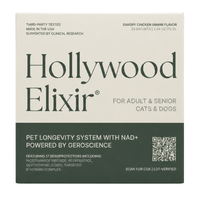
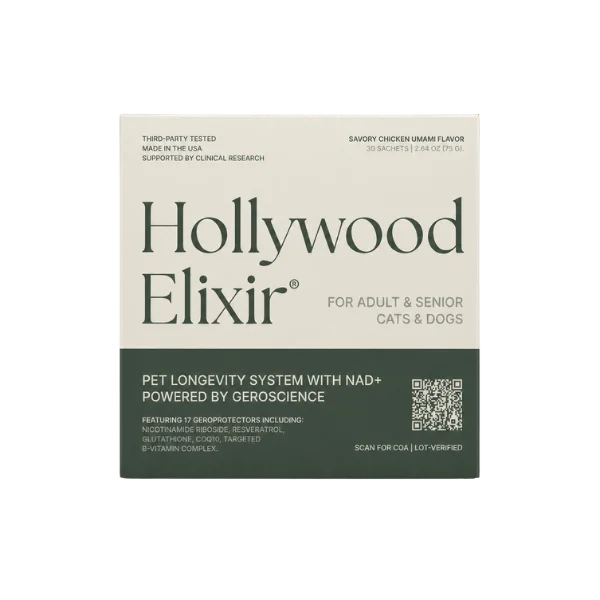
Hollywood Elixir uses reduced glutathione alongside NR and CoQ10 for a daily combination of antioxidant and cellular-energy ingredients. Each standard 2.5 g sachet contains 50 mg glutathione, 60 mg NR and 40 mg CoQ10. Follow the current product directions, and distinguish this daily formula from a liver-support preparation chosen for medical care.

What Glutathione Does Inside a Dog’s Cells

Glutathione is a small molecule made from three amino acids: glutamate, cysteine and glycine. Your dog’s cells assemble it themselves. It belongs to the body’s normal chemistry, even in a dog who has never received a supplement. 1

Its best-known job is antioxidant defense. As cells use nutrients, respond to infections and carry out other work, they produce reactive molecules. Some are useful signals; an excess can damage cell components. Glutathione helps keep that chemistry under control. 2

“Master antioxidant” is a common nickname, but it leaves out how the work gets done. Glutathione acts with enzymes and other molecules. Following one of those reactions makes its purpose much easier to understand.

Woman holding a Hollywood Elixir box beside a pug, a terrier and a food bowl

How Glutathione Helps Turn Peroxide Into Water

Hydrogen peroxide forms during normal metabolism. Cells need ways to manage it before too much accumulates. Enzymes called glutathione peroxidases use reduced glutathione—usually abbreviated GSH—to help convert hydrogen peroxide into water. 2

During this reaction, two glutathione molecules become linked in an oxidized form called GSSG. The antioxidant work changes the molecule; it does not simply disappear after intercepting something harmful.

That distinction explains why glutathione research measures several different things. The amount of GSH in a blood sample, the activity of a glutathione-using enzyme and a marker of oxidative damage each describe a different part of the process. A rise in enzyme activity is not automatically a rise in glutathione concentration.

Woman in sportswear holding a Hollywood Elixir box beside a black-and-tan dog outdoors

Making Glutathione and Recycling It Are Different Jobs

Cells maintain their glutathione supply in two ways. They can build new molecules from amino acids, using energy from ATP. They can also return oxidized glutathione to its reduced, working form. 1

That second job uses the enzyme glutathione reductase and NADPH, which supplies the electrons needed for recycling. NADPH is distinct from NADH, the related molecule involved in making energy from food. 3

The distinction matters when comparing supplements. Whey supplies amino acids used in synthesis; reduced glutathione supplies the named molecule; an NAD+ precursor has another role. These ingredients can belong in a coherent formula without being interchangeable—or proving that taking them together accelerates glutathione recycling.

Woman holding a Hollywood Elixir box above her forehead beside a Bernese mountain dog outdoors

An Older Dog Is Not Automatically Low in Glutathione

The assumption sounds plausible: aging brings more wear, so an older dog must need more antioxidant replenishment. Direct measurements tell a more careful story.

A study compared 35 healthy dogs aged seven to fourteen with 26 healthy dogs aged one to three. Median reduced glutathione in red blood cells was the same in both groups. Blood cysteine, an amino acid used to make it, was also similar. 5

The study did not measure every tissue or include sick dogs. It does, however, give a reason to avoid diagnosing a glutathione shortage from birthdays, a graying muzzle or a slower walk. Daily antioxidant nutrition can be a deliberate healthy-aging choice without first declaring the dog deficient. Our senior-dog supplement guide provides a broader comparison of the products owners consider at this stage.

Golden retriever nuzzling a woman holding a Hollywood Elixir box on the grass beside a food bowl

The Liver Connection Is Real—and More Specific Than a “Detox”
The liver uses glutathione in antioxidant defense and in processing certain compounds. Enzymes can attach glutathione to particular reactive chemicals, often making them less reactive and easier to handle or eliminate. This is a defined biochemical process, not a general flush of everything labeled a toxin. 17

Researchers have found low liver-tissue glutathione in some dogs with liver disease. The result depended on the condition and how the measurements were expressed; the study does not mean every dog with an abnormal liver test has depleted stores. 6

That is why a liver-support discussion usually starts with the diagnosis. Glutathione’s role helps explain interest in treatment, but it cannot identify the cause of an elevated blood enzyme or replace the treatment that cause requires.

Glutathione helps enzymes turn hydrogen peroxide into water.

What the Oral Supplement Studies in Dogs Found

Two 2023 studies tested combinations containing S-acetyl-glutathione, a modified form of the molecule, together with other ingredients.

One followed 30 healthy American Staffordshire Terriers for 35 days. The supplemented group’s glutathione peroxidase activity increased from its starting value. That is an antioxidant-enzyme finding, not a demonstration that the dogs felt more energetic or aged more slowly. 8

The other followed 24 dogs with inflammatory disease affecting the liver and bile ducts. Alongside veterinary treatment, half received a blend containing S-acetyl-glutathione, silybin, vitamin E and other ingredients. Several liver blood markers fell from their starting values in the supplemented group. There was no placebo, and the ingredients’ individual contributions cannot be separated. 7

The liver paper also describes a glutathione measurement using enzyme-activity units, which makes that result difficult to interpret as the amount of glutathione present. The studies offer reasons for further investigation; neither tested Hollywood Elixir or ordinary reduced glutathione alone.

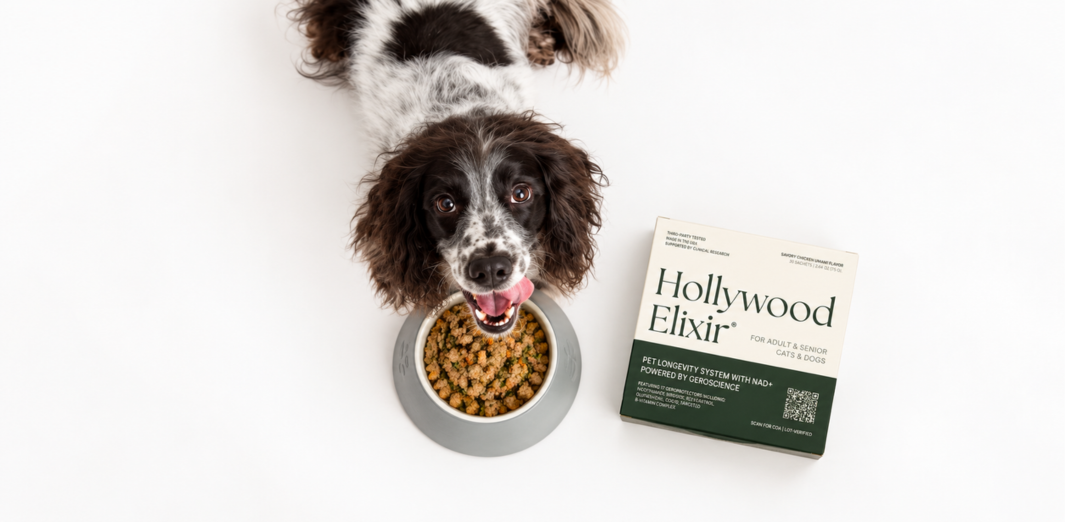
Overhead view of a black-and-white dog beside a food bowl and Hollywood Elixir box

Why NAC and SAMe Appear in the Same Conversation

A veterinarian discussing glutathione may recommend something with a different name. That can be intentional. N-acetylcysteine, or NAC, provides a route to cysteine; S-adenosylmethionine, or SAMe, participates in pathways that can support glutathione synthesis. They are different substances with their own preparations and uses. 11 12

In a study of hospitalized dogs, intravenous NAC increased blood cysteine and helped maintain glutathione over 48 hours. It did not improve the measured illness severity or survival. An intravenous hospital treatment cannot supply an oral glutathione serving recommendation. 11

If your dog has been prescribed a particular liver-support product, do not replace it because another bottle also mentions glutathione. A chew, coated tablet and powder may differ in ingredients, delivery and instructions even when their descriptions sound similar.

Woman smiling beside a golden retriever, a green food bowl and a Hollywood Elixir box

Does Swallowed Glutathione Get Through Digestion?

Digestion is a reasonable concern. Glutathione is a small peptide, and the digestive tract can break it down. But “some is broken down” does not establish that every oral preparation is ineffective.

A six-month placebo-controlled trial in 54 healthy adults found that oral glutathione increased stores measured in several blood-cell compartments. This was a human study, and the preparation was not liposomal. 9

Those findings challenge the blanket claim that ordinary oral glutathione can never affect body stores. They do not establish how much of a particular pet powder reaches a dog’s tissues. The most useful product comparison names the form, amount and preparation actually tested, instead of treating digestion as either a guarantee of failure or a solved problem.

Man holding a Hollywood Elixir box while sitting on an outdoor sofa with a golden retriever

Liposomal Glutathione Has Not Won a Dog Comparison

A liposome is a lipid-based carrier used to package an ingredient. It is a delivery approach, not a different antioxidant job for glutathione.

One often-cited liposomal study followed twelve healthy adults for a month and reported increases in glutathione. It had no placebo group and no ordinary-glutathione comparison group. 10 It cannot establish that liposomal glutathione is superior for dogs.

The distinction is easy to lose in marketing: the six-month human oral trial and the smaller liposomal study are separate experiments. Neither provides a canine head-to-head ranking. For an owner choosing a product, “liposomal” is a detail to investigate, alongside the full formulation and evidence for that preparation.

Read the Form Name Before Comparing Milligrams

Reduced glutathione, S-acetyl-glutathione and liposomal glutathione are different label descriptions. Reduced identifies GSH, the form used in the peroxide-handling reaction. S-acetyl describes a chemical modification. Liposomal describes a delivery system. These terms do not all answer the same question.

Likewise, a product containing NAC or SAMe is not simply a bottle of glutathione under another name. The starting ingredient and the reason for use differ.

Hollywood Elixir’s detailed ingredient list specifies L-glutathione in reduced form. Its current panel lists 50 mg per standard 2.5 g sachet. 14 Read those details in the complete ingredient guide, and use our dog antioxidant supplement guide for the broader label comparison.

Cells both make new glutathione and recycle the glutathione they have used.

Woman sitting with a beagle in a kitchen while holding a Hollywood Elixir box

DVM Voice: Clinical Vignette of a Common Pattern in Senior Dog Aging

Case provided by JoAnna Pendergrass, DVM

Rex, a 7-year-old Labrador Retriever, was brought in after his owner noticed he was slower to rise, hesitant on stairs, and less able to play as before. Examination showed stiffness and reduced hip mobility; radiographs confirmed degenerative joint changes.

His care required weight management, veterinary-guided pain control, nutritional support, and rehabilitation — a comprehensive plan, but one started only after visible decline appeared.

Clinical takeaway: Rex’s case reflects the value of proactive aging support: maintaining lean body condition, monitoring mobility early, and supporting cellular resilience, antioxidant defense, and healthy inflammatory balance before decline becomes obvious.

Single-case vignette. Not generalizable. Veterinary oversight is essential for pain, stiffness, or suspected joint disease.

Explore Hollywood Elixir Research →
Spotted gray dog beside a Hollywood Elixir box held in a person's hand

Why an Antioxidant Belongs Beside Energy Ingredients

The work of making usable energy and the work of handling reactive molecules happen in the same living cells. That gives glutathione a place in a formula built around cellular energy.

NAD+/NADH helps carry electrons released as nutrients are processed. NADH passes electrons into the mitochondrial machinery, where CoQ10 carries them onward as part of the process that makes ATP. NR is a starting material cells can use to make NAD+. 15 16

Glutathione serves a different part of that cellular workload: peroxide handling and other antioxidant reactions. Its recycling depends on NADPH, as described above. This is the biological reason to consider energy ingredients and antioxidant ingredients together; it does not establish that an NR supplement increases NADPH or speeds glutathione recycling in a dog.

The NAD+ guide explains the wider system. Our NR guide and CoQ10 guide examine those ingredients individually.

Golden retriever nuzzling a man holding a Hollywood Elixir box beside a food bowl

Why Hollywood Elixir Includes Glutathione

Hollywood Elixir brings reduced glutathione, NR and CoQ10 together in a daily healthy-aging powder. Each standard 2.5 g sachet provides 50 mg glutathione, 60 mg NR and 40 mg CoQ10. 14

The formulation has a clear division of work: NR provides a precursor for NAD+, CoQ10 belongs in mitochondrial electron transfer, and glutathione participates in antioxidant defense. For an owner interested in cellular energy, including the antioxidant side of cellular work makes the formula more complete in purpose than choosing an energy ingredient alone.

This is why glutathione is in Hollywood Elixir. The formula offers those complementary ingredients in one measured powder, with their amounts disclosed. If that is the kind of daily addition you want, explore Hollywood Elixir and its current serving directions. It is a healthy-aging formula; a veterinarian’s liver-treatment plan may call for a different preparation and amount.

Golden spaniel eating from a green bowl beside a Hollywood Elixir box

Whey and Vitamins Add More Than Extra Names to the Label

Hollywood Elixir also includes 250 mg whey protein isolate, 10 mg vitamin C and 15 IU vitamin E per standard sachet. These ingredients connect with antioxidant biology in different ways. 14

Whey supplies amino acids, including cysteine, used to build glutathione. Its 250 mg contribution is modest: meals still supply most dietary protein. Our whey protein guide explains that amino-acid connection and why a small formula ingredient is different from a protein supplement intended to change the diet.

Glutathione can help return oxidized vitamin C to its reduced form through enzyme-mediated reactions. Vitamin E has a particular role in protecting membrane lipids. 4 12 Pairing these ingredients gives the formula several defined points of contact with antioxidant chemistry. Whether a particular combination improves an outcome in dogs still requires testing of that combination.

A daily formula also has a different job from balancing a recipe. For home-cooked meals, the homemade-food supplement guide distinguishes nutritional completeness from targeted additions.

There Is No Universal Glutathione Dose for Every Dog

The studies above used different forms, combinations, routes and purposes. They do not yield one dependable milligram-per-kilogram dose for routine glutathione use in every dog.

Start with the exact product and the reason it is being considered. A daily multi-ingredient powder and a clinician-selected liver product should not be matched by glutathione milligrams alone. Increasing a blend to reach a number also increases everything else in it.

For Hollywood Elixir, consult the current directions for your dog rather than treating the standard-sachet panel as an instruction to give every dog the same amount. If your veterinarian has recommended glutathione-related support for illness, ask which form and formulation they intend, and how they will judge the response.

An Elevated ALT Is a Reason to Investigate, Not a Glutathione Test

Owners often arrive at liver supplements after routine bloodwork in a dog who seems well. It is an uncomfortable gap: a number is flagged, yet nothing at home looks different.

ALT and ALP are blood enzymes used in evaluating liver and other health problems. Their interpretation depends on the pattern, trend, medications, examination and other tests. They are not measurements of glutathione stores. 18

Bring previous results and every medication and supplement label to the appointment. Ask what the clinician thinks may be causing the change, what additional assessment is needed and when the bloodwork should be repeated. The liver-health guide includes questions to organize that conversation.

A supplement can be part of the plan when its purpose is clear. It should not turn an unexplained result into a presumed deficiency—or delay care when a dog becomes unwell.

Woman holding a Hollywood Elixir box beside a dapple dachshund and green food bowl on a sofa

Safety Depends on the Whole Formula

“Dogs make glutathione naturally” does not establish that every supplement containing it is suitable for every dog. The canine studies discussed here were small and short. They cannot answer every question about long-term use, pregnancy, complex illness or medication combinations. 7 8

Give the veterinarian the complete label when reviewing a product, especially during treatment for liver disease or cancer. That allows the actual ingredients and amounts to be assessed; a generic list of “antioxidant interactions” is less useful. Do not stop prescribed treatment to make room for a supplement.

Hollywood Elixir contains milk-derived whey and chicken ingredients, which matter for allergies and prescribed elimination diets. 14 Human products require a separate ingredient check: xylitol can be dangerous to dogs. If a dog may have swallowed it, contact a veterinarian or animal poison service immediately. 13

Woman cuddling a brown-and-white spaniel while holding a Hollywood Elixir box

Make the Mealtime Plan Work in Practice

A powder left at the bottom of a bowl has not become part of the dog’s daily intake. Follow the product’s mixing and storage directions, measure consistently and check that the food containing it is actually eaten.

If your dog refuses a prescribed liver tablet, tell the clinic before changing brands or crushing it. Formulation and coating can be part of the instructions. An easier-to-feed product is useful only if it still fits the intended treatment.

For an appropriate daily supplement, avoid starting several new products at once. Record acceptance and any new vomiting, diarrhea or appetite change; stop the new addition and seek advice if a concerning reaction occurs. Those observations help assess tolerance. They are not a home measurement of glutathione, and the research does not provide a reliable countdown to brighter energy or a glossier coat.

Choose Glutathione for a Defined Place in the Routine

Glutathione earns its place in antioxidant biology through specific work: helping process peroxides, participating in the handling of certain reactive compounds, and connecting with other antioxidant molecules. The attraction is more substantial than the word “detox.”

For a dog receiving liver care, the decision belongs with the diagnosis, selected product and monitoring plan. For an owner building a daily healthy-aging routine, Hollywood Elixir combines reduced glutathione with an NAD+ precursor, CoQ10 and complementary nutritional ingredients.

That is a concrete choice: one disclosed formula for cellular-energy and antioxidant nutrition, alongside the food and veterinary care the dog already receives. Review the complete label, check that the serving and ingredients fit your dog, and choose the product for what it supplies.

An elevated liver enzyme is not a measurement of glutathione stores.

Educational content only. This material is not a substitute for veterinary advice. Always consult your veterinarian about your dog’s specific needs. These statements have not been evaluated by the Food and Drug Administration. Products mentioned are not intended to diagnose, treat, cure, or prevent any disease.

Glossary

Glutathione: A molecule made from glutamate, cysteine and glycine, used in antioxidant defense and other cellular reactions.

GSH: Reduced glutathione, the form used in reactions such as peroxide breakdown.

GSSG: Oxidized glutathione, formed when two glutathione molecules become linked.

Glutathione peroxidase: An enzyme that uses glutathione to help break down peroxides.

NADPH: A molecule that supplies electrons for reactions including glutathione recycling.

NAD+/NADH: Related forms of a coenzyme involved in carrying electrons during nutrient metabolism.

NR: Nicotinamide riboside, a precursor cells can use to make NAD+.

CoQ10: Coenzyme Q10, an electron carrier involved in mitochondrial ATP production.

NAC: N-acetylcysteine, a substance that can provide cysteine for glutathione synthesis.

SAMe: S-adenosylmethionine, a compound involved in pathways that can support glutathione synthesis.

S-acetyl-glutathione: A chemically modified form of glutathione used in some supplements.

Liposomal: Packaged in a lipid-based carrier; a delivery description rather than proof of superior effects.

Related Reading

References

Numbered references identify the sources used for specific claims. Read the study design, species and evidence boundaries alongside each finding.

  1. Reactome. Glutathione synthesis and recycling. Accessed 2026Species/context: Conserved cellular pathway; human curated record with canine orthologueEvidence boundary: Cells make glutathione from amino acids. This pathway explains the synthesis process, rather than demonstrating a benefit from a particular supplement.↩ 1 · ↩ 2 · ↩ 3
  2. Reactome. Detoxification of Reactive Oxygen Species. Accessed 2026Species/context: Conserved cellular pathways; human curated recordEvidence boundary: Glutathione peroxidases help convert hydrogen peroxide to water. Normal antioxidant chemistry does not by itself establish the effects of oral glutathione in a dog.↩ 1 · ↩ 2 · ↩ 3
  3. Reactome. GSR catalyzes glutathione (oxidized) + NADPH + H+ => 2 glutathione (reduced) + NADP+. Accessed 2026Species/context: Conserved cellular pathway; human curated record with canine orthologueEvidence boundary: Glutathione reductase uses NADPH to regenerate reduced glutathione. NADPH is distinct from the NADH used in mitochondrial energy transfer.
  4. Reactome. GSTO dimers reduce DeHA to AscH-. Accessed 2026Species/context: Conserved cellular pathway; human curated record with canine orthologueEvidence boundary: This reaction explains how glutathione participates in recycling vitamin C. It is a biochemical connection, rather than a trial of an antioxidant combination in dogs.
  5. Katherine L. Moyer, Lauren A. Trepanier. Erythrocyte glutathione and plasma cysteine concentrations in young versus old dogs. 2009Species/context: DogsEvidence boundary: Healthy older dogs did not have lower measured circulating glutathione or cysteine than young dogs. The study does not describe every tissue or every dog with an illness.
  6. Sharon A. Center, Karen L. Warner, Hollis N. Erb. Liver glutathione concentrations in dogs and cats with naturally occurring liver disease. 2002Species/context: Dogs and cats; canine results discussed separatelyEvidence boundary: This biopsy study measured glutathione in diseased liver tissue. It does not show that a supplement treats liver disease or that a blood enzyme value measures glutathione.
  7. Elisa Martello, Francesca Perondi, Donal Bisanzio, Ilaria Lippi, Giorgia Meineri, Valeria Gabriele. Antioxidant Effect of a Dietary Supplement Containing Fermentative S-Acetyl-Glutathione and Silybin in Dogs with Liver Disease. 2023Species/context: DogsEvidence boundary: This small trial tested a combination alongside liver treatment and had no placebo. Its reported glutathione measurement uses enzyme-activity units, which limits its interpretation as glutathione concentration.↩ 1 · ↩ 2
  8. Francesca Perondi, Donal Bisanzio, Raffaella Adami, Ilaria Lippi, Giorgia Meineri, Monica Isabella Cutrignelli, Selena Massa, Elisa Martello. The effect of a diet supplement containing S-acetyl-glutathione (SAG) and other antioxidant natural ingredients on glutathione peroxidase in healthy dogs: a pilot study. 2023Species/context: DogsEvidence boundary: Thirty healthy dogs received a combination supplement or placebo. The reported increase concerns glutathione peroxidase, an enzyme, rather than a demonstrated improvement in longevity or everyday vitality.↩ 1 · ↩ 2
  9. John P. Richie Jr, Sailendra Nichenametla, Wanda Neidig, Ana Calcagnotto, Jeremy S. Haley, Todd D. Schell, Joshua E. Muscat. Randomized controlled trial of oral glutathione supplementation on body stores of glutathione. 2015Species/context: HumansEvidence boundary: Oral glutathione increased measured stores in this human trial. It did not compare liposomal and ordinary glutathione in dogs.
  10. Raghu Sinha, Indu Sinha, Ana Calcagnotto, Neil Trushin, Jeremy S. Haley, Todd D. Schell, John P. Richie Jr. Oral supplementation with liposomal glutathione elevates body stores of glutathione and markers of immune function. 2018Species/context: HumansEvidence boundary: This small human pilot had no placebo group and no ordinary-glutathione comparison. It cannot establish that liposomal glutathione is superior in dogs.
  11. K. R. Viviano, B. VanderWielen. Effect of N-acetylcysteine supplementation on intracellular glutathione, urine isoprostanes, clinical score, and survival in hospitalized ill dogs. 2013Species/context: DogsEvidence boundary: The hospitalized dogs received intravenous N-acetylcysteine, a glutathione precursor. The findings do not establish the effects or dose of an oral glutathione powder.↩ 1 · ↩ 2
  12. Cynthia R. L. Webster, Sharon A. Center, John M. Cullen, Dominique G. Penninck, Keith P. Richter, David C. Twedt, Penny J. Watson. ACVIM consensus statement on the diagnosis and treatment of chronic hepatitis in dogs. 2019Species/context: DogsEvidence boundary: The consensus discusses diagnosis and adjunctive liver treatments. SAMe, vitamin E and a daily glutathione blend have different compositions and purposes.↩ 1 · ↩ 2
  13. U.S. Food and Drug Administration. Paws Off Xylitol; It’s Dangerous for Dogs. Accessed 2026Species/context: DogsEvidence boundary: Human supplement ingredients can pose risks that have nothing to do with glutathione. Suspected xylitol ingestion needs prompt veterinary or poison-control guidance.
  14. La Petite Labs. Hollywood Elixir official ingredient panel. 2026Species/context: Dogs and catsEvidence boundary: The official panel establishes ingredient amounts per standard 2.5 g sachet. The finished formula was not the product tested in the glutathione studies discussed here.↩ 1 · ↩ 2 · ↩ 3 · ↩ 4
  15. Reactome. Complex I oxidises NADH to NAD+, reduces CoQ to CoQH2. Accessed 2026Species/context: Conserved cellular pathway; human curated record with canine orthologueEvidence boundary: This pathway describes normal electron transfer in mitochondria. It explains the relationship between NADH and CoQ10, rather than the effects of taking a supplement.
  16. Rachel S. Fletcher, Joanna Ratajczak, Craig L. Doig, Lucy A. Oakey, Rebecca Callingham, Gabriella Da Silva Xavier, Antje Garten, Yasir S. Elhassan, Philip Redpath, Marie E. Migaud, Andrew Philp, Charles Brenner, Carles Canto, Gareth G. Lavery. Nicotinamide riboside kinases display redundancy in mediating nicotinamide mononucleotide and nicotinamide riboside metabolism in skeletal muscle cells. 2017Species/context: Mouse skeletal-muscle cells and miceEvidence boundary: This work traces NR metabolism into NAD+. It supports the precursor explanation, rather than a clinical claim about a daily combination formula in dogs.
  17. Reactome. Glutathione conjugation. Accessed 2026Species/context: Conserved cellular pathway; human curated record with canine orthologueEvidence boundary: Glutathione can be attached to certain reactive compounds to help process them for elimination. This chemistry does not make a supplement a universal detoxifier or an antidote.
  18. Krista Williams. Chronic Hepatitis in Dogs. 2025Species/context: DogsEvidence boundary: Blood enzyme changes can prompt a liver investigation, but do not measure glutathione. Symptoms, trends and the underlying diagnosis guide the clinical plan.

FAQ

What are the most realistic glutathione benefits for dogs?

Glutathione participates in antioxidant defense, including enzyme reactions that turn hydrogen peroxide into water. Small canine studies of blends containing S-acetyl-glutathione have reported antioxidant-enzyme or liver blood-marker changes. Those results do not establish reliable improvements in everyday energy, coat quality or lifespan from an ordinary glutathione supplement.

How does glutathione support the liver in dogs?

The liver uses glutathione in antioxidant reactions and in attaching to certain reactive compounds during their processing. Some dogs with liver disease have low liver-tissue glutathione, but an elevated ALT or ALP is not a glutathione measurement. Supplement choice should follow the diagnosis and veterinary plan.

Is glutathione for dogs safe for daily use?

Safety depends on the exact form, amount, companion ingredients and dog. Small, short studies of particular canine blends cannot establish lifelong safety for every product. Follow applicable pet directions and seek individual advice for illness, pregnancy, nursing or a complex medication plan. Stop a new supplement and contact your veterinarian if concerning changes occur.

Can glutathione interact with my dog’s medications?

Have your veterinarian review the complete product alongside every medication, especially during treatment for liver disease or cancer. A formula may contain several active ingredients, and direct canine interaction evidence for oral glutathione is limited. Do not change prescribed medicines or substitute a daily blend for a clinician-selected liver product without that review.

Is glutathione for dogs different from glutathione for cats?

The glutathione molecule has the same identity in both species. That does not make products, servings or study results interchangeable. Choose directions and a complete formulation appropriate to the animal, and keep canine research distinct from feline research when assessing a claim.

What should I look for in the best glutathione for dogs?

Look for the named form, disclosed amount, complete ingredient list and directions applicable to your dog. Reduced glutathione, S-acetyl-glutathione and liposomal delivery describe different things; NAC and SAMe are different ingredients again. A liposomal label alone does not establish superiority in dogs. Hollywood Elixir discloses 50 mg reduced glutathione per standard 2.5 g sachet alongside NR and CoQ10.

Can I give glutathione with a weight-loss diet?

Review the full product with the team managing your dog’s feeding plan. A multi-ingredient powder adds more than glutathione, so include its composition, serving and any available calorie information. Glutathione is not a weight-loss treatment, and adding it should not displace the food intended to supply balanced nutrition.

Is there research on glutathione supplements for dogs?

Yes. Two small 2023 studies tested blends containing S-acetyl-glutathione: one in healthy dogs and one alongside treatment for liver and bile-duct inflammation. They reported changes in selected antioxidant-enzyme or liver blood measures. The interventions were combinations, so the findings cannot be attributed to glutathione alone or transferred directly to a different formula.

Dalmatian looking toward a Hollywood Elixir box held in a person's hand

Discover LPL-01: How This Fits Into a Larger Canine Longevity System

Aging in dogs is not driven by a single pathway. It’s the result of interacting biological systems—energy metabolism, oxidative stress, immune signaling, and structural integrity—changing over time.

This article explores one piece of that puzzle. If you want to understand how these pieces connect—and what actually moves the needle—you need to zoom out.

Start with the underlying science:

Keep exploring

What would you like to understand next?

Search practical guides about healthy aging, cellular energy, ingredients, and daily support for dogs.