Dog Restless at Night

Identify the Trigger—pain, Itch, Anxiety, or Aging—and Rebuild Nightly Sleep

Essential Summary

Why is it important to understand why a dog is restless at night?

Nighttime restlessness in dogs is usually a signal, not a personality flaw. Common drivers include discomfort, itch, anxiety, routine changes, and age-related sleep shifts. Start by ruling out urgent signs, then improve the sleep environment and track patterns for your veterinarian. Long-term support can help dogs settle more easily and recover better.

Hollywood Elixir™ is designed for system-level support as dogs age—helping the broader resilience and recovery network that influences how easily a dog can settle, stay asleep, and bounce back from daily stressors. It’s not a sedative; it’s a steady, daily way to support calm nights through whole-body aging support.

If you’re here, you’ve likely watched it happen: the lights go out, and suddenly your dog can’t settle. A restless dog may pace the hallway, switch beds, lick paws, stare into corners, or ask to go outside again and again. Sometimes it’s paired with panting—dog panting and restless behavior that feels out of proportion to the day you just had. It’s the kind of change that makes people whisper to themselves, why is my dog restless at night, and then stay awake listening for the next lap around the room.

Night restlessness is rarely random. It’s often a sign that something is uncomfortable, overstimulating, or no longer matching your dog’s needs—especially as dogs age. The tricky part is that many causes look similar at 2 a.m.: pain, itch, anxiety, reflux, medication effects, and cognitive changes can all produce the same pacing-and-panting loop. That’s why “my dog is acting weird and restless” is a useful starting observation, but not a diagnosis.

This page is designed to help you sort the likely from the unlikely, notice red flags, and make calm adjustments that improve sleep without forcing sedation. And for owners who want a science-minded reason to add a daily wellness formula: sleep is a system outcome. Even when diet is adequate, supporting the broader resilience network—recovery, stress tolerance, and healthy aging—can make it easier for your dog to settle and stay settled over time. That’s the role a product like Hollywood Elixir™ is meant to play: not a single-ingredient “sleep fix,” but steady support for the whole dog.

By La Petite Labs Editorial, ~15 min read

Featured Product:

  • Night restlessness is often a comfort problem first: pain, itch, temperature, or reflux.
  • Panting changes the picture; consider heat, anxiety, nausea, or breathing strain.
  • Medication timing and new preventives can be relevant; bring the timeline to your vet.
  • Routine and environment matter more than most people expect; predictability lowers arousal.
  • Older dogs may show sleep-wake changes that deserve both medical and home supports.
  • Track patterns for one week; small notes and short videos accelerate good vet decisions.
  • Science-minded owners choose daily formulas for system resilience, not single “sleep ingredients.”

When Nights Turn Restless, the Body Is Often Speaking Quietly

When a dog can’t settle after dark, it rarely feels like “just a phase.” A restless dog may pace, change sleeping spots, lick, whine, or keep checking doors and windows. Some dogs seem fine all day, then unravel at bedtime—leaving you wondering, why is my dog restless at night when nothing else has changed?

Nighttime restlessness usually comes from one of three buckets: discomfort in the body, stress in the nervous system, or a mismatch between routine and environment. The right next step depends on which bucket is most likely—and whether there are red flags that should move you straight to your veterinarian.

This page focuses on calm, practical ways to narrow the cause, improve sleep hygiene, and support whole-body resilience over time. The goal isn’t to “knock your dog out,” but to make nights feel safe, predictable, and physically comfortable—so sleep becomes the default again.

Visualization of mitochondria illustrating cellular support pathways for why is my dog restless.

What Restlessness Looks Like After Dark, and Why It’s Different

Owners often notice the pattern as a cluster: pacing, staring, repeated trips to the water bowl, and then sudden panting. Dog panting and restless behavior can be as mild as “can’t get comfortable,” or as intense as frantic movement from room to room. The difference matters.

Occasional unsettled nights happen—storms, fireworks, a schedule change. But if the behavior repeats, escalates, or comes with new physical signs, it’s worth treating as information. A dog’s sleep is a sensitive readout of pain, itch, temperature regulation, breathing comfort, and emotional security.

The most helpful mindset is curious rather than alarmed. You’re looking for the simplest explanation that fits the whole picture: age, recent medications, exercise level, diet timing, and whether the restlessness is paired with panting, trembling, or confusion.

DNA strand visualization representing cellular protection supported by why is my dog restless.

Dog Panting and Restless Nights: Reading the Context Carefully

Panting is one of the most common details owners mention, and it changes the differential. Dog panting at night and restless behavior can reflect heat, pain, anxiety, nausea, respiratory strain, or hormonal disease. It can also be a learned response—some dogs pant when they anticipate a trip outside or attention.

Start with the basics: room temperature, bedding warmth, and whether your dog is sleeping near a heater or under heavy blankets. Then look for context: does panting begin after lying down (possible discomfort), after a noise (possible fear), or after drinking (possible nausea or reflux)?

If panting is new, intense, or paired with weakness, coughing, pale gums, or a distended belly, treat it as urgent. When panting is the headline symptom, it’s safer to rule out medical causes early than to assume it’s “just anxiety.”

Protein structure illustration showing biological precision behind restless dog.

Pain and Stiffness: the Most Commonly Missed Nighttime Cause

Pain is a frequent, under-recognized reason a dog can’t settle. Arthritis, dental pain, ear infections, and soft-tissue injuries often announce themselves at night, when distractions fade. You may see repeated repositioning, reluctance to lie down, or a preference for hard floors over a plush bed.

Look for small tells: slower stairs, hesitation before jumping, stiffness after naps, or licking at a joint. If your dog is acting weird and restless but also moving carefully, pain belongs near the top of the list. A vet exam can localize discomfort quickly, and targeted pain control often improves sleep within days.

At home, focus on comfort rather than improvising medications. Supportive bedding, traction rugs, and a gentle evening walk can reduce nighttime flare-ups without masking important symptoms your vet needs to see.

Close-up dog photo reflecting peaceful vitality supported by why is my dog panting and restless.

Itch, Skin, and Ears: When Discomfort Masquerades as Anxiety

Itch can look like anxiety in the dark. Flea allergy, environmental allergies, ear irritation, and dry skin may drive a restless dog to scratch, chew paws, rub their face, or repeatedly get up and down. Because itching often intensifies when a dog warms up under blankets, it can peak at bedtime.

Check ears for odor or redness, look between toes, and scan the belly and armpits for irritation. If you see hair loss, scabs, or recurrent ear problems, a vet visit is the fastest route to relief. Treating itch is not cosmetic; it’s sleep medicine.

If the timing coincides with a new flea/tick preventive, mention it. Neurologic side effects have been reported with isoxazolines in some dogs, and sleep disruption can be part of the picture (Bates N, 2024).

Hollywood Elixir™ is amazing and makes my 13 y/o young again!

— Jessie

We go on runs. Lately he's been keeping up with no problem!

— Cami

“Nighttime restlessness is usually a signal of discomfort, arousal, or mismatch—not stubbornness.”

Anxiety, Vigilance, and Noise Sensitivity After the House Sleeps

Anxiety is a common reason owners ask, why is my dog restless at night? Noise sensitivity, separation distress, and generalized hypervigilance can all intensify after dark. Dogs that patrol windows, react to distant sounds, or shadow you from room to room may be struggling to downshift.

The most humane goal is not suppression, but safety: fewer triggers, more predictability, and a sleep space that feels protected. White noise, blackout curtains, and a consistent bedtime routine can reduce arousal. Behavioral sleep interventions and stable routines are known to improve insomnia symptoms in other settings, and the same environmental logic applies well to pets (Meltzer, 2014).

If anxiety is severe or escalating, ask your veterinarian about behavior support. The right plan can combine training, management, and—when appropriate—medication, without turning your dog into someone they’re not.

Weimaraner image reflecting strength and companionship supported by why is my dog restless.

Senior Dogs and Sleep-wake Shifts That Change the Whole Night

Senior dogs deserve a special mention. Cognitive changes can shift sleep-wake patterns, leading to nighttime wandering, staring, or seeming “lost” in familiar rooms. Owners often describe it as a gentle but unsettling change: the dog is present, but not quite anchored.

If your older dog wakes more, vocalizes at night, or seems disoriented, schedule a vet visit to rule out pain, sensory decline, and medical drivers like kidney disease. Then consider environmental supports: night lights, a clear path to the water bowl, and a consistent bedtime location.

For aging dogs, the “why” is often layered: mild pain plus mild anxiety plus a thinner ability to recover from stimulation. Supporting resilience—rather than chasing one perfect cause—tends to produce the most durable improvement.

Canine profile image reflecting strength and steadiness supported by why is my dog restless at night.

Home Factors That Keep a Dog Half-awake Without You Noticing

Sometimes the environment is the culprit, even in a loving home. A new neighbor, a different HVAC cycle, a baby monitor, or a change in where you charge devices can add high-frequency noise or light that dogs notice more than people do. If your dog sleeps lightly, these small changes can create a nightly pattern of waking and pacing.

Try a simple experiment: for three nights, keep the sleep space darker, cooler, and quieter than usual. Move the bed away from windows and exterior walls, add white noise, and remove scented plug-ins. Environmental factors are known to influence sleep disturbance in pets and in pediatric insomnia contexts, and reducing stimulation often improves settling.

If the change helps, you’ve learned something valuable: your dog’s nervous system is doing its job—just a little too well at night.

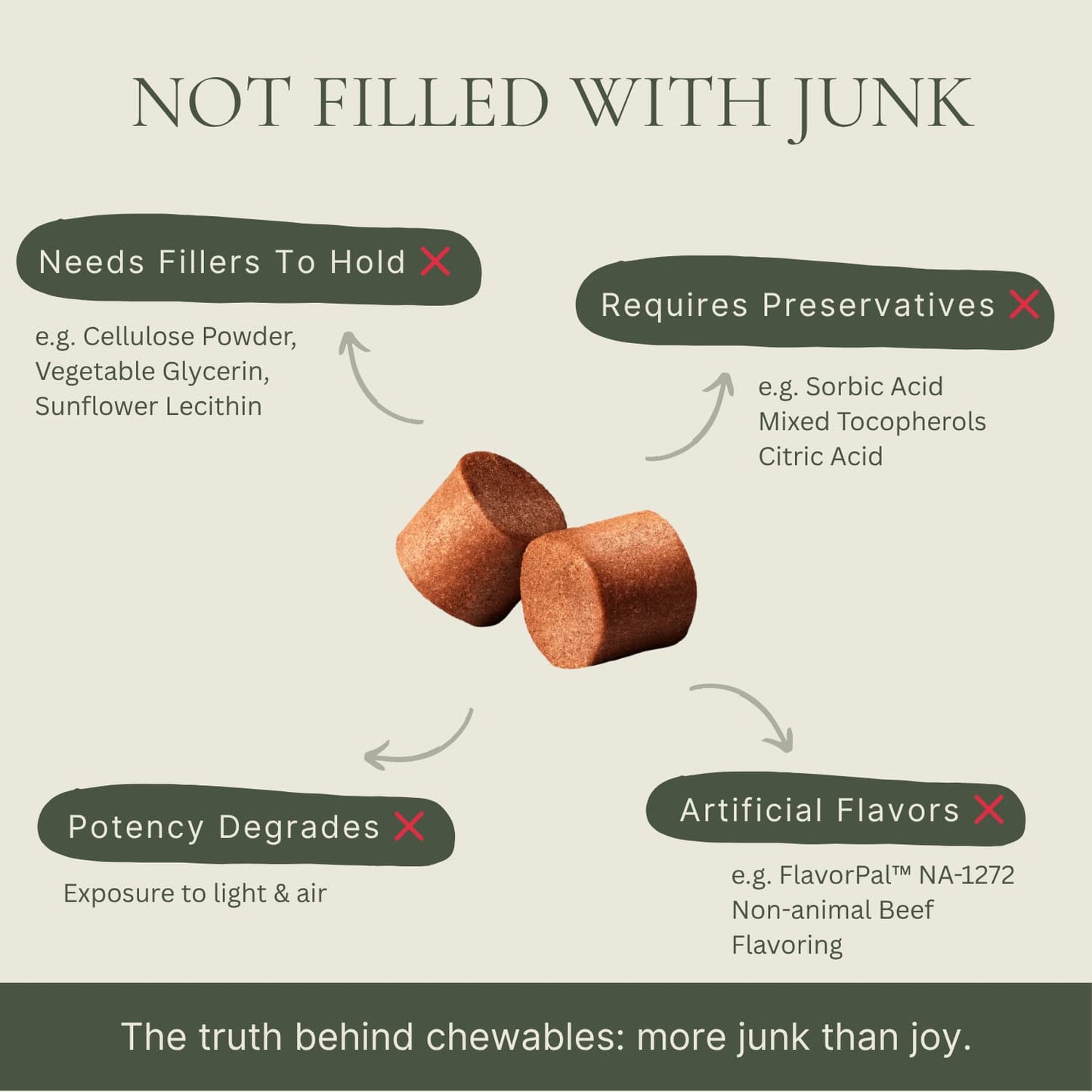
Ingredient explainer image showing clean formulation principles for why is my dog restless at night.

Exercise, Enrichment, and the Timing That Helps Sleep Most

Exercise is a double-edged tool. Too little daytime activity can leave energy unspent, while too much late-evening intensity can keep adrenaline high. If your dog is restless at night, aim for earlier enrichment: sniff walks, gentle training, and low-stakes play that ends at least an hour or two before bed.

Mental work often settles dogs more than physical exertion. A short scent game, a food puzzle at dinner, or a calm decompression walk can reduce pacing without revving the system. Consistency matters more than hero workouts.

If you’re increasing activity to fix sleep, watch for soreness the next day. Overdoing it can backfire by creating nighttime discomfort—especially in older dogs or those with hidden joint pain.

Medication and Preventive Timing That Can Disrupt Sleep

Medication timing can quietly shape the night. If your dog started a new flea/tick product, pain medication, steroid, or seizure medication and then became unsettled, bring that timeline to your vet. Some dogs have neurologic side effects after isoxazoline-class flea/tick preventives, and changes can include agitation or sleep disruption (Bates N, 2024).

For dogs on phenobarbital, restlessness can signal that seizure control, dosing schedule, or blood levels need review—especially if you also notice wobbliness, unusual sedation, or breakthrough episodes (Jukier T, 2023). Don’t stop or adjust prescriptions on your own; instead, ask whether the dosing time, formulation, or monitoring plan should change.

A useful rule: if “my dog is acting weird and restless” started within days to weeks of a medication change, treat it as a medical clue. Even when the medication is still the best choice, small adjustments can restore sleep without sacrificing protection or control.

“Small details—timing, temperature, a new medication—often explain the whole night.”

Research-style uniform highlighting scientific integrity aligned with why is my dog restless at night.

Repetitive Movements, Light Sleep, and the “Can’t Settle” Pattern

Some dogs look restless because their legs won’t fully relax. In people, restless legs syndrome and periodic limb movements are well-described causes of fragmented sleep and nighttime restlessness (Geng C, 2022). Dogs don’t receive the same diagnosis in routine practice, but the concept—sleep disrupted by repetitive limb movement or an urge to reposition—can still be a helpful lens when you’re observing your own dog.

If you notice rhythmic twitching, repeated kicking, or frequent “resetting” of posture that wakes your dog, capture a short video for your veterinarian. Sleep disruption patterns matter, and even in humans, identifying these patterns can be challenging without good screening tools (Fulda S, 2021).

The practical takeaway: don’t assume it’s behavioral if the movement looks involuntary or repetitive. Your vet may look for pain, neurologic issues, itch, or medication effects first, then decide whether further workup is warranted.

Shop Now
Curated ingredient scene highlighting bioactive blend supporting dog panting at night and restless.

Routine and Environment: the Underestimated Sleep Architecture

A calm night often starts hours earlier. Dogs are sensitive to cues: light, noise, household activity, and your own bedtime rhythm. When those cues are inconsistent, a dog may stay in “monitoring mode,” especially if they’re naturally vigilant.

Behavioral sleep research in children shows that consistent routines and environmental adjustments can reduce insomnia symptoms (Meltzer, 2014). While dogs aren’t children, the principle translates well: predictability lowers arousal. Try a steady wind-down window (same time, same order), dimmer lights, and a quiet, comfortable sleep zone that doesn’t change night to night.

If your dog is restless at night only in one room, treat that as data. Drafts, hallway noise, a neighbor’s late-night footsteps, or even a new air freshener can be enough to keep a sensitive dog half-awake.

Shop Now
Lifestyle shot of dog owner and Hollywood Elixir aligned with restless dog.

Food, Water, and Reflux: Subtle Drivers of Night Waking

Food and timing can influence sleep quality. A dog that gulps dinner, drinks heavily, or eats too late may wake to urinate, feel reflux, or ask for another trip outside. On the other hand, a dog that goes to bed hungry may pace and beg, especially if they’ve learned that nighttime restlessness earns a snack.

If you’re troubleshooting, keep changes simple: move dinner slightly earlier, keep water available but avoid encouraging large “pre-bed chugging,” and offer a small, consistent bedtime routine that doesn’t involve high-value treats. If you suspect reflux (lip licking, swallowing, grass eating, discomfort when lying down), ask your vet about safe options rather than experimenting with human medications.

For older dogs, nighttime hunger can also reflect changing metabolism or underlying disease. If appetite has increased alongside restlessness, it’s worth a medical check rather than a bigger bowl.

Shop Now

A One-week Tracking Plan That Clarifies What’s Really Happening

A short tracking period can turn a vague worry into a solvable pattern. For one week, note bedtime, wake-ups, pacing episodes, panting, water intake, and any daytime changes (exercise, visitors, storms, new foods). Add a simple 0–3 score for restlessness. You’re not trying to build a perfect dataset—just enough clarity to answer, why is my dog restless?

If you can, record a 15–30 second video of the behavior that concerns you most: the pacing loop, the panting, the leg movements, the “can’t get comfortable” shifting. Vets can often spot pain, anxiety, respiratory effort, or neurologic patterns faster from video than from a description alone.

Tracking also protects you from false fixes. When you change three things at once, you can’t tell what helped. One change, a few nights of observation, then the next.

Red Flags That Deserve Prompt Veterinary Attention

There are moments when waiting it out isn’t kind—or safe. Seek veterinary care promptly if restlessness comes with collapse, blue or pale gums, repeated unproductive retching, a swollen abdomen, severe pain, or sudden disorientation. If your dog is panting and restless with a hot body, vomiting, or weakness, treat it as urgent.

Also call your vet if nighttime agitation appears after a new medication or preventive. Neurologic side effects have been reported with isoxazoline exposure in dogs, and individual sensitivity varies (Bates N, 2024). Your veterinarian can help you weigh risks, alternatives, and whether the timing fits.

For chronic cases—weeks of disrupted sleep—plan a non-urgent appointment even if your dog seems “fine” by day. Sleep loss accumulates, and the underlying cause is often treatable once it’s named.

Competitor comparison image focusing on formulation integrity in my dog is acting weird and restless.

Natural Support Without Sedation: Building Resilience over Time

Natural support works best when it’s framed as nervous-system and whole-body support, not a single “sleep ingredient.” A dog’s ability to settle depends on comfort, oxidative balance, and the day-to-night rhythm of arousal. That’s why the most effective plans combine environment, routine, and targeted nutritional support rather than relying on one lever.

If you’re considering supplements, prioritize transparency, consistent dosing instructions, and a formula designed for long-term use. Avoid stacking multiple calming products at once; it becomes hard to spot what’s helping and harder to notice subtle side effects. If your dog takes prescription medications, ask your vet before adding anything new.

For science-minded owners, the question is fair: why choose a premium daily formula when diet already covers basics? Because sleep and calm are system outcomes. Supporting the broader metabolic network and resilience over time can matter even when no single nutrient is “deficient,” especially in aging dogs with thinner margins.

Shop Now
Product reveal shot showing premium feel consistent with dog panting and restless.

Putting It Together: a Calm, Layered Plan for Better Nights

If your dog is restless at night, think in layers. First, remove obvious friction: a better bed, cooler room, one last calm potty break, and a consistent lights-down routine. Next, look for drivers you can’t see: pain, itch, reflux, medication effects, or cognitive change. Finally, support the long game—stress tolerance, recovery, and aging resilience.

This layered approach mirrors what we know about sleep disruption more broadly: nighttime restlessness often reflects multiple small contributors rather than one dramatic cause (Meltzer, 2014). When you address two or three contributors at once—without overcorrecting—you usually see steadier nights within a couple of weeks.

If you’re stuck, bring your notes and videos to your veterinarian. The fastest path to relief is often a short list of likely causes, tested thoughtfully, rather than endless trial-and-error.

Shop Now

The Long View: Restorative Sleep as a Quality-of-life Marker

Peaceful sleep is a quality-of-life issue—for your dog and for you. When nights improve, daytime behavior often softens too: less clinginess, fewer startle reactions, and more willingness to rest. That’s why it’s worth taking nighttime changes seriously, even when they seem subtle.

If your dog panting at night and restless has become the new normal, don’t settle for guessing. Start with safety checks and a vet conversation if needed, then build a calmer routine and environment that your dog can trust. Add supportive nutrition when it fits your dog’s life stage and health picture.

Over time, the goal is simple: fewer wake-ups, faster settling, and a dog who looks genuinely restored in the morning.

“The goal isn’t to sedate; it’s to make sleep feel safe and physically easy.”

Educational content only. This material is not a substitute for veterinary advice. Always consult your veterinarian about your dog’s specific needs. These statements have not been evaluated by the Food and Drug Administration. Products mentioned are not intended to diagnose, treat, cure, or prevent any disease.

Glossary

  • Arousal: A heightened state of alertness that makes settling and staying asleep harder.
  • Sleep Fragmentation: Repeated brief awakenings that reduce restorative sleep even if total time in bed seems normal.
  • Pacing: Repetitive walking loops that can signal anxiety, discomfort, nausea, or cognitive change.
  • Panting: Rapid breathing that can reflect heat, stress, pain, nausea, or respiratory effort.
  • Sleep Hygiene: The set of environmental and routine factors (light, noise, schedule) that support better sleep.
  • Trigger Stacking: Multiple small stressors in a day that add up, making nighttime settling harder.
  • Reflux: Backflow of stomach contents that can cause discomfort when lying down, leading to restlessness.
  • Cognitive Change: Age-related shifts in attention, orientation, and sleep-wake rhythm that can increase nighttime wandering.
  • Periodic Limb Movements: Repetitive limb motions during sleep that can disrupt rest, described in human sleep literature (Riccardi S, 2023).

Related Reading

References

Fulda S. We need to do better: A systematic review and meta-analysis of diagnostic test accuracy of restless legs syndrome screening instruments.. PubMed. 2021. https://pubmed.ncbi.nlm.nih.gov/33838561/

Geng C. Polysomnographic nighttime features of Restless Legs Syndrome: A systematic review and meta-analysis.. PubMed. 2022. https://pubmed.ncbi.nlm.nih.gov/36090852/

Broström A. Worldwide estimation of restless legs syndrome: a systematic review and meta-analysis of prevalence in the general adult population.. PubMed. 2023. https://pubmed.ncbi.nlm.nih.gov/36600470/

Peña-Jorquera H. Dog companionship and cortisol levels in youth. A systematic review and meta-analysis.. PubMed. 2025. https://pubmed.ncbi.nlm.nih.gov/39951871/

Riccardi S. Pharmacological responsiveness of periodic limb movements in patients with restless legs syndrome: a systematic review and meta-analysis.. PubMed. 2023. https://pubmed.ncbi.nlm.nih.gov/36692194/

Meltzer. Systematic Review and Meta-Analysis of Behavioral Interventions for Pediatric Insomnia. PubMed. 2014. https://pubmed.ncbi.nlm.nih.gov/24947271/

Luyster. Sleep: a health imperative.. Nature. 2012. https://www.nature.com/articles/s41598-021-04502-2

Siegel. Do all animals sleep?. Nature. 2008. https://www.nature.com/articles/s41598-023-40048-1

Bates N. Neurological adverse effects of isoxazoline exposure in cats and dogs.. PubMed. 2024. https://pubmed.ncbi.nlm.nih.gov/38616548/

Jukier T. Pharmacokinetics and tolerability of a veterinary phenobarbital product in healthy dogs.. PubMed Central. 2023. https://pmc.ncbi.nlm.nih.gov/articles/PMC10796454/

Di Cesare. Gabapentin: Clinical Use and Pharmacokinetics in Dogs, Cats, and Horses. 2023. https://www.mdpi.com/2076-2615/13/12/2045/html

Fahey. The art of establishing mineral tolerances of dogs and cats.. PubMed Central. 2024. https://pmc.ncbi.nlm.nih.gov/articles/PMC11161897/

Rumbeiha W. A review of class I and class II pet food recalls involving chemical contaminants from 1996 to 2008.. PubMed Central. 2011. https://pmc.ncbi.nlm.nih.gov/articles/PMC3614097/

Ahmed. Bioaccumulation of heavy metals in some commercially important fishes from a tropical river estuary suggests higher potential health risk in children than adults.. Nature. 2019. https://www.nature.com/articles/s41598-021-00467-4

FAQ

Why is my dog restless at night after a normal day?

Nighttime restlessness often shows up when distractions drop away. Mild pain, itch, reflux, or anxiety can become more noticeable in the quiet, even if your dog seemed fine earlier. Start by checking temperature, bedding comfort, and whether your dog needs a calm potty break before sleep.

If it’s happening repeatedly, keep a simple log and consider a vet check to rule out discomfort. For steady, whole-body support that can complement good sleep hygiene, considerHollywood Elixir™

Is dog restless at night always a sign of anxiety?

Not always. Anxiety is common, but discomfort is just as common—especially joint pain, skin irritation, or digestive upset that flares when your dog lies down. A good clue is whether your dog can settle in a different spot or keeps repositioning no matter where they go.

If you’re unsure, a short video for your veterinarian can help distinguish stress from pain. Alongside training and environment changes, daily resilience support can fit well withHollywood Elixir™

What does dog panting at night and restless behavior usually indicate?

Panting at night can be as simple as a warm room, but it can also reflect pain, nausea, fear, or breathing strain. Look for context: does panting start after lying down, after a noise, or after drinking? Those details help narrow the cause.

If panting is intense, new, or paired with weakness, coughing, or pale gums, contact a veterinarian promptly. For long-term support that complements medical care and calmer routines, considerHollywood Elixir™

Why is my dog panting and restless but only after bedtime?

Bedtime can reveal problems that daytime activity masks. Lying down may worsen reflux, make joint pain more obvious, or increase itch as the body warms. Some dogs also become more vigilant at night, reacting to sounds you barely notice.

Try a cooler room, a supportive bed, and a consistent wind-down routine for several nights, then share patterns with your vet if it persists. For system-level aging and recovery support alongside those changes, considerHollywood Elixir™

When should I worry about a restless dog at night?

Worry less about a single odd night and more about red flags or repetition. Seek urgent care if restlessness comes with collapse, repeated unproductive retching, a swollen belly, blue or pale gums, severe pain, or sudden disorientation. Those signs can indicate emergencies.

For ongoing sleep disruption over weeks, schedule a non-urgent vet visit to look for pain, itch, or disease. For gentle daily support that pairs with a vet-led plan, considerHollywood Elixir™

Can a new flea or tick medicine cause nighttime restlessness?

It can in some dogs. Neurologic side effects have been reported with isoxazoline-class preventives, and individual sensitivity varies. If restlessness began soon after a new dose, note the product name, date, and any other changes.

Don’t stop preventives without veterinary guidance; your vet can help weigh risks and alternatives. For broader resilience support that doesn’t replace medical decisions, considerHollywood Elixir™

Could my dog’s seizure medication affect sleep and settling?

Yes. Dogs on phenobarbital or other seizure medications can show changes in sleep patterns, energy, or agitation if dosing timing or blood levels aren’t ideal(Jukier T, 2023). Restlessness can also appear if seizure control is changing, even subtly.

Never adjust seizure medications on your own; ask your veterinarian whether monitoring or schedule changes are appropriate. For supportive daily wellness alongside vet care, considerHollywood Elixir™

How can I tell pain from anxiety at night?

Pain often looks like repeated repositioning, reluctance to lie down, stiffness, or choosing cool hard floors. Anxiety more often involves scanning, startle responses, and difficulty settling even when physically comfortable. Both can coexist, especially in older dogs.

A short video plus notes about stairs, jumping, and morning stiffness can help your vet sort it out quickly. For long-term support that complements comfort-focused care, considerHollywood Elixir™

What bedtime routine helps dog restless at night settle faster?

Aim for a predictable wind-down: a calm potty break, dim lights, and a quiet sleep space that stays the same each night. Consistent routines are known to reduce sleep disturbance in behavioral insomnia contexts, and dogs often respond quickly to that predictability.

Avoid late intense play, and keep attention low-key if your dog wakes and paces. For daily support that fits a steady routine and long-term resilience, considerHollywood Elixir™

Does more exercise fix a restless dog during the night?

Sometimes, but it’s easy to overshoot. Too little activity can leave energy unspent, while late-evening intensity can keep arousal high. Many dogs sleep better with earlier enrichment: sniff walks, gentle training, and calm play that ends well before bedtime.

If increased exercise leads to next-day soreness, nighttime restlessness can worsen from discomfort. For supportive daily recovery and aging resilience alongside smart activity, considerHollywood Elixir™

Can digestive upset or reflux cause nighttime pacing in dogs?

Yes. Reflux or nausea can make lying down uncomfortable, leading to pacing, lip licking, swallowing, or repeated attempts to settle. Late meals, rich treats, or sudden diet changes can make this more likely.

If you suspect reflux, ask your veterinarian for safe options rather than using human medications. For gentle daily support that complements a vet-led plan and steadier routines, considerHollywood Elixir™

Why is my dog restless at night as they get older?

Aging can change sleep depth and the ability to recover from stimulation. Older dogs may also develop arthritis, sensory decline, or cognitive changes that shift sleep-wake patterns. The result can be nighttime wandering, staring, or frequent wake-ups.

Because multiple factors often overlap, a vet check plus home supports (night lights, better bedding, consistent location) can help. For system-level aging support that fits this stage of life, considerHollywood Elixir™

Are certain breeds more prone to dog restless at night?

Some breeds are more vigilant, noise-sensitive, or prone to joint issues, which can all show up as nighttime restlessness. But breed is usually a background factor, not the main cause. The more useful question is what changed: routine, environment, health, or medications.

If your dog’s pattern is new, treat it as a solvable problem rather than a personality trait. For daily support that complements breed-appropriate routines and aging needs, considerHollywood Elixir™

Is dog restless at night different in puppies versus adults?

Yes. Puppies often wake from immature bladder control, inconsistent schedules, or overtiredness. Adults are more likely to be restless from discomfort, anxiety, or environmental triggers. In both cases, predictability helps: consistent bedtime cues and a calm sleep space.

If a puppy’s restlessness is paired with vomiting, diarrhea, or lethargy, call your vet. For gentle daily support that can fit adult and senior wellness routines, considerHollywood Elixir™

Do cats get the same nighttime restlessness issues as dogs?

Cats can be restless at night too, but the common drivers and routines differ. Dogs are more likely to show pacing, panting, and “checking” behaviors tied to vigilance or discomfort, while cats may vocalize or become active in short bursts. Either way, persistent sleep disruption deserves a medical look.

This page is dog-focused, but the principle holds: rule out pain and illness before assuming behavior. For dog-specific daily resilience support, considerHollywood Elixir™

How long should I try home changes before calling my vet?

If there are no red flags, give simple home changes about one week: cooler, darker room; consistent routine; earlier enrichment; and a supportive bed. Track wake-ups and any panting or pacing so you can report specifics.

Call sooner if symptoms escalate, if sleep loss is severe, or if your dog seems painful or confused. For steady daily support that pairs well with a vet-guided plan, considerHollywood Elixir™

What quality signals matter when choosing a calming supplement?

Look for clear labeling, consistent serving guidance, and a company that explains what the formula is designed to support. Avoid stacking multiple “calming” products at once, and be cautious with products that promise sedation. If your dog takes prescriptions, ask your vet about compatibility.

The best supplement choice supports long-term resilience rather than chasing a single night’s outcome. For system-level daily support designed for aging dogs, considerHollywood Elixir™

How do I give Hollywood Elixir™ if my dog is picky?

Most picky dogs do better when you keep administration calm and consistent. Offer it at the same time daily, paired with a familiar routine, and avoid turning it into a negotiation. If your dog is suspicious of new flavors, introduce it gradually rather than changing multiple foods at once.

If your dog has dietary restrictions, check the label and ask your veterinarian if it fits your plan. To explore an option built for daily resilience support, seeHollywood Elixir™

Is it safe to use Hollywood Elixir™ every day long-term?

Daily use is typically the point of a wellness formula, but “safe for your dog” depends on age, health conditions, and current medications. If your dog is pregnant, has chronic disease, or takes prescriptions, your veterinarian should be part of the decision.

Introduce any supplement one at a time and monitor appetite, stool, and behavior changes. For a daily option positioned as system-level support rather than a sedative, considerHollywood Elixir™

What research ideas relate to nighttime restlessness and disrupted sleep?

In humans, nighttime restlessness and sleep fragmentation are linked to conditions like restless legs syndrome and periodic limb movements, which can disrupt sleep quality(Geng C, 2022). While dogs aren’t diagnosed the same way, the broader concept is useful: repetitive movement, discomfort, or arousal can repeatedly break sleep.

That’s why tracking patterns and sharing video with your vet can be so effective. For daily support that complements a whole-body approach to recovery and aging, considerHollywood Elixir™

What’s a simple decision framework for dog restless at night?

Start with safety: rule out urgent signs like collapse, severe pain, or breathing trouble. Next, ask “what changed” in the last month: medications, preventives, diet, schedule, or environment. Then address comfort and routine for a week while tracking patterns.

If the issue persists, bring your notes and videos to your veterinarian to narrow causes efficiently. For ongoing, system-level support that fits alongside those steps, considerHollywood Elixir™

5K+ Happy Pet Parents

Excellent 4.8

Dog Restless at Night | Why Thousands of Pup Parents Trust Hollywood Elixir™

"He seems more happy overall. I've also noticed he has more energy which makes our walks and playtime so much more fun."

Olga & Jordan

"He's got way more energy now! We go on runs pretty often; he use to get tired halfway through, but lately, he's been keeping up without any problem."

Cami & Clifford

"I want her to live forever. She hasn't had an ear infection since!"

Madison & Azula

"It helps with her calmness, her immune system. I really like the clean ingredients. Highly recommend La Petite Labs!"

Maple & Cassidy

"He seems more happy overall. I've also noticed he has more energy which makes our walks and playtime so much more fun."

Olga & Jordan

"He's got way more energy now! We go on runs pretty often; he use to get tired halfway through, but lately, he's been keeping up without any problem."

Cami & Clifford

"I want her to live forever. She hasn't had an ear infection since!"

Madison & Azula

"It helps with her calmness, her immune system. I really like the clean ingredients. Highly recommend La Petite Labs!"

Maple & Cassidy

"He seems more happy overall. I've also noticed he has more energy which makes our walks and playtime so much more fun."

Olga & Jordan

"He's got way more energy now! We go on runs pretty often; he use to get tired halfway through, but lately, he's been keeping up without any problem."

Cami & Clifford

"I want her to live forever. She hasn't had an ear infection since!"

Madison & Azula

"It helps with her calmness, her immune system. I really like the clean ingredients. Highly recommend La Petite Labs!"

Maple & Cassidy

"He seems more happy overall. I've also noticed he has more energy which makes our walks and playtime so much more fun."

Olga & Jordan

"He's got way more energy now! We go on runs pretty often; he use to get tired halfway through, but lately, he's been keeping up without any problem."

Cami & Clifford

"I want her to live forever. She hasn't had an ear infection since!"

Madison & Azula

"It helps with her calmness, her immune system. I really like the clean ingredients. Highly recommend La Petite Labs!"

Maple & Cassidy

SHOP NOW