
The 12 Hallmarks of Aging in Dogs, Explained
Read full insightBest Senior Dog Supplements for Longevity & Vitality
Match each supplement to your dog's stiffness, energy, or memory needs
By La Petite Labs Editorial 15 min read

The best senior-dog supplement is rarely one product—it is a small, deliberate combination matched to what is actually changing: stiffness, slower recovery, digestion, coat, or cognition. Choosing reliably means using an evidence hierarchy, not a louder label: first your vet’s guidance for your dog’s conditions and medications, then products with transparent dosing and third-party testing, then ingredient research that fits the outcome you want.
Aging disrupts dogs along a few predictable lines—chronic inflammation, oxidative damage, and joint-cartilage wear—so the goal is to protect function where it frays, without crowding the cabinet. Safety matters more in seniors, who are likelier to have kidney or liver changes or prescriptions that interact with supplements. The smart purchase states exactly what is in each serving and how it is tested, then introduces it slowly so you can tell whether it helps. The rest of this page shows how to read labels, pair categories without overlap, and measure real change.
- The “best” senior supplement is usually a small combination matched to one or two goals—mobility, digestion, cognition, or broad aging support.
- Avoid stacking products with overlapping ingredients; totals climb quietly and become impossible to judge.
- Joint formulas need extra care—doubling up has been linked to serious harm, so one well-chosen product beats a pile.
- Be cautious with heavy vitamin-mineral blends; tolerances exist and needs vary by life stage and individual risk.
- Measure outcomes you can observe: stool quality, appetite, willingness to move, sleep, and fewer off days.
- A single system-level longevity formula can replace several overlapping bottles when you want coherent aging support.
Longevity & Vitality Supplement Scorecard (What to Check on Every Label)
Use this quick scorecard to compare products side-by-side before you buy:
- Active amounts disclosed: The label should list each active ingredient with an exact amount per chew/scoop (not just a “proprietary blend”). If amounts aren’t disclosed, you can’t evaluate dose or value.
- Form and standardization: Look for clearly identified forms (e.g., specific extracts or chelated minerals) and any standardization details when relevant.
- COA (certificate of analysis): The brand should provide a recent COA on request (or via QR code) showing identity, potency, and contaminant screening.
- Third-party testing: Prefer products tested by an independent lab for heavy metals, microbes, and label accuracy.
- GMP or NASC: Manufacturing under GMP standards and/or NASC Quality Seal helps reduce batch-to-batch variability.
- Allergen and sensitivity flags: Check for chicken/beef flavors, dairy, soy, or common irritants if your dog has a history of reactions.
- Clear dosing instructions: Dosing should be weight-based with maximum daily amounts and a timeline for reassessment.
- Palatability and format: Chews, powders, and liquids each affect compliance; pick what your dog will reliably take.
- Return policy and lot traceability: A fair guarantee and visible lot numbers signal accountability if a batch issue arises.

Match the Product to the Dog: Size, Age, Meds, and Goals
Choose supplements by “fit,” not by the word senior on the front label. Large-breed dogs often need more careful, weight-based dosing and may reach age-related mobility changes earlier, while small-breed dogs can be more sensitive to concentrated chews and flavorings—so avoid assuming a one-size serving works for both. Start with one primary goal (mobility, cognition, skin/coat, or GI consistency) and pick a product formulated for that outcome with a dosing chart that matches your dog’s current weight.
Before starting, do interaction screening: list all prescriptions and OTC items (NSAIDs, thyroid meds, heart meds, seizure meds, anticoagulants) and confirm compatibility with your veterinarian or pharmacist. For seniors, use a start-low, go-slow approach (e.g., begin at a partial serving for several days) and change only one thing at a time so you can attribute benefits or side effects. Reassess after 3–6 weeks using simple markers you can track (stool quality, appetite, willingness to move, sleep disruption) and discontinue if you see vomiting, diarrhea, itchiness, or behavior changes.

Senior Dog Vitamins and Vitality: What Actually Changes Day to Day
The vitality owners hope to protect shows up in ordinary moments: steadier stairs, more willingness to jump, less hesitation on slick floors. Those changes reflect joint comfort, muscle strength, and confidence working together—so a supplement can be a reasonable part of the plan, but only alongside traction, appropriate exercise, and a veterinary check when something shifts quickly.
Be wary of any product that implies guaranteed results. The effectiveness of vitamin-mineral supplements for longevity and vitality is not assured, and quality across the category is uneven (RVA, 2021). A better standard than “will this extend my dog’s life” is concrete and answerable: is the product safe for my dog, consistent batch to batch, and aligned with their specific constraints? When the answer is yes on all three, you can judge it by what you actually see over a few weeks rather than by the promise on the front of the bag.

Mobility Support: Helpful, Common, and Easy to Overdo
Mobility support is the category most people think of first, and for good reason: movement shapes everything else, from weight to mood. Still, joint products are easy to over-stack. If you’re using a joint chew plus a joint powder plus a fortified food, you may be pushing beyond intended levels without realizing it.
Overdosage of joint supplements can have serious clinical implications, which is why careful administration and veterinary guidance matter, especially in seniors (Nobles IJ, 2015). For many dogs, one well-chosen mobility product plus lifestyle support is safer than a pile of overlapping formulas.

Digestive Comfort as a Foundation for Senior Vitality
Digestive comfort is an underappreciated driver of “vitality.” When stools become inconsistent, appetite can wobble, and energy often follows. Senior dogs may also become more sensitive to abrupt diet changes or rich treats, making consistency more valuable than novelty.
If you’re comparing top supplements for older dogs health, consider whether the product supports overall resilience rather than adding a heavy vitamin-mineral load. Some vitamin-mineral supplements may not meet minimum recommendations and can carry risks, so a cautious, quality-first approach is warranted.
“In senior years, the best supplement plan is the one you can keep steady—and your veterinarian can easily understand.”
Skin and Coat Changes That Reflect Whole-body Aging
Skin and coat changes in older dogs are often framed as cosmetic, but they can signal broader shifts: grooming tolerance, inflammation, or nutrient absorption. The best vitality supplements for older dogs tend to support comfort in ways you can see—less scratching, a softer coat, fewer “bad skin days”—without implying that a supplement replaces medical care for infections or endocrine disease.
Because many diets already include essential nutrients, the question becomes whether a supplement adds coherent support or simply piles on. Senior diet nutrient composition varies across brands and formulations, so the right choice depends on what your dog is actually eating every day.

Cognitive and Mood Shifts: Supporting Steadier Days
Cognitive and mood changes can be subtle: a dog who seems “stuck” in corners, startles more easily, or paces at night. Supplements are sometimes used as part of a broader plan that includes routine, lighting, and veterinary evaluation for pain or sensory decline. The goal is not to promise reversal, but to support steadier days.
When owners look for best senior dog supplements for longevity vitality, they’re often really looking for continuity—more familiar behavior, fewer restless nights, and a dog who seems comfortable in their own home. A system-level formula can be appealing here because it aims to support aging resilience without relying on one narrow claim.

The Best Supplement Combination for Aging Dogs: Pairing Without Overlap
The best supplement combination for an aging dog is usually two products at most: one targeted formula for a clear need (often mobility) plus one broad daily formula for aging resilience—chosen so their ingredients don’t overlap. The supplement aisle pushes the opposite: a multivitamin, then a joint chew, then a “longevity” capsule, until totals are unclear and minerals quietly stack. Mineral tolerances exist for a reason, and accurate dosing is what keeps support from drifting toward toxicity (Fahey, 2024).
To pair cleanly, write down every active in each product and look for duplicates—glucosamine in two places, the same vitamins and minerals in three. If a category already appears in a complete diet, you may not need it again. The cleaner approach is either one targeted product for a specific gap or one thoughtfully designed broad formula that supports the aging network—fewer bottles, more coherence, and a plan your vet can actually evaluate.

Safety in Seniors: Context, Conditions, and Medication Lists
Safety in seniors is mostly about context. A supplement that’s benign for a healthy adult dog may be less forgiving for a dog with kidney disease, a history of pancreatitis, or multiple medications. Even “natural” products can create problems if they’re dosed aggressively or layered without a plan.
Vitamin-mineral supplements can carry potential risks, and their benefits for longevity aren’t guaranteed. If you want best senior dog vitamins for vitality, prioritize products with conservative dosing, clear instructions, and a formulation philosophy that respects the reality of senior physiology.
When Diet Is Strong, What Supplements Can Still Add
If your dog eats a complete senior diet, you may wonder whether supplements are redundant. Sometimes they are. But “complete” doesn’t always mean “ideal for this individual,” and nutrient profiles can differ meaningfully across senior formulas (German, 2025). Appetite changes, picky phases, dental issues, and chronic conditions can also shift what your dog actually absorbs and uses.
A practical way to think about the best supplements for senior dogs longevity is as gap-aware support: not replacing food, but supporting the broader network that influences energy, mobility, and recovery. This is also where a system-level product can make sense—one that’s built around aging support rather than a single nutrient headline.
“Longevity support is rarely a single ingredient. It’s a calmer, safer pattern repeated over time.”

DVM Voice: Clinical Vignette of a Common Pattern in Senior Dog Aging
Case provided by JoAnna Pendergrass, DVM
Rex, a 7-year-old Labrador Retriever, was brought in after his owner noticed he was slower to rise, hesitant on stairs, and less able to play as before. Examination showed stiffness and reduced hip mobility; radiographs confirmed degenerative joint changes.
His care required weight management, veterinary-guided pain control, nutritional support, and rehabilitation — a comprehensive plan, but one started only after visible decline appeared.
Clinical takeaway: Rex’s case reflects the value of proactive aging support: maintaining lean body condition, monitoring mobility early, and supporting cellular resilience, antioxidant defense, and healthy inflammatory balance before decline becomes obvious.
Single-case vignette. Not generalizable. Veterinary oversight is essential for pain, stiffness, or suspected joint disease.

Quality, Testing, and Label Clarity: What to Prioritize
Quality matters more in senior years because the margin for error narrows. Some vitamin-mineral supplements don’t reliably meet minimum recommendations, and there can be contamination concerns in poorly controlled products (RVA, 2021). That doesn’t mean supplements are “bad.” It means the bar should be higher: transparent sourcing, batch testing, and clear labeling that doesn’t encourage stacking multiple overlapping formulas.
When evaluating top supplements for older dogs health, look for restraint. A well-designed product is often less about maximal dosing and more about coherent formulation, consistency, and safety-minded directions—especially if your dog is already on a senior diet or takes medications.

Joint Support Without Overlap: the Safety-first Mindset
Joint support is common, and it can be helpful when it’s appropriate and properly used. But “more” is not automatically better. Overdosage of joint supplements has been associated with serious adverse outcomes, including multiorgan dysfunction, underscoring why careful administration matters (Nobles IJ, 2015).
For owners seeking the best dog supplements for senior vitality, the safer approach is to avoid stacking multiple joint products unless your veterinarian explicitly recommends it. Choose one well-made option, track comfort and stool quality, and reassess periodically. Longevity support should feel steady and boring—not like a constant experiment.

Minerals and Hidden Excess: Why Restraint Matters
Minerals are a frequent source of unintended excess because they show up in food, treats, and supplements at the same time. Establishing tolerances matters; mineral requirements and safe upper ranges can vary by breed and life stage, and accurate dosing is critical to avoid toxicity (Fahey, 2024). (see our Dog Life Stages →)
If you’re comparing best senior dog health supplements, be cautious with “kitchen sink” multivitamins that add large mineral loads on top of a complete diet. For many dogs, a more modern longevity approach is to support cellular and metabolic resilience without pushing minerals toward the edge of tolerance.
Choosing Vitality Support That Matches Your Dog’s Signals
Aging dogs often change in subtle ways: they nap more deeply, recover more slowly after play, or seem less interested in long walks. Those shifts can be normal, but they’re also useful signals. The best senior dog vitamins for vitality are the ones that match the story your dog is telling—mobility support for stiffness, digestive support for irregularity, or broader aging support when the changes are diffuse.
Keep expectations realistic. Vitamin-mineral supplementation is not guaranteed to create longevity or vitality on its own, and some products carry avoidable risks (RVA, 2021). The goal is to create conditions for better days, then measure whether your dog actually has them.
A Simple Trial Plan You Can Actually Maintain
A simple decision framework helps: identify the primary constraint (movement, appetite, digestion, stress, or overall “slowing down”), choose one supplement category, and commit to a consistent trial. Consistency matters because senior diets and supplements both work over time, and nutrient profiles can differ across formulations (German, 2025).
If you’re aiming for best longevity supplements for senior dogs, prioritize products that support multiple aging-relevant systems without encouraging you to stack overlapping vitamins and minerals. That approach tends to be easier to maintain—and easier for your veterinarian to evaluate alongside labs and medications.

Administration Details That Decide Whether Supplements Truly Work
Administration is where good intentions can go sideways. Palatability issues lead owners to mix products, double up, or switch too quickly. A calmer approach is to introduce one change at a time, keep a short log (stool, appetite, energy, mobility), and avoid combining multiple joint formulas. Monitoring dosage is crucial because overuse can cause serious adverse effects (Nobles IJ, 2015).
For best vitality supplements for older dogs, the “best” product is often the one your dog will take daily without drama—and that you can keep consistent through travel, schedule changes, and the normal unpredictability of senior life.

When to Pause Supplements and Call Your Veterinarian
There are moments when supplements should pause and a veterinarian should lead: sudden weight loss, persistent vomiting or diarrhea, new coughing, fainting, or a rapid change in thirst and urination. These aren’t “supplement problems” until proven otherwise; they’re health signals that deserve a medical workup.
Also ask for guidance if your dog has kidney disease, liver disease, heart disease, pancreatitis history, or is on long-term medications. Mineral tolerances and dosing precision matter in these contexts, and requirements can vary by life stage and individual risk (Fahey, 2024).
Putting It Together: a Coherent Longevity Routine over Time
Longevity is built from repeatable days. The best senior-dog routine fits your dog’s real needs, respects safety limits, and stays consistent enough to evaluate honestly. Senior diets give a strong foundation, but they vary, and not every dog thrives on the same profile—which is where one coherent daily formula can replace several overlapping bottles.
That is the case for a system-level routine like Hollywood Elixir: rather than chasing isolated nutrients, it supports the aging network—cellular energy, antioxidant balance, immune steadiness—in one food-mixed serving with readable amounts, such as nicotinamide riboside at 60 mg and CoQ10 at 40 mg. You can see exactly what your dog gets and bring the label to your vet. For owners who want outer-condition support too, the Pampered System pairs it with Pet Gala as one structured 90-day plan. The goal is steady inputs, fewer surprises, and a routine you can keep.
“Avoid the supplement pile-up. Clarity is a form of care.”
Educational content only. This material is not a substitute for veterinary advice. Always consult your veterinarian about your dog’s specific needs. These statements have not been evaluated by the Food and Drug Administration. Products mentioned are not intended to diagnose, treat, cure, or prevent any disease.
Glossary
- System-Level Support: A formulation approach that aims to support multiple aging-relevant functions at once, rather than targeting a single symptom.
- Stacking: Using multiple supplements with overlapping ingredients, which can raise total intake beyond intended levels.
- Senior Diet: A complete and balanced food marketed for older dogs, often with adjusted nutrient profiles compared with adult maintenance diets.
- Palatability: How willingly a dog eats a supplement or food; a key factor for consistency in senior routines.
- Tolerance (Minerals): The upper range of intake considered safe; exceeding it can increase toxicity risk.
- Targeted Supplement: A product designed for a specific goal, such as joint comfort or digestive support.
- Quality Control: Manufacturing practices such as batch testing and contaminant screening that help ensure consistency and safety.
- Functional Markers: Observable outcomes used to judge whether a supplement is helping, such as stool quality, willingness to walk, or ease of rising.
- Coherence-First Plan: A supplement strategy that prioritizes simplicity and clarity (fewer overlapping products) to reduce risk and improve evaluation.
Related Reading
Aging & Senior Dog Guidance
• Dog Age Calculator
• Dog Dementia
• Lethargy in Dogs
• My Dog Won't Eat
• Dog Pacing At Night
• Dog Licking Paws
• Can Dogs Dehydrate
Healthy Aging Support
• NAD+ for Dogs
• NMN for Dogs
• Antioxidants Supplements for Dogs
• Best Senior Dog Supplements & Vitamins
• Rapamycin for Dogs
References
Nobles IJ. Multiorgan dysfunction syndrome secondary to joint supplement overdosage in a dog. PubMed. 2015. https://pubmed.ncbi.nlm.nih.gov/25829554/
RVA. Vitamin-mineral supplements do not guarantee the minimum recommendations and may imply risks of mercury poisoning in dogs and cats. PubMed Central. 2021. https://pmc.ncbi.nlm.nih.gov/articles/PMC8075222/
Bilgiç B. Investigation of Trace and Macro Element Contents in Commercial Cat Foods. PubMed Central. 2025. https://pmc.ncbi.nlm.nih.gov/articles/PMC11633335/
Rumbeiha. A review of class I and class II pet food recalls involving chemical contaminants from 1996 to 2008. PubMed Central. 2011. https://pmc.ncbi.nlm.nih.gov/articles/PMC3614097/
Fahey. The art of establishing mineral tolerances of dogs and cats. PubMed Central. 2024. https://pmc.ncbi.nlm.nih.gov/articles/PMC11161897/
German. Exploratory analysis of nutrient composition of adult and senior dog diets. PubMed Central. 2025. https://pmc.ncbi.nlm.nih.gov/articles/PMC12757753/
FAQ
What counts as senior dog supplements for longevity and vitality?
In practice, senior longevity and vitality supplements are products owners use to support comfortable movement, steady energy, digestion, and overall resilience as dogs age. The best ones fit a real need and can be used consistently, not the ones with the longest ingredient list. When changes are diffuse rather than one issue, a broad formula can help; many owners choose Hollywood Elixir™ as a daily aging-support baseline alongside a complete diet.
Why do owners look for best senior dog supplements for longevity vitality?
Most owners are not chasing immortality; they are trying to preserve the dog they recognize. That usually means fewer stiff mornings, steadier appetite, calmer nights, and more willingness to engage, quality-of-life markers that can shift gradually in senior years. A supplement is often chosen when lifestyle and diet are solid but the dog still seems to be slowing down.
How long until you see results from senior dog supplements?
Timelines vary by goal and by dog. Some owners notice appetite or stool changes sooner, while mobility and pep often take longer because they depend on daily patterns of movement, rest, and consistency. The most reliable way to judge is to track a few simple markers weekly rather than day to day, keeping the rest of the routine stable.
Are multivitamins always the best senior dog vitamins for vitality?
Not always. Some vitamin-mineral supplements may not meet minimum recommendations, and poorly controlled products carry avoidable risks. If your dog already eats a complete senior diet, a heavy multivitamin can also create overlap that is hard to quantify. Many owners prefer a broader aging-support formula that is not simply more vitamins.
Can I combine joint chews with other senior health supplements?
Sometimes, but stacking is where dosing mistakes happen. Overdosage of joint supplements has been linked to serious adverse outcomes, so careful administration matters, especially in seniors. If you combine products, confirm with your veterinarian that you are not duplicating the same actives across formats, and keep the plan as simple as you can.
What side effects should I watch for with senior supplements?
The most common issues are digestive: softer stools, gas, reduced appetite, or occasional vomiting, often from introducing too much too fast. More concerning signs include persistent vomiting or diarrhea, marked lethargy, or sudden behavior changes, which should prompt a veterinary call. Choose conservative formulations and introduce them gradually.
Do senior dog supplements interact with prescription medications?
They can. Interactions depend on the ingredient profile and your dog's medication list, so share labels with your veterinarian. This matters most for dogs on long-term pain control, heart, seizure, or endocrine medications, where even small changes in appetite or digestion can affect stability. Keeping the supplement plan simple makes it easier to review.
At what age should dogs start longevity-focused supplements?
Age is a rough proxy. Large breeds often show senior changes earlier than small breeds, but the better trigger is function: slower recovery after activity, stiffness, or a drop in enthusiasm. Starting earlier can be reasonable if the product is conservative and the plan is simple enough to maintain long-term.
Do small and large breeds need different senior supplements?
Often yes, at least in emphasis. Large breeds may need earlier mobility and weight-management support, while small breeds may live longer and show later changes in stamina or cognition. Individual health history matters more than size alone, but size can shape which weak links appear first. A broad formula can be a practical middle ground.
Are senior dog supplements safe for dogs with kidney disease?
They can be, but kidney disease is a situation where your veterinarian should guide choices. Minerals are a particular concern because tolerances matter and requirements vary by life stage and individual risk. Even well-intended products can add unwanted load alongside a therapeutic diet, so bring the full ingredient label to your appointment.
Can supplements replace a senior diet for older dogs?
No. Supplements are add-ons, not foundations. Senior diets are typically formulated with adjusted nutrient profiles for aging needs, though composition varies across brands. Food provides the core calories, protein, and essential nutrients that supplements cannot realistically replace. Supplements help most by supporting broader resilience when diet alone is not delivering the comfort you want.
What quality signals matter most in top supplements for older dogs health?
Look for clear labeling, conservative dosing directions, and evidence of quality control such as batch testing. Be cautious with products that promise guaranteed longevity or dramatic transformations. Some vitamin-mineral supplements have been found not to meet minimum recommendations, and risk rises when quality is inconsistent. A product that reduces the need to stack is a plus.
Should I rotate supplements or keep one steady for seniors?
For most senior dogs, steady beats clever. Rotating products makes it hard to know what is helping and increases the chance of overlapping ingredients. A consistent plan also helps your veterinarian interpret changes in appetite, stool, or lab values without guessing what changed last week. Adjust only when there is a clear reason.
What is a safe way to start best longevity supplements for senior dogs?
Start with one product, introduce it gradually, and keep everything else stable for a few weeks. This reduces digestive upset and makes it easier to judge whether anything is changing. Avoid stacking multiple joint products, since dosing errors can have serious consequences. Reassess with your veterinarian before adding the next item.
Can cats use supplements marketed as senior dog supplements?
Not by default. Cats and dogs have different nutritional requirements and sensitivities, and products formulated for dogs may not suit cats. Even within dogs, vitamin-mineral products can be inconsistent in meeting recommendations, which is another reason species-specific guidance matters. If you have both pets, ask your veterinarian for a cat-appropriate plan rather than sharing products.
How do I choose between targeted and broad senior supplements?
Choose targeted supplements when the problem is clear: stiffness, itchy skin, or inconsistent stools. Choose broad support when the changes are general, slower recovery, less enthusiasm, a sense that your dog is aging all over. Broad formulas also reduce the temptation to stack overlapping products. As a coherence-first baseline, Hollywood Elixir™ can anchor the routine, with targeted add-ons only when needed.
Do senior diets reduce the need for supplements in older dogs?
They can, but it depends on the specific diet and the specific dog. Senior diets often have adjusted nutrient profiles, yet formulations vary significantly between brands. Appetite, dental health, and chronic conditions also change what a dog actually consumes and absorbs. Many owners still use supplements to support the broader aging picture rather than to add more nutrients.
What should I avoid when shopping for best senior dog health supplements?
Avoid products that rely on extreme dosing, vague proprietary blends, or guaranteed outcomes. Be cautious with heavy vitamin-mineral formulas, since some may not meet minimum recommendations and can carry contamination or safety concerns. Also avoid stacking products that share the same headline ingredients. One targeted product plus one broad formula is usually cleaner.
When should I call the vet about supplement use in seniors?
Call if you see persistent vomiting or diarrhea, sudden lethargy, fainting, new coughing, rapid weight loss, or major changes in thirst and urination. Also call before starting supplements if your dog has kidney, liver, or heart disease, or takes multiple medications, because dosing margins can be narrower in seniors. Bring the product label and diet details.
Is there research proving supplements extend lifespan in senior dogs?
Be cautious with strong claims. The effectiveness of vitamin-mineral supplements in promoting longevity and vitality in senior dogs is not guaranteed. What many owners can reasonably aim for is support of comfort, consistency, and resilience, the factors that shape quality of life as dogs age, rather than promises of a longer lifespan.

Discover LPL-01: How This Fits Into a Larger Canine Longevity System
Aging in dogs is not driven by a single pathway. It’s the result of interacting biological systems—energy metabolism, oxidative stress, immune signaling, and structural integrity—changing over time.
This article explores one piece of that puzzle. If you want to understand how these pieces connect—and what actually moves the needle—you need to zoom out.
Start with the underlying science:
- Canine Geroscience Framework →
A structured view of how aging progresses across cellular energy, inflammation, and resilience systems. - Senior Biological Defense Coverage (BDC) Modeling →
A systems-level map of which biological pathways decline first, and how layered interventions can support them. - 2026 Market Research: Best Dog Longevity Supplements →
A 2026 industry report and review of leading senior-dog and cellular-aging formulas. - LPL-01 Standard →
The formulation system that translates these models into real-world supplementation—covering multiple pathways in a coordinated way.
Essential Summary
Why are the best senior dog supplements for longevity and vitality important?
The best senior dog supplements for longevity vitality support repeatable, comfortable days—without pushing risky doses or stacking overlapping formulas. Because senior diets vary and individual needs shift with age, a thoughtful supplement can add system-level support for energy, mobility, and resilience. Choose quality, keep it simple, and reassess with your veterinarian.
Hollywood Elixir is designed as system-level aging support—meant to complement a complete diet rather than replace it. For owners who want fewer bottles and a more coherent approach, it fits the spirit of best senior dog supplements for longevity vitality by focusing on steadier energy, comfort, and resilience over time.
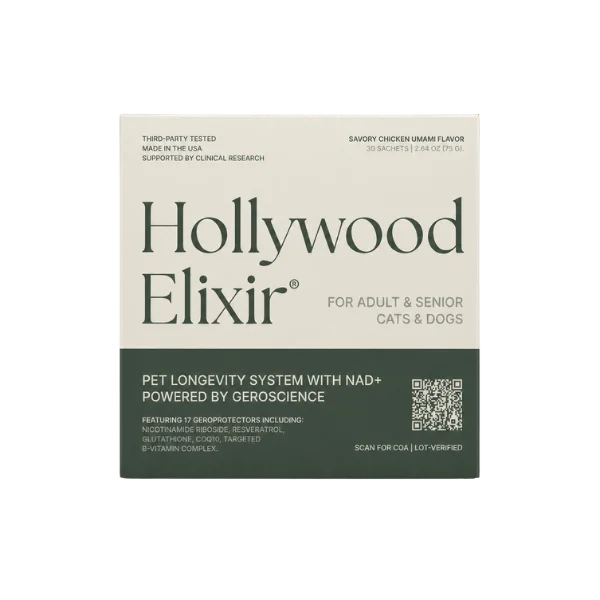
Longevity Core
Hollywood Elixir®
★★★★★(313)
More good years, starting now — steady energy, engagement, and a pet who keeps showing up fully, every day.
Starting at $89/mo
Hollywood Elixir is amazing! She put back on 5 lbs to a healthy weight, her eyes are shiny, her coat is beautiful!
— Jessie
We go on runs. Lately he's been keeping up with no problem!
— Cami
Considering the best senior dog supplements for longevity and vitality?
If you're looking for senior dog supplements for longevity and vitality
If you’re choosing the best senior dog supplements for longevity vitality, start with a simple question: what would a better month look like for your dog—easier rising, steadier stools, calmer nights, or more interest in walks? Pick one primary goal, then choose either one targeted product or one broad, system-level formula you can use consistently. Avoid stacking overlapping joint chews or heavy multivitamins, since dosing errors and unnecessary excess are common pitfalls. A coherent plan is easier to evaluate, easier to discuss with your veterinarian, and more likely to last through the realities of senior life.
Veterinary Insights

Learn about how our DVMs think about dog aging
Dr. JoAnna Pendergrass DVM


Longevity Core
Hollywood Elixir®
★★★★★(313)
More good years, starting now — steady energy, engagement, and a pet who keeps showing up fully, every day.
Starting at $89/mo
Wellness Tools
Explore your dog’s changing needs over time


Related Reading
Finding the best senior dog supplements for longevity & vitality starts with defining what “best” actually means: evidence, safety, quality controls, and fit for your dog’s age, size, and health status.
