
The 12 Hallmarks of Aging in Dogs, Explained
Read full insightStandardized Extracts vs Whole Powders and Bioactives
Why milligrams mislead and how to compare real potency
By La Petite Labs Editorial 15 min read

A standardized extract is a plant or mushroom concentrate adjusted so every batch delivers the same set percentage of one chosen bioactive — say, “standardized to 95% curcuminoids.” In plain terms, “standardized” is a consistency promise: it tells you the maker is measuring and targeting a specific active, not just weighing powder.
That matters because two jars can both say “500 mg” and still deliver very different amounts of the compounds a dog’s body can actually use. A whole powder is the entire ground ingredient with everything mixed together; an extract pulls and concentrates certain compounds; a standardized extract pins the active to a repeatable number. But “standardized” does not automatically mean stronger, better-absorbed, or safer.
This page shows how to read potency on a label and tells the difference using two everyday goals owners trial supplements for: itchy skin and age-related joint stiffness.
- “Standardized” means each batch is adjusted to a fixed percentage of a named bioactive (e.g., “standardized to 24% flavone glycosides”) — a consistency guarantee, not a strength guarantee.
- Standardized extract meaning, in one line: you get a repeatable amount of the active compound, jar to jar.
- Milligrams measure total weight; the number that matters is the named bioactive — “500 mg powder” and “500 mg extract standardized to 95%” are very different payloads.
- Whole powders carry the full matrix (fiber, oils, many minor compounds) — broader, but more variable batch to batch.
- Potency is step one; absorption and gut tolerance decide what the body can actually use.
- Label skills that matter: plant part, “standardized to X%,” amount per serving, and contaminant testing.
- Best next step: pick one form, change one variable at a time, give it 3–4 weeks, and bring labels to your vet.
What “Standardized” Really Means on Pet Labels
“Standardized” is a chemistry promise: the maker targets a repeatable amount of one chosen compound in every batch. Instead of relying on how strong a given harvest happened to be, a standardized extract is adjusted so the label can say “standardized to 95% curcuminoids” or “standardized to 24% flavone glycosides.” That is what standardized means for pet supplements — more uniform bioactive delivery from jar to jar (Guo, 2024).
This matters most when a dog’s signs come and go and you’re trying to connect cause and effect. If one bottle works and the next does nothing, the culprit may be batch variability, not the dog “getting used to it.” Treat a supplement potency comparison pets can rely on as a search for one clue: a “standardized to X%” line means the maker is measuring something specific, not just scooping powder.

Whole Powders: More Than One Thing at Once
A whole powder is the entire dried ingredient ground up—leaf, root, fruiting body, or a blend—so it contains many compounds at once. That “whole” matrix can include fibers, oils, proteins, minerals, and hundreds of small plant chemicals that are not the headline bioactive. The upside is breadth; the downside is that the amount of any one target compound can swing widely with plant part, season, storage, and processing. This is why whole powder vs extract pet supplement choices are not interchangeable, even when the front label shows the same milligram number.
In a kitchen-style routine, whole powders often behave like foods: they add bulk, smell, and taste, and they can change stool consistency in sensitive dogs. Owners may notice a dog turning away from meals if a powder is bitter, or licking the bowl if it’s naturally savory. Those day-to-day reactions are not “proof” of potency, but they are useful signals about palatability and gut comfort—two reasons a whole form can be easier to keep consistent over weeks.

Extracts: Concentration Changes the Conversation
An extract is made by pulling certain compounds out of the raw material using a solvent such as water or alcohol, then concentrating what was pulled. This can raise the bioactive concentration pets receive per scoop, which is why extracts are common in studies that need a defined ingredient form (Guo, 2024). Extracts can also remove some bulky components that dilute the target compound in a whole powder. The tradeoff is that an extract may be narrower, leaving behind parts of the original matrix that could have mattered for digestion, taste, or “how the ingredient sits” in the gut.
At home, extracts can feel “stronger” simply because smaller amounts are used, but that can also make measuring errors more meaningful. A tiny scoop that is packed vs leveled can change the daily amount more than owners expect. If a dog is on multiple products, concentrated extracts also raise the odds of stacking similar compounds across formulas, which can complicate the household readout of what is helping and what is causing loose stool.

Bioactives Versus the “Matrix” Around Them
Bioactives are the specific molecules a label is usually “counting on,” such as curcuminoids in turmeric or certain mushroom beta-glucans. The matrix is everything else that comes along for the ride in a whole ingredient—fibers, fats, and minor compounds that can change how the gut handles the bioactive. Sometimes the matrix helps; sometimes it competes. This is why bioactive concentration pets is not the same as effect: the body still has to dissolve it, absorb it, and move it to where it matters.
Owners often notice matrix effects as “this one upsets the stomach” or “this one is easy to tolerate,” even when the label looks similar. A dog that gets gassy on a whole powder may do fine on an extract, while another dog may accept a whole-food form better because it blends into meals. These observations are not trivial—they are the difference between a plan that stays consistent for a month and a plan that gets abandoned after three days.

Why 500 Mg Can Mean Almost Nothing
Milligrams describe weight, not strength — and that single fact explains most label confusion. “500 mg turmeric powder” might contain a little or a moderate amount of curcuminoids depending on the source; “500 mg curcuminoids extract standardized to 95%” is a completely different payload. The number that matters is the named bioactive, not the total plant weight. Trials often use defined extracts for exactly this reason: they can be described and repeated, while raw powders cannot (Barbeau-Grégoire, 2022).
At home this shows up as “nothing changed” after switching brands at the same scoop size, or softer stool after a “higher mg” product that actually delivered more concentrated compounds. When comparing labels, find the bioactive line — percent or mg of actives — and treat the big milligram headline as background.
“A big milligram number can hide a tiny amount of the real bioactive.”
How Standardization Is Achieved (and Its Limits)
Standardization typically involves testing a batch for a marker compound and then blending or adjusting so the final ingredient hits a target range. That marker might be the main bioactive, or it might be a “stand-in” that tracks with quality. This is useful, but it has limits: standardizing to one marker does not guarantee every helpful compound is present, and it does not guarantee the ingredient is free of contaminants. Safety still depends on sourcing and testing, especially for botanicals that can concentrate unwanted elements (Zheng, 2014).
Owners can think of standardization like buying coffee with a stated caffeine range: it helps predict the “kick,” but it does not tell the whole story about flavor, freshness, or how it sits in the stomach. If a dog has a sensitive gut, a standardized extract might still cause trouble if the formula includes multiple concentrated ingredients. The practical move is to change one thing at a time and keep the rest of the routine stable long enough to read the result.

Extraction Methods Change What Survives
Water extracts tend to pull more water-soluble compounds, while alcohol extracts can pull more fat-soluble compounds; some products use mixed methods. Heat, time, and filtration can also change what remains, which is why two “extracts” of the same plant can behave differently. This is one reason owners feel lost when doing whole powder vs extract pet supplement comparisons: the word “extract” is not a single standardized process. In research, clearer ingredient descriptions help interpretation, but reporting is not always complete across pet trials (Sargeant, 2021).
At home, the extraction method is rarely printed in a way that’s easy to use, so the best proxy is consistency and transparency: does the label name the plant part, list a standardization percentage, and show batch testing? If those details are missing, owners may see more irregular results from bottle to bottle. That irregularity can look like “good weeks and bad weeks” even when the dog’s diet and exercise stayed the same.

Potency Is Not the Same as Absorption
Potency is what’s in the scoop; bioavailability is what gets into the body. Some bioactives are notoriously hard to absorb, so a high percentage on paper may still translate to a modest internal exposure. Formulation choices—like pairing with fats, using certain delivery forms, or choosing specific extract types—can change how much is absorbed and how long it stays available. This is why bioactive concentration pets should be treated as “step one,” not the finish line, when deciding whether a product is worth a trial.
Owners often notice absorption issues as “no change at all” despite faithful use, especially for joint stiffness where day-to-day variation is normal. A practical approach is to keep expectations realistic: give each change 3–4 weeks before judging, unless side effects appear. If a dog vomits, refuses food, or develops diarrhea, the most useful next step is not to push through—it is to stop, note the timing, and discuss a different form with the veterinarian.

Case Vignette: Itchy Skin, Two “Same” Supplements
A two-year-old mixed-breed dog with seasonal itching starts a “quercetin” chew that lists only “500 mg botanical blend,” and nothing changes after a month. The owner switches to a product that lists a quercetin extract with a stated percentage, and the dog’s scratching pattern becomes less irregular over the next few weeks—though flare days still happen. This kind of story is common in atopy households because extracts used in diets and trials are often chosen for defined composition, not just a big milligram number (Park, 2025).
At home, the important lesson is not that one ingredient “works” and the other “fails,” but that the form changed the likely bioactive delivery. It also highlights a second reality: itching has multiple drivers (allergens, skin barrier, infections), so supplements should sit alongside basics like parasite control and vet-guided skin care. A clearer label helps the household interpret results without guessing what was actually given.
Reading “Standardized to X%” Without Guessing
“Standardized to X%” means the manufacturer is claiming that X percent of that ingredient is a named compound or compound family. If a label says “turmeric extract standardized to 95% curcuminoids,” that is a direct clue about bioactive concentration pets are likely receiving per gram of extract. If it only says “turmeric powder,” the curcuminoid content is unknown without testing. In osteoarthritis nutrition studies, defined extracts are often used so the intervention is repeatable and interpretable (Comblain, 2017).
Owners can use a simple label habit: look for (1) plant part, (2) extract ratio or standardization percent, and (3) the amount per serving. If only one of those is present, the product may be harder to compare. When a dog is on multiple chews, write down the “standardized to” lines in one note so overlapping actives do not quietly stack across products.
“Standardized usually means more uniform, not automatically more effective.”

DVM Voice: Clinical Vignette of a Common Pattern in Senior Dog Aging
Case provided by JoAnna Pendergrass, DVM
Rex, a 7-year-old Labrador Retriever, was brought in after his owner noticed he was slower to rise, hesitant on stairs, and less able to play as before. Examination showed stiffness and reduced hip mobility; radiographs confirmed degenerative joint changes.
His care required weight management, veterinary-guided pain control, nutritional support, and rehabilitation — a comprehensive plan, but one started only after visible decline appeared.
Clinical takeaway: Rex’s case reflects the value of proactive aging support: maintaining lean body condition, monitoring mobility early, and supporting cellular resilience, antioxidant defense, and healthy inflammatory balance before decline becomes obvious.
Single-case vignette. Not generalizable. Veterinary oversight is essential for pain, stiffness, or suspected joint disease.

When Whole-food Forms Can Be the Better Choice
Whole-food powders can make sense when the goal is broad nutritional support rather than a single targeted bioactive. For example, spirulina-style powders bring pigments, proteins, and minerals together, and blueberry powders bring a mix of polyphenols rather than one isolated compound. In that context, chasing a single standardized marker may miss the point. This is also where internal learning can help: comparing polyphenols-for-dogs or blueberries-for-dogs content often clarifies why “many small compounds” can still matter.
At home, whole forms can be easier to use consistently because they behave like foods: they mix into wet meals, can be split across feedings, and may be gentler for some stomachs. They also make it simpler to stop and restart when a dog has a flare of diarrhea or is on antibiotics. The tradeoff is that results may be slower and more variable, so tracking becomes more important than “feeling” an immediate change.

Does “Standardized” Mean Stronger? Not Always
A common mistake is hearing “standardized” and assuming “more powerful.” Standardized mostly means more uniform — less variable batch to batch — because one marker compound is being measured and hit. A standardized extract can still be a poor fit if that marker isn’t the compound your dog’s goal needs, if the dog can’t absorb it well, or if similar actives are already coming from a therapeutic diet or another supplement.
The deeper lesson is transparency: you can only judge a product when the label shows the actual amounts. That’s the standard worth shopping for. Hollywood Elixir is built around it — every active is disclosed in milligrams, including quercetin 25 mg, reishi 25 mg, and CoQ10 40 mg, with no proprietary blend hiding the doses, so you can read exactly what your dog is getting before you buy. See the Hollywood Elixir formula →
If you suspect a product, the fix is the same either way: pick one form, keep meals and treats stable, and give the dog room to ride out normal day-to-day swings before calling the trial a failure.

Owner Checklist for Comparing Powders and Extracts
A practical owner checklist can turn label confusion into a repeatable decision. Check: (1) Does it say “powder” or “extract”? (2) Is there a “standardized to X%” line naming the bioactive? (3) Is the plant part listed (root, leaf, fruiting body)? (4) Is there batch testing information for contaminants like heavy metals? (5) Are multiple concentrated botanicals stacked in one chew, making side effects harder to attribute? Contaminant testing matters because ingested exposure to certain elements is linked with kidney risk in broader biology (Zheng, 2014).
At home, also check the “use reality”: will the dog eat it daily, and can the household measure it the same way every time? A product that is technically impressive but refused at dinner has zero practical potency. If a dog is picky, consider whether a whole-food powder mixed into a small amount of wet food is more workable than a bitter extract capsule.
What to Track: Daily Readouts That Make Results Clear
Because skin and joint signs naturally swing, tracking turns “maybe” into usable information. What to record and bring to the vet: (1) itch episodes per day and the time they cluster, (2) paw licking minutes after walks, (3) stool form and frequency, (4) morning stiffness duration before the dog moves freely, (5) willingness to jump into the car or onto the couch, and (6) any new ear redness or odor. These daily readouts help separate a true change from normal variability when trying a new whole powder vs extract pet supplement.
A simple phone note works: one line each evening for 3–4 weeks. If the plan includes a diet change, keep treats and chews stable so the readout is not muddied. Tracking also protects against overconfidence: a “good week” can happen by chance, and a “bad week” can happen from weather, pollen, or a longer play session.
Vet Visit Prep: Questions That Clarify Ingredient Form
A veterinarian can help interpret ingredient form in the context of the dog’s medications, diet, and diagnoses. Useful vet-visit prep questions include: (1) “Is an extract or a whole powder safer with this dog’s stomach history?” (2) “Are any ingredients likely to interact with current meds or supplements?” (3) “Which symptom should be the main success marker—itching, ear flares, or mobility?” and (4) “What lab work, if any, should be considered before longer-term use?” Some standardized extracts have been evaluated for biomarker changes in dogs, showing why clinicians think in terms of measurable outcomes rather than label hype (Lertpatarakomol, 2025).
Bring the actual containers or clear photos of the Supplement Facts panel, including the “standardized to” line if present. Also bring the tracking note from the prior weeks, because memory tends to over-weight the worst day. This handoff helps the vet decide whether the plan needs a different form, a different goal, or a medical workup for infections, pain, or allergies.

What Not to Do When Chasing “Potency”
Common mistakes are surprisingly consistent. What not to do: (1) Don’t stack three multi-botanical chews at once and expect a clear readout. (2) Don’t assume “more concentrated” is always gentler—extracts can be harder on sensitive stomachs. (3) Don’t ignore quality signals like contaminant testing just because the ingredient is “natural.” (4) Don’t treat “standardized” as a safety guarantee; safety still depends on dose, the dog’s health, and the specific extract. Toxicology work on some standardized botanical extracts shows why dose and testing matter, even when the ingredient is well-characterized (Kim, 2022).
At home, another mistake is changing food, treats, shampoo, and supplements in the same week. That creates noise, not clarity. If a dog develops vomiting, diarrhea, hives, or sudden lethargy after a new product, stop it and contact the veterinarian—then keep the container for ingredient review. A cautious, one-change approach usually leads to faster answers than aggressive experimenting.

How Research Uses Extracts (and Why Labels Still Vary)
Many pet studies choose extracts because they can be described with more precision—an ingredient can be standardized, measured, and repeated across batches. That makes outcomes easier to interpret, whether the focus is skin comfort or mobility (Barbeau-Grégoire, 2022). Even so, the supplement world is messy: trials may not report every detail owners wish they had, like exact extraction methods or full testing results, which limits how confidently one product can be compared to another (Sargeant, 2021).
For owners, the practical takeaway is to treat research as a map, not a mirror. A study using a defined extract does not automatically validate a random “powder blend” on a store shelf. When reading about ingredients like reishi mushrooms or polyphenols, it helps to notice whether the discussion is about whole forms or standardized extracts—then use that same lens when shopping across reishi-mushrooms-for-dogs or polyphenols-for-dogs resources.
A Simple Decision Framework for Ingredient Form
A workable framework starts with the goal, not the ingredient. For a targeted goal like joint comfort, a defined extract with a stated bioactive percentage may offer more uniform dosing logic. For broad nutrition or picky eaters, a whole-food powder may be easier to keep consistent. Then add the safety layer: transparent sourcing, contaminant testing, and a plan to stop if side effects appear. This approach keeps whole powder vs extract pet supplement decisions grounded in what can be measured and repeated, rather than marketing language.
Finally, build in time and tracking. Give each change 3–4 weeks before evaluating, and use the daily readouts to decide whether the plan is helping, neutral, or causing trouble. If the dog is on prescription medications, or has liver, kidney, or clotting concerns, ingredient form becomes even more important—bring labels to the veterinarian so the plan stays within safe latitude.
“Potency is what’s in the scoop; absorption is what reaches the body.”
Educational content only. This material is not a substitute for veterinary advice. Always consult your veterinarian about your dog’s specific needs. These statements have not been evaluated by the Food and Drug Administration. Products mentioned are not intended to diagnose, treat, cure, or prevent any disease.
Glossary
- Standardized extract - An extract adjusted to contain a targeted percentage of a named marker compound.
- Whole powder - Ground dried plant or mushroom material containing the full matrix of compounds.
- Bioactive - A specific molecule (or family) expected to contribute to a biological effect.
- Marker compound - The measured compound used to represent quality or strength in standardization.
- Matrix - The non-target components surrounding a bioactive in a whole ingredient (fiber, oils, proteins, minor compounds).
- Extraction method - The process (water, alcohol, mixed, heat/time) used to pull compounds from raw material.
- Bioavailability - The fraction of an ingested compound that is absorbed and becomes available to the body.
- Batch variability - Differences in ingredient composition between production lots due to sourcing and processing.
- Contaminant testing - Screening for unwanted substances (e.g., heavy metals) that can concentrate in botanicals.
Related Reading
Aging & Senior Dog Guidance
• Dog Age Calculator
• Dog Dementia
• Lethargy in Dogs
• My Dog Won't Eat
• Dog Pacing At Night
• Dog Licking Paws
• Can Dogs Dehydrate
Healthy Aging Support
• NAD+ for Dogs
• NMN for Dogs
• Antioxidants Supplements for Dogs
• Best Senior Dog Supplements & Vitamins
• Rapamycin for Dogs
References
Lertpatarakomol. Effects of Gingko biloba and Milk Thistle Extracts on Biomarkers of Antioxidants Status and Liver Function in Healthy Dogs. 2025. https://www.mdpi.com/2306-7381/12/8/763
Park. Clinical evaluation of a functional diet containing Siraitia grosvenorii residual extract for atopic dermatitis in dogs: a self-controlled study. PubMed Central. 2025. https://pmc.ncbi.nlm.nih.gov/articles/PMC12587690/
Zheng. Arsenic and Chronic Kidney Disease: A Systematic Review. Nature. 2014. https://www.nature.com/articles/s41598-017-17159-7
Barbeau-Grégoire. A 2022 Systematic Review and Meta-Analysis of Enriched Therapeutic Diets and Nutraceuticals in Canine and Feline Osteoarthritis. PubMed Central. 2022. https://pmc.ncbi.nlm.nih.gov/articles/PMC9499673/
Sargeant. Quality of reporting of clinical trials in dogs and cats: An update. PubMed Central. 2021. https://pmc.ncbi.nlm.nih.gov/articles/PMC8295703/
Guo. The Role of Plant Extracts in Enhancing Nutrition and Health for Dogs and Cats: Safety, Benefits, and Applications. PubMed Central. 2024. https://pmc.ncbi.nlm.nih.gov/articles/PMC11435925/
Kim. Repeated oral dose toxicity and genotoxicity of a standardized Quisqualis indica extract. PubMed. 2022. https://pubmed.ncbi.nlm.nih.gov/36277358/
Comblain. A randomized, double-blind, prospective, placebo-controlled study of the efficacy of a diet supplemented with curcuminoids extract, hydrolyzed collagen and green tea extract in owner's dogs with osteoarthritis. PubMed Central. 2017. https://pmc.ncbi.nlm.nih.gov/articles/PMC5738810/
FAQ
What does “standardized extract” mean for dogs?
A standardized extract means the ingredient is made to contain a targeted percentage of a named compound (a marker), so each batch is more uniform. That is the practical standardized extract meaning pets: less irregular “strength” from bottle to bottle.
It does not automatically mean the ingredient is best for every goal, and it does not guarantee absorption. It simply makes the label’s claim more measurable than a whole powder that can vary with harvest and processing.
Why isn’t supplement potency obvious from milligrams?
Milligrams describe how much material is present, not how much of the key bioactive is inside it. A whole powder can be mostly fiber and starch with a small amount of the compound owners care about, while an extract can concentrate that compound.
That’s why Standardized Extracts, Whole Powders, and Bioactives: Why Potency Isn't Always Obvious is mainly a label-reading problem: the “active” line (percent standardized or mg of actives) is usually more informative than the biggest number on the front.
Is an extract always better than a whole powder?
No. Extracts can deliver a higher bioactive concentration pets receive per serving, which can be useful for targeted goals. But whole powders bring a broader matrix that can be easier for some dogs to tolerate and easier to mix into meals.
The best choice depends on the dog’s stomach sensitivity, how picky the dog is, and whether the goal is targeted (like a specific joint-support ingredient) or broad (like food-style polyphenols).
What does “standardized to 95%” actually tell owners?
It tells owners that the manufacturer is claiming 95% of that ingredient is a named compound or compound family. This makes supplement potency comparison pets more concrete because it links the serving size to an estimated amount of actives.
It still does not guarantee absorption, and it does not automatically confirm the ingredient is contaminant-free. It is one useful piece of the puzzle, not the entire safety or effectiveness story.
How can owners compare whole powder vs extract pet supplement labels?
Start by identifying the form: “powder” versus “extract.” Then look for plant part (root, leaf, fruiting body), a standardization statement (“standardized to X%”), and the amount per serving.
Finally, look for quality signals like batch testing and clear manufacturer contact information. If the label hides everything inside a “proprietary blend,” it becomes harder to predict bioactive delivery and harder to troubleshoot side effects.
Do standardized extracts work faster than whole powders?
Sometimes they can feel faster because they may deliver more of a target compound per serving. But speed is not guaranteed, especially for joint stiffness and skin comfort where day-to-day variation is normal.
A more reliable approach is to keep the routine stable and give each change 3–4 weeks before judging, unless side effects appear. Tracking daily readouts prevents a “good day” from being mistaken for a true trend.
What side effects can happen with concentrated extracts?
Because extracts can be more concentrated, sensitive dogs may show digestive upset such as soft stool, diarrhea, or vomiting. Some dogs also refuse food if an extract is bitter or strongly scented.
If any reaction appears soon after starting a new product, stop it and contact the veterinarian, especially if there is lethargy, repeated vomiting, or blood in stool. Bring the container so the ingredient form and stacking can be reviewed.
Can whole powders be safer than extracts?
They can be, but not automatically. Whole powders are often less concentrated, which may be gentler for some dogs’ stomachs and easier to measure without big swings.
However, whole botanicals can also carry contaminants depending on sourcing, and they can vary more from batch to batch. Safety depends on testing, transparency, and the dog’s health history—not just whether it is “whole” or “extract.”
What quality signals matter most for botanical supplements?
Look for clear identification of the ingredient (species and plant part), a standardization statement when relevant, and batch testing information. Third-party testing or a certificate of analysis availability is a strong signal of seriousness.
Also watch for overly vague “proprietary blends” that hide amounts. If a dog has kidney or liver concerns, quality signals matter even more because unwanted contaminants or ingredient stacking can narrow the dog’s latitude.
How does bioavailability change supplement potency comparison pets?
Bioavailability is the bridge between what’s on the label and what the body can use. Two products can list the same bioactive amount, yet one may dissolve and absorb better based on formulation, meal timing, or delivery form.
That’s why Standardized Extracts, Whole Powders, and Bioactives: Why Potency Isn't Always Obvious is not solved by percentages alone. Owners get the clearest answers by tracking signs over weeks and keeping other variables stable.
Are there differences between dogs and cats for extracts?
Yes—cats and dogs can differ in taste acceptance, dosing practicality, and how easily owners can give a product consistently. Cats are also more likely to refuse bitter flavors, which can make some extracts harder to use day after day.
For either species, the safest approach is vet-guided selection, especially if there are prescription medications involved. Ingredient form matters most when it changes how concentrated the actives are and how likely the pet is to actually take it.
How long should a supplement trial last before judging results?
For many skin and mobility goals, a reasonable window is 3–4 weeks of consistent use before judging, unless side effects appear. This gives enough time to see whether changes are more sustained rather than day-to-day noise.
During that window, keep food, treats, and other new products stable. If multiple changes happen at once, it becomes impossible to know whether the ingredient form, the dose, or an unrelated routine shift drove the outcome.
What should owners track for itchy skin supplement trials?
Track itch episodes per day, paw licking after walks, ear redness or odor, and any new hot spots. Also track stool changes, because gut upset can appear before any skin change and can end a trial early.
Write one short note each evening. This creates a clear handoff for the veterinarian and helps separate seasonal flare patterns from a true response to a change in bioactive concentration pets are receiving.
What should owners track for joint stiffness supplement trials?
Track morning stiffness duration, willingness to jump, pace on stairs, and interest in walks. Note whether the dog warms up and moves more freely after a few minutes or stays guarded.
Also record activity level changes, because a long play session can make the next day look worse even if the supplement plan is unchanged. These daily readouts make whole powder vs extract pet supplement comparisons more fair.
Can supplements replace allergy or arthritis medications?
No. Supplements are best viewed as part of a broader plan, not a replacement for diagnosis, parasite control, pain management, or prescription therapy when needed.
If a dog is uncomfortable, scratching to the point of skin damage, or limping, a veterinary exam matters more than changing ingredient forms. Supplements may help support normal function, but they should not delay medical care.
What interactions should be discussed with the veterinarian?
Discuss any prescription medications, especially anti-inflammatories, seizure medications, or drugs with narrow dosing margins. Also disclose all supplements and chews, because stacking similar botanicals can raise the total exposure without being obvious.
Bring labels or photos so the veterinarian can see whether the product is a standardized extract, a whole powder, or a blend. That context helps interpret both benefits and side effects.
When should owners stop a supplement and call the vet?
Stop and contact the veterinarian if there is repeated vomiting, diarrhea that lasts more than a day, blood in stool, hives, facial swelling, sudden lethargy, or a clear refusal to eat. These are not “normal adjustment” signs.
Also call if itching or pain escalates quickly, because infections or injuries can mimic “supplement failure.” Keep the container so the ingredient form and potential stacking can be reviewed.
How does Standardized Extracts, Whole Powders, and Bioactives: Why Potency Isn't Always Obvious help shopping?
It gives a simple shopping lens: identify the form, find the bioactive claim (percent standardized or mg of actives), and then ask whether the dog can absorb and tolerate that form. This prevents being misled by big milligram headlines.
It also encourages a one-change, 3–4 week trial with tracking. That routine turns label details into real-world answers, especially for itchy skin and joint stiffness where signs naturally swing.
Is Hollywood Elixir™ a whole powder or standardized extract product?
Ingredient forms vary by formula, so the most accurate approach is to read the Supplement Facts and ingredient details on the product page. Look for whether ingredients are listed as powders or extracts and whether any are standardized to a percentage.
For reference, here is the product page for Hollywood Elixir™. Any multi-ingredient product should be introduced while keeping other new supplements stable, so the household readout stays interpretable.
How should Hollywood Elixir™ fit into a cautious routine?
It should fit as one layer in a broader plan that prioritizes diet, exercise, dental care, and veterinary checkups. If a dog is already taking other botanicals, avoid stacking multiple new products at once.
If using Hollywood Elixir™, track daily readouts for 3–4 weeks and bring notes to the veterinarian, especially if the dog has a sensitive stomach or takes prescription medications.

Discover LPL-01: How This Fits Into a Larger Canine Longevity System
Aging in dogs is not driven by a single pathway. It’s the result of interacting biological systems—energy metabolism, oxidative stress, immune signaling, and structural integrity—changing over time.
This article explores one piece of that puzzle. If you want to understand how these pieces connect—and what actually moves the needle—you need to zoom out.
Start with the underlying science:
- Canine Geroscience Framework →
A structured view of how aging progresses across cellular energy, inflammation, and resilience systems. - Senior Biological Defense Coverage (BDC) Modeling →
A systems-level map of which biological pathways decline first, and how layered interventions can support them. - 2026 Market Research: Best Dog Longevity Supplements →
A 2026 industry report and review of leading senior-dog and cellular-aging formulas. - LPL-01 Standard →
The formulation system that translates these models into real-world supplementation—covering multiple pathways in a coordinated way.
Essential Summary
Why Is Standardized Extract Potency Clarity Important?
Potency is not obvious because “500 mg” may describe whole powder weight, not the amount of a usable bioactive. Standardized extracts aim for more uniform bioactive content, but absorption and tolerance still decide real-world results. Tracking for 3–4 weeks makes comparisons meaningful.
Hollywood Elixir is designed to support normal aging routines with thoughtfully selected ingredient forms.
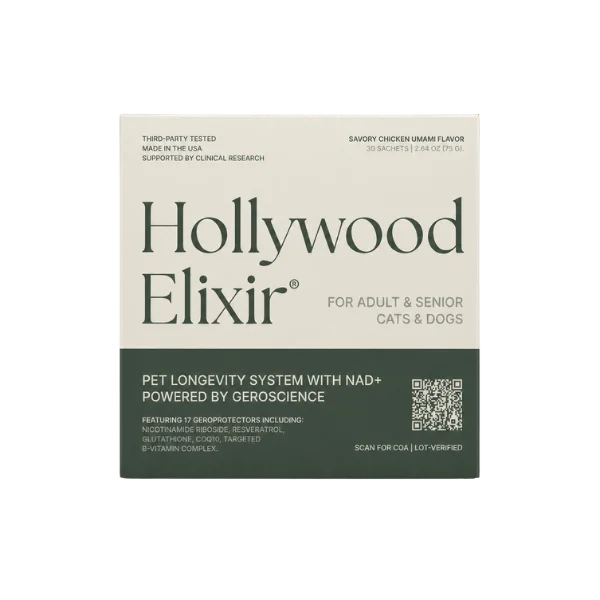
Longevity Core
Hollywood Elixir®
★★★★★(313)
More good years, starting now — steady energy, engagement, and a pet who keeps showing up fully, every day.
Starting at $89/mo
Hollywood Elixir is amazing! She put back on 5 lbs to a healthy weight, her eyes are shiny, her coat is beautiful!
— Jessie
She hopped up onto the windowsill again for the first time in years.
— Charlie
Considering Supplement Form Choices?
If You’re Researching Supplement Forms, Here’s What Matters Most
Pick one goal (itching patterns or mobility), then choose a form you can give consistently for 3–4 weeks. Compare labels for plant part, “standardized to” details, and testing transparency. If a multi-ingredient option like Hollywood Elixir is used, keep other new supplements stable so the household readout stays clear.
Veterinary Insights

Learn about how our DVMs think about cat aging
Dr. JoAnna Pendergrass DVM


Longevity Core
Hollywood Elixir®
★★★★★(313)
More good years, starting now — steady energy, engagement, and a pet who keeps showing up fully, every day.
Starting at $89/mo
Wellness Tools
Explore your dog’s changing needs over time


Related Reading
Two jars can both say “500 mg,” yet deliver very different amounts of the compounds a dog’s body can actually use. That mismatch is why owners get confused when one product seems to “do nothing” while another feels noticeable—despite similar-looking labels.
