PetDomain Longevity Complex vs Hollywood Elixir® for Dogs

PetDomain—formerly ThorneVet—offers a seven-active soft chew with weight-based dosing. Hollywood Elixir® uses a broader food-mixed sachet formula. The useful comparison is the current label, the dog's actual serving, 90-day cost, cautions, and available quality records.

By La Petite Labs Editorial 31 min read

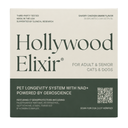
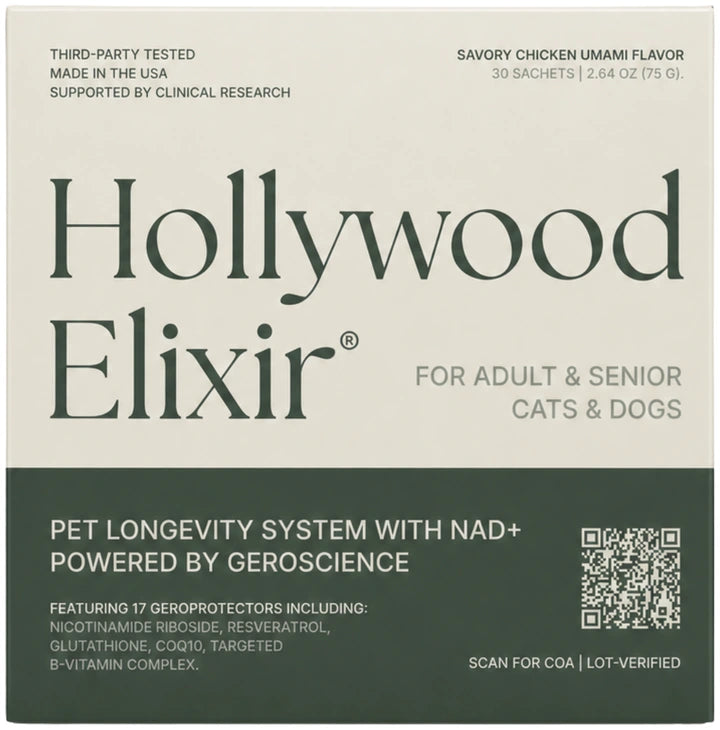
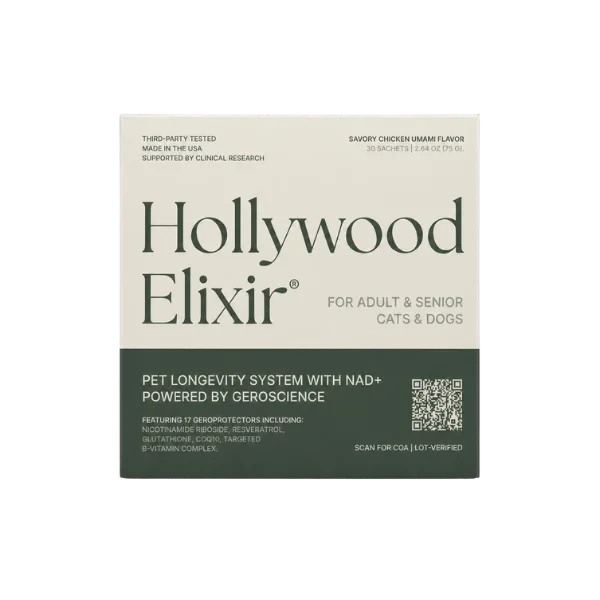
Hollywood Elixir box above a spotted dog on a light background

This review is published by La Petite Labs, the maker of Hollywood Elixir®. That commercial relationship matters. PetDomain deserves full credit where its current label, format, or price is a stronger fit, and Hollywood Elixir should earn consideration through verifiable differences rather than publisher preference.

The comparison is dog-focused and centered on the PetDomain 90-soft-chew listing, SKU V985-SC. PetDomain also sells a 90-scoop powder under SKU V985-P, but that separate format is context—not a reason to blur two listings or switch the price used in the main calculation. The Hollywood Elixir examples use the current weight tier: Standard for a 25-lb dog and Double for a 75-lb dog.

Neither finished formula has been established here as a way to lengthen canine life or outperform the other. Both are supplements for daily nutritional support. The fair decision uses the dog's weight, diet, medication list, intended ingredient goal, tolerance, preferred administration method, and veterinary guidance. It also uses the current physical package when online and historical materials disagree.

The Short Verdict

PetDomain Longevity Complex is a credible choice with unusually direct active-amount disclosure, a compact seven-active formula, and favorable cost math for the 25-lb dog example. It may also be easier for an owner who wants a chew rather than powder in a meal. Those are genuine strengths and should stand without a forced pivot to Hollywood Elixir.

Hollywood Elixir serves a different preference: a pre-portioned food-mixed sachet with CoQ10, reduced glutathione, beta-glucans, reishi, vitamins, and other disclosed nutrients that PetDomain does not list. Its current public lot record adds a documentation pathway for buyers holding the matching batch. For a 75-lb dog, its price falls between once- and twice-daily PetDomain, which makes the selected PetDomain frequency central to a fair comparison.

The short decision rule is practical. Choose PetDomain when its particular actives, chew format, and labeled schedule match the plan. Consider Hollywood Elixir when its different ingredient set, sachet routine, and lot visibility are the closer fit. Do not switch an established, tolerated PetDomain routine simply because the publisher makes the other product. Do not start either supplement before reconciling medication use, health conditions, dietary sensitivities, and the current package cautions with a veterinarian.

If both formulas look plausible, compare them one decision at a time: desired ingredient, full daily amount at the dog's weight, delivery format, warning fit, documentation, and complete 90-day cost. Starting both together would add overlap and make tolerance harder to interpret. A narrower, observable choice is usually more useful than assembling the longest possible ingredient list.

At a Glance

What is PetDomain Longevity Complex for dogs?

PetDomain Longevity Complex is a dog and cat healthy aging supplement sold in a 90 count soft chew package under SKU V985 SC. The current label states seven active amounts per 3 g chew, led by taurine 500 mg and nicotinamide riboside tartrate 100 mg. Dog directions state one chew per 25 pounds of body weight, one to two times daily.

Product
PetDomain Longevity Complex
Category
Dog healthy-aging supplement
Format
90 soft chews; one chew per 25 lb, one to two times daily. A separate powder SKU is also sold.
Why owners notice it
A quantitatively disclosed taurine, NR-tartrate, phytosome-botanical, resveratrol, and astaxanthin chew with weight-based serving math.
What to check
Seven active amounts are visible per chew. No public V985-SC lot-specific report was established; PetDomain's NASC and quality statements remain attributed.
Side by Side

The Plain Comparison

**Price comparison basis:** Same 25-lb and 75-lb dogs over 90 days; PetDomain soft chews at one chew per 25 lb, one or two times daily; Hollywood Elixir Standard at one sachet daily for 25 lb and Double at two sachets daily for 75 lb; one-time and subscription prices checked 2026-09-03; USD before tax and shipping.

Decision pointPetDomain Longevity ComplexHollywood ElixirMore suitable when...
Current identityPetDomain, formerly ThorneVet; SKU V985-SCLa Petite Labs Hollywood Elixir Longevity SystemHollywood Elixir for its distinct current system; PetDomain for continuity with the legacy line
Main label emphasisTaurine, NR tartrate, quercetin phytosome, curcumin phytosome, green tea phytosome, trans-resveratrol, astaxanthinNR tartrate, glutathione, CoQ10, beta-glucans, reishi, polyphenols, vitamins, spirulina, blueberry, wheyNamed ingredients match the veterinarian's purpose; count alone is not decisive
Active-amount disclosureSeven active amounts per chewSeventeen active amounts per sachetTie for basic quantitative visibility
AdministrationSoft chew; separate loose-powder listing also availablePre-portioned powder mixed into foodHollywood Elixir for portioned food mixing; PetDomain for a chew or alternate loose powder
25-lb, 90-day one-time cost$77 once daily; $154 twice dailyStandard, $199PetDomain on price at either labeled PetDomain frequency
75-lb, 90-day one-time cost$231 once daily; $462 twice dailyDouble, $379Hollywood Elixir compared with twice-daily PetDomain; PetDomain at once-daily use
Public quality informationBrand-attributed NASC membership and audit language; no public V985-SC lot report establishedPublic record for lot 2604066 with 26 listed passing resultsHollywood Elixir when the purchased lot matches; otherwise request documents from either brand
Key caution issueCurrent online gallery does not include a caution panel; legacy warnings are not a current-label substituteAdult-use limits; veterinary consultation for medication or medical-condition context; whey and chicken ingredientsThe complete current cautions and ingredients suit the individual dog

Competitor label and pricing facts checked September 3, 2026. Sources are listed in the References section below.

PetDomain, ThorneVet, and the Legacy Page

PetDomain is not a look-alike brand borrowing an old product name. Its official history says the ThorneVet animal-health operation became independent from Thorne Research in 2019 and now operates under the PetDomain name. Its dedicated name-change FAQ says the team remains and familiar products will stay the same. The current Longevity Complex soft-chew listing uses V985-SC, the same SKU attached to the legacy ThorneVet line.

That makes “formerly ThorneVet” useful context for owners checking old packaging, recommendations, invoices, or subscriptions. Owners who recognize the legacy name can still consult the earlier ThorneVet comparison, while this review uses PetDomain's current product identity and current package details. Reading the two separately keeps historical and current specifications from being silently blended.

There is also a reason for careful wording. PetDomain's About page says it is renaming and reformulating products, while the dedicated rebrand FAQ broadly says products stay exactly the same. The current PetDomain panel uses “nicotinamide riboside tartrate,” whereas older ThorneVet PDFs used “hydrogen malate.” The responsible conclusion is narrower than either marketing sentence: this is the successor V985-SC listing, but current package facts control and the NR wording needs confirmation.

Owners may still encounter the ThorneVet name in veterinarian notes, saved bookmarks, marketplace listings, or older jars. Match the SKU and current panel instead of relying on the logo alone. A seller using old photography may be offering older inventory, so check expiration, lot, storage condition, tamper evidence, and the actual brand shown on the shipped package.

What the Current PetDomain Label Discloses

Each 3 g soft chew lists seven actives with amounts: taurine 500 mg; nicotinamide riboside tartrate 100 mg; QuerceFit quercetin phytosome 75 mg; CurcuVET curcumin phytosome 50 mg; GreenSelect decaffeinated green tea phytosome 50 mg; Veri-te trans-resveratrol 40 mg; and AstaReal astaxanthin biomass 3 mg. The panel is easy to audit because it does not group these ingredients into a proprietary blend.

The inactive panel matters for fit, too. It lists arabic gum, buffered white distilled vinegar, chickpea flour, citric acid, coconut glycerin, coconut oil, guar gum, natural vegan bacon flavor, natural vegetarian flavor, rosemary extract, sunflower lecithin, sunflower oil, tapioca starch, and water. None of those ingredients is automatically disqualifying. An owner managing a known sensitivity can take the full list to the veterinarian rather than assuming “active ingredients” are the only relevant part of a chew.

Transparency has boundaries. A label can show what is intended per unit without proving what every batch contains, how the ingredients behave together, or what result a particular dog will experience. The panel is strong decision evidence for ingredient selection and dose arithmetic. It is not, by itself, proof that the finished chew changes lifespan or performs better than a different formula.

The branded-material names are useful identifiers, not automatic guarantees about the purchased lot. If a specific QuerceFit, CurcuVET, GreenSelect, Veri-te, or AstaReal input matters to the veterinary plan, ask PetDomain whether the current lot uses the named material exactly as printed and whether identity or potency documentation is available for this finished-chew SKU.

What Hollywood Elixir Discloses

Hollywood Elixir's current per-sachet panel lists nicotinamide riboside tartrate 60 mg, niacin 2 mg, riboflavin 0.5 mg, vitamin B6 1 mg, vitamin B12 0.25 mg, CoQ10 40 mg, reduced glutathione 50 mg, astaxanthin 2 mg, vitamin C 10 mg, vitamin E 15 IU, resveratrol 15 mg, quercetin 25 mg, beta-glucans 50 mg, reishi extract 25 mg, spirulina 50 mg, blueberry 50 mg, and whey protein isolate 250 mg. It does not list taurine, curcumin, or green tea.

Its inactive list includes chicken flavor, chicken liver powder, yeast extract, glycine, and hydroxypropyl beta-cyclodextrin. Whey is milk-derived, and chicken appears in the flavor system. Those points deserve attention for a dog with a relevant dietary history. The product is intended for adults; the current page says it is not for puppies, kittens, pregnant animals, or lactating animals unless a veterinarian directs use.

The longer active list creates convenience when the owner and veterinarian actually want those components in one daily formula. It also creates more overlap to reconcile against food, multivitamins, mushrooms, antioxidants, and other supplements. Breadth is a design choice, not a universal advantage. PetDomain's shorter panel may be the cleaner choice when its seven named lines are the actual goal.

The per-sachet panel must also be multiplied by the daily tier. A 25-lb dog receives the printed amounts once; a 75-lb dog receives twice those amounts. This matters for both the intended ingredients and dietary carriers. Owners should compare the correct daily total against the full existing routine, especially when another product already supplies B vitamins, mushrooms, CoQ10, or antioxidants for that dog.

Shared Ingredients, Different Formula Priorities

The two labels overlap around nicotinamide riboside tartrate, quercetin, resveratrol, and astaxanthin. Even inside that overlap, the specified forms differ for quercetin, and the amounts differ. PetDomain uses a quercetin phytosome and names trans-resveratrol; Hollywood Elixir's current quality record describes quercetin dihydrate and resveratrol standardized to at least 98%. These details help a veterinarian evaluate the intended materials, but a comparison table cannot translate them into equivalent clinical effect.

PetDomain's distinctive emphasis is taurine plus curcumin and decaffeinated green tea phytosomes. Hollywood Elixir's distinctive emphasis is a wider cofactor and antioxidant set that includes CoQ10, reduced glutathione, beta-glucans, reishi, several vitamins, spirulina, blueberry, and whey protein isolate. Neither design is simply a stronger or weaker version of the other. They are different bundles with different carrier systems and routines.

Start with the ingredient that has a defined role in the dog's plan. If the veterinarian specifically wants taurine or a curcumin phytosome, PetDomain deserves the first look. If CoQ10, glutathione, or a combined food-mixed system is central, Hollywood Elixir may align more closely. If there is no specific target beyond a general wish for healthy aging, clarify the goal before adding either complex formula.

Shared ingredient names also create stacking questions. Using either product alongside a separate NR, quercetin, resveratrol, or astaxanthin supplement changes the dog's total exposure. List every source, including combination products whose front labels emphasize something else. The veterinarian can then decide whether the overlap is intentional, unnecessary, or relevant to a medication or health condition.

“PetDomain wins the 25 lb price comparison at both labeled frequencies; that competitor advantage should stand plainly.”

The Nicotinamide Riboside Naming Issue

The present PetDomain image says “Nicotinamide Riboside Tartrate 100 mg” per chew. The current Hollywood Elixir panel also uses the tartrate name and states 60 mg per sachet. On that wording alone, a 25-lb dog's printed daily totals are 100 or 200 mg from PetDomain and 60 mg from Hollywood Elixir. A 75-lb dog's totals are 300 or 600 mg from PetDomain and 120 mg from Hollywood Elixir.

Those calculations describe label-line mass. They do not establish absorption, NAD+ changes in the individual dog, comparative benefit, or the value of the surrounding formula. More importantly, legacy ThorneVet label documents used “Nicotinamide Riboside Hydrogen Malate 100 mg” for the same V985-SC line. PetDomain's general rebrand language does not resolve whether the new term is a naming correction, supplier change, or formulation change.

Until the company provides a SKU-specific answer, the current PetDomain label should be quoted as written and the discrepancy should remain visible. Owners with old and new packages can compare the Supplement Facts panels and lot information, then ask PetDomain and their veterinarian to reconcile them. A responsible review should not collapse two chemical names into one or imply that the change is clinically important without evidence.

A useful brand reply would identify the exact ingredient form, supplier or specification, amount basis, effective lot or change date, and whether the Supplement Facts panel was corrected without a material change. A general assurance that the product is familiar is not enough to settle a chemically specific label question. Keep that reply with the lot documentation for future reference.

Directions and the Frequency Decision

PetDomain directs one soft chew per 25 pounds of body weight, one to two times daily. That is a weight ratio plus a frequency range, not one universal daily serving. A 25-lb dog uses one chew per administration. A 75-lb dog uses three. Moving from once to twice daily doubles active totals, chew consumption, package count, and cost.

Hollywood Elixir uses weight bands instead. Dogs from 7 through 30 pounds receive one sachet daily, while dogs over 30 pounds receive two. A 25-lb example therefore maps to Standard, and a 75-lb example maps to Double. Using a Standard price for the larger dog would understate both sachets and cost. Using two Hollywood Elixir sachets for a 25-lb dog would overstate them.

The label tells the owner how to calculate units, but it does not decide which end of PetDomain's one-to-two-times-daily range is appropriate for an individual dog. Ask the veterinarian to specify frequency and record it in units per day. If the plan says three chews twice daily, budgeting three chews once daily is not a comparable routine. If administration changes later, rerun the math rather than carrying forward an old monthly estimate.

The displayed directions also do not explain rounding for dogs whose weight is not an exact multiple of 25 pounds. Do not invent a fraction, round up, or round down from this page. Ask PetDomain or the veterinarian how the current label should be applied to that dog's measured weight, and confirm whether a soft chew is intended to be divided.

Real 90-Day Cost for a 25-Lb Dog

A 25-lb dog uses one PetDomain chew per administration. At once-daily use, 90 days requires 90 chews, exactly one $77 jar. At twice-daily use, it requires 180 chews, or two jars costing $154. With the displayed 10% subscription discount, the corresponding package totals are $69.30 and $138.60. Daily cost is about $0.86 or $1.71 one time, and $0.77 or $1.54 by subscription.

Hollywood Elixir assigns this dog to Standard at one sachet daily. The current 90-sachet option costs $199 one time or $189 by subscription, equal to about $2.21 or $2.10 per day across the same 90-day period. PetDomain is therefore less expensive at both ends of its labeled frequency range in this example. That competitor advantage should be stated plainly.

Cost does not make the formulas substitutes. The $77 PetDomain outcome applies only if once-daily use is the selected plan; $154 applies to twice daily. Hollywood Elixir's price covers its different 17-active sachet formula, not an equivalent amount of the PetDomain formula. Taxes and shipping are excluded, and subscription terms can change. Recheck the cart and cancellation terms before using any dated total as a budget commitment.

Package fit is unusually clean at 25 pounds because the PetDomain calculation ends on whole jars. There is no leftover product in either 90-day example. Real-world cost can still change through missed servings, spoilage, a changed plan, or a promotion. Those factors belong in a household budget, but they should not be inserted selectively to favor one brand in the base comparison.

Use the same calculation again if the dog's measured weight or prescribed frequency changes during the period.

Real 90-Day Cost for a 75-Lb Dog

A 75-lb dog uses three PetDomain chews per administration. Once daily, 90 days requires 270 chews, or three 90-count jars. That costs $231 one time or $207.90 at the displayed subscription price, about $2.57 or $2.31 per day. Twice daily, the dog uses 540 chews, or six jars. The total becomes $462 one time or $415.80 by subscription, about $5.13 or $4.62 per day.

Hollywood Elixir assigns this dog to Double at two sachets daily. Its 180-sachet 90-day option costs $379 one time or $339 by subscription, about $4.21 or $3.77 per day. The result has no single price winner: once-daily PetDomain costs less, while Hollywood Elixir costs less than twice-daily PetDomain. The formula difference and the veterinarian-selected PetDomain frequency determine whether either comparison is relevant.

Large dogs make package arithmetic especially important. A price shown for one PetDomain jar is not a 90-day price for this dog; it covers 30 days once daily or 15 days twice daily. Likewise, a 30-sachet Hollywood Elixir price is only a one-month Double supply when two sachets are used daily. Comparing complete 90-day quantities keeps a low sticker price from distorting the decision.

The large-dog example also changes reorder workload. Once-daily PetDomain averages one jar each month; twice-daily use averages two. Hollywood Elixir Double uses one 180-sachet option across the stated three-month period. Storage space, delivery reliability, and the risk of running out are practical differences, though none should override a formula or caution mismatch.

Confirm enough supply before beginning so an avoidable delivery gap does not interrupt the veterinarian's intended schedule.

Subscription Prices and Moving Variables

PetDomain displayed a 10% subscription reduction from $77 to $69.30 per jar, with monthly, two-month, three-month, and four-month delivery intervals. The right interval depends on weight and frequency. A 25-lb dog taking one chew daily consumes one jar every three months; a 75-lb dog taking three chews twice daily consumes two jars per month. Selecting an interval that does not match consumption can create surplus or a gap even when the per-jar price is correct.

Hollywood Elixir's 90-day Standard option displayed $199 one time and $189 by subscription. The 90-day Double option displayed $379 one time and $339 by subscription. Those are fixed-dollar reductions rather than one identical percentage across both tiers. The comparison therefore prints actual checkout prices instead of describing every plan with one discount rate.

Subscriptions deserve a separate fit check: delivery cadence, quantity per shipment, renewal price, ability to pause, cancellation terms, stock handling, and whether the dog's serving is likely to change. A subscription is not automatically less expensive if jars accumulate unused or if a veterinarian later changes the routine. The cost tables assume the displayed price applies to every package in the 90-day example, before tax and shipping. Verify the current total and the exact recurring schedule immediately before enrolling.

Discount codes, introductory offers, loyalty credits, and shipping thresholds are excluded because they may not apply equally or recur. If a promotion matters, calculate two totals: the first shipment and the normal renewal. The ongoing number is the better measure of affordability for a daily routine, while the first-order number helps with immediate cash flow.

“For a 75 lb dog, once daily and twice daily PetDomain lead to different cost winners.”

Chew, Loose Powder, or Sachet

The PetDomain target reviewed here is the 90-count soft chew. A chew can be convenient when a dog accepts it reliably and the daily unit count stays manageable. The full inactive list is relevant because flavor, oils, gums, and flour help create that format. A 75-lb dog may need three or six chews per day, so “easy chew” convenience should be judged at the actual unit count rather than from a small-dog routine.

PetDomain also sells Longevity Complex Powder in a 90-scoop container under SKU V985-P. On 2026-09-03 it was listed at $74 one time or $66.60 with the displayed subscription reduction and reported in stock. That option can matter for dogs that refuse chews or for owners who prefer food mixing. It is a separate listing, and its current physical label should be confirmed before assuming every soft-chew detail transfers.

Hollywood Elixir uses 2.5 g single-serve sachets mixed into food: one for a 25-lb dog and two for a 75-lb dog. Sachets reduce scoop measurement but add packaging and still require reliable meal acceptance. No format wins for every household. Consider dental needs, food refusal, travel, caregiver handoff, mess, storage, daily unit burden, and dietary sensitivities. The format that is given consistently and tolerated well is more useful than the one that looks simplest on a product page.

Observe how the dog takes the chosen format without compromising the meal. A dog that swallows chews whole, refuses food after powder is added, or receives inconsistent servings from different caregivers may need a different plan. Store both products according to their current package instructions, keep moisture and heat in mind, and retain the original container for lot identification.

Quality Claims Versus Lot Records

PetDomain's About page says the company has been an NASC member since 2002, participates in on-site quality audits every two years, and places the NASC Quality Seal on qualifying products. It also attributes ingredient traceability and supplier standards to the brand. Those are meaningful quality signals when accurately applied, but they do not disclose the test results for a specific jar of V985-SC.

PetDomain does not currently publish a public lot-specific COA lookup or report for the current soft chew. That absence is a documentation difference, not evidence of poor manufacturing or a failed product. An interested buyer can ask PetDomain for the production lot, sample identity, outside laboratory, test methods, specifications, and results. A general membership badge and a finished-batch report answer different questions.

La Petite Labs publishes a record for Hollywood Elixir lot 2604066. It lists 26 passing results: five microbial checks from Daane Labs, four heavy-metal checks from Harken Research, and 17 active-ingredient checks in a NutraSky manufacturer quality summary. The record is useful only when the package lot matches, and each part should be interpreted according to its stated source and method. Passing listed specifications supports batch verification; it does not show that Hollywood Elixir improves outcomes or is the better formula for every dog.

When requesting PetDomain documentation, ask for more than the phrase “third-party tested.” The useful record names the finished product and lot, identifies the sample, laboratory, analytes, methods, results, units, specifications, and report date, and shows who authorized it. Raw-material certificates can add context but do not substitute for evidence tied to the finished jar.

What the Evidence Can Actually Answer

This comparison can answer several practical questions with reasonable precision. It can identify the active and inactive ingredients printed on the current labels. It can calculate how many units a 25- or 75-lb dog uses under each labeled schedule. It can turn current package prices into 90-day totals. It can distinguish an attributed company-quality statement from a public record tied to a named lot.

It cannot establish a lifespan effect, clinical superiority, or the individual dog's response. No finished-formula, head-to-head canine trial was identified here. Research on nicotinamide riboside, taurine, botanical compounds, vitamins, mushrooms, or redox biology may explain why an ingredient is of interest. It does not automatically validate the complete commercial formula, the labeled amount, long-term use, or a comparison against another product.

Marketing language about healthy aging should therefore remain within supplement boundaries. Neither product has been shown here to extend a dog's lifespan. Neither should replace complete nutrition, diagnostic work, prescribed medication, or condition-specific veterinary management. Owners can still make a well-informed purchase without overclaiming: define the desired support, compare the exact ingredient forms and servings, review cautions and overlap, request documentation, and choose a routine the dog can follow consistently.

Subjective changes such as energy, appetite, engagement, or mobility can be worth recording, but they can move with sleep, pain, diet, weather, activity, and underlying illness. A single improvement or decline after starting a supplement does not establish cause. Concerning changes need veterinary assessment; favorable observations should be interpreted modestly and alongside the original goal.

Cautions, Interactions, and Side Effects

The current PetDomain online gallery panels available on 2026-09-03 show the ingredient list and dog-and-cat directions, but they do not present a current caution panel. That means this page cannot supply a complete current PetDomain warning list. Check the physical jar before use and ask a veterinarian to review medications, health conditions, pregnancy status, gastrointestinal history, and the full active and inactive ingredient lists.

Legacy ThorneVet Longevity Complex material warned about use with blood thinners, possible gastrointestinal irritation, animals with stomach ulcers, and unestablished safety during pregnancy. Because the current PetDomain label uses different NR terminology and the brand's pages contain mixed general statements about unchanged versus reformulated products, those older cautions are historical context only. They should prompt confirmation, not be presented as an exhaustive current label.

Keep a photo of the current panel and note the lot before the first serving. If the dog reacts, record timing, amount, food, medications, symptoms, and any other recent change. That information helps the veterinarian assess urgency and next steps. Do not restart after a suspected reaction unless the veterinarian specifically advises it.

Hollywood Elixir's current directions limit use to adult dogs and cats and advise veterinary direction for pregnant or lactating animals. Its product guidance also calls for consultation when a pet has a medical condition or takes medication. The formula contains whey and chicken ingredients. Potential side effects depend on the individual dog, dose, ingredients, diet, and medication context. With either product, stop and seek urgent veterinary care for swelling, breathing difficulty, collapse, or another severe reaction. Contact a veterinarian promptly if vomiting, diarrhea, appetite loss, or lethargy is severe or persists. Introduce one new variable at a time unless directed otherwise so tolerance changes are easier to interpret.

When PetDomain May Be the Better Fit

PetDomain has several situations where it can fairly lead the decision. It may fit when a veterinarian wants taurine, curcumin phytosome, decaffeinated green tea phytosome, or the particular branded botanical materials on its label. It may also suit a dog that readily accepts soft chews, an owner who wants the choice of a separate loose powder, or a household already using and tolerating the legacy V985-SC line.

Price is a real PetDomain strength for the 25-lb example. Ninety days costs $77 once daily or $154 twice daily one time, both below Hollywood Elixir Standard at $199. For a 75-lb dog, PetDomain remains lower at once-daily use: $231 versus $379. A competitor being less expensive is useful information, even on a manufacturer-published comparison.

Before choosing it, confirm three points. First, have the veterinarian specify whether once or twice daily applies to the dog. Second, inspect the current package cautions and resolve any medication or gastrointestinal concerns. Third, ask PetDomain what the NR terminology change means and request lot-specific quality documentation if that affects the purchase. If those checks are satisfactory, an established and well-tolerated PetDomain routine may remain the more appropriate choice.

PetDomain may be less convenient when a large dog's daily chew count is burdensome, when the dog refuses the texture, or when one of the carrier ingredients conflicts with a known sensitivity. It may also be harder to evaluate when the owner requires a publicly accessible finished-lot report. These are fit limits, not claims that the product is poor quality.

When Hollywood Elixir May Be the Better Fit

Hollywood Elixir may fit when the owner and veterinarian prefer its combination of nicotinamide riboside tartrate, CoQ10, reduced glutathione, beta-glucans, reishi, vitamins, spirulina, blueberry, and related disclosed ingredients in one food-mixed formula. It can also suit a household that prefers pre-portioned sachets over counting several chews or measuring loose powder.

For a 75-lb dog, price can favor Hollywood Elixir specifically against twice-daily PetDomain. The 90-day one-time totals are $379 versus $462, and the subscription examples are $339 versus $415.80. That comparison does not apply against once-daily PetDomain, which remains less expensive. It also does not apply to a 25-lb dog, where PetDomain costs less at both labeled frequencies.

The public Hollywood Elixir record for lot 2604066 is another relevant distinction when the buyer's package carries that lot. It lists microbial, heavy-metal, and active-ingredient checks with stated results. Buyers should verify their own lot instead of treating one batch as permanent proof for all future production. Hollywood Elixir is not a fit when whey or chicken conflicts with the dog's dietary history, when meal mixing is unreliable, or when its additional ingredients create unwanted overlap with the dog's current regimen.

It can also be the more expensive choice. For the 25-lb example, both once- and twice-daily PetDomain totals are lower. For the 75-lb example, once-daily PetDomain is lower. Owners should not pay for ingredient breadth or public documentation they do not need; the added features should correspond to a real goal and a sustainable daily routine.

A Veterinarian Conversation and First-Use Plan

Bring both current labels, the dog's weight, medications, diagnoses, diet, snacks, and all supplements to the veterinarian. Ask a concrete question: “Which ingredient goal are we addressing, and what exact daily schedule fits this dog?” For PetDomain, get the frequency written as chews per administration and administrations per day. For Hollywood Elixir, confirm the weight tier and sachets per day.

Before the first serving, record a simple baseline for appetite, stool, vomiting, energy, sleep, mobility, itching, and any symptom the veterinarian wants followed. Note the brand, product, lot, start date, daily units, and meal timing. Keep other discretionary changes stable when practical. This does not turn home observation into a clinical trial, but it makes adherence and tolerance easier to discuss.

Reassess after a veterinarian-selected interval. Check whether the dog accepts the format, whether the schedule is sustainable, whether costs match the real rate of use, and whether any concerning change appeared. Do not double a serving after a missed day unless the veterinarian or current label specifically instructs it. Store the container and lot information until the routine is finished. If the dog's weight, medications, diagnosis, or diet changes, revisit the plan rather than assuming the original selection still fits.

Agree on stop and contact rules before beginning, particularly for a medically complex dog. Clarify which observations require same-day advice, which require urgent care, and when a routine review is due. A plan with explicit follow-up is more useful than an open-ended supplement purchase whose purpose, cost, and tolerance are never revisited.

Bottom Line

PetDomain Longevity Complex is the current, rebranded successor to the ThorneVet Longevity Complex line, with the same V985-SC soft-chew SKU. Owners may therefore encounter both names in veterinary notes, saved links, receipts, and older packaging. Use PetDomain's current product page and the physical package in hand—not a legacy listing—to confirm price, stock, ingredients, serving directions, and warning language.

The product earns credit for clear seven-active disclosure, taurine and phytosome ingredients, chew-or-powder format choice, and strong cost results for a 25-lb dog. Hollywood Elixir earns consideration for its different 17-active sachet formula, public lot record, and lower cost than twice-daily PetDomain in the 75-lb example. Neither wins every scenario.

Keep the remaining PetDomain evidence gap visible: its new label says nicotinamide riboside tartrate, older ThorneVet documents say hydrogen malate, and its corporate pages mix “same products” with broader reformulation language. Before purchase or use, ask for a SKU-specific answer and inspect the current caution panel. Then choose based on the veterinarian-defined goal, actual daily units, complete ingredients, current warnings, lot documentation, tolerance, and the 90-day cost for the dog's real weight—not the most attractive single package price.

A final four-part check keeps the choice grounded: verify the exact current product and lot; write down the dog-specific daily serving; confirm ingredient, medication, and caution fit; and price the complete planned period. If any one of those pieces is missing, pause the decision. If all four align, either product can be a reasonable, evidence-bounded component of a veterinarian-guided routine.

“The current package should settle current facts when PetDomain and legacy ThorneVet wording differ.”

Educational content only. This material is not a substitute for veterinary advice. Always consult your veterinarian about your dog’s specific needs. These statements have not been evaluated by the Food and Drug Administration. Products mentioned are not intended to diagnose, treat, cure, or prevent any disease.

Glossary

  • COA: Certificate of Analysis, a record showing specified tests and results for an identified sample or lot.
  • NASC: National Animal Supplement Council, an industry organization with audit programs and a Quality Seal for qualifying products.
  • Nicotinamide riboside (NR): A vitamin B3 form studied as a precursor in NAD+ metabolism.
  • Label-line mass: The printed mass of the named ingredient material; it is not automatically a measure of absorbed active material or clinical effect.
  • Phytosome: A plant-derived ingredient associated with phospholipids as a delivery complex. Its milligrams should not be assumed equivalent to an uncomplexed material.
  • One-time price: The non-recurring price displayed on the stated date, before tax and shipping.
  • Subscription price: The displayed recurring-purchase price; delivery cadence, renewal terms, and future pricing require separate confirmation.

Related Reading

References

Product facts, public claims, ingredient details, and quality-language checks were checked against the references below.

  1. Source Official PetDomain Longevity Complex soft-chew page Current name, SKU V985-SC, 90-count package, price, subscription options, availability, and label links; checked 2026-09-03.
  2. Source Official PetDomain Longevity Complex ingredient panel Current active and inactive ingredients; caution-panel non-visibility and NR-name discrepancy retained; checked 2026-09-03.
  3. Source Official PetDomain Longevity Complex directions panel Current dog and cat serving directions; checked 2026-09-03.
  4. Source Official PetDomain name-change FAQ Company history, team continuity, and attributed same-product statement; checked 2026-09-03.
  5. Source Official PetDomain About page Brand history, attributed NASC and traceability language, and broader reformulation wording; checked 2026-09-03.
  6. Source Official PetDomain Longevity Complex Powder page Separate SKU V985-P format, package size, price, and availability; checked 2026-09-03.
  7. Source Official legacy ThorneVet soft-chew label PDF Historical V985-SC identity, directions, ingredient terminology, and panel; used only as legacy context; checked 2026-09-03.
  8. Source Official legacy ThorneVet Longevity Complex product page Historical cautions captured 2026-07-14; retained only as legacy context because the current PetDomain package controls.
  9. Source Hollywood Elixir product and current variants Package names, SKUs, sachet counts, current one-time and subscription prices, directions, and availability; checked 2026-09-03.
  10. Source Current Hollywood Elixir supplement-facts panel Active and inactive ingredient panels; checked 2026-09-03.
  11. Source Current Hollywood Elixir directions and cautions panel Directions, warnings, consultation cautions, and adult-use limitation; checked 2026-09-03.
  12. Source Hollywood Elixir lot lookup Public record for lot 2604066 with 26 listed passing results across microbial, heavy-metal, and active-ingredient checks; checked 2026-09-03.

FAQ

Is PetDomain Longevity Complex the same as ThorneVet Longevity Complex?

It is the current successor listing for the former ThorneVet product line: PetDomain says ThorneVet is now PetDomain, says familiar products continue, and uses the same V985 SC soft chew SKU. However, the current NR ingredient wording differs from legacy ThorneVet documents, so confirm that label detail directly with PetDomain rather than assuming every historical specification is unchanged.

What ingredients are in the current PetDomain soft chew?

Per chew, the label states taurine 500 mg, nicotinamide riboside tartrate 100 mg, quercetin phytosome 75 mg, curcumin phytosome 50 mg, decaffeinated green tea phytosome 50 mg, trans resveratrol 40 mg, and astaxanthin 3 mg. It also lists chew forming oils, gums, flours, flavor systems, and other inactive ingredients.

How much does PetDomain Longevity Complex cost?

The 90 soft chew jar was $77 one time or $69.30 with the displayed 10% subscription discount on 2026 09 03. At the labeled weight ratio, a 25 lb dog uses one jar over 90 days once daily or two jars twice daily. A 75 lb dog uses three jars once daily or six jars twice daily.

How long does one jar last for a dog?

At once daily use, 90 chews last 90 days for a 25 lb dog and 30 days for a 75 lb dog. At twice daily use, the same jar lasts 45 days for a 25 lb dog and 15 days for a 75 lb dog. These are arithmetic examples from the label; the veterinarian should select frequency.

Which costs less for a 25 lb dog?

PetDomain costs less in both labeled frequency examples at the checked prices. Over 90 days, it is $77 once daily or $154 twice daily one time, compared with $199 for Hollywood Elixir Standard. Subscription examples are $69.30 or $138.60 for PetDomain and $189 for Hollywood Elixir.

Which costs less for a 75 lb dog?

Frequency changes the answer. Over 90 days at one time prices, PetDomain costs $231 once daily or $462 twice daily; Hollywood Elixir Double costs $379. PetDomain is lower at once daily use, while Hollywood Elixir is lower than twice daily PetDomain. The formula and veterinarian selected schedule still come before the price result.

Does PetDomain provide more nicotinamide riboside?

On the current labels, PetDomain states 100 mg nicotinamide riboside tartrate per chew and Hollywood Elixir states 60 mg per sachet. That produces higher printed daily label totals for PetDomain in the 25 and 75 lb examples. Printed milligrams do not establish better absorption, clinical effect, or overall formula fit, and PetDomain should clarify its changed legacy terminology.

Does PetDomain publish a lot level COA?

PetDomain does not currently publish a public lot specific lookup or report for V985 SC. PetDomain attributes NASC membership and quality audit participation to the brand, but those statements answer a different question. Ask for the report, lot match, laboratory, analytes, methods, specifications, and results if documentation matters to the purchase.

What side effects or cautions should owners check?

The current PetDomain gallery panels reviewed show ingredients and directions but do not display a caution panel, so check the physical package and ask a veterinarian about medications, pregnancy, gastrointestinal history, and ingredient sensitivities. Legacy ThorneVet material included blood thinner, gastrointestinal irritation, stomach ulcer, and pregnancy cautions; treat that as historical context, not current exhaustive labeling.

Which product is better overall?

There is no universal winner. PetDomain has a clear price advantage for the 25 lb example and may suit owners seeking its taurine and phytosome chew. Hollywood Elixir may suit owners who want its different food mixed combination and a public record for the matching lot. Weight, frequency, tolerance, cautions, documentation, and veterinary fit decide the better option.

Hollywood Elixir box above a spotted dog on a light background

Discover LPL-01: How This Fits Into a Larger Canine Longevity System

Aging in dogs is not driven by a single pathway. It’s the result of interacting biological systems—energy metabolism, oxidative stress, immune signaling, and structural integrity—changing over time.

This article explores one piece of that puzzle. If you want to understand how these pieces connect—and what actually moves the needle—you need to zoom out.

Start with the underlying science: