Muscle Health for Cats

Match Protein, Hydration, and Activity to Mobility, Metabolism, and Heart Health

Essential Summary

Why is senior cat muscle support important?

Cats can lose lean tissue while weight looks stable, especially in midlife and beyond. The most effective plan pairs complete nutrition with gentle, repeatable movement and simple tracking. When appetite, pain, or chronic disease is involved, early veterinary guidance creates more room to recover.

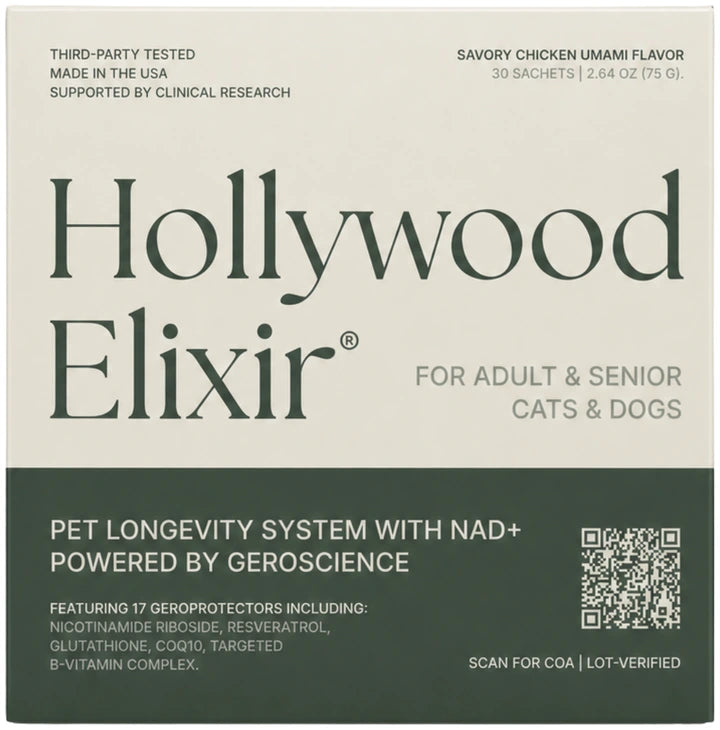
As part of a daily plan for senior cat muscle support, Hollywood Elixir™ supports the cellular environment that aging cats rely on for more sustained recovery and activity. It fits best alongside complete nutrition, hydration, and a gentle strength routine, with changes evaluated over 3–4 weeks.

Muscle loss can be underway even when a cat’s weight looks “normal,” and that is why so many owners feel blindsided when jumping and play suddenly change. The mechanism is simple: muscle is constantly being broken down and rebuilt, and aging, pain, low activity, or inconsistent intake can tip the balance toward breakdown. Over time, feline sarcopenia narrows mobility latitude and can make everyday tasks—climbing, grooming, getting into the litter box—feel harder.

The most useful approach to muscle health for cats is to think in signals. Muscle “hears” signals from adequate protein and calories, from repeated movement, and from a stable internal environment that supports normal remodeling. Muscle also influences whole-body metabolism, so a slow decline can affect more than strength alone. Owners can act early by watching shape and function, tracking a few daily readouts, and bringing a clear timeline to the veterinarian. From there, a plan can be built that pairs complete nutrition with gentle, repeatable activity and addresses common drivers like dental pain, arthritis, or kidney disease. Changes should be evaluated over 3–4 weeks so results are interpretable and more sustained.

By La Petite Labs Editorial, ~15 min read

Featured Product:

  • Muscle health for cats depends on steady protein intake plus daily movement signals, not weight alone.
  • Feline sarcopenia can start in midlife and may be missed when fat replaces lean tissue.
  • Early clues are functional: lower jumps, shorter play, slower grooming, and bony shoulders or hips.
  • Track weekly weight, monthly photos, jump choices, play duration, appetite, and litter box changes.
  • Prioritize complete and balanced diets; avoid unbalanced homemade feeding and sudden calorie cuts.
  • Ask the veterinarian for muscle condition scoring, pain assessment, and screening for common drivers.
  • Consider layered support (including Hollywood Elixir™) only after fundamentals are consistent for 3–4 weeks.

Why Cats Lose Muscle Before Owners Notice

Muscle is not just “power”; it is a living tissue that constantly breaks down and rebuilds. With age, illness, or low activity, the balance can drift toward breakdown, and the change may start earlier than most owners expect. In cats, this shift often shows up as feline sarcopenia: a slow loss of lean tissue that can alter energy use and whole-body metabolism because muscle also acts like an endocrine organ (Baskin, 2015).

At home, early muscle change is easy to miss because weight can stay stable while lean mass shrinks and fat rises. A cat may still eat well but look “less filled out” over the shoulders or along the spine. Treat muscle as a daily priority: consistent meals, predictable play, and a calm routine that encourages movement without forcing it.

Mitochondria illustration showing cellular energy support linked to feline sarcopenia.

Cellular Energy, Mitochondria, and Recovery Latitude

Inside muscle fibers, mitochondria help convert fuel into usable energy, and that energy availability influences how well muscle can maintain itself. Aging and chronic inflammation can make this energy handling less uniform, which can slow mending speed after normal activity. Because muscle communicates with other organs through signaling molecules, a long-term slide in muscle quality can ripple into appetite, glucose handling, and overall hardiness (Baskin, 2015).

Owners often notice “less spring” before they notice obvious weakness: fewer spontaneous sprints, shorter play bouts, and longer rest after jumping. A useful routine is to split activity into small, repeatable moments—two minutes of wand play, a short hallway trot for a treat, and a gentle climb onto a stable ottoman. The goal is more sustained participation, not exhaustion.

Molecular science graphic tied to healthy aging support from senior cat muscle support.

Protein Signals and Why Consistent Intake Matters

Protein intake matters, but so does how the body “hears” the protein signal. Essential amino acids—especially leucine—are studied in general biology for their role in muscle protein synthesis and maintenance (Guo, 2022). In cats, the practical takeaway is not a supplement chase; it is ensuring a complete, species-appropriate diet and avoiding long stretches of low intake that push the body to borrow amino acids from muscle.

Meals that are too small, too infrequent, or frequently skipped can quietly accelerate cat muscle loss prevention efforts in the wrong direction. If a senior cat grazes, consider offering smaller portions more often and warming food to improve aroma. Any sudden diet change should be gradual, because stress and food refusal can create a bigger muscle risk than the original menu.

Molecular design image tied to antioxidant pathways supported by senior cat muscle support.

When Diet Imbalance Damages Muscle

Some cats lose muscle because the diet is unbalanced, not because they are “just getting old.” A classic example is nutritional myopathy, where dietary deficiencies can damage skeletal muscle and cause weakness (Dennis, 1982). While most commercial diets are formulated to be complete, problems can arise with unbalanced homemade feeding, heavy reliance on complementary foods, or long-term picky eating that narrows nutrient intake.

A practical household safeguard is to treat “complete and balanced” as non-negotiable for the main calories. If toppers are used, keep them as a small fraction of the daily intake and rotate textures rather than replacing the core diet. When a cat refuses food for more than a day, the priority becomes restoring intake and calling the veterinary team, not experimenting with restrictive plans.

Black pug portrait showing gentle expression and daily vitality with feline sarcopenia.

Chronic Disease Drivers That Change Muscle Biology

Muscle loss in cats is often tied to a second problem that changes metabolism—kidney disease, dental pain, arthritis, hyperthyroidism, or diabetes. One reason this matters is that muscle-regulating signals can shift with chronic disease; for example, myostatin (a regulator of muscle growth) has been measured in cats with early-stage chronic kidney disease (Fleming, 2026). That does not mean a single lab value explains every cat, but it reinforces that “aging” and “disease” can overlap.

When a cat’s appetite seems normal but muscle is fading, look for the quieter drivers: longer chewing time, dropping kibble, hiding more, or hesitating before jumping. These clues help the veterinarian choose targeted testing rather than guessing. Senior cat muscle support works best when the underlying condition is identified early and the home plan matches it.

Hollywood Elixir™ is amazing and makes my 13 y/o kitty young again!

— Jessie

She hopped up onto the windowsill again—first time in years.

— Charlie

“A stable scale can hide a steady loss of lean tissue.”

Case Vignette: the Cat Who Stayed the Same Weight

CASE VIGNETTE: A 12-year-old indoor cat keeps the same scale weight, but the owner notices a sharper spine and “bony” hips when petting. The cat still eats, yet play sessions end quickly and the cat chooses the lower couch instead of the window perch. This pattern fits a common muscle-loss story: lean tissue is slipping while daily movement quietly narrows.

In this situation, the most helpful first step is a structured observation week, not a sudden overhaul. Keep meals consistent, add two short play prompts daily, and take a weekly top-down photo in the same lighting. Bring those notes to a veterinary visit so the conversation can focus on body condition, muscle condition scoring, pain, and appetite drivers.

Dog portrait tied to trust and long-term care supported by cat muscle loss prevention.

Owner Checklist: Early Signs of Muscle Change

OWNER CHECKLIST: At-home signs that muscle is changing tend to be tactile and behavioral rather than dramatic. Check (1) shoulder blades that feel more prominent, (2) a narrower “thigh” when the cat sits, (3) reduced jump height or a two-step climb onto furniture, (4) shorter grooming sessions with a messy coat over the back, and (5) a new preference for sleeping in one spot rather than rotating favorite perches.

These checks work best when paired with calm handling. Feel along the spine and hips once weekly, not multiple times per day, so changes stand out. If the cat resists touch, treat that as data: discomfort can be the reason movement drops, and less movement can accelerate feline sarcopenia. A soft blanket on a stable surface can make brief handling more tolerable.

Dog in profile against soft background, showing calm attention with cat muscle loss prevention.

What to Track: Daily Readouts That Reveal Trends

WHAT TO TRACK: Muscle change is easier to manage when it is measured with simple, repeatable readouts. Record (1) weekly weight on the same scale, (2) a monthly side photo and top photo, (3) the highest jump the cat chooses without coaxing, (4) daily food intake estimates, (5) litter box output changes, and (6) play duration until the cat disengages. These markers create a timeline that helps separate a temporary dip from a true trend.

Use a single notebook or phone note so the data stays together. The goal is not perfection; it is consistency. Give any new feeding or activity change 3–4 weeks before judging results, because muscle mending speed is slower in seniors. If multiple markers worsen at once—less eating, lower jumps, and weight loss—move the veterinary visit forward.

Product overview visual highlighting formulation integrity aligned with feline sarcopenia.

A Common Misconception About Weight and Muscle

A UNIQUE MISCONCEPTION: “If the scale is fine, muscle is fine.” Cats can maintain body weight while losing lean tissue, especially if activity drops and calories remain similar. Another common misunderstanding is that only very old cats develop muscle loss; in reality, the slide can start in midlife and become obvious later, when there is less room to recover. That is why cat muscle loss prevention is best treated as a long-term habit, not a crisis response.

Owners can correct this misconception by focusing on shape and function, not just numbers. Notice whether the cat can rise smoothly, turn without stiffness, and land confidently. If the cat is “rounder” but weaker, the plan should prioritize lean tissue support through diet quality and gentle strength-style play, rather than simply cutting calories.

Feeding Patterns That Protect Lean Tissue over Time

Feeding for muscle maintenance is less about extremes and more about reliability: complete nutrition, adequate protein, and steady intake. In general biology, pathways like Nrf2 are studied for their relationship to cellular stress responses and muscle remodeling (Konopka, 2017). For owners, the actionable point is that the “cellular environment” matters—sleep, stress, pain control, and consistent nutrition all influence whether the body can keep muscle rebuilding on schedule.

Practical feeding tactics include using a kitchen scale for portions, offering a quiet eating location, and separating cats if competition changes intake. For seniors, texture can be decisive: pâté, shredded, or softened kibble may allow more sustained eating. If appetite is variable, track what was offered versus what was actually eaten; that detail helps the veterinarian interpret weight and muscle trends.

“Short, repeatable movement signals matter more than intense play.”

Research-style uniform highlighting scientific integrity aligned with cat muscle loss prevention.

Gentle Strength Signals: Movement That Cats Will Repeat

Movement is the other half of the muscle equation. Cats do not need “workouts,” but they do need repeated signals that muscle is still required. Short bursts of play mimic natural hunting patterns and can be shaped into gentle strength work: stepping onto a low platform, controlled sit-to-stand motions for a treat, or slow wand play that encourages reaching and turning. Over time, these cues can support more uniform muscle engagement.

Set the environment to make movement the easy choice. Add a step stool to a favorite perch, place food and water a short distance apart, and use non-slip runners on slick floors. If arthritis is suspected, avoid high jumps as “training,” because pain can shrink activity latitude and worsen muscle loss. The best routine is the one the cat repeats willingly.

Shop Now
Hollywood Elixir with foods symbolizing nutrient synergy aligned with senior cat muscle support.

Energy Handling Nutrients and the Bigger Picture

Energy handling nutrients are often discussed in muscle conversations, including l-carnitine, which plays a role in transporting long-chain fatty acids into mitochondria in general physiology (Pekala, 2011). For cats, this does not translate into a one-ingredient fix; it highlights that muscle depends on steady fuel use and that diet quality and disease status shape how well energy pathways run. Any supplement plan should be discussed with a veterinarian, especially for seniors with kidney or heart concerns.

Owners can support energy consistency by avoiding frequent diet swaps and by keeping treats predictable and modest. If a cat is overweight and losing muscle, weight-loss plans should be slow and supervised so lean tissue is protected. A measured approach—small changes, then 3–4 weeks of observation—tends to produce more sustained results than aggressive restriction.

Shop Now
Pet parent holding supplement, symbolizing trust and routine via cat muscle loss prevention.

What Not to Do When a Cat Is Losing Muscle

WHAT NOT TO DO: Common well-meant choices can backfire when a cat is losing muscle. Avoid (1) sharply cutting calories without a veterinary plan, (2) relying on unbalanced homemade diets or “all topper” feeding, (3) pushing intense play that leaves the cat sore and less willing to move tomorrow, and (4) adding multiple supplements at once, which makes it hard to interpret appetite changes or stomach upset.

Also avoid megadosing vitamins “for strength.” Cats have documented risk from dietary vitamin D excess, including cases linked to pet foods (Crossley, 2017). If a supplement is used, choose products with clear quality controls and veterinary oversight, and keep the plan simple enough to evaluate. The safest muscle plan is usually the most boring: consistent nutrition, gentle movement, and early medical workup.

Shop Now

Prepare for the Vet Visit with Better Observations

VET VISIT PREP: A strong appointment starts with specific observations rather than a general worry. Bring (1) the timeline of weight and photos, (2) a 3-day estimate of food intake, (3) notes on jump changes and play duration, and (4) any vomiting, stool change, or thirst shift. Ask: “Can you score muscle condition and explain what you feel?” and “Which conditions most commonly cause this pattern in cats?”

Also ask whether pain is limiting movement and whether dental disease could be reducing intake. If lab work is recommended, request a clear recheck plan: what would count as improvement, and when should the next measurement happen. This approach makes senior cat muscle support a shared project with concrete readouts, rather than a vague hope.

Supplement Safety: Avoiding Excess and Ingredient Overlap

When owners consider supplements, safety and ingredient discipline matter more than novelty. Vitamin D is a useful example: cats have experienced toxicity from dietary sources, including complementary foods and pet food-linked cases (Vecchiato, 2021). That history is a reminder that “more” is not automatically safer, and that stacking products can unintentionally duplicate fat-soluble vitamins. A veterinarian can help screen for overlap and match choices to the cat’s medical profile.

A careful supplement approach also protects appetite. If a new powder changes smell or taste, a picky senior may eat less, undermining cat muscle loss prevention goals. Introduce one change at a time, mix thoroughly into a familiar texture, and watch the litter box and water bowl for subtle shifts. If intake drops, stop the new addition and contact the veterinary clinic.

Side-by-side chart contrasting bioactives and fillers relative to feline sarcopenia.

Where Hollywood Elixir Fits in a Layered Plan

A layered plan can include a daily support product when the fundamentals are already in place. {"type":"text","value":"Hollywood Elixir™","bold":true} is designed to support the cellular environment that aging cats rely on for more sustained energy handling and recovery latitude. It should be viewed as part of a daily plan alongside complete nutrition, hydration, and gentle activity, rather than a replacement for diagnosing pain, kidney disease, or dental problems.

The most useful way to evaluate any support product is through the same readouts used for the overall plan: appetite consistency, willingness to move, and stable body shape over time. Keep the rest of the routine steady for 3–4 weeks so changes are interpretable. If the cat is on prescription diets or medications, confirm compatibility with the veterinarian before starting.

Shop Now
Packaging reveal image highlighting brand care aligned with senior cat muscle support.

Reframing Feline Sarcopenia as a Signal Problem

Feline sarcopenia is often described as “muscle loss with age,” but the more useful framing is “muscle loss when signals stop arriving.” The signals include adequate amino acids, pain-free movement, and a stable internal environment that supports normal remodeling. When those signals are restored, many cats regain some function even if they do not return to a youthful shape. The goal is more sustained mobility and confidence, not perfection.

Owners can support this by making the home easier to navigate: low-entry litter boxes, ramps to favorite spots, and warm resting areas that encourage gentle stretching. Keep play predictable and stop before fatigue turns into avoidance. When progress happens, it often shows up first as a cat choosing to move more often, even if the body looks the same for a while.

Shop Now

A Practical Decision Framework for Long-term Muscle Support

The decision framework is simple: if muscle is changing, confirm the cause, then match nutrition and movement to what the body can actually do. Muscle condition scoring, basic lab work, and pain assessment create the map; daily routines create the repetition that muscle responds to. When the plan is working, the cat’s movement becomes less irregular and recovery after play shows more room to recover.

If the plan is not working, the data should guide the next step rather than adding random interventions. A drop in appetite, rapid weight loss, or sudden weakness is a reason to contact the veterinary clinic promptly. With steady tracking and early action, cat muscle loss prevention becomes realistic, and senior cat muscle support becomes a long-term, measurable routine.

“Track function and shape together to catch decline early.”

Educational content only. This material is not a substitute for veterinary advice. Always consult your veterinarian about your cat’s specific needs. These statements have not been evaluated by the Food and Drug Administration. Products mentioned are not intended to diagnose, treat, cure, or prevent any disease.

Glossary

  • Feline sarcopenia - Age- and lifestyle-associated loss of lean muscle tissue in cats.
  • Lean body mass - The body’s non-fat tissues, including muscle, organs, and bone.
  • Muscle condition score - A hands-on veterinary assessment of muscle mass over key areas (spine, hips, shoulders).
  • Protein turnover - The ongoing cycle of muscle protein breakdown and rebuilding.
  • Myostatin - A signaling protein that helps regulate muscle growth and maintenance.
  • Mitochondria - Cell structures that help convert nutrients into usable energy for muscle work and repair.
  • Essential amino acids - Amino acids that must come from the diet because the body cannot make them.
  • Nutritional myopathy - Muscle damage caused by dietary imbalance or deficiency.
  • Daily readouts - Simple, repeatable home measurements (weight, photos, jump choices, appetite) used to track trends.

Related Reading

References

Konopka. Influence of Nrf2 activators on subcellular skeletal muscle protein and DNA synthesis rates after 6 weeks of milk protein feeding in older adults.. 2017. https://www.mdpi.com/2072-6643/14/21/4674

Guo. The Effect of Leucine Supplementation on Sarcopenia-Related Measures in Older Adults: A Systematic Review and Meta-Analysis of 17 Randomized Controlled Trials. 2022. https://www.frontiersin.org/journals/nutrition/articles/10.3389/fnut.2022.929891/full

Pekala. L-Carnitine - Metabolic Functions and Meaning in Humans Life. 2011. https://www.mdpi.com/2079-7737/10/4/299

Dennis. Nutritional myopathy in a cat.. PubMed. 1982. https://pubmed.ncbi.nlm.nih.gov/7135770/

Baskin. Muscle as a “Mediator” of Systemic Metabolism. 2015. https://www.mdpi.com/2076-3921/14/7/847

Crossley. Vitamin D toxicity of dietary origin in cats fed a natural complementary kitten food.. PubMed Central. 2017. https://pmc.ncbi.nlm.nih.gov/articles/PMC5731632/

Vecchiato. Case Report: A Case Series Linked to Vitamin D Excess in Pet Food: Cholecalciferol (Vitamin D3) Toxicity Observed in Five Cats.. PubMed Central. 2021. https://pmc.ncbi.nlm.nih.gov/articles/PMC8416511/

Fleming. Serum Growth Differentiation Factor 8 (Myostatin) Concentrations in Cats with Early-Stage Chronic Kidney Disease.. PubMed Central. 2026. https://pmc.ncbi.nlm.nih.gov/articles/PMC12846599/

FAQ

What does muscle loss look like in cats at home?

Muscle loss often looks like a change in shape and function, not a dramatic collapse. Owners may feel a sharper spine, more prominent shoulder blades, or thinner thighs even if the scale barely moves. Jump height may drop, and play sessions may end sooner.

Weekly hands-on checks and monthly photos help reveal trends. If appetite is normal but muscle seems to fade, a veterinary exam is important because pain, dental disease, or chronic illness can be the driver.

Is feline sarcopenia the same as simple weight loss?

No. Feline sarcopenia refers to loss of lean tissue, and a cat can lose muscle while maintaining body weight if fat increases at the same time. That is why “the scale is fine” can be misleading.

A veterinarian can score both body condition and muscle condition. At home, focus on function (jumping, rising, grooming) and shape (hips, shoulders, spine), not weight alone.

Why can muscle loss start earlier than expected?

Muscle is constantly remodeling, and the balance can shift toward breakdown when movement drops, protein intake is inconsistent, or chronic inflammation is present. Because muscle also influences whole-body metabolism, small changes can compound over time(Baskin, 2015).

Midlife cats that become more sedentary indoors may slowly lose the daily “use it” signal that keeps muscle robust. Catching the trend early creates more room to recover with gentle activity and reliable nutrition.

How much protein does a senior cat need for muscle?

Protein needs depend on the cat’s health status, kidney function, and the diet’s overall formulation. Rather than targeting a number at home, prioritize a complete and balanced diet designed for the cat’s life stage and medical needs.

If muscle is declining, ask the veterinarian whether the current diet matches the cat’s condition and appetite pattern. Consistent intake matters as much as the label, because skipped meals can push the body to borrow amino acids from muscle.

Do amino acids like leucine matter for older cats?

In general biology, leucine has been studied for its role in muscle protein synthesis and sarcopenia-related measures(Guo, 2022). For cat owners, the practical focus is ensuring the diet provides complete essential amino acids and that the cat eats consistently.

Supplement decisions should be veterinary-guided, especially for seniors with chronic disease. The most reliable foundation for cat muscle loss prevention remains a complete diet plus daily movement that the cat will repeat willingly.

What daily activity best supports senior cat muscle support?

Short, repeatable bouts work better than occasional intense play. Wand play that encourages reaching and turning, stepping onto a low platform for a treat, and brief hallway trots can provide a gentle strength signal without triggering soreness.

Keep surfaces non-slip and add steps to favorite perches so movement feels safe. Stop play before fatigue, because a cat that feels sore tomorrow may move less overall, which undermines the goal.

How can pain affect muscle maintenance in cats?

Pain reduces movement, and reduced movement removes the signal that muscle is still needed. Over time, that can narrow activity latitude and make feline sarcopenia more noticeable. Cats often hide pain, so behavior changes may be subtle.

Clues include hesitating before jumping, choosing lower resting spots, or resisting touch over the back and hips. A veterinary pain assessment can change the entire muscle plan, because comfortable cats are more willing to move.

What should be tracked to monitor muscle changes over time?

Use simple daily readouts: weekly weight, monthly side and top photos, the highest jump the cat chooses without coaxing, play duration until disengagement, and estimated daily food intake. Litter box output changes are also valuable context.

Keep the routine steady and evaluate changes over 3–4 weeks. If several markers worsen together—less eating, lower jumps, and weight loss—contact the veterinary clinic sooner rather than waiting for a scheduled check.

When is muscle loss in cats an urgent vet issue?

Urgency rises when muscle change is paired with rapid weight loss, refusal to eat, sudden weakness, collapse, or major changes in drinking and urination. These combinations suggest more than a slow aging shift and warrant prompt veterinary attention.

Even without an emergency, a steady decline over a month is worth a visit. Early evaluation creates more room to recover and helps target the cause instead of guessing with diet swaps or random supplements.

Can kidney disease contribute to muscle loss in cats?

Yes. Chronic kidney disease can change appetite, inflammation, and metabolic signals that influence lean tissue. Myostatin, a regulator of muscle growth, has been measured in cats with early-stage chronic kidney disease, reinforcing that muscle biology can shift with chronic illness(Fleming, 2026).

If kidney disease is present, diet choices and supplements should be coordinated with the veterinarian. The best plan supports stable intake and comfortable movement while respecting the cat’s medical constraints.

Are homemade diets risky for cat muscle loss prevention?

They can be, especially if they are not formulated by a qualified veterinary nutrition professional. Cats can develop muscle problems from dietary imbalance, including nutritional myopathy described in a cat case report(Dennis, 1982).

If a homemade plan is important for other reasons, it should be recipe-based and monitored. For most households, a complete and balanced commercial diet is the simplest way to protect lean tissue while other causes are investigated.

Is it safe to add multiple supplements for muscle at once?

Stacking supplements is a common mistake because it increases the chance of duplicated ingredients and makes side effects harder to interpret. Fat-soluble vitamins are a particular concern, since cats have documented vitamin D toxicity from dietary sources(Crossley, 2017).

Introduce one change at a time and keep the rest of the routine stable for several weeks. If appetite drops or vomiting appears, stop the newest addition and contact the veterinarian for next steps.

How does Hollywood Elixir™ fit into a muscle support plan?

In a muscle-focused routine, Hollywood Elixir™ can be viewed as a daily layer that supports the cellular environment aging cats rely on for more sustained recovery and activity. It is not a substitute for complete nutrition, pain control, or diagnosing chronic disease.

The best way to judge fit is through tracking: appetite consistency, willingness to move, and stable body shape over 3–4 weeks. Discuss use with a veterinarian if the cat is on prescription diets or medications.

How soon should results be expected from routine changes?

Behavioral changes often appear before visible body changes. A cat may choose higher perches or play a little longer within a couple of weeks, while muscle shape can take longer to look different. That is why consistent tracking matters.

Give one meaningful change—diet adjustment, pain plan, or activity routine—about 3–4 weeks before judging it, unless appetite worsens. If the trend continues downward, the next step is deeper veterinary evaluation rather than adding more variables.

Can indoor cats be more prone to muscle decline?

Indoor living can reduce spontaneous movement, especially when the environment is flat and predictable. Less climbing, sprinting, and stalking means fewer daily signals to maintain lean tissue. Over time, that can contribute to feline sarcopenia.

Environmental design helps: add steps to window perches, place food puzzles in different rooms, and use non-slip runners to encourage confident movement. The goal is more sustained daily activity without forcing the cat into stressful situations.

What quality signals matter when choosing a cat supplement?

Look for clear labeling, lot tracking, and conservative claims that focus on supporting normal function. Avoid products that promise rapid body changes or that list many overlapping vitamins and minerals without context. Cats are sensitive to excesses, particularly with fat-soluble vitamins.

Ask the veterinarian whether the supplement duplicates nutrients already present in the diet. A simpler, more transparent product is often easier to use safely and to evaluate with daily readouts.

Can Hollywood Elixir™ be used daily for senior cats?

Daily use is a reasonable way to approach a support product because muscle and recovery signals depend on repetition. If used, Hollywood Elixir™ should be part of a stable routine that also includes complete nutrition and gentle movement.

Introduce it without changing other variables for 3–4 weeks so appetite and stool changes are interpretable. For cats with chronic disease or prescription diets, confirm the plan with the veterinarian first.

Are there side effects to watch for with new supplements?

The most common early issues are appetite changes and gastrointestinal upset, such as softer stool or vomiting. Even mild taste or smell changes can reduce intake in picky seniors, which can worsen muscle trends.

Stop the newest addition if the cat eats less for more than a day, and contact the veterinary clinic for guidance. Avoid adding multiple new products at once, because it becomes difficult to identify what caused the change.

Do cats and dogs lose muscle in the same way?

The broad biology of muscle remodeling is shared across mammals, but cats have distinct nutrition needs and a different pattern of hiding pain and illness. Cats are also more likely to show muscle change as a subtle shift in jumping, grooming, and posture rather than obvious limping.

Because cats are obligate carnivores, diet quality and consistent intake are especially important. Plans should be cat-specific and coordinated with a veterinarian when chronic disease is possible.

What should be discussed with the vet about muscle changes?

Bring a timeline: weight, photos, appetite notes, jump changes, and play duration. Ask for muscle condition scoring and whether pain, dental disease, kidney disease, thyroid disease, or diabetes should be screened based on the pattern.

Also ask what “success” should look like over the next month—more sustained movement, stable intake, or a change in body shape. Clear targets make senior cat muscle support easier to evaluate and adjust.

How should Hollywood Elixir™ be evaluated alongside diet and activity?

Treat it as one variable in a broader plan. If adding Hollywood Elixir™, keep diet and activity steady so daily readouts remain comparable. Track appetite, stool, play duration, and voluntary jumping for 3–4 weeks.

If the cat’s intake becomes less uniform or vomiting appears, stop and consult the veterinarian. The goal is support that fits the cat’s routine and medical reality, not a complicated stack.

5K+ Happy Pet Parents

Excellent 4.8

Muscle Health for Cats | Why Thousands of Pet Parents Trust Hollywood Elixir™

"My go-to nutrient-dense topper. Packed with 16 powerful anti-aging actives and superfoods!"

Chanelle & Gnocchi

"We go on runs pretty often; he use to get tired halfway through, but lately, he's been keeping up without any problem."

Cami & Clifford

"He seems more happy overall. I've also noticed he has more energy which makes our walks and playtime so much more fun."

Olga & Jordan

"I want her to live forever. She hasn't had an ear infection since!"

Madison & Azula

"My go-to nutrient-dense topper. Packed with 16 powerful anti-aging actives and superfoods!"

Chanelle & Gnocchi

"We go on runs pretty often; he use to get tired halfway through, but lately, he's been keeping up without any problem."

Cami & Clifford

"He seems more happy overall. I've also noticed he has more energy which makes our walks and playtime so much more fun."

Olga & Jordan

"I want her to live forever. She hasn't had an ear infection since!"

Madison & Azula

"My go-to nutrient-dense topper. Packed with 16 powerful anti-aging actives and superfoods!"

Chanelle & Gnocchi

"We go on runs pretty often; he use to get tired halfway through, but lately, he's been keeping up without any problem."

Cami & Clifford

"He seems more happy overall. I've also noticed he has more energy which makes our walks and playtime so much more fun."

Olga & Jordan

"I want her to live forever. She hasn't had an ear infection since!"

Madison & Azula

"My go-to nutrient-dense topper. Packed with 16 powerful anti-aging actives and superfoods!"

Chanelle & Gnocchi

"We go on runs pretty often; he use to get tired halfway through, but lately, he's been keeping up without any problem."

Cami & Clifford

"He seems more happy overall. I've also noticed he has more energy which makes our walks and playtime so much more fun."

Olga & Jordan

"I want her to live forever. She hasn't had an ear infection since!"

Madison & Azula

SHOP NOW