
The 12 Hallmarks of Aging in Dogs, Explained
Read full insightHow to Tell If Your Dog Is Going Blind
Spot the early vision-loss signs and keep your dog safe and confident
By La Petite Labs Editorial 15 min read

Most people don’t notice vision loss the way they notice limping. It’s quieter. A dog will memorize the house, follow familiar scents, and lean on routine until the day a small moment breaks the illusion: a missed step, a bump into a chair leg, a pause at the top of the stairs. If you’re searching for how to tell if your dog is going blind, you’re likely feeling two things at once—fear that something serious is happening, and hope that you can still protect your dog’s comfort.
This page is designed to help you notice the signs that matter, without turning your home into a testing ground. You’ll learn which changes are common when a dog losing vision begins to compensate, which eye and behavior clues suggest pain or urgency, and what your veterinarian may do to pinpoint the cause. You’ll also find practical ways to make daily life safer and calmer, because the environment becomes part of your dog’s sensory system.
A careful, science-minded owner may also wonder where a supplement fits into something as specific as eyesight. The honest answer is that supplements aren’t a replacement for diagnosis or eye treatment. Their value is broader: supporting the metabolic network that underpins resilience as dogs age—energy, recovery, and the ability to adapt when one sense changes. That’s why system-level support can remain relevant even when diet is already good and veterinary care is the priority.
- Early vision loss is often subtle: hesitation at stairs, wider turns, and misjudged jumps.
- Look for patterns across lighting; many dogs struggle more at dusk or indoors.
- Eye appearance changes (redness, cloudiness, discharge) can signal treatable problems.
- Pain signs—squinting, pawing, light sensitivity—should be treated as urgent.
- A veterinary exam distinguishes slow conditions from time-sensitive emergencies.
- Home changes (stable layouts, runners, gates, sound cues) restore confidence quickly.
- System-level aging support can complement medical care by supporting resilience and adaptation.
The Quiet Early Clues That Suggest Vision Is Changing
Vision loss in dogs is often gradual, and that slowness is exactly why it can be missed. A dog losing vision may compensate with memory, scent, and hearing—so well that the first “sign” is a small accident: bumping a shoulder on a doorway, hesitating at a curb, or misjudging a step. When you’re trying to figure out how to tell if your dog is going blind, look for patterns rather than one-off moments. Consistency across days, lighting conditions, and rooms matters more than a single stumble.
It also helps to separate behavior from eyesight. A dog may seem stubborn, anxious, or “clingy” when the real issue is uncertainty about space. If your dog is going blind, you may notice a new preference for familiar routes, reluctance to explore, or a subtle startle response when touched unexpectedly. These changes are not character flaws; they’re coping strategies.
The goal of this page is to help you notice early clues, understand common causes, and know when a veterinary exam is urgent. You’ll also find practical ways to make home safer and calmer—because even when vision can’t be restored, quality of life can remain high with thoughtful support.
Subtle Navigation Changes You Might Notice First at Home
The earliest signs of vision loss are usually small mismatches between your dog and the environment. You might notice hesitation at the top of stairs, a pause before jumping onto a familiar couch, or a wider “arc” when turning corners. Some dogs begin to bump into objects on one side more than the other. Others keep their head lower, as if scanning the floor. These are often the first clues when a dog is losing vision.
Pay attention to lighting. Many owners first suspect a problem when their dog seems fine in daylight but uncertain at dusk. That pattern can point toward conditions that affect low-light vision. Also watch for changes in eye appearance: cloudiness, redness, discharge, or a pupil that looks different from the other. Appearance alone can’t tell you the cause, but it can tell you that the eye itself may be involved—not just behavior.

How Vision Loss Affects Depth, Motion, and Confidence
A practical way to think about vision is to break it into tasks: detecting motion, judging distance, and navigating edges. A dog losing vision may still see large shapes but struggle with depth perception. That’s why you might see misjudged jumps, awkward landings, or a sudden preference for being lifted into the car. Dogs that once leapt confidently may start placing paws carefully, testing surfaces before committing.
You may also notice “visual checking” behaviors: turning the head to use one eye more than the other, staring longer at objects, or freezing briefly before moving forward. None of these prove blindness, but together they can answer the question of how to tell if your dog is losing vision: the dog is working harder to do what used to be automatic.
Separating Vision Problems from Anxiety, Pain, or Distraction
Not all vision problems look dramatic. Some are intermittent, and some are situational. If your dog seems “off” only in bright sun, they may be squinting from discomfort rather than losing sight. If they struggle mainly at night, low-light vision may be declining first. If they bump into objects only in new places, anxiety or distraction may be amplifying a mild deficit.
Try to notice whether the issue is navigation, recognition, or confidence. Navigation problems show up as collisions and missteps. Recognition problems show up as failing to spot a familiar person across the room. Confidence problems show up as reluctance, clinging, or startle. A dog going blind can show all three, but the mix can hint at whether the change is primarily visual, cognitive, or pain-related—another reason a veterinary exam is so valuable.

Common Medical Causes Behind a Dog Losing Vision
Several common conditions can lead to partial or complete vision loss. Cataracts can make the lens look cloudy and may progress over time. Glaucoma involves increased pressure inside the eye and can be painful; it may cause redness, cloudiness, and a “hard” eye. Progressive retinal changes can reduce vision gradually, often first noticeable in dim light. Inflammation, injury, and corneal disease can also interfere with sight.
Because different causes require different timelines, it’s risky to self-diagnose based on appearance alone. A cloudy eye could be a cataract, but it could also be corneal edema from pressure changes. If you suspect your dog is going blind, the safest next step is an exam that can distinguish discomfort from simple opacity, and urgent problems from slow ones.
“The earliest signs aren’t dramatic—they’re repeated, quiet hesitations in familiar places.”
Age, Health, and Whole-body Clues That Matter
Age is a major factor, but it’s not the only one. Older dogs are more likely to develop lens changes, retinal degeneration, and systemic conditions that affect the eyes. That said, younger dogs can also experience vision loss from inherited eye disease, trauma, infection, or immune-mediated inflammation. The key is not to dismiss symptoms because your dog is “too young” or to assume every change is “just aging.”
If your dog losing vision is also drinking more water, losing weight, or acting unusually tired, mention that to your veterinarian. Whole-body health can influence eye health, and some systemic diseases have eye manifestations. A complete picture—behavior, eyes, appetite, thirst, energy—helps your vet choose the right tests and avoid missing a broader issue.

Breed Risk Without Assumptions: What It Can and Can’t Tell You
Breed and genetics can shape risk. Some breeds are predisposed to cataracts, glaucoma, or retinal degeneration, and your veterinarian may consider that history when evaluating symptoms. But predisposition isn’t destiny. Two dogs of the same breed can age very differently, and environment, general health, and preventive care all matter. If you adopted your dog and don’t know their background, that’s common—and it doesn’t prevent good care.
If you’re trying to decide how to tell if your dog is going blind versus simply slowing down, focus on function. Is your dog missing visual cues they used to respond to? Are they misjudging distances? Are they startled by touch more often? These are more informative than breed lists. Still, sharing breed and family history (if known) can help your vet prioritize likely causes.

Vision Loss Versus Cognitive Change: Where They Overlap
Vision loss can overlap with cognitive change, especially in senior dogs. A dog may appear disoriented, get “stuck” behind furniture, or wander aimlessly. Those behaviors can come from reduced sight, cognitive decline, or both. The difference matters because the support plan differs: vision-friendly home design helps one problem, while cognitive support may require additional strategies and veterinary guidance.
One clue is consistency. A dog going blind often struggles most with obstacles and edges, but still recognizes voices and routines. Cognitive changes may show up as altered sleep-wake cycles, house-soiling, or confusion even in open spaces. Many dogs have a mix. A calm, thorough workup can reduce guesswork and help you choose interventions that genuinely improve daily comfort.

Pain Signals That Can Hide in Plain Sight
Pain is easy to overlook, especially when a dog is stoic. Some eye conditions that reduce vision also cause significant discomfort. Watch for squinting, tearing, rubbing the face, avoiding light, or reluctance to be touched near the head. A dog losing vision may also become reactive because pain lowers tolerance. If you see these signs, treat the situation as urgent rather than observational.
Avoid using leftover eye drops or human products unless your veterinarian specifically instructs you. Some medications can worsen certain eye problems, and the wrong drop can delay appropriate treatment. If you’re unsure what you’re seeing, take clear photos in good light and call your clinic. The safest approach is quick assessment, especially when pain is possible.
What to Expect at the Vet and Why Timing Matters
If you suspect a dog losing vision, a veterinary visit is less about “confirming your worry” and more about identifying what’s treatable. Many eye conditions look similar at home but differ dramatically in urgency. Your veterinarian may start with a basic eye exam and then recommend tests such as tear production, corneal staining, intraocular pressure measurement, and a close look at the lens and retina. In some cases, referral to a veterinary ophthalmologist is the fastest path to clarity.
Bring specifics: when you first noticed changes, whether they’re worse in dim light, any redness or discharge, and any recent medication changes. If you can safely capture short videos of the behaviors you’re seeing—hesitation at stairs, bumping, or startle responses—those can help your vet interpret what’s happening. The more precise your observations, the easier it is to separate normal aging from a problem that needs immediate care.
“Sudden vision change should be treated as urgent until a veterinarian rules out pain.”

DVM Voice: Clinical Vignette of a Common Pattern in Senior Dog Aging
Case provided by JoAnna Pendergrass, DVM
Rex, a 7-year-old Labrador Retriever, was brought in after his owner noticed he was slower to rise, hesitant on stairs, and less able to play as before. Examination showed stiffness and reduced hip mobility; radiographs confirmed degenerative joint changes.
His care required weight management, veterinary-guided pain control, nutritional support, and rehabilitation — a comprehensive plan, but one started only after visible decline appeared.
Clinical takeaway: Rex’s case reflects the value of proactive aging support: maintaining lean body condition, monitoring mobility early, and supporting cellular resilience, antioxidant defense, and healthy inflammatory balance before decline becomes obvious.
Single-case vignette. Not generalizable. Veterinary oversight is essential for pain, stiffness, or suspected joint disease.

Gentle At-home Observations That Don’t Add Stress
At-home “tests” should be gentle and low-stress. The point is not to trick your dog; it’s to notice how they use vision in everyday life. Try changing only one variable at a time. For example, observe navigation in bright daylight versus evening light, or in a familiar room versus a quieter unfamiliar space. If your dog is going blind, the difference often shows up when lighting changes or when the environment is less predictable.
Simple observations can be revealing: does your dog track a slow-moving treat with their eyes, or do they rely on scent alone? Do they locate a toy by sight when it’s still? Do they hesitate before stepping off a curb? Avoid sudden gestures near the face, and never shine bright lights into the eyes. If you see persistent confusion, increased startle, or repeated collisions, treat that as a reason to schedule an exam rather than escalating home experiments.

Home Adjustments That Make Rooms Feel Predictable Again
When a dog going blind begins to rely more on hearing and smell, the home environment becomes part of their sensory toolkit. Consistency is kind. Keep furniture layouts stable, avoid leaving clutter in walkways, and use textured runners to create “paths” between favorite spots. Baby gates can prevent falls on stairs, and night-lights reduce the challenge of dim hallways. If your dog hesitates at thresholds, a contrasting mat can help define edges.
Sound cues can replace visual cues. A soft bell on another pet’s collar, a consistent verbal cue before you touch your dog, and predictable routines reduce surprise. Outdoors, a harness often gives better guidance than a collar, especially if your dog startles. These changes aren’t about limiting life; they’re about making the world legible again—through touch, scent, and rhythm.

Behavior Changes That Often Follow Vision Loss
Behavior shifts can be the most emotionally confusing part. A dog losing vision may seem withdrawn, irritable, or unusually attached, and it’s easy to misread that as “acting out.” In reality, uncertainty can raise baseline stress. Some dogs become quieter and avoid busy rooms; others shadow you closely because proximity feels safe. You may also notice changes in play—less chasing, more sniffing, or preference for squeaky toys that provide audio feedback.
Support starts with predictability. Announce yourself before petting, keep routines steady, and give your dog time to map new spaces. If anxiety is rising—pacing, vocalizing, or refusing to settle—talk with your veterinarian. Pain, cognitive changes, and vision loss can overlap, and the best plan is often multi-layered: environmental adjustments, behavior support, and medical evaluation to rule out discomfort.
Treatment Paths: from Urgent Eye Care to Long-term Management
Treatment depends on the cause. Some conditions are reversible or partially reversible if addressed early; others are managed to preserve comfort and slow progression. Cataracts, for example, may be surgically treatable in selected dogs, while glaucoma requires urgent pressure control to protect the eye and reduce pain. Dry eye and corneal disease often improve with consistent therapy. Retinal degeneration is typically managed with supportive care and safety planning rather than a single fix.
If you’re wondering how to tell if your dog is losing vision because you want to “do something,” that instinct is valid. The most effective “something” is a clear diagnosis, because the wrong approach can waste time. Ask your veterinarian what the goal is: restore vision, preserve remaining vision, control pain, or improve navigation and confidence. Knowing the target helps you judge progress realistically.
Whole-body Support That Complements Eye-specific Veterinary Care
Nutrition can’t replace veterinary eye care, but it can support the systems that aging eyes depend on: cellular energy production, oxidative balance, and healthy inflammation signaling. As dogs age, the metabolic “background” changes—repair processes slow, resilience drops, and small stressors add up. That’s why a science-minded owner may still choose a system-level supplement even when diet is already solid: it’s not about one vitamin; it’s about supporting the network that helps tissues cope over time.
If your dog is going blind, think in layers. Medical treatment addresses the eye condition itself. Environmental changes reduce risk and anxiety. And broader wellness support can help your dog stay steady in energy, appetite, sleep, and mobility—factors that shape how well they adapt to sensory change. Discuss any supplement with your veterinarian, especially if your dog takes prescription medications or has chronic disease.

Living Well with Limited Vision: Routines, Walks, and Play
Daily life with limited vision can still be rich. Many dogs navigate beautifully once the rules of the house are consistent and their humans stop “testing” them. Use a calm voice cue before guiding around obstacles. Keep water and food bowls in the same place. Choose toys that are easy to locate by sound or scent. On walks, let your dog set the pace and sniff more; scent becomes a primary way of reading the world.
If other pets are in the home, supervise introductions in tight spaces. A dog losing vision can be startled by sudden movement, even from a familiar companion. With time, most households settle into a new normal. The emotional tone you set matters: steady, unhurried, and confident. Your dog will borrow that confidence when their own senses feel uncertain.

Red Flags That Should Prompt Urgent Veterinary Attention
Some situations should move you from observation to urgent care. Sudden blindness, a painful-looking eye, or a rapidly cloudy or enlarged eye can signal emergencies. Squinting, pawing at the face, marked redness, or a pupil that looks unusually large or unresponsive are also red flags. If your dog bumps into walls out of nowhere or seems disoriented in a familiar room, don’t wait to “see if it passes.”
When you call, describe the timeline clearly: “This started today” versus “This has been slowly changing for months.” Ask whether your dog should be seen immediately or within 24 hours. If you’re unsure, err on the side of prompt evaluation—especially because some causes of sudden vision loss are time-sensitive. Your role is not to diagnose; it’s to notice and act.
A Reassuring Outlook: Adaptation, Safety, and Lasting Quality of Life
If you’re reading this with a knot in your stomach, that’s understandable. The phrase “dog going blind” carries a lot of fear, but it doesn’t have to mean a small life. Dogs are remarkably adaptable, and many remain playful, affectionate, and confident with the right supports. The most helpful mindset is practical tenderness: take symptoms seriously, reduce hazards, keep routines steady, and let your dog’s other senses lead.
Over time, you’ll likely become fluent in your dog’s new way of moving through the world. Progress may look like fewer startles, smoother navigation, and a return to ordinary joys—meals, walks, naps in sun patches. Pair veterinary guidance with a home environment designed for predictability, and consider broader aging support so your dog has the energy and resilience to adjust.
“Consistency at home is not limitation—it’s a map your dog can trust.”
Educational content only. This material is not a substitute for veterinary advice. Always consult your veterinarian about your dog’s specific needs. These statements have not been evaluated by the Food and Drug Administration. Products mentioned are not intended to diagnose, treat, cure, or prevent any disease.
Glossary
- Depth perception: The ability to judge distance, often noticed when a dog misjudges jumps or steps.
- Low-light vision: Sight in dim conditions; difficulty here can show up at dusk or in dark hallways.
- Cataract: Clouding of the lens that can reduce vision; severity and treatability vary by case.
- Glaucoma: Increased pressure inside the eye that can be painful and may cause rapid vision loss.
- Retina: The light-sensing tissue at the back of the eye; degeneration can lead to gradual vision loss.
- Corneal ulcer: A defect on the eye’s surface that can cause squinting, tearing, and light sensitivity.
- Intraocular pressure: The pressure within the eye; abnormal levels can threaten comfort and vision.
- Startle response: A sudden reaction to touch or movement; may increase when vision is reduced.
- Navigation cues: Non-visual signals (texture, sound, routine) that help a visually impaired dog move confidently.
Related Reading
Aging & Senior Dog Guidance
• Dog Age Calculator
• Dog Dementia
• Lethargy in Dogs
• My Dog Won't Eat
• Dog Pacing At Night
• Dog Licking Paws
• Can Dogs Dehydrate
Healthy Aging Support
• NAD+ for Dogs
• NMN for Dogs
• Antioxidants Supplements for Dogs
• Best Senior Dog Supplements & Vitamins
• Rapamycin for Dogs
References
FAQ
What are the earliest signs my dog may be losing vision?
Early signs are usually small: hesitation at stairs, bumping a shoulder on doorframes, wider turns, or misjudging a familiar jump. Many dogs compensate well, so you’re looking for repeated patterns rather than one clumsy moment.
If you’re tracking changes, note whether problems worsen in dim light and whether the eyes look red, cloudy, or uncomfortable. For broader aging resilience that can support adaptation alongside veterinary care, consider Hollywood Elixir™.
How to tell if your dog is going blind at home?
Focus on gentle observation, not “testing.” Watch how your dog navigates in bright light versus evening light, and whether they hesitate at edges like curbs or stairs. Notice if they rely on scent to find toys or treats they used to spot visually.
If you see consistent confusion, collisions, or increased startle, schedule an exam to identify treatable causes. For system-level support as your dog adapts to age-related changes, you can discuss Hollywood Elixir™ with your veterinarian.
How to tell if your dog is losing vision in dim light?
Low-light difficulty often shows up as freezing in hallways, reluctance to enter darker rooms, or bumping into furniture at night while seeming fine during the day. You may also notice slower movement outdoors at dusk, especially on uneven ground.
Use night-lights and keep pathways clear while you arrange a veterinary evaluation to determine the cause. To support overall resilience during aging-related transitions, consider Hollywood Elixir™ as part of a vet-guided plan.
Can a dog going blind still recognize people and routines?
Often, yes. Many dogs rely more on scent, footsteps, and daily rhythm than we realize. A dog may fail to visually spot you across the room but still greet you confidently once they hear your voice or catch your scent.
That’s why subtle vision loss can be missed until navigation becomes harder. Supporting calm routines and whole-body steadiness can help adaptation; ask your vet whether Hollywood Elixir™ fits your dog’s needs.
What causes sudden blindness in dogs, and is it urgent?
Sudden blindness can be caused by painful eye pressure problems, inflammation, trauma, or retinal events, among other possibilities. Because some causes are time-sensitive and uncomfortable, sudden change should be treated as urgent until a veterinarian says otherwise.
Call promptly, describe the timeline, and avoid using leftover eye drops without guidance. For broader aging support that complements medical care, you can also discuss Hollywood Elixir™ with your clinic.
When should I call the vet about possible vision loss?
Call quickly if you see sudden disorientation, a painful-looking eye (squinting, pawing, light sensitivity), marked redness, or rapid cloudiness. For gradual changes—hesitation, bumping, night difficulty—schedule an appointment soon so treatable causes aren’t missed.
Bring notes about lighting patterns and any behavior shifts, since details help your vet triage urgency. For system-level support during aging, consider Hollywood Elixir™ as part of a broader plan.
Is my dog losing vision or just getting older?
Normal aging can look like slower movement, but vision loss tends to show specific functional changes: misjudging distances, bumping into objects, and hesitating at edges. If the pattern is consistent—especially in dim light—vision should be evaluated rather than assumed.
A veterinary exam can separate eye disease from arthritis, anxiety, or cognitive change. For whole-body support that may help seniors stay steady as they adapt, consider Hollywood Elixir™ with vet guidance.
How do vets diagnose vision problems in dogs?
Vets typically combine a physical eye exam with specific tests, which may include tear production, corneal staining, measuring eye pressure, and examining the lens and retina. They also assess whether the eye is painful and whether the issue is localized or part of a broader health problem.
In some cases, referral to a veterinary ophthalmologist is recommended for advanced evaluation. For supportive care that complements diagnosis and treatment, ask about Hollywood Elixir™ in your dog’s routine.
Can cataracts make my dog look like they’re going blind?
Cataracts can reduce vision by clouding the lens, and they may progress slowly or more quickly depending on the cause. However, not every cloudy-looking eye is a cataract, and not every cataract causes severe vision loss right away.
Because other conditions can look similar and may be painful, it’s worth getting a clear diagnosis. For broader aging support alongside veterinary eye care, consider Hollywood Elixir™.
What home changes help a dog losing vision feel safer?
Keep furniture layouts stable, remove clutter from walkways, and use runners or textured mats to create predictable paths. Add baby gates near stairs and night-lights in hallways. Use consistent verbal cues before touching or guiding your dog to reduce startle.
These changes reduce accidents and lower stress, which can improve confidence quickly. For system-level support that complements environmental adjustments, consider Hollywood Elixir™ as part of a steady routine.
Is it safe to keep walking my dog with vision loss?
In many cases, yes—walks can remain a major source of enrichment. Use a harness for better guidance, choose familiar routes, and let your dog set a slower pace. Avoid crowded areas if your dog startles easily, and be cautious near curbs, stairs, and uneven terrain.
If you suspect pain or sudden change, pause and get veterinary advice first. For whole-body support that can help seniors stay steady on daily outings, consider Hollywood Elixir™.
How can I reduce anxiety in a dog going blind?
Predictability is the fastest anxiety reducer: keep routines consistent, avoid rearranging furniture, and use a calm cue before you touch your dog. Provide “safe zones” where your dog can rest without being surprised, and supervise interactions with other pets in tight spaces.
If anxiety escalates, ask your veterinarian to rule out pain and discuss behavior support options. For system-level aging support that may help overall steadiness, consider Hollywood Elixir™ alongside a calm home setup.
Can supplements restore eyesight in dogs with vision loss?
Supplements generally aren’t a substitute for diagnosing and treating eye disease, and they shouldn’t be framed as restoring vision. Where they can be relevant is supporting broader aging physiology—energy, resilience, and oxidative balance—which can influence how well a dog adapts to sensory change.
The best approach is layered: veterinary care for the eye condition, environmental safety, and thoughtful wellness support. For system-level support, consider Hollywood Elixir™ with your vet’s input.
Is Hollywood Elixir™ safe for senior dogs with eye concerns?
Most safety questions depend on your dog’s individual health profile, including kidney or liver disease, current medications, and any history of sensitivities. Senior dogs often take multiple products, so it’s wise to review the full list with your veterinarian before adding anything new.
Ask specifically about timing with meals and whether any ingredients overlap with existing supplements. For vet-guided, system-level aging support, see Hollywood Elixir™.
Can Hollywood Elixir™ be used daily, and when to pause?
Daily use is often how wellness supplements are intended to be evaluated, because gradual changes in aging physiology aren’t usually visible overnight. That said, any new product should be introduced thoughtfully, especially in seniors, and monitored for appetite changes, stool changes, or unusual behavior.
Pause and call your veterinarian if you notice persistent GI upset, lethargy, or anything that feels “off,” and always pause before surgeries unless your vet advises otherwise. Learn more about Hollywood Elixir™ in the context of your dog’s plan.
How long does it take to notice changes with Hollywood Elixir™?
Timelines vary because the goal is system-level support rather than a quick, single-symptom effect. Some owners notice steadier energy, appetite, or recovery within a few weeks, while others judge value over a longer window as routines and aging patterns become clearer.
If your concern is vision, keep expectations realistic: supplements support overall resilience, while eye disease needs veterinary diagnosis and targeted care. For ongoing support, consider Hollywood Elixir™ as part of a consistent regimen.
What medications or supplements might interact with Hollywood Elixir™?
Potential interactions depend on the ingredient profile and your dog’s prescriptions, especially for chronic conditions. The safest approach is to share a complete list—heart meds, seizure meds, anti-inflammatories, thyroid meds, and other supplements—with your veterinarian or pharmacist for review.
This matters most in seniors, where small changes can have outsized effects. For a product page you can review with your clinic, see Hollywood Elixir™.
How do I choose a quality aging supplement for my dog?
Look for clear labeling, consistent manufacturing standards, and a rationale that goes beyond a single trendy ingredient. A quality product should fit into a vet-guided plan, especially for seniors, and should be positioned as supportive rather than as a replacement for diagnosis or treatment.
It also helps when the goal is system-level resilience—energy, recovery, and steady routines—because that’s what owners can realistically observe over time. One option to consider is Hollywood Elixir™.
Is this vision topic different for puppies versus senior dogs?
Yes. In puppies and young dogs, vision issues may relate more to congenital or inherited conditions, injury, or infection, and they should be evaluated promptly. In seniors, gradual changes are more common, but painful emergencies can still occur at any age.
Regardless of age, the safest path is diagnosis first, then layered support. For senior-focused, system-level aging support you can discuss with your vet, consider Hollywood Elixir™.
Do cats show the same signs of vision loss as dogs?
Cats can show similar navigation changes, but they often hide symptoms longer and may reduce activity rather than bump into things. A cat may stop jumping to high perches, hesitate in dim rooms, or become more easily startled. The underlying causes and urgency can also differ.
If you’re concerned about any pet’s vision, a veterinary exam is the right next step. For dog-focused aging support that complements veterinary care, consider Hollywood Elixir™.
How to tell if your dog is going blind or has dementia?
Both can look like disorientation, but vision loss often shows up around obstacles and edges, while cognitive decline may include altered sleep-wake cycles, aimless wandering, or confusion even in open spaces. Many senior dogs have a mix, which is why a thorough evaluation is helpful.
Bring specific examples and timelines to your veterinarian so you can build a targeted plan. For system-level support that may complement senior care, consider Hollywood Elixir™.
What’s a practical decision framework if I suspect vision loss?
Start with three questions: Is this sudden? Does the eye look painful? Is my dog unsafe (falls, repeated collisions)? If any answer is yes, treat it as urgent. If changes are gradual, document patterns (lighting, stairs, recognition) and schedule a timely exam.
While you wait, stabilize the environment: clear pathways, add night-lights, and keep routines steady. For broader aging resilience that supports adaptation, consider Hollywood Elixir™ in a vet-guided plan.

Discover LPL-01: How This Fits Into a Larger Canine Longevity System
Aging in dogs is not driven by a single pathway. It’s the result of interacting biological systems—energy metabolism, oxidative stress, immune signaling, and structural integrity—changing over time.
This article explores one piece of that puzzle. If you want to understand how these pieces connect—and what actually moves the needle—you need to zoom out.
Start with the underlying science:
- Canine Geroscience Framework →
A structured view of how aging progresses across cellular energy, inflammation, and resilience systems. - Senior Biological Defense Coverage (BDC) Modeling →
A systems-level map of which biological pathways decline first, and how layered interventions can support them. - 2026 Market Research: Best Dog Longevity Supplements →
A 2026 industry report and review of leading senior-dog and cellular-aging formulas. - LPL-01 Standard →
The formulation system that translates these models into real-world supplementation—covering multiple pathways in a coordinated way.
Essential Summary
Why is it important to know how to tell if your dog is going blind?
Early vision loss in dogs often shows up as hesitation, misjudged steps, and anxiety in dim light. Track patterns, note any eye redness or cloudiness, and prioritize a veterinary exam—some causes are urgent and painful. With stable routines, safer spaces, and whole-body aging support, many dogs adapt well and keep their daily joy.
Hollywood Elixir is designed for system-level support as dogs age—helping the broader metabolic network that underpins resilience, energy, and recovery over time. For families navigating vision changes, that whole-body steadiness can matter as much as any single nutrient, especially alongside veterinary care and a home set up for confidence.
Longevity Core
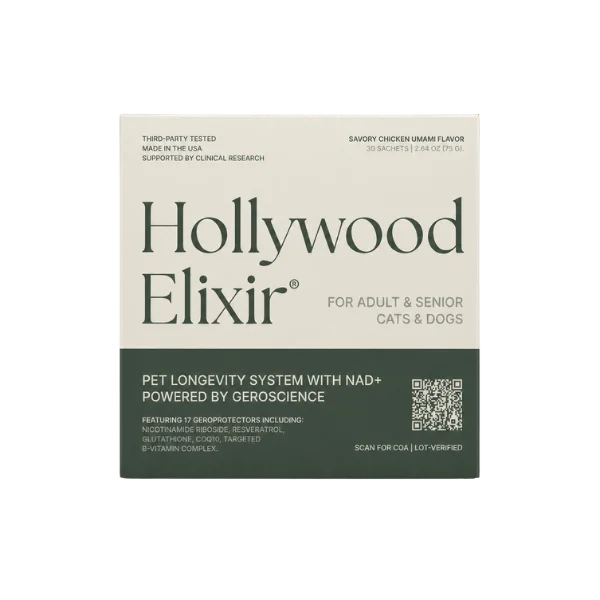
Hollywood Elixir®
★★★★★(313)
More good years, starting now — steady energy, engagement, and a pet who keeps showing up fully, every day.
Starting at $89/mo
Hollywood Elixir is amazing! She put back on 5 lbs to a healthy weight, her eyes are shiny, her coat is beautiful!
— Jessie
We go on runs. Lately he's been keeping up with no problem!
— Cami
Worried your dog may be going blind?
If you're searching to understand how to tell if your dog is going blind
If you’re noticing signs your dog is losing vision, start with two priorities: safety and diagnosis. Keep pathways clear, add night-lights, and block stairs until you know what’s going on. Then schedule a veterinary exam to identify treatable or urgent causes, especially if there’s redness, squinting, or sudden change. While medical care addresses the eye, many dogs do best with steady routines and support for whole-body aging—energy, recovery, and resilience that shape how well they adapt. That’s where a system-level formula can still make sense for a careful owner: it supports the broader network, not a single nutrient. Consider adding Hollywood Elixir as part of a vet-guided plan.
Veterinary Insights

Learn about how our DVMs think about dog aging
Dr. JoAnna Pendergrass DVM


Longevity Core
Hollywood Elixir®
★★★★★(313)
More good years, starting now — steady energy, engagement, and a pet who keeps showing up fully, every day.
Starting at $89/mo
Wellness Tools
Explore your dog’s changing needs over time


Related Reading
Most people don’t notice vision loss the way they notice limping. It’s quieter. A dog will memorize the house, follow familiar scents, and lean on routine until the day a small moment breaks the illusion: a missed step, a bump into a chair leg, a pause at the top of the stairs.
