






The 12 Hallmarks of Aging in Dogs, Explained
Read full insightFelycin-CA1 for Cats: The Weekly Tablet for Early HCM
By La Petite Labs Editorial 10 min read
As Seen On
Contents +
Felycin-CA1 is a once-weekly prescription tablet that manages heart-wall thickening in cats with subclinical hypertrophic cardiomyopathy (HCM). Its active ingredient is sirolimus, also called rapamycin. The FDA conditionally approved it in March 2025. It isn't a longevity drug, and you can only get it through a vet.
Here's who it's for, the label's dosing chart, its side effects and monitoring, what it costs, and how it compares with compounded rapamycin.
La Petite Labs publishes this guide and makes Hollywood Elixir, a supplement for dogs and cats. We're not affiliated with TriviumVet, PRN Pharmacal or any company named here.
What is Felycin-CA1 used for?
Felycin-CA1 is used to manage ventricular hypertrophy, a thickening of the wall of the heart's main pumping chamber, in cats with subclinical hypertrophic cardiomyopathy.1 "Subclinical" means the wall has thickened but the cat hasn't had heart failure or a blood clot. On the label, that means a left ventricular wall at least 6 mm thick with no other cause, such as high blood pressure.1
HCM is the most common heart disease in cats and one of the most common causes of death in cats.2 About 15% of cats have it, by one consensus estimate.3 Felycin-CA1 was the first product the FDA approved for cats with HCM for any use. It was developed by TriviumVet, a veterinary drug company in Waterford, Ireland.2
Felycin-CA1 at a glance
- What it is
- Sirolimus (rapamycin) delayed-release tablets for cats
- What it's for
- Managing heart-wall thickening in cats with subclinical HCM
- FDA status
- Conditionally approved March 14, 2025; full approval still pending
- How it's given
- By mouth once a week with a meal, swallowed whole
- Label dose
- 0.3 mg/kg once weekly, using 0.4, 1.2 and 2.4 mg tablets
- Not for
- Cats with diabetes or liver disease; cats under 2.5 kg (5.5 lb) can't be dosed accurately
- How to get it
- Prescription from a licensed vet
- Is it a longevity drug?
- No; it's approved for one heart condition
Felycin-CA1 tablets by body weight (label dose)
| Cat's weight (label, kg) | About (lb) | Tablets once a week | Sirolimus per week |
|---|---|---|---|
| 2.5–3.2 | 5.5–7.1 | Two 0.4 mg | 0.8 mg |
| 3.3–4.8 | 7.3–10.6 | One 1.2 mg | 1.2 mg |
| 4.9–6.4 | 10.8–14.1 | One 0.4 mg and one 1.2 mg | 1.6 mg |
| 6.5–9.6 | 14.3–21.2 | One 2.4 mg | 2.4 mg |
| Over 9.6 | Over 21.2 | One 1.2 mg and one 2.4 mg | 3.6 mg |
Competitor label and pricing facts checked November 11, 2026. Sources are listed in the References section below.
Is Felycin-CA1 a longevity drug for cats?

No. Felycin-CA1 is approved for one heart condition, and its main trial measured heart-wall thickness, not lifespan. The trial's authors wrote that further studies are needed to find out whether the benefit leads to longer life, fewer complications or a better quality of life.4
The approval also limits who can get it. Because Felycin-CA1 is conditionally approved, it may be used only as its label directs, so a vet can't prescribe it to a healthy cat for aging.5 For the drugs being developed for aging cats, see our Loyal for cats guide and our PURR-001 guide. Our guide to natural alternatives to longevity drugs for cats covers what owners can do without a prescription.
Is felycin the same as rapamycin?
Yes, in its active ingredient. Felycin-CA1 contains sirolimus, also known as rapamycin, a compound produced by the bacterium Streptomyces hygroscopicus.6 At higher doses, sirolimus suppresses the immune system in people who've had organ transplants. The FDA says the dose in Felycin-CA1 isn't expected to be immunosuppressive in cats.2
What's different is the product. Felycin-CA1 is a delayed-release tablet with an enteric coating, made in cat-sized strengths, with a label the FDA reviewed for this one use.1 Our rapamycin for cats guide covers the wider research on the molecule.
How does Felycin-CA1 work?
Felycin-CA1 works by blocking mTOR, a protein complex that controls cell growth. One form, mTORC1, drives protein building and helps the heart wall adapt to strain, but when it stays switched on under constant stress it can cause harmful thickening.4 Rapamycin blocks mTORC1 quickly, while the other form, mTORC2, is affected only after prolonged exposure.4
That's the reason for weekly dosing. The trial's authors cite evidence that intermittent dosing avoids the effects of long mTORC2 blockade, such as glucose intolerance, while still blocking mTORC1.4 In mice with induced heart thickening and in human heart-transplant patients, sirolimus reduced ventricular size without harming heart function.6
Which cats can take Felycin-CA1?
Felycin-CA1 is for otherwise healthy cats diagnosed with subclinical HCM.1 The label rules out cats whose heart wall has thickened for another reason, such as high blood pressure, and cats that have had congestive heart failure, a blood clot (arterial thromboembolism) or severe obstruction of blood leaving the heart.1
Diagnosis takes a vet's workup. The label calls for a physical exam with a blood pressure reading, a heart ultrasound (echocardiogram) and chest X-rays to rule out heart failure, plus blood tests to rule out liver disease before starting.1 The FDA made it prescription-only because diagnosing HCM requires professional expertise.6
Felycin-CA1 manages heart-wall thickening in early HCM. It isn't a longevity drug.
Felycin-CA1 dosing chart: how many tablets for my cat's weight?
The Felycin-CA1 label dose is 0.3 mg per kg of body weight, given by mouth once a week.1 It comes in three tablet strengths, 0.4 mg, 1.2 mg and 2.4 mg, and the label sets out how to combine them by weight. The pound figures are our conversions.1
Cats under 2.5 kg (about 5.5 lb) can't be dosed accurately with the available tablets.1 Your vet sets your cat's dose, so don't adjust it yourself.
How do you give Felycin-CA1?
Felycin-CA1 is given once a week with a meal, and the tablets must be swallowed whole, not chewed, split or crushed.1 The coating protects people from contact with the drug, but exposure can happen if the cat vomits or the coating breaks down.1
The label asks owners to keep tablets in the blister pack until dosing, throw away any tablet the cat doesn't swallow, and wear gloves around vomit, saliva or tablet pieces. Pregnant or breastfeeding women should avoid contact.1 The label doesn't give instructions for a missed dose, so ask your vet what to do.1
What are the potential side effects of Felycin-CA1 in cats?
In the main field study of Felycin-CA1, the most frequent problems were heart-related and mostly tied to HCM itself: abnormal heart rhythms, congestive heart failure, fainting and fluid around the heart.1 Other reactions were lethargy, vomiting, diarrhea and loss of appetite.1
One cat on the label dose developed diabetes and later died after diabetic ketoacidosis.1 In a 24-week safety study at 1.3 to 6.3 times the label dose, liver enzymes rose in 15 of 24 treated cats, with no liver damage found at necropsy.1 And three cats on twice the label dose went into heart failure or died suddenly. Two had severe heart disease at the start, and the label says the link to the drug is unknown.1
Which cats shouldn't take Felycin-CA1?
Felycin-CA1 shouldn't be used in cats with diabetes or existing liver disease, and the label says to stop it immediately if diabetes is diagnosed.1 It hasn't been evaluated in cats with chronic kidney disease, hyperthyroidism, chronic viral infections or other types of cardiomyopathy, or in cats taking beta blockers or corticosteroids. It isn't for breeding cats.1
Some medicines can raise the risk of side effects, including calcium channel blockers, amiodarone, azole antifungals and cyclosporine, so tell your vet everything your cat takes.1 Felycin-CA1 may also affect vaccine response.1 If your cat is already treated for hyperthyroidism or diabetes, your vet will weigh that first.
What did the Felycin-CA1 study show?
The Felycin-CA1 approval rests mainly on the RAPACAT trial: 43 client-owned cats with subclinical HCM at two US referral cardiology centers, randomized to placebo, the label dose or twice the label dose, once weekly for six months.64 At day 180, the heart wall's maximum thickness had fallen by an average of 0.17 mm on the label dose and grown by 0.94 mm on placebo. The double dose did less well, with a 0.50 mm increase.1
One caveat matters. The FDA's summary notes that the company chose wall thickness at day 180 as the effectiveness measure after exploratory analyses, not before the study began.6 TriviumVet funded the trial and four of its authors worked there.4 The FDA concluded the drug has a "reasonable expectation of effectiveness," the standard for conditional approval.6
Conditional approval means one label and one use: a vet can't prescribe Felycin-CA1 for anything else.
What does conditional approval mean for Felycin-CA1?
Conditional approval lets a company sell an animal drug while it gathers the full evidence of effectiveness. It lasts one year and can be renewed yearly up to four times, five years in all, as long as the company shows progress toward "substantial evidence" of effectiveness.5 Felycin-CA1's approval dates from March 14, 2025.2
Off-label use isn't allowed. The Felycin-CA1 label states that using it other than as directed is "a violation of Federal law."1 To support full approval, TriviumVet is running the HALT study, a placebo-controlled trial of 12 months of weekly dosing that aims to enroll 300 cats at about 25 US sites.7
Does Felycin-CA1 help cats with symptomatic HCM?
That hasn't been shown. Felycin-CA1 is labeled only for subclinical HCM, and the label excludes cats with current or past heart failure, blood clots or severe outflow obstruction.1 Its US distributor says no studies support its use in clinical or late-stage heart disease, and that using it there would be off-label, which it doesn't recommend.8
Cats with heart failure are treated with other drugs. Veterinary cardiology guidelines name furosemide as the main drug for fluid buildup and recommend clopidogrel to lower clot risk in cats with heart failure and an enlarged left atrium.3 Fast or labored breathing at rest needs prompt veterinary attention.
Felycin-CA1 vs compounded rapamycin: what's the difference?
Felycin-CA1 and compounded rapamycin share an active ingredient, but only Felycin-CA1 has been through FDA review for cats with HCM.2 The FDA says compounded animal drugs made from bulk ingredients haven't been reviewed for evidence that they're safe and effective, and they lack post-market controls. It says compounding may be justified when no medically appropriate approved or conditionally approved drug is available.9
In practice, Felycin-CA1 has a set dose, the same delayed-release tablet tested in its trial, and a label listing warnings and monitoring.16 PBI-Gordon, whose companies develop and sell Felycin-CA1, says compounded sirolimus and the human drug Rapamune aren't FDA-approved for managing HCM in cats.710 Whether any alternative suits your cat is a decision for your vet. Our rapamycin for cats guide explains the research behind both.
How does Felycin-CA1 compare with other HCM treatments?
Felycin-CA1 is the only drug approved to manage the heart-wall thickening of subclinical HCM.6 Before it, no available drug had been shown to delay progression, improve quality of life or improve survival in subclinical HCM, according to the RAPACAT authors.4
The 2020 ACVIM consensus guidelines, written before Felycin-CA1 was approved, say treatment generally isn't recommended for low-risk subclinical cats.3 For cats at risk of blood clots, they recommend clopidogrel. Atenolol lowers heart rate and outflow obstruction, but it hasn't been shown to change five-year survival in subclinical HCM.3 Your vet or a veterinary cardiologist decides what fits your cat's stage.
What monitoring does a cat on Felycin-CA1 need?
Felycin-CA1 needs regular bloodwork: the label calls for rechecks one to two months after starting, then every 6 to 12 months.1 A mild liver-enzyme rise, up to twice the normal limit, gets a recheck in two months. The drug is stopped if the rise persists, goes higher, or other signs of liver trouble appear.1
The US distributor says follow-up heart ultrasounds are typically recommended every six months. At home, it suggests watching for a sleeping breathing rate above about 30 to 35 breaths a minute, labored or open-mouth breathing, hiding, less activity or a change in appetite, and calling your vet if you see them.8
Where can I buy Felycin-CA1 for my cat?
You get Felycin-CA1 through your vet. Federal law restricts it to use by or on the order of a licensed veterinarian, and it comes in 12-tablet cartons of each strength.1 The brand site tells owners to ask their vet about it.8
In the US, it's sold under the PRN Pharmacal brand, which belongs to Pegasus Laboratories, part of PBI-Gordon.110 It isn't sold in Europe: TriviumVet withdrew its application to the European Medicines Agency in March 2025.11 Be wary of anyone offering Felycin-CA1 or rapamycin for cats without a prescription.
How much does Felycin-CA1 cost?
Neither TriviumVet nor PRN Pharmacal publishes a price, as of November 2026.812 The cost depends on your cat's weight, since some weight bands need two tablets of different strengths a week, and on the clinic or pharmacy.1 A 12-tablet carton lasts 12 weeks for a cat on one tablet a week.
Budget for monitoring too: bloodwork one to two months after starting and every 6 to 12 months after that, plus the heart ultrasounds your vet recommends.18 Ask your vet or pharmacy for a quote for your cat's dose.
Where daily nutrition fits
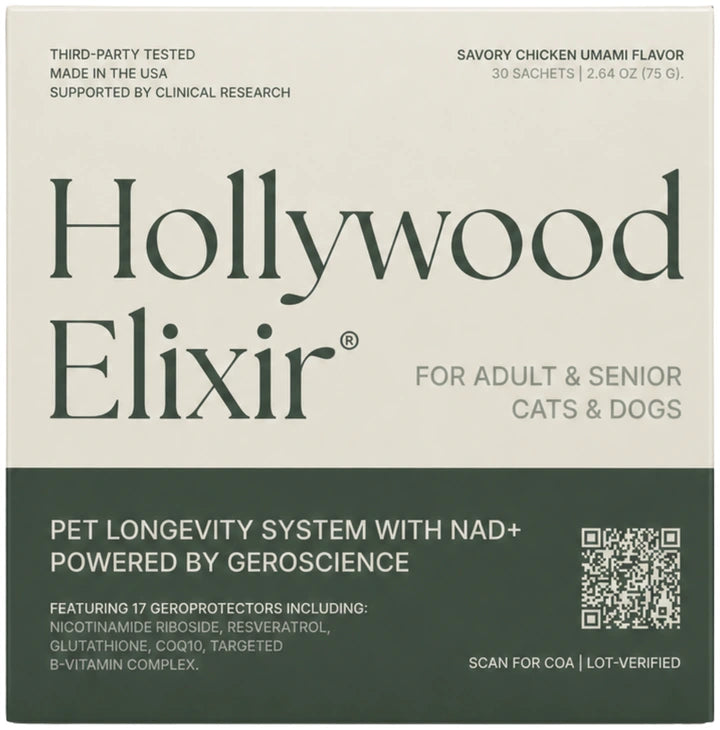
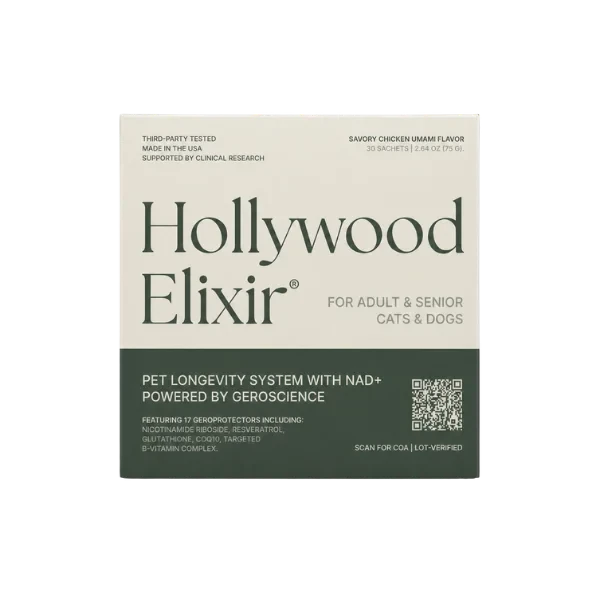
We make Hollywood Elixir, a daily nutrition powder for adult and senior dogs and cats. It's built around nicotinamide riboside, an NAD+ precursor, with CoQ10, glutathione and 14 more actives, and every active amount is printed on the label. It's a supplement, not a Felycin-CA1 substitute: it isn't designed to do what Felycin-CA1 does, and it hasn't been tested for lifespan. Its case is practical: one daily sachet stirred into food (half a sachet for cats under 7 lb) instead of a cupboard of separate supplements. If your cat takes Felycin-CA1, check with your vet before adding it or any other supplement. See the full formula and serving guide.
In its trial, the heart wall thinned slightly on the label dose and thickened on placebo.
Educational content only. This material is not a substitute for veterinary advice. Always consult your veterinarian about your cat’s specific needs. These statements have not been evaluated by the Food and Drug Administration. Products mentioned are not intended to diagnose, treat, cure, or prevent any disease.
Glossary
HCM: hypertrophic cardiomyopathy, a thickening of the heart muscle and the most common heart disease in cats.
Subclinical: present, but not yet causing heart failure or other signs.
Sirolimus: the drug name for rapamycin.
mTOR: a protein complex that controls cell growth; rapamycin blocks it.
Conditional approval: FDA permission to sell an animal drug for up to five years while full effectiveness evidence is collected. Off-label use isn't allowed.
Echocardiogram: an ultrasound scan of the heart, used to measure wall thickness.
Related Reading
Aging & Senior Cat Guidance
• Cat Age Calculator: Cat Years to Human Years
• Cat Lifespan by Breed
• Lethargy in Cats
• Senior Cat Not Eating
• Cat Drinking A Lot
• Why Is My Senior Cat Withdrawn?
Healthy Aging Support
• NAD+ for Cats
• NMN for Cats
• Vitamins For Older Cats
• Senior Cat Food
• Longevity Drugs for Cats
References
Sources and further detail
- PRN Pharmacal / TriviumVet (label rev. May 2025), *Felycin-CA1 (sirolimus delayed-release tablets) prescribing information*, DailyMed
- FDA (14 March 2025), FDA conditionally approves drug for management of ventricular hypertrophy in cats
- Luis Fuentes V et al. *Journal of Veterinary Internal Medicine* (2020). ACVIM consensus statement guidelines for the classification, diagnosis, and management of cardiomyopathies in cats
- Kaplan JL, Rivas VN, Walker AL et al. *JAVMA* (2023). Delayed-release rapamycin halts progression of left ventricular hypertrophy in subclinical feline hypertrophic cardiomyopathy: results of the RAPACAT trial
- FDA, *Conditional approval explained: a resource for veterinarians* (checked November 2026)
- FDA Center for Veterinary Medicine (2025), *Corrected Freedom of Information Summary: application for conditional approval 141-604, felycin-CA1*
- TriviumVet, *felycin-CA1 and the HALT study* (checked November 2026)
- PRN Pharmacal, *Felycin-CA1: for cat owners* (checked November 2026)
- FDA, *Animal drug compounding* (checked November 2026)
- PBI-Gordon Companies (31 July 2025), FDA gives green light to first-ever drug for subclinical HCM in cats: Felycin-CA1 now available to veterinarians
- European Medicines Agency (2025), *Sirolimus TriviumVet: withdrawn application*
- PRN Pharmacal, *Felycin-CA1 product page* (checked November 2026)
FAQ
Is Felycin-CA1 FDA approved?
It's conditionally approved. The FDA granted conditional approval on March 14, 2025, pending a full demonstration of effectiveness under application 141-604. The HALT study is meant to supply that evidence.
What strengths does Felycin-CA1 come in?
Three: 0.4 mg, 1.2 mg and 2.4 mg tablets, each in a 12-tablet carton. At the label dose of 0.3 mg/kg a week, one 1.2 mg tablet covers cats of 3.3 to 4.8 kg (about 7.3 to 10.6 lb).
What happens if I miss a dose of Felycin-CA1?
The FDA label doesn't give missed-dose instructions. Ask your vet what to do, and don't change the weekly schedule on your own.
Can Felycin-CA1 tablets be split or crushed?
No. The label says to swallow them whole, without chewing, splitting or crushing, and to give them with a meal. The coating protects people handling the tablets.
Who makes Felycin-CA1?
TriviumVet, a veterinary drug company in Waterford, Ireland, developed it and sponsored the FDA application. In the US it's sold under the PRN Pharmacal brand of Pegasus Laboratories, and both companies are part of PBI-Gordon.
Can my cat get vaccinated while taking Felycin-CA1?
Talk to your vet first. The label says it may affect vaccine response. A killed rabies vaccine still produced an adequate response in testing, but other vaccines, such as those for feline herpesvirus, calicivirus, panleukopenia and leukemia, haven't been evaluated.
How long does a cat stay on Felycin-CA1?
The US distributor recommends it as a lifelong medication for cats with subclinical HCM. No studies have followed what happens after it's stopped, so don't stop it without your vet.
Is Felycin-CA1 available in the UK or Europe?
Not as of November 2026. TriviumVet withdrew its European application for sirolimus in cats on March 18, 2025, after the EMA's veterinary committee said the data didn't allow it to conclude the benefits outweigh the risks.
Is Felycin-CA1 safe for cats with kidney disease?
It hasn't been evaluated in cats with chronic kidney disease, hyperthyroidism or other significant systemic disease. Your vet will weigh those conditions before prescribing it.
Can a healthy cat take Felycin-CA1 for anti-aging?
No. It's conditionally approved for one heart condition, and FDA rules don't allow it to be prescribed for anything else, including aging.
Discover LPL-01: How This Fits Into a Larger Feline Longevity System
Aging in cats unfolds quietly. It’s not driven by a single failure, but by gradual shifts across interconnected systems — cellular energy, oxidative balance, immune tone, and tissue integrity — each influencing the others over time.
This article explores one layer of that system. To understand what actually shapes long-term health, you need to step back and look at how these layers interact.
Start with the underlying science:
- Feline Geroscience Framework →
A structured view of how aging progresses across cellular energy, inflammation, and resilience systems. - Senior Biological Defense Coverage (BDC) Modeling →
A systems-level map of which biological pathways decline first, and how layered interventions can support them. - Feline Geroscience Evidence System →
A breakdown of what is strongly supported in the literature versus what is still emerging. - LPL-01 Standard →
The formulation system that translates these models into real-world supplementation—covering multiple pathways in a coordinated way.
Essential Summary
What is Felycin-CA1?
A once-weekly sirolimus (rapamycin) tablet, FDA conditionally approved in March 2025 for heart-wall thickening in cats with subclinical HCM.
Prescription only, dosed at 0.3 mg/kg by weight band, and not for cats with diabetes or liver disease.
It needs bloodwork after one to two months and every 6 to 12 months; full approval depends on the HALT study.

Hollywood Elixir® Senior Cat Supplement
17 science-backed actives in every sachet
Supports senior energy, mobility & cognition
60-day first-box guarantee
Supporting an older cat today?
Daily nutrition for the cells that keep them going.
Hollywood Elixir brings nicotinamide riboside, CoQ10, glutathione and 14 more actives, every active amount printed, into the meal they already love. It's a supplement, not a Felycin-CA1 substitute.

Hollywood Elixir® Senior Cat Supplement
17 science-backed actives in every sachet
Supports senior energy, mobility & cognition
60-day first-box guarantee
Learn about how our DVMs think about cat aging
Dr. JoAnna Pendergrass DVM

Hollywood Elixir® Senior Cat Supplement
17 science-backed actives in every sachet
Supports senior energy, mobility & cognition
60-day first-box guarantee
Explore your cat’s changing needs over time
Related Reading
Felycin-CA1 is a once-weekly sirolimus tablet for cats with early HCM, FDA conditionally approved in March 2025. Dosing by weight, side effects, cost.


