5 Coat Warning Signs of Illness in Dogs & Cats
Read full insightDouble-Coated Dog Shedding: Coat Blow, Deshedding, and When It Is Not Normal
By La Petite Labs Editorial 14 min read
A double-coated dog sheds both long guard hairs and a softer, more numerous undercoat. During a coat blow, the undercoat may release in visible tufts; the practical response is short, gentle grooming sessions, strategic bathing when the coat can be rinsed and dried completely, and daily skin checks. Deshedding removes hair already loosening—it does not stop the follicle cycle. [1] [2] [4]
Normal coat blow should leave broadly intact coverage and comfortable skin. Bald patches, rapidly expanding thin areas, intense itch, pain, redness, crusts, odor, sores, or a major change from the dog’s baseline shifts the problem from housekeeping to health. Seasonal timing varies by breed and climate, so the dog’s pattern matters more than a universal spring-and-fall calendar. [3] [5]
- Double coats combine guard hairs with a denser secondary undercoat. [1]
- Coat blow is heavy normal replacement, not a diagnosis made from tufts alone.
- Use frequent short sessions during active release and stop before skin becomes sore.
- Mechanical tools collect loose hair; they do not turn off shedding biology. [2] [4]
- Bath only when complete rinsing and skin-level drying are realistic.
- Do not shave a double coat merely to stop shedding; cutting shafts does not stop follicles cycling.
- Baldness, itch, pain, inflammation, odor, lesions, or sudden change requires a different pathway. [5]
First Decide Whether This Is Coat Blow or Hair Loss
Start by parting the coat to the skin in several regions. A normal heavy shed can look dramatic in the brush while coverage remains broadly even and skin remains comfortable. True alopecia produces visible thinning or absence of hair where coat should be present, and may bring itch, inflammation, scale, color change, odor, or lesions. [5]
This page owns normal double-coat biology and removal technique. The dog grooming tips guide owns the full grooming routine, while symptom pages own patchy loss, disease-associated shedding, and diagnosis. The boundary matters because the correct response to loose undercoat is mechanical; the correct response to inflamed or disappearing coat begins with cause-finding.
Understand the Two Layers Before Choosing a Tool
Primary guard hairs are coarser and shape much of the coat’s color and outer texture. Secondary undercoat hairs are softer, finer, and more numerous. Together they create a coat that can look smooth on top while holding a dense layer of released fiber beneath. A tool that touches only the guard coat may collect little during a blow; a sharp tool driven to skin may injure while collecting plenty. [1]
Use fingers and a wide-toothed comb to learn depth and resistance before increasing intensity. The goal is to lift hair that releases with modest tension, not to force every hair out in one session. If the dog flinches, turns, braces, or skin lifts sharply with the tool, reduce pressure, change implement, or stop.
Hair Follicles Cycle; Brushes Do Not Flip the Switch
Canine follicles move through anagen growth, catagen regression, and telogen rest. Shedding is the visible release side of that biology. In a classic Beagle cohort, peaks in combed hair tracked higher proportions of telogen follicles in spring and fall. The brush measured and removed output; it did not create or stop the cycle. [2] [4]
This distinction makes realistic expectations possible. A successful grooming session reduces the amount of loose hair available to fall around the home and prevents released undercoat from remaining packed. It does not promise zero hair tomorrow. Claims that one tool, shampoo, or food “stops shedding” need evidence for the follicle, not merely a fuller brush.
Season Is a Clue, Not a Universal Calendar
Small canine studies support seasonal influence, but they also show breed and environment differences. Beagles in one study peaked in spring and fall; Boxers, Labradors, and Schnauzers in tropical Brazil showed different follicular patterns, with temperature and photoperiod correlations in two breeds. These are useful signals, not a global timetable. [2] [3]
Indoor light, climate control, geography, neuter status, health, and coat genetics may alter what an owner observes, yet direct evidence for every modern household pattern is limited. Establish the individual baseline: when heavy release starts, how long it lasts, where it is densest, and whether skin remains normal. Compare the dog with itself before comparing it with the season.
Use Short Sessions During Active Release
During a clear coat blow, begin with five to ten calm minutes daily or every other day, depending on tolerance and how easily hair releases. That is an editorial handling protocol, not a trial-derived dose. Work by region, support loose skin, and stop while the dog is still comfortable. Several modest sessions are safer and often more effective than one marathon that leaves skin tender.
Outside active release, reduce frequency to what prevents packing and allows skin inspection. The right endpoint is not an empty brush; it is a coat that parts easily, allows air and movement through the undercoat, and reveals comfortable skin without repeated scraping. Track tool passes and dog response if family members share grooming.
Double coats combine guard hairs with a denser secondary undercoat.
Start Broad, Then Move to the Undercoat
First loosen surface hair with fingers, a soft brush, or a wide comb. Next, use an undercoat-appropriate rake or comb in the direction of growth, in small sections, with minimal pressure. Finish with a comb or brush that confirms the coat is moving freely. Tool names are less important than tooth length, spacing, edge quality, and how they meet this dog’s coat. [1] [6]
Avoid repeatedly dragging a bladed tool over the same area because a large pile can include cut or broken coat, not only released undercoat. Examine what comes out: naturally shed hairs, broken short fragments, and hair cut by an edge tell different stories. When in doubt, ask a professional groomer to demonstrate on one region and show a safe endpoint.
Treat Resistance as Information, Not a Challenge
A sudden stop in the tool may be a tangle, a compacted patch, a skin fold, a scar, or a tender lesion. Do not add force. Separate hair with fingers, change angle, or work from the ends. If the mass is tight to skin, extensive, damp, odorous, or painful, professional removal is safer than pulling through it.
Compacted undercoat differs from a discrete mat but can create similar access problems: the outer coat looks normal while the base feels felted and airless. Lift small sections and inspect skin. Stop for redness, moisture, discharge, scabs, parasites, or pain. A grooming goal never outranks the dog’s comfort or the need to see what lies beneath.
Bathe Strategically, Not Automatically
A bath can loosen soil and released undercoat, especially when followed by patient sectioned rinsing and complete drying. It is not mandatory for every shed and should not be used when severe matting prevents safe skin access. Choose a dog-labeled product appropriate to current skin, keep water comfortably lukewarm, and rinse until no removable residue remains. [7]
The useful timing is when brushing has opened the coat enough for water to reach and leave, and when the household can dry to skin. Bathing a packed coat without full rinse and dry can add moisture and friction to an already dense layer. If odor, greasiness, redness, or itch drives frequent bathing, investigate the skin state instead. [5] [7]
Drying Can Do the Heavy Lifting—If It Stays Comfortable
A controlled high-velocity dryer can separate damp coat and move already released undercoat, but it is a handling tool, not a medical treatment. Introduce sound and airflow gradually, use secure non-slip footing, protect eyes and ear openings, and keep the nozzle moving. Air should never make skin hot, painful, or violently ripple in one spot.
Work from the skin outward in sections and pause to comb what has loosened. For dogs with severe fear, breathing disease, pain, fragile skin, or neurologic problems, a professional or alternative drying method may be safer. Stop if the dog panics, coughs, becomes weak, or shows skin distress. More airflow is not the same as better grooming.
Do Not Shave Merely to Stop Shedding
Shaving the visible hair shaft does not stop follicles from cycling or prevent undercoat release. It may make shed hairs shorter and temporarily change the amount of coat available to trap them, but it is not a biological shedding treatment. The hair cycle continues beneath the clipped surface. [4]
This is not a universal ban on clipping. Veterinary access, severe matting, wound care, surgery, heat management in an individual medical context, or a groomer’s safety judgment can change the decision. Discuss the reason, area, expected regrowth, sun exposure, and aftercare. Avoid promising that shaving either permanently ruins or reliably improves every double coat; outcomes vary.
Mechanical tools collect loose hair; they do not turn off shedding biology.
DVM Voice: Clinical Vignette of When Skin Changes Point Deeper Than the Surface
Case contributed by Sarah Calvin, DVM
Rosey, a 10-year-old Shih Tzu, was brought in after two weeks of paw redness and head shaking. Her owner had also noticed lower energy, thinning abdominal hair, and mild generalized itchiness over the previous few months.
Examination showed inflammation in the ears, skin folds, and paws. Testing confirmed mixed yeast and bacterial infections, while parasites and fungal disease were ruled out. Because Rosey’s skin changes appeared alongside reduced energy and coat thinning, her veterinarian performed a broader workup, which revealed hypothyroidism as a likely underlying contributor.
Her care required a staged approach: treating the infections, addressing the thyroid imbalance, and then restoring the skin barrier through diet, bathing support, paw care, and omega-3 supplementation.
Six months later, Rosey’s owner reported a thicker coat, fewer tangles, less breakage, no itch, and restored energy.
Clinical takeaway: Rosey’s case shows why skin and coat changes should not be treated as cosmetic alone. Healthy skin depends on immune balance, endocrine health, nutrition, barrier integrity, and daily support for resilient coat growth.
Single-case vignette. Not generalizable. Veterinary diagnosis and oversight are essential for itching, redness, ear irritation, hair thinning, recurrent infections, or suspected endocrine disease.
Measure Shedding Without Counting Every Hair
Choose a repeatable five-minute session on the same body regions with the same tool. Record a simple category—light, moderate, heavy, or tufting—plus skin comfort, coat coverage, itch, and any focal change. A photograph of the collected hair beside the tool can make week-to-week comparison easier than memory. [5]
Control the obvious variables: groom before or after bathing consistently, note recent professional grooming, and record major weather or household changes. The number is not a health score. Its value is change detection: a sudden large shift, longer-than-usual heavy phase, or new symptom can be described clearly to a groomer or veterinarian.
Let Breed Pages Own Breed-Specific Expectations
Double-coat architecture crosses breeds, but density, length, texture, climate adaptation, and grooming tolerance differ. The corgi shedding guide owns the compact herding-coat pattern; the German shepherd shedding guide owns that breed’s baseline and warning signs; and the golden retriever shedding guide owns retriever feathering and seasonal management.
Use this cohort page for the shared mechanism and decision method, then move to a breed page for breed-shaped expectations. A mixed-breed dog may not match either parent’s visible coat exactly. Hands-on assessment—guard-hair texture, undercoat density, parting depth, and seasonal history—is more useful than guessing from appearance alone. [1] [6]
Read the Skin Beneath the Shed
Part the coat at the neck, shoulders, back, tail base, belly, armpits, groin, and behind the ears. Look for even density, comfortable color, absence of moisture and lesions, and whether the dog tolerates touch. Dense fur can hide redness, flea debris, scabs, pustules, greasy scale, and wounds until odor or behavior changes. [5] [8]
Pay attention to distribution. Tail-base itch and chewing can raise parasite or flea-allergy questions; symmetric trunk thinning can raise a different set; focal broken hair may suggest friction or self-trauma. These are routes for veterinary reasoning, not home diagnoses. Photograph the pattern before aggressive grooming changes what can be seen.
Use the Normal Coat Blow Versus Veterinary Signal Matrix
The matrix compares hair pattern, skin, behavior, timing, and associated health change. “Normal” means the observation remains compatible with natural replacement; it does not mean a home audit can rule out every condition. The strongest signal is a coherent pattern: heavy loose undercoat, broadly preserved coverage, comfortable skin, and no meaningful systemic change. [5]
One warning sign can be enough to leave the grooming pathway, especially sudden pain, extensive lesions, or rapid hair loss. More often, several moderate changes accumulate: the shed lasts longer, odor appears, scratching rises, coat thins at the tail base, and sleep is disrupted. Use the matrix to decide the next professional, not to name the disease.
Original decision tool — Normal Coat Blow Versus Veterinary Signal Matrix: Compare distribution, skin, behavior, timing, and associated signs so owners can choose between a grooming plan and clinical assessment without attempting a home diagnosis.
• Observation: Hair distribution | Compatible with coat blow: Loose undercoat or tufts with broadly intact coverage | Raises a health question: Focal baldness, expanding thin areas, symmetric loss | Action now: Photograph before intensive grooming | Record for review: Location, symmetry, border, progression
• Observation: Skin appearance | Compatible with coat blow: Comfortable skin without lesions or marked scale | Raises a health question: Redness, pustules, crusts, sores, moisture, darkening | Action now: Stop over affected skin | Record for review: Color, lesion type, discharge, odor
• Observation: Comfort and behavior | Compatible with coat blow: Normal tolerance and ordinary sleep | Raises a health question: Itch, chewing, pain, startle, grooming avoidance | Action now: End session and assess severity | Record for review: Timing, body area, night disruption
• Observation: Timing | Compatible with coat blow: Familiar seasonal or individual pattern that trends down | Raises a health question: Abrupt onset, unusually prolonged, or escalating release | Action now: Compare with baseline log | Record for review: Start date, climate, indoor change, grooming
• Observation: Hair character | Compatible with coat blow: Released soft undercoat and some guard hairs | Raises a health question: Many broken shafts, clipped fragments, sticky or matted hair | Action now: Review tool and coat access | Record for review: Tool, pressure, resistance, hair length
• Observation: Odor and oil | Compatible with coat blow: No important change after normal grooming | Raises a health question: Strong recurrent odor, greasy scale, damp packed coat | Action now: Avoid masking fragrance | Record for review: Source area, bath timing, drying
• Observation: Tail base and rear | Compatible with coat blow: Even loose coat without itch | Raises a health question: Chewing, flea debris, papules, caudal thinning | Action now: Check prevention history; seek advice | Record for review: Parasite product, exposure, lesions
• Observation: Whole-dog health | Compatible with coat blow: Normal appetite, thirst, weight, energy, temperature tolerance | Raises a health question: Systemic change arriving with coat change | Action now: Book veterinary assessment | Record for review: Weight, thirst, appetite, medication, illness
Method: The matrix synthesizes canine hair-cycle research, coat-composition genetics, Merck’s normal-shedding versus alopecia boundary, and WSAVA individualized coat-care guidance. It emphasizes pattern coherence and deviation from baseline.
Limit: This editorial comparison is not a validated dermatology tool. Comfortable-looking skin does not exclude early disease, and warning signs cannot identify a cause without veterinary assessment.
Patchy, Symmetric, Itchy, and Broken Hair Are Different Problems
The dog shedding and patchy fur guide owns visible focal thinning and regrowth questions. Patchy loss can accompany infection, parasites, inflammation, trauma, or other causes; symmetric loss can suggest noninflammatory and endocrine patterns; broken hair can come from friction or self-trauma. The distinctions guide testing, but none can be settled by coat texture alone. [5]
Do not brush a thinning patch repeatedly to “clear the shed.” Preserve photographs, note itch and pain, inspect collars or harness contact, and list recent illness, medication, diet, parasite prevention, and grooming changes. That history makes the dermatology visit more useful and avoids turning a diagnostic sign into a grooming injury.
Know the Red Flags That End a Home Deshedding Session
Stop and arrange assessment for bald patches, rapidly expanding thin areas, intense itch, pain, heat, swelling, oozing, crusts, pustules, strong odor, bruising, marked scale, or a sudden change from baseline. Also report lethargy, weight or appetite change, increased thirst, heat intolerance, or other systemic signs that arrive with coat change. [5]
Seek urgent care for severe distress, facial swelling, breathing difficulty, collapse, extensive raw skin, or a rapidly progressing reaction. A full brush of loose hair can coexist with disease; the presence of one does not cancel the other. When the dog is uncomfortable, protect the skin and preserve the clinical signal rather than finishing the grooming plan.
Run a Seven-Day Coat-Blow Protocol
Day one: photograph coat and skin, record baseline, and complete a short broad-tool session. Days two and three: work different body regions for five to ten calm minutes. Bathe only if the coat is open enough to rinse and dry fully. After drying, comb by sections. Continue short sessions through day seven, decreasing pressure and frequency as resistance and released volume fall.
At the end, ask four questions: Is coverage still even? Is skin comfortable? Is loose volume trending down? Is the dog tolerating the routine? If yes, move to maintenance. If volume remains extreme without decline, the coat packs immediately, or any warning sign appears, use the record to seek professional grooming or veterinary assessment.
Keep Grooming, Skin Health, and Nutrition in Their Proper Lanes
A complete plan removes released hair gently, keeps the coat rinseable and dryable, and treats skin changes as health information. No brush can correct an infection or endocrine disorder; no shampoo can switch off a normal follicle cycle; and no supplement can pull compacted undercoat from the skin.
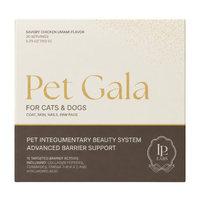
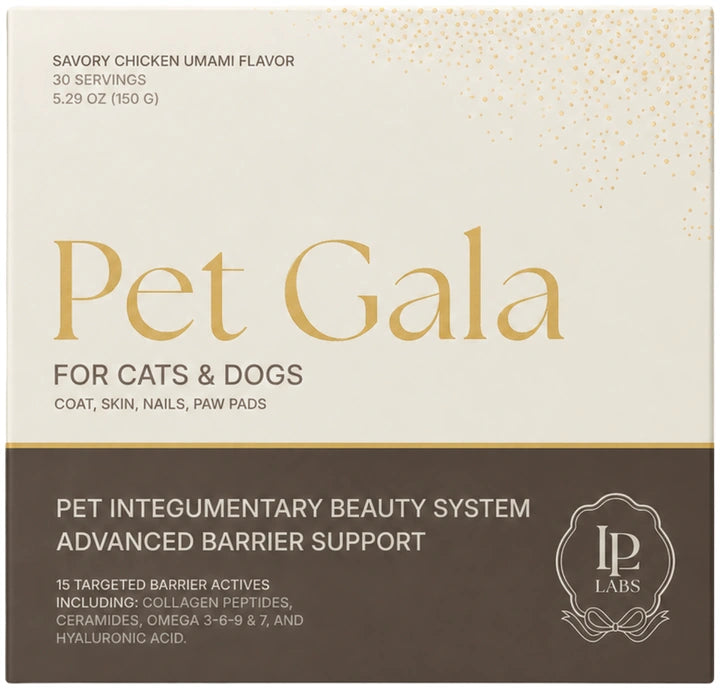
If diet adequacy or coat nutrition becomes a separate question, the dog shedding supplement guide provides an evaluation framework. Pet Gala may appear as optional skin-and-coat product context on this template, but this article makes no claim that it stops coat blow, replaces grooming, or treats allergic, parasitic, infectious, endocrine, or systemic disease. Mechanism, maintenance, and medicine should remain distinct.
Baldness, itch, pain, inflammation, odor, lesions, or sudden change requires a different pathway.
Educational content only. This material is not a substitute for veterinary advice. Always consult your veterinarian about your dog’s specific needs. These statements have not been evaluated by the Food and Drug Administration. Products mentioned are not intended to diagnose, treat, cure, or prevent any disease.
Glossary
- Guard hair: A coarser primary hair that contributes much of the outer coat’s texture, color, and surface protection.
- Undercoat: The softer, finer, more numerous secondary hairs beneath guard hairs in a double coat.
- Coat blow: A period of conspicuously heavy undercoat release during natural coat replacement.
- Anagen: The active growth phase of the hair-follicle cycle.
- Catagen: The relatively brief regression phase between active growth and rest.
- Telogen: The resting phase of a hair follicle associated with later release and replacement of hair.
- Alopecia: Partial or complete absence of hair where coat would normally be present.
- Compacted undercoat: Dense retained undercoat that resists parting and can limit airflow, skin visibility, rinsing, and drying.
Related Reading
Common Canine Integumentary Issues
• Hot Spots on Dogs
• Dog Licking Paws
• Dog Itch Relief
• Dog Skin Allergies
• Dog Dandruff
Comfort & Recovery
• Skin & Coat Supplements for Dogs
• Coat Growth Supplement for Dogs
• Dog Nail Supplement
Ingredient-Level Articles
• Biotin for Dogs
• Silica for Dogs
• Hyaluronic Acid for Dogs
• Ceramides for Dogs
References
Numbered references support claims cited in the article. Evidence context identifies the study population and design; it does not turn indirect evidence into pet-specific proof.
-
[1]
Whitaker DT, Ostrander EA. Hair of the Dog: Identification of a Cis-Regulatory Module Predicted to Influence Canine Coat Composition. Genes · 2019· DOI 10.3390/genes10050323Primary ResearchPopulation: dogEvidence boundary: Genomic association and coat-phenotype research; functional descriptions do not establish a grooming treatment effect.↩ 1 · ↩ 2 · ↩ 3 · ↩ 4 · ↩ 5
-
[2]
Al-Bagdadi FA, Titkemeyer CW, Lovell JE. Hair follicle cycle and shedding in male beagle dogs. American journal of veterinary research · 1977· PMID 879559Observational StudyPopulation: dogEvidence boundary: Nine male Beagles across ages were sampled; classic seasonal findings should not be generalized to every breed, climate, or indoor environment.↩ 1 · ↩ 2 · ↩ 3 · ↩ 4
-
[3]
Favarato ES, Conceição LG. Hair cycle in dogs with different hair types in a tropical region of Brazil. Veterinary dermatology · 2008· DOI 10.1111/j.1365-3164.2007.00642.xObservational StudyPopulation: dogEvidence boundary: Twenty-one male dogs across three breeds in one tropical location; useful for variability, not a universal shedding calendar.↩ 1 · ↩ 2
-
[4]
Müntener T, Doherr MG, Guscetti F, et al. The canine hair cycle - a guide for the assessment of morphological and immunohistochemical criteria. Veterinary dermatology · 2011· DOI 10.1111/j.1365-3164.2011.00963.xPrimary ResearchPopulation: dogEvidence boundary: Morphologic study of healthy Beagle skin in controlled conditions; supports cycle definitions rather than consumer grooming outcomes.↩ 1 · ↩ 2 · ↩ 3 · ↩ 4
-
[5]
Merck Veterinary Manual. Hair Loss (Alopecia) in Dogs. Merck Veterinary Manual · 2025GuidelinePopulation: dogEvidence boundary: Official clinical overview for recognizing when shedding becomes hair loss; it cannot diagnose a cause from appearance alone.↩ 1 · ↩ 2 · ↩ 3 · ↩ 4 · ↩ 5 · ↩ 6 · ↩ 7 · ↩ 8 · ↩ 9
-
[6]
World Small Animal Veterinary Association. Principles of Wellness. World Small Animal Veterinary Association · 2025GuidelinePopulation: bothEvidence boundary: Broad professional guidance; it does not validate a deshedding tool or fixed brushing frequency.↩ 1 · ↩ 2
-
[7]
Bajwa J. Shampoo therapy in veterinary dermatology: Benefits and practical tips. The Canadian veterinary journal = La revue veterinaire canadienne · 2025· PMID 41584245ReviewPopulation: dogEvidence boundary: Veterinary review of shampoo therapy; grooming recommendations are bounded by coat, product, skin status, and complete drying.↩ 1 · ↩ 2
-
[8]
Merck Veterinary Manual. Flea Allergy Dermatitis in Dogs and Cats. Merck Veterinary Manual · 2025GuidelinePopulation: bothEvidence boundary: Clinical pattern overview; flea allergy cannot be ruled in or out from a home coat check alone.↩
FAQ
What is a double coat on a dog?
A double coat has coarser primary guard hairs over a softer, more numerous secondary undercoat. The outer layer shapes color and texture; the undercoat creates much of the dense fiber released during a coat blow. Coat depth and texture still vary greatly across breeds and individual dogs.
What does it mean when a dog blows its coat?
Coat blow describes a period of heavy normal undercoat release. Tufts may lift from the body and the brush fills quickly, but coverage should remain broadly intact and skin should stay comfortable. It is a descriptive grooming term, not proof that every heavy shed is normal.
When do double-coated dogs shed the most?
Spring and fall peaks have been observed in a small Beagle study, but breed, coat type, temperature, photoperiod, climate, and the individual alter timing. Some household dogs release hair more diffusely. Track your dog’s start date, duration, distribution, and skin signs instead of relying on a universal calendar.
How often should I brush a dog that is blowing coat?
Start with five to ten calm minutes daily or every other day while hair releases easily, then reduce as volume falls. This is a practical handling protocol, not a clinically tested dose. Stop before skin becomes tender, and divide the body into regions rather than trying to empty the coat in one marathon.
What is the best deshedding tool for a double coat?
No single tool is best for every double coat. Match tooth length and spacing to coat depth, begin with fingers or a wide comb, and use minimal pressure. The right tool reaches loose undercoat without scraping skin, cutting large amounts of healthy coat, snagging repeatedly, or making the dog brace and flinch.
Should I bathe a double-coated dog during coat blow?
A bath can help loosen released coat when the coat is open enough to wet and rinse to skin and can be dried fully afterward. Do not soak severe mats or packed coat and leave it damp. Use a dog-labeled product appropriate to the skin and stop if bathing causes irritation or distress.
Should I shave a double-coated dog to reduce shedding?
Not merely to stop shedding. Clipping shortens visible shafts but does not stop follicles from cycling. Medical access, severe matting, wound care, or an individualized professional plan can justify clipping. Discuss the reason, expected regrowth, sun exposure, and aftercare rather than treating shaving as either universally harmless or universally forbidden.
How can I tell normal shedding from alopecia?
Normal shedding is more compatible with broadly even coverage and comfortable skin. Alopecia means visible thinning or absent coat and may occur with itch, pain, redness, scale, odor, lesions, or systemic change. The pattern helps route the question, but veterinary assessment—not a home coat check—determines the cause.
Do indoor double-coated dogs shed all year?
Some owners observe a more diffuse pattern indoors, but direct studies comparing modern indoor and outdoor pet environments are limited. Seasonal canine studies show sensitivity to environmental cues and breed differences. Use the individual dog’s monthly baseline rather than assuming year-round shedding is automatically normal or abnormal.
When should I call a vet about a double-coated dog shedding?
Arrange assessment for bald patches, rapidly thinning coat, intense itch, pain, redness, crusts, sores, odor, marked scale, or sudden deviation from baseline—especially with weight, appetite, thirst, energy, or temperature-tolerance changes. Seek urgent help for severe distress, facial swelling, breathing difficulty, collapse, or rapidly progressing raw skin.
Discover LPL-01: How This Fits Into a Complete Canine Integumentary Support System
Skin, coat, and nails aren’t cosmetic features. They’re the visible surface of deeper biological systems—barrier function, hydration balance, structural protein turnover, and lipid integrity—working in concert.
When these systems fall out of sync, it shows: dull coat, shedding, dryness, brittleness, sensitivity.
This article explores one piece of that puzzle. If you want to understand how true coat quality and skin resilience are built—and what actually moves the needle—you need to zoom out.
Start with the underlying science:
- Canine Skin & Coat Framework →
A structured view of how skin, coat, and nail health are maintained across collagen synthesis, lipid balance, and barrier function. - Barrier Protection Coverage Modeling →
A systems-level map of which integumentary pathways are most vulnerable—and how layered nutritional inputs can support them. - 2026 Market Research: Best Dog Skin & Coat Supplements →
A category review of dog formulas for coat quality, skin barrier support, fatty acid balance, collagen support, shedding, and visible beauty. - LPL-01 Standard →
The formulation system that translates these models into real-world supplementation—covering multiple pathways in a coordinated way.
Pet Gala™
From $79
The scratching is completely gone, his coat looks healthy and shiny!
— Lena
He was struggling with itching, now he's glowing.
— Grace
Learn about how our DVMs think about the canine barrier
Dr. Sarah Calvin DVM
Pet Gala™
From $79
Related Reading