How to Choose the Best Dog Nail Supplement

Compare ingredients, disclosed amounts, safety, and fit

By La Petite Labs Editorial 15 min read

Woman cuddling a golden retriever and a collie beside a Pet Gala box and a food bowl
Pet Gala™ Daily skin & coat system · adult & senior dogs Starting at $56/month 

How to Choose the Best Dog Nail Supplement

Compare ingredients, disclosed amounts, safety, and fit

Portrait of Dr. Sarah Calvin, DVM
Medical review

Medically reviewed by Dr. Sarah Calvin, DVM

Medical evidence and safety reviewedon . The current page is written and editorially maintained by La Petite Labs.

Review scope: Medical evidence, safety guidance, and evidence limitations; product selection and later editorial structure are by La Petite Labs.

Dr. Sarah Calvin, DVM is a small-animal veterinarian with interests in dermatology and internal medicine. She supports La Petite Labs by helping ensure our skin, coat, and nail education remains biologically accurate, conservative, and easy for pet parents to understand. A graduate of Washington State University, she has clinical experience in internal medicine, diagnostic ultrasonography, and nutrition-focused care.

The best dog nail supplement is not the one with the longest ingredient list. It is the one whose label you can evaluate: disclosed amounts, clear evidence limits, no unnecessary overlap with other products, and a sensible place beside a complete diet and regular nail care.

This buyer guide compares biotin, zinc, fatty acids, collagen peptides, MSM, and silica, then shows exactly what Pet Gala provides per sachet. It also separates ordinary product selection from brittle-nail warning signs that need veterinary assessment. Nutritional support may help normal keratin growth, but canine trials have not established a supplement treatment for otherwise healthy dogs with brittle or cracked nails.

  • Best buying signal: disclosed amounts and conservative claims, not ingredient count.
  • Evidence limit: no canine trial has tested supplements for ordinary brittle nails in otherwise healthy dogs.
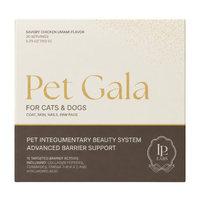
  • Pet Gala discloses collagen 500 mg, omega 3-6-9 150 mg, MSM 100 mg, silica 10 mg, biotin 50 mcg, and zinc 1.5 mg per sachet.
  • Avoid stacking overlapping mineral, vitamin, oil, skin, coat, joint, and nail products.
  • Pain, bleeding, swelling, discharge, limping, sudden change, or several affected nails need veterinary assessment.

Quick Verdict: What Makes a Good Dog Nail Supplement?

A good dog nail supplement is easy to evaluate before you buy: every active is disclosed per serving, the formula does not duplicate the rest of your dog’s supplement stack, and the claims stay within what canine evidence can support. Nutrition can supply building blocks for normal keratin growth, but it is not a treatment for trauma, infection, or immune-mediated nail disease.

Start with the label, not the ingredient count. A shorter disclosed formula can be easier to assess than a long proprietary blend. Pair any supplement with a complete diet and regular nail care, and ask your veterinarian about sudden, painful, bleeding, or multi-nail changes.

Woman cuddling a golden retriever and a fluffy white dog while holding a Pet Gala box beside a food bowl

Pet Gala Dog Nail Ingredients and Amounts per Sachet

Pet Gala uses a once-daily food-mixed sachet and discloses the nail-related ingredients rather than hiding them in a proprietary blend. The amounts below describe what is on the label; they are not presented as clinically proven doses for brittle nails in otherwise healthy dogs.

  • Marine collagen peptides: 500 mg
  • Omega 3-6-9: 150 mg
  • MSM: 100 mg
  • Silica: 10 mg
  • Biotin: 50 mcg
  • Zinc: 1.5 mg

See Pet Gala ingredients and serving details.

Woman holding a Pet Gala box beside a curly-coated brown dog outdoors

The Evidence Ladder: What We Know and What We Do Not

The most important buying distinction is between nutritional rationale and proven canine nail outcomes. Biotin, zinc, fatty acids, amino acids, and sulfur-containing compounds have biological roles relevant to keratinized tissues. Some fatty-acid and vitamin-E protocols have also been used in specific diagnosed canine nail diseases.

What we do not have is direct trial evidence showing that a supplement improves ordinary brittle or cracked nails in otherwise healthy dogs. No canine trial has tested Pet Gala for that outcome. Ingredient inclusion therefore explains the formulation rationale; it does not guarantee stronger nails or replace diagnosis and nail care.

Woman cuddling a Dalmatian while holding a Pet Gala box

Biotin: A Keratin Nutrient, Not a Standalone Fix

Biotin is involved in normal nutrient metabolism and is commonly included in skin, coat, and nail formulas. Dog research is not nail-specific, so a biotin label should not be read as proof that a product will correct brittle claws. Read more about the evidence and limitations in biotin for dogs.

Biotin makes the most sense as one disclosed part of a balanced formula. Tell your veterinarian about biotin-containing supplements before certain laboratory tests, and do not add several biotin products simply because the ingredient is water-soluble.

Cream-colored dog resting on a person's lap beside a Pet Gala box and a food bowl

Zinc: Essential When Needed, but More Is Not Better

Zinc supports normal skin and keratinized tissues, and true deficiency or impaired absorption can affect nails. Most dogs eating a complete commercial diet are not automatically zinc deficient. High-dose or overlapping mineral products should not be used as a diagnostic shortcut. See the broader safety context in zinc for dogs.

When comparing products, favor a disclosed amount that can be reviewed alongside the diet and other supplements. Dogs with suspected deficiency, chronic disease, or a home-prepared diet need individualized veterinary nutrition advice rather than a generic nail stack.

“Nail care is visible care: smoother edges, fewer splits, and paws that look well-kept.”

Fatty Acids: Supportive Evidence Comes from Nail Disease

Omega fatty acids have a more relevant canine evidence lane than many beauty ingredients because they have been used in management plans for particular inflammatory or immune-mediated nail diseases. That evidence does not establish that omega supplements fix routine cosmetic splitting in healthy dogs. Learn how sources and fatty-acid families differ in fatty acids for dogs.

A buyer should check the disclosed amount, the rest of the diet, and whether another fish-oil or coat product is already being used. Adding several oil products can increase calories and make the routine harder to interpret.

Hand lifting a sachet from an open Pet Gala box beside a dog's long golden coat

Collagen Peptides: Structural Rationale, Limited Nail Outcomes

Collagen peptides provide amino acids used throughout connective tissues. That is a formulation rationale, not direct proof of stronger dog nails. There are no direct canine brittle-nail trials establishing an effective collagen dose for this purpose. See the ingredient overview in marine collagen peptides for dogs.

Use dose disclosure to compare products, but avoid assuming that the largest milligram number is automatically the best option. Overall diet quality, nail mechanics, and the cause of breakage remain more important than a single structural ingredient.

Woman leaning toward a golden retriever in a kitchen while holding a Pet Gala box

MSM and Silica: Formulation Rationale with Clear Limits

MSM supplies an organic sulfur compound and silica is often included in beauty formulas, but neither has direct clinical evidence for ordinary brittle dog nails. Pet Gala discloses 100 mg MSM and 10 mg silica per sachet. Those amounts should be treated as label facts, not as proven nail-treatment doses. Review the separate evidence pages for MSM and silica.

If a seller describes either ingredient as rebuilding, hardening, or curing dog nails on a fixed timeline, ask for dog-specific outcome evidence. A transparent evidence limit is a stronger buying signal than a mechanistic promise.

Man cuddling two dogs while holding a Pet Gala box

How to Compare Labels Without Creating a Risky Stack

  • List every supplement, fortified treat, and therapeutic diet your dog receives.
  • Compare per-serving amounts rather than front-label ingredient names.
  • Check repeated minerals, fat-soluble vitamins, oils, and flavor allergens.
  • Prefer one primary formula over several overlapping skin, coat, joint, and nail products.
  • Bring the combined labels to your veterinarian when your dog has chronic disease or takes medication.

The goal is not the longest label. It is a routine whose total exposure is visible and easy to discuss with a veterinarian.

Powder, Chew, or Liquid: Choose the Format You Can Use Reliably

Format is mainly a compliance decision. Powders can mix into food, chews can be convenient, and liquids can be measured, but no format has proven superiority for canine nail outcomes. Choose the product your dog will accept at the labeled serving without adding multiple formats to solve the same problem.

Introduce one change at a time and monitor appetite, stool quality, itching, or other unexpected changes. Stop and seek veterinary advice for a concerning reaction. Consistency helps you evaluate tolerability; it does not turn limited evidence into a guaranteed result.

“The safest routine is usually the simplest: one primary supplement, minimal overlap.”

Woman in a white coat sitting with a pug while holding a Pet Gala box

DVM Voice: Clinical Vignette of When Skin Changes Point Deeper Than the Surface

Case contributed by Sarah Calvin, DVM

Rosey, a 10-year-old Shih Tzu, was brought in after two weeks of paw redness and head shaking. Her owner had also noticed lower energy, thinning abdominal hair, and mild generalized itchiness over the previous few months.

Examination showed inflammation in the ears, skin folds, and paws. Testing confirmed mixed yeast and bacterial infections, while parasites and fungal disease were ruled out. Because Rosey’s skin changes appeared alongside reduced energy and coat thinning, her veterinarian performed a broader workup, which revealed hypothyroidism as a likely underlying contributor.

Her care required a staged approach: treating the infections, addressing the thyroid imbalance, and then restoring the skin barrier through diet, bathing support, paw care, and omega-3 supplementation.

Six months later, Rosey’s owner reported a thicker coat, fewer tangles, less breakage, no itch, and restored energy.

Clinical takeaway: Rosey’s case shows why skin and coat changes should not be treated as cosmetic alone. Healthy skin depends on immune balance, endocrine health, nutrition, barrier integrity, and daily support for resilient coat growth.

Single-case vignette. Not generalizable. Veterinary diagnosis and oversight are essential for itching, redness, ear irritation, hair thinning, recurrent infections, or suspected endocrine disease.

Explore Pet Gala Research →
Woman smiling beside a chocolate-brown dog while holding a Pet Gala box

When Pet Gala May Be a Reasonable Fit

Pet Gala may suit an owner who wants one disclosed skin-coat-nail formula, already provides a complete diet and appropriate nail care, and understands that nutritional support is adjunctive. It can simplify a routine that would otherwise use separate collagen, biotin, mineral, and fatty-acid products.

It is not a substitute for diagnosis, medication, treatment of nail-fold infection, or repair of a painful broken nail. Check the current ingredient label for dietary sensitivities and review the full routine with your veterinarian when your dog has a medical condition.

See Pet Gala ingredients and serving details.

Hand petting a brown dog beside a Pet Gala box and a bowl of food

When a Nail Supplement Is the Wrong First Step

Do not start with a supplement when a nail breaks high and bleeds, the nail bed is swollen or discharging, the dog is limping, several nails change suddenly, or paw licking and odor suggest inflammation or infection. Chronic or recurrent changes can also be associated with immune-mediated or other medical conditions.

Use the diagnostic guide to review brittle dog nail causes and warning signs. A veterinarian should determine the cause; the commercial comparison on this page is for choosing adjunctive support after urgent and underlying problems are addressed.

German shepherd raising a paw beside a Pet Gala box on a small table

What to Track During a Consistent Trial

Nails grow outward, so the damaged tip does not change immediately. Avoid fixed one- or two-week promises. Take a photo after each trim in the same lighting and at a similar nail length, then record new splits, snagging, paw licking, terrain, and trim dates.

If the pattern is unchanged or worsening, reassess the presumed cause instead of adding another bottle. A useful trial keeps other variables stable and includes routine nail care; it cannot prove that a supplement caused every change you observe.

Daily Nail Care Still Does Most of the Mechanical Work

Sarah Calvin, DVM, emphasized in her medical review that daily nail habits often matter more than nutrition unless a true nutritional deficiency exists. Keep paws clean and dry, trim or file small amounts regularly, protect nails during long periods on abrasive surfaces, and make handling sessions calm and positive.

These steps reduce leverage, snagging, and repeated trauma while new nail grows. Nutrition cannot outwork an overlong edge, chronic licking, or ongoing inflammation.

Hydration is important to general health, but it is not a specific brittle-nail treatment and should not be presented as a primary nail intervention.

Buyer Checklist: Six Questions Before You Purchase

  • Are all active amounts disclosed per serving?
  • Does the company distinguish dog evidence from human or mechanistic evidence?
  • Will this duplicate minerals, oils, or vitamins already in the routine?
  • Is the format realistic for daily use?
  • Does the label fit known allergies, conditions, and medications?
  • Have painful, sudden, infectious, or multi-nail changes been evaluated first?
Man leaning toward a golden retriever while holding a Pet Gala box beside a food bowl

Pet Gala Compared with Single-Ingredient Nail Products

A single-ingredient product can be appropriate when a veterinarian has identified a specific need. Pet Gala takes a different approach: one disclosed skin-coat-nail formula with collagen peptides, fatty acids, MSM, silica, biotin, and zinc. The advantage is routine simplification, not proof that every ingredient independently improves nails.

Choose the single-ingredient route for a defined clinical reason. Choose a multi-nutrient product when the aim is convenient adjunctive support and the combined label fits the dog’s diet and health context.

Brown-and-white dog raising a paw beside a Pet Gala box held in a person's hand

The Bottom Line on the Best Dog Nail Supplement

The best dog nail supplement is the one you can assess honestly: disclosed amounts, conservative claims, no unnecessary overlap, and a clear place beside diet, grooming, and veterinary care. Pet Gala is a buyer option for owners who prefer one transparent daily formula rather than a stack.

No supplement can promise to fix brittle nails without knowing why they are brittle. Compare the formula here, use the diagnostic page for causes and warning signs, and let persistent or painful nail changes guide you to a veterinarian.

See Pet Gala ingredients and serving details.

Medical Review and Editorial Scope

Sarah Calvin, DVM, medically reviewed the underlying nail-health evidence, safety guidance, and evidence limitations on November 24, 2025. La Petite Labs is responsible for the product-selection framework, current commercial comparisons, label presentation, and later editorial structure.

The medical review supports the clinical boundaries on this page; it is not an endorsement of Pet Gala and does not establish that the product has been clinically proven to improve brittle nails.

“A polished paw is a small detail that changes the whole impression.”

Educational content only. This material is not a substitute for veterinary advice. Always consult your veterinarian about your dog’s specific needs. These statements have not been evaluated by the Food and Drug Administration. Products mentioned are not intended to diagnose, treat, cure, or prevent any disease.

Glossary

  • Brittle Nails: Nails that chip, peel in layers, or crack easily, especially after trimming.
  • Peeling (Delamination): When the outer nail layers separate, creating a flaky, rough edge.
  • Snagging: Nails catching on fabric or carpet, often due to sharp corners or uneven wear.
  • Quick: The sensitive inner portion of the nail containing blood vessels and nerves.
  • Integumentary System: The skin, coat, and nails considered as one outward “presentation” system.
  • Supplement Stacking: Using multiple supplements at once, increasing the chance of overlapping ingredients.
  • Trace Minerals: Minerals needed in small amounts; overlap across products can raise safety concerns.
  • Label Overlap: When two products contain the same vitamins/minerals, increasing total daily intake.
  • Visible Signals: Owner-observed changes such as smoother nail edges, fewer splits, and a more polished paw.

Related Reading

References

FAQ

What is the best supplement for dog nails?

The best supplement for dog nails is one that supports a smoother, stronger-looking nail surface while fitting cleanly into your dog’s existing routine. Owners typically want fewer chips after trims, less peeling, and nails that feel less rough to the touch. Look for a product designed for nails as part of overall skin and coat presentation, and avoid stacking multiple overlapping chews.

Why do dog nails get brittle and crack easily?

Brittle nails often reflect a mix of factors: frequent wear on pavement, long intervals between trims, paw licking, and overall skin-and-coat condition. Sometimes the nails simply can’t hold a clean edge, so they peel or split right after grooming. A supplement can support the visible finish, but it works best alongside consistent trimming and a stable diet.

How long until a nail supplement shows visible changes?

Nails improve as new nail grows in, so changes are usually noticed gradually rather than overnight. Many nail-quality supplements are positioned for regular use to maintain condition, which aligns with what owners see: fewer tiny chips after trims and a smoother edge over time. Track progress with quick photos after each trim so you can compare the same nail length.

Do senior dogs need different nail support supplements?

Senior dogs may show more nail roughness because activity patterns change, grooming tolerance shifts, and paws can look drier overall. The goal is still visible comfort and a well-kept look: nails that don’t snag and paws that are easier to handle. Because seniors are more likely to be on medications or joint products, review supplement overlap with your veterinarian before adding anything new(Nobles IJ, 2015).

Does dog size or breed affect nail supplement choices?

Size and lifestyle matter more than breed labels. Large dogs often put more mechanical stress on nails, while active dogs wear nails down unevenly on hard surfaces. The best supplement for dog nails is the one you can give consistently and that matches your dog’s overall routine and sensitivity. Follow label directions for your dog’s weight range and avoid combining multiple fortified products.

What ingredients are common in nail-support dog supplements?

Many nail-support products include biotin and other supportive nutrients because they’re commonly used in formulations aimed at nail quality. You’ll also see ingredients positioned for skin and coat appearance, since nails are part of the same outward finish owners notice. Rather than chasing the longest label, prioritize a formula that fits your dog’s routine and avoids redundant overlap with other chews.

What if my dog’s nails split and bleed often?

Frequent splitting with bleeding deserves a veterinary check. It can reflect trauma, infection risk, or nail-bed inflammation—situations where diagnosis and local care matter more than adding another supplement. Supplements are best for general appearance support, not urgent or painful nail problems. Once your veterinarian has ruled out medical causes, a consistent beauty routine can help support a smoother, stronger-looking nail surface.

What research supports supplements for improving dog nail strength?

The supplement conversation around nails often centers on providing supportive nutrients used in nail-quality formulations, with biotin frequently included. The practical takeaway for owners is less about a single study and more about consistent use paired with grooming, since nails show change as they grow out. Equally important is safety: reports of adverse outcomes from excessive supplement intake reinforce the need to avoid stacking and to follow label directions.

Black-and-white dog between a bowl of food and a Pet Gala box held in a person's hands

Discover LPL-01: How This Fits Into a Complete Canine Integumentary Support System

Skin, coat, and nails aren’t cosmetic features. They’re the visible surface of deeper biological systems—barrier function, hydration balance, structural protein turnover, and lipid integrity—working in concert.

When these systems fall out of sync, it shows: dull coat, shedding, dryness, brittleness, sensitivity.

This article explores one piece of that puzzle. If you want to understand how true coat quality and skin resilience are built—and what actually moves the needle—you need to zoom out.

Start with the underlying science:

Keep exploring

What would you like to understand next?

Search practical guides about skin, coat, barrier health, ingredients, and daily care for dogs.