








Colloidal Oatmeal for Cats

What it can do for dry or itchy skin, how to use it on an animal that hates baths, and where it stops helping.

By La Petite Labs Editorial 10 min read

As Seen On

Woman nuzzling an orange cat beside a fluffy gray-and-white cat, a Pet Gala box and a food bowl
Pet Gala™ Skin & Coat Supplement for Cats

15 science-backed barrier actives

From$43/moSave up to 47%Save up to 46%Shop Now
Contents

Colloidal oatmeal is a gentle skin soother that vets use on cats as well as dogs, and it brings short-term comfort to dry or mildly itchy skin. No study has tested it in cats, and it doesn't fix the cause of an itch. Most itchy cats have fleas, an allergy or an infection that needs its own treatment.

This guide covers the forms that work for cats, how to apply them, the licking question, and the signs that mean a vet visit.

  • What it is: Whole oats milled to a fine powder that stays suspended in water and coats the skin.1
  • What it does: Holds moisture on the skin and calms itch for a while.1, 2
  • Cat evidence: No cat study. The one animal study was in 12 dogs, where it eased mild and moderate itch.9
  • Best forms for cats: A leave-on spray or a cream rinse. Few cats tolerate a full bath.4
  • Licking: Keep your cat from grooming the area for 30 minutes after a leave-on product.4
  • See a vet if: There are scabs, bald patches, sores, fleas, or itch that lasts more than a few days.
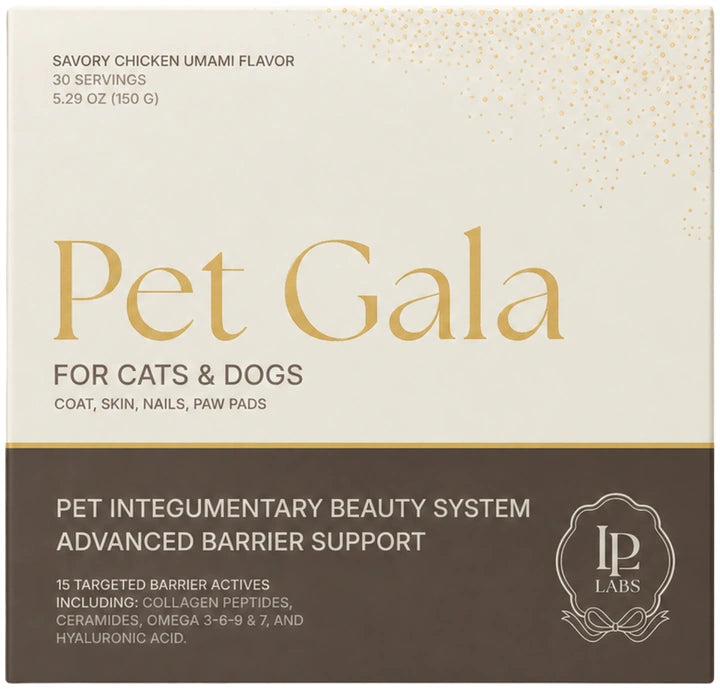
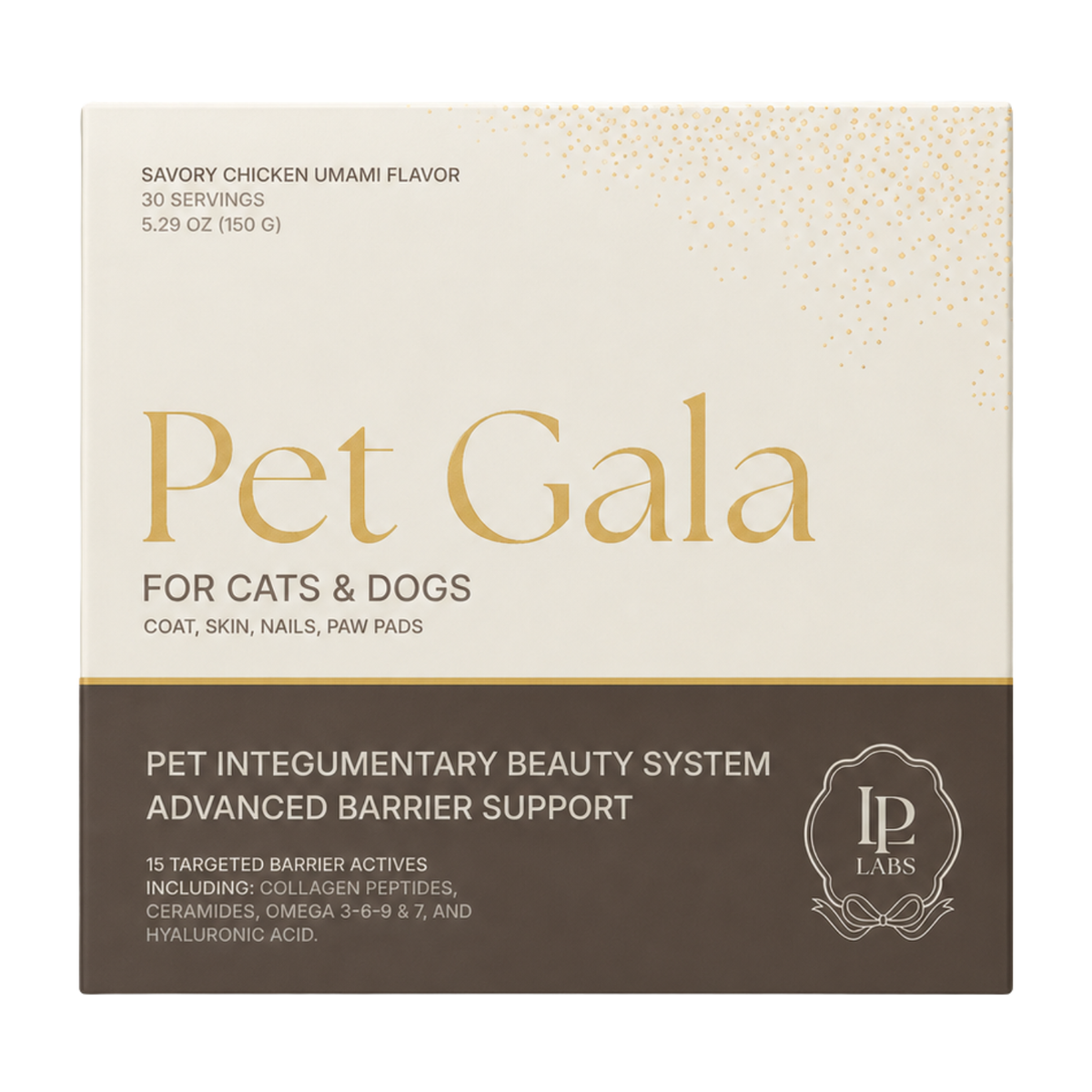
  • In Pet Gala: No. Pet Gala is fed, so it has no colloidal oatmeal. It supplies ceramides and omega fatty acids for the skin from the inside.

What is colloidal oatmeal, and is it used on cats?

Colloidal oatmeal is oat grain ground so fine that it hangs in water as a milky suspension. That lets it coat skin and hair evenly, which rolled oats from the kitchen can't do.

It has a long record in human skin care. A ready-made version went on sale in 1945, and the US Food and Drug Administration has recognized colloidal oatmeal as a skin protectant in over-the-counter products since 2003.1

Vets use it on cats too. VCA Animal Hospitals describes colloidal oatmeal as a topical treatment for surface skin disorders and skin reactions in both cats and dogs.4 On a cat it's comfort care for dry, flaky or mildly itchy skin. It's one part of a plan, and the plan starts with finding out why the skin is unhappy.

Woman smiling with a tabby cat on her shoulder while holding a Pet Gala box

What does colloidal oatmeal do on a cat's skin?

Colloidal oatmeal works on the surface of the skin in three ways.

  • A moisture film: oat starches and beta-glucan sit on the skin and hold water in.1
  • Less itch signaling: oat compounds called avenanthramides reduced inflammation in skin cells and scratching in mice.2
  • Mild cleaning: oat saponins lift dirt without strong detergents.1

These effects were measured on human skin and in the lab. In 29 women with dry, itchy legs, an oatmeal lotion improved dryness, scaling and itch.3 A cat's skin sits under dense fur, so the product has to reach the skin to do anything.

Woman kissing a fluffy gray cat while holding an orange tabby and a Pet Gala box

Does colloidal oatmeal help an itchy cat? What do studies show?

Colloidal oatmeal hasn't been studied in cats, so the honest answer rests on dogs and people. In the one animal study, vets bathed 12 itchy dogs with an oatmeal shampoo. It eased mild and moderate itch and did little for severe or chronic cases.9

Topical care can work in cats. In a field trial of a leave-on mousse with a different soothing ingredient, 19 allergic cats finished three weeks of treatment. Their skin scores fell from 6.2 to 2.8 and their itch scores from 7.4 to 4.3.5

So expect oatmeal to take the edge off a mild itch. Don't expect it to settle an allergic flare.

Woman petting a silver tabby on a kitchen counter beside an open Pet Gala box

Which form suits a cat: shampoo, rinse or spray?

Colloidal oatmeal for cats is sold as a shampoo, a cream rinse and a leave-on spray.4 For most cats the order of preference runs backward from that list.

  • Leave-on spray: the easiest. It goes on a small area and dries in place, with no rinsing.4
  • Cream rinse: useful after a bath your cat already needs, to put moisture back.
  • Shampoo: only for cats that accept bathing, or when the coat is dirty or greasy.

In the cat mousse trial, every owner who finished rated the leave-on routine as practical.5 That matters with an animal that fights the sink.

Woman holding a fluffy white cat and a Pet Gala box

How do you use an oatmeal product on a cat?

Colloidal oatmeal has to reach the skin, so application is the whole job. For a leave-on spray, part the fur and spray or dab it onto the skin, then let it dry. Don't rinse.4

For a shampoo, use lukewarm water, work the lather down to the skin, and rinse until the water runs clear. Keep every product away from the eyes.4

Two things make it easier. Apply the product before a meal or a play session, so your cat is busy while it dries. And keep the first session short, because a calm cat today is a cat you can treat again next week.

Colloidal oatmeal has to reach the skin, so application is the whole job.

How often can you bathe a cat with oatmeal shampoo?

No bathing schedule for oatmeal shampoo has been tested in cats, so follow the product label and your vet. Most healthy cats groom themselves well and seldom need a bath at all.

When a vet does recommend bathing, it's usually for a reason: a greasy or soiled coat, a long-haired cat that can't keep up, or a medicated shampoo for a diagnosed skin problem. In those cases your vet sets the interval.

Two cautions apply to any schedule. Frequent washing strips the skin's natural oils, which is the opposite of what a dry-skinned cat needs. And bathing is stressful for many cats. A leave-on spray, used as the label directs, is usually the gentler route.

Two long-haired cats looking toward a Pet Gala box held above a food bowl

Is colloidal oatmeal safe if a cat licks it?

Colloidal oatmeal itself is a food ingredient, and the concern with licking is everything else in the bottle. Cats groom thoroughly, so whatever stays on the coat ends up swallowed.

VCA Animal Hospitals advises keeping a pet from grooming or scratching the treated area for 30 minutes after a leave-on product, and applying it only to the skin.4 A meal, a toy or a short cuddle covers that half hour.

Choose a product labeled for cats. Don't use one that lists essential oils, including tea tree, unless your vet has approved it.

Hand gently petting an orange-and-white cat beside a Pet Gala box and a food bowl

What are the side effects of oatmeal products in cats?

Side effects from colloidal oatmeal are uncommon and local. VCA Animal Hospitals lists redness, itching or irritation at the spot where the product went on.4

An allergic reaction is rare. Watch for a rash, a swollen face, fever or irregular breathing, and get to a vet at once if you see them.4

Stop using the product if the skin looks worse or your cat scratches more afterward. Don't use it on a cat that has reacted to any ingredient on the label.4

Man sitting with two long-haired cats on a sofa beside a Pet Gala box and a food bowl

Can you use human or dog oatmeal products on a cat?

Human and dog oatmeal products aren't made with cats in mind, so a cat-labeled product is the safe choice. The oatmeal is the same in all three. The other ingredients are the issue.

Human lotions often carry fragrance and plant oils. Some dog shampoos include ingredients that aren't safe for cats. Because a cat will lick off whatever it can reach, the full ingredient list matters more than the front of the bottle.

If you only have a dog or human product, ask your vet before using it, and read the label for essential oils first.

Why do cats get itchy skin in the first place?

Colloidal oatmeal soothes itch without telling you where it comes from, and in cats the cause is usually specific. The common ones are fleas, allergies to food or to things in the environment, mites, ringworm and skin infections.

Allergic skin disease in cats often shows up as small crusty bumps, bald patches from overgrooming, or sores on the lips and belly. Vets call the kind triggered by the environment feline atopic skin syndrome.

That matters because the treatments are different for each cause. A review of 66 papers found good evidence for prescription anti-inflammatory drugs in feline atopic skin syndrome, and only low to moderate benefit from antihistamines and fatty acids.6

A soothing product can sit beside those treatments. It can't replace the diagnosis. Our guide to feline miliary dermatitis explains the crusty-bump pattern.

A plain spray your cat tolerates will do more than a premium shampoo that never leaves the cupboard.

Close-up of long white cat fur beside a veterinary vignette about visible skin and coat changes

DVM Voice: Clinical Vignette of When Skin Changes Point Deeper Than the Surface

Case provided by Sarah Calvin, DVM

Maverick, a 4-year-old Siamese cat, was brought in for hair loss across his lower abdomen and red, flaky skin lesions that had progressed over the previous month. His owners were unsure whether he was itchy or overgrooming.

Examination showed broken hairs, abdominal alopecia, and lesions consistent with bacterial skin infection. Further testing ruled out fleas, FeLV/FIV, and common fungal causes. Because his grooming pattern suggested deeper discomfort, his veterinarian continued the workup.

Radiographs and urinalysis revealed bladder stones, crystalluria, and blood in the urine. Maverick’s overgrooming was linked to urinary pain — a case where skin changes were secondary to an internal problem.

His care required a staged plan: stabilizing the skin infection, surgically removing the bladder stones, managing pain, transitioning to a therapeutic diet, and supporting skin-barrier recovery with appropriate nutrition and fish oil.

Hair regrowth began by 8 weeks. By 6 months, his coat had fully recovered, with no recurrence after the urinary issue was resolved.

Clinical takeaway: Maverick’s case shows why feline coat loss and overgrooming deserve careful veterinary investigation. Skin and coat health can reflect pain, stress, nutrition, infection, barrier weakness, or internal disease — not just surface-level grooming behavior.

Single-case vignette. Not generalizable. Veterinary diagnosis and oversight are essential for overgrooming, hair loss, skin lesions, urinary signs, pain, or suspected infection.

Explore Pet Gala Research →
Long-haired tabby being combed beside a Pet Gala box and a food bowl

Will oatmeal help with fleas, ringworm or mites?

Colloidal oatmeal won't clear fleas, ringworm or mites. It has no action against parasites or fungi, and each of those needs a specific treatment from your vet.

It can still make an affected cat more comfortable once treatment has started, because the skin stays sore for a while after the cause is gone. Ask your vet before putting anything on skin that is being treated, since some medicated products shouldn't be layered with others.

Ringworm spreads to people and other pets. Any circular bald patch needs a vet, and oatmeal shouldn't delay that visit.

Orange-and-white cat eating from a bowl beside a Pet Gala box

Which cats should skip oatmeal baths? Kittens, seniors and anxious cats

Colloidal oatmeal is gentle, but bathing isn't right for every cat.

  • Kittens: young kittens chill quickly when wet. Ask your vet before bathing one.
  • Senior and arthritic cats: a sink bath is hard on stiff joints. A leave-on spray avoids the handling.
  • Anxious cats: if bathing causes panic, the stress outweighs the benefit. Use a spray, or skip it.
  • Cats with open sores: broken skin needs a vet first.

Any cat that has reacted to an oat product before should avoid it.4

Brown-and-white tabby licking its nose beside a Pet Gala box and a food bowl

When should an itchy cat see the vet?

An itchy cat should see the vet when the itch lasts more than a few days or the skin is damaged. Colloidal oatmeal is for mild, short-lived dryness. Go sooner if you see:

  • scabs, crusts or small bumps along the back or neck;
  • bald or thinning patches;
  • sores, redness or a bad smell;
  • fleas or flea dirt in the coat;
  • nonstop licking, chewing or head shaking.

Cats hide discomfort well, so a visible skin change usually means the problem has been building for a while.

How do you choose an oatmeal product for a cat?

A good oatmeal product for a cat is short on ingredients and clearly labeled for cats. Look for these points on the label:

  • "colloidal oatmeal" named in the ingredient list;
  • a statement that it's for cats, or for cats and dogs;
  • no fragrance, dyes or essential oils;
  • a leave-on format, if your cat won't accept baths;
  • directions that say whether to rinse.

Price tells you little. A plain spray your cat tolerates will do more than a premium shampoo that never leaves the cupboard.

If your vet has prescribed a medicated product, use that first and ask where a soothing spray fits around it. Our guide to natural anti-itch options for cats compares the gentler choices.

Is colloidal oatmeal different for cats and dogs?

Colloidal oatmeal is the same ingredient for cats and dogs, sold in the same forms.4 How you use it differs.

Most dogs tolerate an oatmeal soak, and vet guidelines recommend weekly baths for itchy dogs.10 Cats groom themselves, dislike water and swallow what's left on the coat. So for cats the leave-on spray comes first and the bath last.

The evidence differs too. Dogs have one small oatmeal shampoo study, and cats have none.9 Our guide to colloidal oatmeal for dogs covers baths and the dog research.

Long-haired tabby beside a Pet Gala box held by a person wearing blue scrubs and a stethoscope

What are the alternatives to oatmeal for an itchy cat?

Colloidal oatmeal is the mildest option on a longer list, and the right choice depends on the diagnosis.

  • Flea control: the first step for any itchy cat, even an indoor one.
  • Prescription anti-inflammatories: the treatments with good evidence in feline atopic skin syndrome.6
  • Fatty acids: low to moderate benefit in the same review.6
  • Other leave-on products: the mousse routine that improved skin and itch scores in allergic cats.5

Our guide to cat skin care supplements covers the nutrition side.

Couple cuddling a silver tabby cat

Can a cat's diet improve its skin from the inside?

Diet shapes a cat's skin barrier, and oatmeal on the surface can't do that job. The classic proof is linoleic acid, a fat cats must get from food. Kittens fed a diet without it developed poor skin and coats and lost water through the skin at a high rate. Adding it back prevented all of that.7

Water loss through the skin is also higher in cats with allergic skin disease than in healthy cats.8 The skin's own fats, ceramides among them, are what hold that water in.

Pet Gala, our skin and coat formula, is built around feeding that barrier. Our guides to ceramides for cats and omega 3-6-9 for cats explain the nutrients.

Is colloidal oatmeal in Pet Gala?

No. Pet Gala doesn't contain colloidal oatmeal, because oatmeal works on the outside of the skin and Pet Gala goes in the food bowl. They cover different halves of skin care.

Oatmeal calms the surface for a while. The barrier underneath is built from what a cat eats. Each Pet Gala sachet carries 8 mg of ceramides, 150 mg of omega 3-6-9 and 50 mg of hyaluronic acid. Marine collagen, biotin, zinc and 7 more actives round out the formula, and the label prints the amount of each.

For cats the serving is small: half a sachet a day for a cat under 7 lb, and one sachet from 7 to 30 lb, stirred into food. Pet Gala is a supplement. It's no substitute for a diagnosis, and an itchy cat needs a vet first.

If your cat's skin is dry and the vet has ruled out the usual causes, this is the inside half of the routine. Our guide to cat skin and coat supplement systems compares the options. See the full Pet Gala formula and serving guide.

Diet shapes a cat's skin barrier, and oatmeal on the surface can't do that job.

Educational content only. This material is not a substitute for veterinary advice. Always consult your veterinarian about your cat’s specific needs. These statements have not been evaluated by the Food and Drug Administration. Products mentioned are not intended to diagnose, treat, cure, or prevent any disease.

Glossary

Colloidal oatmeal: Whole oats milled into a powder fine enough to stay suspended in water.

Avenanthramides: Oat compounds with anti-inflammatory and anti-itch activity in lab studies.

Feline atopic skin syndrome: Allergic skin disease in cats triggered by things in the environment, such as dust mites or pollen.

Miliary dermatitis: A pattern of small crusty bumps on a cat's skin, usually from an allergy or parasites.

Linoleic acid: An essential fatty acid cats need in their food for healthy skin and coat.

Skin barrier: The outer layer of skin cells and fats that keeps water in and irritants out.

Related Reading

References

Numbered references identify the sources used for specific claims. Read the study design, species and evidence boundaries alongside each finding.

FAQ

Do cats need oatmeal baths?

Most cats don't need baths of any kind, because they groom themselves. An oatmeal bath or spray is worth trying only for dry, flaky or mildly itchy skin, and after a vet has checked for fleas and allergies.

Can I make a homemade oatmeal bath for my cat?

You can grind plain oats into a fine powder and stir it into warm water, but few cats will sit in it. A leave-on colloidal oatmeal spray made for cats is easier and puts the oatmeal where it's needed.

Does colloidal oatmeal help cat dandruff?

Colloidal oatmeal holds moisture on the skin, so it can ease dry flakes for a while. Dandruff that keeps coming back has a cause, such as diet, weight, arthritis that stops grooming, or mites, and it needs a vet's look.

Is oatmeal shampoo safe for kittens?

Ask your vet before bathing a kitten with oatmeal shampoo or anything else. Young kittens lose heat fast when wet, and their skin problems are often parasites or ringworm, which need specific treatment.

Will colloidal oatmeal stop my cat overgrooming?

Not on its own. Overgrooming has a cause, usually itch, pain or stress, and colloidal oatmeal only eases surface itch for a short time. A cat with bald or thinning patches needs a vet to find the reason.

Does Pet Gala contain colloidal oatmeal?

No. Pet Gala has no colloidal oatmeal, because it's fed with a meal and oatmeal works on the skin's surface. It supplies ceramides, omega fatty acids, hyaluronic acid and other skin and coat nutrients, with every amount printed.

How long does colloidal oatmeal relief last on a cat?

No one has measured it in cats. In dogs, the relief from an oatmeal shampoo was temporary in the harder cases, so plan on short-lived relief and repeat it as the label allows.

Is colloidal oatmeal good for cats with allergies?

Colloidal oatmeal can make an allergic cat more comfortable between treatments. It doesn't treat the allergy. The treatments with good evidence for feline allergic skin disease are prescription medicines from your vet.

Orange tabby cat stretching on a green rug

Discover LPL-01: How This Fits Into a Complete Feline Integumentary Support System

Skin, coat, and nails in cats are not surface traits. They reflect deeper biological systems—barrier integrity, hydration dynamics, lipid balance, and structural protein turnover—working in coordination.

When these systems drift, the signs are subtle but telling: reduced coat softness, increased shedding, dryness, brittle claws, changes in grooming behavior.

This article explores one piece of that system. If you want to understand how true coat quality and skin resilience are built in cats—and what actually drives visible improvement—you need to zoom out.

Start with the underlying science:

Keep exploring

What would you like to understand next?

Search practical guides about skin, coat, barrier health, ingredients, and daily care for cats.