Cat Overgrooming: Why Cats Lick Fur Off

Tell itch from anxiety, then rebuild skin comfort and coat growth

By La Petite Labs Editorial 15 min read

If a patch of fur has gone missing and you are asking whether your cat is overgrooming, the answer is often yes—and you are right to take it seriously. Overgrooming usually shows up quietly in everyday life: a belly that looks oddly smooth, a foreleg that seems “trimmed,” or a coat that loses its even, plush finish. It can be a response to stress, anxiety, parasites, allergy, or pain, and it can lead to visible skin changes that deserve a look.

This page helps you read the signals you can actually see: where the hair loss appears, what the skin looks like, and which daily changes tend to precede flare-ups. You will also learn how to stop the cycle in a way that feels calm and sustainable—starting with a veterinary check when the skin is raw or spreading, then building a home routine that reduces triggers and protects the coat while it recovers.

And if you already feed a careful diet but still want a more polished, comfortable finish—softer feel, healthier sheen, stronger nails—there is a clear reason a beauty-forward supplement still fits: a diet can be “complete” while daily presentation varies. Pet Gala is daily skin-coat-nail support that complements medical clarity, not a replacement for it.

  • Overgrooming is a visible pattern: thinning hair, broken coat texture, or a damp-looking patch that keeps returning.
  • Belly and inner-thigh focus often signals either itch or self-soothing, but the look alone can’t confirm the cause.
  • A veterinary exam matters because stress, pain, parasites, and allergies can create the same “barbered” finish.
  • Track what you can see: weekly photos, where hair loss spreads, and when licking spikes during the day.
  • Home changes that help most are quiet and consistent: predictable play, more choice, and fewer daily surprises.
  • Diet consistency supports interpretation; frequent switches can blur whether grooming changes are environmental or physical.
  • A beauty-forward supplement can complement medical clarity by supporting the skin-coat-nail look owners want to maintain.

When Grooming Stops Looking Normal: the First Visible Signs

Overgrooming is more than “a cat being clean.” When licking shifts from routine maintenance to repetitive, urgent, or trance-like behavior, the coat starts to look thinned, the skin can look pink or bumpy, and the cat may seem less settled. Many owners first notice it as a suddenly bare patch, a rough-looking area, or a new focus on one spot—often the belly, inner thighs, or forelegs. That pattern matters because it can point toward itch, pain, stress, or a mix of triggers that stack together (Sackman, 2025).

Cat Overgrooming Belly Patterns: Why That Area Is a Target

The most common “tell” is location. Cat overgrooming belly patterns can look like a shaved strip, a thin triangle, or a smooth patch that feels like velvet, and forelegs and inner thighs are frequent targets too. Often there are no obvious scabs—just missing hair and a cat returning to the same spot.

Because cats are discreet groomers, you usually see the result, not the behavior. Overgrooming can lead to skin lesions and hair loss, so it is a reason to get veterinary eyes on the skin rather than waiting it out—especially if the area is raw, spreading, or symmetrical on both sides.

Why It Matters: Coat Shine as a Signal of Comfort

Why does it matter? Because the coat is a visible signal of comfort. When grooming becomes excessive, the skin barrier can look irritated, the coat loses its even sheen, and the cat’s daily mood can shift—more hiding, less play, less tolerance for touch. Overgrooming can be a behavioral response to stress or discomfort, and it can create a loop where irritated skin invites more licking. Addressing it early is less about “stopping a habit” and more about restoring a calm, well-kept look that matches how you want your cat to feel.

Common Causes: Itch, Pain, Stress, or More Than One

Veterinarians typically sort causes into a few buckets: itch (parasites, allergies, infections), pain (arthritis, abdominal discomfort), and emotional pressure (stress, anxiety, conflict with other pets). Many cats have more than one factor at once. A key point: the same “barbered” coat can come from very different roots, so guessing can waste time. Veterinary assessment is crucial to determine underlying causes and to choose the right next step, especially if there are sores, scabs, or rapid hair loss.

What to Bring to the Vet Visit for Faster Answers

Your appointment is more productive when you bring specifics. Note when you first saw thinning, whether it’s seasonal, and whether the licking happens after meals, after litter box use, or during noisy times. Take photos of the belly and legs, and list any recent changes: new food, new detergent, visitors, moves, or a new pet. Overgrooming can be linked to stress, anxiety, or underlying medical conditions, so timelines help your vet connect the dots without relying on memory.

“The coat is a daily report: when it looks uneven, your cat may be asking for something to change.”

Cat Overgrooming Treatment: Building a Plan That Holds Up

If you’re focused on cat overgrooming treatment, expect a combination approach rather than a single fix. Medical care may address itch or infection; environmental changes may reduce triggers; and behavior support may help break the repetition. Behavioral modification techniques can be effective for some cats, especially when the grooming functions as self-soothing. The “win” is not just fewer licking episodes—it’s a coat that looks fuller, skin that looks less reactive, and a cat that returns to relaxed, ordinary routines.

Diet Trials and Sensitivities: Keeping the Experiment Clean

Diet changes are sometimes suggested when itch or sensitivity is suspected. While food isn’t the only driver, what a cat eats can influence overall health and behavior, and protein level can shift aspects of the gut environment in healthy adult cats (Summers, 2023). If your veterinarian recommends a diet trial, treat it like a clean experiment: no flavored meds, no table scraps, no “just one treat.” Consistency makes results easier to interpret—and helps you avoid cycling through foods without learning anything useful.

Food Formats and Quality: Reducing Noise in Your Routine

Food format and sourcing can matter for predictability, too. Studies comparing diet types show differences in feline growth patterns and development, underscoring that “diet” is not a single interchangeable category (Hamper BA, 2017). For an overgrooming-prone cat, the practical goal is a steady baseline: a diet your cat tolerates well, with minimal day-to-day variation. Once you have that baseline, it’s easier to see whether grooming changes track with stress, season, parasites, or household shifts rather than constant nutritional noise.

Multi-cat Homes: Resource Friction and Quiet Coat Changes

If you’re wondering how to stop cat overgrooming in a multi-cat home, look for social friction. Blocking access to resources (food bowls, litter boxes, favorite perches) can create quiet tension that shows up as grooming. Add extra litter boxes, separate feeding stations, and vertical escape routes. Keep play sessions individualized so each cat gets a predictable outlet. Stress-driven grooming is well recognized, and reducing daily pressure can make the coat look more even and “settled” again.

How to Stop the Cycle Without Turning Home into a Clinic

If you’re asking “how to stop a cat from overgrooming,” think in layers: remove physical discomfort, reduce environmental pressure, and replace the habit with calmer routines. Start by limiting access to the “hot spot” only if needed (a soft cone or recovery suit can prevent damage while you investigate). Then add predictable daily anchors: play at the same times, feeding puzzles, and a quiet resting zone away from foot traffic. Behavioral modification can help some cats shift away from compulsive grooming patterns, especially when stress is part of the picture (Sackman, 2025).

“The goal isn’t perfection. It’s a calm-looking skin surface and an even, plush finish again.”

La Petite Labs

Clinical Vignette of When Skin Changes Point Deeper Than the Surface

Maverick, a 4-year-old Siamese cat, was brought in for hair loss across his lower abdomen and red, flaky skin lesions that had progressed over the previous month. His owners were unsure whether he was itchy or overgrooming.

Examination showed broken hairs, abdominal alopecia, and lesions consistent with bacterial skin infection. Further testing ruled out fleas, FeLV/FIV, and common fungal causes. Because his grooming pattern suggested deeper discomfort, his veterinarian continued the workup.

Radiographs and urinalysis revealed bladder stones, crystalluria, and blood in the urine. Maverick’s overgrooming was linked to urinary pain — a case where skin changes were secondary to an internal problem.

His care required a staged plan: stabilizing the skin infection, surgically removing the bladder stones, managing pain, transitioning to a therapeutic diet, and supporting skin-barrier recovery with appropriate nutrition and fish oil.

Hair regrowth began by 8 weeks. By 6 months, his coat had fully recovered, with no recurrence after the urinary issue was resolved.

Clinical takeaway: Maverick’s case shows why feline coat loss and overgrooming deserve careful veterinary investigation. Skin and coat health can reflect pain, stress, nutrition, infection, barrier weakness, or internal disease — not just surface-level grooming behavior.

Single-case vignette. Not generalizable. Veterinary diagnosis and oversight are essential for overgrooming, hair loss, skin lesions, urinary signs, pain, or suspected infection.

Explore Pet Gala Research →
cat overgrooming - 9

Protecting Skin While Hair Grows Back in Evenly

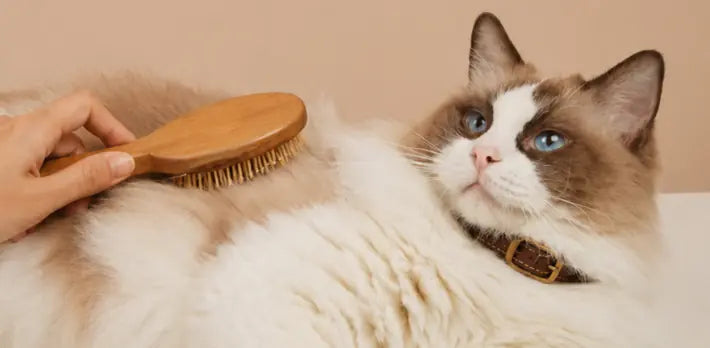
Home care should protect skin while your plan takes effect. Keep nails trimmed to reduce self-trauma, and consider gentle, cat-safe grooming support (soft brushing can redirect the urge and keep the coat looking even). Avoid fragranced wipes, essential oils, or harsh shampoos; irritated skin often reacts to “extra cleaning.” If the area is raw, oozing, or your cat is breaking the skin, skip DIY topicals and call your veterinarian. Overgrooming can create lesions and hair loss that deserve a proper exam rather than trial-and-error at home (Sackman, 2025).

cat overgrooming - 10

Food Consistency and Coat Quality: Why Predictability Matters

Nutrition will not “solve” every case, but it shapes how a cat looks and feels day to day—especially coat texture, skin comfort, and overall polish. Diets vary widely in composition and quality, and that variability matters when you are trying to hold a consistent outward result (Prantil, 2015). If you have recently switched foods, changed treats, or started a new feeding pattern, note the timing relative to grooming changes.

Pet Gala fits here as the steady daily piece: a food-mixed skin-coat-nail system—marine collagen, omega fatty acids, hydration, and keratin support—made to keep coat texture and skin comfort even while you and your vet address the cause. The goal is not perfection; it is steadiness—fewer flare-ups, a calmer coat, and skin that looks less reactive. It supports the visible finish; it does not treat allergy, parasites, or stress.

cat overgrooming - 11

Weight, Activity, and the Coat: Small Shifts You Can Notice

Weight and activity can also shape grooming behavior in subtle ways. Some cats groom more when they’re bored, less mobile, or uncomfortable reaching certain areas; others fixate on one spot when their routine changes. Research on weight control feeding shows that dietary changes can alter body composition and activity patterns in cats (Opetz DL, 2024). For owners, the practical takeaway is to watch the whole picture: appetite, play, sleep, and movement. A cat that looks “restless in the coat” often benefits from a lifestyle rhythm that supports comfortable, confident motion.

Stress Triggers That Show up on the Coat, Not the Calendar

Some cats overgroom in response to stressors that seem minor to us: a new schedule, a different litter, construction noise, a visiting pet, or even a moved sofa. The grooming becomes a self-soothing ritual, and the belly is a common target because it’s accessible and sensitive. Overgrooming is recognized as a behavioral response to stress or discomfort, and it can spiral into skin issues that keep the cycle going (Thomazini VC, 2024). The most effective changes are usually quiet ones: more choice, more hiding options, and fewer surprises.

Medication Timelines: the Overlooked Detail Worth Mentioning

Medication and supplements can occasionally be part of the story. If your cat started a new drug and grooming increased soon after, mention it to your veterinarian; certain medications may contribute to overgrooming through side effects that shift behavior (Thomazini VC, 2024). Don’t stop prescribed meds abruptly—just bring a timeline. Also share any flea products, calming chews, or new topical items. The goal is a clean, accurate inventory so your vet can separate coincidence from a real trigger and keep your cat comfortable while protecting the coat.

Tracking Progress with Photos, Notes, and Calm Expectations

A practical way to track progress is to measure what you can see. Take weekly photos in the same light, note how often you see licking episodes, and watch for early signals: a “spiky” coat, dandruff-like flakes, or a slightly darker, damp-looking patch. If you’re working on cat overgrooming treatment with your veterinarian, these notes help fine-tune the plan without guessing. Veterinary assessment is important because the same outward pattern can come from different underlying causes (Thomazini VC, 2024).

Is My Cat Overgrooming: a Quick Visual and Behavior Check

When owners ask “is my cat overgrooming,” the answer often lies in contrast: what changed, and what looks less like your cat’s normal. A healthy grooming routine leaves the coat even and plush; overgrooming leaves edges—short stubble, broken hairs, or a clearly defined patch. If the belly is thinning, check for symmetrical hair loss versus a single targeted area. Stress and anxiety are common contributors, but medical issues can look identical from across the room. That’s why a calm, observant approach beats quick assumptions.

A Visible Finish Again: What Success Looks Like Day to Day

The most reassuring outcome is visible: a coat that grows back evenly, skin that looks calm, and a cat that seems more present—less preoccupied with one spot. If you’ve been wondering “why is my cat overgrooming,” it’s valid to want an answer you can trust and a routine you can maintain. Pair veterinary clarity with daily care that supports the skin-coat-nail “finish” you notice up close. That’s where a beauty-forward supplement can fit: not as a replacement for diagnosis, but as consistent support for how wellbeing shows every day.

“When you track what you can see, you stop guessing—and your plan gets easier to trust.”

Educational content only. This material is not a substitute for veterinary advice. Always consult your veterinarian about your dog’s specific needs. These statements have not been evaluated by the Food and Drug Administration. Products mentioned are not intended to diagnose, treat, cure, or prevent any disease.

Glossary

  • Overgrooming: Repetitive licking or chewing that thins hair, breaks the coat, or irritates skin.
  • Barbering: Hair shafts broken off by licking, leaving short stubble rather than full-length fur.
  • Alopecia: Noticeable hair loss; in overgrooming it may be self-induced rather than shedding.
  • Pruritus: Itch sensation that can drive licking, scratching, and skin irritation.
  • Hot Spot (Acute Moist Dermatitis): A rapidly irritated, moist skin area that can worsen with licking.
  • Flea Allergy Dermatitis: Hypersensitivity to flea saliva that can cause intense itch and grooming.
  • Psychogenic Alopecia: Hair loss linked to stress-driven grooming after medical causes are ruled out.
  • Skin Barrier: The protective outer layer of skin; when disrupted, skin can look red, flaky, or reactive.
  • Environmental Enrichment: Changes that add choice and engagement (perches, play, puzzles) to reduce stress behaviors.

Related Reading

References

Opetz DL. Effects of overfeeding on the digestive efficiency, voluntary physical activity levels, and fecal characteristics and microbiota of adult cats. PubMed. 2023. https://pubmed.ncbi.nlm.nih.gov/37772600/

Dzanis DA. The Association of American Feed Control Officials Dog and Cat Food Nutrient Profiles: substantiation of nutritional adequacy of complete and balanced pet foods in the United States. PubMed. 1994. https://pubmed.ncbi.nlm.nih.gov/7996232/

Hamper BA. Evaluation of two raw diets vs a commercial cooked diet on feline growth. PubMed. 2017. https://pubmed.ncbi.nlm.nih.gov/26927818/

Jobe MT. Systematic Review and Meta-Analysis of Quality Claims Associated with Fresh Pet Food: Evaluating Scientific Evidence for Additives, Ingredient Quality, and Effects of Processing in Pet Nutrition. PubMed. 2025. https://pubmed.ncbi.nlm.nih.gov/41514729/

Opetz DL. Restricted feeding of weight control diets induces weight loss and affects body composition, voluntary physical activity, blood metabolites, hormones, and oxidative stress markers, and fecal metabolites and microbiota of obese cats. PubMed. 2024. https://pubmed.ncbi.nlm.nih.gov/39485233/

Prantil. Nutritional analysis and microbiological evaluation of commercially available enteral diets for cats. PubMed. 2015. https://pubmed.ncbi.nlm.nih.gov/26317493/

Summers. The Effect of Dietary Protein Concentration on the Fecal Microbiome and Serum Concentrations of Gut-Derived Uremic Toxins in Healthy Adult Cats. 2023. https://www.mdpi.com/2306-7381/10/8/497

Morris. Assessment of the Nutritional Adequacy of Pet Foods through the Life Cycle. 1994. https://www.sciencedirect.com/science/article/pii/S0022316623060741

Thomazini VC. Impact of concerning excipients on animal safety: insights for veterinary pharmacotherapy and regulatory considerations. PubMed Central. 2024. https://pmc.ncbi.nlm.nih.gov/articles/PMC11087455/

Seksel. Behavior-modifying drugs. 2008. https://www.sciencedirect.com/topics/biochemistry-genetics-and-molecular-biology/propentofylline

Sackman. Feline overgrooming behaviors. 2025. https://www.sciencedirect.com/science/article/pii/B978032399868000025X

Seksel K. Use of clomipramine in the treatment of anxiety-related and obsessive-compulsive disorders in cats. PubMed. 1998. https://pubmed.ncbi.nlm.nih.gov/9631696/

King JN. Determination of the dosage of clomipramine for the treatment of urine spraying in cats. PubMed. 2004. https://pubmed.ncbi.nlm.nih.gov/15485047/

Richard B Ford. Charts and Tables. PubMed Central. 2006. https://pmc.ncbi.nlm.nih.gov/articles/PMC7158574/

Bilgiç B. Investigation of Trace and Macro Element Contents in Commercial Cat Foods. PubMed Central. 2025. https://pmc.ncbi.nlm.nih.gov/articles/PMC11633335/

RVA. Toxic element levels in ingredients and commercial pet foods. PubMed Central. 2021. https://pmc.ncbi.nlm.nih.gov/articles/PMC8546090/

Summers S. Evaluation of iron, copper and zinc concentrations in commercial foods formulated for healthy cats. PubMed Central. 2022. https://pmc.ncbi.nlm.nih.gov/articles/PMC10812249/

Ahmed. Bioaccumulation of heavy metals in some commercially important fishes from a tropical river estuary suggests higher potential health risk in children than adults. Nature. 2019. https://www.nature.com/articles/s41598-021-00467-4

McMullen. Minoxidil toxicosis in cats and dogs: A scoping review and call to action. 2025. https://www.sciencedirect.com/science/article/pii/S019096222500595X

FAQ

What is cat overgrooming and how does it look?

Cat overgrooming is grooming that becomes repetitive enough to thin the coat, break hairs, or irritate skin. You may notice a smooth patch, short “stubble,” or a damp-looking area that keeps reappearing, even if you rarely catch the licking. Because the look can come from itch, pain, or stress, it’s best treated as a signal to investigate while supporting the coat’s visible comfort.

Why is my cat overgrooming all of a sudden?

Sudden overgrooming often follows a change: fleas or other itch triggers, a new food, a stressful household shift, or discomfort such as joint or abdominal pain. Cats can also self-soothe with grooming when their environment feels less predictable. A timeline (what changed and when) helps your veterinarian narrow the cause while you keep skin protected and routines steady.

Is my cat overgrooming or just grooming normally?

Normal grooming keeps the coat even and plush. Overgrooming tends to create defined patches, broken hairs, or a “barbered” look, often on the belly, inner thighs, or forelegs. You might also notice your cat repeatedly returning to the same spot. If you see redness, scabs, or rapid hair loss, schedule a vet visit to rule out medical causes.

Why does cat overgrooming matter for skin and coat?

Overgrooming can turn a small irritation into a visible coat problem: thinning hair, uneven texture, and skin that looks pink or inflamed. It can also create a cycle where irritated skin invites more licking, which further disrupts the coat’s finish. Addressing it early helps preserve a calm-looking skin surface and a fuller coat while you and your vet identify the driver.

How do vets figure out the cause of overgrooming?

Vets typically start with a skin and coat exam, parasite control history, and questions about timing and household changes. Depending on what they see, they may recommend tests or trials to separate itch, infection, pain, and stress-related grooming. Bringing photos and a short log of licking episodes can make the visit more precise.

What is the best cat overgrooming treatment approach?

The best approach is usually combined: treat medical itch or infection if present, reduce stressors at home, and protect the skin from further damage. Behavioral modification can be part of the plan when grooming has become a self-soothing habit. Ask your vet what success should look like week to week (less licking, calmer skin, hair regrowth).

How to stop cat overgrooming without stressing my cat?

Start with low-drama changes: keep routines predictable, add short daily play sessions, and provide a quiet resting spot plus vertical perches. If skin is being damaged, a soft cone or recovery suit can prevent injury while you address the cause. Avoid harsh shampoos or fragranced products that can make skin feel worse.

How to stop a cat from overgrooming the belly area?

Cat overgrooming belly patterns often reflect either itch (fleas, allergies) or self-soothing when a cat feels tense. Because the belly is easy to reach and sensitive, it’s a common focus even when the trigger is elsewhere. Protect the area from damage, then work with your vet to rule out parasites and skin disease, while you stabilize routines at home.

Can stress or anxiety cause cat overgrooming behaviors?

Yes. Overgrooming can be a behavioral response to stress or discomfort, and it may intensify during household changes, conflict with other pets, or unpredictable schedules. Some cats groom to self-soothe, even when the skin started out normal. Improving choice and predictability (more perches, separate resources, consistent play) often helps the coat look more even over time.

Could pain or arthritis lead to overgrooming in cats?

It can. Cats sometimes lick repeatedly near an area that feels uncomfortable, and pain can also increase overall restlessness. Because the coat pattern alone can’t confirm pain, your veterinarian may check mobility, abdomen, and other clues during an exam. If pain is addressed, the coat often begins to look less “worked over” as licking decreases.

Can medications trigger overgrooming or increased licking in cats?

Sometimes. Certain medications may contribute to overgrooming by causing side effects that change behavior or comfort, especially if the timing lines up closely with a new prescription. Don’t stop a medication on your own; bring the timeline to your vet. Also mention any new flea products, calming chews, or topical items, since combinations can complicate the picture.

Are there side effects to cones or recovery suits?

Cones and recovery suits can be useful to prevent skin damage, but some cats become less active, eat less, or seem more anxious while wearing them. Fit matters: too tight can rub, too loose can allow licking or snagging. Use them as short-term protection while you address the underlying cause, and monitor for rubbing or stress.

Do supplements interact with prescription treatments for overgrooming?

They can, depending on ingredients and your cat’s medications. The safest approach is to show your veterinarian the full label of any supplement and ask whether it fits your cat’s current plan, especially if your cat is on behavior or allergy medications. This keeps the focus on comfort and a clean, predictable routine rather than stacking too many changes at once.

Is overgrooming more common in kittens or senior cats?

Any age can overgroom, but the likely drivers can differ. Kittens may respond to new environments or social stress, while older cats may have discomfort, reduced mobility, or skin changes that make grooming feel different. The pattern is a clue, not a diagnosis. If the behavior is new in a senior cat, a vet check is especially worthwhile.

Do certain cat breeds overgroom more than others?

Some breeds and personalities can be more sensitive to stress or routine changes, which may show up as repetitive grooming. Coat type can also make hair loss more noticeable: fine coats show thinning quickly, while dense coats can hide early changes. Rather than focusing on breed, focus on your cat’s baseline and what changed.

Is overgrooming a cat-only issue or do dogs do it?

Dogs can also lick excessively, but cats are uniquely efficient groomers, so coat changes can appear quickly and look very “clean-edged.” In cats, you may see symmetrical thinning or a sharply defined patch with minimal scabbing at first. Because the visual pattern can be subtle, photos and routine notes help your vet interpret what’s happening.

How long until hair grows back after overgrooming stops?

Timelines vary with the cause, the season, and how much the hair was broken versus shed. Many owners first notice improvement as less licking and a calmer-looking skin surface, followed by gradual “filling in” of the coat over weeks. If the area stays red, develops sores, or expands, check back with your veterinarian.

What quality signals show a coat is improving visibly?

Look for fewer broken hairs, less “spiky” texture, and a more even sheen in consistent lighting. Skin should look calmer—less pink, less flaky, and less damp-looking. Behavior matters too: fewer licking episodes and more relaxed resting. Weekly photos from the same angle can reveal subtle progress you might miss day to day.

How should I give Pet Gala to a picky cat?

For picky cats, consistency beats pressure. Offer it at the same time daily, paired with a small amount of a familiar food, and avoid changing multiple things at once (new bowl, new location, new topper) so you can tell what your cat accepts. If your cat is on a strict diet trial, ask your veterinarian before adding anything new.

Can I use Pet Gala every day long term?

Many owners prefer a steady daily routine for coat and skin support, because visible condition tends to reflect what’s consistent rather than what’s occasional. If your cat has medical conditions, is pregnant, or takes prescriptions, confirm fit with your veterinarian first. Long-term use should feel simple: easy to give, easy to observe, and compatible with your cat’s overall plan.

La Petite Labs

Discover LPL-01: How This Fits Into a Complete Feline Integumentary Support System

Skin, coat, and nails in cats are not surface traits. They reflect deeper biological systems—barrier integrity, hydration dynamics, lipid balance, and structural protein turnover—working in coordination.

When these systems drift, the signs are subtle but telling: reduced coat softness, increased shedding, dryness, brittle claws, changes in grooming behavior.

This article explores one piece of that system. If you want to understand how true coat quality and skin resilience are built in cats—and what actually drives visible improvement—you need to zoom out.

Start with the underlying science: