AIM and Cat Kidney Disease: What Toru Miyazaki's Research Actually Shows in 2026

A dated evidence map for the mechanism, feline survival signal, genetic variant, regulatory status, conflicts, foods, and limits.

By La Petite Labs Editorial 14 min read

The short answer: AIM/CD5L is a real protein with a compelling kidney-cleanup mechanism, and a 2026 exploratory study reported a large survival signal after intravenous recombinant AIM in 11 selected cats with advanced chronic kidney disease. But the study was small, non-pivotal, and methodologically limited. It does not establish a cure, a prevention protocol, or the safety and effectiveness of routine treatment. [2] [5]

FeliAIM is the separate veterinary drug candidate submitted to Japan’s Ministry of Agriculture, Forestry and Fisheries on April 24, 2026. No positive official approval notice was verified in our August 21 refresh; the regulator also warns that its database can lag. AIM30, A-30, or “for AIM” food is another category again: food is not the recombinant protein given intravenously in the clinical study. [8] [9] [11]

  • AIM and CD5L are names for the same circulating protein. [1] [2]
  • Feline AIM-IgM behavior is an experimentally supported mechanism, not a complete theory of feline CKD. [2]
  • One genotype association is interesting but not a deterministic forecast for an individual cat. [3] [4]
  • The 2026 feline rAIM survival signal is encouraging and still non-confirmatory. [5]
  • The published exploratory study and the 26-hospital regulatory trial are not the same trial. [5] [7]
  • FeliAIM was submitted in Japan; application does not equal approval. [8]
  • AIM-branded food is not intravenous recombinant AIM and cannot inherit its evidence. [5] [11]
  • Current CKD staging, monitoring, renal nutrition, and individualized care remain the practical center. [10]

Begin With Four Different Things Called AIM

The conversation becomes clearer when four identities are separated: natural AIM/CD5L in blood, laboratory-produced recombinant AIM administered intravenously in research, FeliAIM as a veterinary drug candidate in Japanese review, and foods marketed with AIM30, A-30, or “for AIM” language. A shared name does not make these interventions interchangeable.

This page owns evidence identity and 2026 research status. The chronic kidney disease in cats guide owns diagnosis, IRIS staging, symptoms, and management. Nothing here is a dosing guide, and the experimental infusion protocol should not be reproduced. The reader’s job is to understand what was studied, in which cats, with which endpoint, and how far the result can travel. [5] [10]

Woman hugging a long-haired orange cat

What Toru Miyazaki Actually Discovered

Toru Miyazaki and colleagues published the original AIM paper in 1999, describing a macrophage-derived soluble factor in mouse biology. AIM was named for “apoptosis inhibitor of macrophage” and is also called CD5L. Later work broadened its immune-metabolic roles and its relationship with IgM. [1] [2]

Discovery credit is not clinical proof. The path from a newly described protein to a licensed veterinary medicine requires separate steps: mechanism, animal models, target-species dosing, safety, controlled efficacy, manufacturing consistency, and regulatory review. Much confusion around AIM comes from compressing that twenty-seven-year ladder into one “breakthrough” headline.

Woman holding a colorpoint cat in sunlight

The Kidney-Cleanup Mechanism in Plain Language

In the 2016 model, circulating AIM is usually carried by IgM. During acute kidney injury in mice and humans, released AIM can enter urine, coat dead-cell debris inside injured tubules, and help KIM-1-expressing tubular cells engulf that debris. Removing an obstruction may support recovery from the acute injury. [2]

Feline AIM behaved differently: it bound IgM much more tightly and did not release efficiently in the experimental injury setting. Debris clearance was impaired in felinized mice and in induced feline acute injury observations. This is a coherent mechanism. It is not proof that AIM dysfunction causes every chronic kidney lesion, every progression pattern, or the entire species-level CKD burden. [2]

Man kissing an orange tabby beside a Hollywood Elixir box

Why the 2016 Paper Was Important—and Easy to Overread

The 2016 paper combined protein biochemistry, feline samples, experimentally induced injury observations, cell assays, and mice engineered to express feline AIM. Recombinant AIM improved kidney function and survival in an induced mouse injury model. That result made AIM a plausible therapeutic target and justified feline development. [2]

The rescue was not a treatment trial in pet cats with naturally occurring chronic kidney disease. Acute injury and chronic disease overlap biologically but are not the same endpoint. A felinized mouse is useful precisely because variables can be controlled; a client-owned older cat brings comorbidities, diet, medications, disease duration, and heterogeneous pathology that the model cannot reproduce.

Spotted cat reaching for a green feather toy

The Exon 3 Variant Adds a Second AIM Story

Some cats carry a duplication of exon 3 in the feline AIM gene, producing a four-domain form rather than the three-domain wild type. In a 2025 retrospective study, homozygous variant cats within 50 qualifying CKD cases were more likely to have worse IRIS stage and rising creatinine than wild-type cats. [3]

That is an association in a small selected cohort, not a genetic sentence. The study does not show that every homozygous cat develops CKD, that every wild-type cat is protected, or that a result can replace creatinine, SDMA, urine, blood pressure, imaging, clinical history, and repeated trend assessment. Genotype may eventually add context; its individual predictive value remains unsettled.

AIM and CD5L are names for the same circulating protein.

A Common Variant Is Not the Same as a Common Outcome

In 2026, researchers genotyped 1,000 archived client-owned-cat DNA samples: 19.3 percent were homozygous for the duplication, 46.7 percent carried one copy, and 34.0 percent were wild type in that cohort. The variant was not confined to one reported breed or type. [4]

The study had no phenotype data—no CKD status, age, biomarkers, or comorbidities—and came from one teaching-hospital DNA bank. It therefore estimates genotype frequency in its sample, not the risk that a cat will develop or progress with kidney disease. The authors also disclosed possible future genetic-testing commercialization, another reason clinical utility should be validated prospectively and independently. [4]

Tabby cat walking beside a Hollywood Elixir box

What the 2026 Cat Treatment Study Tested

The exploratory study screened 216 CKD cats and focused on a selected advanced subgroup with serum creatinine from 2.9 to 5.0 mg/dL and elevated indoxyl sulfate. Six cats received intravenous mouse recombinant AIM, five received feline recombinant AIM, and fifteen served as untreated controls. Survival was followed to 360 days alongside kidney biomarkers and metabolomic analyses. [5]

This was not the commercial FeliAIM label, a food study, a prevention trial, an early-CKD trial, or a trial in healthy cats. It was explicitly described by its authors as exploratory and non-pivotal. Those words are not ceremonial caution; they identify evidence designed to detect a signal and inform next studies rather than settle clinical practice.

Slender brown cat stepping forward

The Survival Signal Deserves Attention

At 360 days, the paper reported cumulative survival of 83 percent in the six mouse-rAIM cats and 80 percent in the five feline-rAIM cats, compared with 20 percent in fifteen untreated controls. The untreated group’s reported median survival was 167 days. Kidney biomarkers and selected molecular profiles also moved in favorable directions. [5]

Those are large differences, not a trivial fluctuation to dismiss. They are also estimates from tiny groups with wide confidence intervals. The responsible summary is “encouraging survival signal requiring confirmation.” “AIM cures kidney disease” removes the study design, population, uncertainty, and regulatory state—the very information needed to understand the number.

Woman holding a long-haired tabby cat

Why the Study Cannot Yet Carry a Cure Claim

Cats entered over 4.5 years and were alternately incorporated into treatment or control rather than randomly assigned at one time. Baseline care was not standardized; renal-diet use differed; blood pressure, urinalysis, and other diagnostics were incomplete; age differed somewhat; and some assays were not validated. The study also lacked the scale needed to balance unknown confounders reliably. [5]

These weaknesses can inflate, shrink, or otherwise distort an apparent effect. They do not prove that the signal is false. They tell us what a confirmatory study must improve: prespecified endpoints, adequate sample size, randomization, blinding where feasible, standardized background care, complete measurements, validated assays, and transparent accounting for every enrolled cat.

Read the Conflict Disclosure as Context, Not a Verdict

Toru Miyazaki and Satoko Arai disclosed ownership of IAM CAT stock, and the paper states that the company could benefit financially from publication. The relevant response is neither to ignore the disclosure nor to treat it as proof of misconduct. It is to demand the same things good science always needs: reproducibility, independent analysis, and a better controlled confirmatory dataset. [5]

The team also disclosed funding and the exploratory nature of the study. Transparent interests let readers calibrate confidence; they do not substitute for judging methods. If later pivotal results reproduce the signal under standardized conditions, confidence should rise. If they do not, the interpretation should change. Evidence is a process, not a loyalty test.

The 2026 feline rAIM survival signal is encouraging and still non-confirmatory.

Close-up of a cat's green eye beside a senior-cat clinical vignette

DVM Voice: Clinical Vignette of a Common Pattern in Senior Cat Aging

Case provided by JoAnna Pendergrass, DVM

Sasha, a 12-year-old cat, was brought in after her owner noticed increased thirst and urination, lethargy, vomiting, and a generally unkempt appearance. Examination showed weight loss, elevated blood pressure, and reduced vitality.

Diagnostic testing revealed elevated kidney markers, poorly concentrated urine, and protein loss in the urine — findings consistent with chronic kidney disease, one of the most common chronic conditions in senior cats.

Her care required a kidney-focused diet, blood pressure management, targeted supplementation, medication support, and regular monitoring — a necessary plan, but one started after clinical signs were already visible.

Clinical takeaway: Sasha’s case reflects why senior-cat wellness should begin before obvious decline. Earlier monitoring, body-condition tracking, hydration awareness, antioxidant support, and daily cellular resilience may help support quality of life as cats age.

Single-case vignette. Not generalizable. Veterinary diagnosis and monitoring are essential for increased thirst, urination, vomiting, lethargy, weight loss, or suspected kidney disease.

Explore Hollywood Elixir Research →
Woman cuddling an orange-and-white cat

Do Not Confuse a Mechanism With a Monitoring Plan

AIM biology does not replace ordinary renal assessment. The creatinine, BUN and SDMA guide explains what common blood markers can and cannot show, while the urinalysis for kidney screening guide covers urine concentration, protein, sediment, and related context. IRIS staging also depends on stable-patient interpretation and relevant substaging. [10]

No publicly validated AIM test currently replaces those tools for routine pet-cat decisions. A genotype result cannot stage disease; a mechanistic paper cannot show whether one cat is stable today; and a future approved drug would still require diagnosis, eligibility, safety monitoring, and management of blood pressure, proteinuria, phosphorus, hydration, nutrition, and comorbidities.

Spotted cat jumping beside a Hollywood Elixir box and green jar

Keep the Published Study and Regulatory Trial Separate

IAM announced in June 2025 that a clinical trial had begun at 26 veterinary hospitals across Japan. That regulatory-development program is not the paper’s 11 treated cats: the publication describes an exploratory academic study recruited over 4.5 years, while the later multicenter trial was undertaken to support approval. [5] [7]

As of this page’s evidence cutoff, the official sponsor notices reviewed confirmed that the later trial had begun and that a separate manufacturing-and-marketing application was submitted. Those notices do not themselves publish pivotal trial results. [7] [8] A senior pet baseline tracker can still help owners organize appetite, thirst, weight, medication, and behavior for the veterinary team while formal evidence matures.

Woman pouring a sachet into a spotted cat's food bowl

FeliAIM Was Submitted, Not Declared Approved

IAM CAT announced that it submitted FeliAIM to Japan’s Ministry of Agriculture, Forestry and Fisheries for manufacturing and marketing approval on April 24, 2026. An application begins or advances regulatory review; it is not an approved label, a launch authorization, a treatment recommendation, or evidence that a product is available. [8]

Our August 21, 2026 refresh found the application notice but no later positive official approval notice. MAFF says its approved-products database can take time to update, so a negative search is not conclusive. The defensible status is dated: “submitted; approval not verified in the official sources checked.” Refresh it immediately before promotion. [9]

What Cat Owners Should Do While the Evidence Develops

Do not wait for an investigational therapy to assess a cat that is drinking more, urinating differently, losing weight, eating less, vomiting, becoming constipated, or seeming weak. The cat drinking a lot of water guide can help structure one common presenting change, but blood, urine, blood-pressure, imaging, and clinical interpretation may all matter. [10]

For a cat already diagnosed with CKD, follow the individualized veterinary plan. Current management can include renal nutrition, hydration and nausea support, phosphorus management, blood-pressure and proteinuria treatment, anemia assessment, and monitoring according to stage and needs. “No disease-reversing cure” does not mean “nothing meaningful can be done.” [10]

AIM30 and “for AIM” Foods Are a Different Intervention

An AIM-branded food is eaten and digested; the exploratory therapy was a laboratory-produced protein given intravenously. The Inaba “for AIM” page describes mineral adjustment and added nutrients and explicitly says the product does not treat kidney disease. That is a food formulation and label boundary—not recombinant AIM pharmacology. [5] [11]

Some companies discuss amino-acid ingredients or endogenous “AIM activation.” To transfer the injection study’s evidence, a food would need finished-product evidence showing the claimed biological exposure and clinically meaningful feline outcomes in the intended population. A familiar molecule name, laboratory pathway, or researcher association cannot bridge route, dose, bioavailability, formulation, and endpoint by itself.

Couple cuddling a long-haired gray cat outdoors

Use the Four-Way AIM Identity Table

The table asks six questions before accepting any AIM claim: What exactly is the intervention? Is AIM present, induced, or merely referenced? What route and dose were used? Which cats or models were studied? What endpoint changed? What regulatory status applies? Those questions prevent a plausible mechanism from becoming an unearned product promise.

The method generalizes beyond AIM. A natural protein, recombinant drug, genetic marker, and food ingredient can sit in the same biological story while carrying entirely different evidence burdens. The closer a claim moves toward treatment, prevention, safety, or lifespan, the more direct the target-species, finished-intervention, controlled evidence must become.

Original decision tool — The Four-Way AIM Identity Table: Prevent natural protein biology, an injected recombinant intervention, a drug candidate, and branded food from borrowing one another’s evidence.

• Identity: AIM/CD5L | What it is: A naturally occurring circulating protein, commonly carried by IgM | Evidence object: Discovery, structural, biochemical, cell, animal, and feline observational research | What can be said: It participates in debris-clearance and broader immune-metabolic biology | What cannot be inferred: That one pathway causes every feline CKD case or that natural levels predict one cat’s outcome

• Identity: Feline AIM-IgM mechanism | What it is: Species-specific binding and release behavior studied in acute injury work | Evidence object: 2016 biochemical, feline-sample, induced-injury, cell, and felinized-mouse experiments | What can be said: A coherent mechanism may contribute to feline renal vulnerability | What cannot be inferred: A complete explanation for natural CKD or proof of chronic treatment efficacy

• Identity: Intravenous recombinant AIM | What it is: Laboratory-produced mouse or feline AIM administered in research | Evidence object: 11 treated and 15 untreated selected advanced-CKD cats in an exploratory non-pivotal study | What can be said: A large, encouraging 360-day survival signal was reported | What cannot be inferred: A cure, prevention protocol, consumer dose, established safety, or effect in early CKD and healthy cats

• Identity: FeliAIM | What it is: Named Japanese veterinary drug candidate from the AIM development program | Evidence object: 26-hospital regulatory development and April 24, 2026 approval application | What can be said: It was submitted for Japanese manufacturing and marketing approval | What cannot be inferred: That it is approved, available, has a public label, or equals the published exploratory protocol

• Identity: AIM exon 3 genotype | What it is: Wild-type, heterozygous, or homozygous duplication status | Evidence object: Small CKD association cohort and 1,000-sample prevalence cohort | What can be said: The variant is common in the DNA-bank sample and homozygosity was associated with worse CKD in one study | What cannot be inferred: A deterministic forecast, diagnosis, stage, or replacement for kidney monitoring

• Identity: AIM30, A-30, or “for AIM” food | What it is: Commercial food or ingredient positioning linked by AIM language | Evidence object: Manufacturer formulation and label statements | What can be said: It is food with its own nutrient formulation and stated label boundary | What cannot be inferred: That it contains recombinant AIM, reproduces intravenous exposure, treats CKD, or inherits rAIM survival evidence

• Identity: CD5L cell or mouse mechanism study | What it is: Preclinical work on oxidative stress, fibrosis, or injury pathways | Evidence object: Cell systems and experimental mouse models | What can be said: It can add biological plausibility and hypotheses | What cannot be inferred: Direct efficacy or safety in client-owned cats

• Identity: Current CKD care | What it is: Stage- and patient-specific veterinary management | Evidence object: IRIS and clinician assessment | What can be said: Monitoring and supportive management remain meaningful now | What cannot be inferred: That “no cure” means no useful care exists

Method: The table classifies each AIM-related claim by intervention identity, route, species, study design, endpoint, and regulatory state. Evidence transfers only when those dimensions are sufficiently matched.

Limit: This is a dated evidence-literacy comparison, not regulatory advice or a treatment recommendation. FeliAIM status, pivotal publications, corrections, and guidelines can change and must be refreshed before promotion.

Man kissing a colorpoint cat

The Next Evidence That Would Change the Answer

Confidence would rise with full publication of the regulatory trial, adequate enrollment, prespecified primary outcomes, standardized background care, randomization, blinded outcome assessment where feasible, complete safety accounting, and independent replication. An approved label would answer a regulatory question; peer-reviewed pivotal data would answer a scientific one. Both matter, and neither should be inferred from a press release alone.

Confidence would fall with failure to reproduce survival or renal outcomes, serious safety findings, major protocol imbalance, corrections that alter the effect, or a label materially narrower than public expectations. The page should therefore remain versioned. Every status update should record the date, official source, intervention identity, study population, and whether evidence is publication, registry, regulator action, or company statement.

Keep Hope Precise

AIM is one of the most scientifically interesting feline kidney stories in years: a distinctive mechanism, a genetic association, and a small but striking treatment signal. Precision does not diminish that achievement. It protects it from being spent too early on a cure claim, a thirty-year-lifespan promise, a food halo, or an unapproved-treatment marketplace.

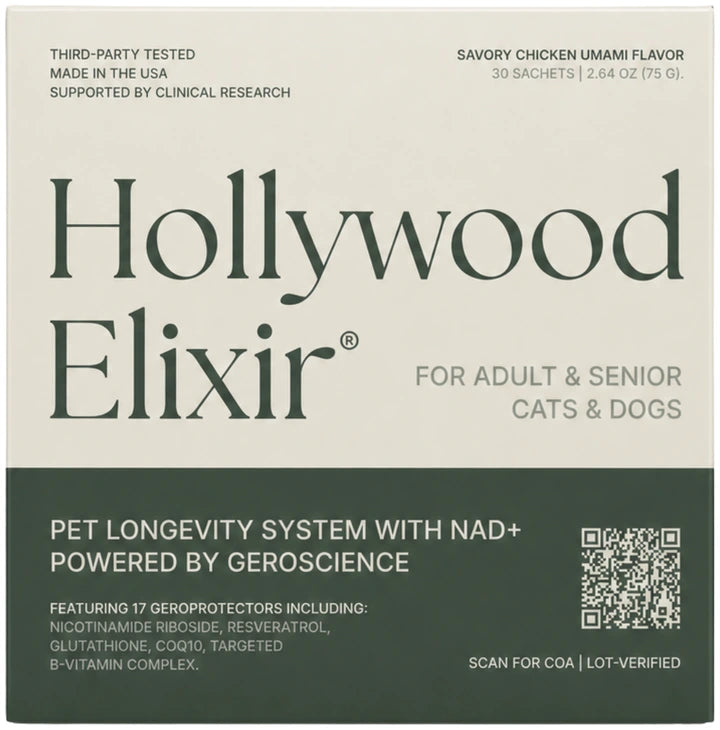
Hollywood Elixir is not FeliAIM, recombinant AIM, an AIM activator, or a CKD treatment, and La Petite Labs does not transfer the AIM evidence to it. If supplements are part of a veterinarian-informed discussion, the cat vitamins and supplements guide is a separate evidence check. For kidney disease, clinical assessment, current CKD care, and official regulatory updates remain the decision path.

Current CKD staging, monitoring, renal nutrition, and individualized care remain the practical center.

Educational content only. This material is not a substitute for veterinary advice. Always consult your veterinarian about your cat’s specific needs. These statements have not been evaluated by the Food and Drug Administration. Products mentioned are not intended to diagnose, treat, cure, or prevent any disease.

Glossary

  • AIM: Apoptosis inhibitor of macrophage, a circulating protein also known as CD5L.
  • CD5L: CD5-like protein, an alternative name for AIM used in scientific literature.
  • IgM: Immunoglobulin M, an antibody complex that carries much circulating AIM.
  • Recombinant AIM: Laboratory-produced AIM protein used as an administered research intervention.
  • FeliAIM: The name of a Japanese veterinary AIM drug candidate submitted for manufacturing and marketing approval in April 2026.
  • Non-pivotal study: An exploratory study intended to detect and characterize a signal rather than provide the definitive evidence package for approval.
  • Exon duplication: A copied segment of a gene that can alter the structure of the resulting protein.
  • Indoxyl sulfate: A uremic solute used in the exploratory AIM study to define a selected higher-risk advanced-CKD subgroup.
  • IRIS stage: A standardized chronic kidney disease classification interpreted in stable patients and supplemented by blood-pressure and proteinuria information.

Related Reading

References

Numbered references support claims cited in the article. Evidence context identifies the study population and design; it does not turn indirect evidence into pet-specific proof.

  1. Toru Miyazaki, Yumiko Hirokami, Nobuyuki Matsuhashi, et al. Increased Susceptibility of Thymocytes to Apoptosis in Mice Lacking AIM, a Novel Murine Macrophage-derived Soluble Factor Belonging to the Scavenger Receptor Cysteine-rich Domain Superfamily. The Journal of Experimental Medicine · 1999· DOI 10.1084/jem.189.2.413Primary ResearchPopulation: otherEvidence boundary: Foundational mouse discovery paper; it establishes the original AIM identity, not a feline kidney treatment.↩ 1 · ↩ 2
  2. Ryoichi Sugisawa, Emiri Hiramoto, Shigeru Matsuoka, et al. Impact of feline AIM on the susceptibility of cats to renal disease. Scientific Reports · 2016· DOI 10.1038/srep35251Primary ResearchPopulation: catEvidence boundary: Mixed biochemical, feline-sample, induced feline-AKI, and felinized-mouse work; treatment improvement was shown in mice, not a natural feline CKD trial.↩ 1 · ↩ 2 · ↩ 3 · ↩ 4 · ↩ 5 · ↩ 6 · ↩ 7
  3. Evangelista GCL, Hwang JK, Broughton-Neiswanger LE, et al. Apoptosis Inhibitor of Macrophages in Cats: A Potential Link Between an Exon 3 Variant Allele and Progression of Naturally Occurring Chronic Kidney Disease. Journal of veterinary internal medicine · 2025· DOI 10.1111/jvim.70136Observational StudyPopulation: catEvidence boundary: Retrospective records and stored DNA; association in 50 qualifying CKD cases does not validate a deterministic individual predictor.↩ 1 · ↩ 2
  4. Nicolas F Villarino, Julianne K Hwang, Katrina L Mealey. Prevalence of the AIM exon 3 duplication variant, a putative biomarker associated with progression of kidney disease, in 1000 cats. Journal of Feline Medicine and Surgery · 2026· DOI 10.1177/1098612x261445138Observational StudyPopulation: catEvidence boundary: Hospital DNA-bank convenience sample without CKD phenotype data; it estimates genotype frequency in that cohort, not disease risk.↩ 1 · ↩ 2 · ↩ 3
  5. Tetsushi Tezuka, Hiroyuki Arakawa, Kai Kudo, et al. A clinical impact of apoptosis inhibitor of macrophage on feline chronic kidney disease. The Veterinary Journal · 2026· DOI 10.1016/j.tvjl.2026.106545Controlled StudyPopulation: catEvidence boundary: Exploratory non-pivotal study with 11 treated and 15 untreated high-indoxyl-sulfate cats; allocation, care, measurement, duration, and conflict limitations constrain inference.↩ 1 · ↩ 2 · ↩ 3 · ↩ 4 · ↩ 5 · ↩ 6 · ↩ 7 · ↩ 8 · ↩ 9 · ↩ 10 · ↩ 11
  6. Institute for AIM Medicine. The Clinical Trial for the AIM Cat Medicine Has Begun. Institute for AIM Medicine · 2025RegulatoryPopulation: catEvidence boundary: Official sponsor notice confirms trial launch and sites; it does not provide results or establish approval.↩ 1 · ↩ 2 · ↩ 3
  7. IAM CAT Co., Ltd. FeliAIM Manufacturing and Marketing Approval Application Notice. IAM CAT Inc. · 2026RegulatoryPopulation: catEvidence boundary: Official applicant notice confirms submission on 2026-04-24; an application is not approval, availability, or proof of efficacy.↩ 1 · ↩ 2 · ↩ 3 · ↩ 4
  8. Ministry of Agriculture, Forestry and Fisheries of Japan. Approval and Review Information for Veterinary Medicinal Products. Japan Ministry of Agriculture, Forestry and Fisheries, National Veterinary Assay Laboratory · 2026RegulatoryPopulation: bothEvidence boundary: Regulator page directs users to the approved-products database and warns that updates may lag; absence from a search is not conclusive proof of non-approval.↩ 1 · ↩ 2
  9. International Renal Interest Society. IRIS Guidelines for Chronic Kidney Disease. International Renal Interest Society · 2023GuidelinePopulation: bothEvidence boundary: Consensus staging and treatment recommendations organize current care; they do not evaluate FeliAIM or AIM-branded foods.↩ 1 · ↩ 2 · ↩ 3 · ↩ 4 · ↩ 5
  10. INABA Petfood Co., Ltd. for AIM Pet Food Series. Inaba Petfood Co., Ltd. · 2026RegulatoryPopulation: catEvidence boundary: Official manufacturer page; source_type regulatory is the closest schema category for a product-label status source, not scientific efficacy evidence.↩ 1 · ↩ 2 · ↩ 3

Further reading

These sources provide additional context but are not mapped to a numbered claim above.

FAQ

What is AIM or CD5L?

AIM—apoptosis inhibitor of macrophage—is a circulating protein also called CD5L. It is produced largely by macrophages and commonly travels bound to IgM. Research links it to debris clearance and other immune-metabolic processes. That broad biology does not by itself establish a feline kidney treatment.

What did Toru Miyazaki discover?

Miyazaki and colleagues first reported AIM as a macrophage-derived soluble factor in a 1999 mouse study. Subsequent work developed the IgM-binding and debris-clearance story, including feline kidney research. Discovery history is important, but each clinical, genetic, and regulatory claim still needs its own evidence.

Does AIM cure chronic kidney disease in cats?

No cure has been established. A 2026 exploratory non-pivotal study reported a striking survival signal in 11 selected rAIM-treated cats, but small groups, alternating incorporation, unstandardized care, incomplete measurements, long recruitment, and assay limitations require confirmation in larger controlled trials.

What were the survival results in the 2026 AIM cat study?

The paper reported 360-day cumulative survival of 83% in six mouse-rAIM-treated cats and 80% in five feline-rAIM-treated cats, versus 20% in fifteen untreated controls. Confidence intervals were wide, and the selected advanced-CKD study was exploratory rather than pivotal, so the effect size is not yet settled.

Is FeliAIM approved in Japan?

IAM CAT announced an application for Japanese manufacturing and marketing approval on April 24, 2026. In our August 21 official-source refresh, no later positive approval notice was verified. MAFF warns that its database can lag, so this is a dated status and must be checked again before any decision or publication update.

Can a cat receive FeliAIM now?

The official evidence reviewed establishes an application, not routine availability or an approved label. Do not source or reproduce an experimental infusion protocol. Ask the treating veterinarian about current licensed options and monitor IAM CAT and Japan’s regulator for verified status changes.

Can an AIM genetic test predict whether my cat will get CKD?

Not reliably from current evidence. Homozygosity for an exon 3 duplication was associated with worse CKD in one small retrospective cohort, and the variant was common in a separate DNA-bank sample. The prevalence study had no CKD phenotype data. A genotype cannot diagnose, stage, or replace repeated kidney assessment.

Is AIM30 or “for AIM” food the same as the AIM drug?

No. The exploratory therapy was laboratory-produced recombinant protein given intravenously. AIM-branded foods are eaten formulations with their own ingredients and label claims; one official manufacturer page explicitly says its food does not treat kidney disease. The injection study cannot be transferred to a food by shared naming.

Can an AIM-activating food prevent kidney disease?

That prevention claim is not established by the intravenous rAIM study. A food would need finished-product evidence showing the relevant exposure and clinically meaningful outcomes in the intended feline population. Ingredient theory, laboratory activation, researcher association, or an AIM name does not bridge route, dose, bioavailability, and endpoint.

What should owners do now if a cat has kidney disease?

Use the treating veterinarian’s current plan and IRIS-informed staging, substaging, nutrition, hydration, blood-pressure, proteinuria, phosphorus, anemia, symptom, and monitoring decisions. Do not delay assessment for increased thirst or urination, weight loss, appetite change, vomiting, constipation, or weakness while waiting for an investigational therapy.

Woman facing a white cat beside a Hollywood Elixir box in the feline longevity-system framework section

Discover LPL-01: How This Fits Into a Larger Feline Longevity System

Aging in cats unfolds quietly. It’s not driven by a single failure, but by gradual shifts across interconnected systems — cellular energy, oxidative balance, immune tone, and tissue integrity — each influencing the others over time.

This article explores one layer of that system. To understand what actually shapes long-term health, you need to step back and look at how these layers interact.

Start with the underlying science: