Native Pet Allergy Chews Review for Dogs

A label-focused look at Native Pet's chicken-format allergy and immune chew, including disclosed ingredients, missing dose detail, testing visibility, and where Pet Gala is a different kind of skin-support system.

La Petite Labs Editorial 1 min read

Native Pet Allergy Chews are dog chews positioned for allergy and immune support, with a label that names colostrum, spirulina, dried yeast fermentate, algae oil, and Bacillus coagulans as active ingredients. The product page presents the chews for any dog over 3 months old and gives a daily serving direction of 1 chew per 25 pounds of body weight.

This is an itch-adjacent product, so the decision frame should start before the supplement aisle: scratching, paw licking, watery eyes, skin changes, and coat problems can come from parasites, infections, atopy, food reactions, endocrine issues, and other causes. A supplement can be part of a daily skin-support routine, but persistent itching is a veterinary conversation first.

The strongest shopper appeal here is the simple chicken chew format and a short inactive-ingredient list. The main label limitation is that the actives are disclosed by name only, without per-active amounts, a guaranteed analysis, a public COA, a lot lookup, a named lab, or specific test panels on the pages checked.

We reviewed Native Pet at brand level — Public Transparency Score 52/100 — see the Native Pet Review for the brand's testing posture, disclosure practices, and what to verify before buying anything from its range.

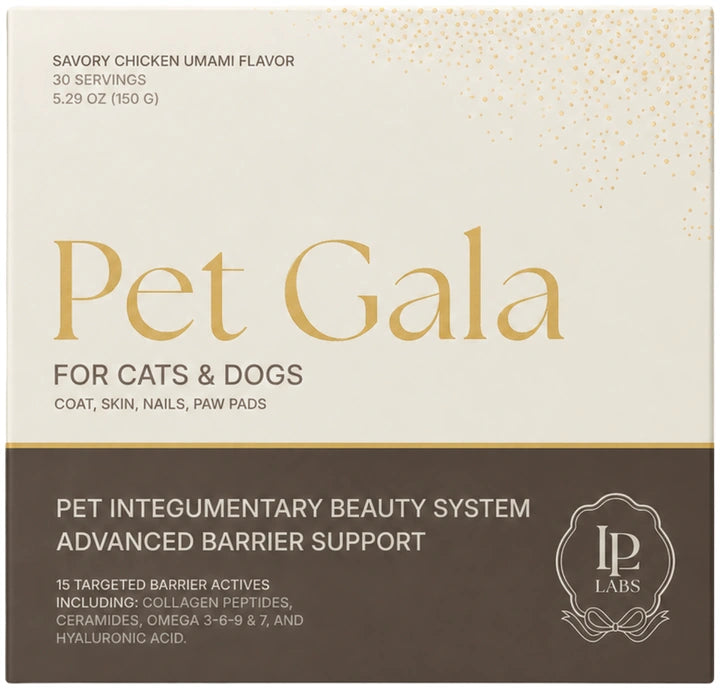
Disclosure: La Petite Labs sells its own pet supplements, including Pet Gala™. This review is editorial: competitor facts are drawn from the public sources listed in the References section, and facts are dated where shown.

What Native Pet Allergy Chews are, and who is behind the label

Native Pet Allergy Chews are dog chews in the allergy and immune support category. The product page presents them as Allergy Chews with size options for 30, 60, 90, and 120 chews, while a retailer page uses 60 Servings and 60 Days Supply wording. The product is for dogs, and the brand states that it recommends Allergy Chews for any dog over 3 months old.

The label's active ingredient line lists Colostrum (Bovine), Spirulina, Dried Yeast Fermentate (Postbiotics), Algae Oil, and Bacillus Coagulans (Probiotics). The inactive ingredient line lists Bone Broth Gelatin (Porcine), Chicken, Coconut Glycerin, and Mixed Tocopherols as a natural preservative. That gives buyers a fairly clear view of what ingredient names are present, but not how much of each active is present per chew.

The brand language is clearly allergy-positioned. Native Pet says the chews provide "targeted immune support to ease seasonal allergies and reduce itchy skin, paw licking, and watery eyes." It also describes spirulina as "a natural anti-histamine and anti-inflammatory that protects against allergic reactions." Those are the brand's words, not a conclusion this review should convert into a treatment claim.

For a cautious owner, this distinction matters. Itching, paw licking, watery eyes, and coat changes can come from parasites, infections, atopy, food reactions, endocrine issues, and other problems that need diagnosis. Native Pet Allergy Chews may be considered as a daily support product within that broader context, but persistent or worsening itch belongs with a veterinarian before a supplement decision becomes the main plan.

At a Glance

What are Native Pet Allergy Chews for dogs?

Native Pet Allergy Chews are daily dog chews positioned for allergy and immune support. The active line lists bovine colostrum, spirulina, dried yeast fermentate, algae oil, and Bacillus coagulans. The brand recommends them for dogs over 3 months old and directs owners to give 1 chew per 25 lbs of body weight daily.

Product
Native Pet Allergy Chews
Category
Dog allergy and immune support chews
Species
Dogs
Format
undefined
Disclosed actives
5 named actives: Colostrum (Bovine), Spirulina, Dried Yeast Fermentate (Postbiotics), Algae Oil, and Bacillus Coagulans (Probiotics); no per-active amounts published
Price
$14.99 USD product-page offer price visible, but the chew-count variant for that price is not identified; cost per day cannot be computed reliably
Best fit
Dog owners who want an easy daily chicken chew with named allergy-positioned actives and are comfortable without per-active dose disclosure.
What to check
Confirm the selected pouch count and live price, review chicken and porcine gelatin for diet fit, and ask your veterinarian first for persistent itching, medications, or multiple supplements.

Quick Answers

Are Native Pet Allergy Chews good?

They are a good fit for some owners who want a convenient chicken chew, short inactive list, simple dosing, and NASC Quality Seal visibility. The main limitation is transparency: the pages checked do not publish per-active amounts, guaranteed analysis rows, a public COA, lot lookup, named lab, or specific test panels.

What should dog owners check before buying Native Pet Allergy Chews?

Check the active list, the missing per-active amounts, the inactive ingredients, and the price-count match. Chicken and porcine gelatin are listed, which matters for allergy-conscious or elimination-diet dogs. Also confirm which pouch size the live price applies to, because the checked $14.99 price was not linked to a specific chew count.

Can Native Pet Allergy Chews cause side effects?

The pages checked do not list specific adverse events, so this review should not invent them. Practically, owners should watch appetite, stool, skin comfort, and any worsening itch after starting. Pause and call a veterinarian if symptoms worsen, if the dog has skin lesions or ear issues, or if the chew is being combined with medications or other supplements.

How much do Native Pet Allergy Chews cost per day?

The product page price data shows $14.99 USD, but it does not identify which chew-count variant carries that price. Because the count is not linked to the price, a reliable cost per day cannot be calculated from the checked pages. Owners need the selected pouch count and the dog's daily chew count first.

How do Native Pet Allergy Chews compare with La Petite Labs Pet Gala?

Native Pet is the simpler chew-format option, with five named actives and 1-chew-per-25-lbs dosing. Pet Gala is more transparent on label amounts, with 13 actives disclosed at full mg amounts and no proprietary blends, plus per-batch third-party testing with named labs and a public COA lookup portal. Pet Gala is not allergy immunotherapy or a prescription dermatology substitute.

Do Native Pet Allergy Chews treat dog allergies or itching?

This review would not describe them that way. Native Pet uses allergy-adjacent wording, including seasonal allergies, itchy skin, paw licking, and watery eyes, but those are brand claims. Persistent itching can have medical causes such as parasites, infections, atopy, food reactions, or endocrine issues, so a veterinarian should be involved before relying on a supplement.

What active amounts are disclosed for Native Pet Allergy Chews?

No per-active amounts were published on the pages checked. The label names bovine colostrum, spirulina, dried yeast fermentate, algae oil, and Bacillus coagulans, but does not state how much of each is in a chew. That prevents dose comparison against research amounts or fully quantified competitor labels.

What age dog can use Native Pet Allergy Chews?

Native Pet says it recommends Allergy Chews for any dog over 3 months old. That age statement is useful, but it does not replace veterinary guidance for dogs with persistent itching, skin lesions, medications, multiple supplements, suspected food reactions, or other health concerns.

The Plain Comparison

Allergy Chews vs Pet Gala™, side by side

QuestionAllergy ChewsPet Gala™Stronger fit
Which product gives a more complete active-amount label?Native Pet lists five actives: bovine colostrum, spirulina, dried yeast fermentate, algae oil, and Bacillus coagulans. Per-active amounts were not published on the pages checked.Pet Gala discloses 13 actives at full mg amounts on the public product page, with no proprietary blends.Pet Gala is the stronger fit for buyers who want full mg-by-active disclosure. Native Pet may still fit buyers who prioritize a simple chew format over dose comparability.
Which product has more visible public testing documentation?Native Pet carries the NASC Quality Seal. Public COA, lot lookup, named lab, and specific test panels were not easy to find publicly when checked.La Petite Labs discloses per-batch third-party testing with named labs and a public COA lookup portal. The portal does not yet cover every currently sold SKU, and the public panel does not yet itemize pesticide, mycotoxin, or allergen testing.Pet Gala is the stronger fit for public testing visibility, within the stated portal limits. Native Pet is the stronger fit only if NASC participation is the buyer's primary quality signal.
Which product is more directly chew-convenient?Native Pet is a savory chicken chew with a jerky-style texture and a daily direction of 1 chew per 25 lbs of body weight.Pet Gala is described as a skin, coat, and barrier-support daily system; the provided La Petite Labs facts emphasize full mg disclosure and testing, not a chicken chew format.Native Pet is the stronger fit for owners specifically wanting a chicken chew routine. Pet Gala is the stronger fit when the buyer values quantified actives and public testing visibility more than chew format.
Which product belongs in a diagnosed allergy plan?Native Pet's brand copy refers to seasonal allergies, itchy skin, paw licking, watery eyes, anti-histamine, anti-inflammatory, and allergic reactions. The pages checked do not provide finished-product study references.Pet Gala is a skin, coat, and barrier-support daily system and is not a substitute for medicated or prescription dermatology products or allergy immunotherapy. La Petite Labs does not claim a finished-formula clinical trial; its evidence is ingredient-level.Neither product should be treated as allergy treatment or a replacement for veterinary dermatology. Native Pet is more allergy-positioned in marketing language, while Pet Gala is the clearer fit for quantified skin, coat, and barrier-support label transparency.
Which product is easier to compare against research doses?Native Pet does not publish per-active amounts for colostrum, spirulina, dried yeast fermentate, algae oil, or Bacillus coagulans on the pages checked.Pet Gala publishes 13 active ingredients at full mg amounts and uses no proprietary blends. La Petite Labs also discloses that it has no finished-formula clinical trial and relies on ingredient-level evidence.Pet Gala is easier to compare against ingredient-level research because the mg amounts are public. Native Pet is harder to compare because the active names are visible but the amounts are not.

Competitor label and pricing facts checked July 3, 2026. Sources are listed in the References section below.

Why the chicken chew format has real shopper appeal

The most obvious appeal of Native Pet Allergy Chews is the format. The brand describes them as "savory chicken chews with a jerky-style texture" and says dogs think it is a treat. For many pet parents, that practical point matters as much as the ingredient panel. A supplement that is easy to give daily is more likely to become a routine than one that requires measuring, mixing, or persuading a reluctant dog.

The inactive ingredient list is also relatively easy to read. It includes Bone Broth Gelatin (Porcine), Chicken, Coconut Glycerin, and Mixed Tocopherols. The brand further says it starts with real chicken, skips artificial preservatives, colors, and flavors, and air-dries each chew. Those claims are useful for shoppers who are trying to avoid a long list of flavoring and filler words, although they still need to evaluate whether chicken, porcine gelatin, or coconut glycerin fits their individual dog.

Native Pet's serving directions are simple: use 1 chew per 25 lbs of body weight daily. The page gives examples of up to about 25 lbs receiving 1 chew and up to about 50 lbs receiving 2 chews. That is easy to remember, and it helps owners estimate how quickly a pouch will be used when the pouch count is known.

The appeal is not only emotional convenience. A chew format can also reduce friction for multi-person households because the dose instruction is straightforward. The tradeoff is that chew products often ask buyers to accept the finished chew as a black box unless active amounts and testing documentation are published. In this case, the format is strong; the amount-level disclosure is the part a label reader should scrutinize.

Native Pet's active ingredient label, line by line

Native Pet's active ingredient line names five actives: Colostrum (Bovine), Spirulina, Dried Yeast Fermentate (Postbiotics), Algae Oil, and Bacillus Coagulans (Probiotics). No per-active amounts are published on the pages checked. That means the label tells owners what active categories are present, but it does not tell them how many milligrams, colony-forming units, or other dose units appear per chew.

Colostrum is listed as bovine colostrum. The brand separately says its "powerful probiotic and prebiotic blend" along with colostrum helps support immunity, but the pages checked do not disclose a colostrum amount. Without that number, a buyer cannot compare the chew to another product with a listed colostrum dose or to ingredient-level research that uses a specific dose.

Spirulina is also listed by name only. Native Pet's marketing language describes spirulina as a "natural anti-histamine and anti-inflammatory," but the label does not publish the amount of spirulina per chew. A cautious owner should keep that distinction clear: the brand is making an ingredient-positioning claim, while the label is not giving enough dose detail to judge the size of that inclusion.

Dried Yeast Fermentate is identified as postbiotics, Algae Oil is named as another active, and Bacillus Coagulans is identified as probiotics. Again, the label checked does not disclose amounts. For Bacillus coagulans, no count is visible; for algae oil, no omega amount or guaranteed analysis row is visible; for dried yeast fermentate, no weight amount is visible.

The practical takeaway is narrow but important. Native Pet publishes the active names, which is better than a completely vague front-panel claim. However, every disclosed active is missing a per-active amount, so this label cannot be compared cleanly against quantified skin, coat, omega, probiotic, or immune-support formulas.

What is not visible on the Allergy Chews page

The biggest missing item is per-active dose disclosure. The pages checked do not publish the amount of Colostrum, Spirulina, Dried Yeast Fermentate, Algae Oil, or Bacillus Coagulans per chew. They also do not publish a proprietary blend total, so there is not even a combined active weight that would let a buyer understand the size of the overall active system.

A guaranteed analysis was not easy to find publicly on the pages checked. That matters especially because this product includes algae oil, and skin-and-coat shoppers often want to know whether a label states fatty acid amounts. Here, no guaranteed analysis rows were found, so the product cannot be evaluated by published omega quantities from the pages checked.

Testing visibility is also limited in the public material checked. Native Pet states that it carries the NASC Quality Seal and says the product is made in the USA, sourced with non-GMO ingredients, and 100% in-house formulated. Those are useful quality signals. At the same time, a public COA, lot lookup, named testing lab, and specific test panels were not easy to find publicly when checked. That is not the same as saying testing does not happen; it means a buyer cannot inspect those items from the visible pages.

The manufacturer is not stated separately from the brand or seller in the checked material. The product page price data shows $14.99 USD, but the price data does not identify which chew-count variant carries that offer price. Because of that, a reviewer should not calculate cost per chew or cost per day from that price without knowing the count.

These gaps do not erase the product's convenience or short ingredient list. They simply define the buyer's decision: this is a named-ingredient chew with limited amount-level and testing-document visibility.

Which skin-support lanes Native Pet Allergy Chews actually covers

For skin and coat buyers, it helps to separate allergy-positioned wording from the support lanes a formula actually names. Native Pet Allergy Chews cover several lanes by ingredient name: bovine colostrum for immune-oriented positioning, spirulina for the brand's allergy-adjacent story, dried yeast fermentate as postbiotics, Bacillus coagulans as probiotics, and algae oil as a skin-and-coat-relevant oil ingredient. The formula is not presented as a collagen or keratin product in the checked material.

The omega lane is only partially visible. Algae Oil is listed as an active, but the pages checked do not publish an amount of algae oil, an omega-3 amount, DHA, EPA, or a guaranteed analysis row. That means the formula includes an oil ingredient by name, but buyers cannot evaluate it the way they might evaluate a product that publishes fatty acid quantities.

The barrier-lipid lane is also not fully quantified. The product is positioned around seasonal allergies, immune support, itchy skin, paw licking, and watery eyes, but the label does not state barrier lipid amounts or a measured skin-barrier panel. It may still appeal to owners looking for a general skin-support chew, but the visible label does not let them map exact doses to a barrier-support plan.

The collagen and keratin lane is not a visible focus. The active list does not include collagen or keratin. Bone Broth Gelatin appears in the inactive ingredient list as porcine gelatin, but the label does not present it as a quantified active collagen system.

This matters because skin supplement is a broad shelf. Native Pet Allergy Chews read more like an immune, postbiotic, probiotic, spirulina, colostrum, and algae-oil chew than a quantified omega, barrier-lipid, collagen, or keratin formula.

“Native Pet Allergy Chews are strongest on daily convenience, not dose-level transparency.”

Daily routine reality: air-dried chews, chicken flavor, and consistency

Native Pet Allergy Chews are built for the daily routine. The serving direction says to use 1 chew per 25 lbs of body weight, given daily. For many dogs, that is a simple enough pattern: a smaller dog may receive one chew, while a dog up to about 50 lbs may receive two chews according to the examples on the page.

The brand's format claims support that routine story. It describes the chews as savory chicken chews with a jerky-style texture, and says it starts with real chicken and air-dries each chew. It also states that the air-dried format supports shelf stability without refrigeration. For an owner who dislikes refrigerated products, messy oils, or powders that cling to bowls, that storage and dosing convenience may be a real advantage.

Routine, however, is not just about whether a dog will eat the chew. It is also about whether the product fits the dog's diet and medical context. Chicken is part of the inactive list, and Bone Broth Gelatin (Porcine) is also listed. For dogs whose owners are avoiding chicken or porcine ingredients, those are not minor details. They are central to whether the chew belongs in the home.

The brand says Allergy Chews can be safely given with any other Native Pet product. Separately, the label advises consulting a veterinarian before starting any new supplement, especially if combining it with other supplements or medications. Those two statements should be read together. A product may be designed for stacking within a brand's line, but a dog with medications, multiple supplements, persistent itching, or a complex diet still deserves veterinary input.

In routine terms, Native Pet's strength is ease. The main practical watchouts are ingredient fit, dose scaling by body weight, and not letting a daily chew delay proper care for ongoing itch.

Dog dosing practicalities for the 1-chew-per-25-lbs direction

The dosing direction is one of the clearest parts of the Native Pet Allergy Chews page. It says to use 1 chew per 25 lbs of body weight, given daily. The examples given are up to about 25 lbs: 1 chew, and up to about 50 lbs: 2 chews. The checked pouch context includes 60 chews per pouch, and the product page size selector includes 30, 60, 90, and 120 chews.

That instruction is easy to apply for many dogs, but it also makes size selection important. A dog receiving 1 chew daily will move through chews at half the rate of a dog receiving 2 chews daily. Because the product page offers multiple chew-count sizes, owners should match the pouch size to the dog's body weight and the planned trial period.

There is one pricing limitation: the product page price data shows $14.99 USD, but it does not identify which chew-count variant carries that offer price. That prevents a clean cost-per-day calculation. If the $14.99 price were tied to a known count, the math would be simple; without that linkage, a buyer should check the live selector before comparing value.

The life-stage note is also clear but limited. Native Pet says it recommends Allergy Chews for any dog over 3 months old. That is helpful for screening puppies younger than the stated threshold, but it does not replace veterinary advice for dogs with current skin lesions, ear problems, severe itching, medications, or suspected food reactions.

The most cautious way to use the dosing information is to treat it as an administration guide, not as proof of dose adequacy. Because per-active amounts are not visible, increasing chews by weight does not tell the buyer how much of each active the dog receives.

Inactive ingredients that matter for allergy-conscious dog owners

Native Pet's inactive ingredient line is short: Bone Broth Gelatin (Porcine), Chicken, Coconut Glycerin, and Mixed Tocopherols as a natural preservative. For a buyer who dislikes long inactive panels, that short list is part of the product's appeal. It is also easier to review than a formula with many flavors, colors, binders, or sweeteners.

Short does not automatically mean suitable for every dog. Chicken is present, and the product is described as a savory chicken chew. If a dog's veterinarian has recommended avoiding chicken, or if the owner is running a structured diet trial, a chicken-based chew can interfere with that plan. That is especially important on an allergy-positioned product because some owners may be buying it for dogs whose food reactions have not been sorted out yet.

Bone Broth Gelatin is identified as porcine. That matters for owners avoiding pork-derived ingredients for dietary, tolerance, or household reasons. Coconut Glycerin is also part of the inactive list and likely contributes to chew texture, but the pages checked do not present it as an active skin ingredient. Mixed Tocopherols are identified as a natural preservative.

The brand says it uses no artificial preservatives, colors, or flavors and no fillers. Those are the brand's claims. A careful buyer can still ask a separate question: are the listed inactive ingredients compatible with this specific dog's diet and skin history?

This is where allergy discipline matters. If a dog is itchy and the cause is unknown, adding a flavored chew can make the diet picture harder to interpret. Native Pet's inactive list is transparent by name, but allergy-conscious owners should treat chicken and porcine gelatin as meaningful ingredients, not background details.

Testing and quality signals: NASC visible, COA details not visible

Native Pet states that it carries the NASC Quality Seal, which it describes as a recognized mark of safety and quality in the pet supplement industry. It also says the product is made in the USA, sourced with non-GMO ingredients, and 100% in-house formulated. These are useful public quality signals, especially for shoppers who want to know whether a pet supplement brand participates in a recognized quality program.

The limits are in the test-document visibility. On the checked public pages, a public COA was not easy to find. A lot lookup was not easy to find. A named testing lab was not easy to find. Specific test panels were not published in the material checked. That means a buyer cannot verify a lot-specific result, inspect a contaminant panel, or see which lab performed testing from the visible page set.

This should be stated carefully. The absence of a public COA or named lab on the pages checked is not proof that the product is untested. It is a transparency limitation for the buyer. Some owners are comfortable with a certification signal such as NASC plus a brand's general quality statements. Others want direct public documents before they buy, especially for daily products used over many months.

Native Pet's facility-related disclosure is also at a broad level. The brand says made in the USA, while the checked material does not separately state a manufacturer name. That can still be enough for some buyers, but it is not the same as a named facility, city, state, or plant-level disclosure.

For this product, the fair quality summary is balanced: NASC is a real visible plus; public batch-level testing detail is not easy to inspect from the pages checked.

Evidence status behind Native Pet's itch and allergy positioning

Native Pet Allergy Chews are presented with strong allergy-adjacent language. The brand says the product offers targeted immune support to ease seasonal allergies and reduce itchy skin, paw licking, and watery eyes. It also says spirulina is a natural anti-histamine and anti-inflammatory that protects against allergic reactions, and that the formula helps address seasonal allergies while supporting healthy immune system function.

Those statements may make the product feel closer to treatment than a cautious owner should assume. This review should not restate them as facts. The safer reading is that Native Pet is selling an allergy-positioned daily supplement built around named active ingredients, not a replacement for veterinary diagnosis or prescription dermatology.

No finished-product study references were published in the checked material. The pages checked also did not provide per-active amounts. That combination limits what a buyer can conclude from the label alone. Ingredient names can explain the brand's rationale, but without amounts and product-specific study references, the label does not let an owner assess how the finished chew was tested for itch, paw licking, watery eyes, or seasonal allergy outcomes.

This matters because itch is not one condition. Parasites, skin infections, ear infections, atopy, food reactions, endocrine issues, and environmental triggers can all show up as scratching or licking. A supplement trial may be reasonable in a mild, already-vetted routine, but persistent itching, broken skin, odor, hair loss, ear discomfort, or worsening symptoms should move the decision back to a veterinarian.

The evidence status is therefore modest: Native Pet provides ingredient-level positioning and brand claims, but not public finished-product trial references or amount-level disclosure on the pages checked.

“The label names five actives, but the amounts behind those names are not published on the pages checked.”

Native Pet Allergy Chews price and the cost-per-day problem

The product page price data checked shows priceCurrency as USD and price as 14.99. That gives one visible offer price: $14.99 USD. The same product page includes a size selector for 30, 60, 90, and 120 chews, and a retailer page uses 60 Servings or 60 Days Supply wording.

The problem is that the product page price data does not identify which chew-count variant carries the $14.99 offer price. Because of that missing linkage, a reliable cost per chew or cost per day should not be calculated from the checked material. The per-day math depends on both the count and the dog's dose: a dog taking 1 chew daily uses half as many chews as a dog taking 2 chews daily.

If a price and count are both visible at checkout, the owner can calculate value directly. For a 1-chew-per-day dog, divide the selected pouch price by the number of chews. For a 2-chew-per-day dog, multiply the daily chew count by the per-chew price. This review cannot do that arithmetic for the $14.99 figure because the count attached to that price is not published in the checked price data.

Value should also include label transparency, not only sticker price. Native Pet gives named actives, a short inactive list, simple dosing, NASC participation, and a convenient chew format. It does not publish per-active amounts or public lot-level test documents on the pages checked. A cheaper product is not automatically a better value if the buyer wants dose comparability; a convenient product is not automatically a poor value if the owner mainly wants an easy daily chew.

The honest price summary is simple: $14.99 is visible, but cost per day is not reliably computable from the checked data.

How long to judge coat and skin-support routines without overreading itch

Skin and coat routines should be judged patiently, but allergy-positioned products need extra caution. Coat appearance, shedding patterns, and skin comfort do not change overnight, and daily supplements are usually evaluated over a consistent routine rather than after a few chews. At the same time, ongoing itch is not just a cosmetic issue. If the dog is persistently scratching, licking paws, chewing skin, rubbing the face, developing hot spots, losing hair, smelling yeasty, or showing ear discomfort, the right next step is veterinary evaluation.

For Native Pet Allergy Chews, the brand's own language includes itchy skin, paw licking, watery eyes, seasonal allergies, and immune support. Those phrases are attractive to owners looking for relief, but they should not turn a chew into the main plan for a dog with unresolved symptoms. Itch can come from parasites, infections, atopy, food reactions, endocrine disease, or other causes that a supplement label cannot diagnose.

A practical first 90 days should focus on consistency and observation. Give the chew according to the body-weight direction if it fits the dog's diet and veterinary context. Track whether the dog accepts it, whether stool or appetite changes occur, whether skin signs improve, stay the same, or worsen, and whether any new ingredient conflicts appear.

Because per-active amounts are not disclosed, owners should avoid making dose-level conclusions such as this should be enough or this cannot work. The label does not provide enough amount data for that. The better question is whether the product's visible strengths, gaps, and ingredient list match the dog's situation.

If symptoms are more than mild coat dullness or seasonal maintenance, do not wait through a long supplement experiment before calling the veterinarian.

Who Native Pet Allergy Chews genuinely fit

Native Pet Allergy Chews genuinely fit a specific kind of buyer: someone who wants a dog-only, chicken-flavored daily chew with a short inactive list, named active ingredients, simple weight-based dosing, and a visible NASC Quality Seal. The product is especially convenient for owners who prefer treat-like formats and want to avoid mixing powders or measuring liquids.

It may also fit owners who are comfortable with category-level ingredient logic rather than fully quantified dose comparison. The active list is clear by name: bovine colostrum, spirulina, dried yeast fermentate, algae oil, and Bacillus coagulans. If the owner's main goal is to add a routine chew built around those ingredient categories, the label provides enough to know what types of actives are present.

The product is a less direct fit for buyers who want to compare every active to research doses or to another product's mg panel. Since the amounts are not disclosed, the label does not let the buyer evaluate how much colostrum, spirulina, postbiotic material, algae oil, or probiotic is delivered per chew. It is also a weaker fit for owners who require public COAs, lot lookup, named labs, or specific test panels before starting a daily supplement.

Diet fit matters too. Chicken and porcine gelatin are in the inactive list. A dog on a strict elimination diet, a chicken-avoidance plan, or a veterinarian-directed food trial may not be a good match for a chicken chew, even if the active ingredient story sounds relevant.

So the product's genuine fit is convenience-led, not transparency-led: easy daily use, appealing format, named actives, and NASC participation, with dose and testing visibility left as the main buyer questions.

When an itchy dog should see a vet before trying Allergy Chews

A dog should see a veterinarian before a supplement trial when itching is persistent, severe, spreading, or accompanied by other skin or ear signs. Paw licking, watery eyes, scratching, coat changes, and skin irritation can come from parasites, infections, atopy, food reactions, endocrine issues, and other causes. A chew cannot sort those causes out from the outside.

This is especially important because Native Pet's own marketing language names seasonal allergies, itchy skin, paw licking, and watery eyes. Those are exactly the kinds of signs owners may be tempted to manage on their own. The label also says to consult a veterinarian before starting any new supplement, especially if combining it with other supplements or medications. That warning is worth following.

See a vet first if the dog has broken skin, scabs, bleeding, hair loss, odor, ear redness, head shaking, recurrent infections, intense scratching, sudden onset of symptoms, lethargy, appetite changes, or a known medical condition. Also involve a veterinarian if the dog is taking medications or multiple supplements, because the label specifically calls out combining products and medications as a reason to consult.

Food context matters as well. Since Native Pet Allergy Chews include chicken and porcine gelatin, they can complicate a diet trial or avoidance plan. If a veterinarian is trying to evaluate food reactions, adding a flavored chew may make the results harder to interpret.

The practical rule is not anti-supplement. It is sequence. Diagnose and stabilize significant itch first, then decide whether a daily support chew belongs in the maintenance routine. Native Pet Allergy Chews may fit some dogs after that step, but unresolved itching should not be treated as a supplement-shopping problem.

How Native Pet Allergy Chews compare with La Petite Labs Pet Gala

Native Pet Allergy Chews and La Petite Labs Pet Gala sit in overlapping skin-support territory, but they are not the same kind of product. Native Pet is an allergy and immune support chew for dogs, built around bovine colostrum, spirulina, dried yeast fermentate, algae oil, and Bacillus coagulans. Pet Gala is described as a skin, coat, and barrier-support daily system with 13 actives disclosed at full mg amounts and no proprietary blends.

The clearest difference is disclosure depth. Native Pet names five actives but does not publish per-active amounts on the pages checked. Pet Gala publishes 13 actives at full mg amounts on its public product page. For buyers who want to compare exact active quantities, Pet Gala is the more transparent label. For buyers who prioritize a chicken chew with a short inactive list and simple 1-chew-per-25-lbs dosing, Native Pet may be the more convenient format.

Testing visibility also differs. Native Pet shows the NASC Quality Seal and broad made-in-USA and non-GMO sourcing statements, while public COA, lot lookup, named lab, and specific panels were not easy to find publicly on the pages checked. La Petite Labs discloses per-batch third-party testing with named labs and a public COA lookup portal. The precise wording matters: La Petite Labs' COA lot-lookup portal does not yet cover every currently sold SKU, and the public panel does not yet itemize pesticide, mycotoxin, or allergen testing.

Neither comparison should become a disease claim. Pet Gala is not a substitute for medicated or prescription dermatology products or allergy immunotherapy. La Petite Labs also explicitly discloses that no finished-formula clinical trial currently exists on its products; its evidence is ingredient-level. So the difference is not one treats allergies and one does not. The difference is label transparency, testing visibility, and the support lanes each product emphasizes.

Full disclosed amounts, testing scope, and serving details for the La Petite Labs side of this comparison are on the Pet Gala™ explainer.

The first 90 days with Native Pet Allergy Chews

The first 90 days should start with fit checks, not expectations. Confirm the dog is over 3 months old, review the inactive ingredients for chicken, porcine gelatin, coconut glycerin, and mixed tocopherols, and decide whether those ingredients fit the dog's current diet. If the dog is itchy, has ear symptoms, has skin lesions, takes medications, or is already on several supplements, consult a veterinarian first, as the product warning advises.

If the product fits, follow the label's body-weight direction: 1 chew per 25 lbs of body weight daily. The examples given are up to about 25 lbs: 1 chew, and up to about 50 lbs: 2 chews. Because the active amounts are not disclosed, do not try to reinterpret the dose beyond the label. The pages checked do not show how much colostrum, spirulina, dried yeast fermentate, algae oil, or Bacillus coagulans the dog receives per chew.

During the routine, track acceptance and tolerance. Watch whether the dog eats the chew willingly, whether appetite or stool changes, whether scratching, paw licking, watery eyes, coat quality, or skin appearance change, and whether any signs worsen. If itching becomes intense, skin breaks open, odor appears, hair loss spreads, ears become inflamed, or the dog seems uncomfortable, pause the supplement decision and contact a veterinarian.

The 90-day frame is useful for habit and observation, but it should not become a reason to delay care. Native Pet's brand language is allergy-adjacent, and that can make the product feel closer to treatment than a cautious owner should assume. A daily chew can be one part of a support routine after major problems are ruled out; it should not stand in for diagnosis.

How to read the Native Pet Allergy Chews label before buying

Start with the active list. Native Pet publishes five active ingredient names: Colostrum (Bovine), Spirulina, Dried Yeast Fermentate (Postbiotics), Algae Oil, and Bacillus Coagulans (Probiotics). That tells you the ingredient categories in the product, but it does not tell you the amount of each one. If you are comparing labels, place this product in the named-actives, unquantified-amounts category.

Next, read the inactive list as carefully as the actives. Bone Broth Gelatin (Porcine), Chicken, Coconut Glycerin, and Mixed Tocopherols are listed. For allergy-conscious dogs, chicken and porcine gelatin are not invisible excipients. They may be acceptable for many dogs, but they matter for elimination diets, ingredient-avoidance plans, and dogs whose veterinarians are trying to isolate food triggers.

Then check the claims. The brand says the product supports seasonal allergies, itchy skin, paw licking, watery eyes, and immune health. It also uses phrases such as anti-histamine, anti-inflammatory, allergic reactions, and free from illness in its ingredient and immune-support copy. Read those as brand claims, not as proof that the chew treats a diagnosed condition.

After that, look for quality documentation. Native Pet shows the NASC Quality Seal and states made in the USA, non-GMO sourcing, and in-house formulation. A public COA, lot lookup, named testing lab, and specific test panels were not easy to find publicly when checked. Decide whether NASC plus general quality statements are enough for your risk tolerance.

Finally, confirm price and count together. The checked price data shows $14.99 USD, but not which chew-count variant it applies to. Do not compare cost per day until the selected pouch count and your dog's daily chew count are both clear.

Bottom line on Native Pet Allergy Chews for dogs

Native Pet Allergy Chews are a convenient, allergy-positioned daily chew for dogs with a short inactive list, simple weight-based dosing, and a visible NASC Quality Seal. The format is the biggest strength: chicken chews with a jerky-style texture, daily directions of 1 chew per 25 lbs of body weight, and no refrigeration requirement according to the brand.

The label is also clear about ingredient names. It lists bovine colostrum, spirulina, dried yeast fermentate, algae oil, and Bacillus coagulans as actives, plus porcine bone broth gelatin, chicken, coconut glycerin, and mixed tocopherols as inactive ingredients. That gives buyers a real starting point for ingredient fit.

The limitation is that the label does not publish per-active amounts, a guaranteed analysis, proprietary blend totals, public COA access, lot lookup, named lab, specific test panels, or a manufacturer separate from the brand on the pages checked. The $14.99 USD product-page price is visible, but the checked price data does not identify which chew-count variant it belongs to, so cost per day cannot be calculated reliably.

For a dog with mild, already-vetted seasonal skin-support needs and no conflict with chicken or porcine ingredients, Native Pet may be a practical chew-format choice. For a dog with persistent itching, skin lesions, ear problems, food-reaction questions, or medication complexity, the first stop should be a veterinarian.

Compared with La Petite Labs Pet Gala, Native Pet looks stronger on chew simplicity and chicken-treat convenience. Pet Gala looks stronger on full mg active disclosure and public testing visibility. Neither should be treated as a substitute for veterinary dermatology or allergy immunotherapy.

“For an itchy dog, a supplement decision should come after the veterinary question, not before it.”

Educational content only. This material is not a substitute for veterinary advice. Always consult your veterinarian about your dog’s specific needs. These statements have not been evaluated by the Food and Drug Administration. Products mentioned are not intended to diagnose, treat, cure, or prevent any disease.

Glossary

Colostrum (Bovine)

A named active in Native Pet Allergy Chews; the label checked does not publish its amount per chew.

Spirulina

A named active used in Native Pet's allergy-positioning language; the label checked does not publish its amount per chew.

Dried Yeast Fermentate

Listed by Native Pet as postbiotics; no per-chew amount was published on the pages checked.

Bacillus Coagulans

Listed by Native Pet as probiotics; no count or amount was published on the pages checked.

NASC Quality Seal

A pet supplement quality seal Native Pet states it carries; it is a visible quality signal, separate from a public lot-specific COA.

COA

Certificate of analysis, a testing document some brands publish for batch or lot verification.

Guaranteed analysis

A label table that can disclose nutrient or analytical values; no guaranteed analysis rows were found on the pages checked.

Allergy-positioned supplement

A supplement marketed around allergy or itch-related signs; it should not be treated as a substitute for veterinary diagnosis or dermatology care.

Related Reading

References

References

Sources for the Allergy Chews facts on this page

Competitor label, pricing, and claims facts on this page come from these public sources. Links are provided for verification.

  • Source pdp.txt Accessed 2026-07-03 · high confidence.
  • Source pdp.jsonld.json Accessed 2026-07-03 · high confidence.
  • Source retailer.txt Accessed 2026-07-03 · medium confidence.

FAQ

La Petite Labs

Discover LPL-01: How This Fits Into a Complete Canine Integumentary Support System

Skin, coat, and nails aren’t cosmetic features. They’re the visible surface of deeper biological systems—barrier function, hydration balance, structural protein turnover, and lipid integrity—working in concert.

When these systems fall out of sync, it shows: dull coat, shedding, dryness, brittleness, sensitivity.

This article explores one piece of that puzzle. If you want to understand how true coat quality and skin resilience are built—and what actually moves the needle—you need to zoom out.

Start with the underlying science: