Maine Coon Hip Dysplasia and Joint Support

Match nutrients to mobility, cartilage, and inflammation control.

By La Petite Labs Editorial 15 min read

When a big, athletic cat hesitates before jumps, owners face a fork: treat it like joint wear with supplements, or like a structural hip problem that needs veterinary direction. With Maine Coon hip dysplasia, both can be relevant, but they are different jobs. Hip dysplasia is an anatomic mismatch that changes how forces travel through the joint, and that mismatch can later create arthritis and pain. A supplement can support normal joint tissues; it cannot re-shape the hip.

This page uses a compare-and-contrast lens to make decisions cleaner. Side A is the supplement mindset, ingredients that support cartilage and comfort. Side B is the vet-led mindset, diagnosis, pain control, weight strategy, and movement design. The honest implication is a two-track routine: protect mobility with traction, ramps, and controlled play, while also supporting the downstream changes owners notice when activity drops, coat dullness, mats, and overgrown nails. The goal is a more rhythmic daily life, not a miracle claim.

  • A Maine Coon hip dysplasia supplement can support normal joint tissues, but it cannot change hip structure.
  • Hip dysplasia starts as a shape and laxity problem; arthritis is the downstream wear response.
  • Signs are subtle in cats, so videos and a vet exam help confirm the source before assuming arthritis.
  • The biggest mobility levers are weight strategy, pain control, traction, ramps, and controlled play.
  • Pick one supplement goal at a time: joint-tissue support, or coat, skin, and nail support during reduced grooming.
  • Track trend points for 30 days (rising, jumping choices, slipping, grooming time, stool tolerance).
  • Avoid stacking products, weekly switching, and high-impact exercise meant to “build muscle.”

Why Supplements and Vet Care Get Confused for Hip Dysplasia

Owners often picture hip dysplasia as a simple “worn-out joint,” but in Maine Coons it is more useful to compare two problems: a hip that never formed with ideal fit, versus a hip that is painful because surrounding tissues are overloaded. Maine Coon hip problems are documented in the breed, and the risk conversation is real—not internet folklore (Loder, 2017). Supplements can support normal cartilage and connective-tissue biology, yet they cannot re-shape a shallow socket or a misshapen femoral head.

That contrast changes the home plan. A maine coon hip dysplasia supplement is best viewed as one small piece alongside weight strategy, movement design, and veterinary pain control. When a large cat moves less, secondary needs appear: coat quality can look duller, nails overgrow faster, and skin can flake from reduced self-grooming. A complete routine addresses both mobility and the “downstream” grooming changes that owners actually see.

Side a: Joint Support Ingredients Versus Structural Hip Fit

Side A of the confusion is “joint support equals hip dysplasia care.” Joint-support ingredients typically aim at the cartilage matrix, synovial fluid, and inflammatory signaling, and may help comfort in some cats with arthritis-like change, though evidence varies by formulation and species (Barbeau-Grégoire, 2022). Hip dysplasia is primarily a structural mismatch that can drive secondary arthritis over time, so the supplement conversation belongs to that secondary layer, not the original anatomy.

That means expectations should track biology. Owners hoping for a quick fix often switch products weekly, which makes trend points impossible to read. Pick one plan, keep feeding consistent, and watch how the cat rises, turns, and lands from low jumps over 30 days. When mobility is the limiter, grooming support, brushing, nail trims, skin care, becomes part of the routine, not a separate topic.

Side B: Vet-led Diagnosis, Pain Control, and Rehab

Side B is the veterinary-led track: diagnosis, pain control, and rehabilitation. Feline hip dysplasia is easy to miss because cats mask pain and the signs overlap with other orthopedic issues (Perry, 2016). A cat may still jump, but with a jagged landing, or bunny-hop only when accelerating, which is why imaging and an orthopedic exam matter before assuming age-related arthritis.

At home, the vet-led track looks like environment engineering: lower-entry litter boxes, step stools to favorite windows, and traction runners on slick floors. These changes give the cat's movement budget more slack, so each step costs less. When movement becomes smoother, appetite and mood often follow. Supplements can be layered in, but they should never be the only lever pulled.

What Actually Differs Between Dysplasia and Arthritis

What actually differs between “hip dysplasia” and “arthritis” is the starting point. Dysplasia begins with shape and laxity; arthritis is the joint’s long-term response to abnormal mechanics. That difference explains why two Maine Coons with the same x-ray label can behave differently: one may have good muscle compensation, while another has less adaptability and a faster loss of comfortable range. Nutritional support is aimed at the joint’s tissues and the cat’s overall regeneration rate, not the bone geometry.

Owners can use this distinction to choose priorities. If the cat’s main issue is slipping, weak rear-end push, or reluctance to climb, the first wins usually come from traction, ramps, and controlled play. If the cat’s main issue is stiffness after rest, a joint-support plan may be more noticeable. Either way, hip dysplasia support large cats need is often “less impact per step,” not more activity for activity’s sake.

Case Vignette: the Cat Who Still Jumps, but Pays for It

A realistic case vignette helps set expectations. A 5-year-old Maine Coon starts avoiding the tall cat tree and hesitates before jumping onto the couch; the owner notices overgrown back nails and a slightly unkempt “pants” area. The cat still plays, but only in short bursts, then lies down with the hips tucked. This pattern fits how feline hip dysplasia can present: subtle, intermittent, and easy to misread as mood (Perry, 2016).

In that scenario, the best first step is not shopping for a stronger supplement—it is building a clean baseline. Keep food portions measured, add a low step to the couch, and schedule a vet exam with videos of the hesitation. If a supplement is added, keep everything else stable for several weeks so changes can surface. Meanwhile, daily brushing and nail care protect skin and coat when the cat’s grooming span shrinks.

“Supplements support tissues; they do not change hip structure.”

Choosing a Joint Support Product Cats Will Actually Take

Owners often ask which ingredients “work” for hips, but cats are not small dogs, and the evidence base is uneven. Reviews of nutraceuticals and enriched diets in canine and feline osteoarthritis suggest some formulations may help support comfort, yet results depend heavily on the exact product and study design (Barbeau-Grégoire, 2022). For a Maine Coon, the practical question is whether the ingredient supports normal joint tissue biology while remaining easy to give and gentle on the stomach.

A household-friendly approach is to choose one joint-support product form (powder, chew, capsule) that the cat will reliably take, then commit to a consistent schedule. Mixing multiple joint products “just in case” can backfire by causing food refusal. If the cat is already moving less, appetite is a fragile anchor; protecting it protects everything else. This is where maine coon joint support becomes as much about routine design as ingredient lists.

UC-II: Where It Fits and Where It Doesn’t

Undenatured type II collagen (often labeled UC-II) is sometimes discussed for joint comfort because it is linked to oral tolerance mechanisms rather than acting as a simple “building block.” Companion-animal reviews describe its use in joint health contexts, but it is not a stand-alone answer for structural hip dysplasia (Gencoglu, 2020). For large cats, the value proposition is modest: it may help support a less jagged comfort pattern when arthritis is part of the picture.

Owners should treat UC-II like a long-game ingredient. It is not expected to change a cat’s gait in a weekend, and it should not replace vet-prescribed pain control. If used, pair it with low-impact play that builds hip and core muscle without repeated high jumps. A feather wand on the floor, short hallway “stalk” games, and controlled step-ups can create adaptability without flare-ups.

Vitamin D: Bone Biology, Not a DIY Hip Fix

Vitamin D is another area where owners can get pulled into extremes: either adding extra “for bones” or ignoring it entirely. In small animals, vitamin D is tightly tied to calcium and phosphorus balance and bone metabolism, and inappropriate supplementation can be risky (Zafalon, 2020). For a Maine Coon with hip dysplasia, the goal is not to self-prescribe high-dose vitamins; it is to ensure the overall diet is complete and the vet can interpret any lab work in context.

Practically, this means avoiding stacks of single-nutrient powders layered onto a complete commercial diet. If the cat is eating less due to pain, the priority becomes restoring consistent intake and hydration, because that supports coat, skin barrier, and stool quality. Owners can also ask the veterinarian whether the cat’s current diet is appropriate for a large-breed adult with reduced activity, rather than chasing “bone supplements” online. (see our Cat Life Stages →)

The Misconception That “Natural” Means Risk-free

A unique misconception is that “if it’s natural, it can’t hurt.” Cats are sensitive to formulation errors, and supplement toxicity has been reported in real-world cases, including severe metabolic derangements after ingestion of joint supplements (Bunnell, 2023). This does not mean all supplements are dangerous; it means dosing discipline, secure storage, and veterinary oversight matter—especially in a curious, food-motivated Maine Coon.

In the home, the safest pattern is boring: one product at a time, childproof storage, and no “extra” scoops on stiff days. If multiple pets share a space, prevent cross-dosing by feeding separately and picking up leftovers. Any vomiting, marked thirst changes, sudden weakness, or collapse after a new supplement is a reason to stop and call a veterinarian. Safety is part of hip dysplasia support large cats need, because their body size can hide early trouble.

Owner Checklist for Subtle Hip Dysplasia Patterns

Owner checklist (hip-focused, Maine Coon-specific) helps separate “quirks” from patterns: (1) hesitation before jumping up, followed by a sudden launch; (2) rear paws slipping on tile during turns; (3) a brief bunny-hop when accelerating; (4) sitting with one hip kicked out to the side; (5) reduced grooming of the lower back and hindquarters. These signs do not prove dysplasia, but they justify a structured plan and a veterinary exam (Perry, 2016).

The checklist also guides the daily routine. If slipping is prominent, traction and nail trims may matter more than changing foods. If grooming is reduced, brushing becomes a health task, not cosmetic. If jumping is the trigger, add intermediate steps and move favorite resources (food, water, litter) to reduce vertical demand. Maine coon hip problems often show up as small compromises repeated many times per day.

“Track trend points for a month before judging any plan.”

La Petite Labs

DVM Voice: Clinical Vignette of When Skin Changes Point Deeper Than the Surface

Case provided by Sarah Calvin, DVM

Maverick, a 4-year-old Siamese cat, was brought in for hair loss across his lower abdomen and red, flaky skin lesions that had progressed over the previous month. His owners were unsure whether he was itchy or overgrooming.

Examination showed broken hairs, abdominal alopecia, and lesions consistent with bacterial skin infection. Further testing ruled out fleas, FeLV/FIV, and common fungal causes. Because his grooming pattern suggested deeper discomfort, his veterinarian continued the workup.

Radiographs and urinalysis revealed bladder stones, crystalluria, and blood in the urine. Maverick’s overgrooming was linked to urinary pain — a case where skin changes were secondary to an internal problem.

His care required a staged plan: stabilizing the skin infection, surgically removing the bladder stones, managing pain, transitioning to a therapeutic diet, and supporting skin-barrier recovery with appropriate nutrition and fish oil.

Hair regrowth began by 8 weeks. By 6 months, his coat had fully recovered, with no recurrence after the urinary issue was resolved.

Clinical takeaway: Maverick’s case shows why feline coat loss and overgrooming deserve careful veterinary investigation. Skin and coat health can reflect pain, stress, nutrition, infection, barrier weakness, or internal disease — not just surface-level grooming behavior.

Single-case vignette. Not generalizable. Veterinary diagnosis and oversight are essential for overgrooming, hair loss, skin lesions, urinary signs, pain, or suspected infection.

Explore Pet Gala Research →
coat-and-skin support during reduced activity - 9

What to Track over a 30-Day Window

What to track over a 30-day window should be concrete, not vibes. Useful trend points include: number of voluntary couch jumps per day, time to rise from a nap, willingness to use stairs/ramps, frequency of slipping events, grooming time observed after meals, and stool consistency after any supplement change. These markers translate directly into “is the plan working” without requiring a perfect diagnosis at home.

Tracking also protects against overreacting to a single bad day. Cats can have jagged weeks due to weather, stress, or a minor slip, and owners may be tempted to add multiple products at once. Instead, keep the environment stable and log the trend points every few days. If the cat’s movement becomes less rhythmic or appetite drops, that is more meaningful than one skipped jump.

coat-and-skin support during reduced activity - 10

Vet Visit Prep That Speeds up Clear Answers

Vet visit prep is most effective when it brings specific observations, not general worry. Helpful items include: short videos of the cat rising and jumping, a list of which surfaces cause slipping, any “after rest” stiffness, and a timeline of diet/supplement changes. Because feline hip dysplasia can be subtle, these details help the clinician decide whether to focus on hips, knees, spine, or a neurologic cause.

Questions to bring: (1) “Does the exam suggest hip laxity, arthritis, or both?” (2) “Which pain-control options fit a large cat with this activity level?” (3) “Would rehab exercises or weight targets change the joint’s loading?” (4) “If a supplement is used, what ingredients should be avoided with this cat’s history?” This makes the supplement discussion part of a coordinated plan rather than a separate experiment.

coat-and-skin support during reduced activity - 11

What Not to Do When a Large Cat’s Hips Hurt

What not to do is often more important than what to buy. Common mistakes include: forcing long play sessions to “build muscle,” encouraging repeated high jumps to test progress, free-feeding a calorie-dense diet during reduced activity, and combining multiple joint products without a clear reason. Another frequent error is assuming limping must be present; many cats with hip pain simply move less and hide.

Instead, aim for cleaner mechanics. Short, frequent, low-impact movement supports muscle without provoking flare-ups, and it keeps the cat engaged. Make the litter box easy to enter, keep water accessible, and place favorite resting spots where the cat can arrive without a dramatic leap. If a maine coon hip dysplasia supplement is added, it should not be used as permission to ignore these basics.

Separate Joint Support from Coat and Skin Support Goals

Two supplement goals get blended together: joint comfort versus coat/skin support during reduced grooming. When a cat moves less, self-care shrinks, and the coat can mat or look dusty even on an unchanged diet. That is not a reason to reach for a stronger joint pill; it is a reason to support normal skin and coat while the veterinarian manages the hip itself.

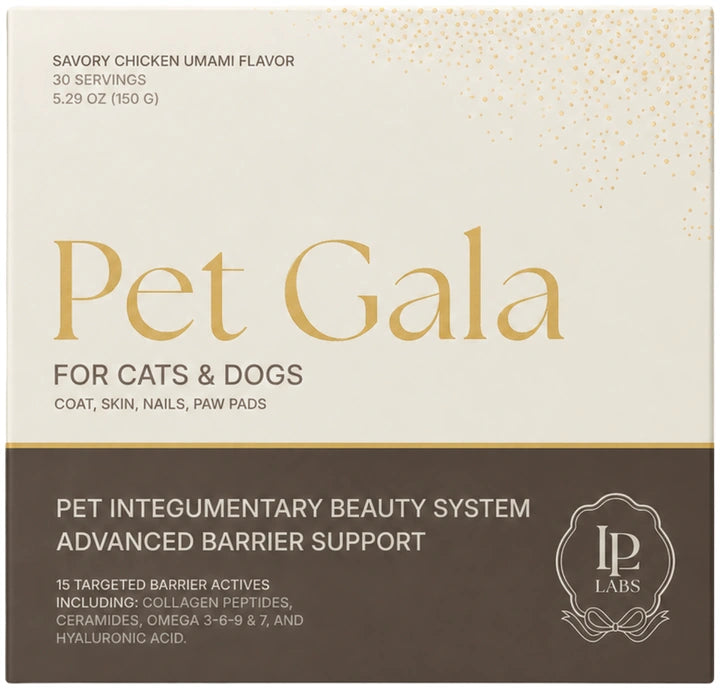
Here a product choice can be more honest about its lane. For the joint, follow your vet's plan, pain control, weight strategy, and a vet-approved joint product. For the coat, skin, and nails during limited grooming, Pet Gala is built for exactly that: a food-mixed powder with marine collagen peptides at 500 mg, biotin at 50 mcg and zinc at 1.5 mg for keratin, coat, and nail strength, and hyaluronic acid at 50 mg for skin hydration, each disclosed by amount. It supports skin and coat, not hip structure, so pair it with brushing and nail trims rather than expecting it to ease the joint.

A Decision Framework for Adding Any Supplement

A decision framework for “should a supplement be used” starts with three gates. Gate 1: confirm the problem is likely orthopedic and not neurologic, behavioral, or purely environmental. Gate 2: ensure pain control and weight strategy are being addressed, because those change joint loading more than any capsule. Gate 3: choose a single target—either joint tissue support or secondary coat/skin support—so outcomes can be interpreted.

Once the gates are met, timing matters. Most supportive ingredients require weeks of consistent use before a pattern looks less jagged, and cats need stable routines to show change. Owners should also plan for “administration reality”: can the cat take it without stress, and can it be given without disrupting meals? A perfect ingredient list that causes food refusal is the wrong choice for hip dysplasia support large cats need.

Quality Signals and Simple Routines That Stay Sustainable

Quality signals for supplements are mostly about transparency and restraint. Look for clear ingredient amounts, lot tracking, and a company willing to discuss testing; avoid proprietary blends that hide dosing. For cats, palatability and GI tolerance are not minor details—they determine whether the plan can be sustained long enough to evaluate. If the cat has kidney disease, diabetes, or a history of pancreatitis, the veterinarian should review any supplement choice before it becomes routine.

Owners can also reduce risk by simplifying the cabinet. Keep one joint product, one skin/coat support if needed, and stop there. If a new item is introduced, log appetite, stool, and energy for the first week, then return to mobility trend points. This approach keeps the cat’s daily plan cleaner and makes it easier to identify what actually fits.

Why Maine Coon Size Changes the Mobility Plan

Breed context matters because Maine Coons are large, athletic cats with high “normal” activity expectations, so small declines can be meaningful. Population data confirm hip dysplasia occurs in the breed, making early recognition worth the effort (Loder, 2017). The goal is not to label every stiff day as dysplasia; it is to notice when the cat’s movement choices shrink and to intervene before deconditioning steals adaptability.

In practical terms, owners can protect mobility by preventing the spiral: pain leads to less movement, less movement leads to weaker support muscles, and weaker muscles make the hip feel less stable. Controlled play, gentle strengthening, and a home layout that reduces slips can slow that loop. A maine coon hip dysplasia supplement may be part of the plan, but the daily environment is the platform it sits on.

Putting Structure Versus Support into One Practical Plan

Putting it all together, the most useful comparison is “structure versus support.” Structure is the hip’s shape and laxity; support is everything that influences how that hip is loaded—muscle, weight, traction, pain control, and consistent routines. Supplements live in the support category, and their best role is helping maintain normal tissue function while the bigger levers are handled with a veterinarian. That framing keeps decisions grounded and prevents chasing miracle claims.

Owners who focus on cleaner daily mechanics usually feel less helpless. Build ramps, trim nails, brush more often, and track trend points for a month before judging results. If the cat’s coat and skin change during reduced activity, address that directly rather than assuming it is “just aging.” The goal is a more rhythmic life: comfortable movement, predictable routines, and a cat that can still choose the activities that make it feel like itself.

“Cleaner mechanics at home often matter more than new products.”

Educational content only. This material is not a substitute for veterinary advice. Always consult your veterinarian about your dog’s specific needs. These statements have not been evaluated by the Food and Drug Administration. Products mentioned are not intended to diagnose, treat, cure, or prevent any disease.

Glossary

  • Hip dysplasia - Developmental mismatch of hip socket and femoral head causing laxity and abnormal loading.
  • Hip laxity - Excess looseness in the hip joint that allows abnormal movement and wear.
  • Secondary arthritis - Degenerative joint changes that develop after long-term abnormal mechanics.
  • Bunny hopping - Using both hind legs together during running, sometimes seen with hip discomfort.
  • Synovial fluid - Lubricating fluid in joints that supports smooth, low-friction movement.
  • Cartilage matrix - The collagen-and-proteoglycan framework that gives cartilage its load-bearing properties.
  • Undenatured type II collagen (UC-II) - A collagen form discussed for joint support via oral tolerance mechanisms.
  • Trend points - Specific, repeatable markers tracked over time to judge whether a plan is working.
  • Traction management - Using rugs/runners and nail care to reduce slipping and sudden hip loading.

Related Reading

References

Loder. Demographics of hip dysplasia in the Maine Coon cat. PubMed Central. 2017. https://pmc.ncbi.nlm.nih.gov/articles/PMC11129213/

Perry. Feline hip dysplasia: A challenge to recognise and treat. PubMed Central. 2016. https://pmc.ncbi.nlm.nih.gov/articles/PMC11148904/

Barbeau-Grégoire. A 2022 Systematic Review and Meta-Analysis of Enriched Therapeutic Diets and Nutraceuticals in Canine and Feline Osteoarthritis. PubMed Central. 2022. https://pmc.ncbi.nlm.nih.gov/articles/PMC9499673/

Gencoglu. Undenatured Type II Collagen (UC-II) in Joint Health and Disease: A Review on the Current Knowledge of Companion Animals. PubMed Central. 2020. https://pmc.ncbi.nlm.nih.gov/articles/PMC7222752/

Zafalon. The Role of Vitamin D in Small Animal Bone Metabolism. 2020. https://www.mdpi.com/2218-1989/10/12/496

Bunnell. Case report: Treatment of joint supplement toxicity resulting in acidemia, hyperglycemia, electrolyte derangements, and multiple organ dysfunction. PubMed Central. 2023. https://pmc.ncbi.nlm.nih.gov/articles/PMC10347412/

FAQ

What is hip dysplasia in Maine Coon cats?

Hip dysplasia is a developmental mismatch between the femoral head and the hip socket, which can create laxity and abnormal loading. In Maine Coons, the condition is documented at the breed level, so it is a legitimate risk to discuss with a veterinarian(Loder, 2017).

Over time, that abnormal loading can contribute to secondary arthritis and pain. Many cats show subtle behavior changes rather than obvious limping, so owners often notice fewer jumps, more hesitation, or reduced grooming before they see a clear “injury.”

Can a supplement fix hip dysplasia in large cats?

No supplement can re-shape the hip joint or correct laxity once the anatomy is established. Supplements are best framed as supporting normal cartilage, connective tissue, or comfort when arthritis is part of the picture, not as a structural correction.

For hip dysplasia support large cats need, the most meaningful changes usually come from vet-guided pain control, weight strategy, and environment design (traction, ramps, lower jumps). A supplement can be layered in, but it should not be the only plan.

How is hip dysplasia different from feline arthritis?

Hip dysplasia is primarily a “shape and stability” problem that begins with joint fit and laxity. Arthritis is the joint’s long-term response to abnormal mechanics, where cartilage, bone, and synovium change over time.

This matters because maine coon joint support products target tissues involved in arthritis-like change, not the original geometry. A veterinarian can help determine whether the cat’s pain is coming from dysplasia, arthritis, spine issues, or another orthopedic source.

What signs at home suggest Maine Coon hip problems?

Common home signs include hesitation before jumping up, slipping on smooth floors during turns, a brief bunny-hop when accelerating, and sitting with one hip kicked out. Some cats become less willing to climb or use tall trees.

Reduced grooming over the lower back and hindquarters is also meaningful, especially in long-haired cats. Because feline hip dysplasia can be difficult to recognize, short videos of these moments are often more useful to a veterinarian than a written description.

When should a Maine Coon with hip pain see a vet?

A veterinary visit is warranted when mobility choices shrink (fewer jumps, less play), slipping becomes frequent, grooming declines, or the cat seems painful when picked up. Cats often mask pain, so waiting for obvious limping can delay care.

Urgent evaluation is appropriate for sudden inability to bear weight, collapse, severe vocalization, or rapid appetite loss. A veterinarian can sort hip dysplasia from other causes and build a multimodal plan that may include rehab and medication.

Which supplement ingredients are commonly used for cat joints?

Common joint-support ingredients include glucosamine/chondroitin, omega-3 fatty acids, and undenatured type II collagen (UC-II). Evidence in pets varies by formulation and study design, so ingredient lists alone do not guarantee a predictable outcome(Barbeau-Grégoire, 2022).

For Maine Coons, the practical filter is: will the cat reliably take it, and can it be used consistently for weeks without upsetting appetite or stool? Consistency is what allows owners to see whether mobility becomes less jagged over time.

What is UC-II, and does it matter for cats?

UC-II refers to undenatured type II collagen, discussed in companion animals for joint health support. Reviews describe it as working through immune tolerance concepts rather than acting as a simple collagen “replacement”(Gencoglu, 2020).

For a cat with hip dysplasia, UC-II is not expected to change joint structure. If arthritis and inflammation are contributing to discomfort, it may help support a cleaner comfort pattern when used consistently and paired with vet-guided care and low-impact movement.

Is it safe to combine multiple joint supplements for one cat?

Combining products increases the chance of GI upset, appetite disruption, and accidental overdosing of overlapping ingredients. It also makes it hard to interpret what is helping or causing side effects.

More importantly, serious adverse events from joint supplement ingestion have been reported, reinforcing that “natural” does not equal risk-free(Bunnell, 2023). A veterinarian should review any stack, especially for large cats with other health conditions or multiple medications.

How long does it take to see results from joint support?

Supportive ingredients typically require weeks of consistent use before a pattern is clear. Owners should avoid switching products every few days, because that creates noise and prevents meaningful trend points from emerging.

A practical approach is to track a 30-day window: rising time after naps, number of voluntary jumps, slipping events, and willingness to use ramps. If the cat’s appetite or stool becomes less rhythmic after starting something new, that signal matters as much as mobility.

What should be tracked during a 30-day mobility trial?

Track concrete markers: couch or bed jumps per day, hesitation before jumping, time to rise from rest, slipping frequency on smooth floors, and willingness to climb steps or ramps. Add grooming time and coat condition if self-care seems reduced.

Also track tolerance: appetite, vomiting, stool consistency, and water intake after any supplement change. These trend points help owners and veterinarians decide whether the plan is creating a cleaner, more rhythmic daily life or adding friction.

Are there diet changes that support Maine Coon joint support plans?

Diet matters most through body weight and consistency. Extra weight increases hip loading, while inconsistent intake makes it harder to judge whether any supportive strategy is working. A veterinarian can help choose an appropriate calorie target and feeding structure.

Some therapeutic diets and nutraceutical approaches have been studied in osteoarthritis contexts, but outcomes vary by formulation. For many households, the most effective “diet change” is measured portions, stable protein sources, and avoiding frequent treat spikes.

Should vitamin D be added for hip dysplasia support?

Vitamin D is essential for bone metabolism, but it is not a DIY hip dysplasia tool. In small animals, vitamin D interacts tightly with calcium and phosphorus balance, and inappropriate supplementation can be harmful(Zafalon, 2020).

For most cats on a complete commercial diet, the safer move is to avoid adding single-nutrient powders unless a veterinarian recommends it based on diet history and lab interpretation. The hip plan should focus on weight, movement design, and pain control first.

What are common mistakes owners make with hip discomfort?

Common mistakes include pushing long, high-impact play sessions to “build muscle,” testing progress with repeated high jumps, and free-feeding during reduced activity. Another frequent error is assuming the cat is fine because it still jumps occasionally.

Cats often mask pain, and hip dysplasia can be difficult to recognize without an exam. Cleaner mechanics usually come from traction, ramps, short low-impact play, and a vet-guided pain plan—then supplements, if used, fit around that foundation.

How can the home be set up for hip-friendly movement?

Use traction runners on slick floors, add step-stools to favorite furniture, and provide a low-entry litter box. Place food and water where the cat can reach them without a dramatic leap or a tight turn on tile.

Keep play low to the ground and frequent rather than intense. The goal is to reduce impact per step while maintaining muscle engagement. This kind of environment design often delivers more noticeable comfort than changing a supplement every week.

Why do coat and nails change when a cat moves less?

When mobility is limited, cats often groom less thoroughly, especially over the lower back and hindquarters. That can lead to mats, dandruff-like flaking, and a duller look even if the diet is unchanged. Nails may overgrow because climbing and scratching patterns change.

This is why a mobility plan often needs a parallel grooming plan: more brushing, scheduled nail trims, and attention to skin comfort. These steps do not replace veterinary hip care, but they reduce secondary problems that owners can actually see and feel.

Where does Pet Gala™ fit if my cat is less active?

It is not positioned as a treatment for hip dysplasia or joint disease. Owners often do best when they separate goals: vet-led mobility care for the hips, and consistent coat/skin support plus brushing for the visible changes that come with less movement. That keeps expectations realistic and routines cleaner.

Can Pet Gala™ be used alongside a joint supplement?

In many households, a skin/coat support can be used alongside a vet-approved joint product, because the goals are different: one supports normal coat/skin/nails, the other targets joint tissues. The safety step is to avoid stacking multiple overlapping products without veterinary review. If the cat has other conditions or takes medications, confirm compatibility and introduce any new item one at a time so tolerance is easy to assess.

What quality signals should I look for in cat supplements?

Look for transparent labeling (exact ingredient amounts), lot tracking, and clear feeding directions. Avoid proprietary blends that hide dosing, and be cautious with products that promise dramatic changes in days.

For cats, palatability and GI tolerance are quality signals too, because a product that disrupts meals undermines the entire plan. If a cat has a history of vomiting, pancreatitis, kidney disease, or diabetes, a veterinarian should review the choice.

What side effects should stop a supplement immediately?

Stop a new supplement and contact a veterinarian if vomiting persists, diarrhea is significant, appetite drops sharply, the cat becomes unusually weak, or drinking/urination changes abruptly. These signs matter even if the product is marketed as “gentle.”

Also treat any suspected overdose as urgent, especially if the cat may have accessed the container. Severe toxicity has been reported after joint supplement ingestion, reinforcing the need for secure storage and dosing discipline(Bunnell, 2023).

How should I talk to my vet about a maine coon hip dysplasia supplement?

Bring a short list of goals and observations: what movements look most jagged, what surfaces cause slipping, and whether grooming has declined. Ask whether the cat’s signs fit hip dysplasia, arthritis, or another orthopedic issue, since cats can be hard to assess without context.

Then ask how a supplement would fit into the broader plan: which ingredients are reasonable, what to avoid with the cat’s medical history, and what trend points to track over 30 days. This keeps the conversation practical and coordinated.

La Petite Labs

Discover LPL-01: How This Fits Into a Complete Feline Integumentary Support System

Skin, coat, and nails in cats are not surface traits. They reflect deeper biological systems—barrier integrity, hydration dynamics, lipid balance, and structural protein turnover—working in coordination.

When these systems drift, the signs are subtle but telling: reduced coat softness, increased shedding, dryness, brittle claws, changes in grooming behavior.

This article explores one piece of that system. If you want to understand how true coat quality and skin resilience are built in cats—and what actually drives visible improvement—you need to zoom out.

Start with the underlying science: