5 Coat Warning Signs of Illness in Dogs & Cats
Read full insightHow Often Should You Bathe a Dog? A Coat, Skin, and Lifestyle Guide
By La Petite Labs Editorial 14 min read
For most healthy dogs, bathe when the coat is meaningfully dirty, develops its normal persistent odor, or has had an exposure that should be removed. If a calendar helps, start with a four-to-eight-week checkpoint and adjust from the dog’s coat, skin, activity, product, and drying time—not from a universal rule. That range is a practical starting point, not a veterinary standard. [1] [7]
Skin disease changes the answer. Weekly, twice-weekly, or other medicated schedules may be appropriate for a diagnosed condition, while the same frequency could be unnecessary for a healthy dog. Follow the prescribed product and contact time, rinse completely, and reassess if the dog becomes red, itchy, flaky, greasy, or malodorous. [2] [4] [5]
- There is no single correct bathing frequency for every dog. [1] [7]
- Use a four-to-eight-week checkpoint only as a healthy-dog starting experiment, not a rule.
- Rinse-only cleanup, targeted washing, and full shampooing are different interventions.
- Coat architecture changes wetting, rinsing, brushing, and drying workload.
- A medical shampoo schedule overrides a cosmetic calendar. [2] [4] [5]
- Thorough rinsing and complete, comfortable drying are part of the bath—not afterthoughts.
- Persistent odor, itch, scale, redness, lesions, or hair loss needs explanation, not endless extra bathing. [6]
The Short Answer: Bathe for a Reason, Then Adjust
There is no evidence-based universal bathing interval for every healthy dog. In healthy animals, veterinary literature frames frequency around coat, odor, lifestyle, and owner needs. A practical calendar can prevent neglect or overcorrection, but the interval should be allowed to move when the coat remains clean, the dog swims, seasonal undercoat changes, or a product causes irritation. [1] [7]
This page owns bathing cadence. The dog grooming tips guide owns the broader routine of brushing, nail care, ears, coat inspection, and tool selection. Here, every decision turns on three questions: why bathe now, what exposure or skin state is present, and what did the previous bath do to the coat and skin?
Separate Calendar Bathing From Event Bathing
Calendar bathing is a planned full wash based on the dog’s ordinary coat and household life. Event bathing responds to mud, feces, seawater, a contaminated environment, a skunk encounter, or another specific exposure. An event does not always require a full shampoo: paws, belly, or a water rinse may be enough when the material is water-soluble and the skin is normal. [1]
The distinction prevents two common errors. Waiting for the next calendar date can leave an irritant on the dog, while shampooing the entire body after every minor splash can create unnecessary product exposure and drying work. Choose the smallest cleaning intervention that actually removes the problem, then return to the baseline schedule. [1] [7]
Use Four to Eight Weeks as a Checkpoint, Not a Commandment
For a healthy companion dog without a prescribed dermatology plan, four to eight weeks is a reasonable first checkpoint if the owner needs a calendar. It is an editorial starting range, not a frequency established by clinical trials. A clean, comfortable short coat may go longer; a dense coat with accumulated soil or an active outdoor life may need earlier attention. [1] [7]
After two cycles, decide from evidence in front of you. Extend the interval if skin and coat remain clean and comfortable. Shorten it only when the wash reliably solves meaningful soil or normal odor without creating tightness, flaking, scratching, tangling, or a difficult prolonged dry. If the reason to shorten is recurrent greasy odor, investigate rather than endlessly compressing the calendar. [6]
Coat Type Changes the Work More Than the Rule
A smooth single coat wets, rinses, and dries differently from a dense double coat, corded coat, long feathering, or continuously growing curly coat. The schedule must account for what water and shampoo can reach and what moisture can remain trapped beneath. A bath that cannot be rinsed or dried comfortably is not improved by happening more often. [1] [7]
Coat type also changes the necessary preparation. Remove loose hair and small tangles before wetting when safe; water can tighten mats and prevent shampoo from reaching skin evenly. For a dense undercoat, work in sections and verify that rinse water runs clean from the skin outward. For long or curly coats, post-bath combing and professional trim schedules remain separate decisions.
Healthy Short Coats Often Need the Least Complicated Plan
For a healthy short-coated dog living mostly indoors, wait for a real signal: visible soil, a persistent normal dog odor, or an exposure worth removing. Use the four-to-eight-week checkpoint only to inspect and decide; do not manufacture a bath because the date arrived. Rubber grooming and a damp cloth may handle loose hair or surface dust between full washes.
Short hair does not make the skin invulnerable. It can make redness, hives, pustules, scale, or focal hair loss easier to see. If those signs accompany odor or itch, the task has moved from hygiene to dermatology. More fragrance may mask the timeline and delay the more useful question: why did the skin state change? [5] [6]
There is no single correct bathing frequency for every dog.
Dense and Double Coats Need Rinse and Dry Capacity
A dense double coat can hold loosened undercoat, shampoo, and moisture close to skin. The interval should therefore reflect whether the household can pre-brush, wet to the skin, rinse by sections, and dry without overheating. Bathing during a coat release can help move loose fiber, but it does not stop the hair cycle and should not become a substitute for gentle undercoat removal.
Check the armpits, groin, neck, tail base, and behind the ears after drying. Damp, packed coat and friction-prone areas deserve special attention. If a high-velocity dryer is used, introduce it gradually, keep air and temperature comfortable, protect eyes and ears, and stop if the skin ripples painfully or the dog becomes distressed.
Long, Curly, and Corded Coats Need a Grooming Calendar Too
For long or continuously growing coats, bath frequency cannot be separated from brushing, detangling, clipping, and full drying. A clean coat that mats during drying is not a successful outcome. Establish the professional grooming interval first, then decide whether home baths between appointments improve comfort or simply complicate coat handling.
Never soak a tight mat and pull through it against the skin. Mats can hide moisture, parasites, inflammation, and wounds, while wetting may make the felted mass tighter. Ask a skilled groomer or veterinary team for removal when mats are close to skin, extensive, painful, or associated with odor or lesions. The bath can wait until access is safe.
Swimming Creates Several Different Bath Decisions
A swim is not automatically a shampoo bath. After chlorinated or salt water, a thorough fresh-water rinse may remove residue without adding cleanser. Muddy or stagnant water may justify a fuller wash depending on what coats the dog and whether the skin has abrasions. Dry ears and skin folds externally and comfortably; do not put unprescribed products into the ear canal.
Track whether swimming itself predicts itch, odor, redness, or recurrent ear problems. The useful schedule may be “rinse after every swim, shampoo only when soil remains,” rather than “full bath every Saturday.” If signs recur after water exposure, seek a veterinary plan; repeated washing can obscure whether allergy, infection, moisture, or the product is driving the pattern. [5]
Puppies, Seniors, and Anxious Dogs Need a Lower-Stress Design
Age alone does not set the interval, but it changes the cost of the procedure. Puppies are learning handling; senior dogs may fatigue, slip, chill, or struggle to stand; fearful dogs may experience restraint as a major stressor. Use non-slip footing, prepare every item in advance, keep water comfortably lukewarm, shorten the session, and choose targeted cleaning when a full bath is not necessary.
A safe bath is one the caregiver can complete without wrestling, lifting unsafely, or leaving shampoo behind. For pain, weakness, breathing difficulty, neurologic disease, or severe fear, ask whether professional grooming, a veterinary setting, or an alternative topical format is more appropriate. Frequency has no value if each session creates physical or behavioral harm.
Choose the Product for the Job, Not the Scent
For routine hygiene, use a product formulated and labeled for dogs and follow its dilution and rinse instructions. Avoid stacking shampoo, conditioner, deodorizer, wipes, and fragrance during the first trial; if the dog reacts, multiple new exposures make the cause harder to interpret. The dog skin care and hydration guide covers the broader barrier-care context.
A medicated product is different. Active ingredients, concentration, contact time, treated area, and frequency are part of the treatment plan. A shampoo can be an effective topical delivery system, but the wrong active ingredient or casual use of a prescription schedule is not upgraded grooming. Follow the clinic and label exactly. [4] [5]
Coat architecture changes wetting, rinsing, brushing, and drying workload.
DVM Voice: Clinical Vignette of When Skin Changes Point Deeper Than the Surface
Case contributed by Sarah Calvin, DVM
Rosey, a 10-year-old Shih Tzu, was brought in after two weeks of paw redness and head shaking. Her owner had also noticed lower energy, thinning abdominal hair, and mild generalized itchiness over the previous few months.
Examination showed inflammation in the ears, skin folds, and paws. Testing confirmed mixed yeast and bacterial infections, while parasites and fungal disease were ruled out. Because Rosey’s skin changes appeared alongside reduced energy and coat thinning, her veterinarian performed a broader workup, which revealed hypothyroidism as a likely underlying contributor.
Her care required a staged approach: treating the infections, addressing the thyroid imbalance, and then restoring the skin barrier through diet, bathing support, paw care, and omega-3 supplementation.
Six months later, Rosey’s owner reported a thicker coat, fewer tangles, less breakage, no itch, and restored energy.
Clinical takeaway: Rosey’s case shows why skin and coat changes should not be treated as cosmetic alone. Healthy skin depends on immune balance, endocrine health, nutrition, barrier integrity, and daily support for resilient coat growth.
Single-case vignette. Not generalizable. Veterinary diagnosis and oversight are essential for itching, redness, ear irritation, hair thinning, recurrent infections, or suspected endocrine disease.
Contact Time Applies Only When the Product Says It Does
Some medicated shampoos require sustained skin contact, often around ten minutes, but that instruction is product-specific. Do not assume every cosmetic or medicated formula needs the same dwell time. Start timing only after the product has reached the intended skin, keep the dog warm and supervised, and prevent licking. [4]
Contact time cannot compensate for poor distribution or incomplete rinsing. Dilution may be recommended for some products to improve coverage and rinse-out; for others it may alter intended concentration. Use the exact directions. If the dog becomes distressed, intensely itchy, red, weak, or develops facial swelling or breathing difficulty, rinse and seek veterinary guidance according to severity.
Persistent Post-Bath Odor Is a Diagnostic Clue
A dog that smells dirty immediately after a technically adequate bath may not need another bath. Yeast or bacterial overgrowth, oily scale, ear disease, skin folds, dental or anal-sac problems, and a coat that remained damp can all change odor. The dog smells bad after bath guide owns that differential and next-step triage. [6]
Record where the smell is strongest, how quickly it returns, and whether itch, licking, redness, discharge, scale, pustules, hair loss, or greasy texture is present. Masking the odor with fragrance can make the signal harder to localize. Recurrent odor is a reason to find the source, not proof that the dog is unhygienic. [6]
Rinsing Is a Skin-Care Step, Not a Cosmetic Detail
Work from the skin outward and continue rinsing until water is clear and the coat no longer feels slick where the product should be removed. Check the belly, armpits, groin, feet, neck, and tail base. Shampoo residue can irritate, and dense or long coats make missed pockets more likely. [4]
Protect eyes and the opening of the ears without packing material into the canal. Use a clean wet cloth around the face rather than directing spray at it. If the formula has separate eye instructions or is unsafe near mucous membranes, follow those restrictions. A bath is not complete while cleanser remains on skin.
Dry to the Skin Without Overheating It
Towel by pressing rather than aggressive rubbing that tangles long hair. Use moving, comfortably warm—not hot—air and keep the dryer far enough away that the caregiver’s hand can remain in the stream. Dense coats require checking beneath the surface; a dry top layer can hide damp undercoat.
Drying burden helps determine cadence. If a dog cannot tolerate safe, complete home drying, schedule professional help or use smaller targeted cleanups when appropriate. Prolonged dampness, new odor, redness, or discomfort after a bath is not an argument for more perfume or a shorter interval; it is feedback about technique, coat access, or skin health.
Use the Bathing Interval Matrix
The Bathing Interval Matrix starts with the reason for cleaning, then separates coat workload, skin status, product type, and response. Its four-to-eight-week healthy-dog checkpoint is deliberately labeled editorial because no controlled evidence establishes that window for all dogs. The matrix is a planning aid, not a dermatology prescription. [1] [7]
Use the widest comfortable interval that keeps a healthy dog clean enough for its life while allowing complete rinsing and drying. Reset the matrix when the dog begins a medicated plan, moves climate, swims regularly, develops a new coat change, or becomes less able to tolerate handling. A changing dog deserves a changing protocol.
Original decision tool — The Dog Bathing Interval Matrix: Match the reason for cleaning to the least intensive adequate method, a review interval, and a stop condition while keeping medical shampoo schedules separate.
• Situation: Healthy indoor short coat | Starting approach: Inspect at four to eight weeks; bathe only for soil or persistent normal odor | Interval decision: Extend if clean and comfortable | Technique priority: Mild dog product, full rinse, easy dry | Reassess when: Flaking, itch, odor, redness, or bath adds no value
• Situation: Active outdoor or muddy dog | Starting approach: Event clean after meaningful soil | Interval decision: Use calendar only for baseline hygiene | Technique priority: Wipe, targeted wash, rinse, or shampoo according to residue | Reassess when: Repeated exposure signs or difficult decontamination
• Situation: Regular swimmer | Starting approach: Fresh-water rinse after salt or chlorine when appropriate | Interval decision: Full shampoo only when residue or soil remains | Technique priority: Rinse skin and coat; dry folds and dense areas | Reassess when: Ear signs, recurrent itch, odor, or redness
• Situation: Dense double coat | Starting approach: Coordinate bath with undercoat release and drying capacity | Interval decision: Do not shorten if coat cannot be fully rinsed and dried | Technique priority: Pre-brush, sectioned rinse, skin-level dry | Reassess when: Packed damp coat, hot spots, odor, or distress
• Situation: Long, curly, or corded coat | Starting approach: Coordinate with detangling and professional grooming plan | Interval decision: Calendar follows coat maintenance, not odor alone | Technique priority: Mat-safe preparation and full dry | Reassess when: Tight mats, skin pain, hidden lesions, or breakage
• Situation: Allergic or infected skin | Starting approach: Use veterinarian-selected topical protocol | Interval decision: Prescribed schedule overrides this matrix | Technique priority: Correct active, dilution, contact time, rinse | Reassess when: Flares, irritation, poor response, caregiver cannot complete plan
• Situation: Greasy scale or recurrent odor | Starting approach: Do not simply increase fragrance or frequency | Interval decision: Seek cause-specific plan | Technique priority: Document distribution and associated signs | Reassess when: Fast recurrence, itch, lesions, hair loss, ear disease
• Situation: Senior, weak, or bath-anxious dog | Starting approach: Choose smallest adequate clean and reduce handling load | Interval decision: Longer interval may be safer if hygiene allows | Technique priority: Non-slip support, short session, warm comfortable dry | Reassess when: Pain, breathing difficulty, unsafe lifting, severe fear
Method: The matrix separates healthy-dog hygiene from diagnosis-led shampoo therapy using veterinary review, ICADA, AAHA, Merck, and WSAVA sources. The four-to-eight-week checkpoint is an explicitly editorial starting range, adjusted by observed need and response.
Limit: This is not a validated clinical schedule. Coat type, climate, disease, product formulation, exposure, and individual tolerance vary, and a prescribed veterinary protocol always takes priority.
Move From Grooming Question to Veterinary Question
Book veterinary assessment when bathing reveals or repeatedly accompanies redness, pain, intense itch, pustules, crusts, greasy scale, focal or symmetric hair loss, sores, strong recurrent odor, ear discharge, or a major behavior change. The hot spots on dogs guide covers acute moist lesions; the common parasites in dogs guide covers a separate prevention and recognition task. [5] [6]
Seek urgent help for facial swelling, breathing difficulty, collapse, severe weakness, extensive chemical exposure, or a rapidly progressing reaction. For a suspected caustic or toxic substance, contact the veterinary team or poison service promptly and follow exposure-specific decontamination advice; the right rinse or product depends on the substance.
Run a Two-Cycle Bath Audit
For two ordinary cycles, record why the bath happened, the product and dilution, contact time if directed, rinse duration, drying method, and the skin and coat response at twenty-four hours and one week. Keep other new topical products out of the trial. This creates a cleaner signal than changing shampoo, frequency, conditioner, and diet simultaneously. [4]
Keep the interval when the dog is clean, comfortable, easy to rinse, and fully dry without new flaking, itch, odor, or tangling. Extend it when the bath was unnecessary; shorten only for a defined hygiene reason or professional plan. If signs persist despite good technique, stop treating cadence as the root problem.
Let Skin Response, Not Marketing, Set the Next Date
Pick the smallest adequate clean today: wipe, fresh-water rinse, targeted wash, or full shampoo. If a healthy dog needs a calendar, schedule a four-to-eight-week checkpoint and inspect before automatically bathing. Keep the date flexible, record the response, and let a prescribed dermatology plan replace this framework whenever disease is present.
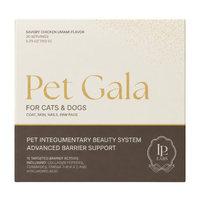
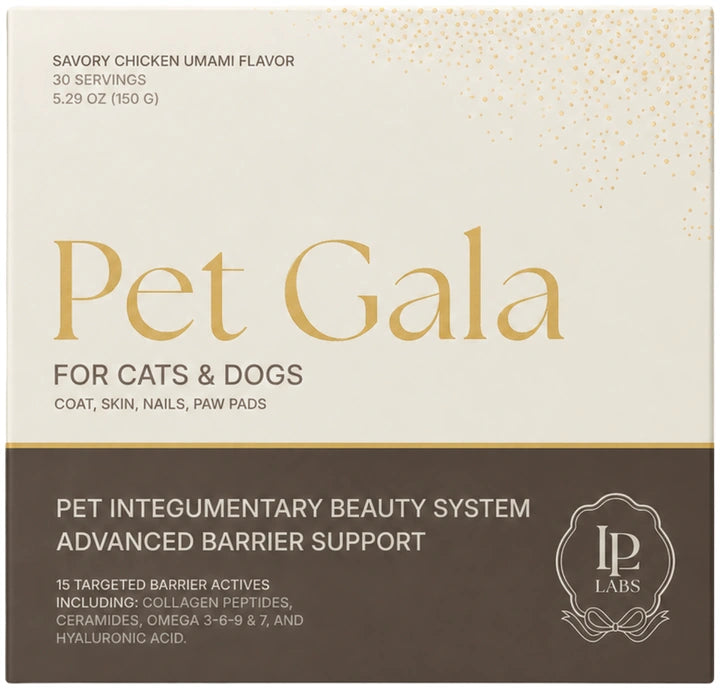
Bathing and nutrition solve different jobs. A skin-and-coat product cannot rinse off mud, allergens, microbes, or shampoo residue, and a bath cannot correct dietary inadequacy. If nutrition enters the broader plan, the dog skin and coat supplement guide offers a separate evaluation route. Pet Gala is an optional product context on this template, not a reason to bathe more or less often and not a treatment for skin disease.
Persistent odor, itch, scale, redness, lesions, or hair loss needs explanation, not endless extra bathing.
Educational content only. This material is not a substitute for veterinary advice. Always consult your veterinarian about your dog’s specific needs. These statements have not been evaluated by the Food and Drug Administration. Products mentioned are not intended to diagnose, treat, cure, or prevent any disease.
Glossary
- Hygiene bath: A wash intended to remove ordinary soil, odor, or an environmental exposure from otherwise healthy skin and coat.
- Therapeutic bath: A diagnosis-led topical treatment using a specific active product, schedule, contact time, and monitoring plan.
- Contact time: The duration a product must remain on the intended skin area when its instructions require it.
- Surfactant: A cleansing ingredient that helps water lift oils and soil from skin or hair.
- Undercoat: The denser secondary hair layer beneath guard hairs in a double coat.
- Targeted wash: Cleaning only the soiled paws, belly, rear, fold, or other limited area instead of shampooing the whole body.
- Seborrhea: Excessive scaling or oiliness that is usually secondary to another condition in dogs and deserves cause-specific assessment.
Related Reading
Common Canine Integumentary Issues
• Hot Spots on Dogs
• Dog Licking Paws
• Dog Itch Relief
• Dog Skin Allergies
• Dog Dandruff
Comfort & Recovery
• Skin & Coat Supplements for Dogs
• Coat Growth Supplement for Dogs
• Dog Nail Supplement
Ingredient-Level Articles
• Biotin for Dogs
• Silica for Dogs
• Hyaluronic Acid for Dogs
• Ceramides for Dogs
References
Numbered references support claims cited in the article. Evidence context identifies the study population and design; it does not turn indirect evidence into pet-specific proof.
-
[1]
Bajwa J. Shampoo therapy in veterinary dermatology: Benefits and practical tips. The Canadian veterinary journal = La revue veterinaire canadienne · 2025· PMID 41584245ReviewPopulation: dogEvidence boundary: Veterinary review distinguishes hygiene bathing in healthy dogs from therapeutic protocols; specific schedules must still be individualized.↩ 1 · ↩ 2 · ↩ 3 · ↩ 4 · ↩ 5 · ↩ 6 · ↩ 7 · ↩ 8
-
[2]
Olivry T, DeBoer DJ, Favrot C, et al. Treatment of canine atopic dermatitis: 2015 updated guidelines from the International Committee on Allergic Diseases of Animals (ICADA). BMC veterinary research · 2015· DOI 10.1186/s12917-015-0514-6GuidelinePopulation: dogEvidence boundary: Disease-specific guidance for canine atopic dermatitis; it must not be generalized into a routine schedule for healthy dogs.↩ 1 · ↩ 2
-
[4]
Merck Veterinary Manual. Treatment of Skin Disorders in Dogs: Shampoo Therapy. Merck Veterinary Manual · 2024GuidelinePopulation: dogEvidence boundary: Official veterinary manual guidance for medicated shampoo use; contact time and frequency depend on the prescribed product and condition.↩ 1 · ↩ 2 · ↩ 3 · ↩ 4 · ↩ 5 · ↩ 6
-
[5]
American Animal Hospital Association. 2023 AAHA Management of Allergic Skin Diseases in Dogs and Cats Guidelines. American Animal Hospital Association · 2023GuidelinePopulation: bothEvidence boundary: Clinical guideline for allergic skin disease, not ordinary hygiene; it supports patient-specific topical plans and reassessment.↩ 1 · ↩ 2 · ↩ 3 · ↩ 4 · ↩ 5 · ↩ 6
- [6]
-
[7]
World Small Animal Veterinary Association. Principles of Wellness. World Small Animal Veterinary Association · 2025GuidelinePopulation: bothEvidence boundary: Global wellness principles offer broad grooming boundaries, not a validated interval by breed or coat type.↩ 1 · ↩ 2 · ↩ 3 · ↩ 4 · ↩ 5 · ↩ 6 · ↩ 7
Further reading
These sources provide additional context but are not mapped to a numbered claim above.
- Discepolo D, Kelley R, Watson A, et al. Impacts to canine dermal microbiota associated with repeated bathing.(2023).
FAQ
How often should a healthy indoor dog be bathed?
Bathe for visible soil, a persistent normal dog odor, or a meaningful exposure. If you need a calendar, inspect at four to eight weeks and bathe only if the dog actually needs it. That range is a practical checkpoint, not a veterinary standard. Extend it when coat and skin stay clean and comfortable.
Is it safe to bathe a dog every week?
Weekly bathing may be appropriate for some dogs, especially under a dermatology plan using a suitable product. It is not automatically necessary for a healthy dog. Product formulation, rinsing, drying, skin response, and topical parasite products matter. If weekly baths cause flaking, redness, itch, or coat problems, reassess with the veterinary team.
How often should a double-coated dog be bathed?
Use need and drying capacity rather than a breed rule. A four-to-eight-week inspection can be a starting checkpoint for a healthy companion, with event cleaning after real soil. Pre-brush loose coat, rinse to the skin, and dry the undercoat fully. Do not increase frequency if each bath leaves packed damp coat or irritation.
Should I bathe my dog after every swim?
Not necessarily. A thorough fresh-water rinse may be enough after salt or chlorinated water when no soil remains. Muddy, stagnant, or contaminated water may require more. Dry dense areas and monitor ears and skin. Recurrent itch, odor, redness, or ear signs after swimming belongs in a veterinary plan.
How often can a puppy be bathed?
Use the smallest adequate clean and make early baths short, warm, non-slip, and positive. Age does not create a single interval; soil, product label, temperature control, vaccination and illness context, and the puppy’s ability to stay warm matter. Ask the veterinary team when the puppy is unwell, very young, or needs a medicated product.
Do senior dogs need fewer baths?
Not automatically, but the physical cost may be higher. Weakness, pain, fatigue, slipping, chilling, breathing issues, and drying time can make a full bath harder. Choose targeted cleaning when adequate, use secure support, and seek professional help if safe lifting or complete rinsing and drying cannot be managed at home.
How often should medicated dog shampoo be used?
Use it exactly as the veterinarian and label direct. Depending on the diagnosis and product, schedules may be weekly, twice weekly, or otherwise prescribed. Contact time, dilution, treated area, and follow-up are part of therapy. Do not copy a schedule from another dog or substitute a cosmetic bath calendar.
Why does my dog still smell after a bath?
Immediate or rapidly returning odor can come from damp packed coat, ears, folds, oily scale, yeast or bacterial overgrowth, dental issues, or other sources. Record where it is strongest and any itch, redness, discharge, scale, or hair loss. Repeated fragrance and extra baths can mask rather than explain the pattern.
Can I use human shampoo on a dog?
For routine bathing, choose a product formulated and labeled for dogs unless a veterinarian directs otherwise. Product pH, surfactants, fragrance, active ingredients, and intended contact time differ. If an accidental product causes redness, itch, facial swelling, weakness, or breathing difficulty, rinse and seek veterinary guidance according to severity.
How can I tell if I am bathing my dog too often?
Watch for post-bath tightness, new flaking, redness, scratching, coat dullness, tangling, or a pattern in which each bath creates the next problem. Also check technique and product: incomplete rinsing and drying can mimic a frequency problem. Change one variable at a time and consult the veterinary team if signs persist.
Discover LPL-01: How This Fits Into a Complete Canine Integumentary Support System
Skin, coat, and nails aren’t cosmetic features. They’re the visible surface of deeper biological systems—barrier function, hydration balance, structural protein turnover, and lipid integrity—working in concert.
When these systems fall out of sync, it shows: dull coat, shedding, dryness, brittleness, sensitivity.
This article explores one piece of that puzzle. If you want to understand how true coat quality and skin resilience are built—and what actually moves the needle—you need to zoom out.
Start with the underlying science:
- Canine Skin & Coat Framework →
A structured view of how skin, coat, and nail health are maintained across collagen synthesis, lipid balance, and barrier function. - Barrier Protection Coverage Modeling →
A systems-level map of which integumentary pathways are most vulnerable—and how layered nutritional inputs can support them. - 2026 Market Research: Best Dog Skin & Coat Supplements →
A category review of dog formulas for coat quality, skin barrier support, fatty acid balance, collagen support, shedding, and visible beauty. - LPL-01 Standard →
The formulation system that translates these models into real-world supplementation—covering multiple pathways in a coordinated way.
Pet Gala™
From $79
The scratching is completely gone, his coat looks healthy and shiny!
— Lena
He was struggling with itching, now he's glowing.
— Grace
Learn about how our DVMs think about the canine barrier
Dr. Sarah Calvin DVM
Pet Gala™
From $79
Related Reading