5 Coat Warning Signs of Illness in Dogs & Cats
Read full insightGrooming Tips for a Healthy Cat Coat
By La Petite Labs Editorial 15 min read
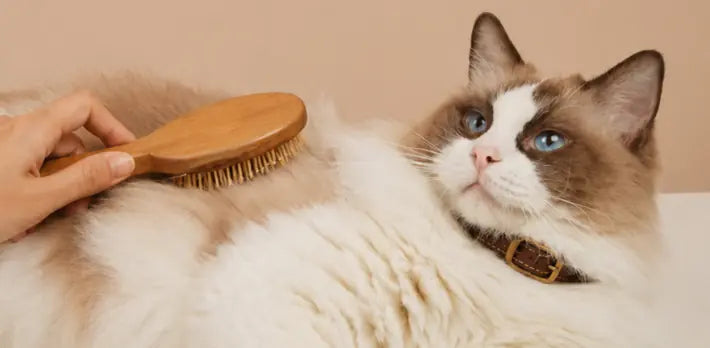
The grooming routine that keeps a cat's coat healthy rests on three things: the right tools, the right frequency, and a gentle hand. Brushing and combing aren't just tidiness — they spread natural skin oils along the hair shaft, lift out loose fur and debris, and stop small tangles from becoming tight mats, which is why a dull, dry, or shedding coat often improves once the routine is consistent. In dry or winter months especially, that oil distribution helps a barrier that indoor heating tends to parch. Build your kit around two essentials: a soft slicker brush for near-daily surface work, and a metal comb to find hidden knots around the chest, belly, and behind the front legs. Frequency follows coat length — short-haired cats often need 2-4 sessions a week, while medium- and long-haired cats benefit from brief daily sessions to prevent mats. Keep sessions short, hit mat-prone zones early, and stop before your cat is overstimulated: consistency beats intensity.
- A healthy-coat routine = right tool, right frequency, gentle technique — brushing spreads oils, lifts loose fur, and prevents mats.
- Match the tool to the coat: soft slicker for surface work, metal comb to find hidden knots; short, calm sessions win.
- Dry or dull in winter? Indoor heating parches the skin barrier — add humidity and keep brushing; persistent dullness deserves a vet check.
- To reduce shedding, brush consistently to remove loose fur before it's swallowed — the biggest lever for less hair and fewer hairballs.
- Bathe sparingly; most cats look fresher with light wipe-downs plus thorough brushing.
- Nutrition refines the finish: coat structure relies on protein and amino acids (Sun M, 2024); supportive products work best alongside steady grooming.
Choose the Right Tool: Brush vs Comb vs Deshedding (and When Not to Use Them)
Tool choice matters because the wrong tool—or too much pressure—can irritate skin and make grooming harder next time (Vogelnest LJ, 2017). A slicker brush is useful for lifting loose hair and lightly working through the topcoat, especially in medium- to long-haired cats. Use it with a soft hand and short strokes in the direction of hair growth; pressing down to “scrape” the coat can cause redness, break hairs, and create brush aversion.
A metal comb is your accuracy tool. After brushing, comb section-by-section to check that you can reach the skin without snagging. If the comb catches, don’t force it—back up, hold the hair close to the skin to reduce pulling, and tease the tangle apart in tiny steps.
Deshedding tools can remove a lot of undercoat quickly, but they’re also easy to overuse. Limit them to occasional, light passes and avoid sensitive areas (belly, armpits, inner thighs). Skip aggressive tools entirely for cats with very thin skin, senior cats, or any cat that shows irritation.
Keep sessions brief (1–5 minutes), end on a win, and pair grooming with calm praise or a small treat so your cat learns that handling is predictable and safe.
Grooming Feedback Loop: What You Learn While Brushing (and What to Do Next)
Grooming is also a regular check-in. As you brush and comb, look for fine flakes (dandruff), new tangles, or areas your cat suddenly guards—common sensitivity spots include the neck/collar area, along the spine, and near the hips. Pay special attention to mat “hotspots” where friction is high: armpits, belly, groin, and behind the ears.
If you find a mat, avoid yanking or trying to rip it out with a brush. Use a gentle detangling approach: separate the hair with your fingers, hold the base of the fur close to the skin, and work the edges of the knot with a comb in tiny increments. For tight mats close to the skin, it’s safer to stop and arrange professional grooming rather than risk cuts.
Do a quick flea dirt check while you’re there: comb through the coat and look for black specks; place them on a damp white tissue—if they smear reddish-brown, that can indicate flea dirt. Also watch for scabs, sores, or broken skin. If you see scabs/oozing, your cat reacts in pain, or you notice a sudden jump in flakes or hair breakage, stop grooming that area and call your veterinarian for guidance (Vogelnest LJ, 2017).
Brushing Basics That Create Immediate Shine and Less Loose Hair
Brushing is the cornerstone of grooming tips for healthy coat for cats because it creates immediate, visible payoff: less loose hair, more shine, and fewer tangles. Match the tool to the coat. For most short-haired cats, a rubber brush or soft bristle brush works well. For long-haired cats, use a comb first to locate knots, then a slicker brush to smooth the topcoat.
Keep sessions short—two to five minutes—and focus on “high-shed” zones like the back, sides, and chest. Avoid yanking through mats; gently separate with fingers or a comb. Consistency matters more than intensity, and your cat’s calm acceptance is part of what makes the coat look naturally polished.
Bathing Without Drama: When Water Helps and When It Hurts
Bathing is optional for many cats, but it can be useful when the coat feels greasy, the cat has gotten into something sticky, or allergies and dandruff are being managed with your veterinarian. If you bathe, use a cat-specific shampoo, rinse longer than you think you need to, and dry thoroughly—leftover residue can make the coat look dull.
For most households, “waterless” grooming is the better default: a damp microfiber cloth for surface dust, followed by brushing. This keeps the coat looking fresh without disrupting your cat’s sense of control. The goal is a clean finish that still feels like your cat, not a perfumed makeover.
Mat Prevention and Safe Detangling for a Smooth, Even Finish
Mats are more than a cosmetic issue—they pull on skin and can make a cat avoid being touched. If you find a mat, isolate it with your fingers and work from the outer edge inward using a wide-tooth comb. If the mat is tight to the skin, skip the scissors; accidental skin cuts are common. A professional groomer or veterinary team can remove severe mats safely.
Preventing mats is easier than fixing them. A quick daily comb-through behind the ears, under the arms, and around the collar area keeps long coats looking smooth and intentional. Think of it as maintaining a tailored fabric—small upkeep preserves the overall look.
“The best coat care is the kind you can see: smooth fur, clean shine, and a cat who stays comfortable.”
Nails and Paws: Small Details That Keep Cats Looking Well-kept
Nails and paws are part of “coat health” because they affect how confidently your cat moves, climbs, and grooms. Overgrown nails can snag fabrics and make cats reluctant to use scratching posts, which can ripple into stress and overgrooming. Trim just the sharp tip every two to four weeks, using calm handling and good lighting.
Check paw pads for litter clumps, dryness, or redness. A quick wipe after messy litter box visits keeps the coat cleaner too—cats often groom their feet and then spread debris through the fur. Small maintenance here supports the overall “well-kept” look.
Why Is My Cat's Coat Dry or Dull? Winter and Indoor Air
A coat can look dull even with perfect brushing when the skin underneath is irritated — and in winter, [dry indoor air](https://lapetitelabs.com/pages/dehydrated-skin-in-cats) is a common culprit. Heating pulls humidity out of the room, and a dry skin barrier reads as a flaky, dusty, static-prone coat no brush fully fixes. Other usual suspects are fleas, environmental allergies, and harsh grooming products. If you see heavy scratching, scabs, or thinning patches, treat it as a comfort problem first, not a styling one.
Because coat changes can signal skin disease or broader health issues, persistent dandruff, greasy texture, or sudden shedding deserves a vet visit rather than endless product swapping. A humidifier, gentle cat-specific products, and steady brushing help in dry months — and once comfort returns, the coat regains its natural luster.
Food and Hydration: the Quiet Foundations of Coat Presentation
Nutrition shows up in the coat. Cats are obligate carnivores, and coat structure relies on protein building blocks, including essential amino acids (Sun M, 2024). When the diet is incomplete or poorly tolerated, the coat may look dry, thin, or lack shine. If you’re changing foods, do it gradually and watch stool quality—digestion and coat presentation are often linked in everyday life.
Water matters too. Hydration supports skin comfort and can make the coat feel less brittle. Add a water fountain, offer wet food if appropriate, and keep bowls clean. These are quiet, practical choices that help the coat look smoother without adding complexity.
A Simple Weekly Rhythm Any Household Can Actually Maintain
If you’re looking for grooming tips for healthy coat for cats that feel doable, build a simple weekly rhythm: two short brush sessions, one quick ear and eye-area check, and a nail check every other week. The point is to keep small issues from becoming visible problems—like dandruff buildup, tangles, or sharp nails that snag.
Make it pleasant. Brush where your cat already relaxes, keep the tool within reach, and stop while things are still going well. Over time, the coat looks more consistently “finished,” and grooming becomes a familiar moment of attention rather than a chore.
Supplements as a Finish: Supporting Shine Beyond the Brush
If you’re exploring grooming tips for healthy coat supplements for cats, think in terms of visible finish rather than “fixing” one isolated nutrient. Coat quality depends on protein building blocks, and amino acids are central to that picture (Sun M, 2024). Still, real-world coat polish is rarely just one ingredient—it’s grooming consistency, hydration, diet quality, and skin comfort working together.
A supplement earns its place when it supports the whole presentation: skin that feels comfortable, fur that lies flatter, and less brittle breakage that makes the coat look thin. Use supplements to complement grooming, not replace it. The goal is a coat that looks freshly cared for, not a complicated regimen.
“Consistency beats intensity—short, calm grooming sessions create the most polished results.”
Clinical Vignette of When Skin Changes Point Deeper Than the Surface
Maverick, a 4-year-old Siamese cat, was brought in for hair loss across his lower abdomen and red, flaky skin lesions that had progressed over the previous month. His owners were unsure whether he was itchy or overgrooming.
Examination showed broken hairs, abdominal alopecia, and lesions consistent with bacterial skin infection. Further testing ruled out fleas, FeLV/FIV, and common fungal causes. Because his grooming pattern suggested deeper discomfort, his veterinarian continued the workup.
Radiographs and urinalysis revealed bladder stones, crystalluria, and blood in the urine. Maverick’s overgrooming was linked to urinary pain — a case where skin changes were secondary to an internal problem.
His care required a staged plan: stabilizing the skin infection, surgically removing the bladder stones, managing pain, transitioning to a therapeutic diet, and supporting skin-barrier recovery with appropriate nutrition and fish oil.
Hair regrowth began by 8 weeks. By 6 months, his coat had fully recovered, with no recurrence after the urinary issue was resolved.
Clinical takeaway: Maverick’s case shows why feline coat loss and overgrooming deserve careful veterinary investigation. Skin and coat health can reflect pain, stress, nutrition, infection, barrier weakness, or internal disease — not just surface-level grooming behavior.
Single-case vignette. Not generalizable. Veterinary diagnosis and oversight are essential for overgrooming, hair loss, skin lesions, urinary signs, pain, or suspected infection.
How to Choose Coat Support Without Overcomplicating the Routine
When you’re deciding between grooming tips for healthy coat supplement for cats options, quality signals matter. Look for clear labeling, consistent manufacturing standards, and a formula designed for cats (not a repurposed dog product). Avoid stacking multiple “skin and coat” products at once; it makes it harder to tell what’s helping and increases the chance of digestive upset.
A practical approach is to keep the grooming routine steady for two weeks, then introduce one supportive product and watch the coat’s feel and shine. If the coat is dull or shedding suddenly, remember that coat changes can also reflect underlying issues, so it’s worth checking in with your veterinarian rather than endlessly switching products (Vogelnest LJ, 2017).
Life Stage Grooming: Kittens, Adults, and Seniors Need Different Help
Kittens, adults, and seniors can all look glossy—but they get there differently. Kittens often need gentle handling more than heavy grooming: short sessions, soft tools, and positive endings. Adult cats typically benefit from consistent brushing that matches coat type. Seniors may need more help with hard-to-reach areas as flexibility changes, and mats can form faster if grooming slows.
If your cat has arthritis, dental pain, or weight changes, their self-grooming may drop, and the coat can look unkempt. Because coat quality can reflect overall health, a sudden change in grooming behavior or coat appearance is a good reason to ask your vet what might be going on.
Coat Type Matters: Short, Long, Plush, and Curly Care Differences
Short-haired cats can still shed heavily, and their coats can still look dusty or dull when oils and dander build up. A rubber curry-style brush or soft bristle brush can lift loose hair and distribute natural oils for a cleaner sheen. Long-haired cats often need a two-step approach: a wide-tooth comb to find tangles, then a slicker brush for finish.
For curly or plush coats, prioritize gentle detangling and avoid over-brushing that can create frizz. The best routine is the one your cat tolerates calmly—because consistency is what keeps the coat looking even and well-kept.
How Do I Reduce My Cat's Shedding?
The most reliable way to reduce cat shedding is consistent brushing — it lifts loose fur before your cat swallows it during self-grooming. That single habit noticeably cuts how much hair ends up on the tongue, in hairballs, and on the rug. Hairballs are really a byproduct of loose fur left in the coat, so removing it first is the lever that matters most.
If hairballs are frequent, pull three visible levers: more brushing, better hydration, and a diet that agrees with your cat's digestion. If vomiting increases, appetite changes, or your cat seems uncomfortable, don't assume it's 'just hairballs' — ask your veterinarian, since coat and skin changes can accompany broader health issues.
Stress and Overgrooming: Keeping the Ritual Calm and Predictable
A polished coat can be undone by a stressed cat. When stress rises, some cats overgroom, creating thin patches; others stop grooming and look rumpled. Your grooming routine can become a calming cue: same chair, same brush, same short duration, and a predictable finish.
Keep sessions brief and end before your cat gets irritated. Watch for tail flicking, skin twitching, or sudden head turns—those are early “I’m done” signals. The goal is a cat who associates grooming with comfort, so the coat stays smooth without turning the ritual into a struggle.
When Coat Changes Mean More Than Grooming Can Solve
When should you call the vet instead of changing brushes or adding products? If you notice sudden dullness, bald patches, scabs, intense itching, or a dramatic increase in shedding, it’s time to ask for medical input. Skin issues can show up as coat quality changes, and the coat can reflect systemic health concerns.
Also reach out if grooming becomes painful, your cat stops self-grooming, or there’s a new odor or greasy feel that doesn’t improve with routine care. Grooming is excellent for maintenance, but it shouldn’t be used to mask a problem that needs diagnosis.
How to Track Results: Shine, Softness, and Brush-out Checks
A simple way to evaluate progress is to track three “mirror checks” once a week: shine under natural light, softness when you stroke against the grain, and how much loose hair comes off in a two-minute brush. These are the signals owners actually care about—and they’re easy to notice without turning grooming into a project.
If you’re using grooming tips for healthy coat for cats alongside a supportive supplement, keep everything else steady for a month. Coat cycles take time, but the feel of the coat and the amount of loose hair can shift sooner when grooming is consistent and the skin is comfortable.
Putting It Together: a Coat Routine That Looks Effortless
The most convincing coat care looks effortless: a cat who's comfortable in their skin, wearing a clean, even sheen. Brushing, smart bathing, and nail-and-paw upkeep set the visible baseline; nutrition and targeted support refine the finish, especially when the coat looks dry, flat, or easily ruffled.
If you want one cohesive routine instead of a shelf of single-ingredient experiments, Pet Gala is the food-mixed daily system for exactly this lane. It discloses its amounts — marine collagen at 500 mg, an omega 3-6-9 blend at 150 mg plus omega 7 at 50 mg, biotin at 50 mcg, and zinc at 1.5 mg per sachet — the barrier lipids and keratin nutrients behind softer texture, less flaking, and a more cooperative brush-through. That's the point: care that starts beneath the surface and shows where it matters — skin, coat, and nails. Explore Pet Gala →
“Supplements work best as a finishing touch, not a substitute for brushing and comfort.”
Educational content only. This material is not a substitute for veterinary advice. Always consult your veterinarian about your dog’s specific needs. These statements have not been evaluated by the Food and Drug Administration. Products mentioned are not intended to diagnose, treat, cure, or prevent any disease.
Glossary
- Topcoat: The outer layer of fur that creates the visible sheen and smooth “finish.”
- Undercoat: The softer insulating layer that sheds seasonally and can compact into mats.
- Matting: Tangled fur that tightens near the skin, pulling and causing discomfort if ignored.
- Slicker Brush: A fine-wire brush used to smooth long coats and lift loose hair after combing.
- Rubber Curry Brush: A flexible rubber tool that gathers shed hair on short coats and boosts shine.
- Dander: Tiny flakes from skin and coat that can build up and make fur look dusty.
- Sebum: Natural skin oils that help fur lie flat and look glossy when evenly distributed.
- Overgrooming: Excessive licking or chewing that can thin the coat and create uneven patches.
- Seasonal Shedding: Periodic increase in loose hair that benefits from more frequent brushing.
- Coat “Finish”: The overall look and feel—shine, softness, and smoothness—owners notice day to day.
Related Reading
Common Feline Integumentary Issues
• Cat Dandruff
• Why Is My Cat Shedding So Much
• Cat Hair Loss
Comfort & Recovery
• Skin & Coat Supplements for Cats
• Cat Nail Supplement
• Best Supplements for Cat Shedding
Ingredient-Level Articles
• Biotin for Cats
• Silica for Cats
• Hyaluronic Acid for Cats
• Ceramides for Cats
References
Vogelnest LJ. Skin as a marker of general feline health: Cutaneous manifestations of systemic disease. PubMed Central. 2017. https://pmc.ncbi.nlm.nih.gov/articles/PMC11128893/
Sun M. Considerations on amino acid patterns in the natural felid diet: a review. PubMed Central. 2024. https://pmc.ncbi.nlm.nih.gov/articles/PMC11603590/
FAQ
What are grooming tips for healthy coat for cats daily?
Daily coat care can be simple: a two-minute brush in your cat’s favorite spot, a quick check for tangles, and a gentle wipe if they feel dusty. The goal is a consistent, calm ritual that keeps the coat smooth and reduces loose hair.
Why does coat shine matter for a cat’s overall appearance?
Shine is one of the easiest “at-a-glance” signs that the coat is clean, evenly oiled, and lying flat. When the coat looks dull, it can mean there’s buildup, excess shedding, or skin discomfort that’s disrupting the finish.
How often should I brush a short-haired cat for shine?
Most short-haired cats do well with brushing two to four times per week, plus quick touch-ups during heavy shedding. A rubber brush or soft bristle brush lifts loose fur and helps distribute natural oils for a cleaner sheen. Keep sessions brief so your cat stays relaxed; consistency is what creates that “freshly cared for” look.
What brushing routine works best for long-haired cats and mats?
For long-haired cats, start with a wide-tooth comb to find tangles, then use a slicker brush to smooth the topcoat. Focus on friction zones—behind ears, underarms, belly—where mats form quietly. Avoid pulling through knots; gentle, frequent detangling keeps the coat looking even and prevents painful tight mats.
Do cats need baths, or is brushing enough?
Many cats don’t need routine baths; brushing and occasional wipe-downs often keep the coat clean and glossy. Baths can help when the coat is greasy, sticky, or your veterinarian recommends medicated shampoo for a specific issue. If you bathe, rinse thoroughly and dry well to avoid residue that dulls the coat.
What are common signs my cat’s coat needs attention?
Look for a dull or dusty finish, dandruff-like flakes, clumps of shed hair, or small tangles that appear quickly. Behavior matters too: if your cat avoids being touched or grooms less, the coat often shows it. Because coat changes can reflect broader health shifts, persistent shedding or irritation should be discussed with your vet.
Are grooming tips for healthy coat for cats different in winter?
Indoor winter air can be dry, so you may notice more static, flakes, or a rougher feel. Keep brushing consistent, consider a humidifier in your cat’s main room, and prioritize hydration to support comfortable skin. Avoid over-bathing in winter, since it can strip oils and make the coat look flat.
Can diet affect coat shine even with perfect grooming?
Yes. Brushing improves the surface quickly, but the coat’s texture and density are influenced by what your cat can build and maintain. Amino acids are essential building blocks for coat proteins, so diet quality can show up as softness and fullness(Sun M, 2024). If you’re already feeding a complete diet, supportive products can still refine visible condition as part of a full routine.
What are grooming tips for healthy coat supplements for cats?
Choose one cat-specific supplement at a time, introduce it gradually, and keep grooming steady so you can judge the coat’s feel and shine. Look for clear labeling and avoid stacking multiple “skin and coat” products, which can complicate tolerance. The best results come when supplements support the whole presentation—skin comfort, coat softness, and nail strength—alongside brushing.
How long until I see results from coat-support routines?
Brushing can improve shine and reduce loose hair right away, while deeper changes—like a fuller-looking coat—often take several weeks as new hair grows in. Track weekly: shine in daylight, softness, and how much hair comes off in a two-minute session. If you add a supplement, keep everything else consistent for a month so changes are easier to attribute.
Are coat supplements safe for cats with sensitive stomachs?
Many cats do fine, but any new supplement can cause mild digestive upset if introduced too quickly. Start slowly, give with food, and avoid combining multiple new items at once so you can identify what agrees with your cat. If vomiting, diarrhea, or appetite changes persist, stop and ask your veterinarian for guidance.
Should I avoid supplements if my cat eats complete food?
A complete diet is the foundation, but owners often choose targeted support for visible coat goals—extra softness, a cleaner sheen, or help during seasonal shedding. Think of it as refining presentation, not “replacing” nutrition. The most satisfying approach is pairing consistent grooming with a formula that supports skin, coat, and nails together.
What side effects should I watch for with coat supplements?
The most common issues are digestive: softer stool, gas, or occasional vomiting, especially when starting. Less commonly, a cat may refuse food if the supplement changes smell or taste. Stop the product and consult your veterinarian if you see persistent GI signs, itchiness, or any sudden change in behavior.
Can supplements interact with my cat’s medications?
They can. Even “beauty” supplements may affect appetite, digestion, or how your cat tolerates other products. If your cat takes prescription medications or has a chronic condition, ask your veterinarian before adding anything new. Bring the label and your cat’s current regimen to the conversation so the plan stays simple and safe.
Are grooming tips for healthy coat for cats different for seniors?
Senior cats may groom less due to stiffness, dental discomfort, or weight changes, so they often need more help with hard-to-reach areas. Keep sessions gentle, prioritize detangling, and watch for mats forming along the lower back and hips. If coat changes appear suddenly, it’s worth a veterinary check since coat condition can reflect overall health.
Do certain breeds need special grooming tools for coat health?
Yes. Long-haired breeds often need a comb plus slicker brush, while dense plush coats may do best with gentle, frequent brushing to avoid compacted shedding. Curly coats can frizz with over-brushing, so use softer tools and shorter sessions. The right tool is the one your cat tolerates calmly and that leaves the coat smooth afterward.
Are these grooming tips the same for cats and dogs?
The principles overlap—remove loose hair, prevent mats, keep skin comfortable—but cats have different grooming behavior and different tolerance for bathing and handling. Cats also have distinct nutritional needs, so cat-specific products matter when you’re supporting coat presentation. If you’re using supplements, choose one formulated for cats and introduce it carefully.
What quality signals matter when choosing coat supplements for cats?
Look for transparent ingredient lists, clear feeding directions, and a company that can answer basic manufacturing and sourcing questions. Avoid products that promise dramatic medical outcomes; coat support should be framed as visible care, not treatment. Also consider palatability and ease of daily use, since consistency is what makes results noticeable.
When should I call the vet about shedding or dull coat?
Call if shedding is sudden or extreme, if you see bald patches, scabs, redness, or intense itching, or if your cat stops self-grooming. Coat changes can be an outward sign of skin disease or broader health issues, so it’s not always a grooming problem. Once comfort and causes are addressed, grooming and supportive care can restore a polished look.
How do I decide between grooming, diet changes, or supplements?
Start with the simplest lever: consistent brushing matched to coat type. If the coat still looks flat or the skin seems dry, review hydration and diet tolerance next. Supplements make the most sense when you want extra visible refinement without changing the entire food routine. Choose one change at a time and track shine, softness, and loose hair weekly.
Discover LPL-01: How This Fits Into a Complete Feline Integumentary Support System
Skin, coat, and nails in cats are not surface traits. They reflect deeper biological systems—barrier integrity, hydration dynamics, lipid balance, and structural protein turnover—working in coordination.
When these systems drift, the signs are subtle but telling: reduced coat softness, increased shedding, dryness, brittle claws, changes in grooming behavior.
This article explores one piece of that system. If you want to understand how true coat quality and skin resilience are built in cats—and what actually drives visible improvement—you need to zoom out.
Start with the underlying science:
- Feline Skin & Coat Framework →
A structured view of how skin, coat, and claw health are maintained across collagen synthesis, lipid nourishment, and barrier function. - Barrier Protection Coverage Modeling →
A systems-level map of which integumentary pathways are most vulnerable—and how layered nutritional inputs can support them. - 2026 Market Research: Best Cat Skin & Coat Supplements →
A feline-focused review of skin and coat formulas shaped by grooming behavior, barrier resilience, coat softness, ingredient quality, and daily usability. - LPL-01 Standard →
The formulation system that translates these models into real-world supplementation—covering multiple pathways in a coordinated way.
Essential Summary
Why are grooming tips for a healthy coat important for cats?
A healthy cat coat looks smooth, clean, and naturally glossy—and grooming is the fastest way to keep that visible finish. Brush to remove loose fur and prevent mats, keep nails tidy, and watch for sudden shedding or dullness that may signal discomfort. Pair consistent grooming with supportive nutrition for a coat that feels freshly cared for.
Pet Gala is designed to complement daily grooming by supporting the skin, coat, and nails as one visible system—so brushing looks better, feels easier, and the results show up as softness and shine you can notice.
Pet Gala™
Starting at $79/mo
The scratching is completely gone, his coat looks healthy and shiny!
— Lena
He was struggling with itching, now he's glowing.
— Grace
Considering grooming tips for a healthy cat coat?
If you're looking for grooming tips to maintain a healthy cat coat
If you want grooming tips for healthy coat for cats that feel premium but realistic, start with a brush routine your cat accepts: short sessions, the right tool for their coat type, and gentle detangling before mats tighten. Then refine the visible finish with hydration, a diet your cat tolerates well, and one supportive layer that’s designed for skin, coat, and nails together. That’s where Pet Gala fits: it complements grooming so the coat looks smoother, feels softer, and stays more consistently “well-kept” between brush sessions—without turning care into a complicated stack of single-ingredient experiments.
Learn about how our DVMs think about the feline barrier
Dr. Sarah Calvin DVM
Pet Gala™
Starting at $79/mo
Explore the visible signs of whole-body wellness
Related Reading
Brushing and combing aren’t just about tidiness—they help spread natural oils along the hair shaft, lift out loose fur and debris, and reduce the chance that small tangles turn into tight mats. A simple home routine also makes it easier to keep your cat comfortable during seasonal shedding or when their coat texture changes with age.