Grizzly Pet Products Pollock Oil Supplement with Wild Alaskan Pollock Review

A careful label read of a dog-and-cat pollock oil with clear per-teaspoon omega numbers, useful storage guidance, and several transparency gaps to verify before buying.

La Petite Labs Editorial 1 min read

Grizzly Pet Products Pollock Oil Supplement with Wild Alaskan Pollock is a liquid fish-oil supplement for dogs and cats. The label centers on wild Alaskan pollock oil and publishes per-teaspoon omega guarantees, including 1000 mg omega-3 fatty acids, 540 mg EPA, and 275 mg DHA.

The genuine shopper appeal is straightforward: this is a simple oil format with a short ingredient list, NASC certification language, Made in the USA language, and storage guidance that tells owners how long to use an opened bottle. It is also positioned around skin and coat support, with the brand describing its EPA content and omega-3 to omega-6 ratio as key features.

The decision frame is less about whether fish oil is a familiar category and more about whether this specific listing gives you enough practical information for your pet. The pages checked did not publish a price, public certificate of analysis, lot lookup, named laboratory, contaminant panel, exact feeding chart by weight, cat-specific directions, or per-pump volume, so a cautious buyer should verify those before treating the bottle as fully comparable to another oil.

We reviewed Grizzly Pet Products at brand level — Public Transparency Score 54/100 — see the Grizzly Pet Products Review for the brand's testing posture, disclosure practices, and what to verify before buying anything from its range.

Disclosure: La Petite Labs sells its own pet supplements, including its daily systems. This review is editorial: competitor facts are drawn from the public sources listed in the References section, and facts are dated where shown.

What Grizzly Pollock Oil is, and who is behind the bottle

Grizzly Pet Products Pollock Oil Supplement with Wild Alaskan Pollock is a liquid omega supplement listed for both dogs and cats. The product sits in the omega category and is built around pollock oil as the active oil source. The product page describes it with wild Alaskan pollock language, and the ingredient panel shown is short: Pollock Oil, Mixed Tocopherols (Preservative), and Rosemary Extract.

The manufacturer field attached to the retailer listing states Lambriar Vet - Dropship. The retailer listing reviewed was for a 32 ounce bottle, with item model number 045 and manufacturer part number 015GPP-045. The brand product page itself is not size-specific in the visible text, but it lists bottle options of 4 oz., 8 oz., 16 oz., 32 oz., and 64 oz.

The page is not a finished medical protocol or a complete nutrition plan. It is a fish-oil product positioned around omega fatty acids, particularly EPA. The label says "With EPA for Healthy Skin & Lustrous Coat" and also uses the phrase "High EPA for Healthy Skin and Coat." Those are structure-function style skin and coat claims, not a disease-treatment claim.

For buyers, the useful starting point is that this is a recognizable, narrow product type: a liquid fish oil for adding to food. The caution is that liquid oils are only as practical as their dosing, freshness, storage, and testing information. This product provides several useful label numbers per teaspoon, but the visible pages leave some everyday buying details for the owner to verify before purchase.

At a Glance

What is Grizzly Pet Products Pollock Oil?

Grizzly Pet Products Pollock Oil is a liquid fish-oil supplement for dogs and cats. The disclosed ingredient line is Pollock Oil, Mixed Tocopherols (Preservative), and Rosemary Extract. The label gives omega amounts per teaspoon, including 1000 mg omega-3 fatty acids, 540 mg EPA, and 275 mg DHA.

Product
Pollock Oil Supplement with Wild Alaskan Pollock
Category
Fish-oil omega supplement
Species
Dogs and cats
Format
undefined
Disclosed actives
Per teaspoon: 1000 mg omega-3 fatty acids, 540 mg EPA, 275 mg DHA, 64 mg omega-6 fatty acids, 1150 mg omega-9 fatty acids; pollock oil amount not separately stated.
Price
Price not published; 32 ounce retailer listing said "No featured offers available," so cost per day cannot be calculated.
Best fit
Dog or cat owners seeking a short-ingredient liquid pollock oil with EPA and DHA amounts disclosed per teaspoon, provided they verify dosing, price, and testing details before use.
What to check
Check exact pet-weight directions, cat-specific directions, per-pump volume, current price, lot testing availability, and whether the bottle can be used within 90 days of opening.

Quick Answers

Is Grizzly Pollock Oil good for dogs and cats?

It can be a reasonable fish-oil option to consider if you want a short-ingredient liquid oil with EPA and DHA amounts shown per teaspoon. The main caution is that the visible pages do not publish weight-banded directions, cat-specific feeding directions, per-pump volume, price, or public lot testing, so owners should verify those details before buying.

What should owners check before buying Grizzly Pollock Oil?

Check the exact bottle size, current price, expiration or best-by information, opened-use timing, species-specific directions, pet-weight directions, and pump volume. Also ask whether a public COA, lot lookup, named laboratory, or testing panels are available if those are important to your buying decision.

What cautions or side effects should owners watch for with this oil?

The visible page does not publish a broad side-effect panel, so monitor practically when introducing it. Watch appetite, stool consistency, food refusal, body weight, and any change in an existing health issue. Pause use and call your veterinarian if your dog or cat does not tolerate the oil or if added fat or calories are a concern.

How many calories are in Grizzly Pollock Oil?

The label lists 37 kcal ME per teaspoon and crude fat at 93% minimum. That matters most for cats, small dogs, weight-managed pets, and pets on low-fat or therapeutic diets. The exact daily calorie addition depends on the pet's directions, which were not published in weight-banded form on the visible pages.

How much EPA and DHA does Grizzly Pollock Oil provide?

Per teaspoon, the label lists 540 mg EPA and 275 mg DHA. It also lists 1000 mg omega-3 fatty acids, 64 mg omega-6 fatty acids, and 1150 mg omega-9 fatty acids per teaspoon. The pages checked do not publish per-pump volume, so per-pump EPA and DHA cannot be calculated from the visible information alone.

What is the price and daily value of Grizzly Pollock Oil?

A daily cost cannot be calculated from the visible information. The retailer listing reviewed was for a 32 ounce bottle, but it said "No featured offers available" and did not show a price. Without price and exact daily serving directions, cost per day would require assumptions the label does not support.

Does Grizzly Pollock Oil publish testing information?

The product information includes NASC Certified language, National Animal Supplement Council certified member language, and Made in the USA. The pages checked did not publish a public COA, lot lookup, named laboratory, or specific heavy-metal, microbiology, contaminant, or potency testing panels.

How long should an opened bottle be used?

The storage guidance says bottles can be stored away from sunlight at room temperature, or refrigerated if desired. It says unopened oil is good for at least 20 months, and opened bottles should be used within 90 days of opening.

Before You Buy

Five things to verify about Pollock Oil

VerifyWhy it mattersWhat we found
Can I see the exact feeding directions for my pet's species and weight?The label numbers are per teaspoon, but daily EPA, DHA, and calories depend on how much a specific dog or cat is told to receive.Exact pump directions by pet weight and cat-specific feeding directions were not easy to find publicly when we checked.
What is the pump volume on the bottle I am buying?The page lists omega amounts per teaspoon and approximate pump counts by bottle size, but per-pump dose math requires the pump volume.Per-pump volume was not easy to find publicly when we checked.
What is the current price for the exact bottle size?Daily value cannot be calculated without a real bottle price and the pet's daily serving.The 32 ounce retailer listing said "No featured offers available," and a price amount was not easy to find publicly when we checked.
Is there a public COA, lot lookup, or named lab for this oil?Fish-oil buyers may want lot-level confirmation for potency, contaminants, and freshness-related quality markers.A public COA, lot lookup, named laboratory, and specific testing panels were not easy to find publicly when we checked.
Can I finish the bottle within 90 days after opening?The product's storage guidance says opened bottles should be used within 90 days, so oversized bottles may not be practical for every household.The page gives approximate pump counts by bottle size and says opened bottles should be used within 90 days, but servings per container were not published.

Competitor label and pricing facts checked July 3, 2026. Sources are listed in the References section below.

Why the pollock-oil format will appeal to some dog and cat owners

The strongest appeal of this product is its simplicity. The active oil source is pollock oil, and the inactive ingredients disclosed are Mixed Tocopherols (Preservative) and Rosemary Extract. For owners who dislike long supplement panels, that short list is easy to read and easy to discuss with a veterinarian.

The second appeal is that the label publishes meaningful omega amounts per teaspoon. It lists 1000 mg omega-3 fatty acids, 540 mg EPA, 275 mg DHA, 64 mg omega-6 fatty acids, and 1150 mg omega-9 fatty acids per teaspoon. That is more useful than a label that only says "fish oil" without separating EPA and DHA, because EPA and DHA are the numbers many owners and veterinarians look for when comparing fish-oil products.

The product also has practical format appeal. A liquid can be added directly to food, and the directions say to add it to the dog's food and use consistently on a long-term basis for best results. The visible directions also say feeding guidelines vary by bottle size and pump size, and to see the product label for specific directions for the pet.

That last point is both useful and limiting. The pump format may be convenient once the owner has the physical bottle, but the visible pages do not publish per-pump volume or a weight-banded chart. So the product's appeal is strongest for buyers comfortable checking the exact bottle label before deciding how much oil their dog or cat should receive.

The Grizzly Pollock Oil label numbers, walked through line by line

The disclosed ingredient line reads: Pollock Oil, Mixed Tocopherols (Preservative), Rosemary Extract. The active oil is pollock oil. Mixed tocopherols and rosemary extract are disclosed as inactive ingredients, with mixed tocopherols specifically identified as a preservative.

The guaranteed analysis is shown per teaspoon. Crude fat is listed at 93% minimum, and moisture is listed at 0.5% maximum. Omega-3 fatty acids are listed at 22% minimum and 1000 mg per teaspoon. EPA is listed at 12% minimum and 540 mg per teaspoon. DHA is listed at 6% minimum and 275 mg per teaspoon. Omega-6 fatty acids are listed at 1.4% minimum and 64 mg per teaspoon.

The active-amount panel also lists omega-9 fatty acids at 1150 mg per teaspoon. That gives buyers several concrete comparison points, especially the EPA and DHA values. The calorie line matters too: the product lists calculated metabolizable energy at 8,410 kcal ME/kg and 37 kcal ME per teaspoon.

The label includes an AAFCO-style note that omega-3 fatty acids are not recognized as an essential nutrient by the AAFCO Dog Food Nutrient Profile. That note does not mean the ingredient is irrelevant; it means buyers should not read the omega listing as the same kind of required nutrient guarantee used for complete-and-balanced food.

A careful buyer should keep the unit straight. These values are per teaspoon, not per pump, per bottle, or per pet. Because the visible pages do not publish per-pump volume, the teaspoon numbers cannot be cleanly converted into pump-by-pump EPA or DHA without checking the physical bottle's pump size.

What is not visible before buying Grizzly Pollock Oil

The visible product information leaves several practical gaps. The life stage or age floor is not published on the pages checked. A brand-product page-specific bottle size, SKU, UPC, or selected offer variant was not shown. The brand product data did not show a Product or Offer price or SKU.

Dosing detail is also incomplete from the public page view. Servings per container are not published. The page gives approximate pump counts by bottle size, but pump count is not the same as serving count because the serving depends on the pet's directions. A weight-banded feeding chart, exact pump directions by pet weight, cat-specific feeding directions, and per-pump volume were not easy to find publicly on the pages checked.

Price transparency is another gap. The retailer listing reviewed was for a 32 ounce bottle, but the price amount was not available; the listing said "No featured offers available." Subscription price was also not published.

Testing visibility is the other major buyer issue. The pages checked did not publish a public certificate of analysis, public lot lookup, named laboratory, or specific heavy-metal, microbiology, contaminant, or potency testing panels. That does not prove the company does not test. It means those documents or panel details were not easy to find publicly when checking the product pages.

For an oil, these missing items matter because the owner is often trying to answer simple questions: how much EPA and DHA will my pet get, how many days will the bottle last, what will it cost per day, how fresh is this bottle, and what independent quality evidence can I review? This product answers some of those questions, but not all of them from the visible pages alone.

Dose math for a liquid oil when the pump size is not published

The reliable dose math starts with the unit the label actually gives: one teaspoon. Per teaspoon, Grizzly Pollock Oil lists 1000 mg omega-3 fatty acids, 540 mg EPA, 275 mg DHA, 64 mg omega-6 fatty acids, and 1150 mg omega-9 fatty acids. It also lists 37 kcal per teaspoon.

The product page says feeding guidelines vary by bottle size and pump size, and that owners should see the product label for specific directions for their pet. It also lists approximate pump counts by bottle size: 4 oz. bottle = 57 pumps; 8 oz. bottle = 114 pumps; 16 oz. bottle = 133 pumps; 32 oz. bottle = 267 pumps; and 64 oz. bottle = 534 pumps.

Those pump counts are useful for estimating how many pump actions a bottle may contain, but they do not reveal the mg of EPA or DHA per pump unless the pump volume is known. The visible pages do not publish per-pump volume, so converting 540 mg EPA per teaspoon or 275 mg DHA per teaspoon into mg per pump would require an extra assumption. A buyer should not make that assumption when comparing oils.

The clean approach is to use the physical label. First, find the feeding direction for the pet's species and weight. Second, confirm how many pumps equal the listed serving. Third, convert only from the published unit. If the label says a serving equals one teaspoon, then the per-serving numbers are the teaspoon numbers above. If the pump serving is different, ask the brand or veterinarian to confirm the conversion before using it for dose-sensitive planning.

“The strongest part of this label is the per-teaspoon EPA and DHA disclosure; the weakest part is the missing public dose, price, and lot-testing detail.”

Calories, fat load, and why 37 kcal per teaspoon matters

Fish oil is not calorie-free. Grizzly Pollock Oil lists 37 kcal ME per teaspoon and crude fat at 93% minimum. That matters for both dogs and cats, especially pets with tight calorie targets or histories where added dietary fat needs medical oversight.

For a large active dog, 37 kcal may be easy to accommodate. For a smaller dog or cat, the same teaspoon can be a more noticeable share of daily calories. The visible directions do not publish a weight-banded chart, so a buyer cannot calculate the exact calorie addition by pet size from the public page alone. The owner needs the label's specific directions and, for calorie-managed pets, a plan for where those calories come out of the diet.

This is also why "just adding oil" should not be treated as nutritionally neutral. The guaranteed analysis lists a high-fat liquid, and the product is meant to be added to food. If a pet is already on a therapeutic diet, a weight-loss plan, a low-fat plan, or a carefully balanced home-prepared diet, the oil should be discussed before routine use.

Practical monitoring is simple: watch appetite, stool consistency, body weight, and whether the pet leaves oily food behind. The product FAQ says it is fine for oil to soak into kibble if the pet does not eat all of it right away, but to be safe, dispose of it if the pet has not eaten it by the next day. That is useful household guidance, especially for owners who free-feed or whose pet eats slowly.

Freshness and storage rules for an opened pollock-oil bottle

Freshness is a real decision point for any liquid fish oil. Grizzly's visible storage guidance says bottles can be stored away from sunlight at room temperature, or refrigerated if desired. It also says unopened oil is good for at least 20 months and opened bottles should be used within 90 days of opening.

That 90-day opened-bottle window is one of the more practical pieces of information on the page. It tells the buyer not to treat a large bottle as automatically better value. A 64 oz. bottle may have more pumps, but the owner still needs to use it within the opened-use window. For one small pet, a smaller bottle may be more practical if the opened bottle would otherwise linger.

The approximate pump counts make this more concrete. The page lists 57 pumps for 4 oz., 114 pumps for 8 oz., 133 pumps for 16 oz., 267 pumps for 32 oz., and 534 pumps for 64 oz. Those are approximate pump counts, not exact servings, but they help owners think about whether the bottle size matches the pet's likely use rate.

Buyers should also check the bottle when it arrives. Confirm the seal, expiration or best-by information, storage instructions, and whether the pump matches the directions. If a pet refuses food after oil is added, or if the oil's appearance or smell seems off, pause use and contact the seller or veterinarian rather than trying to push through the bottle.

Dog and cat practicality: one label, two species, missing cat-specific directions

The product is listed for dogs and cats. That matters because some fish-oil shoppers are buying for a mixed household and want one bottle rather than separate dog and cat products. The visible directions, however, say "Add to your dog's food" and tell owners that feeding guidelines vary by bottle size and pump size, with specific directions on the product label.

For dog owners, the missing public weight chart is the main practical issue. The pages checked do not show exact pump directions by pet weight, so an owner comparing products online cannot calculate daily EPA, DHA, calories, or bottle life for a 12 lb, 45 lb, or 80 lb dog without the bottle label.

For cat owners, the gap is sharper because cat-specific feeding directions were not easy to find publicly on the pages checked. The product is listed for cats, but the visible directions text is dog-worded. That does not mean cats cannot use it; it means cat owners should verify the cat dose before buying or before opening the bottle.

The owner's job is to avoid translating dog directions to a cat without confirmation. Cats are smaller, daily calorie budgets are tighter, and palatability can be less forgiving. The product may still be convenient for a cat if the exact label provides clear cat instructions, but that is a point to confirm, not assume.

Quality signals Grizzly publishes, and the testing detail it does not

Grizzly Pollock Oil carries several visible quality signals. The label and product information include "NASC Certified," "Made in the USA," and the statement that Grizzly is a certified member of the National Animal Supplement Council. Those are relevant signals for buyers who screen pet supplements for basic industry-program participation.

The brand also describes its products as reflecting dedication to sustainability, evidence-based research, and quality "from boat to bottle." That is useful as brand positioning, but it is not the same thing as a product-specific public test result. The pages checked did not publish a public certificate of analysis, lot lookup tool, named laboratory, or specific testing panels for heavy metals, microbes, contaminants, or potency.

For a fish oil, the missing test-panel detail is worth verifying because owners often care about freshness, oxidation, contaminants, and whether EPA/DHA amounts match the label. The available information does not let a buyer check a lot number or review a lab document before purchase.

The fair reading is balanced. NASC certification and Made in the USA language are real published signals from the product information. At the same time, a buyer who requires lot-level public documentation will not find enough detail in the visible pages alone. The practical next step is to ask the company or seller whether they can provide current lot testing, what panels are run, and whether potency and contaminant results are available for the bottle being purchased.

Evidence status behind the skin-and-coat positioning

The product's main benefit language is skin-and-coat oriented. The label says "With EPA for Healthy Skin & Lustrous Coat," "High EPA for Healthy Skin and Coat," and "HIGH EPA FOR HEALTHY SKIN AND A BEAUTIFUL COAT." The brand also says its wild pollock oil has a very high EPA content and very low omega-6 content, making it ideal to support healthy skin and coat.

Those are structure-function style statements. They are not the same as a published clinical trial on this finished product, and the visible pages did not surface specific study citations. The brand does use evidence-oriented language, saying its products reflect dedication to "evidence-based research," but no specific study was easy to connect to this formula on the pages checked.

The product also makes omega-ratio statements. The brand describes an omega-3 to omega-6 ratio in the range of 13 to 14 and says that ratio is close to wild salmon oil in efficacy and far higher than farmed salmon oil, which it says can have a typical omega-3 to omega-6 ratio as low as 2 to 3. That is comparative language from the brand, not a study citation surfaced with the product page.

A careful buyer can still value the disclosed EPA and DHA amounts. Those numbers make the label more usable than a vague fish-oil listing. The evidence caution is that the page does not publish a finished-product clinical study, public lot testing, or citation trail that would let the buyer independently connect every marketing statement to a specific data source.

“For this oil, bottle size is not automatically value, because opened bottles should be used within 90 days.”

Price and daily cost: the missing number that blocks value math

The reviewed retailer listing was for "Grizzly Pet Products Pollock Oil Dog Food Supplement, 32 Ounce," but it did not show a price amount. The visible price field said "No featured offers available." The brand product page also did not publish a Product or Offer price in the visible product data, and no subscription price was published.

Because there is no verified price, daily cost cannot be computed honestly. The arithmetic would require three things: a bottle price, a bottle size or serving count, and the pet's daily serving. Here, the public information gives the 32 ounce retailer size and approximate pump counts by bottle size, but it does not give the 32 ounce price or the pet's exact serving.

The approximate pump count for the 32 ounce bottle is 267 pumps. That can help once the buyer has a real price and a real dose. For example, the owner could calculate price per pump as bottle price divided by 267 pumps, then multiply by the number of pumps used daily. But without the actual price and directions, the result would be invented.

Value for this product should therefore be judged after confirming the current offer. Buyers should record the bottle price, bottle size, pump count or serving count, and the exact daily serving for their dog or cat. Only then can they compare cost per day against another fish oil with different EPA, DHA, calories, and testing visibility.

Who Grizzly Pollock Oil genuinely fits

Grizzly Pollock Oil is a reasonable fit to consider for owners who already want a liquid fish oil and prefer a short ingredient panel. The label discloses pollock oil, mixed tocopherols, and rosemary extract, which makes the ingredient list easy to understand.

It also fits shoppers who want EPA and DHA amounts on the label. Per teaspoon, the product lists 540 mg EPA and 275 mg DHA, along with 1000 mg total omega-3 fatty acids. Those are useful comparison numbers when discussing fish oil with a veterinarian or comparing one oil against another.

The bottle-size range may also appeal to multi-pet households or owners of larger dogs, because the product information lists 4 oz., 8 oz., 16 oz., 32 oz., and 64 oz. bottles. The opened-bottle guidance, however, says opened bottles should be used within 90 days, so larger bottles fit best when the household can use the oil within that window.

The product is a less straightforward online purchase for owners who need everything documented before buying. If you require a published cat dose, weight-banded chart, per-pump volume, lot-level COA, named lab, contaminant panel, or exact daily cost from the product page, you will need to verify those details first. The product may still fit after that verification, but the visible pages do not answer those questions on their own.

Who should check with a veterinarian before adding this oil

Several pets deserve a veterinary conversation before starting any added oil. That includes dogs or cats on calorie-restricted plans, pets with a history where dietary fat is a concern, pets eating therapeutic diets, and pets already taking multiple supplements. The label lists 37 kcal per teaspoon and crude fat at 93% minimum, so the oil should be treated as a meaningful diet addition, not a flavor-only topper.

Owners should also ask first if the pet is pregnant, nursing, very young, medically fragile, or under active care for skin, coat, digestive, weight, endocrine, liver, pancreatic, or bleeding-related concerns. The visible product information does not publish a life-stage floor or a detailed caution panel beyond storage and food-disposal guidance, so the veterinarian may need to help decide whether the product is appropriate.

Cats deserve special care because the product is listed for cats but the visible directions text says to add it to the dog's food. A cat owner should verify the cat-specific amount before use, especially for small cats or cats with strict calorie budgets.

A practical vet conversation does not need to be complicated. Bring the per-teaspoon numbers: 1000 mg omega-3 fatty acids, 540 mg EPA, 275 mg DHA, 64 mg omega-6 fatty acids, 1150 mg omega-9 fatty acids, and 37 kcal per teaspoon. Then ask what daily amount, if any, fits your pet's diet and health history.

How a pollock oil differs from a skin-barrier supplement system

A fish oil and a broader skin-support system do different jobs. Grizzly Pollock Oil is an omega oil. Its disclosed active numbers are fatty-acid amounts per teaspoon, especially EPA and DHA. That makes it easiest to evaluate as a fish-oil product added to food.

A skin-barrier or dermatology supplement system may be built around a different set of ingredients, such as nutrients aimed at barrier support, antioxidant support, or broader skin maintenance. That type of formula is not automatically a substitute for fish oil, and fish oil is not automatically a substitute for a broader skin system. The right category depends on what the pet's veterinarian is trying to support.

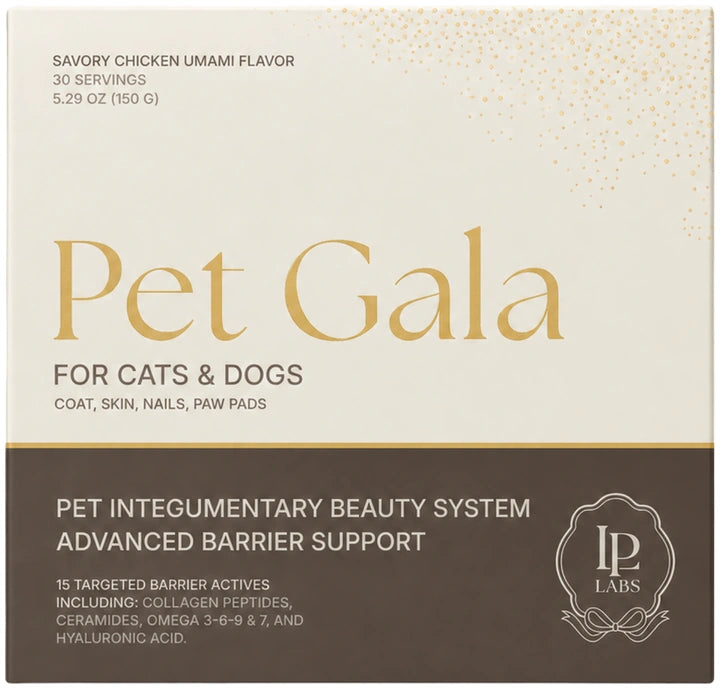
In La Petite Labs' category context, the honest distinction is the job: an oil is mainly an omega-delivery format, while a skin-focused system may be designed around a wider ingredient architecture. La Petite Labs does not have a finished-formula clinical trial and says so, so the useful comparison is not a trial-versus-trial claim; it is whether the owner is shopping for an EPA/DHA oil or for a different kind of skin-support framework.

That distinction helps avoid overbuying. If the goal is to add measurable EPA and DHA, Grizzly's per-teaspoon fish-oil numbers are directly relevant. If the goal is a broader skin plan, the buyer should compare full panels, dose logic, testing visibility, and veterinary guidance rather than assuming every skin-and-coat product belongs in the same lane.

The first 90 days with an opened bottle: what to watch

The product's own storage guidance makes 90 days a natural review window because opened bottles should be used within 90 days of opening. During that window, owners should track both practical use and pet response.

Start with the basics: how easily the oil dispenses, whether the pump matches the label directions, whether the pet eats the food consistently, and whether the bottle can realistically be finished within the opened-use window. If the pet often leaves oil-coated food, the FAQ says it is fine for the oil to soak into kibble if the pet does not eat all of it right away, but to dispose of it if the pet has not eaten it by the next day.

Track diet impact as well. Because the oil provides 37 kcal per teaspoon, body weight and total daily calories matter. For cats and smaller dogs, even small additions can be meaningful over time. Owners should know whether those calories are being added on top of the diet or replacing something else.

Also watch for changes that justify pausing and asking for advice. If appetite drops, stool changes, the pet refuses the food, body weight shifts unexpectedly, or a pre-existing medical issue seems unsettled, stop the new supplement and contact the veterinarian. Those are practical monitoring steps, not proof that the product is unsafe; they are how a careful owner introduces any high-fat oil.

How to read any fish-oil label after reading this one

Grizzly Pollock Oil shows why fish-oil labels should be read by unit. The useful unit here is per teaspoon. That is where the label gives 1000 mg omega-3 fatty acids, 540 mg EPA, 275 mg DHA, 64 mg omega-6 fatty acids, 1150 mg omega-9 fatty acids, and 37 kcal. Any comparison product should be reduced to the same kind of unit before judging it.

The first question is ingredient identity. What is the oil source, and what preservatives or other inactive ingredients are disclosed? Here, the ingredient line is pollock oil, mixed tocopherols, and rosemary extract.

The second question is dose usability. Does the page publish directions by species and weight? Does it tell you how much oil is in a pump, teaspoon, capsule, or chew? Does it let you calculate EPA, DHA, calories, and bottle life for your specific pet? In this case, the public page gives per-teaspoon numbers and approximate pump counts, but not per-pump volume or a weight-banded chart.

The third question is quality visibility. Look for public COAs, lot lookup, named labs, and stated panels for potency and contaminants. Certifications can be useful, but they do not replace product-specific test documents when those are important to the buyer.

The fourth question is freshness. Oils should have clear storage and opened-use guidance. This product gives a 90-day opened-bottle window, which is exactly the kind of practical detail buyers should look for.

What to bring to the veterinarian before choosing this oil

A useful vet conversation starts with the label, not the marketing headline. Bring the species, current diet, body weight, body condition goal, medical history, and all current medications and supplements. Then bring the product's per-teaspoon numbers: 1000 mg omega-3 fatty acids, 540 mg EPA, 275 mg DHA, 64 mg omega-6 fatty acids, 1150 mg omega-9 fatty acids, and 37 kcal.

For dogs, ask what daily EPA and DHA amount makes sense for the reason you are considering fish oil, and ask how to fit the added calories into the diet. For cats, also ask for a cat-specific amount because the visible directions text is dog-worded even though the product is listed for cats.

If your pet has a fat-sensitive history, weight-management plan, therapeutic diet, or complex skin issue, ask whether adding oil is appropriate now or whether diagnostics, diet review, or another plan should come first. Fish oil can be part of a plan for some pets, but it should not be used to postpone care for a persistent or worsening problem.

Also ask what documentation matters. If the veterinarian wants lot-level testing, contaminant screening, or potency confirmation, the public pages may not be enough. In that case, contact the brand or seller before purchase and ask whether current testing documentation is available for the lot you would receive.

Bottom line on Grizzly Pet Products Pollock Oil

Grizzly Pet Products Pollock Oil is a simple, recognizable fish-oil supplement for dogs and cats with several useful label disclosures. The per-teaspoon numbers are the highlight: 1000 mg omega-3 fatty acids, 540 mg EPA, 275 mg DHA, 64 mg omega-6 fatty acids, 1150 mg omega-9 fatty acids, and 37 kcal. The ingredient list is short, and the page provides a practical opened-bottle window of 90 days.

The product also publishes recognizable quality language, including NASC Certified, National Animal Supplement Council certified member language, and Made in the USA. Those are fair positives for shoppers who value supplement-program participation and domestic manufacturing language.

The buyer limitations are just as important. The pages checked did not publish a price amount, subscription price, servings per container, per-pump volume, exact weight-banded directions, cat-specific directions, public COA, lot lookup, named lab, testing panels, or specific study citations. Because of that, the product is easier to evaluate as a label-readable oil than as a fully transparent online purchase.

The best next step is verification, not dismissal. If the current bottle label gives clear dosing for your dog or cat, the price is acceptable, the bottle size can be used within 90 days of opening, and the company can answer your testing questions, this pollock oil may be a practical fit for owners looking specifically for an EPA/DHA liquid oil.

“Grizzly Pollock Oil is easiest to evaluate as a measurable EPA/DHA oil, not as a complete skin or nutrition system.”

Educational content only. This material is not a substitute for veterinary advice. Always consult your veterinarian about your dog’s specific needs. These statements have not been evaluated by the Food and Drug Administration. Products mentioned are not intended to diagnose, treat, cure, or prevent any disease.

Glossary

EPA

An omega-3 fatty acid listed on this label at 540 mg per teaspoon; often one of the key numbers owners compare on fish-oil products.

DHA

An omega-3 fatty acid listed on this label at 275 mg per teaspoon.

Per teaspoon

The unit used for this product's published omega and calorie numbers. It should not be assumed to equal one pump unless the bottle label confirms it.

NASC Certified

A certification phrase published for this product; useful as a quality signal, but not the same as a public product-specific COA.

COA

Certificate of analysis. A product- or lot-specific test document that was not easy to find publicly for this oil on the pages checked.

Opened-use window

The period after opening when the product should be used. This oil's guidance says opened bottles should be used within 90 days.

Crude fat

A guaranteed-analysis measure. This oil lists crude fat at 93% minimum.

Omega-3 to omega-6 ratio

A comparison of omega-3 and omega-6 fatty acids. The brand describes this oil's ratio as in the range of 13 to 14.

Related Reading

References

References

Sources for the Pollock Oil Supplement with Wild Alaskan Pollock facts on this page

Competitor label, pricing, and claims facts on this page come from these public sources. Links are provided for verification.

  • Source pdp.txt Accessed 2026-07-03 · high confidence.
  • Source pdp.jsonld.json Accessed 2026-07-03 · high confidence.
  • Source retailer.txt Accessed 2026-07-03 · medium confidence.
  • Source manifest.json Accessed 2026-07-03 · high confidence.

FAQ

La Petite Labs

Discover LPL-01: How This Fits Into a Complete Canine Integumentary Support System

Skin, coat, and nails aren’t cosmetic features. They’re the visible surface of deeper biological systems—barrier function, hydration balance, structural protein turnover, and lipid integrity—working in concert.

When these systems fall out of sync, it shows: dull coat, shedding, dryness, brittleness, sensitivity.

This article explores one piece of that puzzle. If you want to understand how true coat quality and skin resilience are built—and what actually moves the needle—you need to zoom out.

Start with the underlying science: