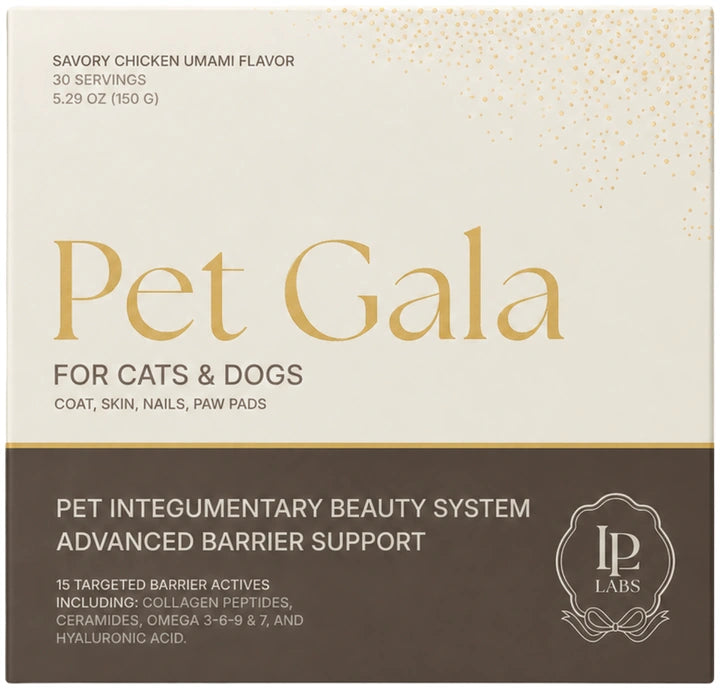
Disclosure: La Petite Labs sells Pet Gala, a skin-and-coat powder discussed here. This is a review of published information; we did not feed Grizzly products to pets or commission laboratory testing.
Grizzly’s strongest feature is its labeling. Salmon Plus, Pollock Oil and Algae Plus publish separate amounts of EPA and DHA, two types of omega-3 fatty acid, per teaspoon. That gives you a clear way to compare the oils before choosing one to add to your pet’s food. 1 2 3
NASC’s public Grizzly profile also reports that the company passed an independent facility audit. The practical choice depends on the oil’s contents, the directions on your bottle and how quickly your household will use it. 6
Salmon Plus, Pollock Oil and Algae Plus compared
The names describe different mixtures. Salmon Plus combines salmon, pollock and whitefish oils. Pollock Oil uses pollock oil. Algae Plus combines flaxseed oil with microalgae oil. Their published panels use the same volume—one teaspoon—so the amounts below can be compared directly. 1 2 3
On small screens, scroll across for all columns.
| Oil | EPA per teaspoon | DHA per teaspoon | EPA + DHA, added together |
|---|---|---|---|
| Salmon Plus | 598 mg | 368 mg | 966 mg |
| Pollock Oil | 540 mg | 275 mg | 815 mg |
| Algae Plus | 138 mg | 322 mg | 460 mg |
These are the manufacturer’s stated minimum amounts, with the last column calculated from the two preceding figures. A teaspoon is the comparison unit here, not a recommended daily amount for every pet.
Salmon Plus lists more combined EPA and DHA per teaspoon than the other two. Pollock has a similar emphasis on EPA, while Algae Plus supplies more DHA than EPA. Those are differences in composition; the table does not rank how much a pet’s skin, coat or joints will improve.
Why the largest omega-3 number can mean something different
Omega-3 is a family of fatty acids. EPA, DHA and ALA are different members, and a total omega-3 figure can include all three.
Algae Plus makes the distinction clear. Its label lists 2,484 mg total omega-3 per teaspoon, including 1,932 mg ALA and the 460 mg combined EPA and DHA shown above. The larger total does not mean it contains that much EPA and DHA. Its flaxseed-and-microalgae blend explains why reading only the headline omega-3 number would miss much of the formula’s character. 3
Algae Plus is therefore worth comparing when you want a plant-based oil blend. If your veterinarian has specified an EPA-and-DHA amount, use those two entries when discussing a product choice. A general “omega-3” total cannot stand in for them.
Where Krill Oil and the other products fit
Grizzly’s Krill Oil has a different published panel: 736 mg omega-3 lipids and 4,089 micrograms of astaxanthin per teaspoon (4.6 g). The readable product page does not break that total into separate EPA and DHA amounts, so it cannot fill the same columns in the comparison above. 4
The brand also lists Hip & Joint, Gut Health and Senior supplements. Its seven-product catalog is broader than fish oil, and a recommendation for one of those formulas should stay attached to that product. 5
Use the pump directions for your bottle
The analysis tells you what is in a teaspoon; the feeding directions tell you how to use the product. Grizzly explicitly says pump sizes and feeding guidelines vary by bottle size. Keep the pump with its bottle and check the instructions again when changing package sizes. 1 2 3
Product names can complicate the comparison too. Chewy’s Omega Health listing shows a salmon-and-pollock blend, while the manufacturer’s Salmon Plus page also lists whitefish. Their published EPA percentages differ. An older per-pump answer for Omega Health should not be used to calculate the contents of a current Salmon Plus serving. 9
For cats, the current Salmon Plus and Algae Plus pages explicitly describe adding the oil to dog or cat food. Pollock Oil’s use text specifies dogs. If the wording on a bottle seems inconsistent with an online listing, give Grizzly the full product name and bottle details so it can identify the applicable directions. A brand-level recommendation cannot resolve a label mismatch. 1 2 3
Choose a bottle you can finish within the use window
Grizzly says opened Salmon Plus and Pollock Oil bottles should be used within 90 days. It allows room-temperature storage away from sunlight, with refrigeration optional. Algae Plus also permits room-temperature storage away from direct light, but its reviewed page does not give the same opened-bottle interval. 1 2 3
Bottle size can matter more than the apparent saving per ounce. Grizzly estimates roughly 133 pumps in a 16-ounce Salmon Plus bottle and 267 in a 32-ounce bottle. Using two pumps daily as a calculation example, those bottles would last about 67 and 134 days respectively. The larger bottle would extend beyond the manufacturer’s 90-day window. 1
Work from the directions for the exact bottle and the amount your pet is meant to receive. A smaller purchase can be the better value when it lets you use the contents in time. Write the opening date on the bottle rather than trying to remember it months later.
What the NASC seal tells you
NASC’s public Grizzly supplier profile reports that the company passed an independent facility audit and earned permission to display its Quality Seal. NASC describes production procedures, complaint monitoring, labeling requirements and random independent-laboratory testing against label claims as parts of that program. These are meaningful quality controls. 6 7
A certificate of analysis, usually shortened to COA, records testing information and results for an identified sample. To assess the bottle you have, the product and lot should match, and the document should identify what was tested. A result for one contaminant does not answer every question about an oil.
We did not locate a downloadable Grizzly batch certificate, a named testing laboratory or a lot-results portal in the manufacturer pages and targeted searches reviewed. Chewy separately hosts an older answer saying Grizzly regularly tests salmon oil for heavy metals and PCBs, but that answer supplies no laboratory report or current batch results. 9
The public gap is access to those particulars. It would be wrong to describe it as proof that Grizzly has no testing program. If a batch result is part of your purchase decision, Grizzly’s customer service is the route for requesting it. 12
What owner reviews add
The owner discussions show why the format matters. One shopper wanted an oil to mix into food, with a manageable price and bottle size; a Grizzly user liked their dog’s response to the flavor but found the bottle messy and the routine easy to forget. Another owner’s question began with a bottle labeled for dogs that they had bought for a cat. 10 11
Those are useful questions about buying and using the product. Reports of softer fur or easier movement are harder to interpret: the exact formula, diet and other care differ between homes. This review evaluates published product information; it does not establish a usual response time or a clinical benefit for the current Grizzly formulas.
Where Pet Gala fits
Grizzly’s oils give you a way to add fatty acids. Our Pet Gala™ Barrier System builds a broader skin-and-coat formula around the supporting proteins, moisture barrier and hydration needs of the skin.
Marine collagen peptides and hydrolyzed whey contribute protein-derived ingredients; fatty-acid ingredients and ceramides address the lipid-barrier side of the design. Hyaluronic acid, zinc and biotin bring further skin-and-coat nutritional roles into the same powder. You can choose that prepared combination without assembling separate collagen, oil and coat products.
Explore Pet Gala’s complete label and serving directions to see the whole design. Its value is the breadth and purpose of the formula, not a claim that a serving supplies the same EPA and DHA as a Grizzly oil. A specified fish-oil dose remains a separate comparison.
The 54/100 score belongs to the July audit
Grizzly received 54/100 in our July 3, 2026 public-transparency audit, under the Brand Transparency Rubric. It measures public disclosure, not safety or effectiveness. The brand transparency report retains that wider historical comparison.
This September review gives a more precise account of the quality evidence and identifies founder Harald Fisker from a primary acquisition announcement. The earlier founder and testing criticisms were too broad. The July score has not been recalculated and should not be read as a new September rating. 8
Which Grizzly oil would you choose?
Salmon Plus is the clearest starting point within these three oils when you are comparing the largest stated EPA-and-DHA amount per teaspoon. Pollock Oil offers a shorter oil-source list, while Algae Plus provides a flaxseed-and-microalgae blend with a different balance of fatty acids. Each deserves to be read as its own formula.
Once you have chosen the oil, choose the bottle around the amount you will actually use. A clearly labeled oil in a size you can finish is a more useful purchase than a bigger bottle whose contents outlast its opened-bottle window.
Frequently asked questions
Is Grizzly a legitimate pet supplement brand?
Grizzly has a documented company history: a primary acquisition announcement identifies Harald Fisker as its founder in 2002. NASC’s supplier profile also reports an independent facility audit and permission to display its Quality Seal. Those establish company credentials, not a guaranteed result for your pet. 6 8
Which Grizzly oil has the most EPA and DHA?
Of Salmon Plus, Pollock Oil and Algae Plus, Salmon Plus lists the largest combined amount per teaspoon: 966 mg, compared with 815 mg and 460 mg respectively. These sums come from the published minimum EPA and DHA amounts. They are not recommended daily servings or clinical rankings. 1 2 3
Is Algae Plus just algae oil?
No. Its ingredient list includes flaxseed oil and microalgae oil. A large part of its stated total omega-3 is ALA; the separate EPA and DHA amounts tell you how much of those fatty acids it supplies. 3
Can cats have Grizzly Salmon Plus?
The current manufacturer page explicitly describes Salmon Plus for adding to dog or cat food. Use the directions for the exact product and bottle, and ask the manufacturer to resolve any conflicting label wording. Do not transfer a dog’s pump schedule to a cat. 1
Does Grizzly publish batch test certificates?
We did not find a public batch COA or lot-results portal in the reviewed manufacturer materials. NASC separately documents an audit on its Grizzly profile, and its Quality Seal program includes random independent-lab testing. A public batch certificate and a quality program are different forms of evidence. 6 7
Does Grizzly oil need refrigeration?
For Salmon Plus, Pollock Oil and Algae Plus, the reviewed manufacturer pages permit storage away from sunlight or direct light at room temperature; refrigeration is optional. Salmon Plus and Pollock Oil also have a stated 90-day use window after opening. Follow the instructions on your particular bottle. 1 2 3
Sources reviewed
- Grizzly Salmon Plus: product panel and directions
- Grizzly Pollock Oil: product panel and directions
- Grizzly Algae Plus: ingredients, analysis and FAQ
- Grizzly Krill Oil: product panel
- Grizzly product catalog
- NASC: Grizzly Pet Products supplier profile
- NASC Quality Seal requirements
- Frontenac: Whitebridge acquires Grizzly, March 1, 2021
- Chewy: Grizzly Omega Health listing and visible Q&A
- Owner discussion: Salmon oil for cats
- Owner discussion: Best fish oil?
- Grizzly customer service