





Cats Get the Leftovers: The Cat Boom the Supplement Aisle Hasn’t Caught Up With

Cat ownership is surging, led by Gen Z and a new generation of cat dads. We counted 2,865 supplements to measure how far the aisle lags, and what it means for the cats in our lives.

By La Petite Labs Editorial 12 min read

As Seen On

Woman cuddling an orange-and-white cat and a silver tabby while holding a Hollywood Elixir box
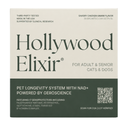
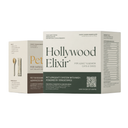
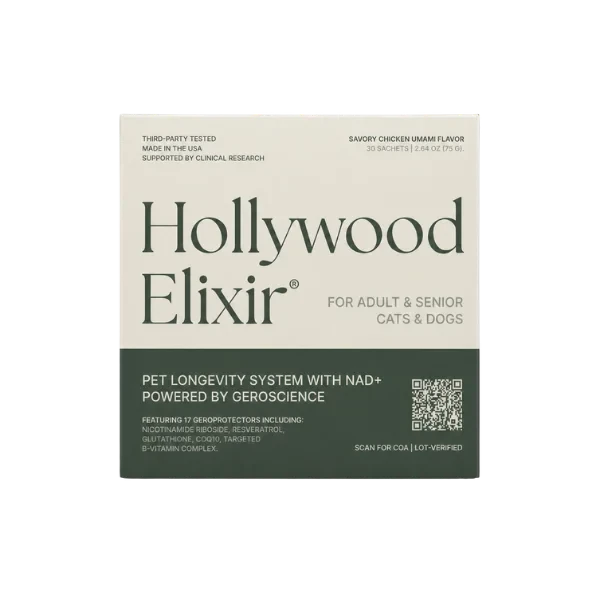
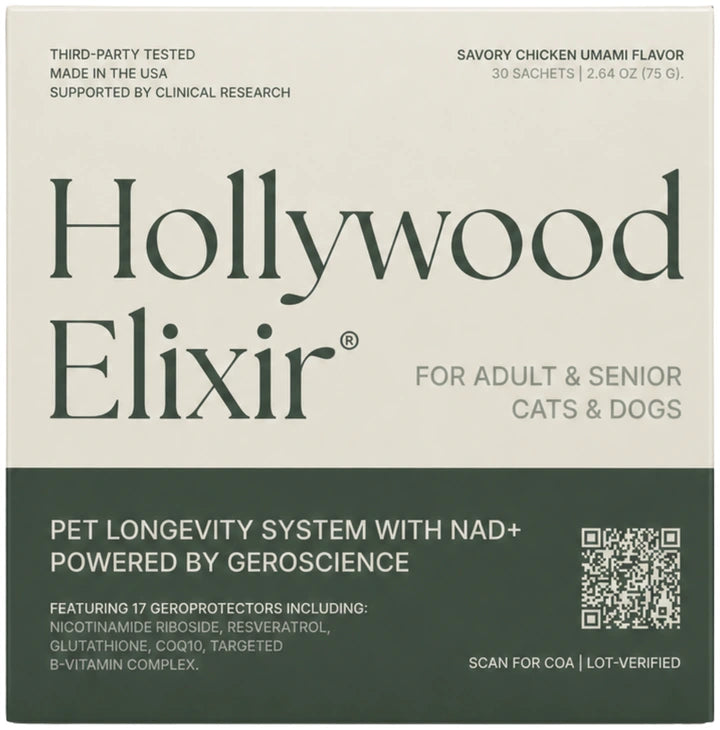
Hollywood Elixir® Senior Cat Supplement

17 science-backed actives

From$50/moSave up to 44%Shop Now
Contents
For years, the pet economy ran on dogs. Dogs set the products, the marketing and the picture of what a devoted pet parent looks like. That picture is changing fast. Cats now live in 53 million U.S. households, 39% of all homes, after one of the sharpest rises in cat ownership on record.2

The new cat owner doesn’t look like the stereotype, and expects more. That raises an obvious question. If cats are now family, is the supplement aisle treating them that way? We counted every supplement on 195 brands’ websites to find out.1

Most supplement brands sell something for cats, but very few have built a cat range. Only 14% of the 2,865 supplements in our census are made for cats alone, and the gap is widest for the jobs older cats need most.

Cats also refuse supplements far more often than dogs, and the research behind cat products is thinner. The answer isn’t a cheaper dog product. It is a cat amount on the label, a format a cat will eat and evidence gathered in cats.

The Cat Decade, by the Numbers

According to the American Pet Products Association’s 2026 Cat Report, cat ownership grew 5% in a year after jumping 23% the year before.2 Men now make up 43% of cat owners, Gen Z accounts for 22%, and households with three or more cats have grown 45% since 2018. Cat dads spend a larger share of their pet budget on products than female owners.3

These owners bring the expectations that reshaped the dog aisle: cleaner ingredients, preventive care and products that treat a pet as family. Their cats are getting older, too. More than half of cat-owning households now include a cat over seven, according to Packaged Facts, which expects cat products to outgrow dog products across most categories over the next five years.4

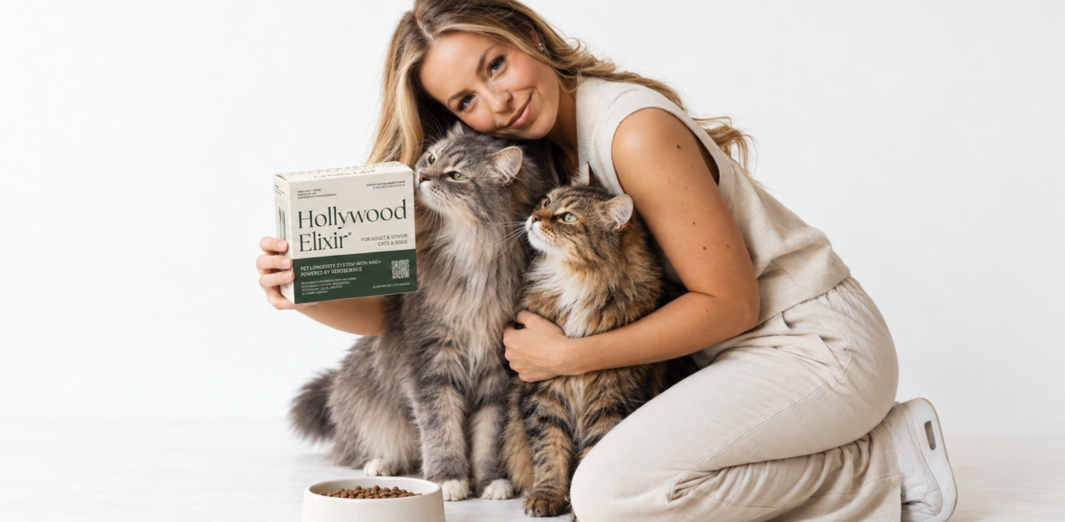
Woman kneeling with two long-haired tabby cats while holding a Hollywood Elixir box beside a food bowl

80% of Brands Sell for Cats. 14% of Products Are Made for Them
At first glance, cats are well served: 157 of the 195 brands (80%) sell at least one supplement for cats.1 Count products instead of brands, and the picture flips. Only 390 of the 2,865 supplements (14%) are made for cats alone. Nearly half (49%) are made only for dogs, a third are labeled for “dogs and cats” together, and 4% don’t say. Most brands have a cat product or two. Very few have built a cat range.

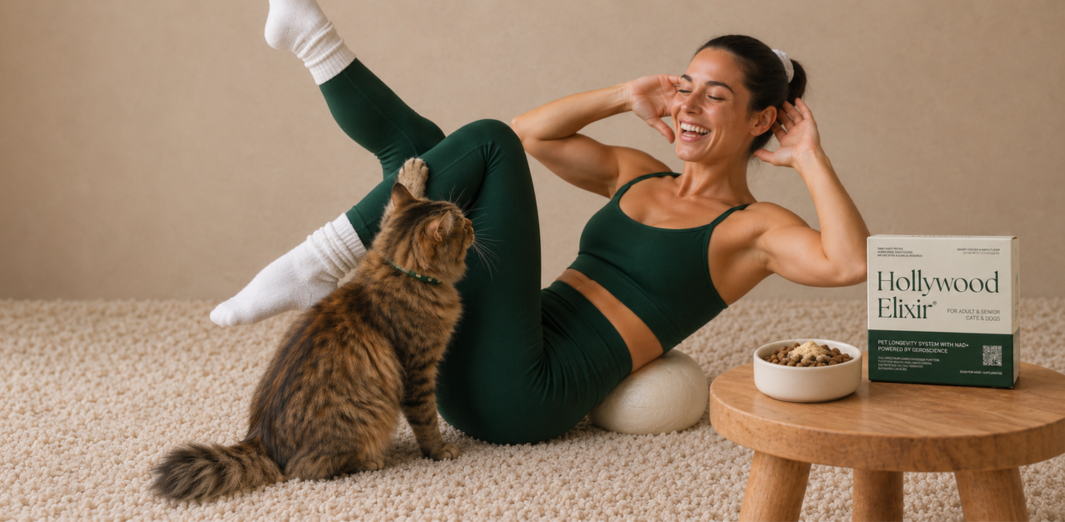
Woman exercising beside a tabby cat, with a Hollywood Elixir box and food bowl on a small table

Seven Dog Joint Supplements for Every Cat One

Compare supplements made only for dogs with those made only for cats, job by job, and the gap is widest where older cats need help most: 7 dog-only joint supplements for every cat-only one (430 against 65), 8 to 1 for dental support, 6 to 1 for cognition and 3 to 1 for digestion.1 The one job cats own is hairballs: 42 cat-only products against 2 for dogs.

Orange-and-white cat reaching toward a woman holding a Hollywood Elixir box while sitting in a chair

A “Dogs and Cats” Label That Forgets the Cat Amount

Many cats end up on dual-species formulas, and a dual label can be a good design. The detail that matters is the amount. Among dual-species supplements that print a readable daily amount, 9% give an amount for dogs and none for cats (55 of 592).1 Cats are not small dogs. They have a famously limited capacity for glucuronidation, one of the liver’s main ways of clearing compounds, so a cat’s amount should be worked out, not assumed.

Gray-haired man holding a Hollywood Elixir box while two cats rest beside him in an armchair

The Cat Version Arrives Five Months Later

When a brand sells the same ingredient for both species, the cat-only version reaches the market a median of five months after the dog or dual version, and later in 180 of the 276 cases we could date.1 New ideas in pet wellness reach cats second, almost by default.

Cats now live in 53 million U.S. homes. Only 14% of pet supplements are made for them alone.

Cats Refuse Supplements Far More Often Than Dogs

Getting a supplement eaten is half the battle. In customer reviews that say whether the pet ate the supplement, 14% of cat owners report a refusal, against 2% of dog owners.1 Even leaving out the single brand with the most cat refusals, cats refuse five times as often.

The industry has adapted. Cat-only supplements are 29% powders and 22% soft chews, while dog-only supplements are 42% soft chews. A powder can disappear into a meal a cat already trusts. A chew has to win on its own.

Tabby cat looking up at a Hollywood Elixir sachet held above it, with the product box on a small table

134 Dog Trials, 23 Cat Trials

The evidence gap mirrors the shelf. Across the 64 human-wellness ingredients we tracked into pet supplements, we found 134 randomized controlled trials in dogs and 23 in cats.1 For half of those ingredients, we found no study in live cats at all. A dog study is a starting point for a cat, not an answer.

Hand gently petting an orange-and-white cat beside a food bowl and Hollywood Elixir box

Ninety Percent With Arthritis, Four Percent Limping

Cats are masters of concealment. In one radiograph study of cats over 12, 90% had degenerative joint disease, yet only 4% were lame.6 Cats rarely limp. They stop jumping onto the counter, sleep more and groom less, changes that are easy to read as ordinary aging.

Man holding a Hollywood Elixir box beside a black cat, an orange tabby and a food bowl

Half of Cats Missed Their Annual Checkup

Cats are also seen less. In a study by Bayer and the American Association of Feline Practitioners, 52% of cats had not seen a veterinarian for a checkup in the previous year.7 Yet when the University of Liverpool’s Cat Prospective Aging and Welfare Study followed 209 aging cats for up to seven years, 96% developed at least one abnormality on veterinary examination.5

What Good Cat Supplementation Looks Like

None of this means a cat supplement can’t be well made. It means the burden is on the label to show that it was. Good cat supplementation starts where cats differ from dogs:

  • An amount for cats on the label, by body weight, not borrowed from a dog chart.
  • A format a cat will accept: powders and liquids that mix into a familiar meal.
  • Cat-relevant evidence: a study in cats where one exists, and a feline-specific rationale where it doesn’t.
  • Patience: one change at a time, watching appetite.

Cats aren’t small dogs. Their supplements shouldn’t be small dog supplements.

Silver tabby sitting beside a food bowl and a Hollywood Elixir box held in a person's hand

DVM Voice: Clinical Vignette of a Common Pattern in Senior Cat Aging

Case provided by JoAnna Pendergrass, DVM

Sasha, a 12-year-old cat, was brought in after her owner noticed increased thirst and urination, lethargy, vomiting, and a generally unkempt appearance. Examination showed weight loss, elevated blood pressure, and reduced vitality.

Diagnostic testing revealed elevated kidney markers, poorly concentrated urine, and protein loss in the urine — findings consistent with chronic kidney disease, one of the most common chronic conditions in senior cats.

Her care required a kidney-focused diet, blood pressure management, targeted supplementation, medication support, and regular monitoring — a necessary plan, but one started after clinical signs were already visible.

Clinical takeaway: Sasha’s case reflects why senior-cat wellness should begin before obvious decline. Earlier monitoring, body-condition tracking, hydration awareness, antioxidant support, and daily cellular resilience may help support quality of life as cats age.

Single-case vignette. Not generalizable. Veterinary diagnosis and monitoring are essential for increased thirst, urination, vomiting, lethargy, weight loss, or suspected kidney disease.

Explore Hollywood Elixir Research →
Woman holding a Hollywood Elixir box toward a brown cat perched on the back of a sofa

The Median Cat Supplement Costs $0.44 a Day

Better cat supplementation doesn’t have to be expensive. The median cat supplement in our census costs $0.44 a day for a 10-lb cat at the label amount, about $13 a month.1 The leftovers aren’t cheap versions of dog products. They are fewer choices, later arrivals and thinner evidence.

Woman leaning toward a fluffy orange cat beside a Hollywood Elixir box and green food bowl

Every Cat Cell Runs on the Same Foundations as Ours

Cats and dogs differ in metabolism, appetite and size, but they share the same mammalian foundations. Every cell in a cat, as in a dog or a person, runs on NAD+ for energy and repair, depends on mitochondria for power, defends itself with antioxidants such as glutathione, and builds skin and coat from the same structural proteins.

Tabby cat licking its nose beside a food bowl and Hollywood Elixir box

Real Cross-Species Formulas Start With the Cat Amount

Formulating at that foundational level, then translating carefully for each species and body weight, is what separates a true cross-species formula from a dog product with a cat on the label. The translation is where most labels fall short, and where a cat owner should look first.

How La Petite Labs Formulates for Cats

La Petite Labs makes supplements for dogs and cats, so this is our aisle too, and our own products are excluded from the census. We design from the inside out, starting with the deeply conserved systems all mammals share: cellular energy, mitochondrial function, antioxidant defense and the structural proteins of skin and coat.

Shared biology is where we start, not where we stop. Our formulas print a daily amount for every body weight, beginning with pets under 7 lb, so a cat owner never has to translate a dog’s serving. And they are powders that mix into a cat’s usual food, the format this census shows cats actually accept.

Cats Deserve Research of Their Own

The right answer to the cat evidence gap is more cat evidence. La Petite Labs is planning its own studies, beginning with senior dogs and extending to cats. Until those results exist, we will keep saying plainly which evidence comes from which species.

Tabby cat sitting at a table with a food bowl and Hollywood Elixir box

Questions to Ask Before You Buy for a Cat

  • Does the label give a daily amount for cats, by weight?
  • Is there an amount for every active ingredient?
  • Is the format something your cat already eats, such as a powder in wet food?
  • Is there evidence in cats, or an honest feline rationale?
  • Can you match a lab report to your batch?
Woman cuddling a silver tabby and a cream-colored cat while holding a Hollywood Elixir box

Quiet Signs Worth a Vet Visit

Because cats hide decline, the useful signals are small: less jumping, more sleeping, less grooming, a change in appetite or litter-box habits. Any of these is worth a veterinary visit before a supplement, especially in a cat over seven.

The Cat Decade Will Reshape the Aisle

Every signal points the same way. Cat ownership is rising fastest among the youngest owners. Cat products are forecast to outgrow dog products. Feline medicine has its own specialist practices and long-term aging studies. The supplement aisle will follow, as it always does, and it can follow better: with a cat amount on every label, formats designed for cats and evidence gathered in cats.

For cat owners, the opportunity is to ask for exactly that. For brands, it is to stop treating cats as small dogs and start treating them as the fastest-growing family members in American homes.

The next era of pet wellness will be built for cats, not adapted for them.

Educational content only. This material is not a substitute for veterinary advice. Always consult your veterinarian about your cat’s specific needs. These statements have not been evaluated by the Food and Drug Administration. Products mentioned are not intended to diagnose, treat, cure, or prevent any disease.

Glossary

Cat-only supplement: A supplement labeled for cats alone, not for “dogs and cats”.

Dual-species supplement: A supplement labeled for both dogs and cats, ideally with an amount for each.

Glucuronidation: One of the liver’s main routes for clearing compounds from the body; cats have a limited capacity for it.

Degenerative joint disease: Age-related joint change, including osteoarthritis, often hidden in cats.

Randomized controlled trial: A study that assigns animals at random to a treatment or a comparison group.

Related Reading

References

Numbered references identify the sources used for specific claims. Read the study design, species and evidence boundaries alongside each finding.

  1. La Petite Labs Research. Pet Supplement Statistics (2026 edition). La Petite Labs · 2026Study design/context: Census of 2,865 supplements from 195 brands’ websites (October 2026)Species/context: dog, catEvidence boundary: Describes public product-page information, not product safety or efficacy.
  2. Petfood Industry. Report: Cat ownership grows to 53 million U.S. households. Petfood Industry · 2026Study design/context: Coverage of the APPA 2026 Cat Report
  3. American Pet Products Association. Gen Z and cat dads are leading cat ownership’s cultural boom. ACCESS Newswire · 2026Study design/context: Industry press release
  4. Petfood Industry. Cat supplement market poised for growth as ownership trends shift. Petfood Industry · 2026Study design/context: Coverage of Packaged Facts research
  5. Frontiers in Veterinary Science. Morbidity and mortality in ageing cats: seven years of the Cat Prospective Ageing and Welfare Study. Frontiers in Veterinary Science · 2026Study design/context: Prospective cohort study of 209 aging catsSpecies/context: cat
  6. Today’s Veterinary Practice. Diagnosis and management of feline osteoarthritis. Today’s Veterinary Practice · 2017Study design/context: Clinical reviewSpecies/context: cat
  7. AAHA NEWStat. Bayer–AAFP study explains why 52 percent of cat owners avoid vet visits. American Animal Hospital Association · 2013Study design/context: Owner surveySpecies/context: cat

FAQ

Orange-and-white cat beside a Hollywood Elixir box held in a person's hand

Discover LPL-01: How This Fits Into a Larger Feline Longevity System

Aging in cats unfolds quietly. It’s not driven by a single failure, but by gradual shifts across interconnected systems — cellular energy, oxidative balance, immune tone, and tissue integrity — each influencing the others over time.

This article explores one layer of that system. To understand what actually shapes long-term health, you need to step back and look at how these layers interact.

Start with the underlying science:

Keep exploring

What would you like to understand next?

Search practical guides about healthy aging, cellular energy, ingredients, and daily support for cats.