Vet's Best Healthy Coat Shed & Itch Tablets Review for Dogs

A label-first buyer's guide to a twice-daily dog skin-coat tablet that names nine actives but leaves price, count, testing, and dose-basis questions open.

La Petite Labs Editorial 1 min read

Vet's Best Healthy Coat Shed & Itch Tablets is a dog skin-coat supplement positioned for dogs of all ages and coat types. The brand describes it as a veterinarian-formulated balance of key natural ingredients, and the label says it boosts skin moisture and provides itch relief. This review reads those as label claims, not proof that the tablets address the cause of a dog's itch.

That caution matters because itching can come from parasites, infections, atopy, food reactions, endocrine issues, or other veterinary problems. Persistent scratching, skin odor, redness, sores, ear issues, hair loss, or sudden severe discomfort should be a veterinary conversation before any supplement comparison.

The genuine appeal is a broad, fully named active list: MSM 100 mg, omega-3 fatty acid 50 mg, quercetin 25 mg, yellow dock root 15 mg, and five 10 mg botanical or fatty-acid entries. The harder buyer questions are public transparency gaps: the amount basis is not stated, price and count are not visible, and public COA, lot lookup, named lab, testing panels, certifications, storage directions, and study references are not easy to find publicly.

We reviewed Vet's Best at brand level — Public Transparency Score 52.5/100 — see the Vet's Best Review for the brand's testing posture, disclosure practices, and what to verify before buying anything from its range.

Disclosure: La Petite Labs sells its own pet supplements, including Pet Gala™. This review is editorial: competitor facts are drawn from the public sources listed in the References section, and facts are dated where shown.

What Vet's Best Healthy Coat Shed & Itch Tablets is, and what the maker information shows

Vet's Best Healthy Coat Shed & Itch Tablets is a dog skin-coat supplement. The reviewed variant is Healthy Coat Shed & Itch Tablets, SKU 3165810128. The public product identity uses Healthy Coat Shed & Itch Tablets, while the page title frames it as a dog healthy coat, shed, and itch relief tablet. The page identifies Vet's Best as the brand, but an explicit manufacturer statement is not published on the pages checked.

The product is positioned for dogs of all ages and coat types. That broad audience makes the label easy to understand at a high level, but it also puts more responsibility on the buyer to match the product to the dog in front of them. A young dog with seasonal coat changes, an older dog with chronic scratching, and a dog with recurrent ear or skin problems are not the same buying situation.

The brand describes the formula as a veterinarian-formulated balance of key natural ingredients. It also says the tablets boost skin moisture and provide itch relief. Those phrases are useful because they show the product's intended lane, but they should stay in the lane of label claims. Persistent itching can come from parasites, infections, atopy, food reactions, endocrine issues, or other veterinary problems. For a dog that is scratching repeatedly, losing hair, developing skin odor, or showing discomfort, this product page should not be the first stop. The first stop is a veterinary conversation.

At a Glance

What is Vet's Best Healthy Coat Shed & Itch Tablets?

Vet's Best Healthy Coat Shed & Itch Tablets is a dog skin-coat supplement positioned for dogs of all ages and coat types. The public label lists nine active ingredients, including MSM 100 mg, omega-3 fatty acid 50 mg, quercetin 25 mg, and several botanicals, with weight-based twice-daily directions.

Product
Vet's Best Healthy Coat Shed & Itch Tablets; SKU 3165810128
Category
Dog skin and coat supplement
Species
Dogs
Format
undefined
Disclosed actives
Nine disclosed actives: MSM 100 mg; omega-3 fatty acid 50 mg; quercetin 25 mg; yellow dock root 15 mg; omega-6 fatty acid 10 mg; Oregon grape root 10 mg; nettle leaf 10 mg; burdock root 10 mg; red clover blossom 10 mg. The amount basis is not stated publicly.
Price
Price, currency, subscription price, tablet count, package size, and servings per container were not easy to find publicly, so cost per day cannot be calculated.
Best fit
Dog owners who want a twice-daily tablet with disclosed active amounts for a skin and coat routine, and whose dog's itching has already been put in the right veterinary context.
What to check
Verify package count, current price, amount basis, storage directions, testing documentation, and whether any active or inactive ingredient overlaps with your dog's current supplements or sensitivities.

Quick Answers

Is Vet's Best Healthy Coat Shed & Itch Tablets good for itchy dogs?

It may fit owners looking for a disclosed multi-ingredient skin and coat tablet, but it should not be used as an allergy diagnosis or replacement for veterinary dermatology. The label says it provides itch relief, but persistent itching can come from parasites, infections, atopy, food reactions, endocrine issues, or other problems.

What should owners check before buying Vet's Best Healthy Coat Shed & Itch Tablets?

Check the full active list, inactive ingredients, twice-daily dosing band for your dog's weight, current package count, price, and amount basis. Public COA, lot lookup, named lab, testing panels, certifications, storage instructions, guaranteed analysis, servings per container, and study references were not easy to find publicly.

What cautions or side effects should owners consider?

The public page does not list specific side effects. Practical caution still applies: introduce any supplement carefully, pause and call your veterinarian if your dog seems worse, and avoid stacking products with overlapping actives. The brand also says to consult a veterinarian before adding supplements, especially with medications or multiple supplements.

What is the price and cost per day for Vet's Best Healthy Coat Shed & Itch Tablets?

A public price, tablet count, package size, and servings per container were not visible on the pages checked, so a cost-per-day calculation is not possible from the available label information. The dosing frequency is visible, but without count and price, monthly cost cannot be compared responsibly.

How is Pet Gala relevant to this Vet's Best comparison?

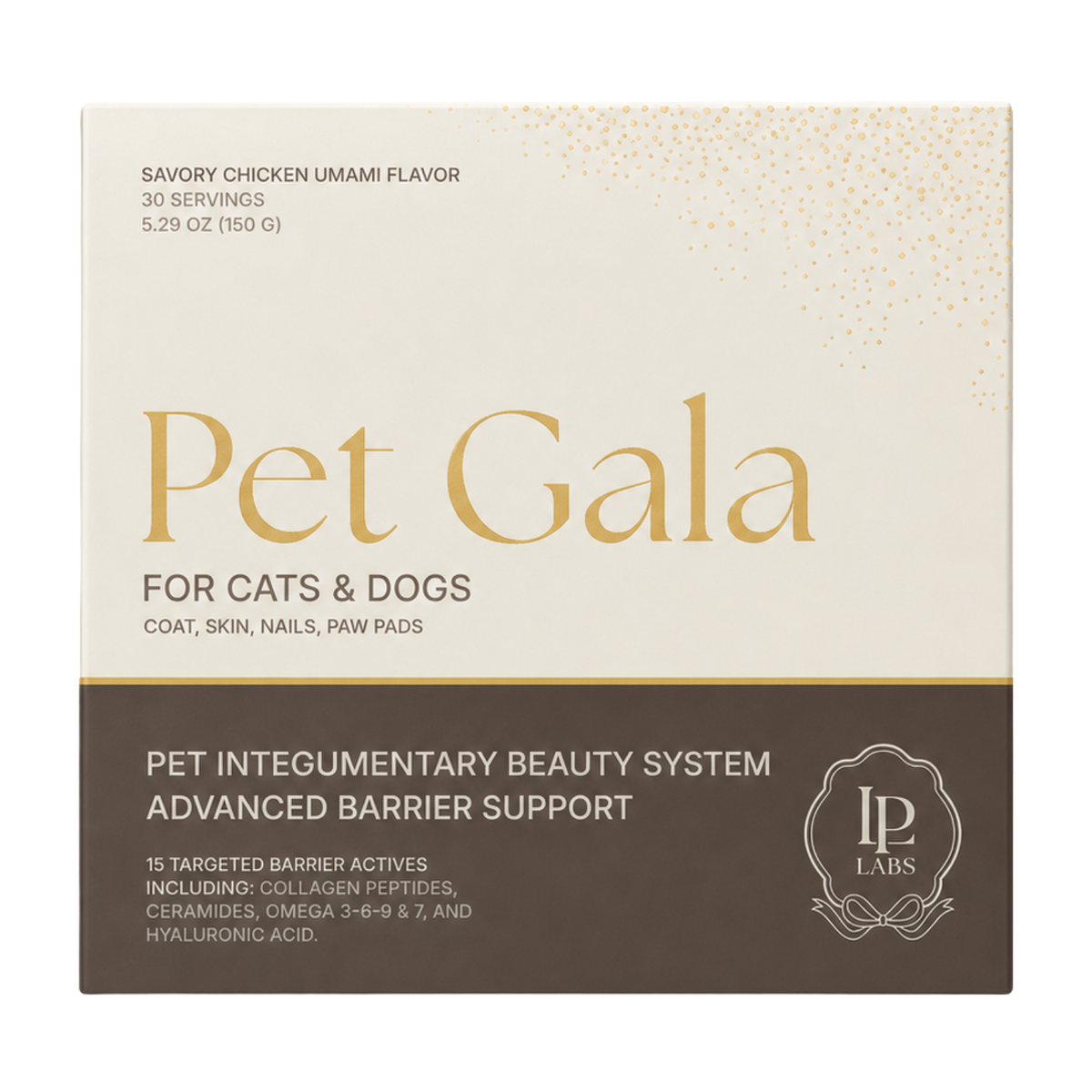
Pet Gala is relevant when the buyer wants a skin, coat, and barrier-support daily system with stronger public transparency around actives and batch testing. Its page discloses 13 actives at full mg amounts with no proprietary blends, and La Petite Labs provides per-batch third-party testing through named labs with a public COA lookup portal.

Can these tablets replace allergy care?

No. The product's name and label language are itch-positioned, but supplements should not be used as allergy care or as a substitute for veterinary guidance. If a dog has persistent scratching, recurrent ear issues, skin odor, sores, hair loss, or sudden severe itch, start with a veterinarian.

How often is Vet's Best Healthy Coat Shed & Itch Tablets given?

The directions are twice daily across all listed weight bands: under 25 lb gets 1/2 tablet twice daily, 25 to 50 lb gets 1 tablet twice daily, 50 to 75 lb gets 1 1/2 tablets twice daily, and over 75 lb gets 2 tablets twice daily.

Does the label disclose all active amounts?

Yes, the visible label gives named amounts for each listed active: MSM 100 mg, omega-3 fatty acid 50 mg, quercetin 25 mg, yellow dock root 15 mg, omega-6 fatty acid 10 mg, Oregon grape root 10 mg, nettle leaf 10 mg, burdock root 10 mg, and red clover blossom 10 mg.

The Plain Comparison

Healthy Coat Shed & Itch Tablets vs Pet Gala™, side by side

QuestionHealthy Coat Shed & Itch TabletsPet Gala™Stronger fit
Which product gives clearer public active-dose disclosure?Vet's Best lists nine active ingredients with amounts: MSM 100 mg, omega-3 fatty acid 50 mg, quercetin 25 mg, yellow dock root 15 mg, omega-6 fatty acid 10 mg, Oregon grape root 10 mg, nettle leaf 10 mg, burdock root 10 mg, and red clover blossom 10 mg. The page does not state the amount basis.Pet Gala discloses 13 actives at full mg amounts on the public product page, with no proprietary blends.Pet Gala is the stronger fit for buyers who want full mg disclosure with no proprietary blends and a clearer public dose basis. Vet's Best still deserves credit for listing each active amount rather than using a proprietary blend.
Which product gives stronger public testing visibility?For Vet's Best, a public COA, lot lookup or batch lookup, named laboratory, and testing panels were not easy to find publicly on the pages checked.La Petite Labs discloses per-batch third-party testing through named labs and a public COA lookup portal. The portal does not yet cover every currently sold SKU, and the public panel does not yet itemize pesticide, mycotoxin, or allergen testing.Pet Gala is the stronger fit for buyers who want public batch-testing visibility. Vet's Best may still be acceptable to owners who are comfortable buying without a public COA or lot lookup.
Which product is closer to an itch-focused supplement?Vet's Best is directly itch-positioned: the page title includes itch relief language, and the brand says the tablets boost skin moisture and provide itch relief for dogs of all ages and coat types. Those are label claims, not an independent medical conclusion.Pet Gala is described as a skin, coat, and barrier-support daily system. It is not a substitute for medicated or prescription dermatology products or allergy immunotherapy.Vet's Best is the more directly itch-positioned product on label language. Pet Gala is the better fit for buyers seeking a broader skin, coat, and barrier-support system without using it as allergy care.
Which product has stronger finished-product clinical evidence?Vet's Best did not publish study references or citations on the pages checked, and no finished-product trial was visible in the public details reviewed here.La Petite Labs explicitly discloses that no finished-formula clinical trial currently exists on its products; its evidence is ingredient-level. Pet Gala's public strengths in this comparison are full mg active disclosure and per-batch third-party testing with named labs and a public COA lookup portal.Neither product is stronger on finished-product clinical evidence from the public facts available here. Buyers who require product-specific clinical trials should keep looking or ask each brand directly.
Which product better fits a transparency-first skin-coat buyer?Vet's Best gives useful active disclosure and weight-based directions, but price, count, servings per container, amount basis, public COA, lot lookup, named lab, testing panels, certifications, storage instructions, and study references were not easy to find publicly.Pet Gala discloses 13 actives at full mg amounts with no proprietary blends, and La Petite Labs discloses per-batch third-party testing through named labs with a public COA lookup portal. The lot-lookup portal does not yet cover every currently sold SKU.Pet Gala is the stronger fit for a transparency-first buyer. Vet's Best is the stronger fit only if the buyer specifically wants the brand's itch-positioned tablet format and is comfortable verifying missing details separately.

Competitor label and pricing facts checked July 3, 2026. Sources are listed in the References section below.

Why this Vet's Best tablet has real shopper appeal for coat-minded dog owners

The appeal of Vet's Best Healthy Coat Shed & Itch Tablets is not hard to see. Many dog skin supplements ask buyers to accept broad ingredient language, but this label gives named active ingredients with milligram amounts. It also avoids proprietary blend totals. For a shopper trying to compare skin-coat products quickly, that is a meaningful advantage because the active list is visible instead of buried behind a blend name.

The formula also has a recognizable skin-coat shape. It includes MSM, omega-3 fatty acid, omega-6 fatty acid, quercetin, yellow dock root, Oregon grape root, nettle leaf, burdock root, and red clover blossom. The brand also calls it a natural alternative and names MSM, yellow dock root, quercetin, and omega fatty acids in that positioning. A buyer who prefers a multi-ingredient tablet rather than a single-ingredient oil or powder may find that combination attractive.

The dosing table is another practical plus. It gives weight bands and tablet amounts rather than making the owner guess: under 25 lb, 25 to 50 lb, 50 to 75 lb, and over 75 lb. Every band uses twice-daily dosing, which is not as simple as a once-daily routine, but it is at least stated clearly.

The praise has a boundary. The product's itch language can make it feel closer to medical care than a cautious owner should assume. It is best read as a skin-coat supplement with itch-positioned label claims, not as a substitute for diagnosing why a dog is itchy.

The disclosed active list, line by line, with the dose-basis caveat

The visible active list is one of the stronger parts of this Vet's Best page. It names nine actives with amounts: MSM 100 mg, omega-3 fatty acid 50 mg, quercetin 25 mg, yellow dock root 15 mg, omega-6 fatty acid 10 mg, Oregon grape root 10 mg, nettle leaf 10 mg, burdock root 10 mg, and red clover blossom 10 mg. No proprietary blend total is used for those actives, which gives buyers more information than a formula that only discloses a combined blend weight.

The important caveat is the amount basis. The public page shows the milligram amounts beside the active names, but it does not state whether those amounts are per tablet, per serving, per daily amount, or another basis. That matters because the dosing directions change by dog weight. A dog under 25 lb is directed to receive 1/2 tablet twice daily, while a dog over 75 lb is directed to receive 2 tablets twice daily. Without the amount basis, a buyer cannot responsibly translate the visible milligrams into a dog's daily intake.

This does not mean the amounts are good or bad. It means the comparison stops earlier than many label readers would like. The right conclusion is not that the listed amounts prove adequacy or inadequacy. The right conclusion is narrower: the label discloses active amounts, but it does not give enough context to compare those amounts to research dosing, daily intake, or another product's per-serving panel. If this product is being considered alongside medications, allergy products, or other supplements, the active list should be reviewed with a veterinarian to avoid overlapping ingredients or duplicating supplement types.

What buyers cannot easily verify on the public Vet's Best page

The biggest limitation is not the number of ingredients. It is the number of buying details that are not easy to verify publicly. A price, currency, subscription price, tablet count, package size, and servings per container were not visible on the pages checked. That blocks a responsible cost-per-day calculation, especially because the directions vary from 1 tablet per day for dogs under 25 lb to 4 tablets per day for dogs over 75 lb.

Several quality and documentation details are also not easy to find publicly. A public Certificate of Analysis, lot lookup or batch lookup, named laboratory, stated testing panels, certifications or quality seals, guaranteed analysis rows, storage instructions, and study references were not published on the pages checked. An explicit manufacturer statement was also not visible, and no sibling variants, alternate sizes, species versions, or alternate formats were shown in the reviewed public details.

The right way to read those gaps is carefully. They do not prove the brand lacks testing, quality controls, or internal documentation. They only mean those details were not easy for a buyer to verify from the public product information available here. For some owners, the visible ingredient disclosure may be enough. For others, especially those buying for a dog with chronic itch, multiple supplements, allergies, or medication considerations, the missing price, count, amount basis, and testing visibility may be enough reason to ask the brand for more documentation before purchasing.

This is also where the product's label cautions matter. The brand tells owners to avoid overconsumption from overlapping active ingredients and to consult a veterinarian before adding supplements. That advice is especially relevant when public details are incomplete.

Where the formula sits: omega support, botanicals, and the barrier-lipid question

A useful way to read a skin-coat supplement is to map the formula into lanes. Vet's Best Healthy Coat Shed & Itch Tablets clearly touches the omega lane because the active list includes omega-3 fatty acid 50 mg and omega-6 fatty acid 10 mg. It also includes MSM 100 mg and quercetin 25 mg, plus botanical ingredients: yellow dock root 15 mg, Oregon grape root 10 mg, nettle leaf 10 mg, burdock root 10 mg, and red clover blossom 10 mg.

The active list does not place the product cleanly into every skin-support lane a buyer may be comparing. The visible actives do not name collagen or keratin. They also do not name ceramides or other barrier lipid ingredients. The page does not publish a guaranteed analysis, and it does not state the source of the omega fatty acids. Because the active amount basis is also not stated, the omega entries cannot be translated into a per-tablet, per-serving, or per-day intake from the public label alone.

That does not make the formula irrelevant. It means the product should be read as a multi-ingredient tablet with omega fatty acids, MSM, quercetin, and botanicals, rather than as a pure omega oil, a collagen or keratin product, or a clearly specified barrier-lipid system. This distinction matters for expectation-setting. If a buyer is looking for a broad tablet with named amounts, Vet's Best has a real appeal. If the buyer is specifically shopping for barrier lipid support, collagen, keratin, or a product with a fully explained omega source and dose basis, the public page leaves unanswered questions.

“Vet's Best earns credit for naming nine active ingredients with amounts, but the missing amount basis limits dose comparison.”

Tablet routine reality: twice daily, not a once-a-day coat add-on

The format here is tablets, and the routine is twice daily. That is a simple but important buying point. Under 25 lb, the directions are 1/2 tablet twice daily. From 25 to 50 lb, the directions are 1 tablet twice daily. From 50 to 75 lb, the directions are 1 1/2 tablets twice daily. Over 75 lb, the directions are 2 tablets twice daily.

For an owner, twice-daily dosing can work well if the dog already has a morning and evening feeding rhythm. It is less convenient if the household wants a single daily add-on. It also makes the missing count more important. A small dog under 25 lb would use 1 tablet per day under the directions. A dog over 75 lb would use 4 tablets per day. Without a published tablet count or package size, the owner cannot tell how long one container lasts.

The public page also does not publish storage instructions. That may not matter to every buyer, but it is a practical gap for anyone who wants to know whether the tablets require a particular storage environment after opening. Palatability, tablet size, and splitting practicality are also not established by the public details reviewed here. The label directs half tablets and 1 1/2 tablets for some weight bands, so owners should consider whether they can divide tablets consistently and whether that routine is realistic for their dog.

The best routine test is not whether the product sounds convenient on a page. It is whether the household can follow the twice-daily directions without skipping, doubling, or stacking it with overlapping supplements.

Dog dosing practicalities by weight band

Vet's Best gives a clear dog weight table, which is helpful. Dogs under 25 lb are directed to receive 1/2 tablet twice daily. Dogs from 25 to 50 lb are directed to receive 1 tablet twice daily. Dogs from 50 to 75 lb are directed to receive 1 1/2 tablets twice daily. Dogs over 75 lb are directed to receive 2 tablets twice daily. The directions therefore range from 1 tablet per day to 4 tablets per day.

That range is important because the label's active amounts are not tied publicly to a stated basis. If the 100 mg MSM line is per tablet, the daily intake would change with tablet count. If it is per serving or another basis, the math would be different. The page does not say, so a careful buyer should not invent the answer. This is a good question to confirm before comparing the formula to another product or discussing it with a veterinarian.

The weight bands also create practical edge cases. A dog near 25 lb, 50 lb, or 75 lb may sit close to a dosing boundary. The page does not publish separate transition guidance for dogs near those cutoffs. If the dog is small, elderly, on medication, taking other supplements, or dealing with a medical skin problem, the brand's own warning to consult a veterinarian before introducing supplements becomes more than boilerplate.

The twice-daily schedule can be reasonable for many households, but it increases the importance of routine discipline. The owner has to track both daily timing and tablet splitting. For an itch-positioned product, the owner also has to avoid using dosing as a substitute for veterinary evaluation when symptoms persist.

Inactive ingredients that allergy-conscious dog owners should read twice

The inactive ingredient list is visible, and allergy-conscious owners should read it as carefully as the active panel. Vet's Best lists brewer's yeast, calcium carbonate, cellulose, dicalcium phosphate, fruit juice powder, magnesium stearate, natural flavor, and rice powder. These are not the headline actives, but they still matter for dogs with known food sensitivities, ingredient restrictions, or a history of reacting poorly to certain supplement formats.

The key point is not that any listed inactive ingredient is automatically a problem. The public page does not state that. The practical point is that an itch-positioned product may be bought by owners whose dogs already have skin discomfort, food trials, or allergy investigations underway. In that situation, even non-active ingredients can complicate the picture if the owner is trying to keep the diet and supplement routine simple.

Natural flavor is worth noting because the page does not specify its source. Brewer's yeast, rice powder, and fruit juice powder are also worth checking against the dog's current diet plan or veterinarian guidance. Calcium carbonate, cellulose, dicalcium phosphate, and magnesium stearate are common label-style entries, but the page does not give a functional explanation for each inactive.

If a dog is currently on an elimination diet, a restricted ingredient plan, or a dermatologist-directed workup, adding a flavored tablet without discussing the inactive ingredients may blur the results. If the dog simply needs a routine coat supplement and has no known sensitivities, the inactive panel may be acceptable. Either way, the full label deserves attention because the product's itch positioning attracts exactly the buyers who most need ingredient discipline.

Testing and quality visibility for a cautious skin-supplement buyer

For a cautious buyer, the public testing picture is thin. A public Certificate of Analysis was not easy to find for Vet's Best Healthy Coat Shed & Itch Tablets. A lot lookup or batch lookup was not easy to find. A named laboratory was not published on the pages checked. Testing panels were not stated. Certifications or quality seals were not visible in the reviewed public details.

Those are visibility gaps, not proof that testing is absent. A brand can have internal quality systems without making every document public. The buyer question is different: can an owner verify testing before purchase without contacting the brand? For this product, the answer from the public page is limited. The product provides ingredient and dosing information, but it does not give the kind of batch-specific testing trail that some supplement buyers now look for.

This matters more because skin and itch products are often bought for dogs with ongoing discomfort. Owners may already be juggling medications, diet changes, shampoos, flea control, or veterinary guidance. In that context, public documentation can reduce uncertainty. It can show what the brand says it tests, which lab is involved, and whether a purchased lot can be matched to a result.

The page also does not publish storage instructions. Storage is not the same as testing, but it is part of practical quality use after purchase. If the buyer wants stronger documentation, the next step is direct verification: ask the brand for current testing information, lot-specific documentation if available, storage guidance, and whether any quality certifications apply to the exact SKU being purchased.

Evidence status: no public studies to lean on for this tablet

The public evidence status is straightforward: study references or citations were not published on the pages checked. That means an independent review should not present this product as having product-specific clinical proof. The brand can make its own label claims, including that the product boosts skin moisture and provides itch relief for dogs of all ages and coat types, but a buyer's guide should keep those statements attributed to the brand.

This matters because the product's name and page title lean into shed and itch language. Itch language can feel highly practical to an owner whose dog is uncomfortable, but it also raises the risk of overreading the page. Supplements do not diagnose parasites, infections, atopy, food reactions, endocrine issues, or other causes of itching. They also do not replace veterinary dermatology, prescription products, medicated care, or allergy-directed workups.

The active list itself is more transparent than many labels because the ingredients and amounts are named. That is a label-disclosure strength. It is not the same thing as finished-product clinical evidence. The page does not publish a finished-product trial, study references, or citations for this exact tablet.

A fair buyer position is therefore balanced. If the dog has mild coat-quality concerns and the owner wants a multi-ingredient tablet to discuss with a veterinarian, the label gives enough ingredient detail to begin that conversation. If the owner is looking for evidence that this product addresses the cause of itching, the public page does not provide that level of support. The practical burden remains on diagnosis first, supplement second.

“For an itchy dog, the most important decision may be whether the skin problem needs a veterinarian before any supplement trial.”

Price and cost per day: the public page leaves the math blank

Price is one of the biggest unresolved buyer questions. A public price, currency, subscription price, tablet count, package size, and servings per container were not visible on the pages checked. Because of that, cost per day cannot be calculated responsibly from the public product details available here.

The dosing table shows why the missing count matters. A dog under 25 lb is directed to receive 1/2 tablet twice daily, which totals 1 tablet per day. A 25 to 50 lb dog is directed to receive 1 tablet twice daily, which totals 2 tablets per day. A 50 to 75 lb dog is directed to receive 1 1/2 tablets twice daily, which totals 3 tablets per day. A dog over 75 lb is directed to receive 2 tablets twice daily, which totals 4 tablets per day.

Those daily tablet counts can change the value picture dramatically once the bottle count and price are known. Without those numbers, a buyer cannot compare the product against another skin supplement on monthly cost, cost per active, or cost per day by dog size. A larger dog may go through a package much faster than a smaller dog, but the public page does not provide the package count needed to quantify that difference.

The most honest value conclusion is narrow: the label offers named actives and clear weight-based directions, but public price value is not assessable from the visible information. Before buying, owners should verify current price, package count, return or subscription terms if relevant, and how many days one container will last for their dog's weight band.

Coat-turnover expectations: what a supplement page can and cannot promise

The public page does not give a visible timeline for when an owner should expect coat or skin changes. That is important because skin-coat products are often judged too quickly or used too long without a clear checkpoint. The label says the product boosts skin moisture and provides itch relief, but the page does not publish a measured timeline, study reference, or response-rate data for this tablet.

For a buyer, the safer expectation is observational rather than promised. If an owner tries the product, they should track the dog's coat appearance, shedding pattern, scratching frequency, skin redness, odor, ear issues, and comfort level. The goal is not to prove the product works from casual impressions. The goal is to avoid drifting for weeks while a veterinary problem continues without care.

The itch positioning deserves special discipline here. If scratching is persistent, severe, sudden, or paired with hair loss, sores, odor, ear problems, or obvious discomfort, the owner should not wait for a supplement timeline to play out. Parasites, infections, atopy, food reactions, endocrine issues, and other causes can all sit behind itch-like signs. Those require veterinary assessment, not a longer supplement trial.

Coat quality changes can be slow to judge in everyday life because grooming, bathing, season, diet, and environment can all affect what an owner sees. Since this page does not publish a product-specific timeline, buyers should create their own conservative review points and involve a veterinarian early when symptoms are active. A supplement routine should have a stop point, not an open-ended hope.

Who this Vet's Best tablet genuinely fits

Vet's Best Healthy Coat Shed & Itch Tablets genuinely fits a specific kind of buyer. It is most sensible for a dog owner who wants a tablet-format skin-coat supplement, appreciates a fully named active list, and can manage twice-daily dosing. It also fits owners who prefer a formula with MSM, omega fatty acids, quercetin, and botanicals rather than a single-ingredient product.

It may also fit a household where the dog's skin situation is not acute or unexplained. For example, an owner may be comparing coat-support supplements after a veterinarian has already ruled out more urgent causes of scratching or skin discomfort. In that situation, the ingredient disclosure and weight-based directions provide a workable starting point for a conversation.

The product is a weaker fit for owners who need strong public documentation before purchase. The public page does not make price, count, servings, amount basis, public COA, lot lookup, named lab, testing panels, certifications, storage instructions, or study references easy to verify. If those details are must-haves, the owner should ask the brand directly before buying or choose a product with clearer public documentation.

It is also a weaker fit for a dog whose main issue is persistent itching. The brand says the product provides itch relief, but the buyer should not turn that wording into an allergy-care assumption. Itching can come from parasites, infections, atopy, food reactions, endocrine issues, or other medical causes. For those dogs, the fit question is not which supplement sounds closest to the symptom. The fit question is whether the dog has had the right veterinary workup first.

Who should see a veterinarian before trying an itch-positioned supplement

Some dogs should see a veterinarian before an owner tries Vet's Best Healthy Coat Shed & Itch Tablets or any similar itch-positioned supplement. That includes dogs with persistent scratching, sudden severe itching, skin redness, sores, odor, hot areas, recurrent ear issues, hair loss, pain, or discomfort that disrupts normal life. Those signs can point to problems that a supplement label cannot diagnose.

The possible causes are broad. Itching can come from parasites, infections, atopy, food reactions, endocrine issues, and other conditions. The right response depends on the cause. A product page that says itch relief may sound directly relevant, but it does not tell the owner whether the dog has fleas, a skin infection, an environmental allergy pattern, a food-related problem, or another medical issue.

The brand's own caution supports a conservative approach. It says multiple supplements can be used in many cases, but owners should ensure products do not contain the same active ingredients to avoid overconsumption. It also cautions against giving two of the same types of supplements, such as two seasonal allergy supplements, even if they use different actives. The page tells owners to consult a veterinarian before introducing new supplements, especially to ensure safety with prescribed medications and to confirm the pet may benefit.

That advice is particularly important for dogs already taking medications, using other skin or allergy products, or following a diet plan. Supplements can make routines more complicated even when they are not medicines. If the dog's symptoms are active, worsening, or unexplained, the most buyer-protective move is to ask the veterinarian what problem is being addressed before choosing a skin-coat tablet.

Where Pet Gala fits: broader barrier support, not an allergy-care substitute

Pet Gala enters this comparison from a different angle. It is described as a skin, coat, and barrier-support daily system. Its public product page discloses 13 actives at full milligram amounts with no proprietary blends. La Petite Labs also discloses per-batch third-party testing through named labs with a public COA lookup portal. Those are meaningful transparency advantages for buyers who want more public documentation before choosing a daily skin-coat product.

The comparison should stay honest. Vet's Best is more directly itch-positioned by its product language. The brand says Healthy Coat Shed & Itch Tablets boosts skin moisture and provides itch relief for dogs of all ages and coat types. Pet Gala should not be presented as allergy care, a replacement for medicated or prescription dermatology products, or a substitute for allergy immunotherapy. If the dog's main issue is persistent itch, the veterinary-first rule applies to both products.

La Petite Labs also has its own evidence boundaries. It explicitly discloses that no finished-formula clinical trial currently exists on its products; its evidence is ingredient-level. The public COA portal with lot lookup is a transparency strength, but the portal does not yet cover every currently sold SKU, and the public panel does not yet itemize pesticide, mycotoxin, or allergen testing.

The practical distinction is this: Vet's Best may appeal to buyers who want a lower-friction, itch-positioned tablet with disclosed active amounts. Pet Gala may appeal to buyers who want a broader skin, coat, and barrier-support system with stronger public dose disclosure and batch-testing visibility. Neither product should be used to bypass diagnosis when itching is persistent.

Full disclosed amounts, testing scope, and serving details for the La Petite Labs side of this comparison are on the Pet Gala™ explainer.

The first 90 days with Vet's Best: label, logging, and stop points

A careful first 90 days starts before the first tablet. The owner should read the full label, review all nine active ingredients, check the inactive ingredients, and compare the formula against everything the dog already receives. Vet's Best specifically cautions against overlapping active ingredients and against giving two of the same supplement type, such as two seasonal allergy supplements, even when the active ingredients differ.

The next step is to verify the missing buying details. The public page does not show price, count, servings per container, storage instructions, or the basis for active amounts. Before committing to a routine, the owner should confirm how many tablets are in the package, how long it lasts at the dog's weight band, how it should be stored, and whether the listed milligrams are per tablet, per serving, or another measure.

During use, the routine should be boring and consistent. Follow the dog's weight band: under 25 lb gets 1/2 tablet twice daily, 25 to 50 lb gets 1 tablet twice daily, 50 to 75 lb gets 1 1/2 tablets twice daily, and over 75 lb gets 2 tablets twice daily. Keep a simple log of scratching, coat appearance, skin redness, odor, ear issues, and any change that concerns the household.

The stop points matter as much as the start. If the dog seems worse, develops new concerning signs, or keeps scratching persistently, pause the supplement conversation and call the veterinarian. If the dog is on medications or other supplements, involve the veterinarian before adding this product. A 90-day routine should not become a reason to delay care.

How to read this kind of skin-supplement label before you buy

Start with the product lane. Is the supplement mostly omega-focused, botanical, collagen or keratin oriented, barrier-lipid oriented, or a broad multi-ingredient tablet? Vet's Best is best read as a broad tablet with MSM, omega-3 fatty acid, omega-6 fatty acid, quercetin, and several botanicals. The visible active list does not name collagen, keratin, ceramides, or other barrier lipids.

Then read the dose disclosure. Vet's Best names each active and gives amounts, which is useful. The missing part is the amount basis. A label that says MSM 100 mg is more helpful when it also tells the owner whether that number is per tablet, per serving, or per day. Because this product has weight-based tablet counts, that missing basis changes how confidently the label can be compared.

Next, check the practical routine. Twice-daily directions may be fine for a dog fed morning and evening. They may be harder for a household that wants a single daily step. Tablet splitting also matters because two weight bands involve half-tablet increments. The page does not publish tablet count, so the owner must verify how long one package lasts.

Finally, separate marketing language from medical decision-making. The brand says the product boosts skin moisture and provides itch relief. Those are label claims. A buyer should still ask whether the dog needs flea control, infection care, diet work, allergy management, endocrine testing, or another veterinary path. The more severe or persistent the itch, the less useful a supplement label becomes as the first decision tool. For itchy dogs, diagnosis comes before supplementation.

Bottom line on Vet's Best Healthy Coat Shed & Itch Tablets

Vet's Best Healthy Coat Shed & Itch Tablets is a credible label to consider if the buyer wants a dog skin-coat tablet with named active ingredients and weight-based twice-daily directions. The product earns real credit for disclosing nine active ingredients with milligram amounts and for avoiding a proprietary blend. Its formula lane is clear enough to describe: MSM, omega fatty acids, quercetin, and botanicals in tablet form.

The limits are equally important. The amount basis is not stated publicly, so the listed milligrams cannot be converted confidently into per-tablet, per-serving, or per-day intake. Price, count, servings per container, guaranteed analysis, public COA, lot lookup, named lab, testing panels, certifications, storage instructions, and study references were not easy to find publicly. That leaves value, testing visibility, and evidence strength unresolved for buyers who require those details before purchasing.

The itch positioning deserves the most caution. The brand says the tablets provide itch relief, and the page title includes itch relief language. That may be exactly why many owners land on the product. But itching can come from parasites, infections, atopy, food reactions, endocrine issues, and other medical causes. No supplement should be used as a shortcut around that workup.

Compared with Pet Gala, Vet's Best is more directly itch-positioned and may appeal to owners seeking that language. Pet Gala is stronger where public dose disclosure and batch-testing visibility are the priority, while also being clear that it is not a substitute for prescription dermatology or allergy immunotherapy. The fairest verdict is conditional: Vet's Best can fit a coat-support routine, but persistent itch belongs with a veterinarian first.

“A price-free, count-free public page makes value impossible to judge responsibly.”

Educational content only. This material is not a substitute for veterinary advice. Always consult your veterinarian about your dog’s specific needs. These statements have not been evaluated by the Food and Drug Administration. Products mentioned are not intended to diagnose, treat, cure, or prevent any disease.

Glossary

MSM

An active ingredient listed here at 100 mg. The public page does not state whether that amount is per tablet, per serving, per day, or another basis.

Omega-3 fatty acid

A fat-family ingredient listed at 50 mg in this product. The page does not publish the omega source or the amount basis.

Quercetin

A plant compound listed at 25 mg in this formula. In a pet supplement label, the key buyer question is the disclosed amount and whether it overlaps with other products your dog already takes.

COA

Certificate of Analysis. A public COA can show test results for a product or batch, but no public COA was easy to find for this Vet's Best page.

Lot lookup

A way to connect a purchased bottle to batch-specific testing information. A lot or batch lookup was not easy to find publicly for this Vet's Best product.

Guaranteed analysis

A pet-product panel that can list guaranteed nutrient levels. No guaranteed analysis rows were visible for this product on the pages checked.

Inactive ingredients

Non-active components such as binders, flavors, processing aids, or carriers. This product lists brewer's yeast, calcium carbonate, cellulose, dicalcium phosphate, fruit juice powder, magnesium stearate, natural flavor, and rice powder.

Amount basis

The unit context that tells a buyer whether a listed amount is per tablet, per serving, per day, or another measure. This product lists active amounts but does not state the amount basis publicly.

Related Reading

References

References

Sources for the Healthy Coat Shed & Itch Tablets facts on this page

Competitor label, pricing, and claims facts on this page come from these public sources. Links are provided for verification.

  • Source pdp.txt Accessed 2026-07-03 · high confidence.
  • Source pdp.jsonld.json Accessed 2026-07-03 · high confidence.

FAQ

La Petite Labs

Discover LPL-01: How This Fits Into a Complete Canine Integumentary Support System

Skin, coat, and nails aren’t cosmetic features. They’re the visible surface of deeper biological systems—barrier function, hydration balance, structural protein turnover, and lipid integrity—working in concert.

When these systems fall out of sync, it shows: dull coat, shedding, dryness, brittleness, sensitivity.

This article explores one piece of that puzzle. If you want to understand how true coat quality and skin resilience are built—and what actually moves the needle—you need to zoom out.

Start with the underlying science: