Purina Pro Plan Veterinary Supplements Skin Care Review for Dogs

A label-first look at Purina's dog skin-care soft chews, including active amounts, cost by weight band, public testing visibility, and where Pet Gala differs.

La Petite Labs Editorial 1 min read

Purina Pro Plan Veterinary Supplements Skin Care Dog Supplements With Omega-3 Fish Oil and EPA and DHA is a daily soft-chew supplement for dogs. The reviewed variant is the 30 Chews (1 Pack) soft-chew listing, with a 60 Chews (1 Pack) sibling also shown.

The label discloses cod liver oil, EPA and DHA, evening primrose oil, linoleic acid, fish collagen, vitamin E, and zinc per 6 g soft chew. It is positioned around skin health, the skin's natural protective barrier, sensitive skin, and seasonal allergy support language, while the page also says no prescription is needed.

The decision frame is practical: this is a readable Purina veterinary-supplement label with a real multi-active formula, but public testing readback, study references, storage details, and servings-per-container information are limited. Dog owners should weigh the convenience and active disclosure against the cost at their dog's weight band and the need for veterinary care when skin signs look medical.

We reviewed Purina Pro Plan Veterinary Supplements at brand level — Public Transparency Score 48.5/100 — see the Purina Pro Plan Veterinary Supplements Review for the brand's testing posture, disclosure practices, and what to verify before buying anything from its range.

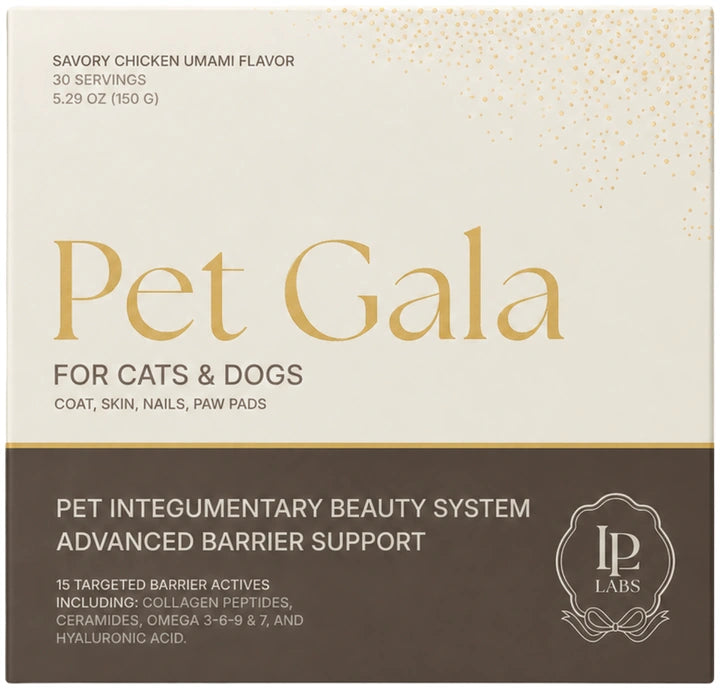
Disclosure: La Petite Labs sells its own pet supplements, including Pet Gala™. This review is editorial: competitor facts are drawn from the public sources listed in the References section, and facts are dated where shown.

What Purina Pro Plan Skin Care is, and who is behind the label

Purina Pro Plan Veterinary Supplements Skin Care Dog Supplements With Omega-3 Fish Oil and EPA and DHA is a canine skin-care supplement sold as daily soft chews. The reviewed variant is identified by retailer listing as 30 Chews (1 Pack), with a 60 Chews (1 Pack) sibling also shown. The brand page text itself does not render a SKU value or selected size, so the practical buying identity is stronger on the retailer listing than on the brand page.

The brand is Purina Pro Plan Veterinary Supplements, and the manufacturer-stated field is Nestle Purina Veterinary Diets. The product is positioned as a Skin Care Canine Supplement for dogs, not as a drug, food, or prescription dermatology product. One of the page claims says no prescription is needed and that Pro Plan Veterinary Supplements can be purchased online, at pet specialty stores, or through a veterinarian.

Its active panel is unusually readable for a soft chew: cod liver oil 570 mg, EPA and DHA 60 mg, evening primrose oil 400 mg, linoleic acid 220 mg, fish collagen 366 mg, vitamin E 60 mg, and zinc 1.2 mg, all stated per 6 g soft chew. That level of active disclosure is useful for buyers who want to compare labels rather than rely only on brand language.

The product's own wording focuses on supporting skin health, the skin's protective barrier, sensitive skin, seasonal allergies, antioxidant support, and immune support. Those are label claims from the brand, not proof of medical outcome for any skin disease. A careful owner should view this as a daily support chew and still involve a veterinarian when symptoms look medical rather than cosmetic.

At a Glance

What is Purina Pro Plan Veterinary Supplements Skin Care for dogs?

It is a dog-only daily soft-chew supplement from Purina Pro Plan Veterinary Supplements, with Nestle Purina Veterinary Diets listed as manufacturer-stated. The reviewed 30 Chews (1 Pack) variant discloses cod liver oil, EPA and DHA, evening primrose oil, linoleic acid, fish collagen, vitamin E, and zinc per 6 g soft chew.

Product
Purina Pro Plan Veterinary Supplements Skin Care Dog Supplements With Omega-3 Fish Oil and EPA and DHA, 30 Chews (1 Pack) soft chews
Category
Dog skin and coat soft-chew supplement
Species
Dogs
Format
undefined
Disclosed actives
Per 6 g soft chew: cod liver oil 570 mg; EPA and DHA 60 mg; evening primrose oil 400 mg; linoleic acid 220 mg; fish collagen 366 mg; vitamin E 60 mg; zinc 1.2 mg.
Price
SRP: $68.97 for the 30 Chews (1 Pack) variant; examples from weight-based dosing: $2.30/day at 1 chew daily, $4.60/day at 2 chews daily, $11.50/day at 5 chews daily.
Best fit
Dog owners who want a Purina veterinary-supplement soft chew with disclosed omega, collagen, vitamin E, and zinc amounts and are comfortable calculating daily cost by weight band.
What to check
Confirm your dog's weight-band chew count, review flavor and fish-derived ingredients if sensitivities matter, and decide whether the lack of public COA, lot lookup, named lab, storage instructions, and serving-count details is acceptable.

Quick Answers

Is Purina Pro Plan Skin Care a good dog skin supplement?

It can be a good fit for owners who want a familiar Purina veterinary-supplement soft chew with full active-amount disclosure and weight-based directions. Its visible strengths are the disclosed multi-active panel and NASC Quality Seal language. Its limitations are public testing readback and logistics details that were not easy to find, including COA, lot lookup, named lab, storage, and servings per container.

What should owners check before buying Purina Skin Care?

Check your dog's weight band first, because dosing ranges from 0.5 chew to 5 chews daily. Then review the inactive ingredients, especially liver flavor, natural flavor, yeast, tapioca starch, and fish-derived actives if your dog has sensitivities. Also note that public COA, lot lookup, named lab, storage instructions, and study references were not easy to find publicly when checked.

What cautions or side effects should dog owners watch for?

The label says to stop administration and consult your veterinarian if the animal's condition worsens or does not improve. It also says safe use in pregnant animals or animals intended for breeding has not been proven, and a veterinary examination is recommended before use. Watch for worsening skin signs, refusal, accidental overdose, or any concern that makes the routine feel wrong for your dog.

How much does Purina Skin Care cost per day?

The reviewed listing shows SRP: $68.97 for the 30 Chews (1 Pack) variant. Daily cost depends on dog size. At 1 chew daily, $68.97 / 30 days = $2.30 per day. At 2 chews daily, $68.97 / 15 days = $4.60 per day. At 5 chews daily, $68.97 / 6 days = $11.50 per day.

How is Pet Gala relevant to a Purina Skin Care shopper?

Pet Gala is relevant if the shopper wants a different transparency profile. La Petite Labs discloses 13 actives at full milligram amounts with no proprietary blends, plus per-batch third-party testing with named labs and a public COA lookup portal. Purina may still fit better for owners who specifically want this Purina dog-only soft chew and NASC seal language.

Does Purina Skin Care require a prescription?

The product page says no prescription is needed and that Pro Plan Veterinary Supplements can be purchased online, at pet specialty stores, or through a veterinarian. That does not mean every dog should start without guidance. The warning language recommends a veterinary examination before use, and skin symptoms that worsen or do not improve should be discussed with a veterinarian.

Is Purina Skin Care for dogs with seasonal allergies?

The brand says the chews help maintain a protective skin barrier to support dogs with sensitive skin, including those with seasonal allergies. That is the label's support language, not proof of medical allergy care. Dogs with persistent itching, redness, paw licking, ear issues, or recurrent skin problems should be evaluated by a veterinarian.

What active ingredients are disclosed on the Purina Skin Care label?

Each 6 g soft chew lists cod liver oil 570 mg, EPA and DHA 60 mg, evening primrose oil 400 mg, linoleic acid 220 mg, fish collagen 366 mg, vitamin E 60 mg, and zinc 1.2 mg. The active panel is fully disclosed and shows no proprietary blends.

The Plain Comparison

Skin Care vs Pet Gala™, side by side

QuestionSkin CarePet Gala™Stronger fit
Which product is more transparent about active amounts?Purina Skin Care discloses seven active entries per 6 g soft chew: cod liver oil 570 mg, EPA and DHA 60 mg, evening primrose oil 400 mg, linoleic acid 220 mg, fish collagen 366 mg, vitamin E 60 mg, and zinc 1.2 mg. No proprietary blends are shown.Pet Gala discloses 13 actives at full milligram amounts on the public product page, with no proprietary blends.Pet Gala is the stronger fit for shoppers who want a broader public active panel. Purina remains a strong fit for shoppers who specifically want this seven-active Purina soft-chew formula.
Which product gives buyers more public testing readback?Purina Skin Care shows the NASC Quality Seal and says it is produced in USA facilities. Public COA, lot lookup, named lab, and specific testing panels were not easy to find publicly when checked.Pet Gala publishes per-batch third-party testing with named labs and a public COA lookup portal. The portal does not yet cover every currently sold SKU, and the public panel does not yet itemize pesticide, mycotoxin, or allergen testing.Pet Gala is stronger for public testing visibility. Purina is stronger for buyers who specifically value NASC Quality Seal language on this product.
Which product is better for a buyer who wants a dog-only soft chew?Purina Skin Care is a dog-only daily soft chew with weight-based dosing from 0.5 to 5 chews per day.Pet Gala is described as a skin, coat, and barrier-support daily system with 13 fully disclosed actives; that does not create the same dog-only Purina soft-chew format.Purina is the stronger fit for someone specifically seeking a dog-only Purina soft chew with a weight-band table.
Which product has finished-product clinical trial evidence?Study references and a finished-product trial were not published on the Purina Skin Care pages checked.La Petite Labs explicitly discloses that no finished-formula clinical trial currently exists on its products; its evidence is ingredient-level.Neither product should be chosen on the basis of visible finished-product clinical trial evidence from the reviewed public materials.
Which product is more appropriate for allergy care?Purina's label mentions sensitive skin and seasonal allergies in support language, but it is positioned as a skin-care supplement and includes cautions to consult a veterinarian if the animal worsens or does not improve.Pet Gala is not a substitute for medicated or prescription dermatology products or allergy immunotherapy.Neither is the stronger fit for active allergy care. A veterinarian is the right first step for active, worsening, or recurrent allergy-like skin signs.

Competitor label and pricing facts checked July 3, 2026. Sources are listed in the References section below.

The genuine appeal of a Purina veterinary soft chew for skin support

The strongest appeal here is not mystery or novelty; it is a familiar veterinary-supplement brand paired with a label that actually lists active amounts. Many pet skin chews advertise omega fatty acids, collagen, or vitamins without making it easy to see the amount per chew. This Purina label gives specific milligram amounts for each active in the Product Facts table, which makes the formula easier to compare.

The second appeal is routine simplicity. The format is a daily soft chew, and the directions are weight-based: 0.5 chew for dogs under 5 lb, 1 chew for 5 to 14 lb, 2 chews for 15 to 35 lb, 3 chews for 36 to 60 lb, 4 chews for 61 to 84 lb, and 5 chews for dogs over 85 lb. That may be more chew volume for large dogs, but it is simple enough for owners who already use daily chews or supplement routines.

The ingredient lanes also line up with common skin-coat buyer priorities. The label contains omega-3 fatty acids from cod liver oil, omega-6 linoleic acid from evening primrose oil, fish collagen, vitamin E, and zinc. The brand describes the product as supporting skin health, the skin's natural protective barrier, dogs with sensitive skin, and dogs with seasonal allergies.

That appeal should stay grounded. The public pages checked did not make a public COA, lot lookup, named lab, specific testing panels, storage instructions, study references, or servings-per-container count easy to find. The product can still be a sensible Purina-format choice for some dog owners, but the buyer has to separate clear label strengths from transparency items that are not publicly visible.

Every active amount on the Purina Skin Care soft-chew label

The label discloses seven active entries per soft chew, and the chew size is stated as 6 g. Cod liver oil is listed at 570 mg per soft chew. EPA and DHA are listed together at 60 mg per soft chew. Evening primrose oil is listed at 400 mg per soft chew. Linoleic acid is listed at 220 mg per soft chew. Collagen, identified as fish collagen, is listed at 366 mg per soft chew. Vitamin E is listed at 60 mg per soft chew. Zinc is listed at 1.2 mg per soft chew.

That is full active disclosure for the listed actives, with no proprietary blends shown. For a buyer, this matters because each lane can be inspected separately. The cod liver oil lane carries the omega-3 source. The EPA and DHA line gives a combined named omega-3 amount. The evening primrose oil and linoleic acid lines speak to omega-6 and barrier-lipid support language. The collagen line adds a structural-protein support angle. Vitamin E and zinc add antioxidant and immune-support positioning.

The label also says the product contains omega-6 linoleic acid and omega-3 EPA and DHA fatty acids to help the skin maintain its natural protective barrier. It says vitamin E provides antioxidant support and zinc offers immune support. Those are the brand's structure-function claims, not a guarantee that a given dog's itching, flaking, licking, or allergy signs will resolve.

One important limitation: the label uses a Product Facts active-ingredient table, not a guaranteed-analysis table. That does not make the product weak, but it changes how a comparison should be read. You can compare the active milligram amounts shown per soft chew; you should not infer guaranteed analysis values that are not published.

What is not visible on the Purina Skin Care public pages

Several buyer-relevant details were not easy to find publicly on the pages checked. Life stage was not published. The brand page did not render a product page SKU value or selected size, even though the retailer listing identified the reviewed item as 30 Chews (1 Pack) and showed a 60 Chews (1 Pack) sibling. Servings per container were not published. That matters because the chew count is not the same as the number of days supplied when dosing ranges from 0.5 to 5 chews per day.

Storage instructions were also not published on the pages checked. For a soft chew containing oils, flavors, glycerin, water, and other inactive ingredients, storage details can matter in normal household use. The absence of public storage language should not be read as proof of a storage problem; it simply leaves the owner without an easy label-based answer.

Testing transparency has additional gaps. The product carries the NASC Quality Seal and says it is produced in USA facilities, but a public COA, lot lookup, named lab, and specific testing-panel statements were not easy to find publicly when checked. That does not prove testing was not performed. It means buyers cannot easily inspect batch-level results or see which panels are used from the public product materials.

The evidence page was also thin from a study standpoint. Study references were not published on the pages checked. The brand makes skin-barrier, sensitive-skin, seasonal-allergy, antioxidant, and immune-support claims, but the public materials reviewed did not provide finished-product study references. A cautious owner should view the product as a disclosed daily skin-support chew, not as a researched dermatology plan.

Which skin-support lanes this formula covers: omega-3, barrier lipids, collagen, vitamin E, and zinc

Purina Skin Care covers several common skin-supplement lanes in one chew. The omega-3 lane is represented by cod liver oil at 570 mg per soft chew and EPA and DHA at 60 mg per soft chew. The brand says the omega-3 EPA and DHA fatty acids help the skin maintain its natural protective barrier. For owners comparing omega products, the combined EPA and DHA amount is the more directly comparable number than fish oil source weight alone.

The barrier-lipid lane is represented by evening primrose oil at 400 mg per soft chew and linoleic acid at 220 mg per soft chew. The product language identifies linoleic acid as omega-6 and says omega-6 and omega-3 fatty acids help the skin maintain its natural protective barrier. This is a coherent label story for dogs whose owners are shopping for coat quality, skin barrier support, and sensitive-skin support rather than a single-ingredient fish oil.

The structural-support lane is represented by fish collagen at 366 mg per soft chew. The brand includes collagen in its multi-active skin-care blend and names it alongside EPA and DHA, vitamin E, and zinc. The label does not publish a finished-product study reference for the chew, so owners should avoid reading the collagen line as proof of a guaranteed coat or skin outcome.

The micronutrient lane is represented by vitamin E at 60 mg and zinc at 1.2 mg per soft chew. The brand says vitamin E provides antioxidant support and zinc offers immune support. Overall, the product is broader than a plain fish-oil chew, but it is not a medicated dermatology product, allergy immunotherapy, or a substitute for diagnosis when itching, redness, odor, hair loss, or recurrent skin issues are present.

“Purina Skin Care's biggest label strength is simple: the active amounts are visible per soft chew.”

Soft-chew routine reality: easy format, higher chew count for bigger dogs

The format is a daily soft chew, which is often easier for pet owners than measuring liquids or opening capsules. The label direction is simple: administer daily based on the size of the dog or as directed by a veterinarian. The brand describes the chews as great-tasting and easy to feed, but taste is still dog-specific. A product can be easy on paper and still be refused by a picky dog.

The practical routine changes sharply by weight. A dog under 5 lb gets 0.5 soft chew daily. Dogs from 5 to 14 lb get 1 soft chew. Dogs from 15 to 35 lb get 2 soft chews. Dogs from 36 to 60 lb get 3 soft chews. Dogs from 61 to 84 lb get 4 soft chews. Dogs over 85 lb get 5 soft chews. That means the reviewed 30-chew pack has very different household meaning depending on dog size.

Because servings per container are not published, owners have to calculate duration from the weight band and chew count they are buying. A small dog in the 5 to 14 lb band would use 1 chew per day, so a 30-chew pack would last 30 days if the reviewed pack contains 30 chews. A dog over 85 lb would use 5 chews per day, so 30 chews would last 6 days. The product pages did not publish an official servings-per-container figure.

Soft chews also bring excipient considerations. This formula lists glycerin, liver flavor, natural flavor, tapioca starch, yeast, psyllium, vinegar, and other inactive ingredients. For many dogs that may be routine. For dogs with known food sensitivities, allergy workups, or strict elimination diets, those flavor and binder ingredients should be reviewed with a veterinarian before adding the chew.

Dog-only directions and the dosing practicalities by weight band

Purina Skin Care is explicitly for dogs only. The warning section says it is for use in dogs only, and the weight table is canine-specific. That matters because skin supplements are sometimes casually shared across pets in a household. This label does not support use for cats or other species, and owners should not extrapolate the dog directions to another animal.

The dosing table is clear, but it is not one-size-fits-all. Dogs under 5 lb receive 0.5 soft chew daily. Dogs 5 to 14 lb receive 1 soft chew. Dogs 15 to 35 lb receive 2 soft chews. Dogs 36 to 60 lb receive 3 soft chews. Dogs 61 to 84 lb receive 4 soft chews. Dogs over 85 lb receive 5 soft chews. The label also allows use as directed by your veterinarian, which is important when the dog has medical history, concurrent medications, pregnancy or breeding considerations, or unclear skin symptoms.

The practical issue is value and compliance. The same 30-chew pack can be a long trial for a tiny dog and a short one for a giant dog. Owners of larger dogs should look at daily chew count before deciding whether the routine is affordable and realistic. If a dog needs multiple chews every day, refusal, digestive fussiness, or household inconsistency can become more likely simply because the routine is larger.

There is also a built-in caution about veterinary oversight. The product warning says that if the animal's condition worsens or does not improve, stop administration and consult a veterinarian. It also says safe use in pregnant animals or animals intended for breeding has not been proven, and that a veterinary examination is recommended prior to using the product. Those cautions are practical, not decorative.

Inactive ingredients and allergy-relevant label reading

The inactive ingredient list is fully visible: citric acid, glycerin, lecithin, liver flavor, microcrystalline cellulose, natural flavor, psyllium, salt, tapioca starch, tocopherols, vinegar, water, and yeast. For many dogs, that may look like a normal soft-chew base. For dogs with sensitive skin, suspected food triggers, or an active elimination diet, it deserves closer reading.

The most allergy-relevant items are the flavor and base ingredients. Liver flavor and natural flavor are not broken down into animal source detail on the public label text. Yeast, tapioca starch, lecithin, glycerin, and psyllium may be ordinary inactive ingredients, but dogs under dietary restriction may need more specificity than the label gives. That does not mean these ingredients are unsafe; it means they may complicate a strict diet trial or ingredient-avoidance plan.

The active list also includes fish-derived components: cod liver oil and fish collagen. For owners specifically avoiding fish ingredients, this product is not a clean fit. For owners seeking fish-based omega and collagen support, those same ingredients may be part of the appeal. The key is matching the ingredient profile to the individual dog rather than viewing skin care as a single universal category.

Because the product language mentions sensitive skin and seasonal allergies, it is especially important not to skip the inactive panel. Dogs with itching or recurrent skin signs may be reacting to environmental allergens, fleas, infection, diet, contact irritants, or other factors. A flavored daily chew can support a routine for some dogs, but it can also introduce ingredients that make a diagnostic diet harder to interpret. When the dog is already in a veterinary skin workup, ask before adding it.

Testing and quality signals: NASC seal, USA facilities, and public-readback limits

The clearest quality signal on the public materials is the NASC Quality Seal. The label says it is certified by the National Animal Supplement Council for meeting quality and compliance standards for pet supplements. For many buyers, that seal is a meaningful baseline because it shows participation in a pet-supplement quality program rather than an anonymous marketplace listing.

The product pages also state that the dog food supplements are produced in USA facilities and frame that as quality and safety language. That is useful country-level manufacturing information, but it is not a named facility disclosure. The public materials checked did not identify a specific facility name, city, or state. That gap should be kept in proportion: country-level facility disclosure is common in this category and is not, by itself, a reason to reject a product. La Petite Labs also discloses manufacturing at country level rather than naming a specific facility, city, or state publicly.

What is less visible is batch-level and lab-level documentation. A public COA was not easy to find. A lot lookup was not easy to find. A named lab was not published. Specific testing panels were not published. Those absences do not prove the product lacks testing, but they do limit what a cautious buyer can verify independently before purchasing.

For comparison, La Petite Labs Pet Gala discloses per-batch third-party testing with named labs and a public COA lookup portal, while also having its own scope limits: the COA lot-lookup portal does not yet cover every currently sold SKU, and the public panel does not yet itemize pesticide, mycotoxin, or allergen testing. Purina's visible strength is the NASC seal and USA facilities claim; Pet Gala's visible strength is more inspectable public testing documentation.

Evidence status for Purina Skin Care: label claims without visible study references

The public product language makes several skin-support claims. It says the chews feature collagen, EPA and DHA, vitamin E, and zinc to proactively support dogs' skin health, including dogs with sensitive skin. It says omega-6 linoleic acid and omega-3 EPA and DHA fatty acids help the skin maintain its natural protective barrier. It also says vitamin E provides antioxidant support and zinc offers immune support.

The label also includes more outcome-flavored language. It describes support for dogs with sensitive skin and those with seasonal allergies, and another line says the product helps maintain a protective skin barrier to support dogs with sensitive skin including those with seasonal allergies. Those are brand statements. They should not be read as medical allergy care, proof of flare control, or a replacement for veterinary dermatology care.

Study references were not published on the pages checked, and no finished-product trial was visible in the public materials reviewed. That matters because an active-ingredient rationale is not the same as a finished-product clinical study. The formula can still be logically assembled around fatty acids, collagen, vitamin E, and zinc, but owners should understand the difference between a transparent active panel and demonstrated finished-product outcomes.

The same standard applies when comparing with Pet Gala. La Petite Labs explicitly discloses that no finished-formula clinical trial currently exists on its products; its evidence is ingredient-level. Pet Gala may be stronger on public testing visibility and broader active disclosure, but it should not be presented as having finished-product clinical evidence that it does not have. For both products, the honest evidence frame is support-oriented and label-based, not disease-outcome proof.

“The same 30-chew pack has very different value for a 12 lb dog than for an 86 lb dog.”

Price and value: $68.97 SRP, but daily cost depends on dog size

The published price found for the reviewed Purina Skin Care listing is SRP: $68.97. The reviewed variant is identified as 30 Chews (1 Pack), with a 60 Chews (1 Pack) sibling shown elsewhere. A subscription price, retailer price, and official servings-per-container count were not published in the checked materials.

Because daily use varies by weight, the per-day cost cannot be reduced to one official number without choosing a dog size. If a 5 to 14 lb dog uses 1 chew per day, the arithmetic from the reviewed 30-chew pack is $68.97 / 30 days = $2.30 per day, rounded to the nearest cent. If a 15 to 35 lb dog uses 2 chews per day, 30 chews last 15 days, so $68.97 / 15 days = $4.60 per day. If a dog over 85 lb uses 5 chews per day, 30 chews last 6 days, so $68.97 / 6 days = $11.50 per day.

That range is the real value story. The same shelf price can feel reasonable for a small dog and expensive for a large dog because the daily chew count changes. Buyers should calculate using their dog's weight band, not the front-of-pack count alone.

The product's value strengths are full active disclosure, a familiar veterinary-supplement brand, NASC Quality Seal language, and a multi-active formula that covers omega-3, omega-6, collagen, vitamin E, and zinc lanes. The value limitations are the lack of public servings-per-container language, no visible subscription price, and limited public testing readback. For a large dog, those limitations matter more because the monthly spend can rise quickly.

Coat-turnover expectations: what a daily chew can and cannot show quickly

Skin and coat changes usually need patience because visible coat quality reflects more than today's supplement. Shedding patterns, hair growth, grooming, bathing products, diet, fleas, environmental allergies, infection, and seasonal change can all affect what an owner sees. The Purina label positions Skin Care as a daily product to promote skin health and support the skin's protective barrier, not as an instant cosmetic fix.

The first few weeks are mostly about tolerance and routine. Does the dog eat the chew? Does the owner give the right number every day? Does the dog show any worsening signs? The label itself says that if the animal's condition worsens or does not improve, stop administration and consult a veterinarian. That is a sensible rule because skin problems can become more complicated when owners wait too long.

For coat quality, a longer observation window is more realistic than expecting a rapid change. Owners may watch for softer coat feel, less dullness, or improved dryness over time, but those observations are subjective. The product pages checked did not publish a finished-product study reference or a time-to-effect claim that would justify a precise timeline. Any 30-, 60-, or 90-day expectation should be viewed as a practical monitoring window rather than a promised result.

If the dog has active itching, redness, odor, crusting, hair loss, hot spots, ear symptoms, paw licking, or seasonal allergy signs, the clock should not be the only plan. Those signs can point to conditions that need veterinary diagnosis. A supplement may be part of a skin-support routine, but it should not delay care when symptoms are persistent, worsening, or uncomfortable.

Who Purina Skin Care genuinely fits

This product is a good fit for dog owners who want a daily skin-support chew from a familiar veterinary-supplement brand and who value a fully disclosed active panel. The label makes it easy to see the per-chew amounts for cod liver oil, EPA and DHA, evening primrose oil, linoleic acid, fish collagen, vitamin E, and zinc. That is a real advantage for buyers who compare formulas.

It also fits owners looking for a broader skin-coat formula rather than a single-source fish oil. The product covers omega-3, omega-6, collagen, antioxidant, and zinc support lanes in one chew. If the dog accepts soft chews and the household can follow the weight-based dosing table consistently, the format is straightforward.

Small and medium dogs may find the routine more practical than very large dogs because the daily chew count is lower. A 5 to 14 lb dog uses 1 chew daily; a 15 to 35 lb dog uses 2; a dog over 85 lb uses 5. For larger dogs, the same product can become a high-chew, higher-cost routine quickly. That does not make it a poor product, but it changes the value equation.

It is not the cleanest fit for owners who need public batch-level COAs, a lot lookup, named lab details, or specific testing panels before purchase. It is also not a clean fit for dogs in strict elimination diets unless the veterinarian approves the inactive ingredients, especially liver flavor, natural flavor, yeast, tapioca starch, and fish-derived actives. The best buyer is someone seeking a disclosed, mainstream soft-chew routine, not a medical substitute or a highly audited testing file.

Who should see a veterinarian first: when itching is more than coat quality

The label itself recommends a veterinary examination prior to using the product. That is especially important when a dog's skin signs are more than mild dryness or coat dullness. Persistent itching, redness, odor, scabs, crusting, hair loss, hot spots, ear discomfort, paw licking, recurrent skin infections, or sudden seasonal flare patterns should be evaluated instead of managed only with a supplement.

The product language mentions dogs with sensitive skin and those with seasonal allergies. Those phrases can be useful shopping cues, but they can also tempt owners to self-manage a dog that needs diagnosis. Seasonal allergies, food reactions, fleas, mites, yeast, bacteria, endocrine conditions, and contact irritants can overlap in appearance. A soft chew cannot sort those causes out.

The warnings give practical stop points. If the animal's condition worsens or does not improve, stop product administration and consult your veterinarian. Safe use in pregnant animals or animals intended for breeding has not been proven. The label also warns that the product is not for human consumption, should be kept out of reach of children and animals, and that a health professional should be contacted immediately in case of accidental overdose.

Owners should also ask first if the dog is on a controlled diet, has known fish or flavor sensitivities, is taking medications, or is already under dermatology care. Those specific conditions are not all listed on the label as adverse events; they are practical reasons to avoid adding a flavored multi-active chew without veterinary context. The product may be useful support, but skin discomfort deserves a lower threshold for professional care.

How Purina Skin Care compares with Pet Gala without pretending they are the same product

Purina Skin Care and La Petite Labs Pet Gala sit in the same broad skin-support category, but they are not identical lanes. Purina is a dog-only soft chew from a veterinary-supplement brand with seven disclosed active entries per 6 g chew: cod liver oil, EPA and DHA, evening primrose oil, linoleic acid, fish collagen, vitamin E, and zinc. Its public appeal is a familiar brand, soft-chew dosing, NASC Quality Seal language, and a multi-active formula focused on fatty acids, collagen, antioxidant support, and zinc.

Pet Gala is described by La Petite Labs as a skin, coat, and barrier-support daily system. Its public page discloses 13 actives at full milligram amounts and no proprietary blends. La Petite Labs also publishes per-batch third-party testing with named labs and a public COA lookup portal. Those are meaningful transparency differences for buyers who want more visible active breadth and more public testing documentation.

The comparison should not turn into a sweep. Purina may be the more natural fit for owners who specifically want Purina Pro Plan Veterinary Supplements, a dog-only veterinary-channel soft chew, NASC seal language, and the exact fatty acid plus collagen profile on this label. Pet Gala may be the stronger transparency fit for owners prioritizing a broader disclosed active panel and public COA lookup with named labs.

Pet Gala also has honest limits. It is not a substitute for medicated or prescription dermatology products or allergy immunotherapy. La Petite Labs explicitly discloses that no finished-formula clinical trial currently exists on its products; its evidence is ingredient-level. Its COA lot-lookup portal does not yet cover every currently sold SKU, and the public panel does not yet itemize pesticide, mycotoxin, or allergen testing. That keeps the comparison useful instead of inflated.

Full disclosed amounts, testing scope, and serving details for the La Petite Labs side of this comparison are on the Pet Gala™ explainer.

The first 90 days on Purina Skin Care: a practical owner checklist

The first 90 days should be viewed as a structured observation period, not a promise window. On day one, confirm the dog's weight band and daily chew count: 0.5 chew under 5 lb, 1 chew for 5 to 14 lb, 2 chews for 15 to 35 lb, 3 chews for 36 to 60 lb, 4 chews for 61 to 84 lb, and 5 chews over 85 lb. If the dog is pregnant, intended for breeding, medically complicated, or already in a skin workup, ask the veterinarian before starting.

During the first two weeks, focus on routine and tolerance. Give the chew consistently according to the label or the veterinarian's direction. Watch whether the dog accepts the flavor and whether any skin signs worsen. The label's own caution is clear: if the animal's condition worsens or does not improve, stop administration and consult your veterinarian.

From weeks three through eight, look for practical signals rather than dramatic conclusions. Coat feel, visible dryness, and skin comfort can be noted, but they are subjective and influenced by grooming, diet, parasites, environment, and season. If itching, odor, redness, paw licking, ear signs, hair loss, or sores are present, do not wait for a supplement trial to answer the medical question.

By around 90 days, the owner should be able to answer three buyer questions: Is the dog consistently taking the chews? Is the cost realistic at this dog's chew count? Has the skin or coat routine improved enough to justify continuing? If the answer is unclear, the next step is not stacking more supplements blindly. It is reviewing the ingredient list, dosing, and symptoms with a veterinarian.

How to read the Purina Skin Care label beside other dog skin supplements

Start with the active table, not the front-of-page claim. Purina Skin Care gives seven active entries per 6 g soft chew: cod liver oil 570 mg, EPA and DHA 60 mg, evening primrose oil 400 mg, linoleic acid 220 mg, fish collagen 366 mg, vitamin E 60 mg, and zinc 1.2 mg. That is the concrete comparison layer. If another product only says with omegas or with collagen without amounts, it is harder to compare.

Next, separate source amounts from specific nutrient amounts. Cod liver oil is listed at 570 mg, while EPA and DHA are listed together at 60 mg. Evening primrose oil is listed at 400 mg, while linoleic acid is listed at 220 mg. Those paired lines are useful because they show both ingredient source and named fatty-acid amount. The label is easier to interpret than one that only names oils.

Then read the inactive ingredient list for the dog in front of you. Liver flavor, natural flavor, yeast, tapioca starch, glycerin, lecithin, psyllium, vinegar, water, salt, citric acid, tocopherols, and microcrystalline cellulose may be ordinary chew ingredients, but they still matter for dogs with food sensitivities or elimination diets. Fish-derived actives also matter for dogs avoiding fish.

Finally, check proof and logistics. Does the brand publish testing details, a COA, a lot lookup, storage instructions, serving count, and study references? For this Purina product, the NASC Quality Seal and USA facilities language are visible, but public COA, lot lookup, named lab, specific testing panels, storage instructions, servings per container, and study references were not easy to find publicly when checked. Those are not automatic dealbreakers, but they are legitimate comparison points.

Bottom line on Purina Pro Plan Veterinary Supplements Skin Care for dogs

Purina Pro Plan Veterinary Supplements Skin Care is one of the more readable soft-chew skin labels because it publishes the active amounts per chew. A buyer can see cod liver oil 570 mg, EPA and DHA 60 mg, evening primrose oil 400 mg, linoleic acid 220 mg, fish collagen 366 mg, vitamin E 60 mg, and zinc 1.2 mg per 6 g soft chew. There are no proprietary blends shown in the active panel.

Its best case is clear: a dog owner wants a familiar Purina veterinary-supplement soft chew for skin, coat, and barrier-support routines, appreciates NASC Quality Seal language, and can follow the daily weight-based dosing. The formula covers omega-3, omega-6, collagen, antioxidant, and zinc support lanes in one chew. For many shoppers, that is a coherent and convenient package.

The reasons to pause are also clear. Servings per container, storage instructions, subscription price, retailer price, study references, public COA, lot lookup, named lab, and specific testing panels were not easy to find publicly on the pages checked. The product's cost per day can also rise sharply for larger dogs because dosing reaches 5 chews daily for dogs over 85 lb.

Compared with Pet Gala, Purina may be the better fit for someone who specifically wants this Purina dog-only soft-chew format and NASC seal language. Pet Gala may be the better transparency fit for someone who wants 13 fully disclosed actives, no proprietary blends, and public COA lookup with named labs. Neither should be viewed as a substitute for veterinary diagnosis, medicated dermatology care, or allergy immunotherapy when a dog has active or worsening skin signs.

“NASC seal language is useful, but it is not the same thing as public batch-level test results.”

Educational content only. This material is not a substitute for veterinary advice. Always consult your veterinarian about your dog’s specific needs. These statements have not been evaluated by the Food and Drug Administration. Products mentioned are not intended to diagnose, treat, cure, or prevent any disease.

Glossary

EPA and DHA

Named omega-3 fatty acids listed together at 60 mg per soft chew on the Purina Skin Care label.

Linoleic acid

An omega-6 fatty acid listed at 220 mg per soft chew and tied by the brand to skin-barrier support language.

Cod liver oil

The fish-oil source listed at 570 mg per soft chew; the label separately lists EPA and DHA at 60 mg.

NASC Quality Seal

A pet-supplement certification claim shown on the product page; it is a quality-program signal, not a finished-product clinical trial.

Public COA lookup

A way for buyers to inspect certificate-of-analysis information publicly; this was not easy to find for Purina Skin Care, while Pet Gala has a public COA lookup portal with stated scope limits.

Product Facts table

The label format used here to list active ingredients and amounts per 6 g soft chew, rather than a guaranteed-analysis table.

Seasonal allergy wording

Brand language that may describe support for dogs with seasonal allergy concerns but should not be read as medical allergy care.

Servings per container

The number of days a package lasts at the directed dose; this was not published, and the actual duration depends on the dog's weight band.

Related Reading

References

References

Sources for the Skin Care Dog Supplements With Omega-3 Fish Oil and EPA and DHA facts on this page

Competitor label, pricing, and claims facts on this page come from these public sources. Links are provided for verification.

FAQ

La Petite Labs

Discover LPL-01: How This Fits Into a Complete Canine Integumentary Support System

Skin, coat, and nails aren’t cosmetic features. They’re the visible surface of deeper biological systems—barrier function, hydration balance, structural protein turnover, and lipid integrity—working in concert.

When these systems fall out of sync, it shows: dull coat, shedding, dryness, brittleness, sensitivity.

This article explores one piece of that puzzle. If you want to understand how true coat quality and skin resilience are built—and what actually moves the needle—you need to zoom out.

Start with the underlying science: