
5 Coat Warning Signs of Illness in Dogs & Cats
Read full insightHyperthyroidism Coat Changes in Cats: Hair Loss Explained
Connect the matted, shedding coat to thyroid disease and weight loss.
By La Petite Labs Editorial 15 min read

Yes — hyperthyroidism can change a cat's coat and even cause hair loss, and in older cats it often shows up first as a suddenly matted, greasy, "unkempt" coat in a cat who is also losing weight. The mechanism is straightforward: too much thyroid hormone speeds the metabolic rate and skin-barrier turnover, so the coat dulls, mats, and sheds while calories burn off faster than the cat can eat. When that coat change arrives with a bigger appetite, nighttime restlessness, or a racing heart, it is a practical reason to ask for thyroid testing — not just a grooming problem.
This page connects what you see to what thyroid hormone is doing inside: why the fur feels oily or thin, why some cats shed heavily without bald patches, and how to document the right cues for your vet — separating these signs from overgrooming, food allergy, and miliary dermatitis. Hyperthyroidism needs veterinary diagnosis and monitoring, but many cats show real coat recovery once hormone levels return to a balanced range.
- Yes, hyperthyroidism can cause coat changes and hair loss — classically matting, greasiness, dandruff, or thinning with weight loss despite a big appetite.
- Excess thyroid hormone speeds renewal and leaves less stamina for thorough grooming.
- Most useful home clues: a weight trend, appetite intensity, photos of coat texture, and grooming-behavior notes.
- Coat changes overlap with overgrooming, food allergy, fleas, and miliary dermatitis — pattern and context decide.
- Diagnosis starts with an exam and thyroid blood testing, often with baseline bloodwork to check overall health.
- Treatment (methimazole or radioiodine) targets a balanced range; coat quality usually improves over weeks to months.
- Never adjust medication based on the coat alone — follow-up testing and clear vet communication protect comfort and safety.
Why a Matted Coat with Weight Loss Raises Flags
Hyperthyroid coat changes look "unkempt" rather than simply old. When thyroid hormone runs high, the renewal rate speeds up, appetite rises, and calories burn faster — so weight drops even while the bowl empties. That same push leaves less overhead for careful self-grooming and normal skin-oil balance, so fur separates, feels greasy, or forms small mats. These are visible clues the whole body is running too fast, not cosmetic-only changes.
At home, the first sign is often "something looks off" in photos: a scruffier back and rump, a thinner outline. Some cats shed so much that tufts collect on bedding, a pattern owners search as cat losing fur hyperthyroidism, even before bald spots appear. You may also see more dandruff on dark furniture, a stronger body odor, or a coat that feels rough against the grain. Paired with weight loss in an older cat, that combination makes a thyroid check the practical next step.
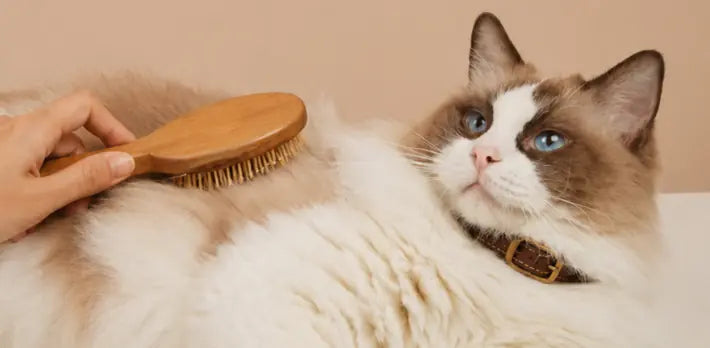
A Classic Senior-cat Pattern: Scruffy Fur and Hunger
The “matted coat + weight loss” pattern matters because it is easy to mislabel as normal aging. Many senior cats slow down, but hyperthyroid cats often look busy and hungry while still getting thinner. Coat quality can also shift because the skin and hair follicles are cycling faster, and the cat may spend less time doing the slow, methodical grooming that keeps guard hairs aligned. Hyperthyroidism is common in older cats, and population studies have examined breed and coat characteristics as risk factors, underscoring how often coat observations lead to diagnosis (Crossley, 2017).
CASE VIGNETTE: A 13-year-old cat starts finishing meals, begging at night, and losing weight, but the owner’s main worry is new mats along the lower back. Brushing helps for a day, then the coat clumps again and feels oily. A routine exam finds a fast heart rate and a thyroid test confirms hyperthyroidism. This is a classic way cat thyroid coat changes announce a treatable endocrine problem.

Does Hyperthyroidism Cause Hair Loss in Cats? Shedding vs. Thinning
Does hyperthyroidism cause hair loss in cats? It can — and the pattern is often confusing, looking both messy and thin at once. Some cats shed heavily with no obvious bald patches; others develop patchy thinning where mats tug hairs out at the root. A few overgroom, which mimics allergy-driven loss. Context decides: when coat decline rides alongside weight loss, a bigger appetite, restlessness, or a racing heart, thyroid disease moves up the list.
OWNER CHECKLIST: Look for (1) new mats on the lower back or belly, (2) a greasy feel or dandruff that returns quickly after brushing, (3) more fur on bedding or in the vacuum, (4) weight loss despite a strong appetite, and (5) a cat that seems "wired" or vocal at night. Note whether the change is seasonal or sudden, and whether the cat is grooming less or licking frantically — that is what separates ordinary shedding from a thyroid pattern that deserves testing.

What Thyroid Hormone Does to Skin and Hair
Thyroid hormone affects more than weight; it influences skin oil production, heat output, and how quickly hair follicles cycle. When levels are high, the body prioritizes constant energy use, and the coat can become less balanced: oils may feel heavier, while the hair shaft can become more fragile. Nutrient status can also matter, because hair is protein-rich tissue and relies on trace elements; research in hyperthyroid cats has evaluated amino acids and minerals like iodine and selenium in relation to coat and overall status (Sabatino, 2013).
In the home routine, this biology shows up as a coat that “won’t stay nice.” Owners may bathe or brush more often, yet the fur still separates into spikes or clumps within days. Some cats feel warmer to the touch or seek cool floors, which can go along with the same hormonal drive that changes coat texture. If dandruff, greasiness, and weight loss arrive together, it is more useful to document the pattern than to keep changing shampoos or diets without a diagnosis.

A Misconception: It’s Not Only a Grooming Problem
A common misconception is that cat thyroid coat changes are “just from not grooming,” as if the solution is only brushing. Grooming does matter, but hyperthyroidism can change the coat from the inside out by shifting skin oils, hair cycling, and the cat’s stamina for long grooming sessions. Another misunderstanding is assuming any hair loss is allergy; food allergy in cats can cause itching and overgrooming, but it usually does not explain rapid weight loss with a big appetite. Correctly labeling the pattern helps owners choose testing rather than trial-and-error.
When a cat is losing fur, hyperthyroidism is only one possibility, so the “why now?” question matters. A cat with seasonal shedding may look fluffy one month and thin the next, but the skin usually looks calm and the cat’s weight stays stable. With Hyperthyroidism Coat Changes in Cats, the coat decline tends to track with body changes—thinner hips, more muscle loss over the spine, and a hungrier, more restless daily rhythm. That combination is the reason veterinarians take coat complaints seriously in seniors.
“A suddenly unkempt coat can be an early endocrine clue.”
When Scabs and Itch Complicate the Picture
Some cats with hyperthyroidism also develop itchy skin patterns that overlap with other conditions. For example, feline miliary dermatitis can look like tiny scabs along the back, and it is often linked to fleas or allergy—but a hyperthyroid cat may have less grooming depth and more skin oil changes that make the coat feel dirty and the skin more reactive. Separately, the skin barrier depends on proteins and tight junctions; when owners read about filaggrin tight junctions and the skin barrier in cats, it helps to remember that endocrine disease can indirectly affect how “comfortable” skin feels.
At home, it helps to check whether the cat is truly itchy or simply unkempt. Itch looks like frequent licking, chewing at the base of the tail, or sudden scratching fits that interrupt rest. An unkempt coat looks like reduced grooming time, mats that form where the cat can’t reach easily, and a greasy feel without obvious redness. If scabs, ear debris, or intense itch are present, that information should be brought to the appointment because it changes the testing plan.

Diagnosis: Matching Lab Results to What You See
Diagnosis starts with a physical exam and a thyroid hormone blood test, but the coat complaint can guide what else gets checked. Hyperthyroid cats often have a fast heart rate, a thin body condition, and sometimes a palpable thyroid nodule. Because weight loss and coat changes can also occur with kidney disease or diabetes, veterinarians commonly pair thyroid testing with baseline bloodwork and urinalysis. This is not “extra”; it helps interpret the whole picture so treatment choices are safer and more tailored. (see our Cat Body Condition Calculator →)
WHAT TO TRACK: Document (1) weekly weight on a baby scale, (2) appetite level and food amount offered, (3) water intake changes, (4) stool volume and frequency, (5) coat feel (greasy, dry, matted) with photos in the same lighting, and (6) grooming behavior—less grooming versus frantic licking. These outcome cues make it easier for a veterinarian to connect hyperthyroid cat fur changes to the timeline of weight and behavior shifts.

Preparing for the Vet Visit with Useful Details
Owners sometimes expect a single “yes/no” test, but thyroid testing can require interpretation in older cats. Total T4 is often the first step, and if results are borderline while signs are strong, a veterinarian may recommend repeat testing or additional thyroid measurements. The coat can be a useful clue here: when cat thyroid coat changes are new and paired with clear weight loss, the odds of a meaningful thyroid problem rise. The goal is not to chase numbers; it is to match lab results to what the cat is showing at home.
VET VISIT PREP: Bring (1) a short timeline of weight and coat changes, (2) photos of mats, dandruff, or thinning areas, (3) notes on appetite, thirst, and nighttime vocalizing, and (4) a list of any flea control, diet changes, or grooming products used recently. Ask: “Could this be Hyperthyroidism Coat Changes in Cats, allergy, or overgrooming?” and “What tests best separate those causes?” Clear handoff details reduce repeat visits and guesswork.

Treatment Basics and Why Coat Changes Lag Behind
Treatment aims to bring thyroid hormone back into a more balanced range, and coat quality often follows. One common medical approach uses methimazole, which blocks thyroid hormone production by inhibiting thyroid peroxidase–mediated steps in hormone synthesis (Unknown, 2020). This mechanism matters for owners because it explains why the coat does not change overnight: hair follicles need time to cycle, and the body needs time to shift from “too fast” back toward normal. Treatment choice depends on the cat’s overall health and the family’s ability to monitor.
At home, medication success is often first seen in appetite and weight, then in coat texture. Owners may notice less ravenous begging, fewer hair tufts on blankets, and a coat that lies flatter after brushing. Because dosing is individualized, follow-up blood tests are part of the plan, not a sign something went wrong. If vomiting, poor appetite, or sudden lethargy appears after starting therapy, that should be reported promptly because it can change the approach.
Transdermal Options and Home Handling Mistakes
Methimazole can be given orally or as a transdermal gel applied to the inner ear, which some cats accept more easily. Long-term follow-up work supports that transdermal methimazole is used in practice and requires ongoing monitoring of thyroid status and side effects (Boretti, 2014). The key point for coat-focused owners is that the route does not change the goal: consistent hormone control over weeks to months so the skin and hair cycle can normalize. A cat that looks “scruffy” is not failing treatment; it may simply be early in recovery.
WHAT NOT TO DO: (1) Do not change the dose based on coat appearance alone, (2) do not apply transdermal medication to broken or inflamed ear skin, (3) do not skip recheck labs because the cat “seems better,” and (4) do not start multiple new diets, flea products, and shampoos at the same time—those changes blur cause and effect. If the coat worsens suddenly during treatment, it is more useful to call the clinic than to experiment at home.
“Coat recovery usually lags behind weight and appetite changes.”

Clinical Vignette of When Skin Changes Point Deeper Than the Surface
Maverick, a 4-year-old Siamese cat, was brought in for hair loss across his lower abdomen and red, flaky skin lesions that had progressed over the previous month. His owners were unsure whether he was itchy or overgrooming.
Examination showed broken hairs, abdominal alopecia, and lesions consistent with bacterial skin infection. Further testing ruled out fleas, FeLV/FIV, and common fungal causes. Because his grooming pattern suggested deeper discomfort, his veterinarian continued the workup.
Radiographs and urinalysis revealed bladder stones, crystalluria, and blood in the urine. Maverick’s overgrooming was linked to urinary pain — a case where skin changes were secondary to an internal problem.
His care required a staged plan: stabilizing the skin infection, surgically removing the bladder stones, managing pain, transitioning to a therapeutic diet, and supporting skin-barrier recovery with appropriate nutrition and fish oil.
Hair regrowth began by 8 weeks. By 6 months, his coat had fully recovered, with no recurrence after the urinary issue was resolved.
Clinical takeaway: Maverick’s case shows why feline coat loss and overgrooming deserve careful veterinary investigation. Skin and coat health can reflect pain, stress, nutrition, infection, barrier weakness, or internal disease — not just surface-level grooming behavior.
Single-case vignette. Not generalizable. Veterinary diagnosis and oversight are essential for overgrooming, hair loss, skin lesions, urinary signs, pain, or suspected infection.

Side Effects That Matter More Than the Coat
Safety monitoring is a real part of hyperthyroidism care, and it protects the cat’s long-term comfort. Methimazole can cause clinically important adverse effects, including liver and blood-related problems, so veterinarians use scheduled bloodwork and symptom check-ins to catch issues early (Mastrangelo, 2025). This is especially relevant when the original complaint is cat losing fur hyperthyroidism, because new lethargy, pale gums, or bruising would not be “coat-related” but could signal a medication complication. Owners do not need to memorize rare side effects; they need a clear plan for what to report.
At home, watch for appetite drop, vomiting, diarrhea, facial itching, or a sudden change in energy after medication changes. Also note whether the cat stops grooming entirely, hides, or seems weak—those are bigger signals than a few extra mats. Keep a simple log of dosing times and any missed doses, because inconsistent dosing can make the coat look “up and down.” A calm, consistent routine supports clearer recheck results and a safer path to coat recovery.

Radioiodine and the Risk of Going Too Low
Radioiodine (iodine-131) is another common treatment option that can provide long-lasting control by targeting overactive thyroid tissue. After radioiodine, some cats become euthyroid while others can become iatrogenically hypothyroid, and thyroid status after treatment can influence outcomes and follow-up needs (Cox, 2025). For coat-focused owners, this matters because both too much and too little thyroid hormone can affect hair and skin comfort. The goal is a middle zone where weight stabilizes and the coat regains a smoother, less uneven feel.
In daily life, post-treatment expectations should include a transition period. The cat may gain weight gradually, sleep more normally, and become less frantic about food. Coat changes often lag behind those shifts; mats may still need gentle combing while new hair grows in. If the coat becomes very dry, the cat seems sluggish, or weight climbs quickly, those are reasons to ask whether thyroid levels have swung too low after treatment.

How Long Coat Recovery Usually Takes
Coat recovery is measured in weeks to months, not days. Once thyroid hormone is controlled, the skin's oil balance and the hair-follicle cycle have time to settle, and grooming often returns because the cat feels better and has the stamina for it. Owners usually notice less dandruff first, then fewer new mats, then a softer feel as new coat replaces old brittle hair. Knowing that timeline prevents discouragement and the urge to keep switching tools or foods.
Support comfort while the coat catches up: short, gentle brushing that does not pull thin skin, focused on mat-prone areas like the lower back, armpits, and belly. Tight mats are safer clipped by a professional than cut with scissors at home. Tracking coat texture weekly with the same comb and lighting makes the improvement trend easy to see.
Sorting Thyroid Changes from Allergy and Fleas
Not every coat problem in a senior cat is thyroid-related, and that is where careful pattern-reading helps. Food allergy in cats typically drives itch—licking the belly, chewing paws, or recurrent ear issues—while Hyperthyroidism Coat Changes in Cats more often look like reduced grooming depth plus weight loss and a “wired” appetite. Overgrooming can happen in both, but the emotional tone differs: allergy itch is urgent and repetitive, while hyperthyroid restlessness is whole-body. Sorting these patterns helps owners avoid months of diet trials when a thyroid test is the faster answer.
If the cat has scabs, consider flea control and ask the veterinarian about feline miliary dermatitis, especially if the rump is affected. If the cat has symmetrical belly thinning with lots of licking, the cat overgrooming differential becomes more important. If the coat is greasy and matted with clear weight loss, thyroid testing deserves priority. These are not competing explanations; they are branches of a decision tree that starts with what the owner can see.
Nutrition Questions Owners Ask During Weight Loss
Nutrition questions often come up because owners notice weight loss and assume the coat is “missing something.” Hyperthyroidism can change how the body uses nutrients, and research has examined amino acids and trace elements in hyperthyroid cats as part of understanding their overall status (Sabatino, 2013). Still, adding supplements without a diagnosis rarely fixes cat thyroid coat changes, because the main driver is hormone excess. The most effective nutrition step is usually ensuring the cat eats consistently while the veterinarian addresses the thyroid problem.
At home, focus on predictable meals and accurate measurement rather than constant food switching. Sudden diet changes can cause stomach upset and make it harder to interpret appetite shifts once treatment starts. If the cat is ravenous, stealing food, or waking the household at night, write those details down; they help confirm that weight loss is not simply “picky eating.” Coat recovery is more likely when the cat’s calories, hydration, and thyroid levels are all moving toward a gentler, more balanced state.

Coat Type, Risk Factors, and What They Really Mean
Some owners worry that coat color or hair length “caused” the disease, especially after reading about risk factors. Studies have evaluated breed and coat characteristics as risk factors for feline hyperthyroidism, but these are associations that help researchers understand patterns, not a reason to blame a cat’s coat (Crossley, 2017). The practical takeaway is simpler: coat observations are valuable early warning signals. A long-haired cat may show mats sooner, while a short-haired cat may show dandruff and a greasy feel first.
In multi-cat homes, compare body condition and coat texture between cats eating similar diets. If one older cat is thinning and looking scruffy while others look normal, that contrast is meaningful. Owners can also check whether the cat is grooming less because of arthritis pain; limited flexibility can worsen mats and can coexist with thyroid disease. Bringing these observations to the veterinarian helps separate “can’t groom” from “doesn’t groom because the body feels unwell.”

Rechecks: Keeping Hormones in the Comfortable Middle
Follow-up is where coat quality and medical safety meet. Whether treatment is medication or radioiodine, veterinarians recheck thyroid levels and often kidney values because changing thyroid hormone can reveal or unmask kidney issues in some cats. Owners should also understand that “too low” thyroid levels after definitive treatment can happen and may need correction, because hypothyroid states can affect energy and coat quality (Cox, 2025). The goal is not the lowest number; it is a cat that eats normally, maintains weight, and has a comfortable skin-and-coat routine.
For home monitoring, keep the same scale, the same food measuring cup, and the same grooming schedule for a month at a time. Track outcome cues like weight trend, appetite intensity, stool volume, and coat mat frequency rather than daily fluctuations. If the cat’s coat suddenly becomes very dry or the cat becomes unusually sleepy, that should be documented and shared. Consistent documentation makes recheck appointments more efficient and decisions more confident.
Putting It All Together for a Clear Next Step
Hyperthyroidism Coat Changes in Cats are best viewed as a visible “dashboard light” for an internal hormone problem. When thyroid hormone is brought back into range, many cats regain weight, settle into a calmer daily rhythm, and gradually grow a coat that is easier to keep clean and unmatted. The coat may never look exactly like kitten fur again, but it often becomes noticeably less greasy and less clumpy. The most important step is timely diagnosis and a monitoring plan that keeps the cat safe.
If an older cat is losing weight and the coat is changing quickly, schedule a veterinary visit rather than waiting for the next grooming cycle. Bring photos, a weight log, and notes on appetite and grooming behavior. If itch, scabs, or ear issues are present, mention them so allergy, fleas, and miliary dermatitis are considered alongside thyroid disease. A clear, shared plan helps the household support both comfort and long-term stability.
“Documenting patterns beats guessing when multiple causes overlap.”
Educational content only. This material is not a substitute for veterinary advice. Always consult your veterinarian about your dog’s specific needs. These statements have not been evaluated by the Food and Drug Administration. Products mentioned are not intended to diagnose, treat, cure, or prevent any disease.
Glossary
- Hyperthyroidism - Overproduction of thyroid hormones, common in older cats.
- Total T4 - A common blood test measuring circulating thyroxine to screen for hyperthyroidism.
- Euthyroid - Thyroid hormone levels in a normal, balanced range.
- Iatrogenic Hypothyroidism - Thyroid hormone levels that become too low due to treatment.
- Hair Follicle Cycle - The repeating phases of hair growth, rest, and shedding.
- Sebum - Natural skin oil that affects coat feel and shine.
- Miliary Dermatitis - A pattern of many tiny scabs, often linked to fleas or allergy.
- Overgrooming - Excess licking or chewing that removes hair; can be itch-driven or behavior-driven.
- Transdermal Medication - Medicine absorbed through the skin, often applied to the inner ear in cats.
Related Reading
Common Feline Integumentary Issues
• Cat Dandruff
• Why Is My Cat Shedding So Much
• Cat Hair Loss
Comfort & Recovery
• Skin & Coat Supplements for Cats
• Cat Nail Supplement
• Best Supplements for Cat Shedding
Ingredient-Level Articles
• Biotin for Cats
• Silica for Cats
• Hyaluronic Acid for Cats
• Ceramides for Cats
References
Sabatino. Amino acid, iodine, selenium, and coat color status among hyperthyroid, Siamese, and age-matched control cats. PubMed. 2013. https://pubmed.ncbi.nlm.nih.gov/23952659/
Boretti. Transdermal application of methimazole in hyperthyroid cats: a long-term follow-up study. PubMed. 2014. https://pubmed.ncbi.nlm.nih.gov/24174499/
Crossley. Breed, Coat Color, and Hair Length as Risk Factors for Hyperthyroidism in Cats. PubMed Central. 2017. https://pmc.ncbi.nlm.nih.gov/articles/PMC5508346/
Cox. Survival of radioiodine treated hyperthyroid cats that are euthyroid and hypothyroid after treatment, and effect of levothyroxine supplementation on survival time of cats with iatrogenic hypothyroidism. PubMed. 2025. https://pubmed.ncbi.nlm.nih.gov/39831449/
Unknown. Methimazole. 2020. https://www.ncbi.nlm.nih.gov/books/NBK548406
Mastrangelo. Adverse side effects, including agranulocytosis and anemia, from methimazole treatment of a hyperthyroid cat. PubMed Central. 2025. https://pmc.ncbi.nlm.nih.gov/articles/PMC11770607/
FAQ
Does hyperthyroidism cause coat changes in cats?
Yes—an overactive thyroid often changes a cat's coat, making it look messy, matted, greasy, or thin, frequently alongside weight loss. The coat may feel rough, shed more, or develop dandruff that returns quickly after brushing. This happens because thyroid hormone affects the whole body, including skin oils, hair cycling, and a cat's stamina for long grooming sessions. A changing coat is a visible clue that an internal hormone problem may need veterinary testing.
Why does a hyperthyroid cat’s coat get matted?
Mats form when hairs stop lying smoothly together. In hyperthyroidism, the coat can become oilier or more brittle, and many cats groom less thoroughly because they feel restless, overheated, or simply run out of stamina for slow grooming.
At home, mats often show up first on the lower back, belly, and armpits—areas that need flexibility and time to groom. When matting appears together with weight loss and a big appetite, cat thyroid coat changes should be considered.
Can hyperthyroidism cause hair loss in cats?
Yes, cat losing fur hyperthyroidism can happen, but it does not always look like obvious bald spots. Many cats shed more or have thinning from hair breakage where mats pull on the coat. Some cats also lick more, which can remove hair even without visible skin redness.
Hair loss from allergy or fleas is usually driven by itch and often comes with scabs or ear issues. Hair loss paired with weight loss, hunger, and restlessness fits hyperthyroid patterns more closely and deserves thyroid testing.
How is hyperthyroid cat fur different from normal shedding?
Normal shedding is often seasonal and the coat still feels clean and lies flat after brushing. Hyperthyroid cat fur changes tend to look “unkempt”: greasy feel, dandruff that returns quickly, and mats that re-form soon after grooming.
The biggest separator is the rest of the cat. If the cat is losing weight, eating more than usual, vocalizing at night, or acting unusually busy, the coat change is less likely to be simple shedding and more likely to be endocrine-related.
What home signs should be tracked with coat changes?
Track outcome cues that connect the coat to whole-body changes: weekly weight, appetite intensity, water intake, stool volume, and grooming behavior (less grooming versus frantic licking). Add photos of the coat in the same lighting each week.
This documentation helps a veterinarian decide whether Hyperthyroidism Coat Changes in Cats are likely, or whether itch-driven problems like fleas, food allergy in cats, or feline miliary dermatitis should be prioritized.
Could food allergy cause similar coat changes in older cats?
Food allergy in cats can cause hair loss and a rough coat, but it usually centers on itch: belly licking, face rubbing, paw chewing, or recurrent ear debris. Weight loss can happen, but it is not typically paired with a dramatically increased appetite.
With cat thyroid coat changes, the coat often looks greasy or matted while the cat becomes thinner and hungrier. When both patterns seem possible, a veterinarian may recommend thyroid testing alongside a skin and parasite assessment.
Does overgrooming happen with hyperthyroidism in cats?
It can. Some hyperthyroid cats lick more because they feel restless or uncomfortable, which can mimic allergy-related overgrooming. That is why the cat overgrooming differential is helpful: it separates itch-driven licking from behavior-driven or endocrine-driven licking.
Owners can note whether licking is focused on one itchy area (common with fleas or allergy) or is more generalized and paired with weight loss and a big appetite (more suggestive of hyperthyroidism).
What tests confirm thyroid-related coat changes in cats?
A veterinarian typically starts with a physical exam and a blood test for thyroid hormone (often total T4). Depending on results and signs, repeat testing or additional thyroid measurements may be recommended to clarify borderline cases.
Because older cats can have more than one condition at once, baseline bloodwork and urinalysis are commonly paired with thyroid testing. This helps interpret weight loss and coat changes in a safer, whole-cat way.
How quickly does the coat improve after treatment starts?
Appetite and weight trend often shift before the coat does. Coat quality usually improves over weeks to months because hair follicles need time to cycle and replace older, brittle hair with new growth.
Owners may first notice less dandruff and fewer new mats, then a softer feel and a coat that lies flatter after brushing. Hyperthyroidism Coat Changes in Cats rarely resolve in a single shedding cycle, even with good hormone control.
Can methimazole help coat quality in hyperthyroid cats?
Methimazole is commonly used to control feline hyperthyroidism by blocking steps in thyroid hormone production(Unknown, 2020). When hormone levels move back toward a balanced range, many cats gradually regain weight and grooming depth, and coat quality often follows.
Coat changes alone should not be used to adjust dosing. Recheck blood tests and symptom updates guide safe dosing decisions, especially if vomiting, appetite changes, or unusual tiredness appear after starting or changing medication.
Is transdermal methimazole safer or easier for cats?
Transdermal methimazole is used as an alternative to oral dosing for some cats and still requires monitoring of thyroid status and side effects(Boretti, 2014). It can be easier for households when a cat resists pills, but it is not “set and forget.”
Owners should apply it exactly as prescribed and avoid placing it on irritated ear skin. If the coat is still messy early on, that does not mean the route failed; hair and skin often lag behind hormone changes.
What side effects should owners watch for on methimazole?
Methimazole can cause side effects ranging from stomach upset to more serious liver or blood-related problems, which is why veterinarians schedule follow-up checks(Mastrangelo, 2025). Concerning signs include appetite drop, vomiting, diarrhea, facial itching, unusual bruising, pale gums, or sudden lethargy.
A worsening coat alone is not a classic emergency sign, but a sudden whole-body change is. Reporting symptoms early helps the veterinarian decide whether to adjust the plan or run additional tests.
Can radioiodine treatment affect a cat’s coat afterward?
Yes. After radioiodine, some cats become euthyroid while others can become iatrogenically hypothyroid, and thyroid status after treatment can influence follow-up needs(Cox, 2025). Both high and low thyroid hormone states can affect energy, skin oils, and hair cycling.
If the coat becomes very dry and the cat seems unusually sleepy or gains weight quickly, that pattern should be shared with the veterinarian. Post-treatment lab checks help confirm whether hormone levels are in a comfortable range.
Is a greasy coat a strong sign of hyperthyroidism?
A greasy coat can be part of cat thyroid coat changes, but it is not specific by itself. Greasiness can also occur with poor grooming from arthritis pain, obesity, dental disease, or skin infections.
It becomes more meaningful when paired with weight loss, increased appetite, restlessness, or nighttime vocalizing. The most reliable next step is a veterinary exam and thyroid testing rather than trying multiple grooming products at home.
Can senior cats look scruffy from aging alone?
Yes, aging can reduce flexibility and grooming time, leading to mild matting or dandruff. However, aging alone usually does not cause rapid weight loss with a strong appetite.
When an older cat becomes thinner while the coat declines quickly, Hyperthyroidism Coat Changes in Cats should be on the shortlist. A veterinarian can help separate normal senior changes from treatable endocrine disease and pain-related grooming limits.
Do coat color or hair length change hyperthyroidism risk?
Research has evaluated breed, coat color, and hair length as risk factors for feline hyperthyroidism, showing associations in large populations(Crossley, 2017). These findings help describe patterns, but they do not mean a particular coat “causes” the disease.
In practical terms, long-haired cats may show mats sooner, while short-haired cats may show dandruff and a greasy feel first. Regardless of coat type, weight loss plus coat decline is the combination that deserves testing.
What grooming is safe while treating hyperthyroidism?
Gentle, short brushing sessions are safest, especially if the cat has lost weight and the skin feels thinner. Focus on mat-prone areas and stop if the cat becomes irritated, since stress can worsen restlessness and reduce grooming cooperation.
Tight mats close to the skin are better clipped by a professional than cut with scissors at home. As hormone levels become more balanced, many cats regain grooming depth and the coat becomes easier to maintain.
When should a vet be called about coat and weight loss?
A veterinary visit is warranted when an older cat shows new matting, greasy coat, or shedding plus weight loss, especially with increased appetite or restlessness. These are classic signals that a thyroid check could change the plan quickly.
Urgent contact is appropriate if the cat stops eating, vomits repeatedly, becomes very weak, has pale gums, or seems to struggle to breathe. Those signs are not “coat issues” and should not wait for a grooming appointment.
Can hyperthyroidism and skin allergy happen at the same time?
Yes. A cat can have hyperthyroidism and also have fleas, food allergy in cats, or environmental allergy. That overlap can make the coat look worse than expected and can add scabs or intense itch to the picture.
This is where documenting itch behaviors helps: frequent scratching fits, ear debris, or scabs suggest an added skin problem. Treating the thyroid condition may improve grooming stamina, but itch still needs its own diagnosis and plan.
How do skin barrier topics relate to thyroid coat changes?
Owners reading about filaggrin tight junctions and the skin barrier in cats are learning how skin holds moisture and blocks irritants. Thyroid disease does not target those proteins directly in most cats, but hormone imbalance can shift skin oils, grooming behavior, and overall comfort.
When the coat is greasy, matted, or flaky, the barrier can feel “off” even without obvious redness. A veterinarian can help decide whether the primary driver is endocrine (thyroid) or dermatologic (parasites, allergy, infection).
What is the best decision framework for worried owners?
Start with the combination: coat change plus weight change. If the cat is losing weight with a strong appetite and looks unkempt, prioritize thyroid testing and baseline bloodwork. If the main feature is itch with scabs or ear issues, prioritize parasites and allergy evaluation while still considering thyroid in seniors.
Use documentation rather than memory: weekly weight, photos, and a short symptom timeline. This approach turns Hyperthyroidism Coat Changes in Cats from a vague worry into clear information a veterinarian can act on.

Discover LPL-01: How This Fits Into a Complete Feline Integumentary Support System
Skin, coat, and nails in cats are not surface traits. They reflect deeper biological systems—barrier integrity, hydration dynamics, lipid balance, and structural protein turnover—working in coordination.
When these systems drift, the signs are subtle but telling: reduced coat softness, increased shedding, dryness, brittle claws, changes in grooming behavior.
This article explores one piece of that system. If you want to understand how true coat quality and skin resilience are built in cats—and what actually drives visible improvement—you need to zoom out.
Start with the underlying science:
- Feline Skin & Coat Framework →
A structured view of how skin, coat, and claw health are maintained across collagen synthesis, lipid nourishment, and barrier function. - Barrier Protection Coverage Modeling →
A systems-level map of which integumentary pathways are most vulnerable—and how layered nutritional inputs can support them. - 2026 Market Research: Best Cat Skin & Coat Supplements →
A feline-focused review of skin and coat formulas shaped by grooming behavior, barrier resilience, coat softness, ingredient quality, and daily usability. - LPL-01 Standard →
The formulation system that translates these models into real-world supplementation—covering multiple pathways in a coordinated way.
Essential Summary
Why Does Hyperthyroidism-Related Coat Change In Cats Matter?
When an older cat’s coat becomes matted, greasy, or thin while weight drops, thyroid hormone excess is a leading, treatable explanation. Diagnosis relies on exam findings plus blood testing, and coat recovery typically follows hormone control over weeks to months. Ongoing monitoring keeps treatment both effective and safe.
This page explains why thyroid hormone excess in older cats can cause a suddenly unkempt coat and weight loss, what owners can document at home, and how treatment and monitoring support coat quality over time.

Barrier System
Pet Gala™
★★★★★(171)
Soft coat, strong nails, calm skin — so they feel comfortable, beautiful, and at ease in their own body.
Starting at $79/mo
The scratching is completely gone, his coat looks healthy and shiny!
— Lena
He was struggling with itching, now he's glowing.
— Grace
Exploring Thyroid-Linked Coat Changes?
If You're Researching Thyroid-Linked Coat Changes, Here's What the Evidence Shows
Discuss the full pattern with the veterinarian: “How much weight has been lost, and over what timeline?” “Is appetite increased?” “Is the coat greasy, matted, or thinning, and is the cat grooming less or overgrooming?” Ask which thyroid test is appropriate now, what baseline bloodwork is recommended, and when rechecks should happen after treatment starts.
Veterinary Insights

Learn about how our DVMs think about the feline barrier
Dr. Sarah Calvin DVM


Barrier System
Pet Gala™
★★★★★(171)
Soft coat, strong nails, calm skin — so they feel comfortable, beautiful, and at ease in their own body.
Starting at $79/mo
Wellness Tools
Explore the visible signs of whole-body wellness


Related Reading
Hyperthyroidism Coat Changes in Cats often look like a suddenly matted, greasy, or “unkempt” coat in an older cat that is also losing weight. When that coat change shows up alongside a bigger appetite, nighttime restlessness, or a faster heart rate, it is not just a grooming issue—it is a practical reason to ask for thyroid testing.
