Skin and Coat Clues to Systemic Disease: 5 Warning Signs
Read full insightHealthy Cat Coat
By La Petite Labs Editorial 15 min read
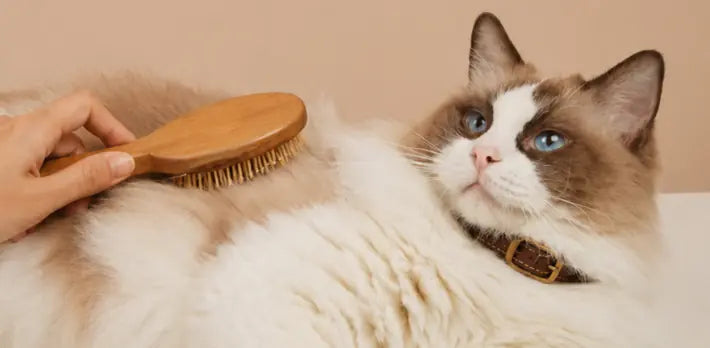
A healthy cat coat is one of the most reassuring forms of proof an owner can see: fur that looks even, feels soft, and carries a clean, natural shine. It’s not vanity—it’s feedback. When the coat looks polished, it usually means your cat is comfortable enough to groom, the skin is calm enough to tolerate touch, and daily nutrition is matching what their body wants to show on the outside.
This is why the contrast between healthy cat coat vs unhealthy can feel so stark. Dullness, flakes, rough texture, or sudden shedding often reads like something is “off,” even before you can name it. Sometimes it’s as simple as seasonal shedding or dry indoor air; sometimes it’s a diet mismatch; and sometimes it’s a medical issue that deserves a veterinarian’s attention. Nutritionally, coat quality depends on more than calories—cats need specific amino acids for coat condition, balanced fats that support coat appearance, and consistent micronutrient coverage, which can vary across commercial foods.
If you already buy high-quality cat food for healthy coat, you may still wonder why your cat’s shine isn’t as consistent as you’d like. The honest answer is that “complete and balanced” is a baseline, not a guarantee of the same visible finish for every individual cat. Stress, grooming tolerance, hydration habits, and seasonal shifts can all change what you see. That’s where a coat-and-skin focused product earns its place: not as a single-nutrient replacement, but as daily support for how wellbeing presents—softness, sheen, and a cared-for look you can recognize at a glance.
- A healthy-looking coat reads as even, soft, and naturally glossy—never greasy or brittle.
- Compare texture and skin comfort to spot healthy cat coat vs unhealthy without overreacting to normal shedding.
- Protein quality matters because cats rely on specific amino acids for coat structure and feel.
- Essential fatty acids, hydration, and grooming are the fastest route to a cleaner-looking shine.
- Commercial diets can vary in trace minerals tied to coat quality, so “good food” can still yield different results.
- Sudden hair loss, sores, strong odor, or intense itching should prompt a veterinary visit.
- Pet Gala complements a complete diet by supporting visible coat-and-skin presentation when consistency is the goal.
The Visible Signals of a Well-kept Coat Owners Recognize Immediately
A healthy-looking coat is one of the clearest “yes” signals a cat gives you: even color, smooth lay, soft touch, and a natural luster that catches light without feeling greasy. When that signal fades, it’s rarely just cosmetic. Coat quality reflects how well skin is supported, how consistently a cat is grooming, and whether daily nutrition is matching their needs for protein building blocks and fats that show up as shine (Sun M, 2024).
This page is designed for discerning owners who want visible confirmation: what a cat shiny coat looks like, what changes are normal, and which shifts deserve a closer look. You’ll also see why “good food” can still leave room for targeted coat-and-skin support: commercial diets vary in key trace minerals that influence fur quality (Summers S, 2022), and everyday care is about consistency, not perfection.
Healthy Cat Coat vs. Unhealthy: Quick Checks for Texture and Comfort
Think in contrasts: healthy cat coat vs unhealthy isn’t about one stray hair or a seasonal shed. Healthy tends to look even and intentional—fur lies flatter, the undercoat feels plush rather than brittle, and the skin underneath looks calm. Unhealthy often reads as “unfinished”: dullness, uneven texture, dandruff-like flakes, or a coat that separates into clumps when you pet against the grain.
A practical way to assess is the “hand test.” Run your fingers from neck to tail: you’re looking for smoothness, minimal static, and a consistent density. Then part the hair at the shoulders and hips: mild pink skin can be normal, but persistent redness, heavy scaling, or a strong odor suggests the coat is signaling discomfort. If the change is sudden, pair your observations with a vet check to rule out medical causes.
Nutrition That Shows: Protein, Amino Acids, and the Coat’s Feel
If you’re wondering how to keep your cat’s coat healthy, start with what hair is made of: protein. Cats rely on specific amino acids to build and maintain coat structure; when intake or balance is off, the coat can lose softness and look tired even with regular brushing (Sun M, 2024). That’s why “more calories” doesn’t equal “better coat”—quality and composition matter.
Next is fat. A balanced intake of essential fatty acids supports the look and feel of the coat and can noticeably improve coat condition when it’s lacking (Blanchard, 2025). The goal isn’t an oily sheen; it’s a clean, flexible hair shaft and comfortable skin that lets grooming do its job. When nutrition and skin comfort align, the coat tends to look naturally polished.
Choosing Cat Food for Healthy Coat Without Chasing One Magic Ingredient
Many owners search for cat food for healthy coat and assume the answer is a single “magic” ingredient. In reality, coat appearance is a composite signal: adequate protein, the right fats, and enough micronutrients to support normal hair growth and pigment. Trace minerals like iron, copper, and zinc are part of that picture, and deficiencies can show up as poor fur quality or loss (Summers S, 2022).
Because commercial foods can vary in their concentrations of these minerals (Summers S, 2022), two cats eating “good brands” may still look different. If your cat’s coat looks dull despite a reputable diet, it doesn’t automatically mean the food is bad—it may mean your cat’s visible needs (shine, softness, reduced flaking) would benefit from additional, skin-forward support alongside a complete diet.
How to Get a Cat’s Coat Shiny with Simple Daily Levers
For owners asking how to get a cat’s coat shiny, the most reliable “fast feedback” comes from three daily levers: hydration, grooming, and fat balance. Regular grooming helps distribute natural oils and removes loose hair, which can immediately improve how light reflects off the coat (Blanchard, 2025). Hydration supports skin comfort, which influences how willingly and thoroughly a cat grooms (Blanchard, 2025).
Shine should look clean, not slick. If the coat looks greasy at the base or feels waxy, that’s not the same as a healthy sheen; it can signal overgrooming, skin irritation, or a product mismatch. Aim for “soft-gloss”: fur that separates easily, feels springy, and doesn’t leave residue on your hands after petting.
“A polished coat isn’t a promise of perfection—it’s a visible sign your cat feels comfortable in their skin.”
Common Reasons a Coat Loses Luster and What They Suggest
A coat can change before anything else does, which is why it’s a useful everyday check-in. Increased shedding, dandruff-like flakes, or a sudden dull coat can be tied to stress, parasites, dental discomfort, or diet changes. Nutritional gaps are also a common theme: deficiencies in essential fatty acids and other nutrients can contribute to poor coat quality and skin issues.
If you notice patchy hair loss, persistent itching, scabs, or a strong odor, treat it as a “skin comfort” issue rather than a beauty issue and involve your veterinarian. For milder changes—like a coat that just looks less vibrant—tightening consistency (same high-quality diet, steady grooming, stable routines) often restores the visible signal.
Cat Food for Shiny Coat: Labels, Consistency, and Quality Signals
Choosing cat food for shiny coat starts with label basics: a complete and balanced diet for your cat’s life stage, with animal-based protein sources and a fat profile that supports skin and coat. Beyond macros, micronutrient consistency matters. Trace minerals such as zinc, copper, and iron play roles in coat quality, and low levels can contribute to poor fur appearance.
Also consider quality control as part of “beauty.” Food safety issues can affect how a cat looks and feels, and monitoring food quality helps reduce risks tied to problematic ingredients or contamination (Peloquin, 2021). If you rotate foods, do it thoughtfully and slowly; abrupt switches can disrupt appetite and stool quality, which can indirectly show up as a less polished coat.
Grooming as a Ritual: Brushing That Improves Shine and Bonding
Grooming is more than maintenance; it’s how you keep the coat looking intentional. Brushing removes dulling debris, lifts loose undercoat, and helps distribute oils for a more even sheen. For shorthaired cats, a few minutes several times a week can be enough; longhaired cats often need daily attention to prevent mats that make the coat look uneven and feel uncomfortable.
Make it a calm ritual. Choose a brush your cat accepts, keep sessions brief, and end before your cat gets overstimulated. If you find mats close to the skin, avoid pulling; discomfort can create grooming avoidance, which quickly dulls the coat. When grooming feels safe, the coat tends to look smoother within days—an immediate, visible payoff.
Hydration and the Coat: Why Water Habits Show up on Fur
Hydration is an underrated shine factor. When cats drink poorly, skin can look less supple and flakes can become more noticeable, even if the diet is otherwise strong. Supporting water intake—through fresh bowls, fountains, and moisture-rich meals—pairs well with coat-focused nutrition and grooming.
Watch for subtle signs: a coat that feels “static-y,” increased dandruff, or a cat that seems less interested in grooming. These aren’t diagnoses, but they are useful signals. If hydration improves and the coat still looks persistently dull, it’s reasonable to review diet quality and consider additional skin-and-coat support that complements, rather than replaces, a complete food.
Seasonal Shedding: Keeping the Coat Looking Finished through Change
Seasonal shedding can make even a well-kept coat look less glossy. During heavy shed periods, the undercoat loosens and the topcoat can look “open,” reflecting light unevenly. The fix is usually not a dramatic diet change—it’s consistent brushing and a steady routine that keeps the coat lying neatly.
If shedding is paired with dandruff, breakage, or a rough feel, revisit nutrition. Cats need adequate amino acids to maintain coat condition; deficiencies can contribute to a poorer coat and broader health concerns (Sun M, 2024). The goal is a coat that rebounds after petting, with minimal loose hair left on your hands.
“Shine should look clean and even, not slick or separated at the roots.”
Clinical Vignette of When Skin Changes Point Deeper Than the Surface
Maverick, a 4-year-old Siamese cat, was brought in for hair loss across his lower abdomen and red, flaky skin lesions that had progressed over the previous month. His owners were unsure whether he was itchy or overgrooming.
Examination showed broken hairs, abdominal alopecia, and lesions consistent with bacterial skin infection. Further testing ruled out fleas, FeLV/FIV, and common fungal causes. Because his grooming pattern suggested deeper discomfort, his veterinarian continued the workup.
Radiographs and urinalysis revealed bladder stones, crystalluria, and blood in the urine. Maverick’s overgrooming was linked to urinary pain — a case where skin changes were secondary to an internal problem.
His care required a staged plan: stabilizing the skin infection, surgically removing the bladder stones, managing pain, transitioning to a therapeutic diet, and supporting skin-barrier recovery with appropriate nutrition and fish oil.
Hair regrowth began by 8 weeks. By 6 months, his coat had fully recovered, with no recurrence after the urinary issue was resolved.
Clinical takeaway: Maverick’s case shows why feline coat loss and overgrooming deserve careful veterinary investigation. Skin and coat health can reflect pain, stress, nutrition, infection, barrier weakness, or internal disease — not just surface-level grooming behavior.
Single-case vignette. Not generalizable. Veterinary diagnosis and oversight are essential for overgrooming, hair loss, skin lesions, urinary signs, pain, or suspected infection.
When Shine Is Misleading: Greasy Texture, Odor, and Skin Imbalance
Not every “shiny” coat is a healthy signal. A greasy, separated coat can indicate skin imbalance, stress grooming, or an underlying issue that needs attention. True shine looks clean and even, and it comes with comfort: your cat grooms normally, rests easily, and doesn’t seem preoccupied with scratching.
If you’re comparing healthy cat coat vs unhealthy, prioritize texture and skin appearance over color intensity. Color can shift with age and sun exposure, but a healthy presentation is consistent: soft, resilient hair shafts and minimal flaking. When the coat looks “finished,” it’s usually because the basics—diet, hydration, grooming, and calm—are aligned.
Supplements with Taste and Restraint: Supporting the Finish, Not Replacing Food
Supplements can be helpful when they’re used as visible-care support, not as a substitute for complete nutrition. Even when a diet is solid, individual cats vary in how their coat responds—especially during stress, indoor dry-air seasons, or after a diet transition. A coat-focused supplement can support the skin-and-coat “finish” owners notice: softness, reduced flaking, and a more even sheen.
Be cautious with stacking multiple products. More isn’t always better, and quality matters. Food quality monitoring is important because some recalled foods have been associated with toxic ingredients and concerning test findings (Peloquin, 2021). If your cat has medical conditions, is on medication, or is pregnant/nursing, ask your veterinarian before adding new supplements.
Life Stage Differences: Kittens, Adults, and Seniors Need Different Support
Kittens, adults, and seniors can all have a healthy-looking coat, but the support they need can differ. Kittens often look naturally plush; the goal is maintaining that softness through steady, complete nutrition and gentle grooming. Adults benefit from consistency—stable diet, predictable routines, and regular brushing that keeps the coat polished.
Seniors may groom less thoroughly due to stiffness or dental discomfort, which can make the coat look unkempt even when nutrition is adequate. In those cases, your grooming ritual becomes a form of care that shows immediately. If a senior cat’s coat changes rapidly, involve your veterinarian to rule out pain or illness before assuming it’s “just age.”
Coat Type Considerations: Longhair, Shorthair, and the Grooming Reality
Longhaired cats often need more hands-on coat care to keep shine visible. Their fur can trap loose undercoat and environmental dust, which dulls the surface and creates tangles that break hairs. Shorthaired cats can look glossy with less brushing, but they still benefit from routine grooming to reduce shedding and distribute oils.
Breed tendencies matter, but they’re not destiny. A cat’s coat is a daily presentation shaped by comfort, diet, and routine. If your cat’s coat type makes mats likely, prioritize detangling tools and short, frequent sessions. The goal is a coat that moves freely and looks even—an unmistakable sign of care.
A Calm Troubleshooting Lens for Dullness, Flakes, and Extra Shedding
If you’re troubleshooting a dull coat, check the “inputs” before changing everything at once. Has the food changed recently? Has your cat’s stress level shifted (new pet, travel, construction noise)? Are you seeing more hairballs, which can indicate heavier shedding? Small disruptions can show up quickly in coat appearance because the coat is an outward signal of daily life.
Then check the “outputs”: grooming frequency, hydration habits, and litter box consistency. Nutritional deficiencies can contribute to poor coat quality, but so can inconsistent routines that reduce grooming. Make one change, give it time to show, and keep notes. Visible improvements are often incremental: less flaking first, then softness, then shine.
What to Expect: Timelines for Softness, Flake Reduction, and Shine
Owners often ask for a timeline: when will the coat look better? Some changes are fast. Brushing can improve surface shine immediately by smoothing the coat and redistributing oils. Hydration improvements can reduce visible flaking within days to a couple of weeks, depending on the cat and the environment.
Diet-driven changes take longer because new hair has to grow in. If you switch to a better-fitting diet or add a coat-supporting product, expect the “finish” to improve gradually over several weeks. Track photos in the same lighting. The goal isn’t perfection; it’s a consistent, cared-for look that stays stable between grooming sessions.
When to Involve Your Veterinarian: Red Flags That Deserve Attention
When should you call the vet? Any sudden bald patches, open sores, intense itching, or a strong odor deserves prompt attention. Also call if coat changes come with appetite shifts, vomiting, diarrhea, or lethargy. These combinations suggest the coat is reflecting a broader issue rather than a simple “needs more brushing” situation.
For non-urgent concerns—like mild dandruff, a slightly dull coat, or seasonal shedding—start with consistent grooming, hydration support, and a careful look at diet quality. If you’re considering supplements, ask your veterinarian to help you choose options that fit your cat’s health history and avoid unnecessary overlap.
Where Pet Gala™ Fits: Daily Support That Shows in Coat and Nails
Where Pet Gala fits is simple: it’s for owners who want the coat to look as good as the care they’re giving. Even with a complete diet, visible coat quality can vary with stress, indoor air, grooming tolerance, and individual needs. Pet Gala is positioned as daily integumentary support—skin, coat, and nails—so the results show where you can see them: softness, sheen, and a more polished overall presentation.
If you’re already choosing thoughtful cat food for healthy coat, Pet Gala complements that foundation rather than competing with it. It’s a way to keep the “finished” look consistent—especially during shedding seasons, routine changes, or any time your cat’s coat needs a little extra visible support.
“The best coat routines feel like bonding—brief, consistent, and easy to keep.”
Educational content only. This material is not a substitute for veterinary advice. Always consult your veterinarian about your dog’s specific needs. These statements have not been evaluated by the Food and Drug Administration. Products mentioned are not intended to diagnose, treat, cure, or prevent any disease.
Glossary
- Sheen: The clean, even way a coat reflects light when hair shafts lie smoothly.
- Dull Coat: Fur that reflects light unevenly, often due to dryness, loose undercoat, or reduced grooming.
- Undercoat: The softer insulating layer beneath the topcoat; heavy shedding can make coats look “open.”
- Topcoat (Guard Hairs): The outer hairs that influence gloss, color clarity, and the “finished” look.
- Dander/Flakes: Visible skin scaling that can appear as white specks on fur; often more noticeable in dry air.
- Matting: Tangled fur that tightens near the skin, causing discomfort and breakage that dulls appearance.
- Essential Fatty Acids: Dietary fats that support skin comfort and coat appearance when balanced appropriately.
- Amino Acids: Protein building blocks needed for normal hair growth and coat structure.
- Trace Minerals: Micronutrients (e.g., zinc, copper, iron) that contribute to normal coat quality and hair integrity.
Related Reading
Common Feline Integumentary Issues
• Cat Dandruff
• Why Is My Cat Shedding So Much
• Cat Hair Loss
Comfort & Recovery
• Skin & Coat Supplements for Cats
• Cat Nail Supplement
• Best Supplements for Cat Shedding
Ingredient-Level Articles
• Biotin for Cats
• Silica for Cats
• Hyaluronic Acid for Cats
• Ceramides for Cats
References
Summers S. Evaluation of iron, copper and zinc concentrations in commercial foods formulated for healthy cats. PubMed Central. 2022. https://pmc.ncbi.nlm.nih.gov/articles/PMC10812249/
Ahmed. Bioaccumulation of heavy metals in some commercially important fishes from a tropical river estuary suggests higher potential health risk in children than adults. Nature. 2019. https://www.nature.com/articles/s41598-021-00467-4
Peloquin. Presumed Choline Chloride Toxicosis in Cats With Positive Ethylene Glycol Tests After Consuming a Recalled Cat Food. 2021. https://www.sciencedirect.com/science/article/pii/S1938973621000416
Sun M. Considerations on amino acid patterns in the natural felid diet: a review. PubMed Central. 2024. https://pmc.ncbi.nlm.nih.gov/articles/PMC11603590/
Blanchard. Nutrition and aging in dogs and cats: assessment and dietary strategies. PubMed Central. 2025. https://pmc.ncbi.nlm.nih.gov/articles/PMC12520854/
FAQ
What does a healthy cat coat look like day to day?
A healthy cat coat typically looks even in density, feels soft when you pet against the grain, and reflects light with a clean sheen. You may still see normal shedding, but the fur shouldn’t look brittle, clumpy, or heavily flaky.
If the coat looks consistently “finished,” it usually means grooming and skin comfort are in a good place. For extra visible support alongside a complete diet, consider Pet Gala™.
Why does coat appearance matter for overall feline wellbeing?
Coat appearance is a visible signal of daily comfort and care. When a cat feels good, they groom more normally, the skin looks calmer, and the coat tends to lie smoothly. When something is off—stress, irritation, or diet mismatch—the coat can look dull or uneven.
It’s not a diagnosis, but it’s a useful early cue to check routines and talk with your vet if changes are sudden. To support that polished look, many owners add Pet Gala™ to their coat-care routine.
How can I tell healthy cat coat vs unhealthy quickly?
Use a simple two-step check: feel and part. A healthy coat feels springy and smooth, with minimal static and little residue on your hands. When you part the fur, the skin should look calm rather than persistently red, scabby, or heavily flaky.
If you see sudden bald patches, sores, or intense itching, contact your veterinarian. For mild dullness or flakes, daily grooming plus supportive care can help—including Pet Gala™.
What nutrients most influence coat softness and shine?
Protein quality matters because cats need specific amino acids to maintain coat structure and overall condition. Essential fatty acids also influence how the coat looks and feels, especially when the diet has been lacking.
Trace minerals can play a role in fur quality as well, which is one reason different complete foods can produce different coat results. For visible, coat-forward support, you can pair a complete diet withPet Gala™.
What cat food for healthy coat should I look for?
Look for a complete and balanced food for your cat’s life stage, with animal-based protein sources and a fat profile that supports skin comfort and coat finish. Consistency matters as much as the brand—frequent abrupt switches can disrupt appetite and grooming.
Because commercial foods can vary in trace minerals tied to coat quality, some cats still benefit from additional visible-care support. A simple way to complement your base diet isPet Gala™.
What cat food for shiny coat works for picky eaters?
For picky cats, “works” often means the food is both complete and reliably eaten. Choose a reputable, complete diet, then protect consistency by transitioning slowly and avoiding frequent flavor hopping. Wet food can also help with hydration, which supports coat appearance.
If intake is steady but the coat still looks dull, a coat-supporting add-on can help without changing the main food. Many owners use Pet Gala™ to support a more polished look.
How to keep your cat’s coat healthy during shedding season?
During shedding season, the coat can look less glossy simply because loose undercoat disrupts the surface. Brush more frequently to remove shed hair and distribute natural oils; this can improve visible shine quickly. Keep routines calm so grooming stays comfortable rather than stressful.
Support hydration and keep diet consistent to avoid compounding changes. For extra coat-and-skin presentation support during heavy sheds, consider Pet Gala™.
How to get a cat’s coat shiny without bathing?
Most cats don’t need baths for shine. Regular brushing smooths the coat and helps spread natural oils, which can make the coat look glossier right away. Hydration support and a diet with appropriate fats also influence how the coat reflects light.
If the coat still looks flat, focus on consistency rather than drastic changes. A coat-support supplement can help maintain that clean sheen—such as Pet Gala™.
Is a dull coat always caused by poor nutrition?
No. A dull coat can reflect stress, seasonal shedding, parasites, dental discomfort, or a grooming routine that isn’t working for your cat. Nutrition is a common factor, but it’s only one part of the visible picture.
If the change is sudden or paired with itching, sores, or appetite changes, involve your veterinarian. For mild dullness, consistent grooming plus coat-focused support can help—like Pet Gala™.
How fast can coat shine improve after diet changes?
Surface shine can improve quickly with brushing, but diet-driven changes take longer because new hair has to grow in. Many owners notice early shifts—less flaking or softer feel—before they see a fuller “gloss” across the coat.
Take photos in the same lighting every couple of weeks to track subtle progress. To support visible coat presentation while you maintain a complete diet, consider Pet Gala™.
Can indoor heating and dry air affect coat appearance?
Yes. Dry indoor air can make flakes more visible and can leave the coat feeling less soft, especially in winter. Supporting hydration and brushing regularly can help the coat look smoother and more even.
If you notice persistent redness, heavy dandruff, or intense scratching, check in with your veterinarian. For everyday seasonal support that keeps the coat looking polished, many owners choose Pet Gala™.
Are fish oils safe for cats with sensitive stomachs?
Some cats tolerate fish oils well, while others may get loose stool or reduced appetite, especially if introduced too quickly. If your cat has a sensitive stomach, start any new supplement cautiously and discuss options with your veterinarian, particularly if your cat has pancreatitis history or is on medications.
A product designed for coat-and-skin support may offer a more balanced approach than adding multiple oils on your own. For visible coat support with a thoughtful routine, consider Pet Gala™.
What side effects should I watch for with coat supplements?
The most common issues are digestive: soft stool, gas, or reduced appetite, especially when introducing a new product quickly. Less commonly, a cat may refuse food if the smell or texture is unfamiliar. Any vomiting, facial swelling, or hives warrants stopping the product and contacting your veterinarian.
Avoid stacking multiple supplements with overlapping ingredients unless your vet recommends it. For a streamlined coat-support option that fits a daily routine, consider Pet Gala™.
Can supplements interact with my cat’s medications?
They can. Some ingredients may affect appetite, digestion, or how certain medications are tolerated. If your cat takes thyroid medication, blood thinners, seizure medications, or has chronic disease, it’s smart to ask your veterinarian before adding any new coat product.
Bring your vet the product label and your cat’s current medication list so they can advise confidently. If you’re looking for coat-and-skin support to discuss with your vet, consider Pet Gala™.
Is Pet Gala™ appropriate for kittens or senior cats?
Life stage matters because kittens, adults, and seniors have different needs and tolerances. For kittens, the priority is a complete growth diet and gentle grooming; for seniors, coat changes may reflect reduced grooming due to stiffness or dental discomfort. In both cases, it’s best to check with your veterinarian before adding new supplements.
If your vet agrees a coat-support product fits your cat’s situation, it can help maintain a polished, comfortable look. Learn more about Pet Gala™.
Do longhaired cats need different coat support than shorthaired?
Longhaired cats usually need more grooming support because tangles and trapped undercoat can dull shine and lead to breakage. Shorthaired cats may look glossy with less brushing, but they still benefit from routine grooming to distribute oils and reduce shedding.
Nutritionally, both coat types rely on the same fundamentals; the difference is how quickly grooming issues show up visually. For coat-and-skin presentation support that complements your routine, consider Pet Gala™.
Is a healthy cat coat different from a dog’s coat?
Yes—cats have distinct grooming behavior, skin sensitivity patterns, and nutritional requirements compared with dogs. Cats also rely on specific amino acids to maintain coat condition, so “dog logic” doesn’t always translate. That’s why species-appropriate products and diets matter.
If you’re choosing coat support, make sure it’s formulated with cats in mind and fits your veterinarian’s guidance. For feline-focused visible coat support, consider Pet Gala™.
What quality signals should I look for in cat foods?
Start with “complete and balanced” for the right life stage, a reputable manufacturer, and transparent sourcing. Also pay attention to your cat’s real-world response: stool consistency, appetite, energy, and coat finish. Food quality monitoring matters because contamination and recalls can pose health risks(Peloquin, 2021).
If your cat does well on a food but the coat still looks flat, that can be a sign to add targeted coat support rather than overhaul the diet. ConsiderPet Gala™for visible-care support.
How should I give Pet Gala™ with meals or treats?
Most cats do best when new supplements are introduced with food, at a consistent time of day, so the routine feels predictable. If your cat is cautious, start by pairing it with a familiar meal and keep everything else stable for a week so you can judge tolerance.
If your cat has a medical condition or takes medication, confirm timing with your veterinarian. For a coat-support routine that stays simple, use Pet Gala™ as directed on the label.
Can I use coat support products every day long term?
Daily use can make sense when the goal is consistent visible presentation—softness, sheen, and reduced flaking—rather than a short “fix.” The key is choosing a product designed for routine use, watching stool and appetite, and keeping your veterinarian in the loop for cats with chronic conditions.
If you notice digestive upset or behavior changes, pause and reassess. For daily coat-and-skin support that complements a complete diet, consider Pet Gala™.
What does research say about fats and coat condition?
Coat condition is strongly influenced by diet composition, and a balanced intake of essential fatty acids can improve coat appearance when a cat’s diet is lacking. Owners often notice changes as improved softness and a more even sheen rather than a dramatic color shift.
Because coat is a visible signal, the most useful approach is pairing a complete diet with consistent grooming and targeted support. For a coat-focused option to discuss with your vet, consider Pet Gala™.
When should I call the vet about coat changes?
Call your vet promptly for bald patches, open sores, intense itching, swelling, or a strong odor. Also call if coat changes come with vomiting, diarrhea, appetite loss, or lethargy. These combinations suggest more than a cosmetic issue.
For mild dullness or flakes, you can start with consistent brushing and hydration support while you monitor. If you want a coat-support option to complement your routine, consider Pet Gala™.
How do I decide between diet changes and supplements?
Start with the foundation: a complete and balanced diet your cat reliably eats, plus grooming and hydration. If the base is weak—poor appetite, inconsistent stool, frequent food switching—fix that first. If the base is strong but the coat still looks dull, a supplement can be a targeted way to support visible coat finish.
Make one change at a time so you can see what helps, and involve your veterinarian for cats with medical conditions. For coat-and-skin presentation support, consider Pet Gala™.
Discover LPL-01: How This Fits Into a Complete Feline Integumentary Support System
Skin, coat, and nails in cats are not surface traits. They reflect deeper biological systems—barrier integrity, hydration dynamics, lipid balance, and structural protein turnover—working in coordination.
When these systems drift, the signs are subtle but telling: reduced coat softness, increased shedding, dryness, brittle claws, changes in grooming behavior.
This article explores one piece of that system. If you want to understand how true coat quality and skin resilience are built in cats—and what actually drives visible improvement—you need to zoom out.
Start with the underlying science:
- Feline Skin & Coat Framework →
A structured view of how skin, coat, and claw health are maintained across collagen synthesis, lipid nourishment, and barrier function. - Barrier Protection Coverage Modeling →
A systems-level map of which integumentary pathways are most vulnerable—and how layered nutritional inputs can support them. - Feline Skin & Coat Evidence Framework →
A breakdown of what is strongly supported in the literature versus what is still emerging in feline skin and coat science. - LPL-01 Standard →
The formulation system that translates these models into real-world supplementation—covering multiple pathways in a coordinated way.
Essential Summary
Why is a healthy cat coat important?
A healthy-looking coat is a visible signal of everyday care: soft texture, even shine, and calm skin. Nutrition, hydration, and grooming all shape that finish, and small disruptions can show up quickly. With a complete diet as the base, targeted skin-and-coat support can help keep the polished look consistent through seasons and routine changes.
Pet Gala is designed for owners who want coat, skin, and nails to look unmistakably cared-for—supporting a soft feel, a clean sheen, and a well-kept finish that shows in daily life.
Pet Gala™
Starting at $79/mo
The scratching is completely gone, his coat looks healthy and shiny!
— Lena
He was struggling with itching, now he's glowing.
— Grace
Considering a healthy cat coat?
If you're looking to maintain a healthy cat coat
If your goal is a healthy cat coat that looks unmistakably cared-for, think in signals you can see: softness when you pet, minimal flaking on dark furniture, and a clean sheen that shows in natural light. Start with a complete diet your cat reliably eats, steady hydration, and a grooming rhythm your cat actually tolerates. Then add targeted support to keep that “finished” look consistent through shedding seasons, indoor dry air, and routine changes. Pet Gala fits here as daily integumentary support—skin, coat, and nails—so the care you give beneath the surface shows where it matters most: in your cat’s visible presentation.
Learn about how our DVMs think about the feline barrier
Dr. Sarah Calvin DVM
Pet Gala™
Starting at $79/mo
Explore the visible signs of whole-body wellness
Related Reading
A healthy cat coat is one of the most reassuring forms of proof an owner can see: fur that looks even, feels soft, and carries a clean, natural shine. It’s not vanity—it’s feedback.