

German Shepherd Degenerative Myelopathy

Build a Daily Plan for Spinal Cord Changes and Safer Mobility

Essential Summary

Why is supporting dogs with german shepherd DM important?

German shepherd DM changes daily life most through traction, fatigue, and safe movement. The most meaningful plan is practical: rule out look-alike problems, keep weight appropriate, build a consistent rehab routine, and track outcome cues so adjustments are timely.

Hollywood Elixir™ can be part of a daily plan that supports normal cellular function and overall resilience while a dog’s mobility routine becomes more structured. It is best used alongside traction, controlled physiotherapy, and veterinary guidance—not as a DM-specific solution.

Dragging rear paws and sudden knuckling are not “just getting older” signs to ignore. In many German Shepherds, that pattern raises concern for a progressive spinal cord disorder, but it can also mimic treatable problems that need a different plan. The most helpful first step is to treat the change as actionable: improve traction, document what is happening, and schedule a veterinary neurologic exam.

German shepherd degenerative myelopathy is often discussed as if a single test confirms it. In reality, a SOD1 DNA result describes genetic risk, not a guaranteed diagnosis, and it should not end the investigation. Owners can support better decisions by noticing the details that separate neurologic weakness from pain-driven limping: fatigue makes signs worse, paws flip under, nails wear down on the tops, and the dog slips on smooth floors even when eager to move.

This page focuses on a diet + routine approach: how to keep weight appropriate, maintain muscle, set up the home to prevent falls, and build a controlled movement plan that stays gentler while still preserving stamina. It also lays out what to track so changes are visible early, and how to prepare for a vet visit that rules out look-alike conditions. Supplements, including Hollywood Elixir™, are positioned only as adjuncts that may help support overall resilience within a mobility-first plan.

  • German shepherd degenerative myelopathy is a progressive spinal cord disorder; daily support focuses on safety, rehab, and quality of life—not quick fixes.
  • Early signs often include toe scuffing, knuckling, and slipping that worsens with fatigue; several treatable conditions can look similar at first.
  • A SOD1 DNA result helps describe risk, but it does not confirm the cause of weakness; a veterinary neurologic exam guides next steps.
  • Weight control and adequate protein help protect mobility by reducing load and supporting normal muscle maintenance during reduced rear-limb use.
  • Traction (runners, mats, ramps) is often the fastest household change that makes movement more balanced and reduces falls.
  • Consistent, controlled physiotherapy and repeatable home exercises can support function longer when started early and kept gentler.
  • Track outcome cues—knuckling frequency, rise time, slips, and toileting stability—so the plan can be adjusted before a crisis.

When Rear Paws Start Dragging, Daily Choices Matter

Hind-end weakness that looks like “clumsiness” can be the first visible sign of a spinal cord problem. In german shepherd DM, nerve pathways in the back half of the spinal cord gradually lose function, so the brain’s signals to the rear legs arrive late or not at all. That slow pattern matters because several other conditions—like orthopedic pain or a disc problem—can look similar early on, yet need different decisions. A DNA test can identify a common risk variant in the SOD1 gene, but risk is not the same as a diagnosis (Capucchio, 2014).

Daily life changes first: paws scuff on walks, nails wear unevenly, and the dog hesitates on slick floors. The most useful early move is to shift from “wait and see” to “set up the house for traction and observation.” Add runners on hard surfaces, keep nails short, and start a simple log of when knuckling happens and on which side. Those notes help a veterinarian separate degenerative myelopathy dogs from look-alike problems.

Cellular powerhouse illustration symbolizing metabolic support via GSD degenerative myelopathy support.

Why Diagnosis Is Tricky and Differentials Matter

A key reality check: german shepherd degenerative myelopathy is usually a diagnosis reached by pattern recognition and ruling out other causes, not by a single “DM test.” The SOD1 mutation is strongly associated with risk in German Shepherd Dogs, but many carriers never develop clinical disease, and some affected dogs may have additional factors (Capucchio, 2014). Veterinarians often combine a neurologic exam with imaging or other testing to exclude compressive spinal disease, because those conditions can sometimes be treated.

A practical home checklist can guide what to report without guessing at the diagnosis: (1) toe scuffing that worsens with fatigue, (2) knuckling that corrects slowly when the paw is flipped, (3) crossing of the back legs when turning, (4) nails worn down on one foot more than the other, and (5) slipping on smooth floors even when the dog seems eager. Bringing these specifics supports a faster, clearer vet workup.

Genetic imagery reflecting cellular wellness supported by GSD degenerative myelopathy support.

The Nervous System Pattern Behind a Changing Gait

The “why” behind early action is simple: once nerve pathways are compromised, the body compensates with altered posture and muscle use. That compensation can create secondary strain—sore hips, tight lower back, and overworked front limbs—even though the primary issue is neurologic. Research tools like diffusion tensor imaging show measurable white-matter changes in dogs with degenerative myelopathy, reinforcing that this is a progressive nervous system condition rather than a motivation problem (Lewis, 2021).

A case vignette: a 9-year-old German Shepherd starts dragging the tops of the rear paws on longer walks, then seems “fine” after rest. Two weeks later, the dog slips when standing up on tile and the rear feet occasionally cross on tight turns. The household assumes it is arthritis and reduces activity sharply, but the dog becomes less balanced and weaker. A better plan is to keep movement gentler and structured while the veterinarian sorts out the cause.

Bioactive protein structure illustrating synergy in wellness supported by german shepherd DM.

Weight Control as Core GSD Degenerative Myelopathy Support

Diet matters in GSD degenerative myelopathy support because body weight changes the physics of every step. Extra pounds increase the effort needed to rise, turn, and correct a mis-placed paw, which can accelerate fatigue and make gait look more uneven. Nutrition cannot “fix” spinal cord degeneration, but it can protect mobility by keeping load appropriate and muscle available. A veterinarian can help set a target body condition score and a calorie plan that preserves lean tissue.

At home, the most effective feeding change is often boring: measure meals, stop free-pouring, and choose treats that do not quietly double daily calories. Use food puzzles or scatter feeding on a rug to add gentle movement without speed. If appetite is high, split meals into smaller portions to keep the dog more balanced through the day. When weight trends down slowly, many owners notice fewer slips during transitions like getting up from bed.

Expressive pug face reflecting gentle aging support associated with degenerative myelopathy dogs.

Feeding to Maintain Muscle While Mobility Shifts
Protein quality and timing can influence how well a dog maintains muscle while mobility changes. In degenerative myelopathy dogs, the rear limbs may do less work, and muscle can shrink from disuse even before the disease is advanced. A diet with adequate, highly digestible protein supports normal muscle turnover, while overly restrictive “senior” feeding can unintentionally lower the building blocks needed for strength training and rehab. Any kidney or liver disease changes this conversation, so veterinary guidance is essential.

A routine that helps: pair meals with a short, controlled exercise block—such as slow leash walking on a grippy surface—so calories support movement rather than long idle periods. Keep water bowls easy to reach to reduce awkward slips. If the dog eats too fast, use a slow feeder to reduce gulping and post-meal restlessness. The goal is not athletic performance; it is preserving stamina for daily tasks like standing, turning, and toileting.

“Traction and controlled movement often change the day faster than any supplement.”

Traction and Home Layout Changes That Prevent Falls

Home flooring is a medical intervention in disguise. When rear paws lose precise placement, slick surfaces force the dog to widen stance and rush movements, which increases falls and anxiety. In german shepherd DM, repeated slips can also create skin abrasions on the tops of toes and stress the wrists and shoulders as the front end compensates. Environmental traction does not change the disease, but it changes the dog’s ability to move safely enough to keep practicing movement.

Start with the routes used most: bed to door, food to water, and the turn into the yard. Add runners, yoga mats, or interlocking foam tiles, and keep them taped flat to avoid bunching. Use a night light for older dogs who misstep in dim hallways. Owners often see a more balanced gait within days—not because nerves healed, but because the dog can place feet without sliding away.

Dog portrait tied to trust and long-term care supported by GSD degenerative myelopathy support.

Physiotherapy Routines That Support Function Longer

Structured physiotherapy is one of the few supportive approaches with evidence tied to longer survival time in suspected degenerative myelopathy. In one study, daily controlled physiotherapy was associated with increased survival compared with less structured activity, suggesting that consistent, guided movement may help maintain function longer (Kathmann, 2006). The likely benefit is not “repair,” but keeping muscles, joints, and coordination engaged so the dog retains overhead for daily movement.

A workable home routine is short and repeatable: two to four five-minute sessions spaced through the day. Focus on slow sit-to-stand transitions on a non-slip surface, weight shifts while standing, and controlled leash walking at a pace that prevents scrambling. Stop before fatigue causes knuckling to spiral. If a rehab professional is involved, ask for a written plan and a “too much” threshold so the household stays consistent.

Profile shot of a dog showing attentive expression supported by GSD degenerative myelopathy support.

Hydrotherapy and Gentler Ways to Practice Stepping

Hydrotherapy can be useful because buoyancy reduces load while still asking the nervous system to coordinate stepping. For dogs with early german shepherd degenerative myelopathy, underwater treadmill sessions can create a gentler way to practice gait without the same slipping risk. The goal is controlled repetition, not exhaustion. Hydrotherapy is not appropriate for every dog—skin infections, uncontrolled pain, or severe anxiety can make it a poor fit—so screening matters.

At home, a similar principle applies: choose surfaces and activities that allow success. Walk on grass, packed dirt, or textured rubber rather than polished floors. Use ramps instead of stairs, and block access to steep steps that invite a rushed descent. If the dog loves fetch, switch to short “find it” games in a small area to keep movement deliberate. The household’s job is to make correct steps easier than incorrect ones.

Supplement breakdown graphic emphasizing no fillers approach within GSD degenerative myelopathy support.

Misconceptions That Delay the Right Next Step

A common misconception is that a positive SOD1 result means a dog “has DM” and nothing else should be investigated. In reality, the SOD1 variant is a risk marker, and other spinal conditions can coexist or mimic the early gait pattern (Capucchio, 2014). Another misunderstanding is that weakness always equals pain; many dogs with german shepherd DM are not painful from the neurologic process itself, though they can develop secondary soreness from compensation.

Correcting those misconceptions changes daily choices. If pain is assumed, owners may stop walks entirely, which can speed deconditioning and make the dog less balanced. If genetics are treated as destiny, a treatable disc or orthopedic issue may be missed. The better approach is to keep activity gentler and planned while pursuing a clear veterinary assessment. That combination supports quality of life without pretending certainty where it does not exist.

Protecting Toes, Nails, and Skin from Drag Injuries

Foot care becomes a neurologic priority when proprioception fades. Knuckling and dragging can scrape the top of the toes, split nails, and create low-grade wounds that are easy to miss under fur. In degenerative myelopathy dogs, those small injuries can change gait further, making steps more uneven and increasing fall risk. Protective booties or toe caps can help, but only if they fit well and do not cause rubbing.

Build a weekly “paws and nails” check into the routine: look for scuffs, heat, swelling, and nail cracks, especially on the rear feet. Keep nails shorter than usual to reduce catching and twisting. If booties are used, start with minutes at a time indoors and inspect skin after each session. A dog that suddenly refuses booties or licks one foot may be signaling discomfort that deserves a closer look.

“A risk gene is not a diagnosis; patterns and rule-outs still matter.”

Research-style uniform highlighting scientific integrity aligned with degenerative myelopathy dogs.

Harnesses and Carts That Keep Movement Safe

Mobility aids are not “giving up”; they are a way to keep movement possible while the nervous system changes. A rear support harness can help a dog rise and toilet with less panic, and it reduces the chance of a sudden fall that strains the front end. For later stages, a properly fitted cart can preserve enrichment and outdoor time. The right tool is the one that keeps the dog moving in a calmer, more balanced way.

Introduce aids early, before an emergency. Practice with the harness during calm moments, not only when the dog is already slipping. Keep straps adjusted so they do not press on the abdomen or restrict breathing. If a cart is being considered, ask a rehab professional to measure and fit it; poor fit can create skin sores and awkward posture. The household should treat these tools like seatbelts: used to prevent problems, not to react to them.

Ingredient still life illustrating clean formulation principles for german shepherd DM.

What to Track so Progression Is Not Guesswork

What to track should be simple enough to sustain for months. Because progression can be gradual, memory is unreliable, and small changes are easy to dismiss until a sudden bad day. Noninvasive tools like electrical impedance myography are being explored as biomarkers in canine degenerative myelopathy, reflecting the broader idea that objective measures can help track change over time (Kowal, 2022). At home, owners can create their own consistent “measurements” using repeatable tasks.

A practical rubric: document (1) number of rear-foot knuckles on a 10-minute walk, (2) time to rise from lying to standing, (3) ability to hold a stand for 30 seconds without stepping, (4) frequency of slips on known surfaces, (5) nail wear pattern photos monthly, and (6) toileting success—squatting posture and any falls. These outcome cues support clearer vet conversations and help decide when to adjust rehab or aids.

Lifestyle shot of dog owner and Hollywood Elixir aligned with degenerative myelopathy dogs.

How to Prepare for a Focused Veterinary Neurology Visit

Vet visit preparation is most useful when it separates observations from conclusions. Degenerative myelopathy dogs can look similar to dogs with orthopedic pain, lumbosacral disease, or disc issues, so the veterinarian needs specifics about onset, symmetry, and fatigue effects. Some clinics may discuss additional diagnostics, including spinal imaging or biomarkers; phosphorylated neurofilament heavy in cerebrospinal fluid has been studied as a diagnostic marker in canine degenerative myelopathy, illustrating how neurologic damage can sometimes be reflected in measurable proteins (Toedebusch, 2017).

Bring a short list of questions: What findings on the neurologic exam point toward spinal cord disease versus joint pain? What conditions must be ruled out first, and what tests do that best? If DM is likely, what rehab plan is appropriate now, and what changes would trigger recheck? Also bring videos of walking on a flat surface and turning tightly. Those details help the appointment stay focused and actionable.

What Not to Do When Weakness and Slipping Begin

What not to do is often as important as what to add. Avoid forcing long hikes “to build strength,” because fatigue can worsen knuckling and increase falls. Avoid slippery nail trims delayed for months; long nails change paw angles and make placement less accurate. Avoid relying on stairs as daily exercise, since missteps can cause sudden injury. And avoid assuming every bad day is progression; urinary infection, sore muscles, or a new orthopedic issue can temporarily change gait.

Also avoid stacking multiple new interventions at once. When diet, supplements, rehab, and equipment all change in the same week, it becomes impossible to see what is helping and what is causing stress. Make sequential steps: traction first, then a rehab routine, then equipment, then any adjuncts. This approach is not about being cautious for its own sake; it protects the dog’s comfort and gives the household clearer feedback.

Where Supplements Fit in a Mobility-first Plan

Supplements sit in a narrow lane for german shepherd DM: they can support general resilience, but they should not be treated as targeted neurologic therapy. Owners often want a single “nerve supplement,” yet the daily wins in GSD degenerative myelopathy support usually come from traction, controlled movement, and weight management. If a supplement is used, it should be chosen for quality, consistency, and compatibility with the dog’s full medical picture, including any medications.

A sensible way to decide is to ask: does this product support normal cellular function, appetite, or recovery from exercise in a way that fits the dog’s routine? Can it be given consistently without upsetting the stomach? Is the label transparent and the dosing practical? Supplements should be introduced one at a time and tracked against the same outcome cues used for rehab. If nothing changes after a reasonable trial, it may not be worth the daily complexity.

Supplement comparison highlighting clean formulation advantages for degenerative myelopathy dogs.

Using Hollywood Elixir as a Gentle Adjunct

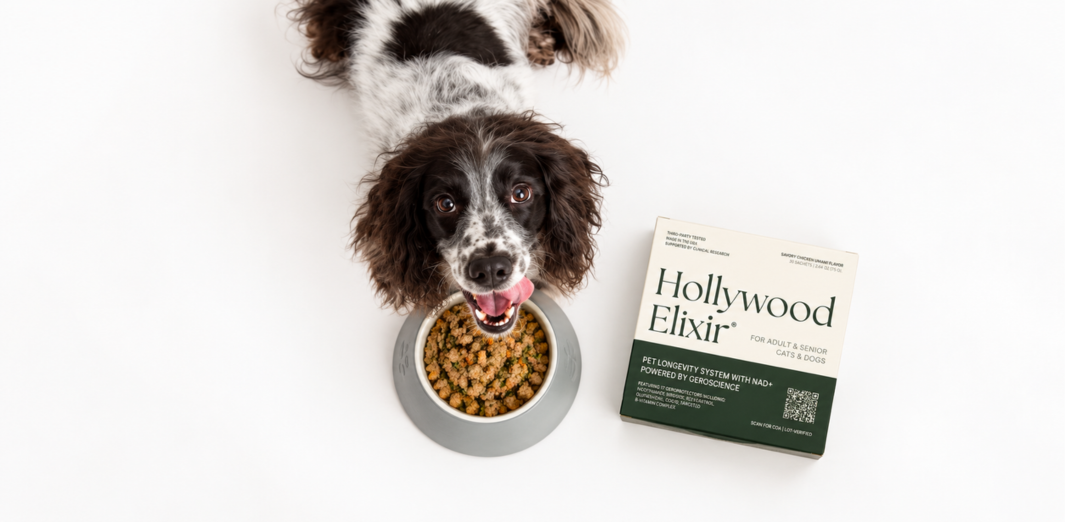
Hollywood Elixir™ can be positioned as an adjunct for dogs whose plans already cover the basics: traction, controlled physiotherapy, and a diet that keeps weight appropriate. It is not a substitute for diagnosis or rehab, and it should not be framed as a DM-specific tool. Instead, it can be part of a daily plan that supports normal cellular cooperation and overall renewal rate, which may matter when a dog is working harder to stay mobile.

For households managing degenerative myelopathy dogs, the best use is consistency and simplicity. Add it only if the dog is already eating reliably and the routine is stable enough to notice changes in appetite, stool, or energy. Discuss timing with the veterinarian, especially if other supplements are in use. The goal is a gentler, more balanced day—not a promise about the spinal cord.

Open box with Hollywood Elixir inside, reinforcing GSD degenerative myelopathy support premium cues.

Quality of Life Planning for Bright Dogs with Weak Hind Ends

Quality of life planning should start early, because it reduces crisis decisions later. In german shepherd degenerative myelopathy, the dog may remain bright and engaged while mobility changes, which can be emotionally confusing for families. A plan that names priorities—safe toileting, comfortable rest, enrichment, and social time—helps the household choose aids sooner and avoid preventable injuries. It also creates a shared language for discussing “good days” and “hard days” without panic.

Build enrichment around what the dog can still do well: scent games, training with a stable stance, chew time on a non-slip mat, and short outdoor sessions supported by a harness. Rotate activities to protect the front end from overuse. If the dog struggles to squat, ask the veterinarian about strategies and whether a rehab professional can teach supported toileting. These adjustments preserve dignity and reduce household stress.

Adjusting the Plan over Months Without Chasing False Promises

Adjusting over time works best when changes are tied to specific triggers rather than vague worry. If the tracking log shows more frequent knuckling, longer rise time, or repeated falls, it is time to revisit the plan: increase traction coverage, shorten walks but add more sessions, or upgrade from a simple harness to a more supportive setup. If the pattern changes suddenly—new pain, rapid weakness, or asymmetric deficits—recheck promptly, because that is less typical for DM.

A calm, stepwise approach also protects the dog’s confidence. Keep routines predictable, reward slow controlled movement, and avoid rushing transitions. Reassess every few weeks with the same videos and the same walk route, then share those materials with the veterinary team. Over months, the goal is not to chase a cure; it is to preserve overhead for the moments that make the dog’s day feel normal.

“Track small outcome cues so adjustments happen before a crisis.”

Educational content only. This material is not a substitute for veterinary advice. Always consult your veterinarian about your dog’s specific needs. These statements have not been evaluated by the Food and Drug Administration. Products mentioned are not intended to diagnose, treat, cure, or prevent any disease.

Glossary

  • Degenerative myelopathy (DM) - A progressive spinal cord disorder that causes hind-limb weakness and coordination loss.
  • Proprioception - The nervous system’s sense of where the limbs are in space; loss contributes to knuckling.
  • Knuckling - Walking on the top of the paw due to delayed correction of paw placement.
  • Ataxia - Uncoordinated movement, often seen as swaying or crossing of the rear legs.
  • SOD1 variant - A genetic change associated with increased risk of DM in several dog breeds.
  • Differential diagnosis - A list of possible causes that can explain similar signs, used to guide testing.
  • Controlled physiotherapy - A structured rehab plan using planned exercises to support function and safety.
  • Underwater treadmill - A hydrotherapy tool that reduces weight-bearing while practicing gait.
  • Rear support harness - A mobility aid that helps lift and stabilize the hind end during transitions and toileting.

Related Reading

References

Capucchio. Degenerative myelopathy in German Shepherd Dog: comparison of two molecular assays for the identification of the SOD1:c.118G>A mutation.. PubMed. 2014. https://pubmed.ncbi.nlm.nih.gov/24390315/

Kowal. Electrical Impedance Myography in Dogs With Degenerative Myelopathy. 2022. https://www.frontiersin.org/journals/veterinary-science/articles/10.3389/fvets.2022.874277/full

Kathmann. Daily controlled physiotherapy increases survival time in dogs with suspected degenerative myelopathy.. PubMed. 2006. https://pubmed.ncbi.nlm.nih.gov/16955818/

Lewis. Brain diffusion tensor imaging in dogs with degenerative myelopathy.. PubMed. 2021. https://pubmed.ncbi.nlm.nih.gov/34410026/

Toedebusch. Cerebrospinal Fluid Levels of Phosphorylated Neurofilament Heavy as a Diagnostic Marker of Canine Degenerative Myelopathy.. PubMed Central. 2017. https://pmc.ncbi.nlm.nih.gov/articles/PMC5354061/

FAQ

What is degenerative myelopathy in German Shepherds?

Degenerative myelopathy is a progressive disorder affecting the spinal cord, most often showing up as hind-end weakness, knuckling, and dragging of the rear feet. In German Shepherds, a common genetic risk variant involves the SOD1 gene, but genetics describe risk rather than confirming the cause of symptoms.

Because other conditions can look similar early on, veterinarians typically use a neurologic exam and may recommend additional testing to rule out treatable problems. Daily support is centered on safety, controlled movement, and tracking change over time.

How is german shepherd DM different from arthritis pain?

Arthritis is primarily a joint problem and often causes stiffness, reluctance to move, and pain on manipulation. german shepherd DM is a neurologic condition, so the hallmark is loss of precise paw placement—knuckling, crossing, and scuffing—often without obvious pain from the spinal cord process itself.

That said, dogs can have both, and compensation can create secondary soreness. Video of walking and turning on a flat surface, plus notes about fatigue effects, helps the veterinarian separate joint discomfort from neurologic weakness and choose the right next tests.

Can a DNA test diagnose DM in my dog?

A DNA test can identify a common SOD1 variant associated with increased risk for degenerative myelopathy, including in German Shepherd Dogs. However, a risk result does not prove that current symptoms are caused by DM, and some dogs with the variant never develop clinical disease.

Veterinarians use the genetic result as one piece of the puzzle alongside the neurologic exam and, when appropriate, imaging or other diagnostics to rule out compressive spinal disease. This is why “positive” should prompt a better workup, not a shortcut.

What early signs should owners watch for at home?

Early signs often show up as small coordination errors: rear-toe scuffing on walks, nails wearing down unevenly, brief knuckling that corrects slowly, or slipping on smooth floors. Many dogs look “better” after rest, which can hide a fatigue-driven pattern.

Owners can help by recording short videos on a consistent route and noting which side seems worse. Also check the tops of the rear toes for scrapes. These details make the veterinary visit more efficient and reduce guesswork about progression.

When should a dog with hind weakness see a veterinarian?

Any new hind-end weakness, knuckling, or repeated slipping deserves a veterinary exam soon, because treatable spinal or orthopedic problems can mimic degenerative myelopathy dogs in the early stage. A sudden change, obvious pain, or rapidly worsening weakness should be treated as urgent.

Before the appointment, bring videos of walking and turning, a list of when symptoms started, and whether fatigue makes them worse. Also note any changes in toileting posture or falls. Clear observations help the veterinarian prioritize diagnostics and supportive care.

Does controlled physiotherapy really matter for suspected DM?

Yes, it can matter as supportive care. In a study of dogs with suspected degenerative myelopathy, daily controlled physiotherapy was associated with increased survival time compared with less structured activity(Kathmann, 2006). That suggests consistent, guided movement may help maintain function longer.

The goal is not to exhaust the dog or “train through” weakness. A rehab plan should emphasize short, repeatable sessions on non-slip surfaces, with clear stop points before fatigue causes more knuckling and falls.

What home exercises are safest for early-stage DM?

Safer exercises are slow and controlled: short leash walks on grippy ground, gentle sit-to-stand transitions, and quiet weight shifts while standing. The best choices are the ones the dog can do without scrambling, slipping, or panicking.

Avoid long hikes, fast fetch, or stairs as “conditioning,” especially if knuckling increases with fatigue. A veterinary rehab professional can tailor a plan to the dog’s neurologic exam and help set a schedule that stays gentler while still building stamina for daily tasks.

How can flooring changes help a dog with rear knuckling?

Traction changes the dog’s ability to place feet correctly. When rear paws slip, the dog widens stance and rushes movements, which increases falls and makes gait look more uneven. Adding runners or mats often creates a more balanced day quickly because the dog can practice correct steps.

Start with the most-used routes: bed to door, food to water, and the turn into the yard. Keep mats flat and secured. Traction does not change the underlying neurologic disease, but it supports safer movement and reduces secondary injuries.

Should a dog with DM stop walking to avoid worsening?

Complete rest is rarely helpful unless a veterinarian identifies a condition that requires it. With suspected DM, stopping walks entirely can accelerate deconditioning, reduce muscle use, and make the dog less balanced during normal household movement.

A better approach is to keep movement gentler and structured: shorter walks, more frequent sessions, and non-slip surfaces. If the dog is falling, panicking, or showing new pain, the plan should be reassessed promptly with the veterinary team.

What should owners track to monitor progression over time?

Tracking works best when it uses repeatable tasks. Useful markers include knuckling count on a set-length walk, time to rise from lying, frequency of slips on known surfaces, ability to stand for 30 seconds without stepping, and monthly photos of nail wear and toe scuffs.

Objective measures are being explored in research settings, including electrical impedance myography as a noninvasive way to assess neuromuscular change(Kowal, 2022). At home, consistent videos and logs provide a practical version of the same idea for the veterinarian.

Are mobility harnesses or carts appropriate, or too soon?

Earlier is often better, because practice prevents fear. A rear support harness can help a dog rise and toilet with less slipping, and it reduces the chance of a sudden fall that strains the front end. A cart may be appropriate later to preserve enrichment and outdoor time.

Fit matters. Poorly adjusted straps can rub skin or change posture in unhelpful ways. A rehab professional can help select and fit equipment so it supports a calmer, more balanced gait rather than creating new pressure points.

How should diet change for a dog with suspected DM?

Diet changes should prioritize body condition and muscle maintenance. Extra weight increases the effort of standing and turning, while overly restrictive feeding can make it harder to keep lean tissue during reduced rear-limb use. Measured meals and a clear calorie plan are often the most effective first steps.

Protein quality matters, but the right target depends on the dog’s full health picture, including kidney or liver disease. A veterinarian can help choose a diet that supports normal muscle turnover while keeping the dog’s day more balanced and less uneven.

Can supplements replace rehab for degenerative myelopathy dogs?

Supplements should not replace rehabilitation, traction changes, or veterinary care. For degenerative myelopathy dogs, the biggest day-to-day gains usually come from safer footing, controlled movement, and weight management. Supplements may help support general resilience, but they are not a targeted fix for spinal cord degeneration.

If a supplement is added, introduce one change at a time and track outcome cues like slips, rise time, and appetite. Discuss choices with a veterinarian to avoid unnecessary complexity or interactions with other products.

How might Hollywood Elixir™ fit into a DM support plan?

In a DM support plan, the foundation is still traction, controlled physiotherapy, and a diet that keeps weight appropriate. Hollywood Elixir™ can be considered as an adjunct that supports normal cellular function and overall resilience as routines become more structured.

It should not be viewed as DM-specific care or a substitute for diagnosis. Introduce it only when the daily plan is stable enough to notice changes in stool, appetite, or comfort, and review the full supplement list with the veterinarian.

How long does it take to see changes from routine adjustments?

Some changes show up quickly: traction improvements can reduce slipping within days, and a well-fitted harness can make standing and toileting feel safer immediately. Strength and coordination changes from controlled rehab usually take weeks, because the body needs repeated practice to build stamina and confidence.

Progression can still occur, so the goal is often a gentler slope rather than a dramatic turnaround. Tracking the same walk route, rise time, and knuckling frequency helps reveal whether the plan is keeping days more balanced over time.

What side effects should owners watch for with new supplements?

The most common issues are gastrointestinal: softer stool, gas, or reduced appetite. Some dogs also become picky if powders change food smell or texture. Any new itching, facial swelling, or repeated vomiting should be treated as a reason to stop the product and call the veterinarian.

Introduce only one new supplement at a time and keep the rest of the routine unchanged for a couple of weeks. That sequential approach makes it easier to identify what is helping, what is neutral, and what is creating discomfort.

Can Hollywood Elixir™ be used with prescription medications?

Any supplement should be reviewed alongside prescription medications, because individual health conditions and drug choices vary widely. Hollywood Elixir™ is designed to support general wellness, but the veterinarian should still confirm it fits the dog’s full plan.

Bring a complete list of everything given daily, including joint products, fish oil, and calming chews. If the dog has liver or kidney disease, that context is especially important when deciding what is reasonable to add.

Is degenerative myelopathy only a German Shepherd problem?

No. Degenerative myelopathy has been reported across multiple breeds, and SOD1-associated risk alleles have been described in broad breed distributions(Zeng, 2014). German Shepherds are a well-known at-risk breed, but similar hind-end patterns can appear in other dogs for different reasons.

That is why the veterinary approach is similar across breeds: identify the neurologic pattern, rule out treatable causes, and then build a daily plan focused on traction, controlled movement, and monitoring. Breed informs risk, not certainty.

Do cats get degenerative myelopathy like dogs do?

The classic condition discussed as canine degenerative myelopathy is a dog-focused diagnosis and is most often considered in specific dog breeds with characteristic neurologic patterns. Cats can develop spinal cord disease, but the causes, diagnostic pathways, and common conditions differ.

If a cat shows hind-end weakness, a veterinarian should evaluate promptly for cat-appropriate differentials. Management principles like traction, safe access to litter, and controlled movement still matter, but the underlying diagnosis and treatment options are not interchangeable.

What questions should owners ask the vet at diagnosis time?

Useful questions are specific: What exam findings suggest spinal cord disease versus joint pain? What conditions must be ruled out first, and which tests do that best? What is the recommended rehab plan right now, and what changes would trigger a recheck or new imaging?

Also ask how to prevent secondary problems: toe wounds, falls, and front-end overuse. Bring videos and a short symptom timeline. That preparation supports a clearer handoff and helps the household leave with a plan that can be followed day to day.

How should owners decide whether to add Hollywood Elixir™?

Decision-making is simplest when it starts with the basics: is traction in place, is weight appropriate, and is there a controlled rehab routine? If those are not stable, adding another variable can make it harder to see what is working.

If the daily plan is consistent, Hollywood Elixir™ may be considered as an adjunct that supports normal cellular function and overall resilience. Introduce it one change at a time, track outcome cues, and review the full plan with the veterinarian.