Front of the Pack Soothe Review for Dogs

A close read of Soothe's five disclosed per-scoop actives, itch-and-gut positioning, and the buyer details that still need verification.

La Petite Labs Editorial 1 min read

Front of the Pack Soothe is a dog supplement positioned as itch and gut support, with the reviewed variant listed as Soothe - Itch & Gut Support - Small Dog (Under 25lbs). The label discloses five active ingredients per scoop: heat-killed Floradapt L. sakei, two yeast fermentates, water soluble egg membrane, and powdered fish oil concentrate.

The first decision point is not whether a supplement sounds skin-friendly. Persistent itching can come from parasites, infections, atopy, food reactions, endocrine issues, or other problems that deserve a veterinary conversation first. Soothe's own copy uses allergy and itchy-skin language, so cautious owners should read it as support positioning, not as a replacement for dermatology care.

For shoppers, Soothe's strongest visible appeal is a named, per-scoop active list and a simple once-daily powder routine. The limits are also important: inactive ingredients, servings per container, public COA, lot lookup, named lab, testing panels, storage instructions, and a guaranteed analysis format were not easy to find publicly in the product details available for review.

We reviewed Front of the Pack at brand level — Public Transparency Score 72.5/100 — see the Front of the Pack Review for the brand's testing posture, disclosure practices, and what to verify before buying anything from its range.

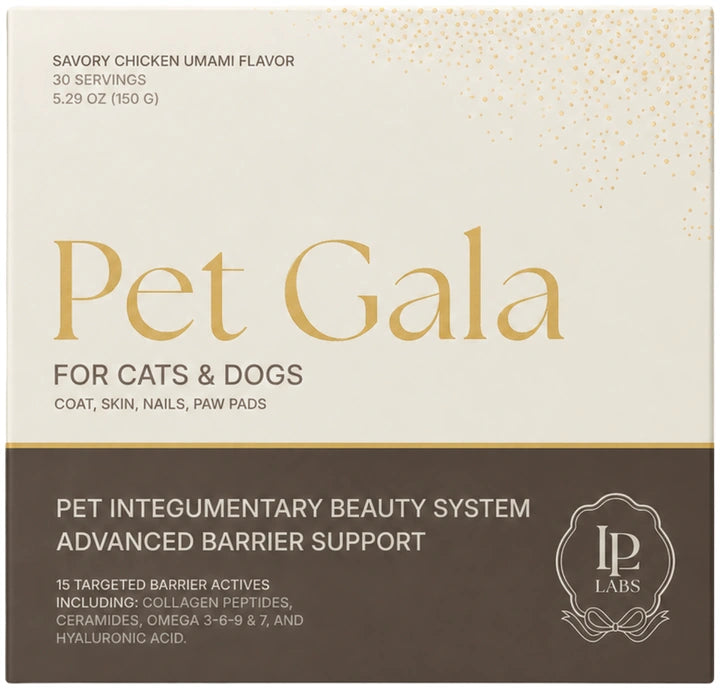
Disclosure: La Petite Labs sells its own pet supplements, including Pet Gala™. This review is editorial: competitor facts are drawn from the public sources listed in the References section, and facts are dated where shown.

What Front of the Pack Soothe is, and what the page does not name

Front of the Pack Soothe is presented as a targeted itch and gut support supplement for dogs. The reviewed option is the Small Dog (Under 25lbs) variant, with other visible options for medium dogs from 25 to 50 lbs and large dogs over 50 lbs. The product is dog-only in the available details and is described by the brand as suitable for dogs aged 12+ weeks.

The buyer caveat starts immediately because this is an itch-positioned product. Ongoing scratching, chewing, hot spots, hair loss, odor, recurring ear issues, flaky skin, or red skin can come from parasites, infections, atopy, food reactions, endocrine issues, or other conditions. A supplement can be part of a routine only after an owner is realistic about that medical context. The product's allergy and itchy-skin wording can make it feel closer to treatment than a cautious owner should assume.

The consumer-facing brand is Front of the Pack. A separate manufacturer name was not easy to find publicly in the product details, while the brand does say the product is made with heart in Utah. That gives a broad location cue, but it does not name a specific facility or manufacturer. For many shoppers, that may be acceptable. For owners comparing skin supplements because their dog has repeated reactions, the manufacturer, facility, and quality-document visibility may be part of the purchase decision.

At a Glance

What is Front of the Pack Soothe for dogs?

Front of the Pack Soothe is a dog supplement positioned for itch and gut support. The reviewed variant is Soothe - Itch & Gut Support - Small Dog (Under 25lbs). It lists five active ingredients per scoop, including heat-killed L. sakei, two yeast fermentates, water soluble egg membrane, and powdered fish oil concentrate.

Product
Front of the Pack Soothe - Itch & Gut Support - Small Dog (Under 25lbs)
Category
Dog skin, coat, itch, and gut support supplement
Species
Dogs
Format
undefined
Disclosed actives
5 disclosed actives per scoop: Floradapt L. sakei 20 mg, TruMune yeast fermentate 250 mg, Epicor yeast fermentate 100 mg, BiovaPlex egg membrane 50 mg, and MEG-3 fish oil 580 mg.
Price
$49.99 USD for Small Dog (Under 25lbs); listed subscription price is also $49.99 USD; servings per container are not visible, so cost per day cannot be calculated.
Best fit
Owners who want Soothe's once-daily postbiotic, fish-oil, and egg-membrane powder concept and who will treat persistent itch as a veterinary issue first.
What to check
Ask for the full inactive ingredient list, servings per container, storage instructions, current COA or lot documentation, testing panels, and veterinary guidance if the dog is persistently itchy, a puppy, pregnant, or lactating.

Quick Answers

Is Front of the Pack Soothe a good skin supplement for dogs?

It can be a reasonable fit for owners who want a once-daily powder with named, mg-disclosed actives and who are not using it as a substitute for veterinary care. Its active disclosure is useful. The main limitations are missing public inactive ingredients, servings per container, storage details, public COA, lot lookup, named lab, and testing panels.

What should owners check before buying Soothe?

Check the full inactive ingredient list, container duration, storage instructions, current lot or COA information, testing panels, and whether the dog should be seen by a veterinarian first. This is especially important for dogs with persistent itching, known food sensitivities, recurring ear or skin infections, restricted diets, or medication histories.

Does Soothe treat dog allergies or stop itching?

No supplement should be treated that way. The brand uses allergy and itchy-skin language, but persistent itching can come from parasites, infections, atopy, food reactions, endocrine issues, and other causes. Soothe may be considered support only after the owner has taken veterinary context seriously.

What cautions or side effects should owners watch for with Soothe?

The visible product details do not list specific adverse events. Practical caution means using the directed scoop count, introducing one new supplement at a time when possible, watching for worsening itch, digestive changes, appetite changes, or unusual symptoms, and pausing use while calling a veterinarian if the dog worsens.

How much does Soothe cost per day?

The Small Dog (Under 25lbs) variant is listed at $49.99 USD, and the listed subscription price is also $49.99 USD. Cost per day cannot be calculated from the visible details because servings per container are not shown. Buyers need container duration plus scoop count to do that math.

Is Soothe suitable for puppies?

The product copy says Soothe is suitable for dogs aged 12+ weeks, but the warning says suitability has not been tested for dogs under 12 months, pregnant dogs, or lactating dogs. Puppy owners should treat that as a reason to ask a veterinarian or the brand before using it.

Does Soothe publish third-party testing or a COA?

No public COA, lot lookup, named laboratory, or testing panel statement was easy to find in the public product details reviewed. That does not prove testing is absent. It means a buyer who cares about lot-level verification should ask Front of the Pack for current testing documents before purchasing.

How is La Petite Labs Pet Gala relevant to this comparison?

Pet Gala is relevant for buyers comparing skin and coat supplements by public disclosure. It lists 13 actives at full milligram amounts with no proprietary blends and has per-batch third-party testing with named labs plus a public COA lookup portal. It still is not a substitute for medicated dermatology care or allergy immunotherapy.

Which product is the stronger fit: Soothe or Pet Gala?

It depends on the buying priority. Soothe is the more direct fit for someone seeking its itch-and-gut postbiotic, fish-oil, and egg-membrane powder concept. Pet Gala is the clearer fit for broader public active disclosure and visible testing transparency, with the caveat that La Petite Labs evidence is ingredient-level, not finished-formula clinical evidence.

The Plain Comparison

Soothe vs Pet Gala™, side by side

QuestionSoothePet Gala™Stronger fit
Which product gives more public active-dose detail?Soothe discloses 5 active ingredients with typical values per scoop: Floradapt L. sakei 20 mg, TruMune yeast fermentate 250 mg, Epicor yeast fermentate 100 mg, BiovaPlex egg membrane 50 mg, and MEG-3 fish oil 580 mg.Pet Gala discloses 13 actives at full mg amounts on the public product page and uses no proprietary blends.Pet Gala is stronger for shoppers prioritizing breadth of public active disclosure; Soothe is still clear on its 5-actives-per-scoop formula.
Which lane is each product built around?Soothe is positioned as targeted itch and gut support for dogs, with postbiotic-style ingredients, powdered fish oil concentrate, and water soluble egg membrane.Pet Gala is described as a skin, coat, and barrier-support daily system, with 13 actives disclosed at full mg amounts and no proprietary blends.Soothe is the more direct fit for a shopper seeking its itch-and-gut concept; Pet Gala is the more direct fit for a skin, coat, and barrier-support daily system.
Which product has stronger public testing visibility?For Soothe, no public COA, lot lookup, named laboratory, or testing panel statement was easy to find in the public product details reviewed.Pet Gala has per-batch third-party testing with named labs and a public COA lookup portal; La Petite Labs notes that the portal does not yet cover every currently sold SKU and the public panel does not yet itemize pesticide, mycotoxin, or allergen testing.Pet Gala is stronger for public testing transparency, with the stated portal-scope limits; Soothe requires more direct brand follow-up on testing.
Which product has clearer finished-product clinical evidence?Soothe's product copy says it is made from three clinically-proven postbiotics, but the public product details do not make a finished Soothe clinical trial easy to evaluate.La Petite Labs explicitly discloses that no finished-formula clinical trial currently exists on its products; its evidence is ingredient-level.Neither product should be chosen on visible finished-formula clinical-trial evidence alone; ask for study details if that is the deciding factor.
Which product is easier to screen for allergy-sensitive dogs?Soothe says 'Hypoallergenic' and 'No Fillers or Additives,' but a full inactive ingredient list was not easy to find publicly; the active list includes fish oil concentrate and egg membrane.Pet Gala discloses 13 actives at full mg amounts with no proprietary blends; its public COA panel does not yet itemize allergen testing.Pet Gala is clearer on active disclosure; neither comparison should replace a full ingredient and veterinarian review for a dog with known allergies.
Which product is easier to value-price from public details?Soothe lists the Small Dog (Under 25lbs) price at $49.99 USD and the subscription price at $49.99 USD, but servings per container are not visible, so daily cost cannot be calculated.The supplied Pet Gala facts cover 13 fully disclosed actives and per-batch third-party testing with named labs and a public COA lookup portal, but they do not provide a price for this comparison.No price-value winner can be called from the supplied facts; Soothe has a visible sticker price, while Pet Gala has visible disclosure and testing facts but no price fact here.

Competitor label and pricing facts checked July 3, 2026. Sources are listed in the References section below.

Why Soothe can still appeal to careful dog owners

Soothe has a clearer label than many skin-support products because it names every active ingredient and gives a per-scoop amount. The active list is not hidden behind a proprietary blend. That matters for owners who want to compare what is actually being fed each day rather than reading only broad skin, coat, gut, or immune-support language.

The formula also has a coherent shopper story. It combines a heat-killed probiotic, two yeast fermentates, egg membrane, and concentrated fish oil powder. The brand frames the product around itchy skin, gut microbiome support, immune response, skin comfort, and a powder routine that can be sprinkled onto food once daily. A dog owner who already uses food toppers may find that easier than adding another chew, capsule, or oil pump.

The appeal is strongest when a buyer values convenience and named ingredient amounts more than a fully documented quality file. The label gives enough active-dose information to make side-by-side ingredient reading possible. It also gives weight-band scoop directions, which keeps the routine simple. Those are real positives.

The appeal should not be stretched into a treatment conclusion. The brand's copy mentions allergies, skin problems, digestive issues, and dry, itchy skin, but a buyer's guide should not translate that into a promise that Soothe treats allergies or stops itching. Its genuine appeal is label readability and routine simplicity, not a substitute for diagnosis.

The Soothe active list, per scoop, without skipping the small print

Soothe's active disclosure is full for the actives shown. The label lists typical values per scoop, which is important because the daily scoop count changes by dog weight. The disclosed active ingredients are Floradapt L. sakei (heat killed) at 20 mg per scoop, yeast fermentate (TruMune) at 250 mg per scoop, yeast fermentate (Epicor) at 100 mg per scoop, water soluble egg membrane (BiovaPlex) at 50 mg per scoop, and powdered fish oil concentrate (MEG-3) at 580 mg per scoop.

That is the core of what a buyer can evaluate from the label. The fish oil concentrate has the largest listed per-scoop amount. The two yeast fermentates are listed separately, not combined into one generic postbiotic line. Floradapt L. sakei is identified as heat killed. BiovaPlex is identified as water soluble egg membrane. For a skin supplement, those distinctions are helpful because they show the actual lanes the product is trying to occupy.

The directions say to sprinkle the recommended number of scoops onto food once a day or mix it with a healthy snack. The weight bands are less than 25 lbs for 1 scoop, 25 to 50 lbs for 2 scoops, and 50 lbs or more for 3 scoops. Because the active amounts are shown per scoop, larger dogs following the directions receive more total scoops. The product details do not show a separate daily total table by weight band, so buyers comparing daily intake should read the per-scoop values together with the dosing directions.

What is not visible on Soothe before checkout

The most important missing pieces are not exotic. They are the details cautious owners usually want before buying a daily supplement for an itchy or sensitive dog. A full inactive ingredient list was not easy to find publicly in the product details. A guaranteed analysis format was also not visible. Servings per container were not visible, which prevents a real cost-per-day calculation. Storage instructions were not visible either.

Quality-document visibility is also limited in the public product details reviewed. No public COA, lot lookup, named laboratory, or testing panel statement was visible. That does not prove Front of the Pack lacks testing or quality controls. It only means a shopper cannot easily verify those points from the public product information available for this review. For some owners, especially those buying for a dog with repeated skin or gut issues, that difference matters.

Retailer information did not fill the gap. The available retailer brand-store text did not provide Soothe-specific label facts. That leaves the product page as the main public decision surface for the reviewed details.

The practical question is how much uncertainty a buyer is willing to accept. Soothe gives a good active-ingredient view, but it gives a thinner view of excipients, container duration, public lab documentation, and storage. If those items are non-negotiable for a dog with allergies or a complicated medical history, the next step is to ask the brand directly before ordering.

Which skin-support lanes Soothe actually covers

Soothe is not just an omega-only skin product, but it also is not a label-stated ceramide, collagen, or keratin formula. Based on the visible active list, it covers three main lanes: fish-oil-style skin support through powdered fish oil concentrate, postbiotic or fermentate positioning through heat-killed L. sakei and two yeast fermentates, and an egg-membrane lane through water soluble egg membrane.

The fish oil concentrate is MEG-3 at 580 mg per scoop. The brand describes omega-3 fish oil as a concentrated powder and says it enriches skin cell membranes and supports inflammatory balance. That is brand structure-function language, not an independent guarantee. Still, it helps a shopper understand why fish oil is present in an itch-and-skin formula.

The postbiotic lane comes from Floradapt L. sakei, TruMune yeast fermentate, and Epicor yeast fermentate. The brand describes the product as made from three clinically-proven postbiotics and connects them to immune response, gut microbiome, and healthy skin. A cautious reader should keep that phrasing attributed to the brand and ask what specific evidence is being referenced if that claim is central to the purchase.

The egg-membrane lane is BiovaPlex at 50 mg per scoop. The label does not separately list ceramides, collagen, keratin, or a named barrier lipid amount. So, for buyers comparing skin supplements by mechanism, Soothe is best read as a postbiotic plus fish oil plus egg membrane formula, not a broad barrier-lipid or collagen/keratin complex based on the visible actives.

“Soothe's active label is easy to read; the harder questions are inactive ingredients, testing documents, and container duration.”

The once-daily powder routine and the 4 to 6 week expectation

Soothe's format is practical. The directions say to sprinkle the recommended number of scoops onto the dog's food once a day, or mix it with one of their favorite healthy snacks. That makes it a daily topper-style product rather than a chew or capsule. For dogs that reliably finish meals, this can be a simple routine. For picky dogs or households with multiple pets eating from each other's bowls, the routine needs more supervision.

The brand says positive improvements should begin to appear within 4 to 6 weeks. That statement is useful as a brand-stated expectation, but it should not be treated as a guarantee. Skin and coat routines are especially easy to misread because scratching can fluctuate with season, fleas, bathing, diet changes, infections, and environmental exposure. If an owner starts several new interventions at once, it becomes harder to know what changed.

The powder format also raises practical questions not answered by the visible details. Servings per container are not shown, so owners cannot tell how long the jar or pouch lasts for each dog size. Storage instructions are not visible, which matters for a powdered formula that includes fish oil concentrate. Palatability claims and flavor details are also not clear from the supplied product facts.

The routine is therefore attractive but not fully quantified. A cautious buyer should know the scoop count for the dog's weight, confirm container duration, and decide how they will track itch, licking, stool changes, and skin appearance over the first several weeks.

Dog weight bands, puppy wording, and daily scoop practicality

The dosing directions are simple on the surface: dogs under 25 lbs receive 1 scoop, dogs from 25 to 50 lbs receive 2 scoops, and dogs 50 lbs or more receive 3 scoops. The reviewed product variant is the Small Dog (Under 25lbs) option, but the active table is shown per scoop. That makes the scoop the important unit for label reading.

The product is described as suitable for all dogs aged 12+ weeks. The warning language adds a more cautious note: the suitability of the product has not been tested for dogs under the age of 12 months, pregnant dogs, or lactating dogs. Those two statements sit in tension for puppy owners. A cautious buyer should not try to resolve that tension by guessing. For puppies, pregnant dogs, and lactating dogs, the veterinarian or the brand should clarify whether the product is appropriate.

The label also says the product is not intended to replace meals or food and should be used as a supplement only. That matters because powder toppers can feel like food, especially when mixed into a favorite snack. The daily scoop should be treated as a supplement dose, not as a nutritional meal component.

For larger dogs, the routine scales by scoops, not by a new formula in the visible directions. Without servings per container, buyers with medium or large dogs cannot calculate how quickly a container will be used. That is a value and convenience question, not just a dosing question.

Inactive ingredients are the allergy-relevant blind spot

For an itch-positioned product, inactive ingredients matter. The label says 'Hypoallergenic' and 'No Fillers or Additives,' but a full inactive ingredient list was not easy to find publicly in the product details. That leaves a practical gap for owners trying to avoid specific binders, flavors, carriers, processing aids, or other non-active ingredients.

The active list itself already raises routine screening questions. Soothe includes powdered fish oil concentrate and water soluble egg membrane. Those are not problems for every dog, but they are relevant for owners whose veterinarian has identified fish, egg, or diet-related sensitivities. The existence of a 'Hypoallergenic' claim should not replace a full ingredient review for a dog with known reactions.

This is where buyer discipline matters. A product can disclose active ingredients well and still leave excipient questions unanswered. Active-dose transparency tells you what the formula is trying to do. Inactive-ingredient transparency tells you what else the dog is ingesting every day. For allergy-sensitive buyers, both sides matter.

The safest reading is not that Soothe contains concerning inactive ingredients; the public details simply do not make them easy to evaluate. Before buying for a dog with food trials, recurrent itch, inflammatory bowel concerns, or a history of supplement intolerance, owners should ask for the full ingredient panel and confirm whether the formula contains flavorings, binders, carriers, or other components that matter for that dog.

Testing and quality signals visible for Soothe

Soothe's public quality picture is mixed: several marketing safety claims are visible, but detailed testing documents are not. The label or product copy includes 'Hypoallergenic,' 'Non-GMO,' 'Pesticide-free,' and 'No Fillers or Additives.' It also says the product is made with heart in Utah. Those statements can matter to shoppers, but they are not the same as a public certificate of analysis or a named test panel.

No public COA was visible in the product details reviewed. No lot lookup was visible. No named laboratory was visible. No testing panels were listed. No certifications were visible. Those are not accusations about what the company does internally; they are public-verification limits. A buyer who wants to see microbial, contaminant, potency, or lot-specific documentation would need to ask Front of the Pack for current documents.

The manufacturer picture is similarly limited. The brand is Front of the Pack, and the product copy says made in Utah, but a separate manufacturer name was not visible. A state-level manufacturing cue is useful, but it is not a named facility, city, or audit trail.

For many owners, the active list may be enough to keep Soothe on the shortlist. For owners whose dogs have complex allergies, immune conditions, recurring infections, or medication histories, the absence of public testing detail can be decision-changing. In that case, ask for the current COA, lot information, lab identity, and testing panels before starting a daily supplement.

Evidence status behind Soothe's postbiotic and itch language

Soothe's evidence language is stronger than ordinary skin-support copy, so it deserves careful reading. The brand says the product is made from three clinically-proven postbiotics and that it works to strengthen immune response, maintain a healthy gut microbiome, and keep skin silky smooth. It also says positive improvements should begin to appear within 4 to 6 weeks.

Those are brand claims, not neutral findings in this review. The visible product details do not provide a public finished-product clinical trial for Soothe, a named study, or a detailed evidence table tied to the finished formula. They also do not show whether the 4 to 6 week expectation comes from ingredient studies, internal observation, customer feedback, or another basis. If that distinction matters to a buyer, it is worth asking the brand for the specific postbiotic studies and whether any study tested the complete Soothe formula.

The allergy language should also stay attributed. The product copy says Soothe offers solutions for allergies, skin problems, or digestive issues, and it says it soothes and nourishes dry, itchy skin. That wording can make the product feel closer to treatment than a cautious owner should assume. A supplement should not be treated as allergy immunotherapy, parasite control, antibiotics, antifungals, anti-inflammatory medication, or a veterinary dermatology plan.

The fair evidence read is this: Soothe gives a transparent active list and uses evidence-forward ingredient language, but the public product details do not make finished-product proof easy to evaluate.

“The brand's allergy and itchy-skin wording should be read as support positioning, not as a replacement for veterinary dermatology.”

Soothe price, subscription price, and why cost per day is not calculable

The reviewed Small Dog (Under 25lbs) Soothe variant is listed at $49.99 USD. The listed subscription price is also $49.99 USD. That is the visible price information available for the reviewed variant.

Cost per day cannot be calculated from the public product details because servings per container are not visible. The arithmetic needed for daily cost is simple in theory: package price divided by the number of days the package lasts for the dog's scoop count. The missing piece is the container duration. Without it, any daily cost would be an estimate rather than a label-backed number.

This matters more than it may appear. The directions use 1 scoop for dogs under 25 lbs, 2 scoops for dogs from 25 to 50 lbs, and 3 scoops for dogs 50 lbs or more. A product can have the same sticker price but very different monthly value depending on dog size and container fill. A household with two dogs may run through it even faster. The Small Dog listing alone does not answer those questions.

Value also depends on what a buyer prioritizes. Soothe provides five disclosed actives per scoop and a convenient powder format. It does not, from the visible details, provide a public COA, lot lookup, testing panel, storage instructions, or inactive ingredient list. A buyer comparing value should weigh both the disclosed formula and the missing verification details before deciding whether $49.99 fits the dog's routine.

How to treat coat-turnover expectations with Soothe

The brand's stated expectation is that positive improvements should begin to appear within 4 to 6 weeks. That gives owners a rough checkpoint, but it should not become a hard promise. Skin and coat observations are noisy. A dog can scratch less after flea control, bathing changes, seasonal shifts, diet changes, medication, fewer allergens, or simply a quieter week. A dog can also look worse because an infection, parasite problem, or flare is progressing while the owner waits for a supplement to work.

A practical first month is less about declaring success and more about tracking. Note baseline licking, scratching, chewing, dandruff, redness, odor, stool consistency, ear debris, and the areas affected. Keep other changes as stable as possible when a veterinarian says that is appropriate. If symptoms are severe, spreading, painful, infected-looking, or paired with digestive or behavior changes, do not wait out a supplement trial.

Soothe's powder routine makes tracking easier because the serving is once daily. Owners can record whether the dog eats it consistently and whether any unusual symptoms appear after starting. The product details do not list specific adverse events, so monitoring has to be practical rather than based on a published side-effect table.

The 4 to 6 week line is best used as a review point. If nothing meaningful has changed, if signs worsen, or if the dog needs repeated rescue care, the next decision should be veterinary follow-up rather than simply adding more supplements.

Dogs and households that Soothe genuinely fits

Soothe is a reasonable shortlist product for owners who want a daily powder with named active ingredients and per-scoop amounts. It fits best when the dog is already eating meals reliably, the owner can dose by weight band, and the skin issue is being handled with appropriate veterinary context. It also fits buyers who are specifically interested in the product's visible lanes: postbiotic-style ingredients, fish oil concentrate, and water soluble egg membrane.

The product may also appeal to owners who dislike vague proprietary blends. Soothe's active list is specific enough to compare ingredient names and milligram amounts per scoop. That is a useful transparency point. A dog owner can see exactly which actives are present and avoid guessing about a combined active blend.

The fit is less clean for owners who need a complete inactive ingredient panel before purchase. It is also less clean for buyers who require public COAs, named labs, testing panels, lot lookup, storage details, or a clearly calculable daily cost. Those details may exist internally or be available from the brand on request, but they were not easy to find publicly in the product information used for this review.

The strongest use case is a non-urgent support routine, not a crisis response. If a dog is intensely itchy, losing hair, has broken skin, smells infected, has recurring ear problems, or has a known allergy diagnosis needing treatment, Soothe should not be the first or only decision. Veterinary care comes first.

When an itchy dog should see a veterinarian before Soothe

Persistent itching is not just a coat-quality problem. It can come from fleas or other parasites, bacterial or yeast infections, environmental atopy, food reactions, endocrine issues, ear disease, contact irritants, or other health problems. Because Soothe is positioned around itch, allergies, skin, and gut support, this caution belongs near the center of the buying decision, not in fine print.

A dog should see a veterinarian before relying on a supplement if the itching is severe, sudden, recurring, or associated with hair loss, sores, scabs, hot spots, odor, ear discharge, head shaking, skin darkening, swelling, vomiting, diarrhea, appetite change, lethargy, or weight change. Puppies, pregnant dogs, and lactating dogs deserve extra caution because the product warning says suitability has not been tested for dogs under 12 months, pregnant dogs, or lactating dogs.

The brand says Soothe offers solutions for allergies, skin problems, or digestive issues, and it says the product soothes and nourishes dry, itchy skin. Those are brand statements. Owners should not read them as a diagnosis, a treatment plan, or proof that the dog's itch is allergy-related. Supplements do not replace parasite control, prescription dermatology care, allergy immunotherapy, elimination-diet guidance, or infection treatment when those are needed.

If a veterinarian has already ruled out urgent causes and the owner wants a support product, Soothe's label is easier to inspect than many formulas because the active amounts are disclosed. That is useful, but it does not remove the need for medical triage.

Where Pet Gala is relevant, and where Soothe is a different lane

La Petite Labs Pet Gala is relevant when the buyer is comparing skin, coat, and barrier-support supplements by transparency and quality documentation. Pet Gala discloses 13 actives at full milligram amounts on the public product page and uses no proprietary blends. It also has per-batch third-party testing with named labs and a public COA lookup portal. Those are stronger public verification signals than what is visible for Soothe in the product details reviewed.

That does not make Pet Gala a universal substitute for Soothe. Soothe is positioned as a targeted itch and gut support supplement built around postbiotic-style ingredients, fish oil concentrate, and egg membrane. A shopper who specifically wants that Soothe ingredient concept and a once-daily scoop powder may still prefer Soothe, especially if they are comfortable asking the brand for missing inactive and testing details.

The La Petite Labs comparison also has limits that should stay explicit. Pet Gala is not a substitute for medicated or prescription dermatology products or allergy immunotherapy. La Petite Labs discloses that no finished-formula clinical trial currently exists on its products; its evidence is ingredient-level. Its COA lot-lookup portal does not yet cover every currently sold SKU, and the public panel does not yet itemize pesticide, mycotoxin, or allergen testing. Manufacturing is disclosed at country level, but the specific facility name, city, and state are not currently public.

So the honest comparison is narrow: Pet Gala is the clearer fit for buyers prioritizing broader public active disclosure and visible third-party testing. Soothe remains the more direct fit for buyers seeking Soothe's itch-and-gut product lane.

Full disclosed amounts, testing scope, and serving details for the La Petite Labs side of this comparison are on the Pet Gala™ explainer.

The first 90 days with Soothe, if your veterinarian agrees

A careful first 90 days starts before the first scoop. Record the dog's current itch pattern, coat condition, stool quality, ear signs, licking sites, diet, bathing routine, flea control status, and any medications or other supplements. If the dog is already in a dermatology plan, confirm with the veterinarian before adding another daily product, especially if the dog is a puppy, pregnant, lactating, medically complicated, or on a restricted diet.

In the first week, the main question is tolerance and consistency. Does the dog eat the powder when sprinkled on food or mixed with a snack? Is the correct scoop count being used for the weight band? Are there any unusual changes after starting? The product details do not list specific adverse events, so owners should use practical monitoring and pause the product if the dog worsens or develops concerning symptoms.

By weeks 4 to 6, compare observations with the brand's stated improvement window. Look for patterns rather than one good day. If scratching, chewing, redness, odor, ears, stool, or skin comfort are worse, the next step is veterinary follow-up. If signs are unchanged, the owner should decide whether the routine and price still make sense before continuing.

By 90 days, the decision should be clearer: continue only if the dog tolerates it, the routine is manageable, the cost is acceptable once container duration is known, and the veterinarian is comfortable with the plan. Do not layer multiple skin supplements without a reason.

How to read a skin-supplement label after reading Soothe

Soothe is a useful example of both what a label can show and what it can leave unanswered. Start with active disclosure. Are the active ingredients named? Are milligram amounts provided? Are they given per scoop, per chew, per serving, or per day? Soothe answers much of that by giving five active ingredients and typical values per scoop.

Next, connect the active table to dosing. If the product uses weight bands, the visible amount may not be the total daily intake for every dog. Soothe lists per-scoop amounts and then gives 1, 2, or 3 scoops depending on dog weight. Buyers should read those two pieces together rather than comparing only the front-panel promise.

Then look for inactive ingredients. This is especially important for itch and allergy-positioned products. Claims like 'Hypoallergenic' or 'No Fillers or Additives' are not a substitute for a complete ingredient panel when a dog has known sensitivities. Soothe's inactive ingredient list was not easy to find publicly, so that is a pre-purchase question.

Finally, separate marketing language from verifiable support. If a product mentions allergies, gut health, immune response, inflammatory balance, or an improvement timeline, ask whether the brand provides finished-product evidence, ingredient-level evidence, testing documents, COAs, lot lookup, named labs, and storage instructions. Soothe provides a clear active list, but the visible details are thinner on public testing, inactive ingredients, container duration, and storage. That is the label-reading lesson.

Bottom line on Front of the Pack Soothe for dogs

Front of the Pack Soothe is not a vague skin supplement. Its visible active label is one of the stronger parts of the product: five active ingredients, all named, all listed with per-scoop milligram amounts, and no proprietary blend shown. The once-daily sprinkle format and weight-band scoop directions are also easy for owners to understand.

The product's buyer challenge is not the active table. It is everything around it. Inactive ingredients, servings per container, public COA, lot lookup, named laboratory, testing panels, storage instructions, and a guaranteed analysis format were not easy to find publicly in the product details. For a dog with routine coat dryness and a veterinarian-approved support plan, those gaps may be manageable. For a dog with recurring itch, suspected allergies, known food sensitivities, infections, or medication needs, they are more important.

Soothe's allergy and itchy-skin language should stay in its lane. The brand can position the product for comfort, gut, immune, and skin support, but owners should not treat any supplement as allergy treatment, parasite control, infection care, prescription dermatology, or allergy immunotherapy.

The fair verdict is conditional. Soothe is a plausible fit for buyers who want its disclosed postbiotic, fish-oil, and egg-membrane powder concept and who are comfortable verifying missing details directly. It is a weaker fit for buyers who need full inactive disclosure, public lot-level testing documents, and clear cost-per-day math before starting a daily skin supplement.

“Cost per day cannot be calculated from the visible Soothe details because servings per container are not shown.”

Educational content only. This material is not a substitute for veterinary advice. Always consult your veterinarian about your dog’s specific needs. These statements have not been evaluated by the Food and Drug Administration. Products mentioned are not intended to diagnose, treat, cure, or prevent any disease.

Glossary

Per scoop

The unit used for Soothe's active amounts. The label gives active values per scoop, while daily scoop count changes by dog weight.

Postbiotic

Soothe's brand language uses this lane for heat-killed L. sakei and yeast fermentates; buyers should keep any clinical wording attributed to the brand unless study details are provided.

Heat killed

A label description for Floradapt L. sakei in Soothe. It distinguishes the ingredient from a live probiotic without proving a specific outcome by itself.

Yeast fermentate

The ingredient type listed for TruMune and Epicor in Soothe, at 250 mg and 100 mg per scoop respectively.

Powdered fish oil concentrate

The MEG-3 ingredient in Soothe, listed at 580 mg per scoop and described by the brand as omega-3 fish oil in concentrated powder form.

Inactive ingredients

Non-active components such as carriers, binders, flavors, or processing aids. These were not easy to find publicly for Soothe and matter for allergy-sensitive dogs.

COA

Certificate of analysis. A public COA can help buyers verify testing, but no public Soothe COA was visible in the product details reviewed.

Lot lookup

A way to connect a purchased product lot to testing information. No Soothe lot lookup was visible in the public product details reviewed.

Guaranteed analysis

A label format that reports guaranteed nutrient values. A guaranteed analysis format was not visible for Soothe in the reviewed product details.

Cost per day

Package price divided by the number of daily servings. Soothe's daily cost cannot be calculated from the visible details because servings per container are not shown.

Related Reading

References

References

Sources for the Soothe facts on this page

Competitor label, pricing, and claims facts on this page come from these public sources. Links are provided for verification.

  • Source pdp.txt Accessed 2026-07-03 · high confidence.
  • Source pdp.jsonld.json Accessed 2026-07-03 · high confidence.
  • Source retailer.txt Accessed 2026-07-03 · medium confidence.

FAQ

La Petite Labs

Discover LPL-01: How This Fits Into a Complete Canine Integumentary Support System

Skin, coat, and nails aren’t cosmetic features. They’re the visible surface of deeper biological systems—barrier function, hydration balance, structural protein turnover, and lipid integrity—working in concert.

When these systems fall out of sync, it shows: dull coat, shedding, dryness, brittleness, sensitivity.

This article explores one piece of that puzzle. If you want to understand how true coat quality and skin resilience are built—and what actually moves the needle—you need to zoom out.

Start with the underlying science: