Dogzymes Biotin Review for Dogs

A focused biotin powder with a simple routine, but key label readers will want the unit, per-serving basis, and public testing details before comparing it closely.

La Petite Labs Editorial 1 min read

Dogzymes Biotin is a dog skin-coat supplement from Nature's Farmacy. The reviewed variant is the 1 lb jar, SKU BIOT-01lb, and the product page also shows 2 lb and 5 lb options.

The label is built around d-Biotin, listed as "d-Biotin 240" after Ground Rice Hulls, Calcium Carbonate, and Wheat Middlings. The main buyer issue is that the label text we found does not publish the unit or per-serving basis for that 240 number, so it cannot be cleanly compared against a daily dose target or ingredient-level research amount.

For owners who want a single-purpose coat supplement with a long-lasting jar and simple twice-daily scoop, the appeal is real. For owners comparing skin-barrier systems, omega products, collagen/keratin products, or brands with public lot-level testing, the missing label context matters.

We reviewed Dogzymes at brand level — Public Transparency Score 55.5/100 — see the Dogzymes Review for the brand's testing posture, disclosure practices, and what to verify before buying anything from its range.

Disclosure: La Petite Labs sells its own pet supplements, including Pet Gala™. This review is editorial: competitor facts are drawn from the public sources listed in the References section, and facts are dated where shown.

What Dogzymes Biotin is and who makes it

Dogzymes Biotin is a dog skin-coat supplement sold by Nature's Farmacy. The reviewed product is the 1 lb jar, identified as SKU BIOT-01lb. The product information also shows 2 lb and 5 lb variants, so the page is not limited to one package size.

The formula is positioned around d-Biotin. The product page describes biotin as a water-soluble vitamin and says the d-Biotin form is biologically active, readily absorbed, and used to support skin, coat, eyes, liver, and nervous system function. Those are the brand's structure-function and outcome-flavored claims; they should be read as product-positioning language, not as proof that a dog with skin disease will improve.

For a buyer, the identity of the product is clear enough: this is not a multi-ingredient omega oil, collagen chew, probiotic skin product, or prescription dermatology item. It is a biotin-focused powder with carrier ingredients. That makes it easier to understand than many multi-blend skin products, but it also means the usefulness of the page depends heavily on how clearly the biotin amount is disclosed. Here, the ingredient line gives a number, but not the unit or serving basis needed for a precise dose comparison. The result is a product that is easy to name, but harder to quantify. That distinction should guide the whole review: the product's lane is obvious, while the daily active amount remains a question for the company or veterinarian. Owners comparing powders should start there.

At a Glance

What is Dogzymes Biotin for dogs?

Dogzymes Biotin is a Nature's Farmacy skin-coat supplement for dogs. The reviewed 1 lb jar lists Ground Rice Hulls, Calcium Carbonate, Wheat Middlings, and d-Biotin 240. The directions say to mix into food or feed directly at 1/4 tsp twice daily for any body weight.

Product
Dogzymes Biotin, 1 lb jar (SKU BIOT-01lb)
Category
Skin and coat supplement
Species
Dogs
Format
undefined
Disclosed actives
d-Biotin 240 listed, but unit and per-serving basis are not published; no guaranteed analysis rows found.
Price
1 lb jar described as about 160 teaspoons (roughly 10.5 months for one dog at label dosing); the store page displayed regional pricing at review time — confirm current USD pricing with the seller.
Best fit
Dog owners who want a focused d-Biotin powder and are comfortable with 1/4 tsp twice daily for any body weight.
What to check
Ask what unit and serving basis apply to d-Biotin 240, and verify current lot testing documentation if public COA access matters to you.

Quick Answers

Is Dogzymes Biotin good for dogs?

It can be a sensible fit for owners who specifically want a focused d-Biotin powder and accept a twice-daily teaspoon routine. The main limitation is label transparency: d-Biotin 240 is listed, but the unit and per-serving basis are not published, so the daily active amount cannot be calculated from the public label.

What should owners check before buying Dogzymes Biotin?

Check what d-Biotin 240 means, since the label does not state the unit or per-serving basis. Also review the inactive ingredients, especially Wheat Middlings, the twice-daily routine, the caution panel, and whether you need public COA or lot-lookup documentation before buying.

Are there side effects or cautions with Dogzymes Biotin?

The label does not claim no side effects. It says to administer during or after eating to reduce gastrointestinal upset, and says safe use in pregnant animals or animals intended for breeding has not been proven. It also recommends a veterinary examination before use and says accidental overdose should prompt contact with a health professional immediately.

How much does Dogzymes Biotin cost per day?

The 1 lb jar is listed at regional pricing shown at review time (confirm current USD price on the seller's site) and is described as lasting a single dog approximately 10.5 months. Across roughly 315 days of use, the per-day cost works out to pocket change at typical pricing (confirm the current USD price before buying). Using the 160-teaspoon estimate and 1/2 tsp daily serving gives a similar result, a per-day cost that works out to a few cents at typical pricing, though buyers should confirm current US pricing on the seller's site.

Does Dogzymes Biotin publish testing or COA details?

Public COA, lot lookup, named lab, and testing panels were not easy to find publicly on the product pages we checked. That does not prove testing is absent. It means a buyer cannot verify those quality details publicly from the visible product information.

How is Dogzymes Biotin different from La Petite Labs Pet Gala?

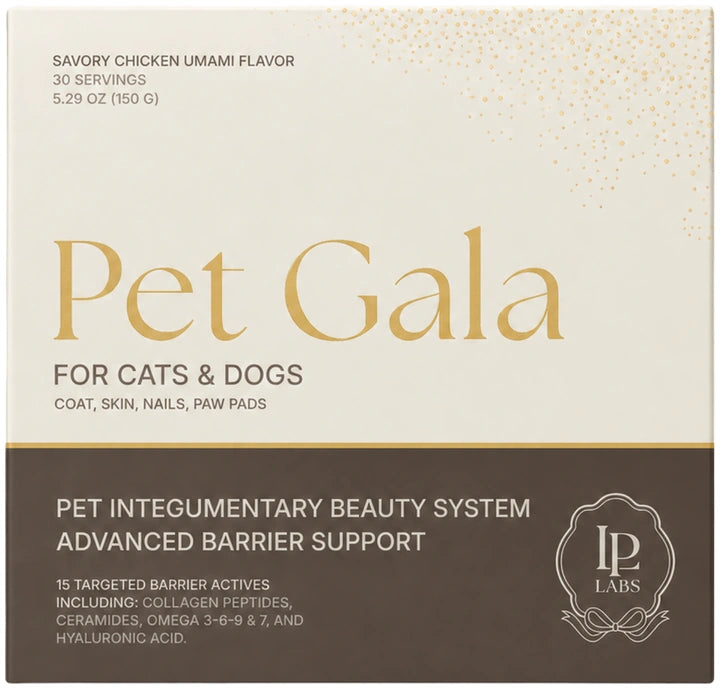
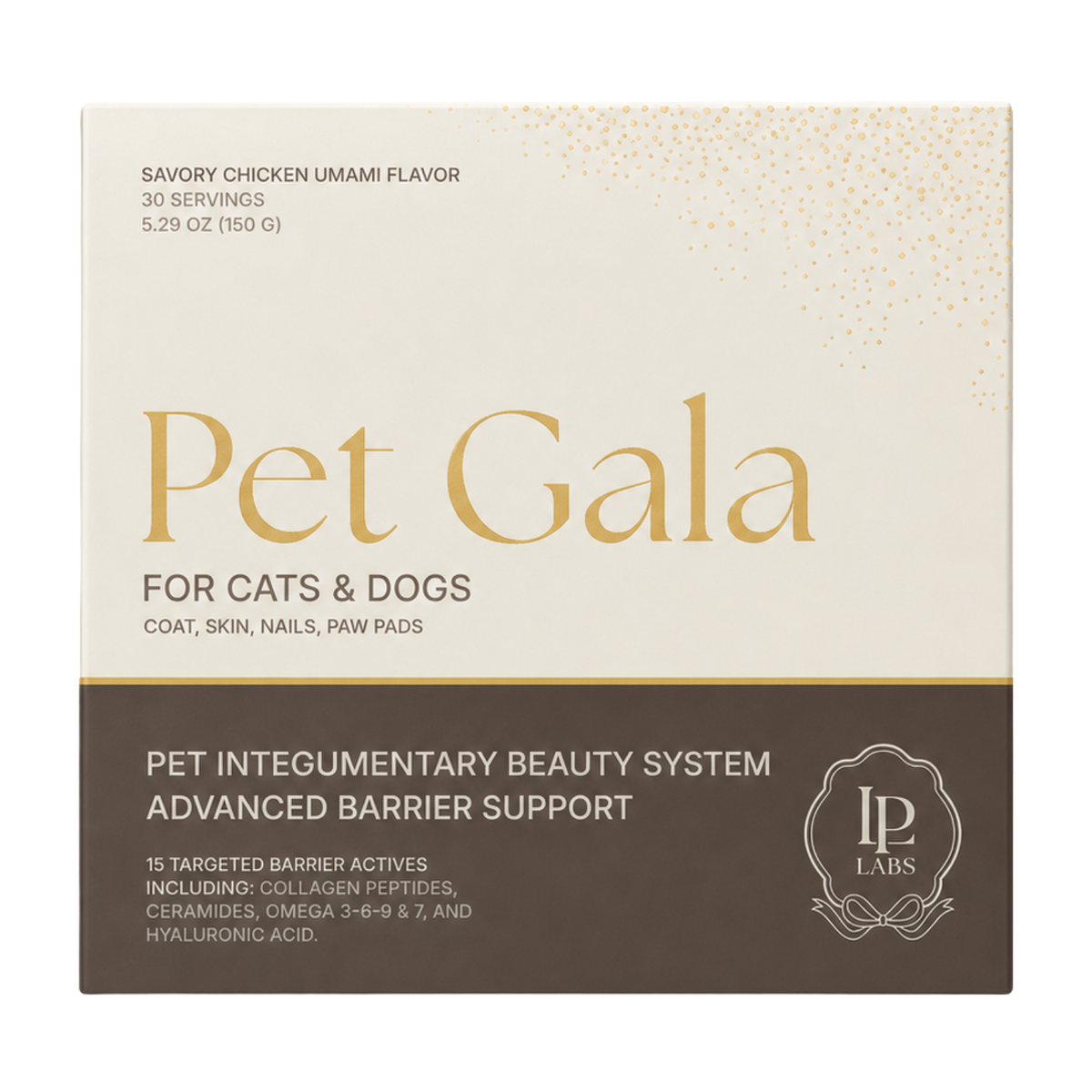
Dogzymes Biotin is a focused d-Biotin powder. Pet Gala is a skin, coat, and barrier-support daily system with 13 actives disclosed at full mg amounts and no proprietary blends. La Petite Labs also states per-batch third-party testing through named labs with a public COA lookup portal, while also disclosing that it has no finished-formula clinical trial.

Who should see a vet before using a biotin supplement?

Dogs with persistent itching, redness, odor, scabs, hair loss, ear problems, sudden coat changes, pregnancy, breeding plans, medical conditions, or current medications should be discussed with a veterinarian first. Dogzymes Biotin's own caution language says a veterinary examination is recommended prior to using the product.

Is Dogzymes Biotin an omega or collagen supplement?

Not based on the visible ingredient line. Dogzymes Biotin lists d-Biotin 240 plus Ground Rice Hulls, Calcium Carbonate, and Wheat Middlings. It does not show omega fatty acids, collagen, keratin, or a multi-active skin-barrier stack on the pages reviewed.

The Plain Comparison

Biotin vs Pet Gala™, side by side

QuestionBiotinPet Gala™Stronger fit
Which product gives a more focused biotin routine?Dogzymes Biotin lists d-Biotin 240 and directs 1/4 tsp twice daily for any body weight.Pet Gala is a broader skin, coat, and barrier-support daily system with 13 actives disclosed at full mg amounts and no proprietary blends.Dogzymes Biotin is the more direct fit for a buyer who specifically wants a biotin-focused powder.
Which product gives more complete public active-dose disclosure?Dogzymes Biotin lists d-Biotin 240, but the unit and per-serving basis are not published on the pages we checked.Pet Gala discloses 13 actives at full mg amounts on the public product page and uses no proprietary blends.Pet Gala is the stronger fit for buyers comparing exact active amounts across a multi-active skin formula.
Which product has more visible public testing infrastructure?Public COA, lot lookup, named lab, and testing panels were not easy to find publicly for Dogzymes Biotin when we checked.La Petite Labs states per-batch third-party testing through named labs with a public COA lookup portal; the portal does not yet cover every currently sold SKU, and the public panel does not yet itemize pesticide, mycotoxin, or allergen testing.Pet Gala is the stronger fit for buyers who want public COA lookup, with the stated scope limits kept clear.
Which product has finished-formula clinical trial evidence?No finished-product clinical trial or study references for Dogzymes Biotin were visible on the pages we checked.La Petite Labs explicitly discloses that no finished-formula clinical trial currently exists on its products; its evidence is ingredient-level.Neither product is stronger on finished-formula clinical trial evidence based on the public information reviewed.
Which product is closer to a veterinary dermatology substitute?Dogzymes Biotin is positioned as a skin-coat supplement and includes cautions recommending a veterinary examination prior to use.Pet Gala is not a substitute for medicated or prescription dermatology products or allergy immunotherapy.Neither should be treated as a replacement for veterinary dermatology care.

Competitor label and pricing facts checked July 3, 2026. Sources are listed in the References section below.

Why a simple d-Biotin powder can be appealing

The genuine appeal of Dogzymes Biotin is simplicity. Many skin and coat products combine oils, vitamins, minerals, flavors, enzymes, probiotics, or long proprietary blends. This product presents a much narrower idea: add a measured powder containing d-Biotin to the dog's food, twice daily, and keep the routine consistent.

That can suit owners who already have a food, omega, or veterinary plan in place and only want a biotin add-on. It may also appeal to multi-dog households or owners who dislike chews because the jar is large and the serving is measured by teaspoon rather than by treat count. The 1 lb jar is described as containing about 160 teaspoons and lasting a single dog approximately 10.5 months, which makes the routine feel low-friction once the dog accepts the powder.

The other appeal is that the product does not bury d-Biotin inside a named proprietary blend. The label line shows the active term directly: d-Biotin 240. That is more useful than a blend name alone. The problem is not the presence of a blend; the problem is the missing context around the number. Without a unit or per-serving basis, a buyer can see that d-Biotin is included, but cannot verify the dog's daily biotin intake from the public label text. Still, for owners who value a narrow ingredient lane over a broad stack, the clean positioning is a legitimate reason to consider it.

Dogzymes Biotin label walk-through: every disclosed amount

The disclosed ingredient line reads: Ground Rice Hulls, Calcium Carbonate, Wheat Middlings, d-Biotin 240. Those are the only ingredients visible in the label text we reviewed. The active ingredient captured from that line is d-Biotin, with the number 240.

The important limitation is that the label text does not publish the unit for 240. It also does not state a per-serving, per-scoop, per-pound, per-kilogram, or guaranteed-analysis basis for that number. Because of that, the number should not be converted into milligrams, micrograms, or daily intake in this review. Any such conversion would be an assumption.

The feeding direction is more concrete. The product says to mix into food or feed directly, using 1/4 tsp twice daily for any body weight. That means the public routine is the same for a small dog and a large dog. Some buyers will like that simplicity. Others may want a more weight-adjusted instruction, especially when comparing formulas that scale by dog size.

No guaranteed analysis rows were visible on the pages we checked. No study references were visible either. The label therefore gives an ingredient list, a serving direction, and a jar-duration estimate, but not the deeper dose documentation a research-minded buyer may want. If exact comparison matters, the next question is not whether biotin is present; it is what amount the dog actually receives each day. That answer is not available from the visible label text.

What is not visible on the Dogzymes Biotin page

Several buyer-relevant details were not easy to find publicly when we checked. The most important is the unit and basis for d-Biotin 240. That is the number most owners would need in order to compare the product against another biotin supplement or against an ingredient-level dose discussion from a veterinarian.

Life stage or age-floor guidance was also not visible. The directions say 1/4 tsp twice daily for any body weight, but we did not find a puppy, adult, senior, or minimum-age instruction. Storage instructions were not visible. Certifications were not visible. A subscription price was not visible. Public study references were not visible.

For quality review, public COA access, lot lookup, named lab information, and testing panels were not easy to find publicly. That does not prove testing is absent; it means a shopper cannot verify those details from the product pages we checked. The distinction matters. A careful buyer should avoid treating missing public documentation as evidence of poor quality, but should also avoid treating private, unpublished quality claims as confirmed facts.

The page does include a 100% Satisfaction Guarantee on products manufactured by Nature's Farmacy. That may reduce purchase anxiety, but it does not replace dose clarity, public testing detail, or veterinary guidance for dogs with active skin problems. The practical next step is to ask for the missing dose and lot documentation before purchase if those details affect your decision.

Which skin-support lanes Dogzymes Biotin actually covers

Skin and coat supplements often sit in different lanes. Some are omega-forward products. Some focus on barrier-support nutrients. Some include collagen or keratin-related ingredients. Some are broad daily systems with multiple disclosed actives. Dogzymes Biotin is best read as a biotin lane product, not as all of those categories at once.

The disclosed active is d-Biotin. The brand says biotin is involved in skin, coat, eyes, liver, and nervous system support, and it describes the d-Biotin form as readily absorbed and used by the dog's body. That tells the buyer how the brand frames the ingredient. It does not show omega fatty acids, collagen, keratin, or a multi-active skin barrier stack on the ingredient line.

For an owner shopping by problem type, that distinction helps. If the goal is a single biotin addition for coat quality or a simple skin-coat routine, Dogzymes Biotin is aligned with that search. If the owner is specifically looking for an omega product, a collagen product, a product with multiple fully quantified skin actives, or a formula with public COA lookup, this page leaves important gaps.

The product also should not be treated as a replacement for a veterinary workup. Itching, inflamed skin, odor, recurrent ear issues, bald patches, scabs, or sudden coat changes can reflect issues beyond coat nutrition. A supplement label cannot sort those causes on its own. The safest comparison is therefore by lane, not by broad skin-health language.

“The label shows d-Biotin 240, but without a unit or per-serving basis, the daily active amount cannot be calculated from the public page.”

Powder format and the twice-daily routine reality

Dogzymes Biotin is used as a powder. The directions say to mix it into food or feed it directly. The listed amount is 1/4 tsp twice daily for any body weight. In practical terms, this is a morning-and-evening habit rather than a once-daily chew or capsule routine.

That format can be convenient for dogs that already eat measured meals and do not resist powders. It can be less convenient for free-fed dogs, picky eaters, dogs that leave powder at the bottom of the bowl, or households where multiple people feed the dog and may duplicate a serving. The product's long jar duration helps only if the routine is followed consistently.

Because the direction is the same for any body weight, owners do not need to consult a weight chart. That simplicity is a real usability advantage. The tradeoff is that the public directions do not show why the same teaspoon amount is used across all dog sizes, and the missing d-Biotin unit prevents a buyer from seeing the daily active amount.

The caution panel says to administer during or after the animal has eaten to reduce the incidence of gastrointestinal upset. That is a practical instruction worth taking seriously, especially when introducing any powder into a dog's diet. Owners should also think about measuring accuracy, since a teaspoon-based powder depends on consistent scooping in everyday feeding. A routine that is cheap but inconsistently given is hard to judge.

Species and dosing practicalities for dogs

This review is for dogs, and the product information supports dog use. The directions are not divided into weight bands: 1/4 tsp twice daily for any body weight. The 1 lb jar is described as containing about 160 teaspoons and lasting a single dog approximately 10.5 months.

The same-dose-for-any-body-weight direction will be attractive to owners who want an uncomplicated label. It removes the need to count chews by weight, split tablets, or change the amount as the dog grows. For multi-dog households, though, it also raises practical questions. A small dog and a large dog are directed to receive the same amount, and the public label does not show the amount of d-Biotin delivered per day.

Owners should also pay attention to the warning language. The page says safe use in pregnant animals or animals intended for breeding has not been proven. It also says federal law prohibits off-label use of this product in ruminants. For a dog owner, the immediate takeaway is simple: this is not a label that says safe for every animal in every circumstance.

If the dog is pregnant, intended for breeding, medically fragile, under veterinary treatment, or showing sudden skin or coat changes, the more cautious route is to ask a veterinarian before starting. That is especially important because skin and coat changes can be nutritional, environmental, infectious, allergic, hormonal, or grooming-related. The fixed dog dose should not replace individual medical judgment.

Inactive ingredients: rice hulls, calcium carbonate, and wheat middlings

The inactive ingredient line matters for skin-coat shoppers because many dogs with coat complaints also have owners watching food sensitivities, stool changes, or ingredient tolerances. Dogzymes Biotin lists Ground Rice Hulls, Calcium Carbonate, and Wheat Middlings before d-Biotin 240.

There are no flavor ingredients visible in the ingredient line we reviewed. There are also no named animal proteins or fish oils in the disclosed ingredient list. That may be useful for owners trying to avoid certain flavor bases, but it should not be stretched into a hypoallergenic claim. The label includes Wheat Middlings, so owners avoiding wheat-derived ingredients should notice that before buying.

Ground Rice Hulls and Calcium Carbonate appear as carrier or support ingredients in the formula, while d-Biotin is the named active. The label does not publish amounts for the inactive ingredients, and it does not provide an allergen statement or storage instruction on the pages we checked.

For dogs with known dietary restrictions, the ingredient list is short enough to review quickly. For dogs with suspected allergies, chronic itching, recurrent ear problems, or gastrointestinal sensitivity, ingredient screening should be part of a veterinarian-guided plan rather than a guessing exercise based on supplement labels alone. A short ingredient list is useful only when it matches the dog's actual tolerance profile. Owners using elimination diets should be especially careful, because adding a supplement can complicate interpretation of food trials. Record any diet changes alongside supplement use.

Testing and quality visibility for Dogzymes Biotin

The public quality picture is limited. We did not find a public COA, lot lookup, named laboratory, or stated testing panel on the pages checked for Dogzymes Biotin. We also did not find certifications.

That does not prove the product is untested or uncertified. It only means those details were not easy for a shopper to verify publicly from the product information we reviewed. For some buyers, especially those buying a low-complexity powder from a familiar brand, that may be acceptable. For others, public lot-level documentation is part of the purchase decision.

The label does include manufacturer identity, ingredient disclosure, directions, cautions, warnings, and a satisfaction guarantee statement. Those are helpful baseline details. The missing pieces are more specific: which lab, which panels, whether contaminants are screened, whether active content is verified, and whether a buyer can match a jar to a public result.

A careful owner can ask the company directly for the current lot's quality documentation before purchase. If a brand provides those records privately, that is still useful, but it is different from having an always-visible public COA portal or lot-lookup system. The quality question is therefore not a verdict on the product; it is a visibility issue that each buyer must weigh. For a daily product that may sit in the pantry for months, that visibility can matter. It also helps owners keep records. For cautious buyers, that is worth asking about.

Evidence status behind the Dogzymes Biotin claims

Dogzymes Biotin's product page makes broad support claims. It says d-Biotin helps support skin, coat, eyes, liver, and nervous system function. It also says skin support can lead to reduced skin issues and overall improvement in skin health, and describes coat enhancement in soft, shiny, luxurious terms.

Those claims are best read as the brand's description of intended nutritional support. We did not find study references on the product page. We also did not find a finished-product clinical trial for Dogzymes Biotin on the pages reviewed. That means the page does not provide public product-specific evidence showing outcomes in dogs taking this exact formula.

The narrowness of the formula helps the evidence conversation in one way: buyers know the focus is d-Biotin, not a long mystery blend. But the missing unit and serving basis for d-Biotin 240 prevents a precise comparison to ingredient-level research doses. The label tells us what the ingredient is, but not enough to calculate how much d-Biotin a dog receives daily.

Owners should keep expectations practical. A supplement can be part of a coat-support routine, but skin disease, allergies, infections, parasites, endocrine issues, and nutritional imbalance are not problems to self-diagnose from a product page. That makes the product more appropriate for a support routine than for evaluating a medical skin complaint. The evidence status is therefore ingredient-positioned, not outcome-proven for this exact jar. That matters when setting expectations.

“Dogzymes Biotin is easiest to understand as a focused biotin powder, not as an omega, collagen, or broad skin-barrier system.”

Dogzymes Biotin price and cost per day from the jar estimate

The reviewed 1 lb jar is listed at regional pricing shown at review time (confirm current USD price on the seller's site). The page states that a 1 pound jar contains about 160 teaspoons and will last a single dog approximately 10.5 months. The serving direction is 1/4 tsp twice daily, which totals 1/2 tsp per day.

Using the page's duration statement — one jar lasting a single dog about 10.5 months — the per-day cost is small at typical pricing; confirm the current USD price on the seller's site to run exact math.92 divided by about 315 days, or roughly a low per-day cost (confirm current USD pricing). The same result also follows from the teaspoon estimate: 160 teaspoons divided by a 1/2 tsp daily serving equals about 320 days from one jar — nearly a year of use for one dog, which makes the per-day cost small at typical pricing.

That is a low daily arithmetic cost for a single dog. The value question is not just price, though. A buyer still has to decide whether the biotin-only lane fits the dog, whether the twice-daily powder routine is realistic, and whether the missing unit for d-Biotin 240 is acceptable.

No subscription price was visible on the pages we checked, so this review should not assume subscribe-and-save pricing. The other listed jar sizes may change the purchase math, but no alternate-size price calculation is included here because the reviewed public price is the 1 lb listing. Low daily cost is most persuasive when the label also answers the buyer's dose and quality questions. Here, value is promising but incomplete before purchase and follow-up.

Coat-turnover expectations for a biotin routine

Skin and coat shoppers often want a fast visual change, but the more realistic tracking window is measured in weeks and months, not days. Dogzymes Biotin's own 1 lb jar duration claim points toward long-term use: the jar is described as lasting a single dog approximately 10.5 months.

For the first few weeks, the most useful owner job is to watch tolerance and consistency. Is the dog eating the powder? Is the serving being given twice daily? Is the dog showing any new digestive discomfort? The caution panel specifically mentions administering during or after eating to reduce gastrointestinal upset, so routine setup matters.

Visible coat changes can be hard to judge because shedding cycles, grooming, bathing, diet changes, seasonal shifts, and underlying skin problems all affect what an owner sees. Before-and-after photos under similar lighting can be more useful than memory. A simple log of itching, licking, scratching, odor, redness, stool changes, and coat feel can help separate cosmetic impressions from meaningful patterns.

If a dog is getting worse, the next step is not simply to keep adding supplements. The label itself says an examination from a veterinarian is recommended prior to using this product, and it says to discontinue use and contact a veterinarian if lameness worsens. If the dog improves, still note what else changed during the same period. That keeps expectations honest and avoids crediting one powder for every change.

Who Dogzymes Biotin genuinely fits

Dogzymes Biotin is a reasonable fit for dog owners who want a focused d-Biotin powder and prefer a large jar over chews or small bottles. It also fits owners who are comfortable with a simple fixed serving: 1/4 tsp twice daily for any body weight.

It may be especially appealing when the owner already understands that this is a narrow supplement. The disclosed active is d-Biotin, while the other listed ingredients are Ground Rice Hulls, Calcium Carbonate, and Wheat Middlings. If that is exactly the lane the owner wants, the product is easy to understand.

The product is a weaker fit for buyers who require full active-dose math before purchase. Because the label does not publish the unit or per-serving basis for d-Biotin 240, a buyer cannot calculate the exact daily d-Biotin amount from the public information. It is also a weaker fit for owners looking for public COAs, lot lookup, named lab information, certifications, or published study references on the product page.

Dogs with active itching, inflamed skin, recurrent ear trouble, hair loss, odor, sores, or sudden coat changes should not be treated as simple coat-quality cases without veterinary input. The best buyer for this product is therefore someone with a specific biotin preference, a dog that tolerates food powders, and a willingness to ask follow-up questions. It is less ideal for someone who wants a fully quantified skin-barrier system before buying.

When itching means your dog should see a vet first

A skin-coat supplement is not the right first answer for every dog with skin signs. If the dog is intensely itchy, losing hair, developing scabs, smelling abnormal, chewing paws, shaking ears, showing redness, or seeming uncomfortable, a veterinarian should evaluate the dog before the owner assumes a coat supplement is enough.

Dogzymes Biotin's own caution language supports a cautious approach. It says an examination from a veterinarian is recommended prior to using this product. It also says safe use in pregnant animals or animals intended for breeding has not been proven, and that accidental overdose should prompt contact with a health professional immediately.

Owners should also pause and ask for help if a dog develops digestive upset after starting the powder, refuses food because of the supplement, or has a medical condition that makes supplement changes more complicated. The label says to administer during or after the animal has eaten to reduce the incidence of gastrointestinal upset.

The practical rule is simple: use coat supplements for nutritional support routines, not as a substitute for diagnosing skin disease. If the symptom is persistent itching rather than just dull coat quality, the vet visit is part of responsible buying. The same applies when skin signs appear suddenly, spread quickly, or come with behavior changes such as restlessness or appetite shifts. A supplement decision should not delay that evaluation. Timing matters when skin discomfort is escalating.

How Dogzymes Biotin compares with Pet Gala's skin-barrier system

Dogzymes Biotin and La Petite Labs Pet Gala sit in different skin-coat lanes. Dogzymes Biotin is a focused d-Biotin powder. Pet Gala is described by La Petite Labs as a skin, coat, and barrier-support daily system with 13 actives disclosed at full mg amounts on the public product page and no proprietary blends.

That means the comparison is not simply one product being better than the other. Dogzymes Biotin may be the more direct fit for an owner who specifically wants a biotin-only powder and values a long-lasting jar. Pet Gala is the more transparent fit for an owner comparing multiple active ingredients by exact milligram amounts.

Testing visibility also differs. For Dogzymes Biotin, public COA, lot lookup, named lab, and testing panels were not easy to find publicly when we checked. La Petite Labs states per-batch third-party testing through named labs with a public COA lookup portal. That portal should be described precisely: it has lot lookup, but La Petite Labs does not claim that every currently sold SKU is covered, and the public panel does not yet itemize pesticide, mycotoxin, or allergen testing.

Pet Gala should not be framed as a medicated or prescription dermatology replacement, allergy immunotherapy, or a finished-product clinical trial product. La Petite Labs explicitly discloses that no finished-formula clinical trial currently exists on its products; its evidence is ingredient-level. The honest choice depends on whether the buyer wants a narrow biotin powder or a more disclosed multi-active system.

Full disclosed amounts, testing scope, and serving details for the La Petite Labs side of this comparison are on the Pet Gala™ explainer.

The first 90 days with Dogzymes Biotin

For the first 90 days, the most useful approach is structured observation. Start with the label direction: mix into food or feed directly, 1/4 tsp twice daily. Because the caution panel says to administer during or after eating to reduce gastrointestinal upset, avoid giving it on an empty stomach unless a veterinarian says otherwise.

In the first week, watch acceptance and tolerance. Note whether the dog eats meals normally, whether stool changes, and whether any new discomfort appears. The label's warning section says the product is for animal use only, should be kept out of reach of children and animals, and accidental overdose should prompt contact with a health professional immediately.

From weeks two through eight, keep the routine consistent and track skin and coat signs in the same way each week. Photos can help because coat shine and fullness are easy to misremember. Track itching, licking, redness, odor, dandruff, shedding changes, and any grooming or diet changes happening at the same time.

By around 90 days, the owner should decide whether the routine is worth continuing, whether the dog tolerated it well, and whether unresolved symptoms need a veterinary plan. If itching or skin discomfort persists, the next step is not a bigger supplement stack; it is diagnosis. If the dog never accepts the powder, that is also a real routine failure, even if the jar looks economical. Practical use matters as much as label appeal.

How to read a biotin skin-supplement label before buying

For a biotin supplement, the first label question is not just whether biotin appears. It is how much biotin the dog receives per day. A strong label makes the unit and serving basis clear, so the buyer can compare products without guessing.

Dogzymes Biotin gets part of the way there by listing d-Biotin directly. The limiting detail is that "d-Biotin 240" appears without a unit or per-serving basis on the pages we checked. That means the number cannot be responsibly converted into a daily milligram or microgram amount in a buyer's guide.

Next, check the serving instruction. Dogzymes Biotin says 1/4 tsp twice daily for any body weight. That is simple, but it also means the same public amount is used for all dogs. Buyers who prefer weight-scaled dosing may want to ask the company or their veterinarian how to think about that direction for their dog.

Finally, check the quality layer: public COA, lot lookup, named lab, testing panel, certifications, storage instructions, cautions, and study references. Not every supplement will publish all of those, but knowing which details are visible helps owners compare transparency rather than relying on label tone alone. This label-reading discipline is especially useful in skin categories, where cosmetic language can sound stronger than the underlying public documentation. A buyer should separate ingredient presence, dose clarity, routine fit, and testing visibility into different questions before comparing products or routines.

Bottom line on Dogzymes Biotin for dogs

Dogzymes Biotin is a focused, simple d-Biotin powder for dogs. Its strengths are clear product identity, a straightforward twice-daily serving, a large 1 lb jar, and a low estimated daily cost when using the page's jar-duration statement.

Its main weakness is not complexity; it is missing context. The ingredient line lists d-Biotin 240, but does not publish the unit or per-serving basis. That prevents precise daily active-dose math. Public COA, lot lookup, named lab, testing panels, certifications, storage instructions, and study references were also not easy to find publicly when we checked.

For a dog owner who wants a narrow biotin product and accepts those limits, Dogzymes Biotin can make sense. For a dog owner comparing fully quantified multi-active skin systems, public testing access, or veterinary dermatology options, it should be evaluated more cautiously. And if the dog's issue is itching, redness, odor, sores, hair loss, or discomfort, the better first step is veterinary evaluation rather than treating the problem as coat quality alone. The fair read is focused appeal, low visible daily cost, and unresolved public-label questions. It is not a product to dismiss, but it is also not a label to read casually if active-dose transparency and testing visibility are priorities. The best purchase decision is narrow, practical, and matched to the dog's actual skin situation, not to broad coat claims alone. That is the practical buyer's-guide conclusion for this product.

“The low daily arithmetic cost is clear; the biotin dose math is not.”

Educational content only. This material is not a substitute for veterinary advice. Always consult your veterinarian about your dog’s specific needs. These statements have not been evaluated by the Food and Drug Administration. Products mentioned are not intended to diagnose, treat, cure, or prevent any disease.

Glossary

d-Biotin

The form of biotin named on the Dogzymes Biotin label; the brand describes it as the biologically active form.

Unit and per-serving basis

The information needed to know whether a number refers to milligrams, micrograms, amount per scoop, amount per weight of product, or another basis.

COA

Certificate of analysis, a document that can show testing results for a product or lot when a brand makes it available.

Lot lookup

A way for buyers to match the lot number on a product to public testing information.

Inactive ingredients

Ingredients used as carriers or supporting components rather than the main named active; Dogzymes Biotin lists Ground Rice Hulls, Calcium Carbonate, and Wheat Middlings.

Structure-function claim

A claim about supporting normal body structure or function, which should not be read as proof that a supplement treats a disease.

Finished-formula clinical trial

A study on the exact finished product, not just research on individual ingredients.

Skin-barrier system

A broader skin-support approach that may include multiple disclosed actives aimed at coat quality and barrier support rather than one narrow ingredient lane.

Related Reading

References

References

Sources for the Dogzymes Biotin facts on this page

Competitor label, pricing, and claims facts on this page come from these public sources. Links are provided for verification.

  • Source pdp_txt Accessed 2026-07-03 · high confidence.
  • Source pdp_jsonld_json Accessed 2026-07-03 · high confidence.

FAQ

La Petite Labs

Discover LPL-01: How This Fits Into a Complete Canine Integumentary Support System

Skin, coat, and nails aren’t cosmetic features. They’re the visible surface of deeper biological systems—barrier function, hydration balance, structural protein turnover, and lipid integrity—working in concert.

When these systems fall out of sync, it shows: dull coat, shedding, dryness, brittleness, sensitivity.

This article explores one piece of that puzzle. If you want to understand how true coat quality and skin resilience are built—and what actually moves the needle—you need to zoom out.

Start with the underlying science: