AnimalBiome Skin Rescue Review

A label-first review of a dog-and-cat skin supplement with disclosed capsule-size dosing, a visible mushroom blend total, and several buyer questions to verify before purchase.

La Petite Labs Editorial 1 min read

AnimalBiome Skin Rescue is a skin and coat supplement for dogs and cats, reviewed here in the 60-count Small size for pets under 20 lb. The label gives weight-based daily directions, capsule-size-specific active amounts, one inactive capsule material, and several skin, itch, allergy, gut-skin, and immune-support claims.

The most useful thing about this page is that the label does not treat every pet size as the same formula. Small, Medium, and Large capsules each show their own two-capsule active amounts. That makes the routine easier to evaluate for a cat or small dog than many skin-support products that only list broad ingredient names.

The honest decision frame is mixed. Skin Rescue has detailed formula visibility, including elemental zinc notes and a disclosed total for its Organic Mushroom Blend. At the same time, public COA access, lot lookup, named lab details, contaminant panels, guaranteed analysis, life-stage guidance, and per-mushroom amounts were not easy to find publicly when we checked.

We reviewed AnimalBiome at brand level — Public Transparency Score 74/100 — see the AnimalBiome Review for the brand's testing posture, disclosure practices, and what to verify before buying anything from its range.

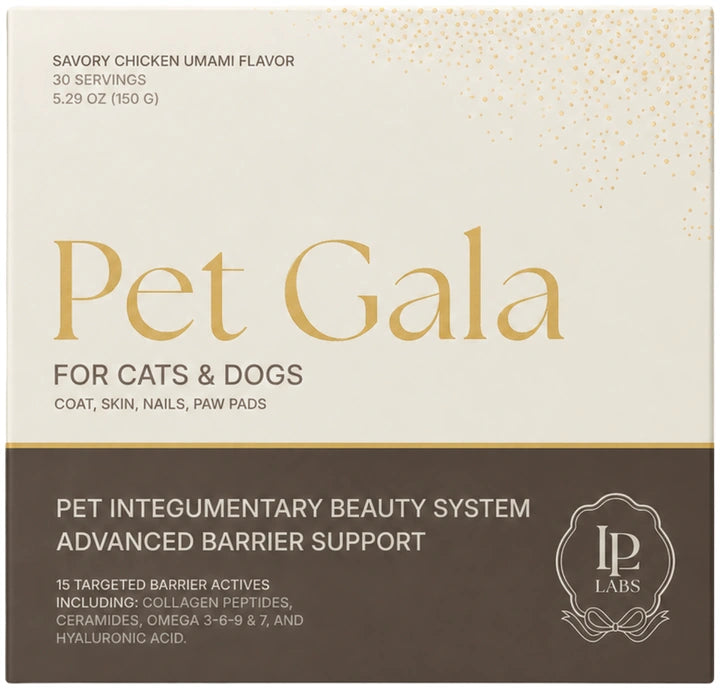
Disclosure: La Petite Labs sells its own pet supplements, including Pet Gala™. This review is editorial: competitor facts are drawn from the public sources listed in the References section, and facts are dated where shown.

What AnimalBiome Skin Rescue Is and Which Pets the Label Covers

AnimalBiome Skin Rescue is a Skin & Coat supplement sold for both dogs and cats. The reviewed version is Skin Rescue - 60ct Small, labeled for pets under 20 lb. The product page also lists 60-count Medium capsules for pets 21-40 lb and 60-count Large capsules for pets 41+ lb. The public product information reviewed here does not name a manufacturer, and it does not show a life-stage or age-floor statement.

The formula is positioned around skin comfort and gut-skin support. The brand uses outcome-flavored language such as "Comprehensive Itch and Allergy Relief," "Over 85% of itchy pets improved with Skin Rescue," and "Helps reduce the frequency and severity of skin issues." Those are the brand's claims, not independent facts this review can verify from the label alone. For a buyer, the more concrete information is the weight-based dosing table and the active-ingredient amounts disclosed for each capsule size.

For cats and dogs under 20 lb, the label gives the Small-capsule active amounts. For dogs 21-40 lb, it gives Medium-capsule amounts. For dogs over 40 lb, it gives Large-capsule amounts. That species wording matters. The product supports cats and dogs overall, but the heavier weight bands shown in the active-amount text are written for dogs, while the Small capsule text explicitly includes cats and dogs under 20 lb.

The practical takeaway is simple: this is not a generic coat chew with a single serving line. It is a capsule routine where size selection changes the active load, daily capsule count, and cost per day. A cat owner or small-dog owner should focus on the Small capsule panel and the 0-10 lb or 11-20 lb daily amount. A medium or large dog owner should confirm which bottle size matches the dog's current weight.

At a Glance

What is AnimalBiome Skin Rescue?

AnimalBiome Skin Rescue is a capsule-based Skin & Coat supplement for dogs and cats. The reviewed product is the 60ct Small size for pets under 20 lb. Its disclosed Small serving actives include Epicor, Organic Marshmallow Root, Organic Mushroom Blend, EubioQuercetin, Cellankton Marine Phytoplankton, and Organic Zinc Proteinate.

Product
AnimalBiome Skin Rescue - 60ct Small (Pets under 20 lbs)
Category
Skin and coat supplement
Species
Dogs and cats
Format
undefined
Disclosed actives
Per 2 Small capsules: 195 mg Epicor, 50 mg Organic Marshmallow Root, 45 mg Organic Mushroom Blend, 25 mg EubioQuercetin, 25 mg Cellankton Marine Phytoplankton, 14 mg Organic Zinc Proteinate; elemental zinc listed as 0.96 mg per Small capsule.
Price
$45 for 60ct Small; $45 / 60 = $0.75 per Small capsule. Daily cost is $0.75 for 0-10 lb pets and $1.50 for 11-20 lb pets.
Best fit
Dogs or cats under 20 lb whose owners want a capsule skin-support formula with weight-based dosing, a short inactive list, and visible active amounts.
What to check
Verify the exact capsule size for your pet's weight, ask for COA or lot documentation if that matters to you, and involve a veterinarian before use when itching is severe, recurrent, or linked with a health condition.

Quick Answers

Is AnimalBiome Skin Rescue good for dogs and cats?

It can be a reasonable fit for owners who want a capsule skin-support formula with weight-based dosing and several disclosed active amounts. Its strengths are label detail, a short inactive list, and Small-capsule directions that explicitly include cats and dogs under 20 lb. The main limitations are public testing visibility and the non-itemized mushroom blend.

What should owners check before buying Skin Rescue?

Check your pet's current weight band, the correct capsule size, and whether a capsule or opened capsule is realistic every day. Also check whether you need public COA, lot lookup, named lab, guaranteed analysis, life-stage guidance, or per-mushroom blend amounts, because those were not easy to find publicly when reviewed.

What cautions or side effects should owners watch for?

The label says to consult a veterinarian before use, especially if the pet has a health condition. This review will not invent side-effect rates. Practically, pause and call your vet if your dog or cat worsens, refuses food, vomits repeatedly, seems unusually tired, or develops new or more intense skin signs after starting any supplement.

How much does AnimalBiome Skin Rescue cost per day?

The reviewed 60ct Small bottle is $45, so the capsule cost is $45 / 60 = $0.75 per Small capsule. A 0-10 lb pet taking 1 Small capsule daily costs $0.75 per day. An 11-20 lb pet taking 2 Small capsules daily costs $1.50 per day.

How does Skin Rescue compare with La Petite Labs Pet Gala?

Skin Rescue has visible capsule-size dosing and brand-stated clinical-trial language for atopic dermatitis symptoms. Pet Gala's comparison strength is transparency: La Petite Labs states 13 actives disclosed at full mg amounts with no proprietary blends, plus per-batch third-party testing with named labs and a public COA lookup portal. Pet Gala has no finished-formula clinical trial.

Does Skin Rescue replace veterinary dermatology care?

No. The brand discusses itchy, red, inflamed skin, paw licking, hot spots, allergies, and flare-ups, but those signs can need diagnosis. Broken skin, odor, discharge, spreading hair loss, severe itching, recurrent hot spots, or a distressed pet should be handled with a veterinarian before relying on a supplement routine.

What is not visible on the Skin Rescue label or page?

Public COA, lot lookup, named third-party lab, testing panels, guaranteed analysis, manufacturer statement, life-stage guidance, subscription price, and per-member amounts inside the Organic Mushroom Blend were not easy to find publicly. Servings per container were also not stated directly, although the bottle count and dosing table allow simple duration math for the Small size.

How long should owners try Skin Rescue before judging it?

The directions say to use daily for a minimum of 60 days for best results. A practical owner trial should track baseline photos, itch frequency, grooming, flakes, and coat changes over that period. Do not wait through a trial if the pet's skin is broken, infected-looking, rapidly worsening, or painful.

The Plain Comparison

Skin Rescue vs Pet Gala™, side by side

QuestionSkin RescuePet Gala™Stronger fit
Which product gives fully itemized active amounts?Skin Rescue discloses active amounts by capsule size, including 195 mg Epicor, 50 mg Organic Marshmallow Root, 45 mg Organic Mushroom Blend, 25 mg EubioQuercetin, 25 mg Cellankton Marine Phytoplankton, and 14 mg Organic Zinc Proteinate per 2 Small capsules. The Organic Mushroom Blend members are named, but per-member amounts are not shown.Pet Gala discloses 13 actives at full mg amounts on the public product page and uses no proprietary blends.Pet Gala is the stronger fit for buyers who want every active item fully itemized rather than a named blend with a total amount.
Which product has more visible public testing documentation?For Skin Rescue, public COA, lot lookup, named third-party lab, and testing panels were not easy to find publicly when checked.La Petite Labs states per-batch third-party testing with named labs and a public COA lookup portal. The portal does not yet cover every currently sold SKU, and the public panel does not yet itemize pesticide, mycotoxin, or allergen testing.Pet Gala is the stronger fit for buyers prioritizing public testing visibility, while the exact COA lookup scope should still be checked for the SKU being purchased.
Which product has stronger finished-product evidence language?AnimalBiome says Skin Rescue features a postbiotic scientifically proven to reduce symptoms of atopic dermatitis in cats and dogs, and says most cats and dogs in a clinical trial had significant improvement by the end of the sixth week.La Petite Labs explicitly discloses that no finished-formula clinical trial currently exists on its products; its evidence is ingredient-level.Skin Rescue is the stronger fit for buyers who specifically prioritize brand-stated finished-product or product-specific trial language, pending review of the underlying study details.
Which product is better for avoiding proprietary blends?Skin Rescue uses an Organic Mushroom Blend with a disclosed total amount: 45 mg per 2 Small capsules, 80 mg per 2 Medium capsules, and 140 mg per 2 Large capsules. Its eight mushroom members are named, but individual mushroom amounts are not shown.Pet Gala has 13 actives disclosed at full mg amounts on the public product page and no proprietary blends.Pet Gala is the cleaner fit for no-blend shoppers; Skin Rescue still gives a useful blend total and member list.
Which product fits a capsule-based small-pet routine?Skin Rescue Small is a 60ct capsule product for pets under 20 lb. The dosing table gives 1 Small capsule daily for 0-10 lb pets and 2 Small capsules daily for 11-20 lb pets.Pet Gala is described as a skin, coat, and barrier-support daily system with 13 actives disclosed at full mg amounts on the public product page.Skin Rescue is the clearer fit when the buyer specifically wants the reviewed capsule routine for cats or dogs under 20 lb; Pet Gala is the clearer fit when full active mg disclosure is the main requirement.
Which product should buyers consider for prescription-level skin problems?Skin Rescue is a supplement with skin, itch, allergy, gut-skin, and immune-support claims. Its label tells owners to consult a veterinarian before use, especially if the pet has a health condition.Pet Gala is not a substitute for medicated or prescription dermatology products or allergy immunotherapy.Neither product is the right standalone answer for severe, recurrent, or infected-looking skin signs; veterinary care is the stronger first step.

Competitor label and pricing facts checked July 3, 2026. Sources are listed in the References section below.

Why Skin Rescue Has Real Shopper Appeal

Skin Rescue's strongest shopper appeal is that it gives buyers concrete formula visibility. The label identifies named actives and shows amounts for Epicor, Organic Marshmallow Root, EubioQuercetin, Cellankton Marine Phytoplankton, Organic Zinc Proteinate, and an Organic Mushroom Blend total. It also gives separate ingredient amounts for Small, Medium, and Large capsules instead of forcing every pet into one serving example.

That matters because skin and coat products often ask owners to commit to a daily routine during a frustrating period: scratching, licking, seasonal irritation, dry flakes, or visible coat change. A label that shows the amount per capsule size gives an owner, veterinarian, or nutrition professional something concrete to review. The brand also includes a note explaining that zinc proteinate contains 15% elemental zinc, with elemental zinc amounts listed as 0.96 mg per Small capsule, 1.70 mg per Medium capsule, and 2.91 mg per Large capsule.

The product is also capsule-based rather than flavored-chew-based, and the inactive ingredient list is very short: modified cellulose capsule. For pets with flavor sensitivities or owners avoiding animal-derived inactive ingredients, that can be a practical point in its favor. The brand describes the formula as "Gentle, hypoallergenic, and free of animal-derived ingredients." That is still a brand claim, but the visible inactive list is at least easy to inspect.

The appeal is not just cosmetic coat shine. Skin Rescue is built around a gut-skin and immune-support story, with postbiotic, mushroom, quercetin, phytoplankton, marshmallow root, and zinc proteinate lanes. Buyers should read that as a broad support concept, not as a replacement for veterinary diagnosis when itching, hot spots, hair loss, or recurrent flare-ups are present.

Skin Rescue Label Walk-Through: Every Disclosed Active Amount

For cats and dogs under 20 lb, the reviewed Small capsule size is the most relevant panel. The label states that 2 Small capsules contain 195 mg Epicor, described as Saccharomyces cerevisiae fermentate; 50 mg Organic Marshmallow Root; 45 mg Organic Mushroom Blend; 25 mg EubioQuercetin, described as quercetin-3-rutinoside from Sophora japonica; 25 mg Cellankton Marine Phytoplankton multi-species; and 14 mg Organic Zinc Proteinate at 15% zinc. The same product information separately states that one Small capsule contains 0.96 mg elemental zinc.

For dogs 21-40 lb, 2 Medium capsules contain 345 mg Epicor, 85 mg Organic Marshmallow Root, 80 mg Organic Mushroom Blend, 45 mg EubioQuercetin, 45 mg Cellankton Marine Phytoplankton multi-species, and 25 mg Organic Zinc Proteinate at 15% zinc. The elemental zinc note says one Medium capsule contains 1.70 mg elemental zinc.

For dogs over 40 lb, 2 Large capsules contain 590 mg Epicor, 150 mg Organic Marshmallow Root, 140 mg Organic Mushroom Blend, 75 mg EubioQuercetin, 75 mg Cellankton Marine Phytoplankton multi-species, and 43 mg Organic Zinc Proteinate at 15% zinc. The elemental zinc note says one Large capsule contains 2.91 mg elemental zinc.

The Organic Mushroom Blend is disclosed as a total blend amount, not as per-mushroom amounts. Its listed members are Reishi, Cordyceps, Turkey Tail, Lion's Mane, Chaga, Maitake, Shiitake, and King Oyster. The dagger note says it is Canada-grown mycelial biomass and fruiting body, cultivated on certified organic sorghum. That is more specific than a blank mushroom blend, but it still does not let a buyer compare each mushroom ingredient one by one.

The guaranteed analysis was not easy to find publicly when checked. The label does disclose active amounts, but guaranteed-analysis-style nutrient minimums or maximums were not visible in the reviewed public information.

What Is Not Easy to Find on the Skin Rescue Page

Skin Rescue has a relatively detailed active panel, but several buyer-relevant items were not easy to find publicly when checked. The product information did not show a named manufacturer. It did not show a life-stage statement or age floor. It did not show servings per container as a direct line, even though the bottle size is 60 capsules and the daily amount changes by pet weight. It did not show a guaranteed analysis.

The public quality signals were also limited. A public certificate of analysis was not found. A lot-lookup system was not found. A named third-party lab was not found. Specific testing panels, such as contaminant or potency panel names, were not found. That does not prove testing is absent; it only means those details were not easy to verify publicly from the pages checked.

The formula itself has one partial-transparency area: the Organic Mushroom Blend. The total amount is visible for each capsule size: 45 mg per 2 Small capsules, 80 mg per 2 Medium capsules, and 140 mg per 2 Large capsules. The members are also named. What is not visible is the amount of each mushroom within that blend. A buyer comparing Reishi, Turkey Tail, Cordyceps, or other mushroom inputs against published ingredient research cannot do that precisely from this label.

Pricing visibility is partly clear. The reviewed 60ct Small bottle is listed at $45. A subscription price was not found. Other capsule sizes are listed as variants, but this review should not assume their current price unless it is shown directly for the chosen variant.

For many owners, none of these gaps automatically disqualify the product. They do, however, shape the right pre-purchase questions. If a pet has a complicated medical history, food sensitivities, recurrent skin infections, or a need for strict quality documentation, ask the brand or your veterinarian for the missing details before considering the product page complete.

Which Skin-Support Lanes Skin Rescue Covers, and Which It Does Not Show

Skin Rescue is not an omega-3 oil product on the label reviewed here. It does not disclose fish oil, EPA, DHA, flax oil, hemp oil, or another named omega source. It also does not disclose collagen, keratin, biotin, or a dedicated structural coat-protein lane. Its visible formula is built around different support lanes: postbiotic fermentate, marshmallow root, mushroom blend, quercetin derivative, marine phytoplankton, and zinc proteinate.

The gut-skin and immune-support lane is the clearest part of the brand's positioning. The label includes Epicor, a Saccharomyces cerevisiae fermentate, and the brand describes the product as supporting the gut-skin axis. The mushroom blend adds a broader immune-support story, although the per-member mushroom amounts are not visible.

The barrier-support lane is present, but not through the usual omega shorthand. The brand says Skin Rescue "Promotes healthy gut and skin barrier function." The disclosed active most directly tied to an essential mineral lane is Organic Zinc Proteinate, with the brand also noting that zinc proteinate contains 15% elemental zinc and listing elemental zinc per capsule size. The formula also includes Cellankton Marine Phytoplankton multi-species, but the label details available here do not translate that into an EPA, DHA, or lipid amount.

The itch-and-allergy lane appears heavily in the brand's claims. The product page uses phrases such as "Provides relief from seasonal allergies" and says it is ideal for addressing itchy, red, inflamed skin, paw licking, hot spots, recurrent flare-ups, and dry, flaky skin. A careful buyer should treat that wording as the brand's positioning and discuss persistent or severe signs with a veterinarian.

So the map is straightforward: Skin Rescue covers postbiotic, mushroom, quercetin, phytoplankton, marshmallow-root, and zinc-proteinate lanes. It does not visibly cover an omega EPA/DHA lane, a collagen lane, a keratin lane, or a biotin-specific coat lane from the public label information reviewed.

“Skin Rescue is strongest as a transparent capsule routine for small pets, not as a substitute for veterinary dermatology care.”

Capsule Format and the Reality of a Daily Skin Routine

Skin Rescue is a capsule product. The label says capsules may be given whole or opened, with or without food. That gives owners two practical routes: direct capsule administration for pets that accept it, or mixing the contents into food for pets that resist swallowing capsules. The inactive ingredient is listed as modified cellulose capsule, and no flavoring, animal-derived inactive ingredient, or chew base is visible in the inactive list.

The label says to administer the recommended number of capsules daily, or as otherwise directed by a veterinary professional. It also says that pets needing additional support may receive up to twice the recommended daily amount. That "up to twice" language is important to handle carefully. Owners should not turn it into an automatic escalation plan, especially for cats, small dogs, pets on medications, or animals with existing health conditions. The product page itself tells buyers to consult a veterinarian before use, especially if the pet has a health condition.

Routine length is another practical detail. The directions say that for best results, use daily for a minimum of 60 days. That means a buyer should think in terms of consistency, not a weekend trial. A 60-count Small bottle lasts 60 days for a 0-10 lb pet at 1 Small capsule per day, or 30 days for an 11-20 lb pet at 2 Small capsules per day. Those are simple count-based estimates from the bottle size and dosing table, not a promise of results.

The capsule format may be a better fit for owners trying to avoid flavored soft chews, but it can be less convenient for pets that refuse powders mixed into food. Before buying multiple bottles, owners should consider whether their pet can reliably take a capsule or opened capsule contents every day for at least the label's minimum-use window.

Dog and Cat Dosing Practicalities by Weight Band

The daily dosing table is one of the most useful parts of the Skin Rescue label. For 0-10 lb pets, the recommendation is 1 Small capsule per day. For 11-20 lb pets, it is 2 Small capsules per day. For 21-40 lb pets, it is 2 Medium capsules per day. For 41-60 lb pets, it is 2 Large capsules per day. For 61-80 lb pets, it is 3 Large capsules per day. For 81+ lb pets, it is 4 Large capsules per day.

For cats, the clearest public fit is the Small capsule band because the active-amount text explicitly says "cats and dogs under 20 lbs." A cat under 10 lb would follow the 1 Small capsule daily line unless a veterinarian directs otherwise. A cat from 11-20 lb would follow the 2 Small capsules daily line. The product information reviewed here does not show cat-specific Medium or Large capsule text, so heavier or medically complex cats should be handled through veterinary guidance rather than a casual extrapolation.

For dogs, the full weight ladder is easier to apply. Small dogs under 20 lb use Small capsules, dogs 21-40 lb use 2 Medium capsules, and dogs over 40 lb move into Large capsule dosing. The daily capsule count increases again for 61-80 lb and 81+ lb dogs.

Cost and bottle duration change sharply by weight. The reviewed Small bottle is 60 capsules, so a 0-10 lb pet taking 1 capsule daily has a 60-day bottle. An 11-20 lb pet taking 2 capsules daily has a 30-day bottle. The public information used for this review does not give prices for every capsule size, so daily costs for Medium and Large routines should be calculated from the exact bottle price a buyer sees at purchase.

The safest dosing habit is to match the capsule size to current body weight and re-check after weight change, growth, or veterinary diagnosis.

Inactive Ingredients and Allergy-Relevant Label Details

The inactive ingredient list for Skin Rescue is short: modified cellulose capsule. That is notable because many pet skin products include flavor systems, palatants, oils, starches, gums, binders, sweeteners, or animal-derived ingredients. A shorter inactive list can be easier for owners to evaluate when a dog or cat has diet restrictions or suspected ingredient sensitivities.

The brand also describes Skin Rescue as "Gentle, hypoallergenic, and free of animal-derived ingredients." That is the brand's tolerability claim, not a universal safety guarantee. "Hypoallergenic" does not mean no pet can react, and it does not remove the need to monitor a pet after starting a new supplement. It does, however, align with the visible inactive list being simpler than many chew-style supplements.

There are still allergy-relevant questions a careful buyer should ask. The Organic Mushroom Blend includes Reishi, Cordyceps, Turkey Tail, Lion's Mane, Chaga, Maitake, Shiitake, and King Oyster. The blend note says the material is cultivated on certified organic sorghum. The formula also includes Saccharomyces cerevisiae fermentate, marshmallow root, a quercetin derivative from Sophora japonica, marine phytoplankton, and zinc proteinate. If a pet has reacted to yeast-derived ingredients, mushrooms, botanicals, marine ingredients, or sorghum-associated inputs before, the simple capsule shell does not eliminate that broader formula consideration.

Because the product is a capsule, owners can avoid some of the flavor variables that come with chews. But the opened-capsule route may still affect palatability. Some pets reject powders mixed with food, and some owners may need to hide the capsule in a tolerated food. That practical issue matters more than it looks on paper, because skin-support routines usually require consistent daily use over weeks, not occasional dosing.

Testing and Quality Visibility for Skin Rescue

The public testing picture for Skin Rescue is thinner than the active-ingredient panel. A public certificate of analysis was not easy to find. A lot-lookup system was not easy to find. A named third-party lab was not easy to find. Specific testing panels were not easy to find. Those are transparency limitations, not proof that the brand does no testing.

The label does include some quality-oriented ingredient detail. Organic Zinc Proteinate is described as an AAFCO-recognized form of zinc, and the brand says it is known for superior bioavailability and tolerability compared with other zinc forms. The public page also explains that zinc proteinate contains 15% elemental zinc and gives elemental zinc amounts per capsule size. For owners comparing zinc-containing skin products, that added explanation is useful because "zinc proteinate" and "elemental zinc" are not the same thing.

The mushroom blend also has a cultivation note: Canada-grown mycelial biomass and fruiting body, cultivated on certified organic sorghum. That gives more sourcing texture than a blend name alone. Still, it does not replace lot-level testing visibility or per-member blend amounts.

For a premium supplement buyer, the question is whether the available public quality information is enough for the pet's situation. For a generally healthy pet using a non-prescription skin-support supplement, some owners may be comfortable with the visible formula detail and veterinary consultation language. For pets with chronic disease, many medications, severe allergies, or previous supplement reactions, the absence of easy public COA and lot information may justify contacting the brand before purchase.

The product page's own caution says to consult a veterinarian before use, especially if the pet has a health condition. That is a sensible floor for any skin supplement, because itching and skin changes can reflect diet, parasites, infection, endocrine issues, environmental allergy, or other problems that a supplement label cannot sort out.

Evidence Status: Brand Trial Claims Versus What Buyers Can Verify

AnimalBiome makes several evidence-forward claims for Skin Rescue. The product page says the formula uses research-backed active ingredients, says Skin Rescue features a postbiotic scientifically proven to reduce symptoms of atopic dermatitis in cats and dogs, and says that in a clinical trial most cats and dogs had significant improvement in symptoms associated with atopic dermatitis by the end of the sixth week. It also says more than 85% of itchy pets improved with Skin Rescue.

Those statements are stronger than ordinary "supports skin health" language, and they will understandably attract owners dealing with persistent itching. In this review, they should still be treated as brand-stated claims unless the buyer can review the underlying study details, population, endpoints, product match, and limitations. The public product information summarized here does not provide enough detail to independently evaluate study design or how closely the trial conditions match a specific dog or cat at home.

This is also where comparison to La Petite Labs needs precision. Pet Gala should not be described as having finished-product clinical trial evidence. La Petite Labs explicitly discloses that no finished-formula clinical trial currently exists on its products; its evidence is ingredient-level. If a buyer values a brand-stated finished-product or product-specific trial claim, Skin Rescue may be stronger on that specific evidence dimension, assuming the buyer is satisfied after reviewing the trial details.

The more cautious framing is this: Skin Rescue has visible study-reference claims and an outcome percentage claim on its product page. The buyer's next step is to ask what exact formula was studied, whether dogs and cats were analyzed together or separately, how symptoms were measured, and whether adverse events and dropouts were reported. That does not dismiss the claim; it puts it in the context a medical-adjacent skin decision deserves.

“The Organic Mushroom Blend is named and totaled, but the label does not show each mushroom's individual amount.”

Skin Rescue Price and Cost Per Day for the Small Bottle

The reviewed Skin Rescue Small bottle is listed at $45 for 60 capsules. That gives a simple capsule price of $45 divided by 60 capsules, or $0.75 per Small capsule. The subscription price was not found, so this review should not assume a discounted recurring cost.

For a 0-10 lb pet taking 1 Small capsule per day, the daily cost is $0.75 and the 60-count bottle lasts 60 days. For an 11-20 lb pet taking 2 Small capsules per day, the daily cost is $1.50 and the 60-count bottle lasts 30 days. These are arithmetic estimates from the listed Small bottle price, capsule count, and dosing table.

The product page also lists Medium and Large variants, but this review does not calculate their cost per day because the verified price provided here is for the 60ct Small variant. That matters because medium and large dogs use different capsule sizes and capsule counts. A 21-40 lb dog uses 2 Medium capsules daily. A 41-60 lb dog uses 2 Large capsules daily. A 61-80 lb dog uses 3 Large capsules daily, and an 81+ lb dog uses 4 Large capsules daily. Without the exact Medium and Large bottle prices in front of the buyer, daily-cost comparisons for those pets would be guesswork.

Value depends on what the owner needs most. If the priority is a capsule formula with a short inactive list, visible active amounts, and brand-stated skin trial claims, the Small bottle may feel reasonable. If the priority is public lot-level COA access, named lab documentation, or fully itemized mushroom amounts, the value case is less complete until those details are verified.

For budget planning, owners should calculate a full 60- to 90-day routine. The directions recommend daily use for a minimum of 60 days, so the practical cost is not just the first bottle price.

What to Expect From Coat-Turnover Timing

The Skin Rescue label says to use daily for a minimum of 60 days for best results. That is a useful expectation-setting line because skin and coat routines rarely make sense as a one-week test. Owners often judge a product by scratching, licking, flakes, redness, shedding, coat feel, and regrowth, but those signs can move on different timelines and may be affected by other care changes.

A buyer should separate comfort signs from coat-turnover signs. If a pet is licking paws, scratching, or chewing skin, the first question is whether a veterinarian needs to rule out infection, parasites, allergy triggers, pain, or another cause. If the goal is general coat quality or barrier support, it is more reasonable to track changes over the label's minimum-use window. Even then, the product page's 60-day guidance should not be read as a guarantee that every pet will visibly improve by day 60.

The brand makes several outcome-focused skin claims, including "Over 85% of itchy pets improved with Skin Rescue" and a clinical-trial statement tied to atopic dermatitis symptoms by the end of the sixth week. Those are brand-stated claims. For a specific dog or cat, the more practical approach is to define what will be monitored before starting: scratch frequency, paw licking, hot spots, dry flakes, coat dullness, or grooming behavior.

A 90-day tracking window can be useful because it covers the minimum 60-day label period and adds time to observe whether any early change is sustained. Take photos under similar lighting, note diet and medication changes, and stop treating the supplement as the only variable if the pet worsens.

If itching is severe, the skin is broken, there is odor or discharge, hair loss is spreading, or the pet seems distressed, do not wait through a supplement trial before seeking veterinary care.

Who Skin Rescue Genuinely Fits

Skin Rescue genuinely fits owners who want a capsule-based skin-support supplement with a detailed public active panel. It is especially relevant for cats and small dogs under 20 lb because the reviewed Small bottle matches the label's cat-and-dog wording, and the active amounts are shown for 2 Small capsules.

It may also fit owners who are intentionally avoiding flavored chews. The inactive list shows only modified cellulose capsule, and the brand describes the formula as free of animal-derived ingredients. A pet with a history of reacting to common chew bases, animal flavors, or rich oils may be easier to trial on a capsule, assuming the active ingredients themselves are appropriate.

Another good-fit buyer is someone who wants a gut-skin-support style formula rather than a classic omega oil. Skin Rescue's disclosed lanes include Epicor fermentate, mushroom blend, quercetin derivative, marine phytoplankton, marshmallow root, and zinc proteinate. If the buyer specifically wants EPA and DHA amounts, collagen, keratin, or biotin, this label does not visibly provide those lanes.

The product can also fit an owner who values brand-stated clinical or study-reference claims and is willing to investigate the underlying details. The brand says most cats and dogs in a clinical trial improved in symptoms associated with atopic dermatitis by the end of the sixth week. That may be appealing, but buyers should still ask for study context if the claim is central to the purchase.

It is a less obvious fit for owners who require public lot-level COA access before buying. Public COA, lot lookup, named lab, and testing-panel details were not easy to find. It is also a less obvious fit when the pet's skin signs are severe, recurrent, infected-looking, or rapidly worsening. In those situations, the right first step is veterinary evaluation, not a supplement comparison chart.

When Itching Means a Dog or Cat Should See a Vet First

Skin supplements can be useful support tools, but itching is not just a coat-quality issue. Skin Rescue's own product page names concerns such as itchy, red, inflamed skin, hair loss from excessive scratching, excessive grooming or paw licking, hot spots, seasonal or environmental allergies, recurrent flare-ups, and dry, flaky skin. Those examples are exactly why owners should know when a supplement is not the right first move.

A dog or cat should see a veterinarian first if the skin is broken, bleeding, crusted, oozing, smelly, swollen, painful, or warm to the touch. Veterinary care should also come first when there is rapid hair loss, repeated hot spots, head shaking, ear odor, intense paw chewing, sudden behavior change, weight loss, appetite change, or lethargy. Cats that overgroom to the point of bald patches also deserve prompt evaluation because discomfort can be hidden until the pattern is advanced.

The same caution applies when signs keep returning. Seasonal patterns may still need diagnosis and a management plan. Environmental allergy, food reaction, parasites, yeast, bacterial infection, endocrine disease, and medication reactions can all show up through skin and coat changes. A supplement label cannot distinguish those causes.

Skin Rescue's directions include a veterinarian caution: consult before use, especially if the pet has a health condition. That is not a formality. It is especially relevant because the formula includes multiple botanicals, a yeast fermentate, a mushroom blend, a marine phytoplankton ingredient, quercetin derivative, and zinc proteinate.

Owners can still use label tracking productively. If a veterinarian says a supplement is reasonable, record baseline photos, itch frequency, grooming behavior, and any diet or medication changes. Pause and call the vet if the pet worsens, vomits repeatedly, refuses food, becomes unusually tired, or develops new skin changes after starting any supplement.

How Skin Rescue Compares With La Petite Labs Pet Gala

Skin Rescue and La Petite Labs Pet Gala are both skin-support products, but they are not identical lanes. Skin Rescue's public formula centers on Epicor fermentate, marshmallow root, mushroom blend, EubioQuercetin, Cellankton Marine Phytoplankton, and zinc proteinate, with weight-based capsule dosing across Small, Medium, and Large variants. Pet Gala is described by La Petite Labs as a skin, coat, and barrier-support daily system with 13 actives disclosed at full mg amounts on the public product page and no proprietary blends.

The biggest transparency difference is blend structure. Skin Rescue discloses the total Organic Mushroom Blend amount and its members, but not per-member mushroom amounts. Pet Gala's stated benchmark is different: 13 actives disclosed at full mg amounts with no proprietary blends. For buyers who want every active item fully itemized, Pet Gala is the cleaner label structure on that specific point.

Testing visibility also differs. Public COA, lot lookup, named lab, and testing-panel details for Skin Rescue were not easy to find. La Petite Labs states per-batch third-party testing with named labs and a public COA lookup portal. That should still be stated precisely: the COA lot-lookup portal does not yet cover every currently sold SKU, and the public panel does not yet itemize pesticide, mycotoxin, or allergen testing.

Evidence is the dimension where Skin Rescue may have the stronger buyer-facing claim. AnimalBiome references a clinical trial and says most cats and dogs improved in symptoms associated with atopic dermatitis by the end of the sixth week. La Petite Labs explicitly discloses that no finished-formula clinical trial currently exists on its products; its evidence is ingredient-level. A buyer who prioritizes finished-product trial claims should weigh that plainly.

Pet Gala is not a substitute for medicated or prescription dermatology products or allergy immunotherapy. Skin Rescue should not be treated that way either. For persistent itch, both belong in a veterinarian-guided plan rather than a self-diagnosis routine.

Full disclosed amounts, testing scope, and serving details for the La Petite Labs side of this comparison are on the Pet Gala™ explainer.

The First 90 Days on Skin Rescue

A practical 90-day Skin Rescue trial starts before the first capsule. Confirm the correct capsule size and weight band. For pets under 20 lb, that means the Small capsule routine: 1 Small capsule daily for 0-10 lb pets and 2 Small capsules daily for 11-20 lb pets. For dogs above 20 lb, the dosing table moves to Medium and Large capsules by weight. Cats should be handled especially carefully because the clearest cat-specific active-amount wording is for cats and dogs under 20 lb.

Next, define what is being tracked. For skin support, useful owner observations include scratching frequency, paw licking, overgrooming, flakes, redness, coat feel, hot spot recurrence, and whether the pet is sleeping or resting normally. Photos can help because memory is unreliable when signs fluctuate.

The label says the product may be given whole or opened, with or without food. Choose the method the pet will accept consistently. If opened into food, keep the food vehicle stable so a new topper or treat does not confuse the trial. Store the product in a cool, dry place, as the label directs.

Days 1-14 are mostly about tolerance and routine. Watch for refusal, digestive upset, behavior change, or new skin changes. This review will not invent adverse-event rates, so the practical rule is to pause and call a veterinarian if concerning signs appear. Days 15-60 line up with the label's minimum-use window. Avoid changing several other skin variables at once unless directed by the vet.

Days 61-90 are for deciding whether the routine is worth continuing. Compare notes and photos with the baseline. If there is no meaningful change, if signs worsen, or if the pet still has recurrent itch, a veterinary plan should take priority over simply extending the supplement trial.

How to Read a Skin-Supplement Label Like Skin Rescue

Start with the exact species and weight wording. Skin Rescue supports dogs and cats, but the active-amount text is most explicit for "cats and dogs under 20 lbs" in the Small capsule size. The Medium and Large active-amount descriptions are written for dogs. That does not make the product irrelevant to cats, but it does mean cat owners should be careful about which panel they use.

Next, check whether amounts are shown. Skin Rescue discloses several active amounts by capsule size, which is helpful. For 2 Small capsules, it shows 195 mg Epicor, 50 mg Organic Marshmallow Root, 45 mg Organic Mushroom Blend, 25 mg EubioQuercetin, 25 mg Cellankton Marine Phytoplankton, and 14 mg Organic Zinc Proteinate. For 2 Medium and 2 Large capsules, the amounts increase. A buyer should compare the amount tied to their pet's actual daily dose, not just the largest number on the page.

Then look for blends. Skin Rescue's Organic Mushroom Blend names eight mushrooms and gives a total amount, but it does not show per-member amounts. That means the blend can be understood as a formula lane, not as eight individually comparable doses.

Check inactive ingredients because skin-sensitive pets often have diet histories. Here, the inactive list is only modified cellulose capsule. That is easier to evaluate than many chew products, but the active ingredients still need review.

Finally, separate claims from verifiable label facts. Phrases about itch relief, allergy relief, inflammation cycles, hot spots, and atopic dermatitis symptoms are brand claims. They may be important, but they should send buyers to the study details and the veterinarian, not replace either. Quality documentation deserves the same discipline: if COA, lot lookup, named lab, or testing panels are not public, ask for them rather than assuming what they contain.

Bottom Line on AnimalBiome Skin Rescue

AnimalBiome Skin Rescue is a skin-support capsule with a detailed public formula panel. The reviewed Small bottle is for pets under 20 lb, and the label gives specific active amounts for 2 Small capsules: 195 mg Epicor, 50 mg Organic Marshmallow Root, 45 mg Organic Mushroom Blend, 25 mg EubioQuercetin, 25 mg Cellankton Marine Phytoplankton, and 14 mg Organic Zinc Proteinate. It also lists elemental zinc per capsule size and gives a straightforward weight-based dosing table.

The best reasons to consider it are the capsule format, short inactive list, visible active amounts, and weight-based routine. It is especially easy to understand for cats and small dogs under 20 lb because the reviewed Small size matches that public wording. The brand's study-reference and itch-improvement claims may also matter to buyers, provided they review the underlying evidence before treating those claims as decisive.

The biggest cautions are not about declaring the formula weak. They are about what remains hard to verify publicly. Public COA access, lot lookup, named lab, testing panels, guaranteed analysis, life-stage guidance, subscription price, manufacturer statement, and per-mushroom blend amounts were not easy to find. Those gaps matter more for medically complex pets and owners who require lot-level documentation.

Compared with La Petite Labs Pet Gala, Skin Rescue may be more appealing to someone prioritizing AnimalBiome's brand-stated finished-product trial language. Pet Gala is more transparent on full active mg disclosure and no proprietary blends, and La Petite Labs states per-batch third-party testing with named labs and a public COA lookup portal, with the important limitation that lot-lookup coverage and public panel scope are not universal.

For persistent itching, recurrent hot spots, hair loss, or inflamed skin, the bottom line is veterinary-first. For general skin and coat support in the right pet, Skin Rescue is worth a careful label-based comparison.

“Skin Rescue may be stronger on brand-stated trial language, while Pet Gala is cleaner on full active mg disclosure and no proprietary blends.”

Educational content only. This material is not a substitute for veterinary advice. Always consult your veterinarian about your dog’s specific needs. These statements have not been evaluated by the Food and Drug Administration. Products mentioned are not intended to diagnose, treat, cure, or prevent any disease.

Glossary

Epicor

A branded Saccharomyces cerevisiae fermentate disclosed in Skin Rescue at different amounts by capsule size.

Organic Mushroom Blend

A blend of Reishi, Cordyceps, Turkey Tail, Lion's Mane, Chaga, Maitake, Shiitake, and King Oyster. Skin Rescue lists the blend total but not per-mushroom amounts.

EubioQuercetin

A branded quercetin-3-rutinoside ingredient from Sophora japonica, listed as an active in Skin Rescue.

Cellankton Marine Phytoplankton

A multi-species marine phytoplankton ingredient listed in Skin Rescue; the label does not translate it into EPA, DHA, or another omega amount.

Zinc proteinate

A zinc form listed in Skin Rescue. The product page says it is 15% elemental zinc and lists elemental zinc per capsule size.

Elemental zinc

The actual zinc portion within zinc proteinate. Skin Rescue lists 0.96 mg per Small capsule, 1.70 mg per Medium capsule, and 2.91 mg per Large capsule.

COA

Certificate of analysis, a lab document buyers use to review batch-level quality information when a brand makes it public.

Proprietary blend

A grouped ingredient blend where the total amount is shown but individual member amounts are not fully itemized.

Related Reading

References

References

Sources for the Skin Rescue facts on this page

Competitor label, pricing, and claims facts on this page come from these public sources. Links are provided for verification.

  • Source pdp.txt Accessed 2026-07-03 · high confidence.
  • Source pdp.jsonld.json Accessed 2026-07-03 · high confidence.

FAQ

La Petite Labs

Discover LPL-01: How This Fits Into a Complete Canine Integumentary Support System

Skin, coat, and nails aren’t cosmetic features. They’re the visible surface of deeper biological systems—barrier function, hydration balance, structural protein turnover, and lipid integrity—working in concert.

When these systems fall out of sync, it shows: dull coat, shedding, dryness, brittleness, sensitivity.

This article explores one piece of that puzzle. If you want to understand how true coat quality and skin resilience are built—and what actually moves the needle—you need to zoom out.

Start with the underlying science: