Microchip Cat Feeders: Protect the Right Cat’s Meal

A registered chip opens the lid. Comfortable access and keeping another pet out still need checking.

By La Petite Labs Editorial 7 min read

As Seen On

Woman cuddling an orange-and-white cat and a silver tabby while holding a Hollywood Elixir box
Hollywood Elixir® Senior Cat Supplement

17 science-backed actives

From$50/moSave up to 44%Shop Now
Contents

A microchip feeder controls which registered pet can open a bowl; it does not choose the diet or automatically prove how much that pet ate. It is worth considering when another animal takes the food. Before relying on it, check that the intended cat can comfortably approach the opening, eat beneath the lid and leave without being crowded.

Identity-controlled access is different from releasing a timed portion.

Training can temporarily leave food accessible to other pets. 2

A recognized chip does not prevent every opportunity for another animal to share an open bowl. 3

Choose for the meal that needs separating

If one cat grazes while another finishes every available bowl, a lid that opens for the intended cat can change who gets an opportunity to eat. It can also support a feeding plan in which the veterinary team has prescribed different diets. The feeder does not establish which diet is appropriate: that remains a nutrition decision.

If the actual problem is making a portion available at a later time, compare automatic wet-food cat feeders instead. A standard identity-controlled bowl opens when an authorized animal approaches; it is not a rotating meal schedule. Neither function alone verifies that the cat swallowed the food.

Keep the approach in view as you choose. A cat must be able to reach the food through the device’s opening, and another animal must not be able to block that route. A sophisticated lid does not make a crowded corner into a calm feeding place.

Compare SureFeed standard with MiBowl CP500

The standard SureFeed Microchip Pet Feeder stores up to 32 identities and has a 400 ml bowl for wet or dry food. Sure Petcare provides a chip-number compatibility checker; verify the cat’s actual identifier before purchase rather than assuming a generic microchip label settles it. 1 The sensor hoop and moving lid are part of the route the cat needs to accept.

MiBowl CP500 can pair up to ten pets. Its manual offers gradual familiarization with the bowl in front of the feeder, closer to it and then inside. Training mode leaves the lid open longer after the pet moves away; the default setting closes sooner. 3 More stored identities are useful only when several authorized animals should share the same bowl.

This comparison concerns the standard SureFeed and MiBowl CP500. Connect and Plus variants have their own specifications and should be checked separately. We reviewed manufacturer pages and manuals on October 25, 2026; we did not test chip recognition, lid speed or food theft in a household.

Inspect the food-contact cleaning route too. SureFeed’s manual says not to put the whole feeder in water or a dishwasher and to keep the four black hoop sensors clean. MiBowl’s bowl is top-rack dishwasher safe, its lid is hand-wash only, and its body is wiped with a damp cloth rather than sprayed or soaked. 2 3

Tabby cat looking up at a Hollywood Elixir sachet held above it, with the product box on a small table

Keep meals protected while teaching the lid

Programming the chip is only one part of setup. Let the cat become familiar with the bowl and opening before expecting normal meals beside moving hardware. Follow the exact model’s training sequence, moving forward when the cat is comfortable rather than to meet a fixed deadline. MiBowl explicitly says not to force the pet into the feeder or put it over the pet’s head. 3

SureFeed’s manual warns that pets can eat from one another’s feeders until the later training stages. 2 If different foods must remain separate, maintain supervised or physically separated meals during that period. “The chip is registered” is not evidence that the current training position keeps the other cat out.

MiBowl also documents a different access gap: the lid may open for a non-paired pet when the paired pet is sitting nearby. Its instructions suggest positioning the feeder against a wall; for several MiBowls, the manual specifies one metre between units. 3 These are model-specific placement measures, not a promise that determined animals can never share an open bowl.

When chip recognition does—and does not—protect a meal

Watch both cats during normal feeding before relying on the lid to keep meals separate.

SituationWhat identity control changesWhat it cannot settleOwner verification
Another pet takes a closed bowl’s foodRegistered identity can trigger openingAccess once the intended cat has opened itWatch both animals during an ordinary meal
Feeder is in early trainingCat learns bowl and lid movementFull separation may not yet apply 2Maintain monitored separate meals
Paired MiBowl cat sits nearbyRegistered identity may keep access availableA non-paired pet can sometimes reach food 3Follow placement guidance and observe
Cat does not approach the openingNothing useful if the meal stays inaccessibleComfort, fear or illnessRestore reachable food; assess the changed behavior
Bowl still contains foodFood remains available in the deviceWhether a useful amount was eatenCheck actual intake within the cat’s care plan

SureFeed and MiBowl manufacturer training and access instructions. 1 2 3

Enrollment does not establish actual intake or exclude every opportunity to share an open bowl.

Hand gently petting an orange-and-white cat beside a food bowl and Hollywood Elixir box

Have a fallback before leaving it in charge of a meal

While you are present, confirm that the intended cat can open and use the feeder and that the lid returns to its normal closed state afterward. Observe whether a second animal waits beside the first or reaches into the opening. Those observations matter more than the number of identities a product can store.

Keep sensors and lid tracks clean, watch the battery indicator and follow the manual when recognition or closure fails. Avoid forcing the mechanism or bypassing its safety behavior. Until the cause is resolved, offer the intended cat a supervised meal it can reach; a full inaccessible bowl is not a successful feeding plan. 2

If the cat stops eating, do not assume the only problem is the lid. Feline guidance advises checking for illness when getting a cat to eat becomes difficult. 4 The senior cat food guide covers the separate diet question, and home modifications for senior cats connects this feeding station with the rest of the cat’s accessible resources.

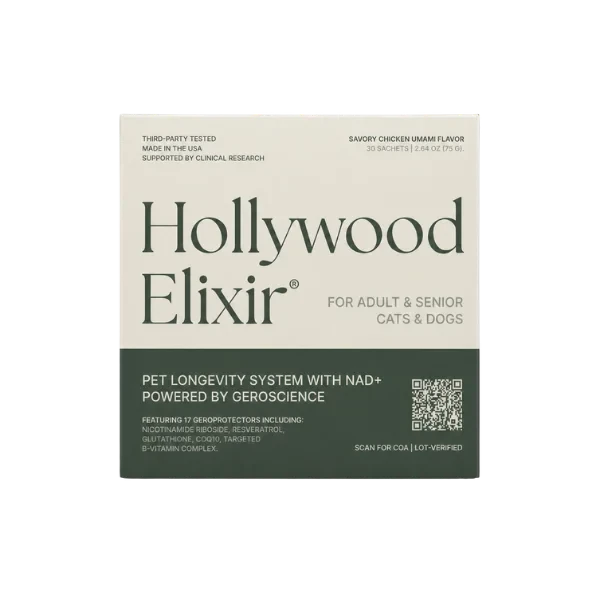
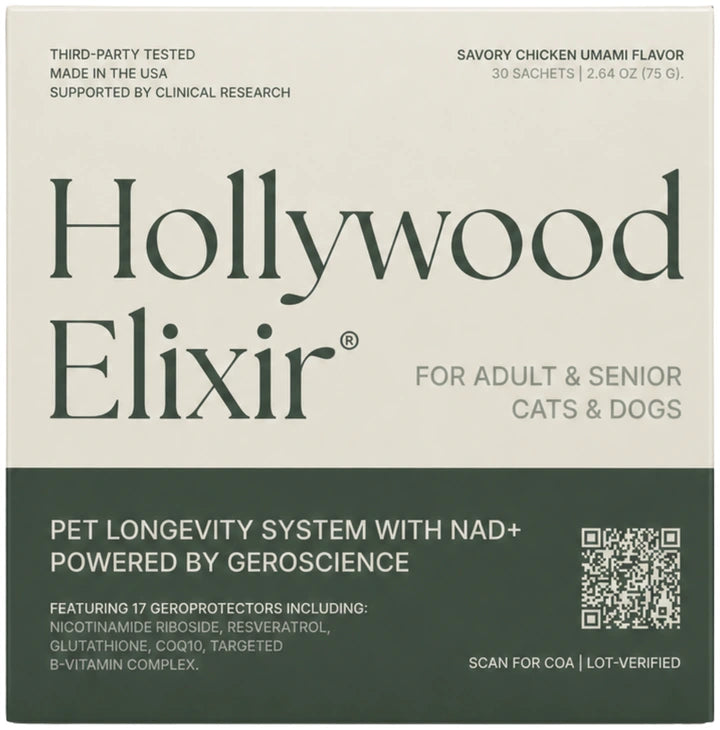
Keeping one cat’s meal separate makes it easier to know which daily additions belong in that bowl. If healthy-aging nutrition is part of the plan, Hollywood Elixir® combines NAD+ precursors, CoQ10 and antioxidant nutrients in a powder for adult and senior cats. Its disclosed amounts let you review overlap with the cat’s existing diet and supplements, while the sachet mixes into the usual meal. Explore the full formula and serving guide before deciding what to add. 5

Silver tabby sitting beside a food bowl and a Hollywood Elixir box held in a person's hand

DVM Voice: Clinical Vignette of a Common Pattern in Senior Cat Aging

Case provided by JoAnna Pendergrass, DVM

Sasha, a 12-year-old cat, was brought in after her owner noticed increased thirst and urination, lethargy, vomiting, and a generally unkempt appearance. Examination showed weight loss, elevated blood pressure, and reduced vitality.

Diagnostic testing revealed elevated kidney markers, poorly concentrated urine, and protein loss in the urine — findings consistent with chronic kidney disease, one of the most common chronic conditions in senior cats.

Her care required a kidney-focused diet, blood pressure management, targeted supplementation, medication support, and regular monitoring — a necessary plan, but one started after clinical signs were already visible.

Clinical takeaway: Sasha’s case reflects why senior-cat wellness should begin before obvious decline. Earlier monitoring, body-condition tracking, hydration awareness, antioxidant support, and daily cellular resilience may help support quality of life as cats age.

Single-case vignette. Not generalizable. Veterinary diagnosis and monitoring are essential for increased thirst, urination, vomiting, lethargy, weight loss, or suspected kidney disease.

Explore Hollywood Elixir Research →

Educational content only. This material is not a substitute for veterinary advice. Always consult your veterinarian about your cat’s specific needs. These statements have not been evaluated by the Food and Drug Administration. Products mentioned are not intended to diagnose, treat, cure, or prevent any disease.

Glossary

paired pet: A pet whose identifier has been registered with the feeder so it can trigger access to the bowl.

training mode: A temporary introduction setting. MiBowl keeps its lid open longer after the pet moves away to allow more time for familiarization.

RFID tag: A model-compatible electronic identifier worn on a collar as an alternative to an implanted microchip for feeder recognition.

Related Reading

References

Numbered references identify the sources used for specific claims. Read the study design, species and evidence boundaries alongside each finding.

  1. SureFeed Microchip Pet Feeder. Sure Petcare · Not statedSpecies/context: catEvidence boundary: Current source-reported specifications and instructions; not independent performance testing.↩ 1 · ↩ 2 · ↩ 3 · ↩ 4
  2. SureFeed Microchip Pet Feeder manual. Sure Petcare · Not statedSpecies/context: catEvidence boundary: Current source-reported specifications and instructions; not independent performance testing.↩ 1 · ↩ 2 · ↩ 3 · ↩ 4 · ↩ 5 · ↩ 6 · ↩ 7
  3. MiBowl CP500 User Manual 50012/06. Closer Pets · Not statedSpecies/context: catEvidence boundary: Current source-reported specifications and instructions; not independent performance testing.↩ 1 · ↩ 2 · ↩ 3 · ↩ 4 · ↩ 5 · ↩ 6 · ↩ 7 · ↩ 8 · ↩ 9 · ↩ 10 · ↩ 11
  4. Senior Cats Have Special Needs. Feline Veterinary Medical Association · Not statedSpecies/context: catEvidence boundary: First-party feline guidance; care advice, not an experimental equipment comparison.↩ 1 · ↩ 2
  5. Hollywood Elixir formula and serving guide. La Petite Labs · Not statedSpecies/context: dog, catEvidence boundary: Current source-reported specifications and instructions; not independent performance testing.↩

FAQ

Can a cat without a microchip use one?

Both manufacturers offer compatible collar identifiers. Check the exact model and tag requirements; do not assume any RFID tag will work. The intended cat must still tolerate wearing the appropriate identifier and using the opening. 1 3

Can two cats share one microchip feeder?

Yes, if both are registered and are meant to access the same food. SureFeed stores up to 32 identities; MiBowl CP500 up to ten. Registration does not create separate compartments or track each cat’s consumption by itself. 1 3

Does the closed lid refrigerate wet food?

No cooling system is established for these models by the sources used here. A covered bowl should not be treated as refrigerated storage. Follow the food manufacturer’s instructions and remove leftovers appropriately; a scheduled cooling feeder is a different product decision.

Can another cat still steal food?

It can, particularly during open training or while an authorized cat is nearby. SureFeed explains the training limitation, and MiBowl documents nearby-pet activation. Observe the actual household before relying on the device for diets that must remain separate. 2 3

What if my senior cat will not use the feeder?

Preserve a reachable supervised meal and return to the model’s gentler familiarization stage. Do not force the cat’s head into the opening. If reduced eating continues or represents a new change, involve the veterinary team. 3 4

Orange-and-white cat beside a Hollywood Elixir box held in a person's hand

Discover LPL-01: How This Fits Into a Larger Feline Longevity System

Aging in cats unfolds quietly. It’s not driven by a single failure, but by gradual shifts across interconnected systems — cellular energy, oxidative balance, immune tone, and tissue integrity — each influencing the others over time.

This article explores one layer of that system. To understand what actually shapes long-term health, you need to step back and look at how these layers interact.

Start with the underlying science:

Keep exploring

What would you like to understand next?

Search practical guides about healthy aging, cellular energy, ingredients, and daily support for cats.