Greasy Dog Coat (Oily Coat) Causes & Fixes

Identify Oily Coat Triggers; Choose Fixes Supporting Skin, Gut, Hormones, Ears, Odor

Essential Summary

Why Is Greasy Dog Coat (Oily Coat) Causes & Fixes Important?

A greasy coat is often the skin signaling an underlying trigger such as yeast overgrowth, seborrhea patterns, allergy inflammation, or hormonal change. Focusing only on shampoo can delay the real solution. Clear home observations and early veterinary testing often shorten the path to a more controlled coat.

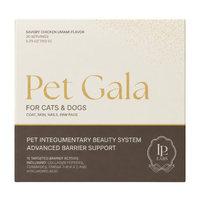
Pet Gala™ can be part of a daily plan that supports normal skin lipids and barrier function. It is best used alongside a veterinary-guided approach for persistent greasiness, including appropriate bathing routines and evaluation for yeast, seborrhea, or allergy triggers.

If the question is “why is my dog so greasy,” the most useful answer is that the skin is making (or holding onto) too much oil, and something is pushing that process off-balance. A shiny, tacky coat is rarely a simple “needs a better shampoo” problem. It can be the early, visible sign of seborrhea in dogs, a yeast shift like malassezia dermatitis in dogs, an allergy pattern, or a hormone issue that changes how skin cells shed and how sebum spreads.

This page, Greasy Dog Coat (Oily Coat) Causes & Fixes, is designed to help owners separate normal coat oil from a true oily dog coat problem that keeps returning. It explains what sebum is, why it sometimes becomes excessive, and what that looks like at home—odor after bathing, greasy ear edges, brown staining on bedding, or a “film” on hands after petting. It also lays out practical next steps: what to try safely, what not to do, what to track as shift indicators, and when a veterinary exam is the fastest route to a more controlled coat.

Because greasy skin often overlaps with “dog smells bad after bath” and “yeast infection on dog skin,” the goal is not just to dry the coat out. The goal is to find the real trigger and build a routine that keeps the skin’s surface more fluid and less choppy over time.

By La Petite Labs Editorial, ~15 min read

Featured Product:

  • Greasy Dog Coat (Oily Coat) Causes & Fixes: most persistent greasiness comes from excess sebum plus an underlying trigger, not from “bad grooming.”
  • Sebum is normal coat oil, but when shedding slows or oil output rises, fur clumps, feels tacky, and holds odor.
  • Yeast (Malassezia) commonly causes greasy skin with a strong smell and itch; it often returns if the driver (like allergy) is not addressed.
  • Seborrhea patterns can trap oil under waxy scale; the right shampoo strategy targets both oil and keratin buildup.
  • Diet and fat balance can influence coat feel; track treats and extras before assuming the main food is the problem.
  • Track shift indicators: days-to-grease after bathing, odor rebound day, itch score at night, ear wax, and where the smell is strongest.
  • Call the vet sooner for painful skin, oozing spots, sudden strong odor, or greasiness with body-wide changes like weight or thirst.

What a Greasy Coat Really Means

A greasy dog coat happens when the skin’s oil (sebum) is produced in excess, spreads unevenly, or gets trapped under a layer of slow-shedding skin cells. That combination creates the “oily dog coat” feel: slick hair shafts, clumped fur, and a surface that seems to get dirty quickly. In many dogs, this pattern sits under the umbrella of seborrheic disorders, where keratin (skin cell) turnover and sebum output stop matching each other (Campbell, 1994). The result is not just cosmetic—oil changes the skin’s surface environment, which can set the stage for odor and secondary infections. At home, greasiness often shows up first in high-contact areas: the collar line, behind the ears, armpits, groin, and along the spine. Owners may notice a waxy residue on hands after petting, yellowish staining on light bedding, or a “wet dog” smell even when the dog is dry. If the coat looks shiny within 24–72 hours after a bath, that timing is a clue that the issue is coming from the skin, not from leftover shampoo.

A realistic scenario: a middle-aged spaniel gets bathed on Saturday, smells fine that night, and by Monday the coat feels tacky and the ears smell “corn-chip” strong. The owner switches shampoos repeatedly, but the greasy feel returns faster each time. That pattern is common when the underlying trigger is yeast or seborrhea rather than “dirty fur.” Owner checklist: check whether the greasiness is worst at the collar line, whether the skin looks pink under the fur, whether there is a waxy ear edge, and whether the smell returns within a few days. Also note if the dog scratches more at night or after walks. These observations help narrow dog greasy fur causes before any product changes are made.

Coat health illustration symbolizing beauty support via dog greasy fur causes.

Sebum 101: the Skin’s Built-in Oil System

Sebum is a normal mixture of oils made by sebaceous glands that empties into hair follicles. In the right amount, it keeps the coat flexible, helps water bead off, and supports a stable surface layer that is less choppy under friction. When sebum production rises or the skin’s shedding slows, oil can pool and spread in patches, creating a greasy sheen and a “heavy” feel. Skin biology matters here: the outer layer is constantly renewing, and when that renewal becomes abnormal, the coat can look oily even if the dog is bathed frequently (Elizabeth A Mauldin, 2015). Oil also changes how particles stick to the coat. Pollen, dust, and outdoor grime cling more easily, so the dog can look dirty quickly. That can trick owners into bathing more often, which sometimes worsens the cycle if the skin becomes irritated and responds by producing more oil.

A useful at-home comparison is to part the fur in three places: along the spine, in the armpit, and at the base of the tail. If the hair shafts look “stringy” and the skin surface looks shiny in all three, the oil is likely coming from broad sebum output. If only one zone is greasy, friction, localized infection, or a grooming product buildup may be playing a bigger role. Another practical clue is how the coat feels after brushing. A brush that drags and collects a sticky film suggests oil plus slow shedding. A brush that glides but leaves dandruff suggests a different seborrhea pattern. These small details help owners describe the problem clearly at a veterinary visit.

Skin health image symbolizing beauty and wellness supported by dog greasy fur causes.

Why Grease Often Comes with Odor

When owners say “dog smells bad after bath,” the smell is often coming from microbes that thrive in oily, warm skin folds rather than from the fur itself. Malassezia yeast is a common example: it normally lives on canine skin, but it is lipid-dependent and can overgrow when the microenvironment becomes oilier or inflamed (Hobi, 2024). As yeast numbers rise, the skin can become greasy, pink, and itchy, and the odor becomes distinctive—often described as musty, sweet, or like stale corn chips (Bajwa, 2017). This is why an oily dog coat can be a skin-health signal, not just a grooming issue. Oil is “food” and a sheltering layer, so the surface becomes easier for yeast to occupy and harder to rinse clean with a quick bath.

At home, odor patterns can help separate dog greasy fur causes. If the smell is strongest in ears, between toes, under the collar, or in armpits, yeast is higher on the list. If the smell is mostly “dirty coat” and improves for a full week after bathing, the issue may be environmental buildup or an early, mild oil imbalance. Owners can do a simple “sniff map” once daily for three days: ears, paws, armpits, groin, and back. Write down where the smell is strongest and whether scratching follows. This kind of map is especially helpful when discussing yeast infection on dog skin versus generalized oiliness.

Beauty formulation visualization tied to support mechanisms in dog greasy fur causes.

Seborrhea Versus Yeast: Similar Look, Different Fix

Seborrhea in dogs describes a pattern of abnormal skin cell turnover and altered sebum, and it can be primary (rare, breed-linked) or secondary to other problems like allergies, parasites, or endocrine disease (Campbell, 1994). Malassezia dermatitis in dogs can look similar because yeast overgrowth often rides on top of oily, inflamed skin and can make the coat feel greasy quickly (Bajwa, 2017). The key difference is what drives the cycle: seborrhea is about how the skin builds and sheds its outer layer, while yeast dermatitis is about an organism taking advantage of a changed surface. Because these conditions overlap, the most effective plan often addresses both the surface oil and the trigger underneath. Treating only the grease without checking for yeast can lead to repeated “relapses” that feel mysterious at home.

A common misconception is that a greasy coat automatically means the dog “needs more baths.” Frequent bathing can be part of care, but it is not a diagnosis and it is not always the missing piece. If the dog becomes greasy within days, the question shifts from “what shampoo” to “what is driving oil and inflammation.” Owners can look for differentiators: yeast-driven cases often have stronger odor, more redness, and more itch; seborrhea patterns may show thicker scaling, greasy flakes, or a waxy feel without dramatic redness. Either way, persistent oiliness deserves a veterinary skin check rather than endless product swapping.

Dog portrait symbolizing beauty and wellness supported by oily dog coat.

Allergies: the Quiet Driver Behind Many Oily Coats

Allergic skin disease is one of the most common “behind the scenes” reasons a coat turns greasy. When skin is chronically irritated, the surface becomes inflamed and the normal shedding rhythm becomes less controlled, which can trap oil and create a sticky feel. Allergies also change scratching and licking behavior, adding moisture and friction that further shifts the skin’s surface. This matters because yeast overgrowth is frequently secondary to underlying skin disease; if the allergy trigger remains active, greasy flare-ups tend to return even after the coat looks better for a short window (Bajwa, 2017). In other words, the oily dog coat is sometimes a symptom of an itch problem that is not obvious at first. Some dogs lick paws and rub faces more than they scratch, so the itch can be missed.

At home, watch for “pattern itch”: paw licking after walks, face rubbing on carpet, recurrent ear wax, or seasonal flare-ups that match pollen months. These clues help connect Greasy Dog Coat (Oily Coat) Causes & Fixes to the bigger picture of allergy management. What to track rubric (shift indicators to compare between vet visits): days-to-grease after bathing, itch score (0–10) at bedtime, ear odor level, number of paw-licking episodes per evening, and whether redness appears before or after the coat turns oily. Tracking order-of-events is often more useful than tracking severity alone.

The scratching is completely gone, his coat looks healthy and shiny!

— Lena

He was struggling with itching, now he's glowing.

— Grace

“A greasy coat is often a skin signal, not a cleanliness problem.”

Diet and Fat Balance: When Skin Oil Feels “Off”

Diet does not “create” yeast or seborrhea by itself, but it can influence the skin’s surface oils and the coat’s feel. The balance of omega-6 and omega-3 fatty acids affects skin lipid composition and inflammatory signaling, which can change how reactive skin feels and how quickly it becomes greasy (Burron, 2024). In some dogs, a diet that is very high in certain fats, frequent table scraps, or rapid food switches can coincide with a coat that feels oilier and smells stronger. Omega-3 supplementation has evidence for supporting skin health goals in companion animals, but the right approach is individualized and should be discussed with a veterinarian, especially if the dog has other medical conditions (THA, 2025). Diet is best viewed as one lever in a broader plan, not the only answer to “why is my dog so greasy.”

A practical home step is to write down every calorie source for seven days: main food, treats, chews, dental products, and “tastes” from family meals. Many owners are surprised by how much fat comes from extras, which can shift stool quality and coat feel at the same time. If a diet change is being considered, keep it simple: one change at a time, with a calendar note of the date. Then compare the coat’s greasiness window (how many days it stays clean-feeling) before and after the change. This avoids confusing coincidence with cause.

Elegant canine photo emphasizing natural beauty supported through oily dog coat.

Hormones and Metabolism: When Grease Signals More

Sometimes dog greasy fur causes sit outside the skin itself. Endocrine conditions can change hair growth cycles, skin thickness, and oil distribution, making the coat feel heavy, dull, or persistently oily. These cases often come with other body-wide clues: changes in thirst, weight gain without diet change, low endurance on walks, or a coat that is slow to regrow after clipping. The skin may also become more infection-prone because the surface environment is altered and grooming alone cannot normalize it. This is one reason Greasy Dog Coat (Oily Coat) Causes & Fixes should include a “whole dog” scan. A greasy coat that appears alongside behavior or body changes deserves a veterinary workup rather than a longer bath routine.

Owners can prepare a short timeline: when the greasiness started, whether it was sudden or gradual, and what else changed in the same month (heat cycles, neuter status, new medications, move to a new home, or a new daycare). Photos taken in the same lighting every two weeks can show coat thinning or darkening that is easy to miss day-to-day. If the dog’s coat is greasy plus there is symmetrical hair loss, repeated skin infections, or a “tired” demeanor, a veterinary visit is the most time-efficient next step. These patterns are not solved by switching shampoos.

Dog in profile against soft background, showing coat health with dog greasy fur causes.

The Role of Bathing: Helpful Tool, Not the Diagnosis

Bathing can be genuinely therapeutic for oily coats, but only when it matches the biology. Antiseborrheic shampoos can help lift oil, loosen scale, and make the coat feel more fluid, while also reducing odor-causing buildup (Campbell, 1994). For yeast-associated greasiness, topical antifungal shampoos are a mainstay, especially for mild or localized disease. In a randomized controlled trial, antifungal shampoo therapy reduced clinical signs in dogs with Malassezia dermatitis, supporting the idea that the right topical plan can change outcomes (Maynard, 2011). The catch is that “more washing” is not the same as “more effective washing.” Contact time, rinse quality, and frequency matter more than fragrance or foam.

A household routine that often helps: brush first to remove loose debris, fully soak the coat, apply shampoo down to the skin, and leave it on for the labeled contact time before rinsing until the water runs clear. Towel-drying thoroughly matters because dampness under a dense coat can keep the surface warm and oily. If the dog becomes greasy again within a few days despite careful technique, that is a clue to look beyond bathing. It suggests the skin is producing oil quickly or that yeast/inflammation is re-establishing, which points back to underlying triggers rather than a “bad shampoo.”

Product info graphic highlighting testing and standards behind oily dog coat.

Targeting Yeast Safely on Skin and in Folds

When a greasy coat is paired with strong odor, redness, and itch, yeast becomes a practical suspect. Malassezia organisms are often identified by simple in-clinic cytology (tape or impression smears), which helps avoid guessing and helps match treatment intensity to what is actually present. Management commonly combines topical antifungals with broader control of the underlying driver, because yeast overgrowth is frequently secondary and tends to recur if the trigger remains active (Hobi, 2024). Topical products may include antifungal shampoos, wipes, or cleansers used on high-risk zones like armpits, groin, paws, and ear margins. The goal is to lower yeast burden and make the surface less welcoming, not to “sterilize” the skin.

What not to do: do not use human dandruff shampoos without veterinary guidance, do not apply essential oils to “kill yeast,” and do not scrub inflamed skin until it is raw. Also avoid leaving the coat damp after baths or swims, especially in skin folds. For dogs that hate full baths, spot-care can be more realistic: treat the smelliest zones consistently and keep a calendar. Owners often see the coat feel less tacky when the fold areas are kept dry and clean, even before the entire coat looks different.

Chlorhexidine: Useful Antiseptic with Boundaries

Chlorhexidine is a common antiseptic ingredient in veterinary skin products and is often used to manage bacterial load on oily, inflamed skin. However, “daily forever” is not automatically safer or better. Research evaluating daily topical chlorhexidine in dogs highlights that barrier effects and cytotoxicity are part of the conversation, especially when products are overused or used on already compromised skin (Matsuda, 2025). This matters for oily coats because irritation can push the skin into a more reactive state, which may increase licking and worsen the greasy cycle. Chlorhexidine is best treated as a tool with a purpose: short-term support during flares, or targeted use on specific areas, guided by a veterinarian’s plan.

At home, watch the skin’s response after 2–3 uses: is redness calmer, or is the skin looking drier, tighter, and more sensitive? If the dog starts avoiding touch in treated areas, that is a sign the routine may be too harsh. Also avoid mixing multiple medicated products at once (for example, chlorhexidine wipes plus a strong degreasing shampoo plus a leave-on spray). Layering can strip oils too aggressively and leave the coat feeling paradoxically greasier a few days later as the skin rebounds. A simpler plan is often more controlled.

“Odor returning fast after baths usually points to a trigger.”

Clinical branding image reflecting trust and validation behind why is my dog so greasy.

When Grease Is a Keratin Problem, Not Just Oil

In many dogs, the “oil” is partly oil trapped in slow-shedding skin. Seborrheic disorders involve abnormal keratinization, meaning the outer layer builds up or sheds in an altered way, and sebum production can rise at the same time. That combination creates greasy flakes, a waxy feel, and a coat that mats near the skin. When keratin is the bigger issue, the most helpful topical plans often include keratolytic/keratoplastic ingredients that loosen scale and help the surface renew more normally, rather than only degreasing. This distinction changes owner decisions: a harsh degreaser may remove oil temporarily but leave the underlying scale layer intact, so the greasy feel returns quickly.

Owners can check for “hidden scale” by rubbing the skin gently against the direction of hair growth in a greasy area. If small, waxy flakes lift up and stick to fingers, keratin buildup is likely part of the story. Another clue is a coat that feels oily but also looks dusty or dull. This is also where brushing matters. Regular brushing can remove loose keratin and spread sebum more evenly, making the coat feel less patchy. If brushing causes discomfort, that discomfort itself is a clue to inflammation that should be discussed with a veterinarian.

Shop Now
Supplement box with ingredient spread showing care behind oily dog coat.

Build a Routine That Stays More Controlled

A sustainable plan for Greasy Dog Coat (Oily Coat) Causes & Fixes usually has three layers: (1) reduce surface oil and debris, (2) address yeast or bacteria if present, and (3) identify the trigger that keeps restarting the cycle. The “trigger” is often allergy inflammation, seborrhea patterns, or a hormone shift, and it is the piece that determines whether the coat stays more controlled between baths. Without that layer, routines become more intense over time but results stay short-lived. The best routines are also realistic. A plan that requires an hour-long bath twice weekly often collapses, while a plan that uses targeted wipe-downs plus scheduled full baths is more likely to be followed long enough to see a true shift.

What to track rubric (weekly): days until the coat feels tacky again, odor score at the collar line, ear wax amount, itch behaviors (paws/face/body), and how much residue collects on a white towel after rubbing the back. Add one “life factor” note: weather humidity, swimming, or daycare days. These markers help owners and veterinarians judge restoration pace. If the window between baths stretches from 2 days to 5 days, that is meaningful progress even if the coat is not perfect yet.

Shop Now
Owner and dog moment highlighting beauty rituals supported by oily dog coat.

Vet Visit Prep: Make the Appointment More Efficient

A veterinary visit for an oily dog coat is most productive when it is treated like a pattern problem, not a single-day snapshot. Skin and ear exams, plus quick cytology, can clarify whether yeast is active and whether inflammation is present, which helps avoid trial-and-error. If seborrhea is suspected, the veterinarian may look for underlying drivers (allergy patterns, parasites, endocrine clues) because secondary seborrhea is common and changes the long-term plan. Owners often worry they will be judged for a greasy coat. In reality, persistent greasiness is a medical clue, and bringing clear observations is one of the most helpful things an owner can do.

Vet visit prep (bring these): the name and frequency of every shampoo/wipe used, the “days-to-grease” window after bathing, and photos of the worst areas. Also bring 2–4 focused questions: “Do you see yeast on cytology today?”, “Is this more consistent with seborrhea or infection?”, “Should ears be treated at the same time as skin?”, and “What is the plan to prevent recurrence, not just clear this flare?” If the dog has recurrent ear odor with coat greasiness, mention it explicitly. Ear margins and skin often flare together in yeast-driven cases, and treating only one site can leave the cycle less controlled.

Shop Now

When to Call Quickly: Red Flags with Greasy Skin

A greasy coat is usually uncomfortable rather than dangerous, but certain signs should move the timeline forward. Rapidly spreading redness, oozing spots, strong pain when touched, or a sudden “rancid” odor can signal infection that needs prompt care. Greasiness paired with intense itch, head shaking, or thick ear discharge suggests the ears may be involved, and ear disease can escalate quickly if the canal becomes inflamed and narrowed. If the dog seems unwell—low appetite, lethargy, feverish behavior—skin problems should be treated as part of a bigger health picture. Greasy skin can also hide parasites or hot spots under dense fur. A quick exam can reveal problems that are hard to see at home, especially in double-coated breeds.

Owners can do a brief daily “hands-on” check: run fingers down to the skin in three zones and look for warmth, swelling, or damp patches. If a damp patch has a sharp border and the dog reacts, that is a reason to call. Also watch for a sudden change in the dog’s normal smell profile. If the dog goes from “a bit oily” to “overwhelming odor” in a week, that speed suggests a microbial shift rather than slow coat buildup. That is especially relevant for households already dealing with dog smells bad after bath.

Home Environment: Small Frictions That Keep Oil Going

The home environment can keep an oily coat cycle running even when the skin is being treated. Collars trap heat and friction at the neck, harnesses rub armpits, and damp bedding holds humidity against the coat. These factors do not “cause” seborrhea or yeast by themselves, but they can lower the threshold for a flare in a dog already prone to oiliness. Oil spreads where friction is highest, and microbes thrive where moisture lingers. This is why some dogs look greasy only in specific zones. A collar line that stays tacky while the rest of the coat is normal suggests a local microenvironment problem that can be adjusted without changing the entire routine.

Practical steps: wash bedding weekly in unscented detergent, dry it fully, and rotate to a second set so the dog is not lying on a damp surface. Clean collars and harnesses regularly, and consider a “no-collar indoors” rule if safe. After rain or swimming, towel-dry the armpits, groin, and between toes, not just the back. If the dog’s greasiness is worst after daycare, note whether the dog is getting wet play, lying on shared mats, or wearing a collar all day. These details help explain flare timing without blaming the dog’s skin.

Chart contrasting minimal formulas with full-spectrum beauty support in why is my dog so greasy.

Supportive Nutrition Without Overpromising

Skin and coat health depend on many nutrients working together: essential fatty acids, vitamins, minerals, and adequate protein. Even when needs are usually met by a complete diet, some dogs benefit from a broader “infrastructure” approach that supports normal skin barrier function and a calmer inflammatory tone, especially when the coat is repeatedly stressed by bathing, scratching, or recurrent infections. The goal is not to “dry out” the coat from the inside, but to support a surface that behaves in a more controlled way over time. Any supplement should be framed as part of a daily plan, not a replacement for diagnosing yeast infection on dog skin or managing seborrhea in dogs. Persistent greasiness still needs a veterinary assessment for root causes.

For owners considering a multi-ingredient daily option, products like Pet Gala™ are positioned to support normal skin lipids and barrier function as part of a routine, alongside appropriate bathing and veterinary care. The most useful way to evaluate a support product is by tracking shift indicators: longer time between greasy flare-ups, less odor rebound, and fewer “hot” itchy evenings. If the dog is on prescription diets, has pancreatitis history, or takes multiple medications, discuss any supplement plan with the veterinarian first. The goal is compatibility and a routine that can be maintained.

Shop Now
Unboxed supplement reflecting refined experience and trust in dog greasy fur causes.

Putting It Together: a Decision Path Owners Can Use

A practical decision path starts with two questions: is the greasy coat mainly cosmetic, or is it paired with itch, redness, and odor? If itch/odor are present, yeast and allergy rise to the top, and a veterinary exam with cytology is often the fastest way to stop guessing. If the coat is greasy with scaling but minimal itch, seborrhea patterns and keratin turnover deserve attention, including whether an underlying trigger is present. If the coat is greasy plus body-wide changes (weight, thirst, energy), endocrine screening becomes more relevant. This approach keeps Greasy Dog Coat (Oily Coat) Causes & Fixes focused on root causes rather than endless surface fixes. It also prevents over-treating with harsh products when the real driver is inflammation.

Owners can write a one-page summary to bring to the vet: main complaint in one sentence, top three affected zones, days-to-grease after bathing, and the strongest associated sign (odor, itch, ear wax, or scaling). Add what has already been tried and what happened. This handoff helps the veterinarian choose the right tests and the right starting plan. It also helps owners feel less stuck, because the problem becomes a trackable pattern with clear next steps rather than a personal failure of grooming.

Shop Now

What Success Looks Like over the Next Month

Success with an oily dog coat is usually measured in windows, not overnight transformation. The first win is often a longer “clean-feeling” period after bathing and a softer, less tacky texture at the collar line. The next win is odor that stays mild between baths and fewer itchy evenings. If yeast was part of the picture, the coat may feel more fluid as the surface environment becomes less oily and less inflamed, and the dog may stop seeking constant scratching. If progress stalls, it often means the trigger is still active—commonly allergy inflammation or a seborrhea pattern that needs a different topical strategy. That is not failure; it is information that the plan needs adjustment.

A realistic four-week tracking plan: pick one bath day each week, score greasiness daily (0–3), and note odor rebound day. Add a quick note on ear smell and paw licking. Compare week 1 to week 4 rather than judging day-to-day. If the dog becomes greasy faster, develops new redness, or the smell becomes sharp despite consistent care, schedule a recheck. Greasy coats are often solvable, but they become more controlled when the underlying driver is named and managed, not when the coat is simply stripped of oil.

“Track the pattern; the pattern often reveals the cause.”

Educational content only. This material is not a substitute for veterinary advice. Always consult your veterinarian about your dog’s specific needs. These statements have not been evaluated by the Food and Drug Administration. Products mentioned are not intended to diagnose, treat, cure, or prevent any disease.

Glossary

  • Sebum - Natural oil made by skin glands that coats hair and skin.
  • Sebaceous Gland - Skin gland attached to hair follicles that produces sebum.
  • Seborrhea (Dogs) - Abnormal skin cell turnover with altered oiliness and/or scaling.
  • Keratinization - The process of skin cells maturing and forming the outer protective layer.
  • Keratolytic - Ingredient/action that helps loosen and remove built-up scale.
  • Keratoplastic - Ingredient/action that helps normalize how the outer skin layer forms.
  • Malassezia - Lipid-dependent yeast that can overgrow on canine skin and cause odor, itch, and greasiness.
  • Cytology - A quick microscope test of skin/ear samples to look for yeast or bacteria.
  • Microenvironment (Skin) - Local conditions like oil, moisture, heat, and friction that affect skin organisms.
  • Contact Time - The minutes a shampoo must stay on the skin to work as intended.

Related Reading

References

Campbell. Seborrheic skin disorders and their treatment in dogs. 1994. https://www.sciencedirect.com/science/article/pii/0738081X94902224

Hobi. Malassezia dermatitis in dogs and cats. 2024. https://www.sciencedirect.com/science/article/pii/S1090023324000236

Bajwa. Canine Malassezia dermatitis.. PubMed Central. 2017. https://pmc.ncbi.nlm.nih.gov/articles/PMC5603939/

Maynard. Comparison of two shampoos for the treatment of canine Malassezia dermatitis: a randomised controlled trial.. PubMed. 2011. https://pubmed.ncbi.nlm.nih.gov/21985533/

Matsuda. Daily topical application of chlorhexidine gluconate to the skin in dogs and its impact on skin barriers and cytotoxicity.. PubMed Central. 2025. https://pmc.ncbi.nlm.nih.gov/articles/PMC11903347/

Elizabeth A Mauldin. Integumentary System. PubMed Central. 2015. https://pmc.ncbi.nlm.nih.gov/articles/PMC7810815/

THA. Exploring the efficacy and optimal dosages of omega-3 supplementation for companion animals.. PubMed. 2025. https://pubmed.ncbi.nlm.nih.gov/40495687/

Burron. The balance of n-6 and n-3 fatty acids in canine, feline, and equine nutrition: exploring sources and the significance of alpha-linolenic acid.. PubMed Central. 2024. https://pmc.ncbi.nlm.nih.gov/articles/PMC11161904/

FAQ

What counts as a truly oily dog coat?

A truly oily dog coat feels tacky or waxy down at the skin, makes fur clump into “strings,” and leaves residue on hands after petting. It often returns quickly after bathing, sometimes within 1–3 days.

Normal coat oil is light and evenly distributed. With a problem oily coat, the greasiness is patchy (collar line, armpits, groin) or paired with odor, redness, ear wax, or itch—clues that point to dog greasy fur causes beyond grooming.

Why is my dog so greasy after a bath?

When greasiness returns fast, the skin is usually producing or holding onto too much sebum, or yeast and inflammation are re-establishing quickly. That is why “why is my dog so greasy” is often a medical question, not a shampoo question.

Also consider technique: incomplete rinsing, not reaching the skin under dense fur, or skipping contact time can leave oil behind. If technique is solid and the coat still turns oily within days, Greasy Dog Coat (Oily Coat) Causes & Fixes should shift toward yeast, seborrhea, allergy, or hormones.

Is a greasy coat the same as seborrhea?

Not always. Seborrhea describes abnormal skin cell turnover and can include greasy skin, but a greasy coat can also come from yeast overgrowth, allergy-driven inflammation, or localized friction under collars and harnesses.

The difference matters because seborrhea-focused care often targets both oil and scale, while yeast-focused care targets odor, itch, and microbial load. Many dogs have overlap, which is why a veterinary exam can clarify the main driver behind an oily dog coat.

Can yeast cause an oily dog coat and smell?

Yes. Malassezia yeast commonly causes greasy skin, redness, itch, and a strong musty or “corn-chip” odor. The coat can feel oily because the skin surface becomes a better environment for yeast and because inflammation changes oil distribution.

If the dog smells bad after bath within a few days, yeast is a common reason. A veterinarian can confirm with quick skin cytology and then match treatment intensity to what is present, which is central to Greasy Dog Coat (Oily Coat) Causes & Fixes.

How can owners tell yeast versus seborrhea at home?

Home clues are imperfect, but patterns help. Yeast problems often have stronger odor, more redness, and more itch (paws, ears, armpits). Seborrhea patterns often show waxy scale, greasy flakes, and a heavy coat feel that is less tied to intense itch.

Map where the smell is strongest and whether scratching follows. If the dog’s oily coat is paired with recurrent ear wax or toe redness, yeast moves higher on the list. Confirmation still requires a veterinary check.

What bathing routine helps a greasy coat most?

For many oily coats, the biggest difference is technique: soak fully, apply shampoo down to the skin, keep it on for the labeled contact time, then rinse until water runs clear. Towel-dry thoroughly, especially folds and armpits.

If odor and itch are part of the picture, ask a veterinarian which medicated shampoo fits the suspected cause. If the coat becomes greasy again within days despite careful bathing, the next step in Greasy Dog Coat (Oily Coat) Causes & Fixes is investigating the trigger.

How often is too often to bathe a greasy dog?

There is no single safe frequency for every dog. Some medicated plans use frequent bathing for a limited time, while other dogs become more irritated and reactive if washed too often. The skin’s response—redness, dryness, increased itch—matters more than the calendar.

If the coat feels oilier a few days after frequent baths, the routine may be too harsh or the underlying driver may be untreated. A veterinarian can tailor frequency based on whether the oily dog coat is yeast-driven, seborrheic, or allergy-linked.

What should owners avoid doing for greasy coat problems?

Avoid stacking multiple harsh products at once (strong degreasers plus antiseptic wipes plus leave-on sprays). Avoid essential oils on inflamed skin, and avoid scrubbing until the skin is raw. These steps can make the surface more reactive and less controlled.

Also avoid assuming the problem is “dirty fur.” If the dog becomes greasy quickly after bathing, Greasy Dog Coat (Oily Coat) Causes & Fixes should pivot toward yeast, seborrhea, allergy, or hormones rather than escalating bathing intensity.

Can food cause a greasy coat in dogs?

Food can influence coat feel, but it is rarely the only cause. Treats, table scraps, and rapid diet changes can coincide with oilier skin or stronger odor, especially in dogs already prone to inflammation.

Before switching diets, track every calorie source for a week. If a diet change is made, change one thing at a time and monitor days-to-grease. This helps separate true dog greasy fur causes from normal variation.

Do omega-3s help with oily dog coat issues?

Omega-3 fatty acids are commonly used to support skin comfort and normal inflammatory balance, which can matter when oiliness is tied to allergy irritation. They are not a quick “degreaser,” and results are usually judged over weeks, not days.

Because needs and safe use depend on the dog’s overall health and diet, omega-3 plans should be discussed with a veterinarian. They fit best as one layer in Greasy Dog Coat (Oily Coat) Causes & Fixes, alongside topical care and trigger control.

Could hormones be behind my dog’s greasy coat?

Yes. Endocrine conditions can change hair growth cycles, skin thickness, and oil distribution, leading to a heavy, dull, or persistently oily coat. These cases often come with other clues like weight change, low endurance, or coat thinning.

If greasiness is paired with body-wide changes, a veterinary workup is the most direct next step. In Greasy Dog Coat (Oily Coat) Causes & Fixes, hormones are a “don’t miss” category because bathing alone cannot correct the driver.

What tests do vets use for greasy skin and odor?

Common first tests include skin cytology (tape or impression smears) to look for yeast and bacteria, plus an ear exam if odor or wax is present. These tests are quick and help avoid guessing.

Depending on the pattern, a veterinarian may also discuss parasite control, allergy evaluation, or bloodwork for endocrine screening. Bringing a timeline and photos makes the Greasy Dog Coat (Oily Coat) Causes & Fixes workup more efficient.

How long until a greasy coat looks and feels better?

Timelines depend on the driver. With the right topical plan, some dogs feel less tacky within 1–2 weeks, but long-term control often takes longer because the trigger must be managed and the skin needs time to normalize shedding.

Track progress by “windows”: how many days the coat stays clean-feeling after bathing, and whether odor rebound shifts later. A longer window is a meaningful shift indicator even if the coat is not perfect yet.

Is chlorhexidine safe for frequent use on dogs?

Chlorhexidine is widely used in veterinary dermatology, but frequent use should match a specific plan. Overuse on already inflamed skin can contribute to irritation, and barrier effects are part of the safety conversation.

If redness, dryness, or sensitivity increases after starting an antiseptic routine, pause and contact the veterinarian. In Greasy Dog Coat (Oily Coat) Causes & Fixes, the goal is a more controlled surface, not aggressive stripping.

Does brushing help with an oily dog coat?

Yes, brushing can help remove loose keratin and spread sebum more evenly, which can reduce patchy greasiness and improve coat feel. It also helps owners notice early redness, damp spots, or scaling.

If brushing is painful or the dog reacts strongly, that suggests inflammation under the coat and should be discussed with a veterinarian. Brushing supports a routine, but it does not replace diagnosing dog greasy fur causes like yeast or allergy.

Are some breeds more prone to greasy coat problems?

Some breeds have coat types and skin features that make oiliness easier to notice or more likely to persist, especially dogs with dense undercoats, skin folds, or heavy ear leather. Breed tendencies can also overlap with allergy risk.

Even in predisposed breeds, the key is still the trigger: yeast, seborrhea patterns, friction zones, or hormones. Owners should focus on the dog’s pattern rather than assuming the oily dog coat is “just the breed.”

Can puppies get greasy coats, or is it adult-only?

Puppies can develop greasy coats, especially if there is early allergy irritation, parasites, or a yeast shift. However, persistent, worsening oiliness is more common as dogs age and triggers accumulate.

For puppies, avoid harsh degreasing routines and focus on gentle, veterinarian-approved products. If odor, itch, or ear wax are present, a veterinary exam can clarify whether Greasy Dog Coat (Oily Coat) Causes & Fixes should focus on infection, allergy, or another driver.

Can Pet Gala™ replace medicated shampoo for oily coats?

No. A supplement is not a replacement for diagnosing and treating yeast, seborrhea patterns, or other medical triggers. Medicated shampoos and veterinary-directed care are often needed when odor, itch, or infection is present.

If a daily support product is being considered, Pet Gala™ can fit as part of a plan that supports normal skin barrier function and coat condition. It is best paired with tracking shift indicators like days-to-grease and odor rebound.

What should owners track to find the real trigger?

Track the order of events, not just severity. Useful markers include: days-to-grease after bathing, where odor is strongest, itch score at bedtime, ear wax amount, and whether redness appears before the coat turns oily.

Add context notes like humidity, swimming, daycare, and collar/harness wear time. These shift indicators help a veterinarian connect Greasy Dog Coat (Oily Coat) Causes & Fixes to likely dog greasy fur causes such as yeast in folds, allergy flares, or friction zones.

When should a greasy coat prompt an urgent vet call?

Call promptly for painful skin, oozing or bleeding areas, rapidly spreading redness, severe head shaking, or thick ear discharge. Also call if the dog seems unwell (low appetite, lethargy) along with skin changes.

Greasy skin can hide hot spots under dense fur, and ear disease can escalate quickly. If “why is my dog so greasy” is paired with sudden strong odor and intense itch, Greasy Dog Coat (Oily Coat) Causes & Fixes should move from home care to veterinary evaluation.

How should owners choose a quality skin support supplement?

Choose products with clear labeling, consistent dosing directions, and a purpose aligned with supporting normal skin barrier function and coat condition. Avoid products that promise to “cure” odor, yeast, or seborrhea.

For owners considering Pet Gala™, the best evaluation is outcome tracking: longer time between greasy flare-ups, less odor rebound, and fewer itchy evenings. Supplements should sit alongside, not instead of, veterinary care for dog greasy fur causes.

5K+ Happy Pet Parents

Excellent 4.8

Greasy Dog Coat (Oily Coat) Causes & Fixes | Why Thousands of Pup Parents Trust Pet Gala™

"It's so good for his coat, and so easy to mix into food."

Alex & Cashew

"Gives him that glow from head to tail!"

Elisabeth & Chai

"The scratching is completely gone, his coat looks healthy and shiny."

Lena & Bear

"Magical. He was struggling with itching and shedding. Now he's literally glowing."

Grace & Ducky

"It's so good for his coat, and so easy to mix into food."

Alex & Cashew

"Gives him that glow from head to tail!"

Elisabeth & Chai

"The scratching is completely gone, his coat looks healthy and shiny."

Lena & Bear

"Magical. He was struggling with itching and shedding. Now he's literally glowing."

Grace & Ducky

"It's so good for his coat, and so easy to mix into food."

Alex & Cashew

"Gives him that glow from head to tail!"

Elisabeth & Chai

"The scratching is completely gone, his coat looks healthy and shiny."

Lena & Bear

"Magical. He was struggling with itching and shedding. Now he's literally glowing."

Grace & Ducky

"It's so good for his coat, and so easy to mix into food."

Alex & Cashew

"Gives him that glow from head to tail!"

Elisabeth & Chai

"The scratching is completely gone, his coat looks healthy and shiny."

Lena & Bear

"Magical. He was struggling with itching and shedding. Now he's literally glowing."

Grace & Ducky

SHOP NOW