Water Bowls for Blind Dogs: A Predictable Drinking Station

Preserve a familiar location, choose an accessible opening and check that the dog drinks comfortably after any change.

By La Petite Labs Editorial 5 min read

As Seen On

Woman hugging a golden retriever while holding a Hollywood Elixir box
Hollywood Elixir® Senior Dog Supplement

17 science-backed actives

From$50/moSave up to 44%Shop Now
Contents

The first water bowl for a blind dog may be the familiar bowl kept in the same place. Replace it when it slides, tips or is hard to drink from—not merely because sight has changed. A fountain can add a sound cue, but your dog still needs to find and use the drinking surface.

Keep a predictable location and clear route. 1

Choose an opening the dog uses willingly.

Measure success by drinking access as well as mess.

Keep the location reliable before changing the bowl

PDSA recommends keeping food and water bowls in the same place and walkways clear for a blind dog. 1 If the existing bowl is usable, a fixed location may be more helpful than buying something marketed for blindness. Keep the route clear when cleaning, then return the bowl to the same spot.

For suspected new vision loss, how to tell if your dog is going blind owns the clinical signs and assessment. This page assumes you are arranging water access for a dog whose needs are being addressed. A bowl cannot explain why the dog has suddenly begun missing familiar objects.

Choose the opening the dog can find and use

An open bowl gives direct access to the water. A splash-catching surround leaves the bowl open but adds walls and a larger footprint. A lid-based design changes where the muzzle and tongue must go. Introduce the new geometry gently while retaining an accepted drinking option.

Neater Feeder Deluxe catches spilled water below the bowls, while Slopper Stopper uses a shaped lid and drinking pool. Slopper Stopper’s five lid sizes fit the same one-gallon bowl; the size changes the opening, not the reservoir. 2 3 4 That distinction matters if a dog struggles to locate a restricted opening.

Overhead view of a black-and-white dog beside a food bowl and Hollywood Elixir box

Observe access as carefully as the floor

Watch an ordinary drink without repeatedly directing the dog into the bowl. Notice whether they locate it, reach the water, swallow normally and leave without bumping or tipping the station. Repeated searching at the lid, backing away or drinking less readily is a reason to restore the familiar option and reconsider the design.

A dry floor does not establish adequate water intake. If drinking has changed, consult the clinical guide to a senior dog drinking a lot of water and your veterinary team. Do not restrict water to control accidents or splashes.

Compare the station before and after a change

Use this table to record the factors that apply to your dog and the exact product you are considering.

ObservationFamiliar setupNew setup
LocationWrite its stable positionSame place or clearly introduced new route
Finding waterOrdinary approach and contactSearching, bumping or hesitation
DrinkingUsual willing drinkReaches water without repeated attempts
After cleaningParts and bowl positionReturned consistently; water available

Based on the cited manufacturer specifications and care instructions and professional veterinary guidance.

Published dimensions and instructions do not establish individual fit, comparative performance or a universal medical recommendation.

Woman smiling beside a golden retriever, a green food bowl and a Hollywood Elixir box

Keep cleaning from changing the map

Place clean parts back in the original arrangement. For Neater Feeder, wash the upper and lower sections as well as the bowls; its maker specifies the top dishwasher rack for the feeder. 2 For a lid system, follow its seal and reassembly instructions so the water level behaves as intended.

The wider home modifications for senior dogs guide covers routes between resources. If the main remaining problem is splash, spill-proof water bowls for dogs examines the competing mechanisms. Use the observation card to keep accessibility as the deciding result.

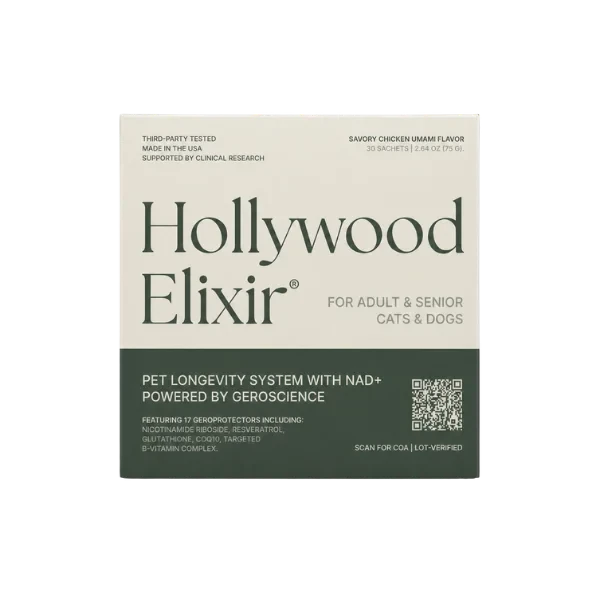
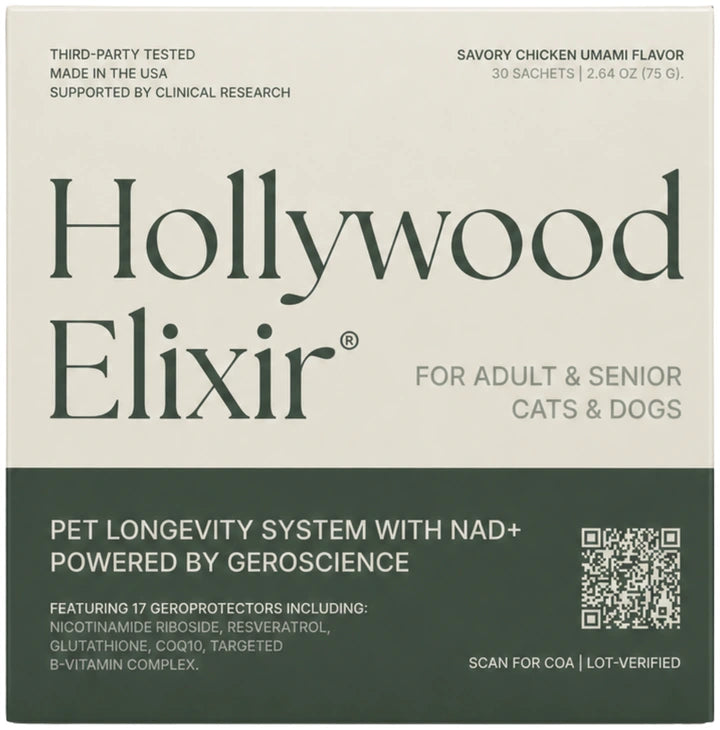
Predictable care can include a familiar mealtime addition. Hollywood Elixir is a healthy-aging nutrition formula for adult dogs, with nicotinamide riboside, CoQ10 and antioxidant ingredients in a powder mixed into usual food. Its disclosed active amounts make the nutritional choice clear to review alongside the existing diet. Explore the full formula and serving guide. 5

Woman sitting with a beagle in a kitchen while holding a Hollywood Elixir box

DVM Voice: Clinical Vignette of a Common Pattern in Senior Dog Aging

Case provided by JoAnna Pendergrass, DVM

Rex, a 7-year-old Labrador Retriever, was brought in after his owner noticed he was slower to rise, hesitant on stairs, and less able to play as before. Examination showed stiffness and reduced hip mobility; radiographs confirmed degenerative joint changes.

His care required weight management, veterinary-guided pain control, nutritional support, and rehabilitation — a comprehensive plan, but one started only after visible decline appeared.

Clinical takeaway: Rex’s case reflects the value of proactive aging support: maintaining lean body condition, monitoring mobility early, and supporting cellular resilience, antioxidant defense, and healthy inflammatory balance before decline becomes obvious.

Single-case vignette. Not generalizable. Veterinary oversight is essential for pain, stiffness, or suspected joint disease.

Explore Hollywood Elixir Research →

Educational content only. This material is not a substitute for veterinary advice. Always consult your veterinarian about your dog’s specific needs. These statements have not been evaluated by the Food and Drug Administration. Products mentioned are not intended to diagnose, treat, cure, or prevent any disease.

Glossary

reservoir: The water-holding part of the bowl or station. For Slopper Stopper, changing lid size does not change the one-gallon bowl capacity.

drinking pool: The exposed area of water the dog can reach; Slopper Stopper forms this pool at the base of its shaped lid.

splash-catching surround: The area around an open bowl that catches spills. Neater Feeder routes spilled water through holes into a lower reservoir.

Related Reading

References

Numbered references identify the sources used for specific claims. Read the study design, species and evidence boundaries alongside each finding.

  1. Caring for a blind dog. PDSA · Current professional guidanceSpecies/context: dogEvidence boundary: Veterinary/professional guidance used only for the stated care boundary.↩ 1 · ↩ 2 · ↩ 3 · ↩ 4
  2. Neater Feeder Deluxe for Dogs: dimensions and cleaning. Neater Pets · Undated current manufacturer pageSpecies/context: dogEvidence boundary: Current first-party document evidence; specifications and care directions are distinct from clinical outcome evidence.↩ 1 · ↩ 2
  3. Slopper Stopper: bowl and lid specifications. Slopper Stopper · Undated current manufacturer pageSpecies/context: dogEvidence boundary: Current first-party document evidence; specifications and care directions are distinct from clinical outcome evidence.↩
  4. Slopper Stopper: fitting and care FAQ. Slopper Stopper · Undated current manufacturer pageSpecies/context: dogEvidence boundary: Current first-party document evidence; specifications and care directions are distinct from clinical outcome evidence.↩
  5. Hollywood Elixir: formula and supplement facts. La Petite Labs · Undated current manufacturer pageSpecies/context: dog, catEvidence boundary: Current first-party document evidence; specifications and care directions are distinct from clinical outcome evidence.↩

FAQ

Does a blind dog need a special water bowl?

Not necessarily. PDSA emphasizes consistent bowl locations and clear routes. Keep an accepted accessible bowl unless there is a specific problem to solve, such as tipping or difficult reach. 1

Is a spill-proof lid better for a blind dog?

Only if that dog can find and use its opening comfortably. Lid geometry changes the drinking task. Retain the familiar water option while introducing it, and do not equate a drier floor with adequate drinking.

Should I move the bowl closer to the bed?

Consider the whole route, but avoid unexplained changes. PDSA recommends keeping bowls in the same location; if a change is necessary, guide the dog around the new layout so they can learn it. 1

Dalmatian looking toward a Hollywood Elixir box held in a person's hand

Discover LPL-01: How This Fits Into a Larger Canine Longevity System

Aging in dogs is not driven by a single pathway. It’s the result of interacting biological systems—energy metabolism, oxidative stress, immune signaling, and structural integrity—changing over time.

This article explores one piece of that puzzle. If you want to understand how these pieces connect—and what actually moves the needle—you need to zoom out.

Start with the underlying science:

Keep exploring

What would you like to understand next?

Search practical guides about healthy aging, cellular energy, ingredients, and daily support for dogs.